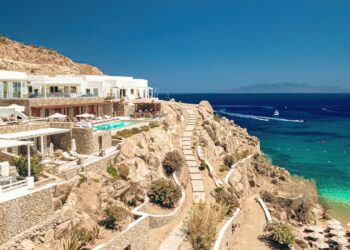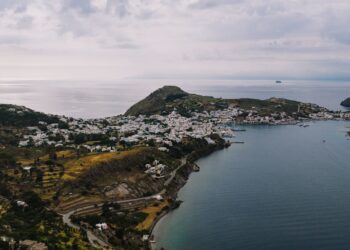
Ios sits halfway between Naxos and Santorini, a hilly Cycladic island of roughly 109 square kilometres where goat herds still block single-lane roads and the port bay is one of the deepest natural harbours in the Aegean. Most travellers know it for the late-night bar strip in Chora, and that reputation is not invented — in July and August, the village’s narrow lanes turn into an open-air party that draws a young international crowd well past dawn. But Ios has been quietly outgrowing its party-island label for years, and visitors who arrive expecting nothing more than cheap shots and loud music tend to leave surprised by what else they find: a Bronze Age settlement older than Akrotiri, a legendary connection to Homer, south-coast beaches that rival anything in the Cyclades, and a goat-cheese tradition that has survived longer than most European capitals.
This guide is designed for travellers who want to understand the full island — whether they are here for the nightlife, the beaches, the archaeology, or simply a less crowded alternative to Santorini and Mykonos. It covers how to arrive, where to base yourself, what the beaches are actually like when the wind picks up, and what is worth your time beyond the main strip.
Ios in a Sentence
A Cycladic island that combines some of the Aegean’s best beaches with concentrated nightlife and a Bronze Age archaeological site older than Akrotiri — all accessible by a thirty-five-minute ferry from Santorini, without the crowds or the prices.
Who Should Visit Ios — and Who Should Not
Ios works particularly well for travellers in their twenties and thirties who want beach days followed by sociable evenings — the combination of good sand, short distances, and concentrated nightlife is genuinely difficult to replicate elsewhere in the Cyclades without spending considerably more. Couples looking for a quieter island experience can find it here too, especially in June or September when the party volume drops significantly and the southern beaches feel almost private.
Families with children will find Ios manageable rather than ideal. The main beaches have shallow entries and the bus service is frequent, but natural shade is scarce across the entire island, and the nightlife-oriented atmosphere of Chora after dark may not suit everyone. Older travellers or anyone with mobility concerns should note that Chora’s steep, narrow lanes involve a lot of steps, and several beaches require descents on unpaved paths.
If you actively dislike any trace of party culture, Ios in peak season may frustrate you — though this is largely confined to Chora’s bar strip and the southern end of Mylopotas. The rest of the island, even in August, remains remarkably quiet.
Ios at a Glance
| Location | Central Cyclades, between Naxos and Santorini |
| Area | 109 km² (approximately 18 km long, 10 km wide) |
| Population | Approximately 2,300 permanent residents |
| Highest point | Mount Pyrgos, 713 m |
| Main settlement | Chora (Ios Town), perched on a hillside above the port |
| Best for | Beaches, nightlife, Cycladic atmosphere, island hopping |
| Ideal duration | 3–5 nights |
| Airport | None — access by ferry only |
A Short History of Ios
The name Ios most likely derives from the ancient Greek word ia (ία), meaning violets, which according to the geographer Plutarch once grew abundantly across the island. An alternative theory links it to the Phoenician word iion, meaning a pile of stones — less romantic, but arguably more accurate given the terrain.
The island’s most significant archaeological site, Skarkos, dates to the mid-third millennium BC and represents one of the best-preserved early Cycladic settlements ever discovered. Built on a hillside overlooking the port, Skarkos featured two-storey stone buildings with walls still standing up to four metres high — a state of preservation that earned the site a European Union Prize for Cultural Heritage in 2008. The settlement sat at the junction of key Cycladic maritime routes, trading obsidian tools with communities across the Aegean before being abandoned around 2300 BC, possibly after an earthquake.
According to ancient historians including Herodotus and Pausanias, Ios was the island where Homer died and was buried. The so-called Tomb of Homer on Psathopyrgos Hill, about twelve kilometres north of Chora, is a popular excursion point — though what survives there is actually the remains of a Hellenistic tower. Whether Homer had any real connection to the island remains a matter of scholarly debate, but ancient coins from Ios did bear his image, and the association runs deep enough to have given the island’s annual cultural festival its name: the Homeria.
Getting to Ios
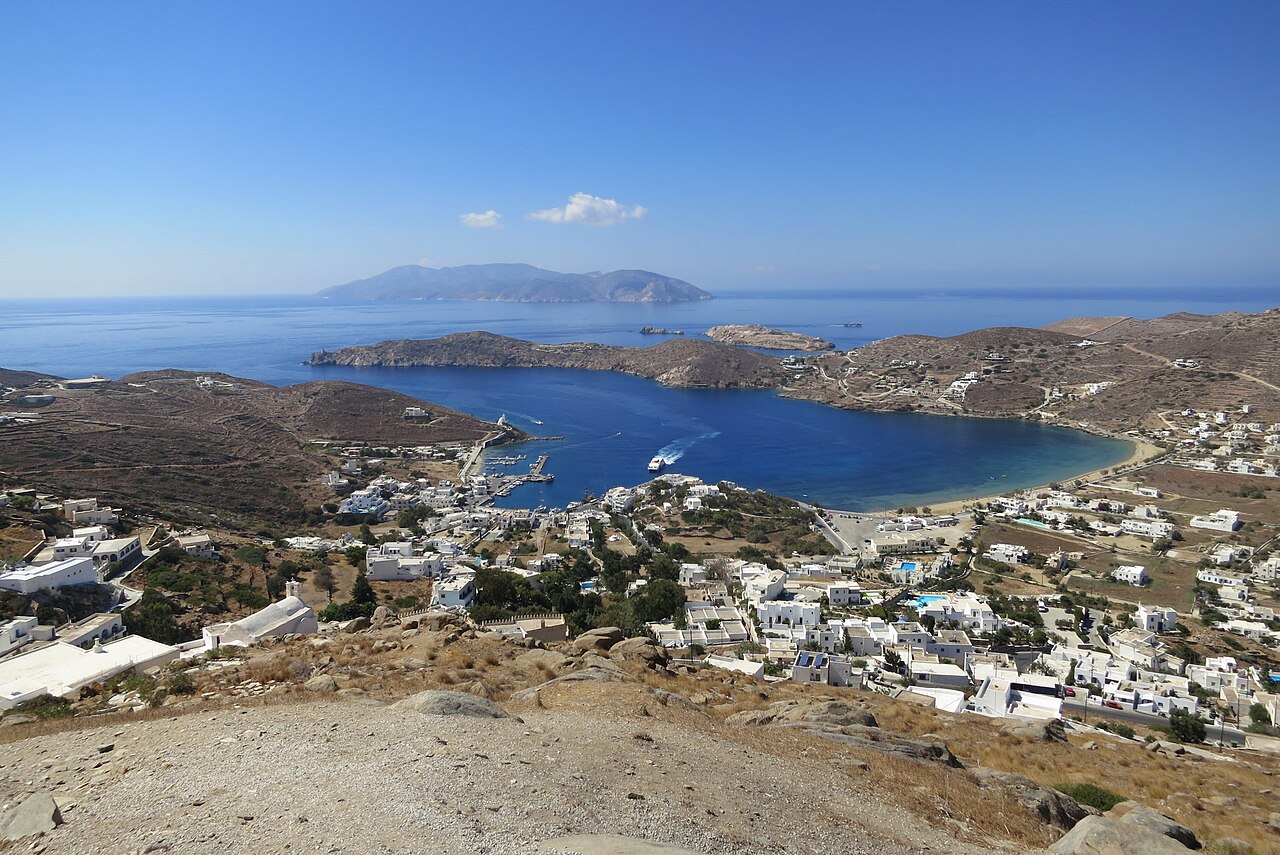
Ios has no airport, which is part of its appeal. Every visitor arrives by ferry, and the connections are frequent enough in summer to make the island a natural stop on any Cyclades island-hopping route.
From Athens (Piraeus)
Three operators serve the Piraeus–Ios route during summer: Blue Star Ferries, SeaJets, and Cyclades Fast Ferries. The fastest crossings with SeaJets take around four hours and fifteen minutes, while the conventional Blue Star service runs approximately seven and a half hours but offers a smoother ride and lower deck fares starting from around €39. During peak season, there are typically three to five departures per day. Ferry schedules change seasonally, so check with operators or booking platforms before making plans.
From Santorini
The Santorini–Ios crossing is one of the shortest and most frequent in the Cyclades. High-speed ferries cover the distance in as little as thirty-five minutes, with conventional ferries taking roughly one hour and fifteen minutes. In summer, up to seven departures run daily. Deck fares start from as little as €6.50 on slower services. Many travellers fly into Santorini’s international airport and take the ferry to Ios from there — a practical route that avoids the long sail from Piraeus.
From Other Islands
Ios connects directly to Naxos, Paros, Mykonos, Folegandros, Sikinos, Milos, and Heraklion (Crete), among others. Not all routes operate daily, and some are seasonal. For connections to the Ionian islands, Dodecanese, or North Aegean, you will typically need to transfer through Piraeus or Santorini. For current schedules and booking, Ferryhopper and Direct Ferries provide real-time timetables.
Getting Around the Island
Ios is compact enough that getting around is straightforward, but not so small that you can walk everywhere comfortably in summer heat.
The local KTEL bus service is genuinely good. In July and August, buses connect the port (Ormos/Gialos), Chora, and Mylopotas Beach every fifteen to twenty minutes from early morning until midnight. Additional routes serve Manganari, Agia Theodoti, Psathi, and Koumbara, though these run less frequently — typically a few times per day. Shoulder-season frequency drops to every twenty to thirty minutes on the main route.
A rental car opens up the entire island, including remote northern beaches and Homer’s Tomb, but is not strictly necessary if you are staying in the Chora–Mylopotas corridor. Rental agencies cluster around the port and in Chora. Roads are mostly asphalt on main routes, though some beach access roads are unpaved and can be rough. If you rent a scooter or ATV, take the mountain roads slowly — the terrain is steeper than it looks, and gravel patches appear without warning.
Taxis exist but are limited in number. During peak season, they can be very difficult to find. Save the local taxi number in your phone before you need it, and consider booking in advance rather than hoping to flag one down.
Where to Base Yourself
Ios has three main areas for accommodation, each suited to a different kind of trip.
Chora (Ios Town)
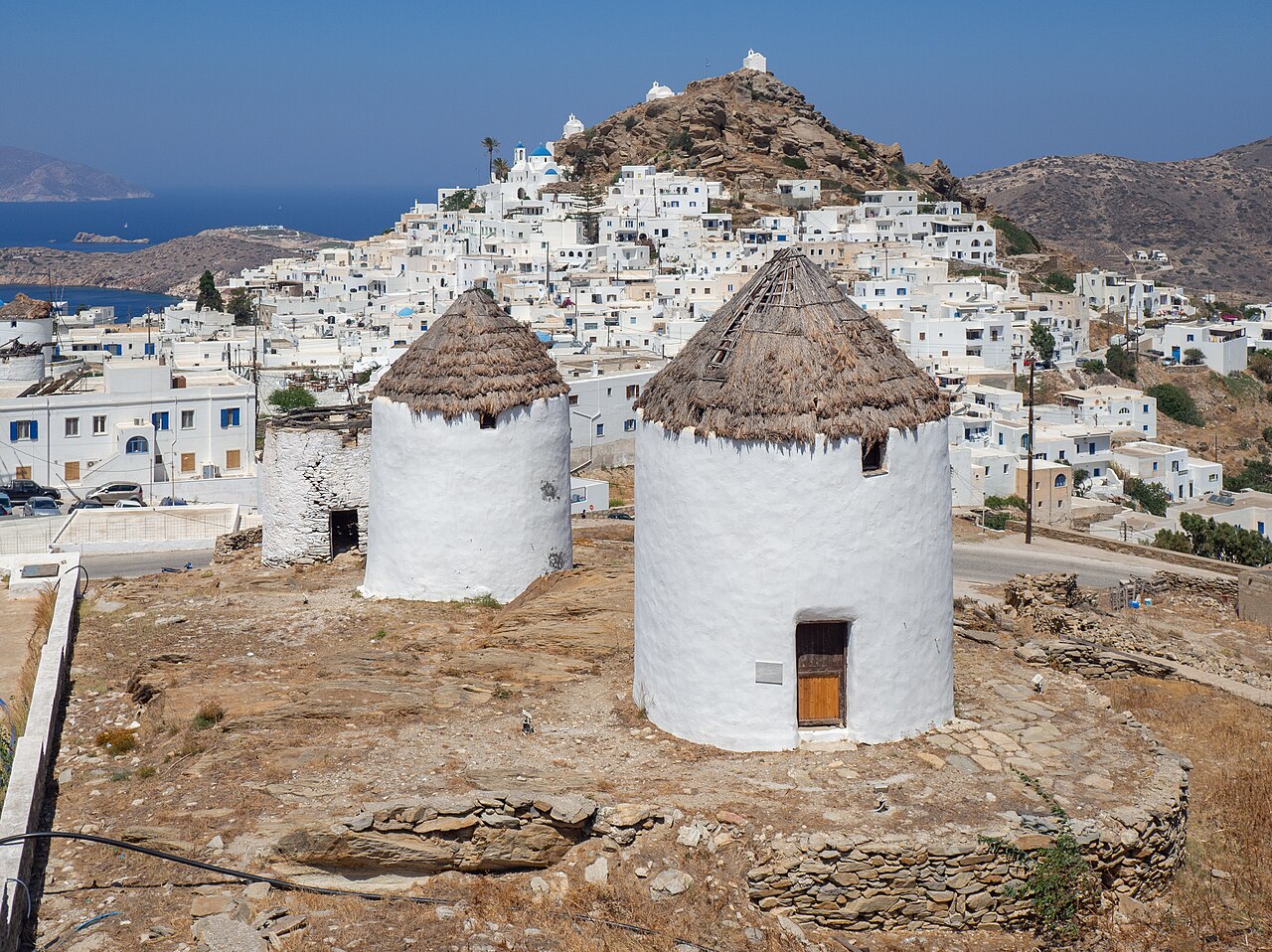
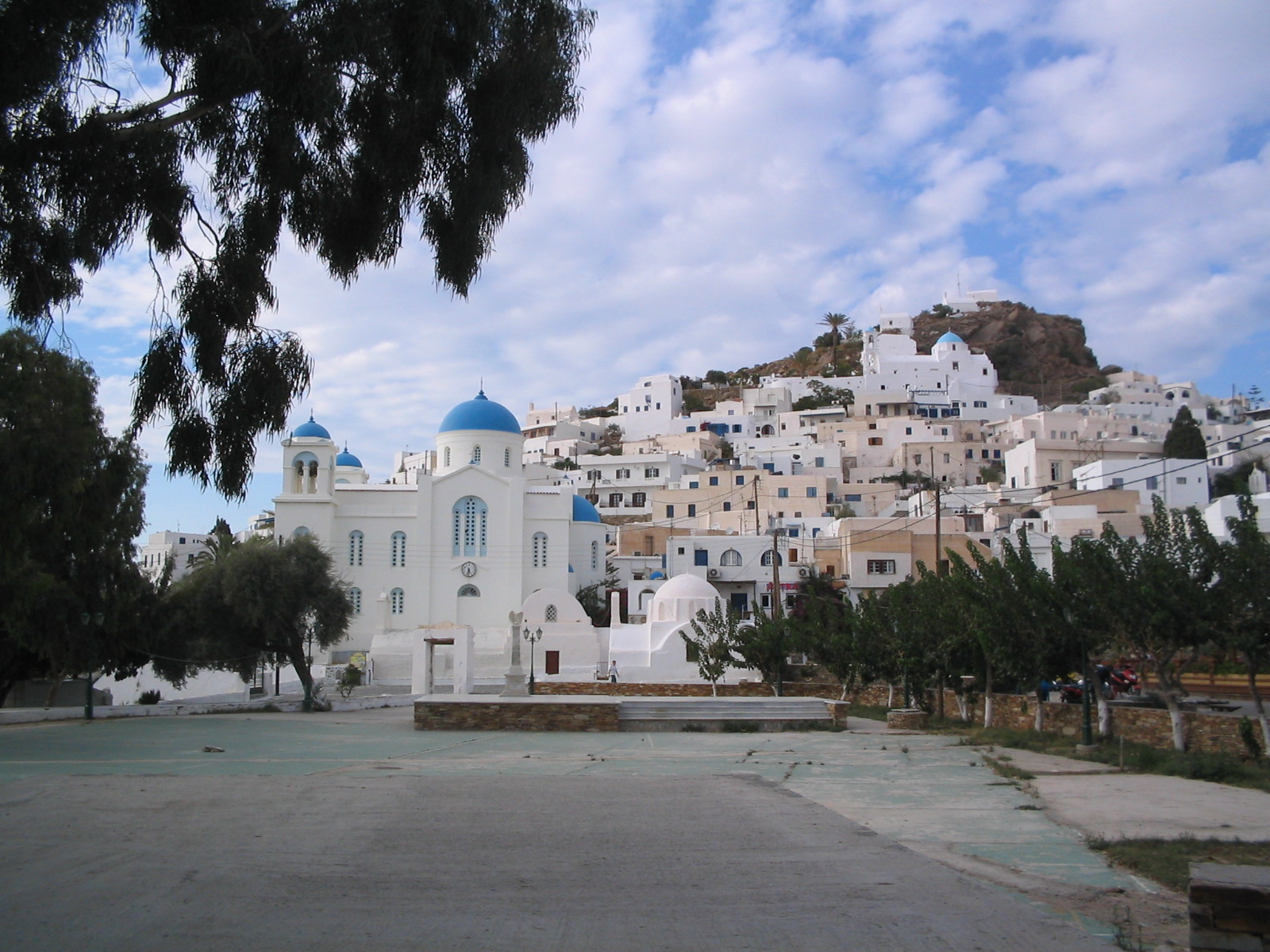
The hillside capital is the social centre of the island. The lower section near the main square has the densest cluster of bars and late-night spots, while the upper reaches — toward the windmills and the church of Panagia Gremiotissa — are quieter and offer sweeping views over the port and the open sea. Staying in Chora means everything is walkable: the bars, the restaurants with the best sunset positions, the bus stop, and the path down to the port. The downside is noise, particularly in July and August, when the bar strip does not settle down until well after three in the morning. Light sleepers should request rooms in the upper village or facing away from the main commercial lane.
Mylopotas
The island’s main beach area sits roughly two kilometres southeast of Chora, accessible by a frequent bus or a fifteen-minute walk. Accommodation here tends to be beach-oriented — pool-and-lounger setups, beachfront positions, and a generally younger crowd. Mylopotas works well for travellers who want to spend most of their time on the sand with easy access to beach bars and watersports. It is also home to the largest beach-club operation on the island, which keeps things lively during the day. Evenings tend to be quieter than Chora, though some beachfront venues run music into the night.
Ormos / Gialos (The Port)
The port area along the harbour bay is the most relaxed of the three bases. Accommodation here tends to offer better value, and the waterfront has a handful of tavernas that cater more to locals and returning visitors than to the party crowd. You are close to Gialos Beach, which is a decent sandy stretch right beside the harbour, and the bus to Chora and Mylopotas runs constantly. For couples, solo travellers, and anyone who wants to enjoy the island without the nightlife soundtrack, this is probably the strongest base.
Beaches
The beaches are the strongest practical reason to visit Ios. The sand quality, water clarity, and variety across the island are genuinely impressive — and because the island receives fewer visitors than Santorini or Mykonos, even popular beaches tend to feel more manageable in terms of crowding.
One important note applies everywhere: natural shade is scarce across the entire island. Budget for a lounger and umbrella rental, or bring your own shade. This matters more here than on more forested islands in the Sporades or Ionian.
| Beach | Distance from Chora | Surface | Organised | Best for |
|---|---|---|---|---|
| Mylopotas | 2 km | Fine sand | Yes — loungers, bars, watersports | All-day beach, social atmosphere |
| Manganari | 17.5 km | Sand | Partly — tavernas, some loungers | Families, calm water, scenery |
| Koumbara | 1.5 km | Sand and pebble | Minimal | Short morning swim near town |
| Agia Theodoti | 10 km | Sand | Minimal — one taverna nearby | Quiet day, snorkelling |
| Kalamos | 16 km | Shingle and sand | No | Solitude, wild landscape |
| Psathi | 9 km | Golden sand | Minimal — wicker umbrellas | Windsurfing, quiet relaxation |
| Gialos | 2 km (at the port) | Sand | Partly | Convenience if staying at the port |
Mylopotas
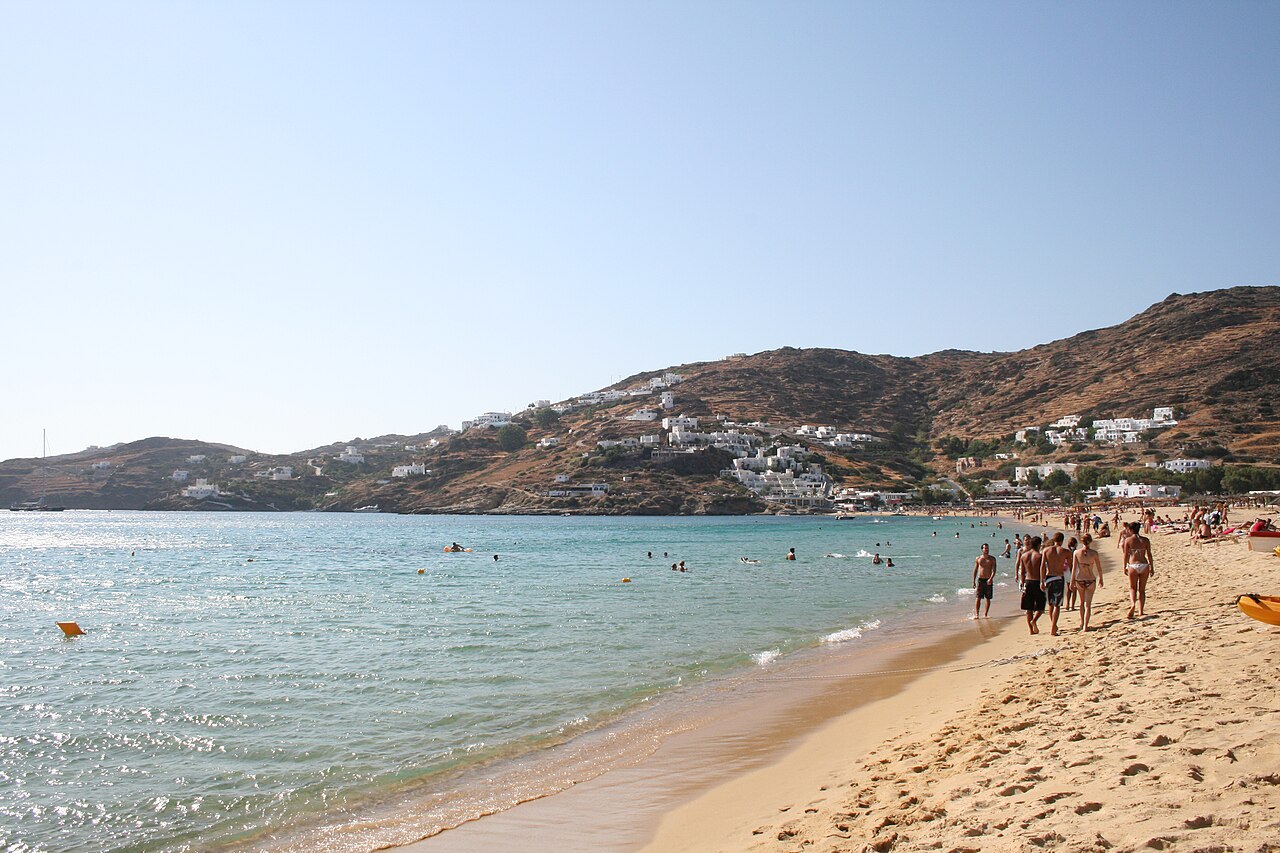
The main event. Mylopotas stretches for over a kilometre of fine sand along the island’s western coast, with shallow water that deepens gradually — making it broadly suitable for families with children, though the beach gets busy in August and the party-bar section at the southern end can be loud. Watersports operators offer paddleboards, jet skis, and pedal boats. The beach has held Blue Flag status, though conditions can change from year to year — the certification should be confirmed for the current season. On days when the Meltemi blows hard from the north, Mylopotas tends to remain relatively sheltered thanks to its southwest orientation, though some chop may develop.
Manganari
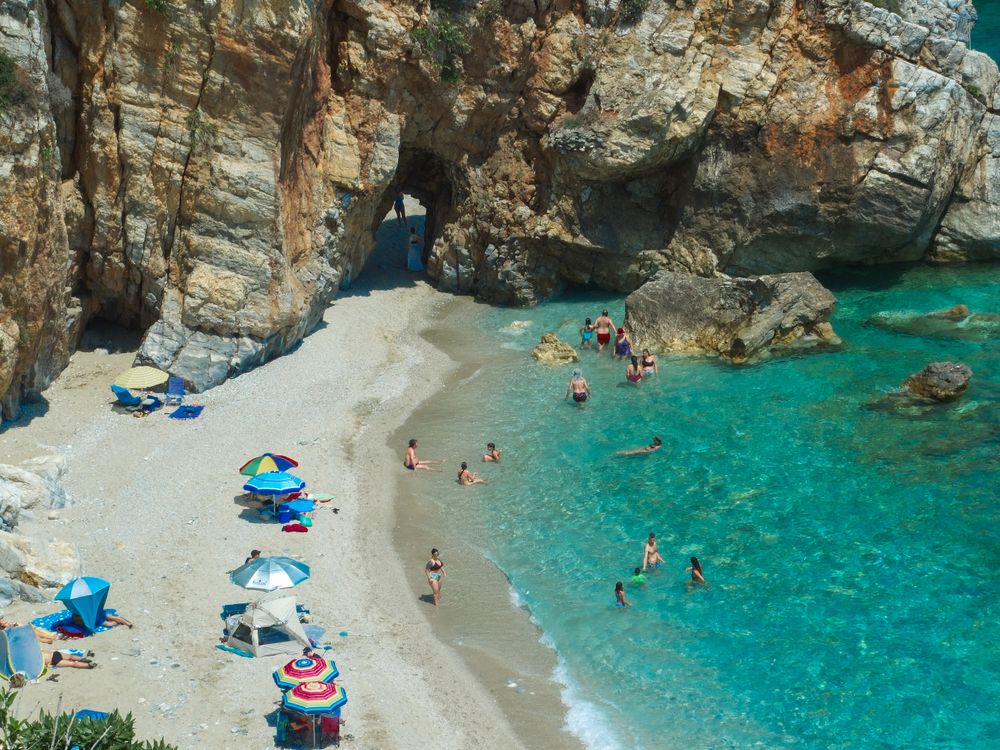
About forty minutes south of Chora by car, Manganari is the island’s most scenic beach. It breaks into several smaller coves separated by rocky headlands, offering more privacy than Mylopotas. The water is typically calm and very shallow at the entry — good for young children wading — and the overall setting feels significantly more remote than anything on the western coast. A couple of tavernas operate in summer. Access is by car, bus (seasonal service), or boat excursion from the port. Bring food and water if you plan a full day, as supplies are limited.
Koumbara
Close to Chora and reachable on foot, Koumbara is where many locals go for a quick swim. The water is clear and usually calm, making it practical for young children. There is not much in the way of facilities, but the proximity to town makes it easy to combine with lunch in Chora. A good option for mornings when you want a swim without committing to a full beach day.
Wind and Conditions
The Meltemi — the strong northerly wind that sweeps the Aegean from roughly mid-June through September — affects Ios less severely than exposed islands like Paros or Tinos, but it can still create rough conditions on north-facing beaches and make ferry crossings uncomfortable. South and west-facing beaches (Mylopotas, Manganari, Koumbara) tend to be more sheltered. Psathi, which faces north, can become quite windy and is favoured by windsurfers for exactly that reason. If waves concern you, check conditions before committing to a remote beach that may be difficult to leave quickly.
Things to Do Beyond the Beach
Walk Through Chora
Ios Town rewards early risers. Before the bars open and the lanes fill up, Chora is a textbook Cycladic village: whitewashed walls, blue-painted doors, bougainvillea spilling over stone steps, cats sleeping in doorways. The upper village is older and less commercial, with a handful of traditional cafés where you can sit with a coffee and watch the ferry arrive in the bay below. The windmills along the eastern ridge are the classic viewpoint, and the church of Panagia Gremiotissa — the island’s most prominent landmark, visible from the port — sits at the highest point of the village. The views from there extend across the sea to Sikinos, Folegandros, and on clear days, Santorini.
Visit Skarkos
The early Bronze Age settlement of Skarkos, a short walk from the port, is the most important prehistoric archaeological site in the Cyclades. Excavated between 1984 and 1997, the site reveals a well-organised community from around 2700–2300 BC: two-storey stone buildings, paved streets, workshops, and storage areas. Skarkos was roughly a thousand years older than Akrotiri on Santorini and provides a rare window into how Cycladic societies functioned before the Minoan period. The site received a European Union Prize for Cultural Heritage in 2008 for its conservation work. Admission is €5 (reduced €3). Opening hours are 08:30–15:30, closed on Tuesdays and Thursdays. Check with the Ephorate of Antiquities of the Cyclades for current schedules.
The Archaeological Museum
Housed in the town hall in Chora, the small Archaeological Museum of Ios displays finds from Skarkos and nearby burial sites: obsidian blades, fragments of early Cycladic figurines, Mycenaean-style pottery, and marble sculptures from the Hellenistic and Roman periods. It takes thirty to forty-five minutes to see everything, but the Skarkos finds alone are worth the detour if you have visited the site. Admission is €5 (reduced €3), and the museum is open 08:30–15:30, closed on Tuesdays.
Homer’s Tomb
The supposed Tomb of Homer sits on a hill in northern Ios, about twelve kilometres from Chora along a winding road that passes through some of the island’s most striking mountain scenery. Ancient historians including Herodotus placed Homer’s death on Ios, and coins minted on the island depicted his likeness — but the structure at the site is actually the ruins of a Hellenistic-era tower, not a tomb in any archaeological sense. It remains a pleasant excursion for the drive and the views rather than for what survives on the ground. A marked path of roughly ten minutes leads from the road to the site, where a gazebo offers panoramic views over the northern coast. No admission fee. A rental car or scooter is the most practical way to reach it.
Odysseas Elytis Theatre
Behind the windmills above Chora, this open-air marble amphitheatre was built in 1997 and seats approximately 1,100 people. Named after the Nobel Prize–winning Greek poet Odysseas Elytis, the theatre hosts concerts, theatrical performances, and cultural events during summer, including the annual Homeria festival. Even outside event season, the theatre itself is worth the short walk for the views over Chora and the Aegean. Check locally for performance schedules.
Diaseli Cheese Museum
One of the more distinctive experiences on the island. The Diaseli Traditional Cheesery and Museum, located centrally on the island, has been run by the same family since 1922. Visitors can tour a small museum depicting eighteenth-century rural life on Ios, watch traditional cheesemaking demonstrations, and taste a selection of seven to ten varieties of goat milk cheese produced on the family farm — accompanied by locally grown figs, tomatoes, honey, and pickled capers. It is one of the few food-focused attractions in the Cyclades that feels genuinely rooted in a specific family and place rather than assembled for tourists.
Best Months for Ios
June and September offer the best balance of warm seas, open services, and manageable crowds. July and August bring peak nightlife but also peak prices, heat, and ferry congestion. For more on seasonal timing across Greece, see our month-by-month guide.
When to Visit
The answer depends almost entirely on what you want from the island.
May and early June are excellent for beaches, walking, and sightseeing without crowds. Water temperatures reach around 21–24°C by June, the bus service is running, and accommodation prices are well below their peak. Most beach bars and tavernas will be open by late May. The nightlife is present but muted compared to high summer.
July and August deliver the full Ios experience at maximum intensity: temperatures above 30°C, Mylopotas packed from mid-morning, and Chora’s bar strip operating at full volume nightly. If this is the energy you are looking for, book accommodation and ferries three to four months ahead. Expect higher prices across the board. The Meltemi wind can provide relief from the heat but may also disrupt ferry schedules on severe days.
September may be the single best month for most visitors. Sea temperatures peak at around 25–27°C after a full summer of warming, the European school-holiday crowds thin out after mid-August, and prices begin to drop. The atmosphere relaxes noticeably while services remain fully operational. October is possible but risky — ferry frequency begins to decline, and some seasonal businesses close after mid-month.
Outside summer, Ios is very quiet. Most accommodation, restaurants, and ferry routes shut down from November through March. The island is not set up for winter tourism.
Food and Drink
Ios does not have the same food reputation as Sifnos or Tinos, and it would be dishonest to pretend otherwise. The island’s dining scene is oriented more toward casual beach eating and evening-out options than toward destination gastronomy. That said, it does a few things well.
Seafood is reliably fresh — the port area and the waterfront at Mylopotas both have tavernas where the day’s catch is grilled simply and served with lemon and olive oil. Octopus dried in the sun is a common sight along the harbour. The island’s goat-farming tradition means the local cheese — particularly fresh and semi-hard varieties made from goat milk — is genuinely distinctive. The Diaseli family’s products are the most well-known, but other producers supply tavernas across the island.
Locally grown capers, tomatoes, and honey appear in salads and meze plates, and they tend to be better than the imported alternatives you will find in more tourist-dependent kitchens. For breakfast, bakeries in Chora serve decent spanakopita and tiropita alongside coffee. In the evening, the range runs from simple grilled-meat-and-salad tavernas at the port to more contemporary restaurants in Chora and along Mylopotas with broader Mediterranean menus.
Wine is not a major local product — you will drink labels from Santorini, Crete, or the mainland more often than anything produced on Ios. The cocktail and bar scene in Chora, on the other hand, is extensive, with everything from five-euro shots to well-made craft cocktails in more upmarket venues along the edges of the main strip.
Nightlife — What to Actually Expect
The nightlife on Ios is concentrated, affordable, and unpretentious. Chora’s main bar strip — a roughly two-hundred-metre stretch of narrow lanes — contains dozens of bars, clubs, and late-night spots that draw a predominantly eighteen-to-thirty crowd during July and August. Drinks are cheap by Cycladic standards, and the atmosphere is closer to a backpacker bar district than to the exclusive club scene of Mykonos. Things start slowly with sunset drinks and build through the evening, with most bars hitting their stride around midnight and running until four or five in the morning.
Down at Mylopotas, several beach bars keep music going through the afternoon and into the evening, offering a more laid-back daytime alternative to Chora’s intensity. The largest of these doubles as an all-day club of sorts, with DJs, pool access, and organised events during peak weeks.
Outside July and August, the nightlife exists but at a lower volume. June and September still see active bars, but the frantic energy of peak season is replaced by something more manageable. If you are visiting specifically for nightlife, the last two weeks of July and the first two weeks of August are the window.
If you are not visiting for nightlife, you can avoid it entirely by staying at the port or the upper reaches of Chora, and by timing your evening walks to avoid the bar strip after 11 pm. The party scene is contained enough that it does not bleed into the rest of the island’s experience.
Practical Costs
Ios is one of the more affordable Cycladic islands, especially compared to Santorini, Mykonos, or Paros. Budget travellers can manage on €50–70 per day (hostel bed, bus transport, beach time, taverna meals, and a moderate night out), while mid-range visitors spending on private rooms, car rental, and more comfortable dining should expect €100–160 per day. Prices peak in the last two weeks of July and the first two weeks of August. Ferry fares from Piraeus start at around €39 for deck passage on conventional ferries and rise to €60–80 for high-speed services.
Beach lounger-and-umbrella sets at Mylopotas typically cost €8–15 per day. Meal prices at waterfront tavernas run €10–18 for a main course. Car rental ranges from €35–60 per day depending on season and vehicle type. These figures should be treated as approximate and confirmed directly before travel.
How Many Days Do You Need?
Three full days is enough to see Chora, spend time on two or three beaches, visit Skarkos, and get a feel for the island’s rhythm. Four to five days is more comfortable if you want to explore Manganari, drive to Homer’s Tomb, visit the Diaseli farm, and have an unhurried day or two on the sand. Beyond five days, Ios begins to feel fully explored unless you are genuinely here for the nightlife or using it as a base for day trips to Santorini (thirty-five minutes by fast ferry) or Sikinos.
Day Trips and Island Hopping from Ios
Ios sits at the centre of the Cyclades ferry network, making it a natural base for short hops to neighbouring islands. The most practical day trips include:
Santorini — thirty-five minutes by high-speed ferry, with multiple daily departures in summer. Enough time to visit Fira, walk toward Oia, or see the Akrotiri archaeological site, though a day trip only scratches the surface. For a fuller picture, see our Santorini travel guide.
Sikinos — a small, quiet island directly west of Ios, reachable in about forty-five minutes. Sikinos has no party scene whatsoever and appeals to travellers who want a stripped-back Cycladic experience: one village, a handful of tavernas, and empty walking paths. The Episkopi monument — a Roman mausoleum later converted to a church — is the main cultural draw.
Folegandros — roughly an hour by ferry, with its famous cliff-top Chora and hiking trails. See our Folegandros guide.
For broader Cyclades hopping routes that include Ios, our island-hopping planning guide covers ferry logistics, route suggestions, and timing advice across all five island groups.
What to Know Before You Go
No airport. The nearest airports are on Santorini (thirty-five minutes by ferry) and Naxos (approximately ninety minutes). Plan your arrival around ferry schedules.
Book ferries early. Peak-season ferries to Ios — especially high-speed services from Piraeus — sell out. Deck seats go quickly, and cabin berths can vanish months ahead. August weekends are the tightest.
Sun protection is not optional. Natural shade barely exists on Ios beaches. Bring a hat, high-factor sunscreen, and either your own umbrella or a budget for daily lounger rental. Dehydration is a real concern in July and August, particularly if combined with nightlife.
Roads to southern beaches are long. Manganari is a scenic but winding forty-minute drive each way. Kalamos involves an unpaved access road. If you are uncomfortable on narrow mountain roads without guardrails, consider the boat excursion instead.
The party is optional. Despite Ios’s reputation, it is entirely possible to visit the island and avoid the nightlife altogether. Stay at the port, swim at Manganari or Agia Theodoti, eat at harbour tavernas, and you may barely notice that the bars exist.
Cash is less necessary than it used to be. Most restaurants, shops, and accommodation accept cards. Beach vendors and taxis may still prefer cash. There are ATMs at the port and in Chora.
This article was researched and verified as of August 2026. Ferry schedules, admission fees, and seasonal services are subject to change — confirm details directly with operators before travelling. Vivid Greece has no commercial relationship with any business mentioned in this guide.