Lemnos is not an island that reveals itself in a single harbour walk. Myrina gives you the castle, the port and an easy first evening, but the island’s character lies further out: in open agricultural plains, long beaches, ancient settlements, seasonal wetlands and villages that still belong to a working landscape.
That makes Lemnos a rewarding choice for travellers who want more than a resort week, but it also creates a practical question. Is the island worth the longer journey, and how should you organise it once you arrive? This guide focuses on that decision: where to stay, whether you need a car, which beaches fit different days, and how to combine Lemnos’ archaeology and natural landscapes without turning the holiday into a list of distant stops.
Lemnos is an island of distance and texture
Come for the beaches, stay for the way the island connects sea, soil, history and everyday life.
Is Lemnos right for your holiday?
Lemnos suits independent travellers, couples, families with older children and anyone who enjoys making a day around a place rather than moving constantly between attractions. It has enough archaeological and cultural substance to give a beach holiday shape, while its wide bays and relatively open landscape create a sense of space that is increasingly difficult to find on the busiest Greek islands.
The island is less convincing if you want a compact, walkable base with frequent ferries and nightlife at the centre of the experience. Its beaches and archaeological sites are scattered, and the best route for one day may be inconvenient from another part of the island. A car is not essential for every visitor, but it makes the difference between seeing a carefully chosen slice of Lemnos and understanding how the whole island fits together.
| What you want | Why Lemnos can work | What to allow for |
|---|---|---|
| A relaxed island week | Myrina, nearby beaches, villages and long lunches create a naturally unhurried rhythm. | The island is larger than a quick map glance suggests. |
| Archaeology with a beach holiday | Poliochni, Hephaistia, Kabeirion and the Myrina museum provide real cultural depth. | The sites are exposed and opening arrangements can change. |
| Quiet swimming | There are many sandy beaches and bays with different wind exposure. | Facilities, shade and road access vary significantly. |
| A car-free break | Myrina has the port, restaurants, nearby beaches and the castle. | A full island itinerary without a car requires careful planning or arranged excursions. |
How Lemnos is shaped
The island’s geography is unusually useful for planning. Myrina sits on the west coast and is the main arrival point. Moudros anchors the large bay in the south-east and is a logical base for travellers concentrating on the eastern archaeological sites and the wetlands. The northern and north-eastern areas contain open beaches, Keros and the dune landscapes, while the interior is marked by villages, cultivated land and vineyards rather than a single dramatic mountain spine.
This is why the island can feel both spacious and accessible. You are rarely climbing through continuous mountain terrain, but the distances between coasts and the need to slow down on smaller roads still make a rushed itinerary uncomfortable. Plan by areas: western Lemnos around Myrina; the south and Moudros; the east for Poliochni; and the north-east for Keros, the wetlands and the dunes.
When to visit Lemnos
Late spring and early autumn are particularly attractive if you want to combine swimming with walking, villages and archaeological sites. The landscape is more comfortable to explore outside the hottest part of summer, and the roads are less pressured. The trade-off is that ferry frequencies, opening hours and seasonal businesses need closer checking.
July and August make sense for a conventional beach holiday and for visitors coming specifically for wind sports. Lemnos is known for its wind, which is an asset at Keros but not automatically an advantage for every swimmer. Choose the coast according to the conditions on the day rather than treating the island’s beaches as interchangeable.
Spring and the cooler months also make the wetlands more interesting, because Alyki and Chortarolimni are seasonal habitats rather than permanent blue-water attractions. Birdlife is not guaranteed, and wildlife should never be approached as a performance arranged for visitors. Use established viewpoints and keep away from sensitive areas.
Getting to Lemnos
Lemnos can be reached by air or by ferry. AEGEAN lists flights to Lemnos from Athens and Thessaloniki, and its destination information places Hephaestus Airport about 22 kilometres east of Myrina. The airline also notes that the airport has car-hire facilities and that KTEL, taxi and car travel are the main onward options. Flight schedules and fares are live information, so search for your actual dates rather than relying on a general route assumption.
By sea, the port is in Myrina. Current Ferryhopper listings show routes from Kavala, Lavrio, Thessaloniki, Alexandroupoli and Piraeus, as well as connections with other Aegean islands. The same listing gives indicative shortest crossings of about three hours from Kavala, around eight hours and twenty minutes from Lavrio and around three and a half hours from Thessaloniki. Those figures are useful for comparing routes, not for promising a particular sailing: operators, intermediate stops, vessels and seasonal frequencies can change.
| Arrival option | Best for | Important decision |
|---|---|---|
| Flight to Lemnos | Travellers who value a shorter journey from Athens or Thessaloniki. | Arrange the airport transfer or car before arrival, especially in the busiest weeks. |
| Ferry from Kavala | Visitors starting in northern Greece or combining Lemnos with mainland travel. | Compare the sailing time, vehicle space and departure date with the flight alternative. |
| Ferry from Lavrio or Piraeus | Travellers bringing a car from Athens or planning a longer sea journey. | Build accommodation and onward travel around the exact sailing, not a broad weekly pattern. |
| Island connection | A North Aegean itinerary involving Lesvos, Chios, Samothrace or Agios Efstratios. | Confirm that the route operates in your month; island-hopping links are particularly seasonal. |
Where to stay
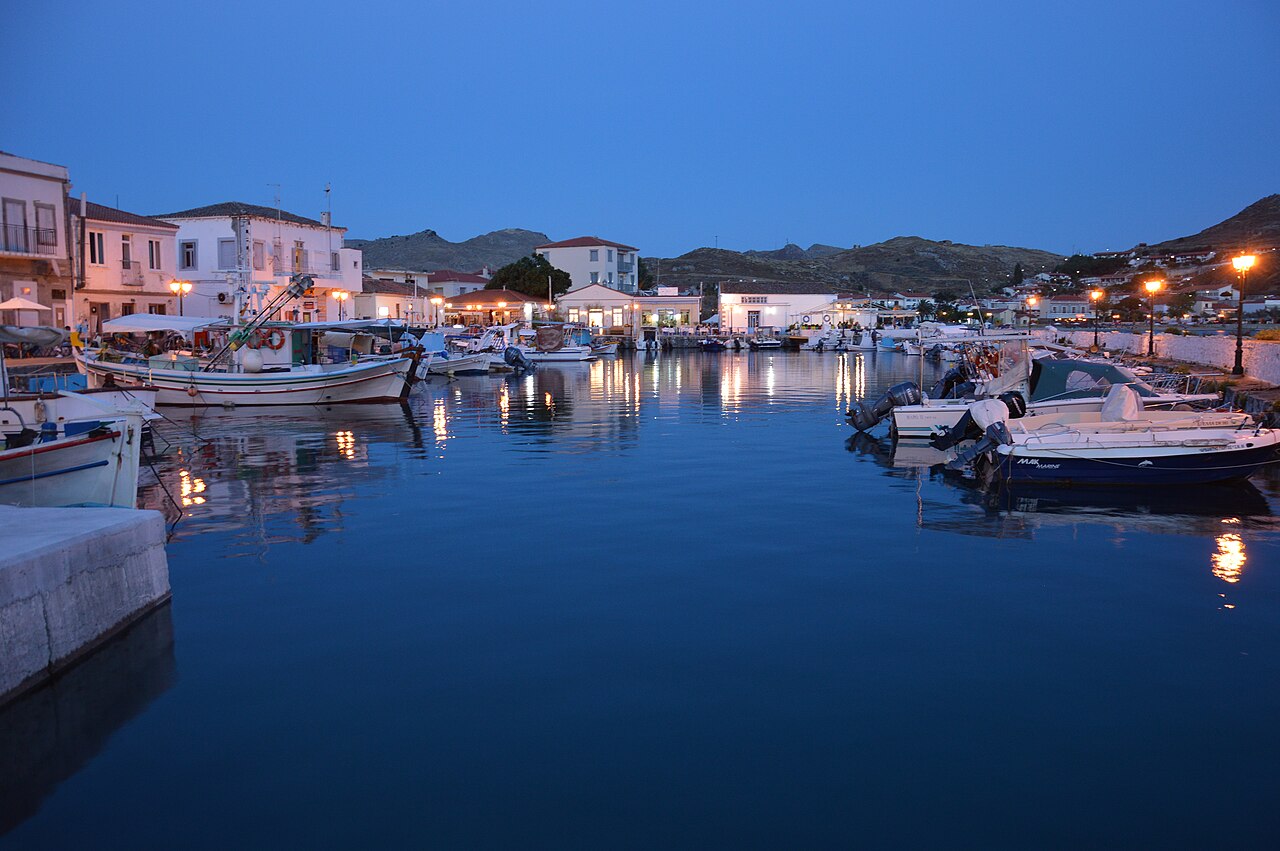
Myrina: the easiest first base
Myrina is the most straightforward recommendation for a first visit. The town gives you the port, restaurants, cafés, evening walks and the castle, while Romeikos Gialos and Richa Nera make it possible to include a swim without committing to a long drive. It is also the best base if you are not hiring a car and want to keep several days simple.
The limitation is geographical rather than atmospheric. Myrina is on the western edge of the island, so Poliochni, Keros, the wetlands and the far north become excursion days. That is perfectly manageable over a week, but less attractive if you have only two or three nights.
Platy and the south-west coast: best for beach convenience
Platy is close enough to Myrina to share its restaurants and services while offering a more beach-oriented setting. It suits travellers who want to swim before breakfast or return to the accommodation without a long evening drive. The compromise is that you may still find yourself using Myrina for atmosphere, supplies and a wider choice of meals.
Moudros: best for the eastern side
Moudros makes sense when the purpose of the trip is to explore eastern and central Lemnos rather than to stay close to the capital. It places you more conveniently for Poliochni, the eastern beaches, Keros and the wetlands. The bay and the settlement have a quieter, more working character than Myrina, which some travellers will prefer and others may find too subdued for a first island stay.
Smaller settlements and rural accommodation
Staying near Keros, Agios Ioannis or an inland village can be rewarding if you want open landscapes, wind sports or a slower rural base. It also increases your dependence on a car. Before booking, check the distance to the nearest shop, evening meal, beach and paved access road. A beautiful location is not automatically a convenient one.
Myrina and the Castle
The castle is the obvious landmark, but Myrina is more than the view from its hill. Start at the waterfront and let the town unfold around the rocky headland. The castle helps explain the settlement’s position: it watches over the harbour and the two sides of the town, while the streets below remain useful for an evening rather than merely decorative.
Allow time for the Archaeological Museum of Lemnos, housed in a nineteenth-century building in Romeikos Gialos. The museum’s new permanent exhibition, inaugurated in August 2025, brings together finds from Poliochni, Myrina, Koukonisi, Kabeirion and Ouriakos. It is the place to visit before or after the archaeological sites, because it gives the island’s long history a structure that scattered ruins cannot provide on their own.
The official museum page currently lists 08:30–15:30 opening hours and Tuesday closure for both its winter and summer information panels, with a €10 ticket. It also warns visitors to check details before travelling. Treat that as part of the itinerary: confirm the current hours, avoid assuming that a holiday follows the ordinary schedule and leave the museum enough time to be useful rather than squeezing it between lunch and a departure.
Beaches: choose the day, not the ranking
Lemnos is strongest for beach variety. There are convenient town beaches, shallow bays, long sandy shores and wind-exposed stretches that suit specialist sports more than a still-water family swim. The right choice depends on wind direction, shade, facilities, road conditions and the people travelling with you.
- For an easy first swim: Romeikos Gialos, Richa Nera and Platy keep the day close to Myrina and its services.
- For shallow water and family practicality: consider beaches such as Kotsinas or Psaravolada after checking current facilities and access.
- For wind sports: Keros is the island’s specialist choice, but the same wind that attracts surfers may make it less comfortable for a quiet swim.
- For landscape: Gomati and the northern beaches combine sand with the island’s unusual dune country.
- For an eastern day: beaches around Moudros and Fanaraki work well when combined with a village or archaeological stop.
Do not equate clear water with universal safety. Children need close supervision, exposed beaches can change quickly and remote shores may have limited shade, services or mobile coverage. Carry water, protect yourself from the sun and check the return route before settling into a distant beach day.
Gomati and the dune landscapes
The dunes near Gomati are one of Lemnos’ most recognisable landscapes. They are often marketed with dramatic “desert” language, but the more useful point for a traveller is that this is a fragile coastal environment, shaped by sand, wind and vegetation, beside a beach that feels very different from the built-up waterfronts near Myrina.
Go for the combination of landscape and sea, not for a quick photograph and a claim that you have seen an entire “European desert”. The approach can take longer than expected, wind can make walking uncomfortable and there may be limited shade. Stay on established routes, do not drive across dunes and do not pick flowers. The dune system is part of the reason Lemnos is distinctive; it should not be treated as an empty surface.
Alyki and Chortarolimni: a different kind of nature
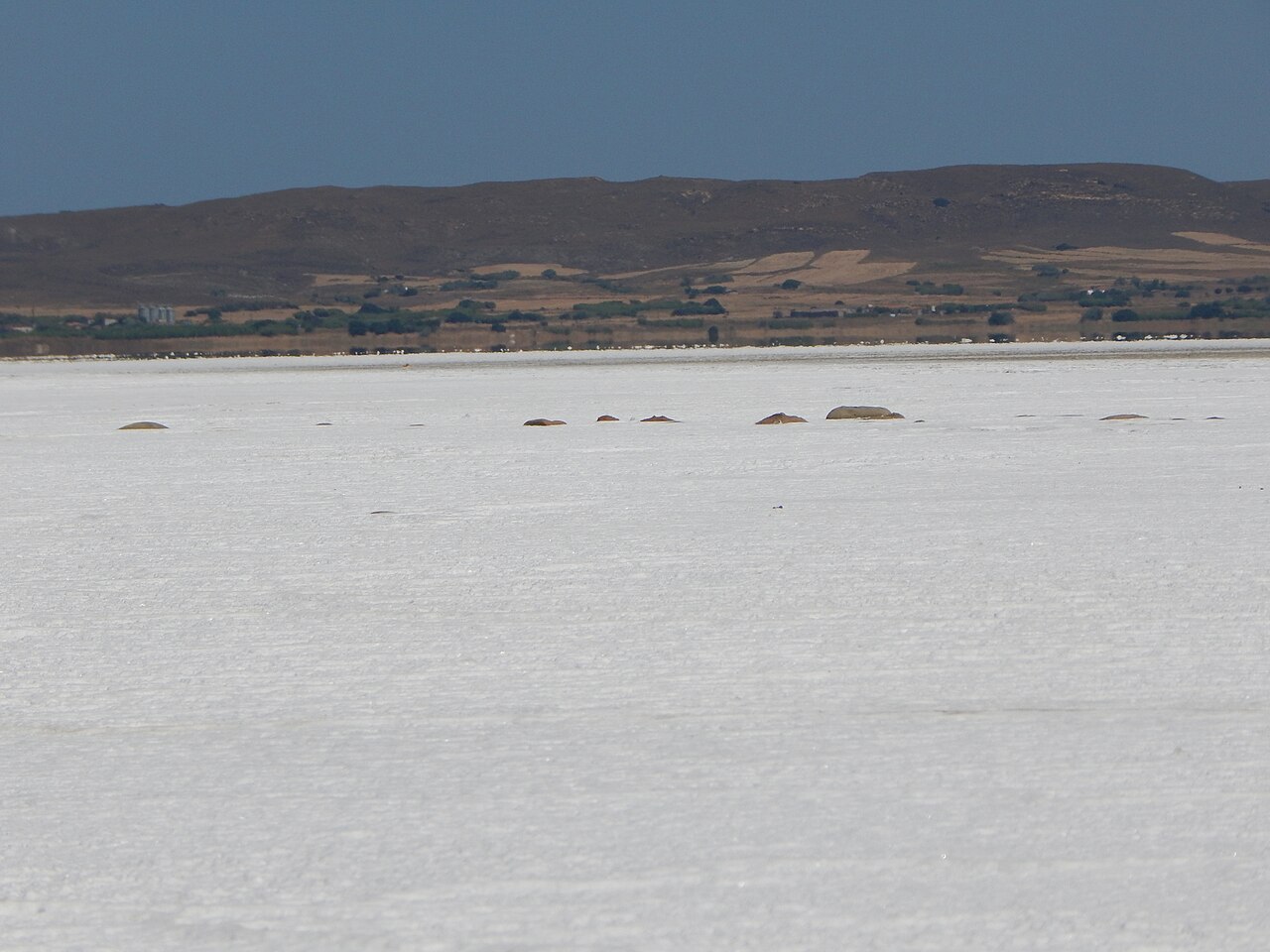
The north-eastern wetland system is a useful corrective to the idea that Lemnos is only a beach island. Alyki is a coastal salt marsh whose appearance changes through the year. Chortarolimni is a seasonal brackish wetland, while the smaller Asprolimni lies between the larger wetland areas and the coast. Together, the lakes and surrounding habitats support migratory and resident birdlife.
That seasonality is important. Alyki can resemble a lake in wetter periods and a salt marsh in summer; Chortarolimni’s water also recedes. The landscape is therefore worth visiting even when birds are not immediately visible. The responsible experience is quiet observation from a recognised viewpoint or observatory, not an off-road search for a guaranteed flamingo photograph.
Poliochni: why the eastern journey matters
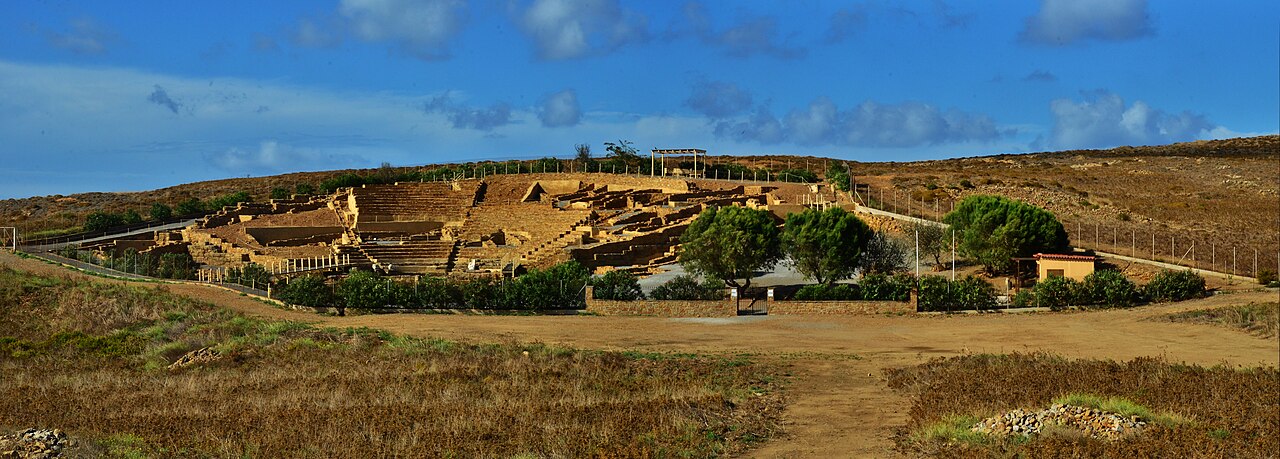
Poliochni is not simply a pile of old stones added to a beach itinerary. On the east coast, the settlement occupied a rise protected by a cove and benefited from access to water, fertile land and maritime routes. The Ministry of Culture describes it as one of the major early urban centres of the Early Bronze Age and records a long sequence of occupation from approximately the middle of the fifth millennium to the end of the second millennium BC.
The site is especially valuable because its organisation remains legible. Retaining walls, public buildings, paved routes, drains, wells and houses show a community dealing with movement, water and shared space. Different archaeological phases are conventionally distinguished by colour, and the settlement’s history includes growth, craft production, trade and eventual abandonment after a destructive earthquake in the late third millennium BC.
It is tempting to reduce Poliochni to a superlative, but “the oldest city in Europe” is too blunt to do justice to the evidence. Visit for the early urban structure and the relationship between settlement and sea. Then make time for the museum in Myrina, where objects and context can turn an atmospheric ruin into a more intelligible historical place.
Hephaistia and Kabeirion
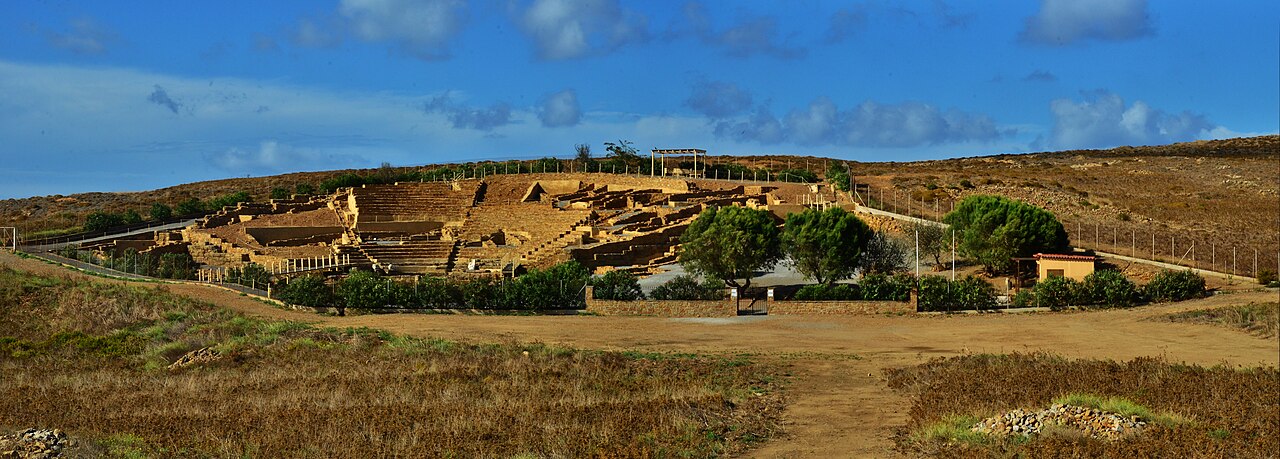
Hephaistia offers a different archaeological experience. Its ancient theatre is the most immediately legible feature for many visitors, but the site belongs to a wider ancient settlement and should be approached with enough time to understand its setting rather than treated as a single photograph.
The Ministry of Culture currently lists the theatre’s opening information as Wednesday to Monday, 08:30–15:30, with Tuesday closed. It lists a €5 full ticket and specifies that the ticket applies to the ancient theatre. These details are time-sensitive and should be checked before the journey, particularly outside the main season.
Nearby Kabeirion was a sanctuary associated with the Kabeiri, deities connected in the official cultural description with fire, metallurgy and fertility. The sanctuary occupied terraces on Cape Chloe, descending towards the sea outside the walls of Hephaistia. The setting is part of its appeal, but the site deserves attention as a religious and archaeological place rather than only as a dramatic coastal viewpoint.
Villages, wine and the Limnian table
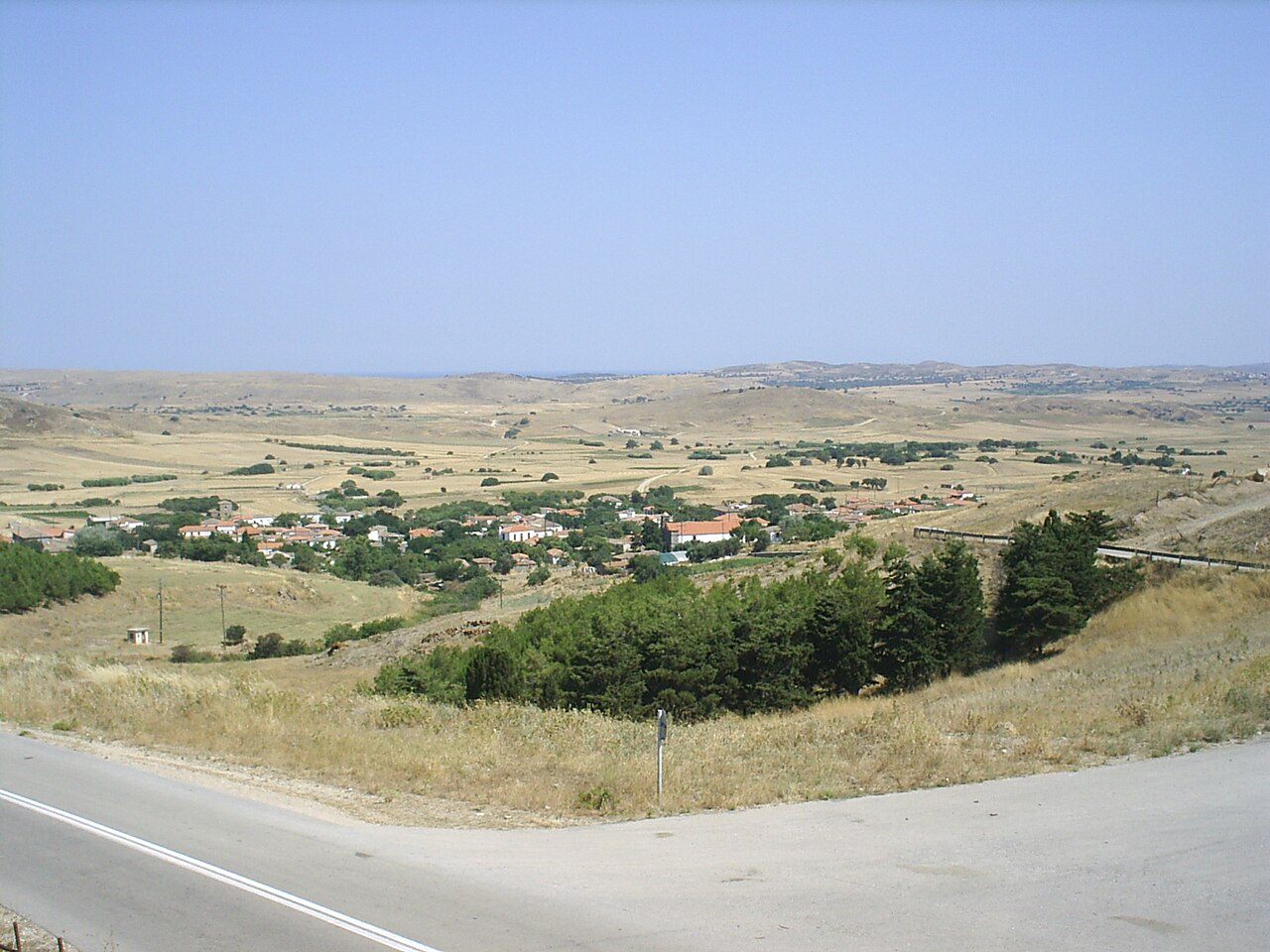
Lemnos’ villages make more sense when you understand the island as agricultural as well as maritime. Grain, vineyards, livestock, fishing and small food production shape the landscape and the meals. Moudros is the most useful eastern settlement for a base or a lunch stop, while Kontopouli and the villages around the central plain can be included in a slower driving day.
Do not try to “collect” every village. Choose one route and stop where the day naturally allows it: for coffee, a bakery, a square or a meal. The point is not to find a supposedly untouched settlement. It is to notice how the island’s buildings, fields and tavernas belong to the same working geography.
Wine is one of the island’s strongest food connections. Visit Greece identifies the dry climate and volcanic soil as important to the cultivation of Muscat of Alexandria, the grape behind the island’s well-known sweet wines. The same official source also discusses Limnio, locally known as Kalambaki. In restaurants and local producers, look for wines alongside kalathaki cheese, melichloro, flomaria pasta, savoury pies, seafood and honey. Ask what is local and available now rather than expecting every menu to carry every speciality.
Evening life is concentrated most clearly in Myrina, but Lemnos is not a nightlife destination in the same way as Mykonos or parts of Ios. Its appeal is the quality of a meal, the walk after it and the gradual change from port activity to a quieter town.
Do you need a car?
For a first-time visitor who wants beaches, archaeology and the north-east in one trip, a car is the most practical option. It lets you link places that do not naturally share a bus timetable and makes it easier to change beaches when the wind turns. It also helps with early archaeological visits and with returning from a village meal without waiting for a seasonal service.
That does not mean every traveller should hire one automatically. If your holiday is based in Myrina, you can spend several days on foot or use taxis and arranged transport for selected excursions. A car becomes less attractive when it sits unused, when the driver dislikes unfamiliar roads or when the itinerary is too short to justify several long days out.
If you hire, choose a vehicle you are comfortable parking and check the rental agreement before using unpaved approaches. Carry water, download directions and avoid planning a remote beach, a long lunch and a late airport transfer on the same day. Lemnos is forgiving when you leave room in the schedule; it becomes tiring when every road is treated as a link between fixed appointments.
A sensible five-day first visit
| Day | Suggested shape | Why it works |
|---|---|---|
| 1 | Arrive in Myrina, settle in, walk the waterfront and see the castle area. | The first day introduces the capital without adding a long drive after travel. |
| 2 | Archaeological Museum, a Myrina or Platy swim and dinner in town. | Culture and an easy beach day remain flexible if opening arrangements change. |
| 3 | Drive east to Poliochni, then continue towards Moudros or a nearby beach. | The longest cultural excursion is paired with a practical route rather than a return-only day. |
| 4 | Hephaistia and Kabeirion if open, followed by Keros or another beach chosen for the wind. | The ancient sites and the north-eastern coast become one deliberate area day. |
| 5 | Gomati dunes and a northern beach, or Alyki and Chortarolimni with a slower village lunch. | The final day can follow the weather and the season instead of forcing a fixed attraction list. |
With seven nights, add a second slow beach day and consider an overnight in the east only if it genuinely improves the route. Otherwise, Myrina remains the simplest centre. The important thing is not to turn every day into an island crossing.
The honest verdict
Lemnos is worth choosing when you want a Greek island with a stronger sense of place than a single beach resort can provide. Myrina gives you an accessible beginning, but the island becomes memorable through the connections between its parts: Bronze Age Poliochni and the museum in Romeikos Gialos; Hephaistia and Kabeirion; the dunes and the wetlands; the vineyards, villages and evening tables.
It is not the easiest island for an improvised weekend, and its ferry connections require more patience than the most heavily served Aegean routes. That is the central trade-off. Lemnos asks you to plan the arrival, choose a base intelligently and accept that a good day may include a drive. In return, it gives you room, variety and a holiday that feels assembled from the island’s actual geography rather than from a resort brochure.
For planning nearby destinations, you can compare Lemnos with our Samos guide and Chios guide. If you are arriving through northern Greece, our Thessaloniki guide can help with the mainland part of the journey. For the island’s official cultural information, check the Archaeological Museum of Lemnos, the Ministry’s pages for Poliochni and Kabeirion, and the current ferry listings.
Research and review note: this guide was checked in July 2026. Flight and ferry schedules, fares, museum and archaeological-site opening hours, road access, beach facilities and seasonal services can change. Confirm the relevant details directly before travelling.