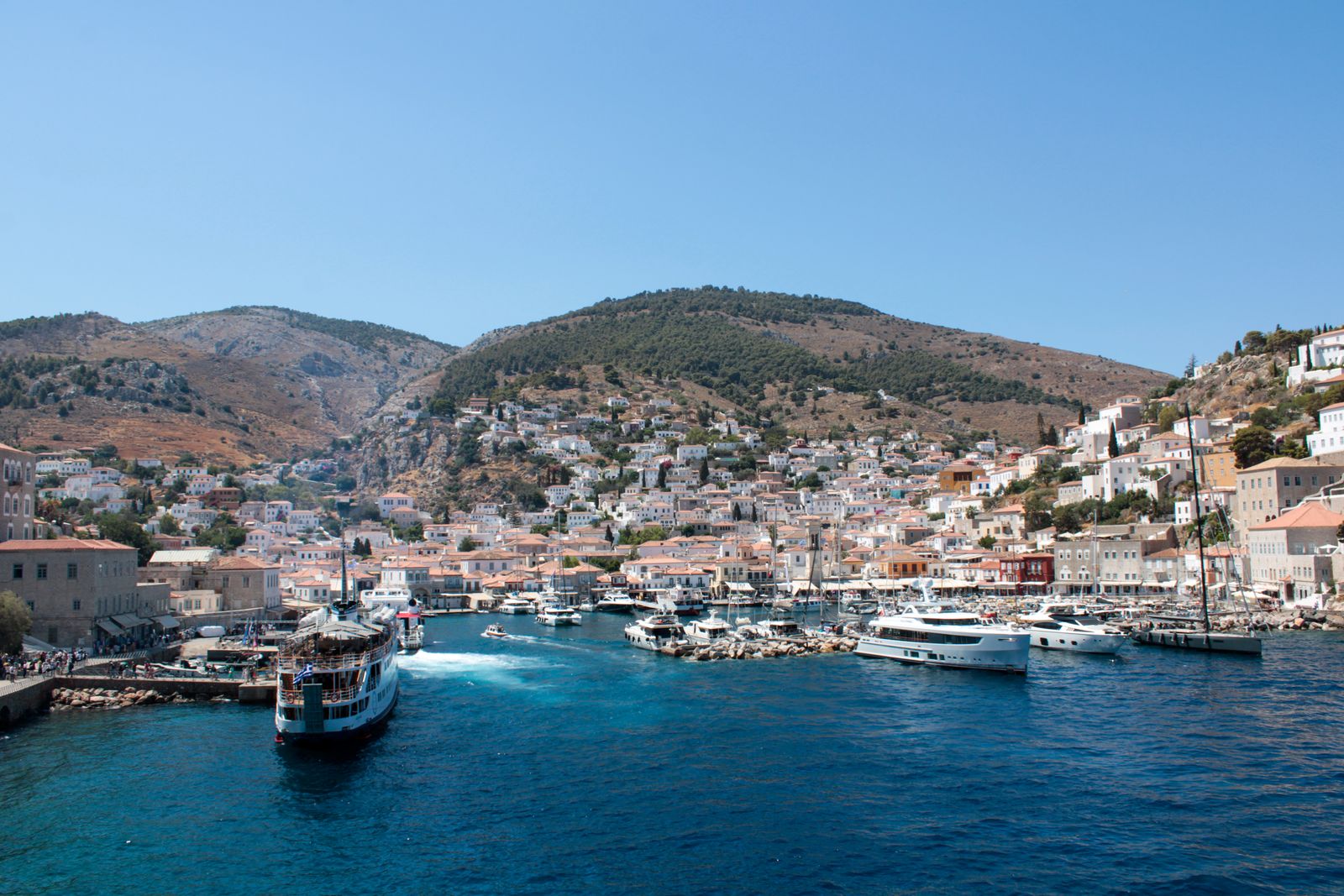
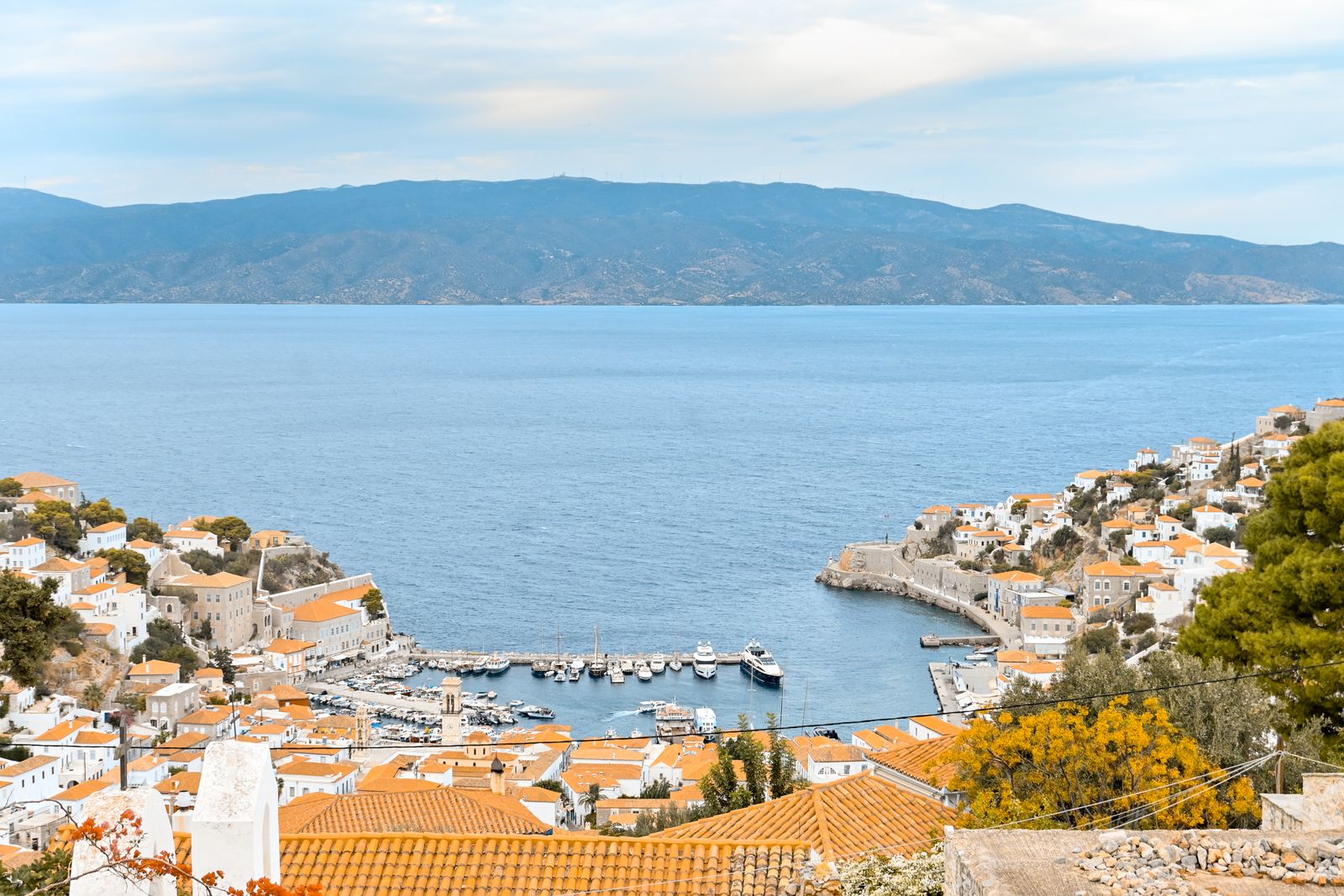
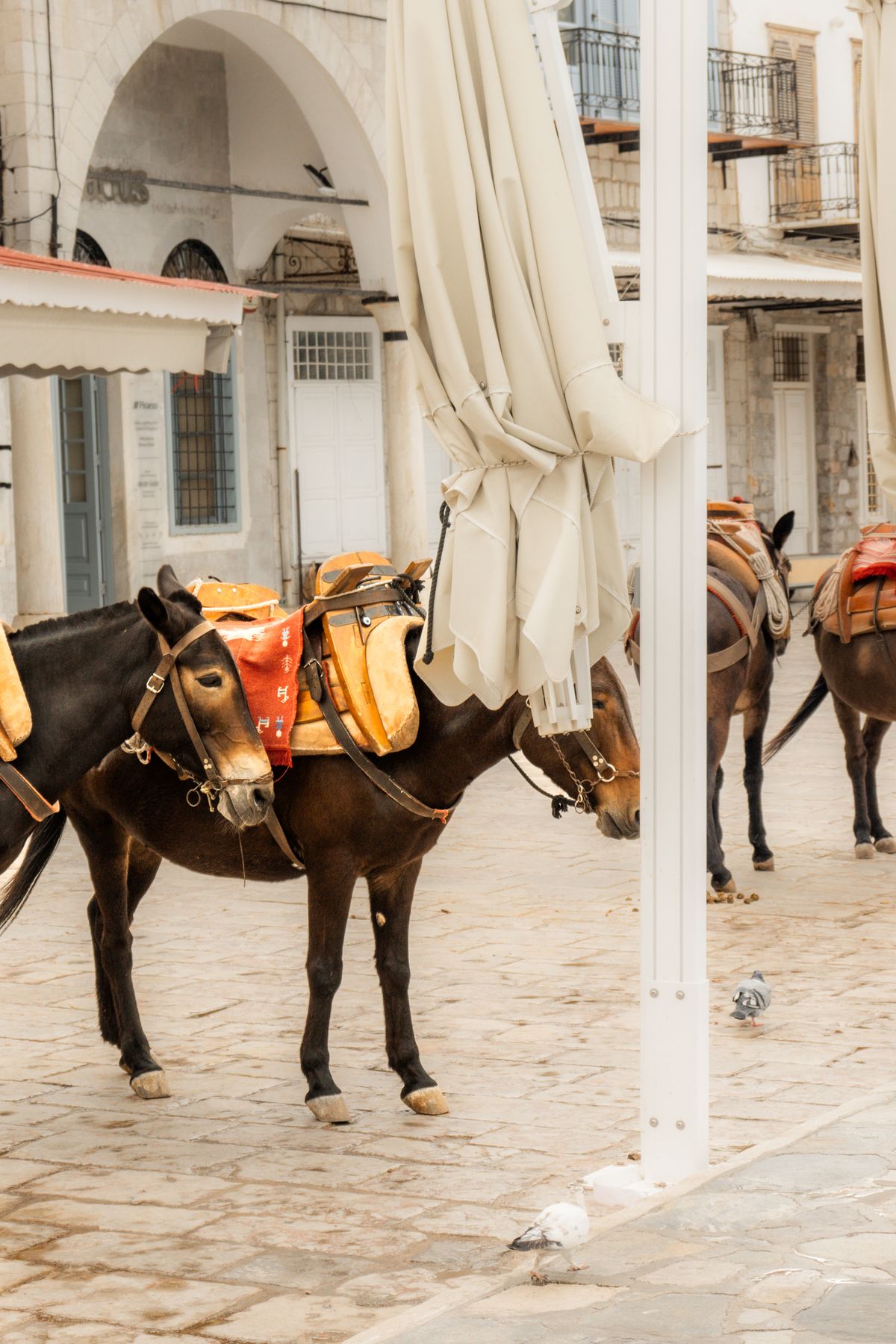
Hydra refuses the one thing almost every other Greek island takes for granted: the engine. There are no cars here, no motorbikes, no scooters, and — if you were wondering — no bicycles either. A 1950s presidential decree saw to that, and the island has held the line ever since. What you get instead is a harbour town built of grey stone and rust-coloured tile, rising steeply from a horseshoe-shaped port where the loudest sound on most mornings is a donkey’s hooves on marble steps.
Sitting in the Saronic Gulf roughly ninety minutes by ferry from Piraeus, Hydra is close enough to Athens for a day trip but distinctive enough to deserve at least two nights. It drew Leonard Cohen in the 1960s, Chagall and a generation of painters before him, and today attracts a contemporary art crowd that fills the old slaughterhouse-turned-gallery each summer. Beneath that creative surface is a naval history that once shaped Greece’s independence — and a network of walking trails, pebbly coves, and hilltop monasteries that reward anyone willing to move at the island’s own unhurried pace.
This guide covers everything you need to plan a trip to Hydra, from ferry connections and beaches to hiking trails, the art scene, and the honest limitations you should know about before booking.
| Location | Saronic Gulf, approximately 65 km south of Athens |
| Ferry from Piraeus | 1 h 5 min – 2 h 20 min depending on stops and operator |
| Vehicles | No cars, motorbikes, or bicycles — donkeys and water taxis only |
| Population | Approximately 3,000 permanent residents |
| Highest point | Mount Eros, 588 m |
| Best for | Couples, walkers, art lovers, slow travellers, weekend escapes from Athens |
| Less suitable for | Beach-focused families wanting long sandy shores, travellers with significant mobility difficulties |
Why Hydra Stands Out
Most Greek islands that call themselves traditional still have a road network, a parade of rental scooters, and the occasional badly parked SUV blocking a harbour lane. Hydra eliminated all of that decades ago. The result is not a gimmick — it is a genuinely different experience of island life. You hear water lapping against hulls, conversations drifting out of open windows, the clatter of a mule train hauling building materials up a stepped alley. The absence of engines changes how you move through the place, how long things take, and what you notice along the way.
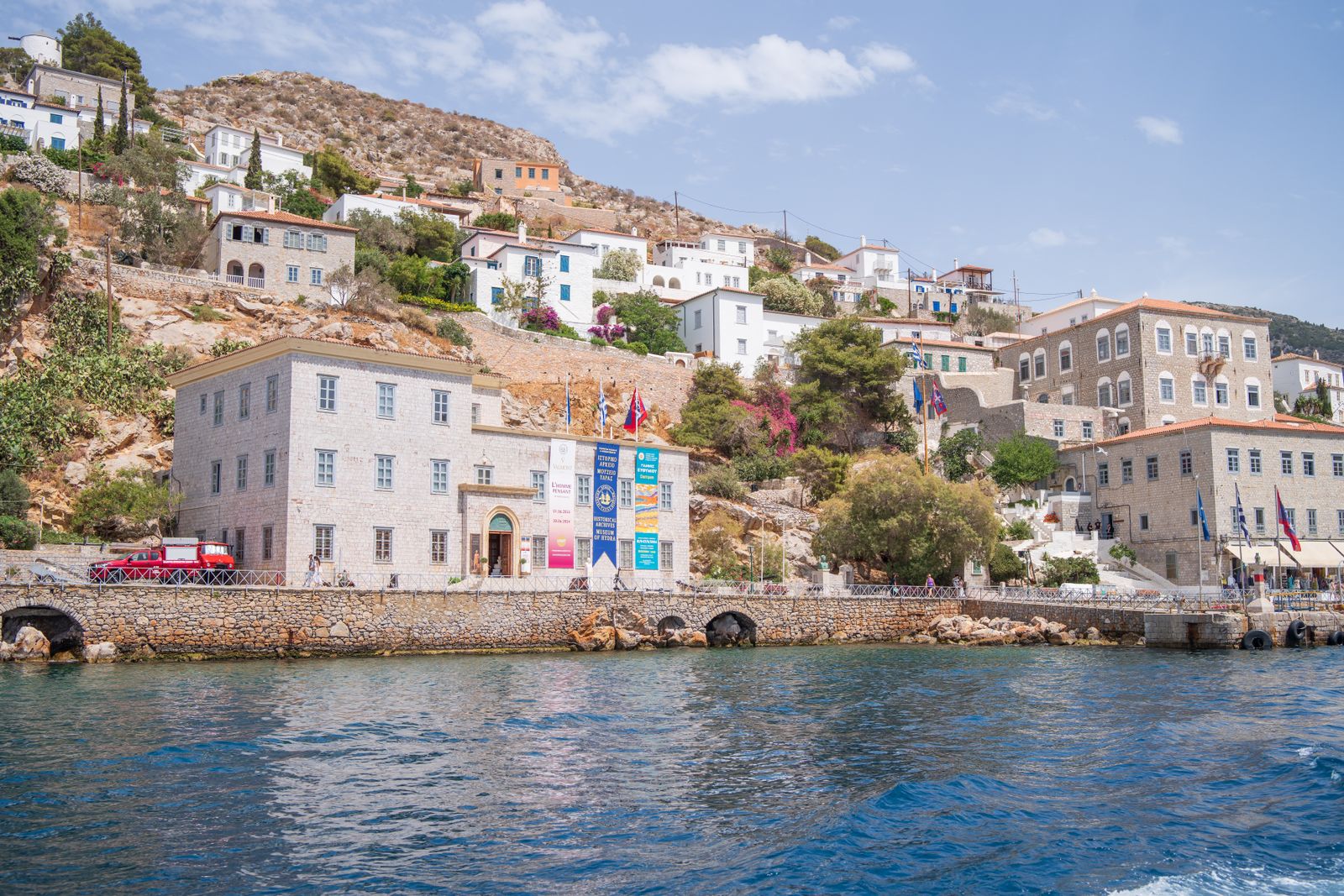
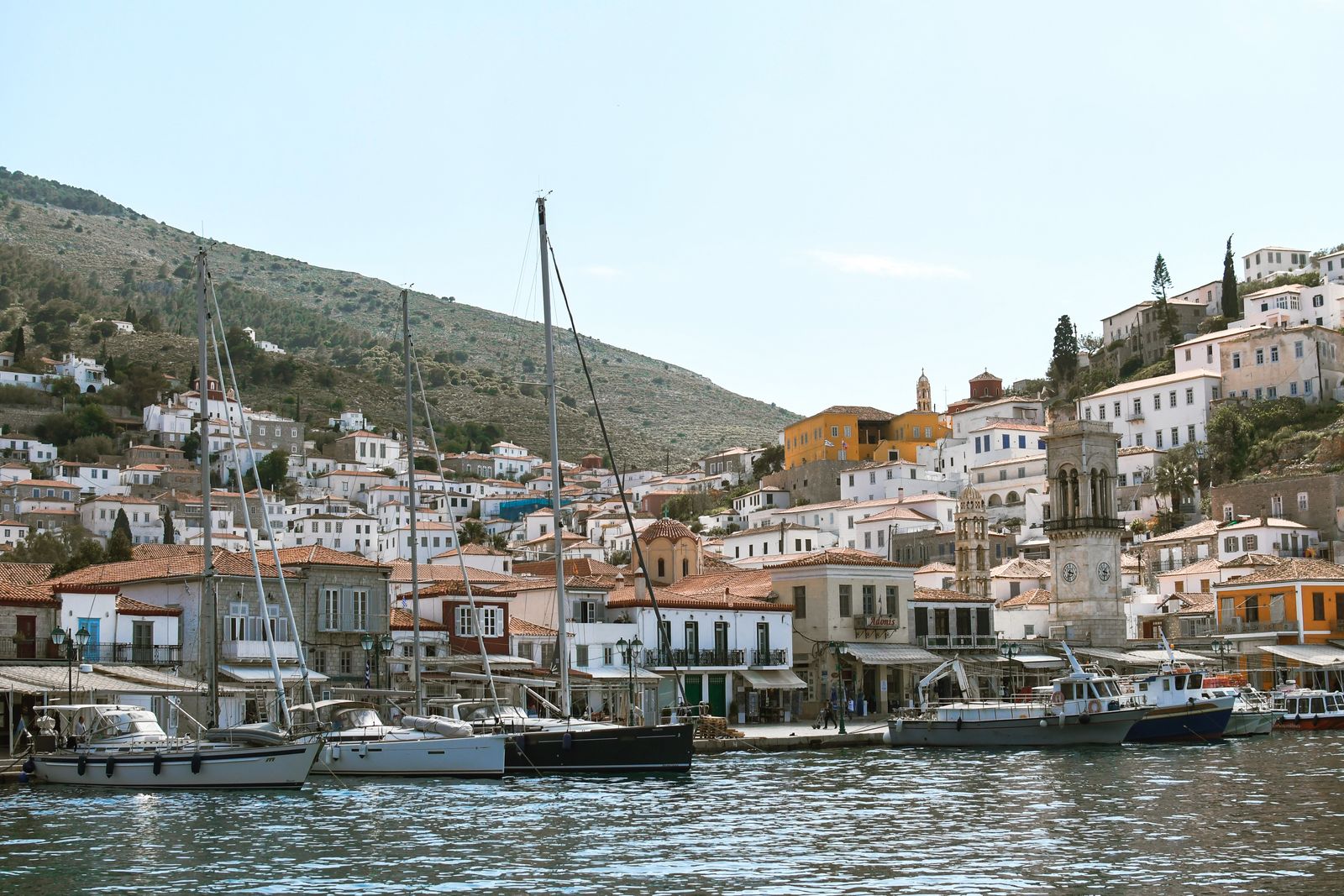
The architecture reinforces this sense of preservation. Hydra Town is built almost entirely of local grey stone, and construction on the island is tightly controlled to maintain its historic character. The mansions lining the harbour were built by wealthy sea captains in the eighteenth and nineteenth centuries, and several have been converted into small museums. Above them, the town rises steeply up two hillsides in an amphitheatre formation, with narrow alleys, iron balconies, and wooden shutters painted in deep blues and greens. The whole island was declared a protected architectural monument, which is why it looks and feels the way it does.
Who Should Visit — and Who Might Prefer Elsewhere
Hydra works particularly well for couples seeking a quiet island that does not require a car or a complex itinerary. It is also one of the better Greek islands for walkers and hikers, with well-marked trails leading to remote beaches and monasteries. The contemporary art scene — anchored by the DESTE Foundation and a rotating schedule of summer exhibitions — makes it a strong choice for travellers who want culture alongside their swimming.
Weekend visitors from Athens will find it easy and rewarding: ferry connections run daily throughout the year, and two or three nights are enough to see the main town, swim at a few beaches, and hike to at least one monastery.
That said, Hydra has real limitations that are worth acknowledging before you book. The beaches are mostly pebbly rather than sandy, and the best ones require a walk or a water-taxi ride. Families with toddlers may find the steep stone steps and the lack of shallow sandy shores less convenient than on flatter Cycladic islands. Travellers with mobility difficulties will face challenges: the town is built on steep gradients, there is no motorised transport, and most accommodation involves climbing steps. If your priority is a long, sandy beach and a resort with a swimming pool, you will probably be happier on Naxos or Paros.
Best Time to Visit
The most comfortable months for visiting Hydra are May, June, September, and October. In May and early June, the weather is warm enough for swimming, the walking trails are at their best, and the harbour is not yet overcrowded. September and early October bring the warmest sea temperatures of the year, fewer day-trippers, and softer light that makes the stone architecture particularly photogenic.
July and August are hot — temperatures regularly reach 35°C — and the harbour fills with yachts and day-trip boats from Athens. Accommodation prices roughly double compared to shoulder season, and water taxis become busier. The island is not unbearable in high summer, but the walking and hiking that make it special become much less pleasant in the midday heat.
Hydra is also a well-known destination for Greek Orthodox Easter. The island’s Good Friday procession, in which an effigy of Christ is carried through the harbour and briefly into the sea, draws large crowds. If Easter interests you, book accommodation several months in advance.
Winter visits are possible — ferries continue to run year-round — but most restaurants, galleries, and accommodation close between November and March. The island in winter is peaceful and atmospheric, but it is very quiet, and you should not expect the full Hydra experience.
How to Get to Hydra
Hydra has no airport. The only way to arrive is by sea, and for most travellers that means a ferry from Piraeus.
Three operators currently serve the route: Blue Star Ferries, Magic Sea Ferries, and Alpha Lines. Combined, they offer approximately eleven daily sailings in summer, with the first departure typically around 08:30 and the last around 19:30. The fastest crossings take just over an hour; those that stop at Poros or other Saronic islands may take closer to two hours. One-way foot-passenger tickets start from around €28, though prices vary by operator and season. Ferries depart from Gate E8 at Piraeus port.
You can also reach Hydra from the eastern Peloponnese. Ferries connect to Porto Cheli (approximately 50 minutes, from €21) and Ermioni, as well as to the neighbouring Saronic islands of Spetses (30 minutes, from €9) and Poros. These connections are useful if you are combining Hydra with the Argolid coast or Nafplio.
A practical detail worth noting: because no vehicles are allowed on Hydra, there is no car ferry service. If you have rented a car to drive around the Peloponnese, you will need to park it in a mainland port town before crossing. Ferry schedules vary by season — summer timetables are normally confirmed by March — so check the operators’ websites before finalising your plans.
Getting to Hydra — Key Facts
- Ferry from Piraeus: approximately 1 h 5 min to 2 h 20 min
- Operators: Blue Star Ferries, Magic Sea Ferries, Alpha Lines
- Approximately 11 daily sailings in summer (reduced in winter)
- One-way foot-passenger tickets from approximately €28
- No vehicle transport — foot passengers only
- Also reachable from Spetses (30 min), Porto Cheli (50 min), Poros, and Ermioni
How Long to Stay
A day trip from Athens is possible and gives you enough time to walk the harbour, explore some backstreets, swim at a nearby cove, and eat lunch before catching an afternoon ferry back. Many visitors do exactly this, and it is a perfectly satisfying way to see Hydra.
That said, the island reveals more of itself when the day-trippers leave. An overnight stay lets you experience Hydra in the evening, when the harbour empties and the town becomes genuinely peaceful. Two nights is the ideal minimum for a proper visit: one day for the town, museums, and a nearby beach; a second day for a longer hike or a boat trip to a remote cove. Three nights suit travellers who want to slow down completely and fit in both the Prophet Elias hike and a beach-boat excursion to Bisti or Agios Nikolaos.
Hydra Town: Walking the Harbour and Beyond
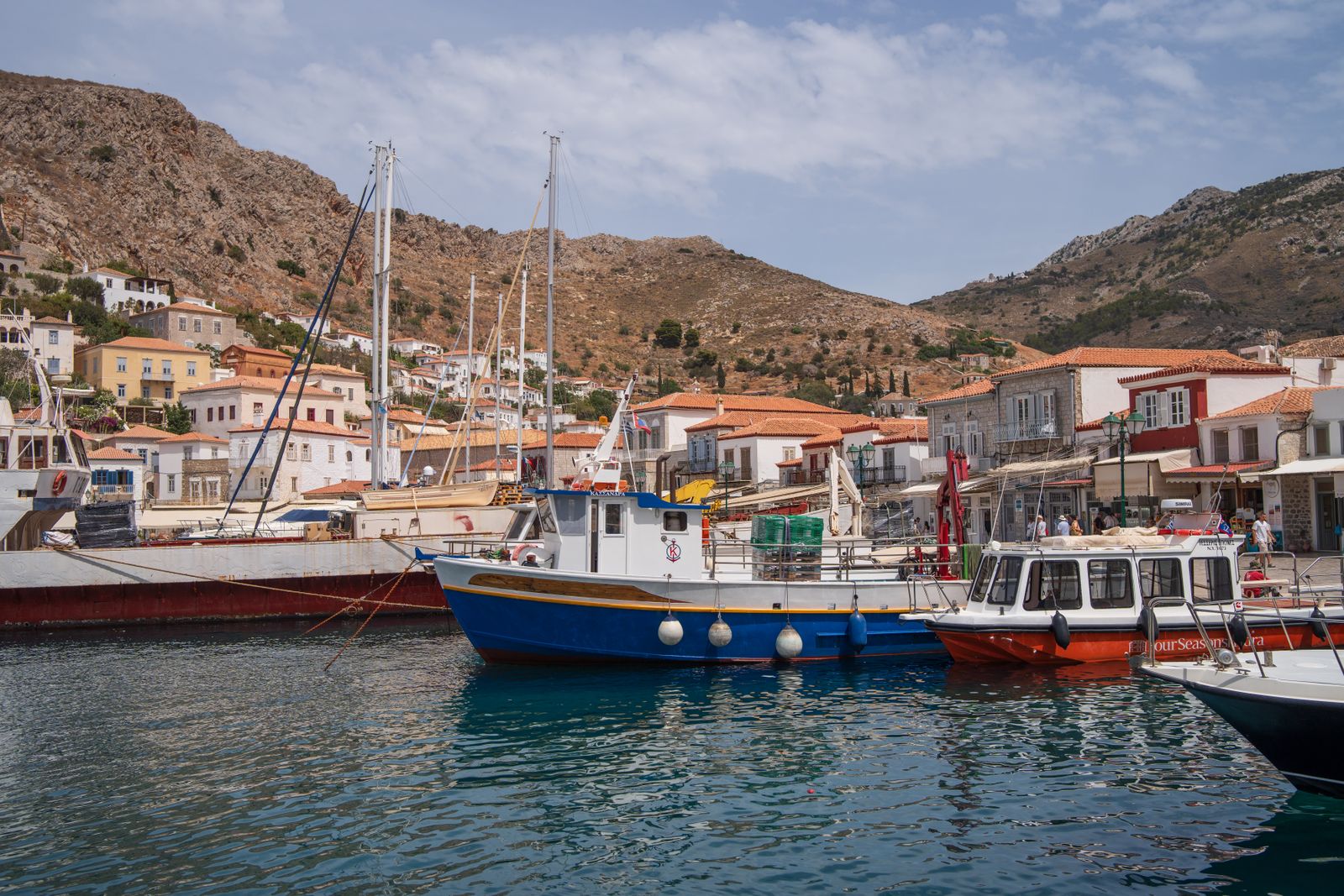
Almost everything on Hydra happens in or around the single town, which shares the island’s name. The horseshoe-shaped harbour is the centre of gravity: ferries dock here, water taxis depart from here, and the waterfront is lined with cafés, fish tavernas, and the occasional jewellery shop. Two stone bastions flanking the harbour entrance still hold their old cannons — a remnant of the island’s naval past.
Just behind the waterfront stands the Church of the Assumption of the Virgin, recognisable by its tall marble bell tower and clock. Built in the mid-seventeenth century, it originally served as part of a monastery and now houses a small ecclesiastical museum with Orthodox icons and manuscripts. The church sits at the heart of the town’s layout, and from here stepped alleys climb sharply in every direction.
Walking these alleys is one of the main pleasures of Hydra. The town has no street names that anyone actually uses, and the lanes are narrow enough that you can touch both walls simultaneously in places. Iron balconies overhang the path, cats sleep in doorways, and bougainvillea spills over stone walls. You will get lost, and that is part of the point. A walk uphill through the Kiafa neighbourhood brings you to the Church of Agios Konstantinos, the highest point within the town, with views across the harbour and the Peloponnese coastline beyond.
Along the way, you will pass former sea-captains’ mansions — large stone houses with elegant interiors that reflect the wealth Hydra accumulated through maritime trade. The deep-yellow Lazaros Koundouriotis Mansion, perched above the western side of the harbour, is the most prominent and has been converted into a branch of the National History Museum. It opens from April to October, Tuesday to Sunday, with a standard ticket at €10. Inside, you will find period furniture, family portraits, and ship-related artefacts that illustrate how tightly Hydra’s fortunes were tied to the sea.
History, Art, and Hydra’s Cultural Side
Hydra’s importance to Greece runs deeper than its current reputation as a fashionable escape might suggest. During the Greek War of Independence (1821–1829), the island’s merchant fleet — financed largely by its wealthy shipowners — became one of the core fighting forces of the Greek revolution. Admiral Andreas Miaoulis, born on Hydra, commanded Greek naval operations and won decisive engagements against Ottoman and Egyptian fleets. His bronze statue stands at the harbour entrance, looking glass in one hand and ship’s wheel in the other. The Historical Archives Museum, housed in an elegant stone mansion on the waterfront, preserves documents, paintings, and naval artefacts from this period. It is open daily (09:00–16:00, with extended summer evening hours), with entry at €5.
The island’s modern cultural identity took shape in the 1950s and 1960s, when an international community of artists and writers settled here. Canadian poet and songwriter Leonard Cohen arrived in 1960, bought a house with money from his grandmother, and lived on the island full-time for seven years. Several of his best-known songs — including “Bird on the Wire” and “So Long, Marianne” — were written on Hydra. The house, still owned by his family, is not open to visitors, but the street in front of it now bears his name, and a memorial bench overlooking the sea was inaugurated in 2017.
Contemporary art has found a permanent foothold on Hydra through the DESTE Foundation, run by collector Dakis Joannou. Its exhibition space occupies a converted nineteenth-century slaughterhouse and hosts a major show each summer, with past exhibitors including Kara Walker and David Shrigley. The Hydra School Projects, curated by Dimitrios Antonitsis for over twenty-five years, scatters installations across unexpected venues throughout the town each June. Between these events and the smaller galleries and exhibitions that fill the harbour area, Hydra offers more serious art per square metre than most islands ten times its size.
Beaches on Hydra
If you are expecting long stretches of golden sand, Hydra will disappoint you. The island’s coastline is mostly rocky, and its beaches tend to be small, pebbly, and reached either on foot or by boat. That said, the water is exceptionally clear, and the effort required to reach some of the more remote spots means you often find them uncrowded. Water shoes are useful on most beaches here.
Close to town, the swimming options are Spilia and Hydronetta — both are essentially rock platforms with ladders into the sea rather than conventional beaches. They are fine for a quick swim and catch good afternoon sun, but they are not places to spend a lazy day with a towel.
The first proper beach heading west from the harbour is Kamini, a small pebble beach about ten minutes’ walk away, beside the fishing hamlet of the same name. The water shelves gently, making it one of the more family-friendly options on the island. There are sunbeds, tavernas, and enough shade from nearby trees.
Vlychos, about thirty minutes’ walk further along the coast, is where many visitors spend their beach day. A mix of sand and pebbles, with sunbeds available and a couple of tavernas overlooking the water, it has a settled and relaxed atmosphere without feeling like a resort. You can also reach Vlychos by water taxi (approximately €25) or beach boat.
East of the harbour, Mandraki is Hydra’s only properly sandy beach with full amenities — sunbeds, umbrellas, a restaurant, showers, and water sports including paddle-boarding and snorkelling. It belongs to the Mandraki Beach Resort and is approximately a twenty-minute walk from town. A shuttle boat runs from the harbour (€10 return).
For a more adventurous beach day, the beach boats from the harbour serve Bisti and Agios Nikolaos, both on the western side of the island. Bisti is a pine-backed pebbly cove with good snorkelling and some natural shade — the boat ride takes around twenty minutes, and return tickets cost approximately €17–20. Agios Nikolaos, about thirty minutes by boat, is a longer arc of white pebbles in a sheltered bay, often calm even when northerly winds affect other parts of the coast. Both beaches have basic refreshments and sunbed hire.
Important note: Avlaki beach, previously popular for its proximity to town, has been closed due to a landfall and is not currently accessible. Check locally for updates before planning to visit.
| Beach | Type | Access | Best For | Facilities |
|---|---|---|---|---|
| Kamini | Pebble | 10 min walk | Families, quick swim | Sunbeds, tavernas |
| Vlychos | Sand & pebble | 30 min walk or water taxi | Relaxed beach day | Sunbeds, tavernas, Wi-Fi |
| Mandraki | Sand | 20 min walk or shuttle boat | Full beach day, water sports | Full amenities, restaurant, showers |
| Bisti | Pebble | Beach boat (20 min) | Snorkelling, shade, quieter day | Snack bar, sunbeds |
| Agios Nikolaos | White pebble | Beach boat (30 min) | Calm water, scenic cove | Snack bar, sunbeds |
| Plakes | Sand & pebble | 50 min walk or water taxi | Quiet, scenic walk to reach it | Sunbeds, restaurant, Wi-Fi |
Hiking and Walking Trails
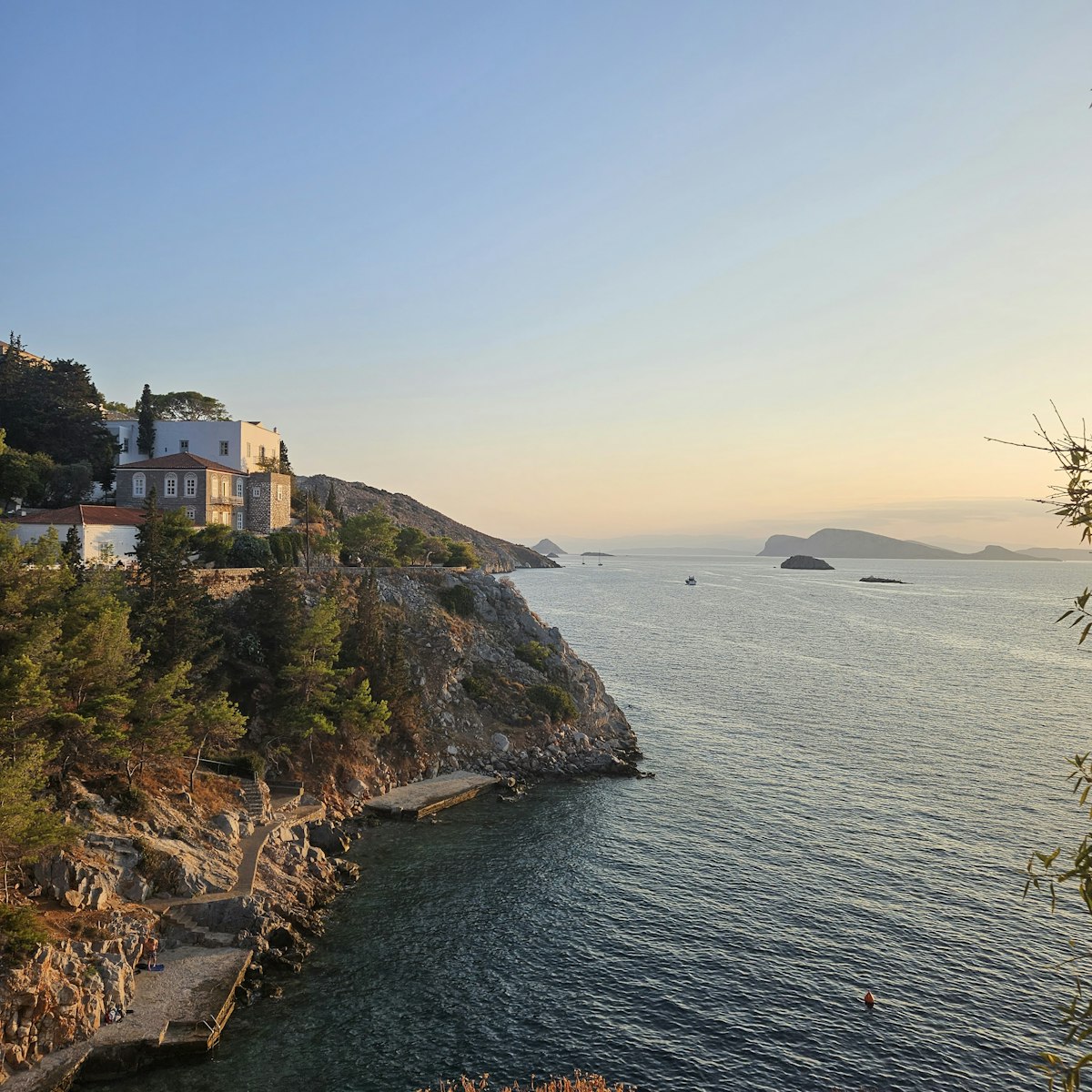
Because there are no roads to speak of, Hydra has become one of the best walking islands in the Saronic Gulf. Several waymarked trails cross the island’s interior, ranging from gentle coastal walks to strenuous mountain hikes. The absence of motor vehicles means you share the paths only with other walkers, the occasional donkey, and the island’s small population of wild goats.
The most rewarding hike is the trail to the Monastery of Prophet Elias and onward to the summit of Mount Eros (588 m). The route begins from the upper end of Hydra Town, climbing through pine forest on a cobbled path. The monastery, dating from 1813 and still inhabited by monks, sits roughly one hour uphill. Donations are welcome, and you can refill your water bottle from the spring. From the monastery, a steeper and rougher path continues to the summit — budget another forty-five minutes to an hour for this section, which involves some scrambling. The reward is a panoramic view across the entire island and the surrounding Saronic Gulf. The complete loop takes approximately four hours, and the trail is best attempted in the cooler months or early morning, as there is limited shade above the treeline.
A gentler option is the coastal path from Hydra Town west to Kamini and Vlychos, which takes about thirty to forty minutes and passes through the fishing hamlet of Kamini. You can combine this with a swim at Vlychos and return by water taxi. For something longer, the trail continues past Vlychos through Plakes and eventually inland to the village of Episkopi, the island’s oldest settlement, before descending to Bisti on the western coast — a total of roughly 12.5 km and nearly five hours without stops.
The eastern trail to the Monastery of Zourvas and the stone lighthouse at the island’s eastern tip covers a similar distance and takes around four and a half hours. Along the way you pass several smaller monasteries — Agios Nikolaos, Agia Triada, and Agia Matrona — and some sections of oak and cedar forest that feel surprisingly remote for an island this close to Athens.
A practical note: guided hikes are available and recommended for less experienced walkers, though most operators pause during July and August because of the heat. Bring plenty of water regardless of the season, and wear sturdy shoes — the terrain beyond the lower cobbled paths is often rocky and uneven.
Where to Stay on Hydra
Accommodation on Hydra is concentrated almost entirely in and around the main town. There are no large resorts, and new construction is heavily restricted, which means the supply of rooms is limited. In July and August, booking five to six months ahead is advisable — especially for properties with harbour views or air conditioning.
Most visitors stay in Hydra Town, within walking distance of the harbour. This is the most convenient base, with immediate access to restaurants, the ferry, and the main walking trails. Expect to pay from around €120 per night in shoulder season to €250 or more in peak summer. Bear in mind that many properties are built on the steep hillside, so your room may involve climbing a significant number of steps from the harbour — check this before booking if it matters to you.
For a quieter stay, the small coastal settlement of Kamini, about ten minutes’ walk west, offers a handful of guesthouses and rental apartments with a more residential atmosphere. Prices are slightly lower than in the main town, and you are within easy walking distance of both the harbour and Kamini beach.
Vlychos, further west, suits travellers who want to be near a beach and do not mind being a thirty-minute walk or short water-taxi ride from the harbour. It has a peaceful village atmosphere and a few small guesthouses with sea views. This is probably the best area for couples prioritising quiet over convenience.
Mandraki, to the east, is where you will find the island’s only resort-style accommodation. It is the most expensive option but offers direct beach access, organised water sports, and facilities that are hard to find elsewhere on the island.
Getting Around Without Wheels
The short answer is: you walk. Within Hydra Town, everything is reached on foot, and even the steepest alleys are manageable if you are reasonably fit. For beaches and settlements beyond the town, you have three options.
Water taxis are small boats that operate on demand from the harbour. They carry up to eight passengers and charge fixed prices: approximately €19 to Kamini, €25 to Vlychos or Mandraki, and €35 to Plakes. For more remote beaches like Bisti and Agios Nikolaos, expect to pay €100–140 for the boat (not per person). Water taxis are the fastest way to move around the coast, but they are not cheap for solo travellers.
Beach boats run on a fixed schedule from the harbour to popular beaches. Boats to Bisti and Agios Nikolaos typically depart at 11:00, 12:00, 13:00, and 14:00, returning at 16:00 and 18:00. Return tickets cost €17–20, making them a much more affordable option than water taxis. Some resort-associated shuttle boats also run to Plakes and Mandraki (approximately €10 return).
Donkeys are still used on Hydra — primarily for transporting luggage from the port to hillside accommodation and for carrying building materials through the town’s narrow lanes. You can arrange donkey transport for your bags when you arrive (your accommodation can usually organise this), which is genuinely useful if you are staying up in the town. Horse rides through the countryside are also available through local operators, though animal-welfare standards vary.
Water Taxi Quick Reference
- Kamini: approximately €19
- Vlychos or Mandraki: approximately €25
- Plakes: approximately €35
- Bisti or Agios Nikolaos: approximately €100–140 (whole boat)
- Beach boats to Bisti/Agios Nikolaos: €17–20 return (fixed schedule)
What to Eat on Hydra
The harbour waterfront has the highest concentration of restaurants, and while some serve adequate tourist menus at elevated prices, others offer genuinely good seafood and traditional Greek cooking. As a general rule, the tavernas one street back from the waterfront or in the hamlet of Kamini tend to offer better value. The island sources much of its fish from local fishermen, and grilled octopus, fresh calamari, and fish of the day are reliable choices across most establishments.
Hydra does not have a strongly distinctive local cuisine the way Crete or some Cycladic islands do, but you will find good versions of classic Greek dishes — fava, baked peppers stuffed with feta, vine leaves, and grilled lamb. Amygdalota, the almond-paste sweets found across the Saronic Islands, are a traditional local sweet worth trying. For morning coffee, several places along the harbour serve strong Greek coffee alongside fresh fruit and yoghurt — a more relaxed way to start the day than diving straight into sightseeing.
Practical Tips and Common Mistakes
Pack light. Your luggage will need to be carried by hand or loaded onto a donkey from the ferry to your accommodation. Rolling suitcases do not work well on stepped cobblestone alleys. A backpack or soft bag makes the arrival significantly easier.
Bring cash. While most restaurants and shops in the harbour area accept cards, some smaller establishments, water-taxi operators, and beach vendors may not. There are ATMs in Hydra Town, but they can run out of cash during busy weekends.
Wear proper shoes. Hydra’s streets are made of marble and polished stone, which become slippery when wet. Flip-flops are fine for the beach, but walking the town and hiking trails requires closed-toe shoes with decent grip. Water shoes are strongly recommended for the pebbly beaches.
Do not underestimate the hills. Hydra Town is built vertically. A property described as “five minutes from the harbour” may involve climbing eighty steps. If you have knee problems or heavy luggage, confirm exactly how many steps are involved before you book.
Check beach-boat schedules on arrival. The beach boats to Bisti and Agios Nikolaos run on a fixed timetable with limited return departures. Missing the last boat back means either a very expensive water taxi or a very long hike.
Day-trip timing. If you are visiting on a day trip from Piraeus, aim for one of the earlier morning ferries (around 08:30–09:30) to maximise your time. The last ferries back to Piraeus typically depart around 19:00–20:00, giving you a full day on the island. Check return times before you arrive.
Suggested Itinerary: Two to Three Days on Hydra
Day 1 — Arrival and the Town
Arrive on a morning ferry. Drop your bags at your accommodation (arrange donkey transport if needed) and walk the harbour. Visit the Historical Archives Museum and the Church of the Assumption. Climb the alleys to the Kiafa neighbourhood and the Church of Agios Konstantinos for views across the harbour. In the afternoon, swim at Spilia or walk to Kamini beach. Eat dinner at a taverna one street back from the waterfront.
Day 2 — Hike or Beach Day
Option A: Hiking. Start early (before 09:00 in summer) and hike to the Monastery of Prophet Elias. If you are fit and the conditions allow, continue to the summit of Mount Eros. Return to town by early afternoon and cool off with a swim at Vlychos. Visit the Lazaros Koundouriotis Mansion in the late afternoon.
Option B: Beach day. Take the beach boat to Bisti or Agios Nikolaos. Spend the day swimming, snorkelling, and reading. Return on the afternoon boat. Walk the harbour in the evening and check the summer exhibition schedule — the DESTE Foundation and Hydra School Projects run from June to October.
Day 3 — Eastern Coast and Departure
Walk east to Mandraki for a morning on the sandy beach. Alternatively, explore the Zourvas trail if you have the energy and time. Return to town for lunch. If you have a specific interest in art, visit the Panagiotis Tetsis House and any current gallery exhibitions. Catch an afternoon ferry back to Piraeus, or continue to Aegina or Spetses if you are island-hopping.
Combining Hydra with Other Destinations
Hydra’s position in the Saronic Gulf makes it easy to combine with several nearby destinations. Aegina, the Saronic island closest to Athens, is known for its pistachio groves and the well-preserved Temple of Aphaia — a worthwhile stop on the way to or from Hydra. Spetses, thirty minutes south by ferry, offers a similar car-free atmosphere with slightly more beach infrastructure.
From the Peloponnese side, the elegant coastal town of Nafplio is within easy reach via Porto Cheli or Ermioni. Combining three nights in Nafplio with two on Hydra makes a strong week-long itinerary that stays close to Athens without venturing to the more heavily touristed Cycladic islands. If you are drawn to the idea of car-free Greek travel more broadly, Monemvasia — a medieval fortress town on the south-eastern Peloponnese coast — shares some of Hydra’s walled, stone-built atmosphere, though for entirely different historical reasons.
Final Verdict
Hydra is not the right island for everyone. If you want sandy beaches, all-inclusive resorts, or nightlife that extends much past midnight, you will be looking in the wrong place. What Hydra offers instead is something increasingly rare in Greece: an island that feels genuinely different from the mainland, not because it has been dressed up for tourists, but because it has deliberately chosen not to change. The absence of cars is not a novelty — it is the foundation of everything else that makes the island work, from the preserved architecture to the quiet walking trails to the quality of the air.
For couples, walkers, art lovers, and anyone who has spent enough time on noisier islands to appreciate what Hydra has given up, it is one of the most rewarding short trips in Greece. Two nights is enough. You will leave wanting a third.
This article was researched and verified as of July 2026. Ferry schedules, museum hours, and prices may change seasonally — we recommend confirming details with official operators and venues before travelling. If you notice any outdated information, please let us know so we can update this guide.