The first question every Santorini visitor faces is not what to see, but where to sleep. The island is small, roughly 76 square kilometres, yet the experience of waking up on the caldera rim in Imerovigli feels nothing like a beachfront morning in Kamari. Your base shapes everything: the views, the budget, the walking, the food, and how easily you move between villages. This guide compares every major area honestly, with clear recommendations for different travellers and budgets.
Santorini divides naturally into two distinct worlds. The western caldera edge, where the famous cliff villages line the volcanic rim, offers the iconic views but at steep prices and steeper stairs. The eastern coast, flatter and less dramatic, delivers better-value accommodation, proper sandy beaches, and a more conventional island holiday. Choosing between these two sides is the most important decision you will make.
Caldera or Coast?
The western caldera rim delivers the famous views at premium prices. The eastern beaches offer better value, flatter terrain, and a more relaxed pace. This guide helps you decide.
Santorini Areas at a Glance
| Area | Best For | Caldera View | Budget Range | Car Needed? |
|---|---|---|---|---|
| Fira | First-timers, nightlife, convenience | Yes | Mid to high | No |
| Firostefani | Couples, caldera views with Fira access | Yes | Mid to high | No |
| Imerovigli | Romance, quiet luxury, views | Yes (highest point) | High to luxury | Not essential |
| Oia | The postcard experience, luxury | Yes | High to very high | Not essential |
| Kamari | Families, beach days, value | No | Budget to mid | No |
| Perissa & Perivolos | Budget travellers, beach lovers | No | Budget to mid | No |
| Pyrgos | Wine lovers, quiet, authenticity | Partial panoramic | Mid to high | Yes |
| Megalochori | Wine country, traditional villages | No (partial from edges) | Mid to high | Yes |
| Akrotiri | Quiet stays, south coast access | Some properties | Budget to mid | Yes |
Fira: The Island’s Working Heart
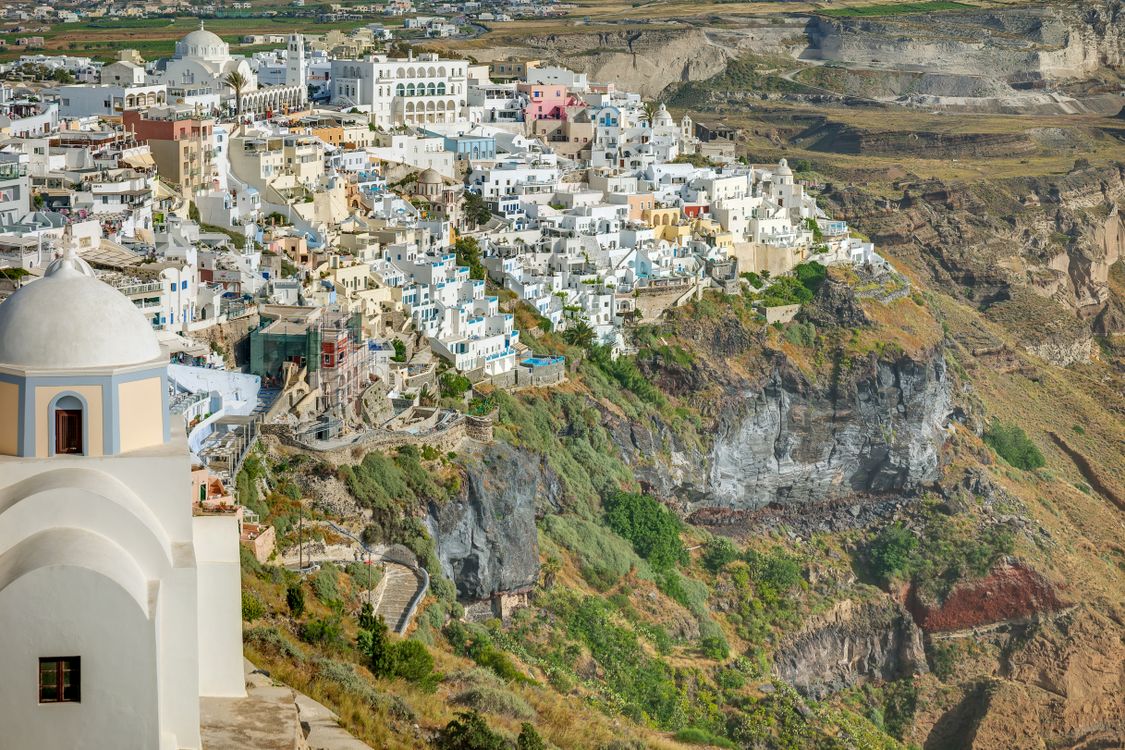
Fira is Santorini’s capital and transport hub, and it earns its reputation as the best all-round base for first-time visitors. Every bus route on the island starts and ends here, which means you can reach Oia, Kamari, Perissa, the airport, and the ferry port without changing buses or hiring taxis. For travellers without a car, this matters enormously.
The town has two distinct personalities. The caldera side, where hotels and restaurants line the cliff edge, is genuinely spectacular, with views across the volcanic basin towards Nea Kameni and Thirasia. Two minutes inland from the rim, the main commercial streets are considerably busier, particularly when cruise ships anchor in the caldera. On heavy cruise days, the narrow lanes between the cable car station and the main shopping area can feel congested, though the 2025-2026 cruise passenger cap has noticeably improved conditions compared to previous years.
Accommodation in Fira spans a wider range than any other area. Caldera-view cave hotels typically run from around 150 to 500 euros per night in high season, while properties on the eastern side of town, without caldera views, can start from 70 to 120 euros. The gap between these is not a quality difference, it is purely a view premium. A well-run hotel on the non-caldera side of Fira may be more comfortable than an entry-level caldera room, just without the sunset terrace.
Fira also offers the island’s strongest selection of restaurants, from proper sit-down tavernas to fast souvlaki joints, plus the only real nightlife on the island. If you want to eat well, walk home, and not worry about transport logistics, this is the practical choice. The main limitation is that Fira’s steep steps and narrow paths make it difficult for travellers with mobility issues, particularly on the caldera side.
Firostefani: The Quiet Neighbour
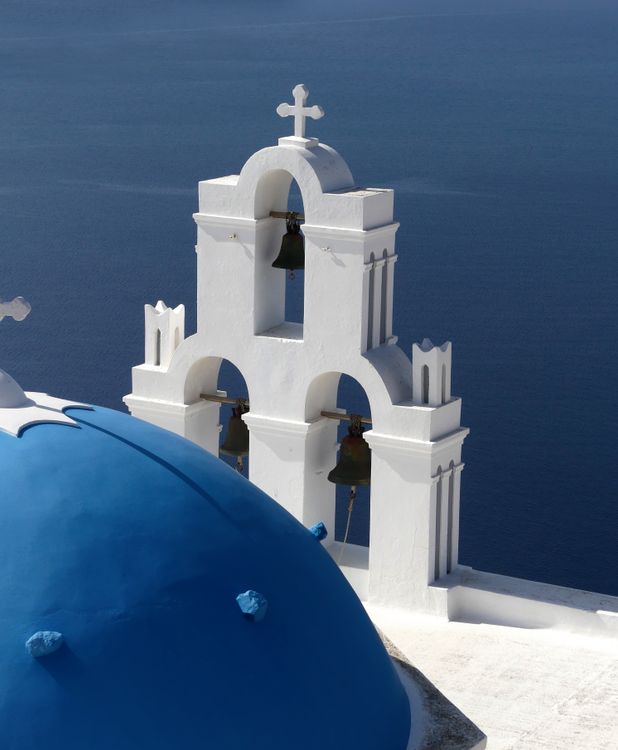
Firostefani sits just ten minutes’ walk north of Fira along the caldera footpath, which makes it one of the smarter choices on the island. You get the caldera views, the quiet residential feel, and the easy walking distance to everything Fira offers, without the commercial density of the capital itself.
The famous Three Bells of Fira, one of the most photographed churches in the Cyclades, is actually located in Firostefani. That landmark alone draws day visitors, but after sunset the village quietens down considerably. Accommodation here offers slightly better value than Oia or Imerovigli for comparable views, with caldera-facing rooms typically ranging from 150 to 400 euros per night during summer.
The bus from Fira to Oia stops in Firostefani, which keeps you connected to the wider island without depending on the bus hub. However, Firostefani has fewer restaurants and shops than Fira. For most evenings, you will walk into Fira for dinner, which is pleasant but worth knowing in advance. Couples seeking a calm base with easy Fira access will find Firostefani an excellent compromise, particularly if the Oia price premium feels unjustified.
Imerovigli: The Highest Point on the Caldera
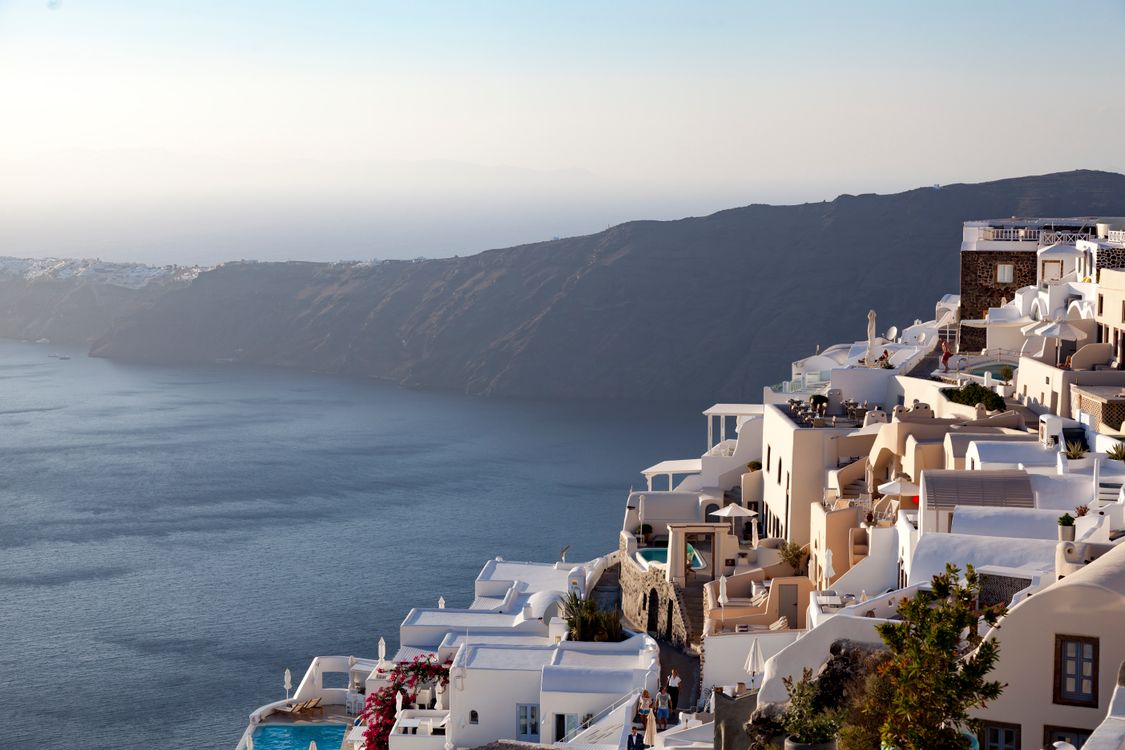
Imerovigli occupies the highest elevation on Santorini’s caldera rim, which gives it arguably the most dramatic vantage point on the island. The views stretch across the entire volcanic basin, from Oia in the north down past Fira and around to Akrotiri in the south. It is quieter than Fira, less crowded than Oia, and the accommodation here tends to deliver exceptional value relative to its quality.
The village itself is small. There are fewer than a dozen restaurants, a handful of small shops, and no nightlife to speak of. That is precisely the appeal. Imerovigli attracts couples and honeymooners who want to spend their evenings on a private terrace rather than navigating busy lanes. Many of the island’s finest boutique hotels sit here, carved into the cliff face with infinity pools that seem to merge with the Aegean below.
From Imerovigli, you can walk to Fira in roughly 20 to 25 minutes along the caldera path, or catch the bus. The famous Skaros Rock, a dramatic headland with the remains of a medieval fortress, is accessible from Imerovigli by a moderately challenging trail that takes about 20 minutes each way. The walk is worth the effort for the views alone, though it involves uneven terrain and should be avoided in the midday heat.
Caldera-view accommodation in Imerovigli generally ranges from 200 to 900 euros per night in high season, which positions it between Firostefani and Oia. For travellers who want the finest caldera setting without the Oia crowds, this is the strongest recommendation. The trade-off is a quieter evening scene and slightly longer travel times to the main bus station in Fira.
Oia: The Famous Sunset Village
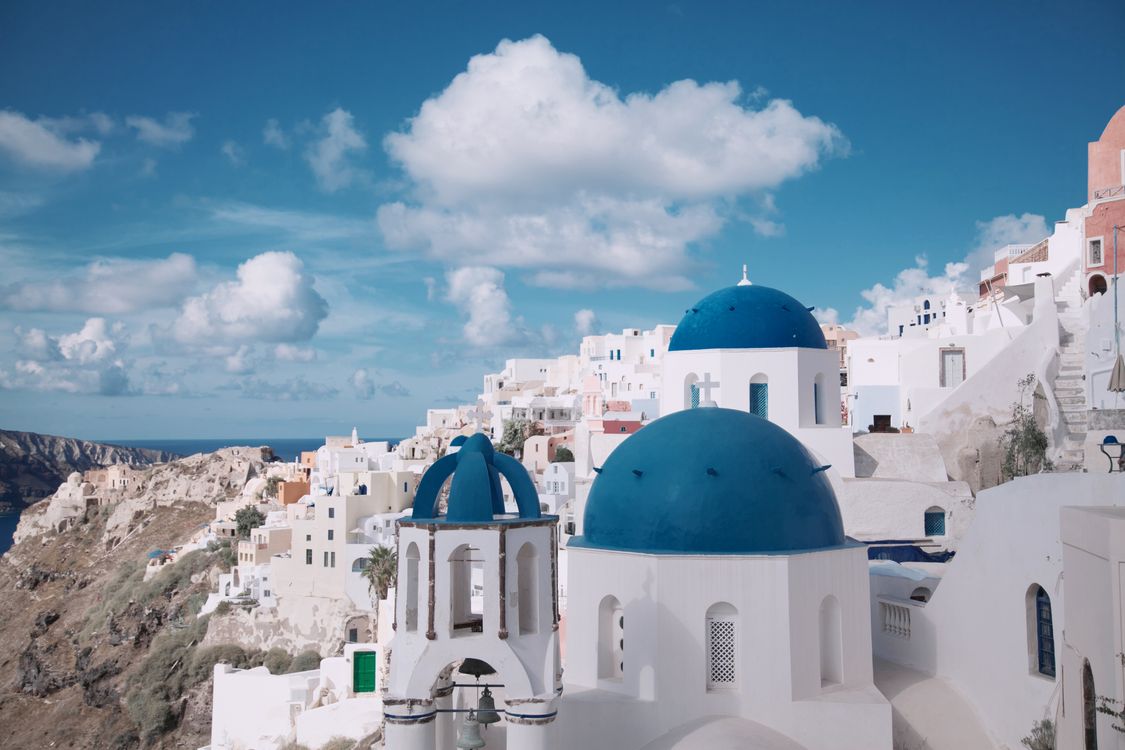
Oia needs no introduction. The blue-domed churches, the white-washed houses cascading down the cliff, the sunset crowds at the castle ruins, all of this has become the international image of Greece itself. Staying here places you inside one of the most photographed villages in the world, and at the centre of its most significant price premium.
Caldera-view accommodation in Oia typically starts from 300 euros per night in summer and reaches well above 1,000 euros for suites with private pools. Restaurant prices run 30 to 40 per cent higher than Fira for equivalent quality. A couple spending four nights here can expect to pay 500 to 1,200 euros more than they would from a Fira base, on accommodation and dining combined.
The village is genuinely beautiful, there is no denying that. The pedestrian promenade along the caldera is wide, paved, and lined with galleries, shops, and restaurants. It is accessible from the south end near Passagio Cafe, where wheelchair users can enter without encountering steps. Beyond the main pathway, however, Oia’s side streets drop steeply with narrow staircases.
The main limitation is congestion. Oia fills with day visitors throughout the afternoon, particularly around sunset. If you are staying in the village, mornings before 10:00 and late evenings after 21:00 offer the quieter, more atmospheric experience. The Oia bus to Fira takes about 25 minutes and runs frequently in summer, though buses can fill to standing capacity during peak hours. Travellers who value aesthetics over convenience, and have the budget to match, will find Oia worth every euro. Those who want practical ease may prefer Fira or Imerovigli and visit Oia for an afternoon instead.
Kamari: The Best Beach Base
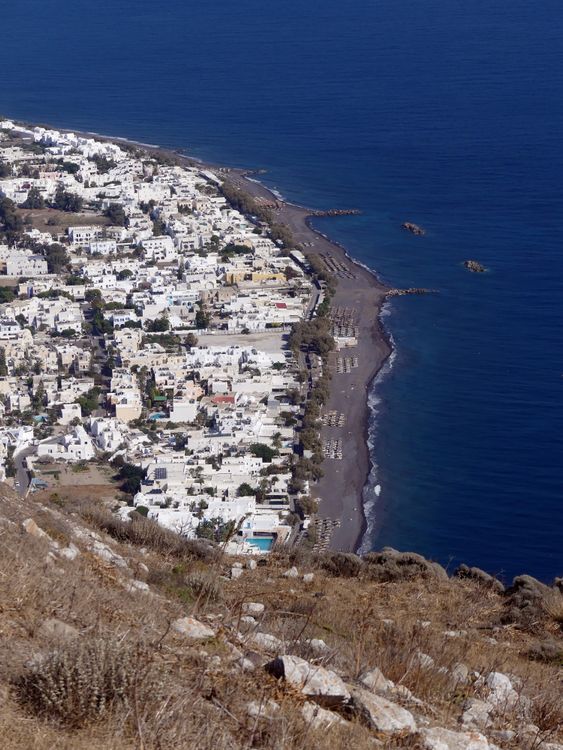
Kamari is the most developed beach town on the eastern coast, with a long promenade of restaurants, bars, and shops running behind a dark volcanic sand beach. The atmosphere is relaxed and family-friendly, with flat terrain, easy parking, and proper pavements, a significant contrast to the caldera villages where pushchairs and suitcases are a serious challenge.
There are no caldera views here. What Kamari offers instead is a genuine beach holiday at a fraction of the caldera price. Well-reviewed hotels typically range from 60 to 180 euros per night, with family rooms and larger apartments available. The beach has sunbed hire, water sports, and several sections with lifeguard cover during summer. At the southern end, the open-air cinema is a memorable evening option for families and couples.
Buses to Fira run every 15 to 30 minutes in summer, taking about 20 minutes. From Fira, you can connect to anywhere else on the island. A seasonal water taxi also links Kamari to Perissa around the base of Mesa Vouno, though it depends on weather and demand. Kamari is the strongest recommendation for families with young children, travellers who want daily beach access, and anyone prioritising value over views.
Perissa and Perivolos: Budget Beach Territory
Continuing south from Kamari, separated by the rocky headland of Mesa Vouno, Perissa and Perivolos share the longest continuous stretch of dark sand on Santorini. Perissa is the more casual, younger end, with budget accommodation, lively beach bars, and a straightforward taverna scene. Perivolos, further south, trends slightly more upscale, with beach clubs and some higher-end dining.
This area offers Santorini’s lowest accommodation prices, with clean double rooms starting from around 45 to 80 euros per night in summer. The beach has sunbeds, shade, and water sports, and the flat terrain makes it easy to move around on foot. Buses to Fira run roughly every 30 minutes to an hour, taking about 25 minutes, though the last evening bus can limit your options if you are dining in Fira.
The honest trade-off is distance. Perissa and Perivolos are the farthest major areas from the caldera villages, and getting to Oia requires a bus to Fira followed by a second bus, adding up to an hour or more each way. For travellers who see the caldera as a day trip rather than a permanent backdrop, and who want maximum beach time at minimum cost, this area delivers well. It is not the right base for anyone who wants easy evening access to the caldera restaurants and sunset terraces.
Pyrgos: The Hilltop Alternative
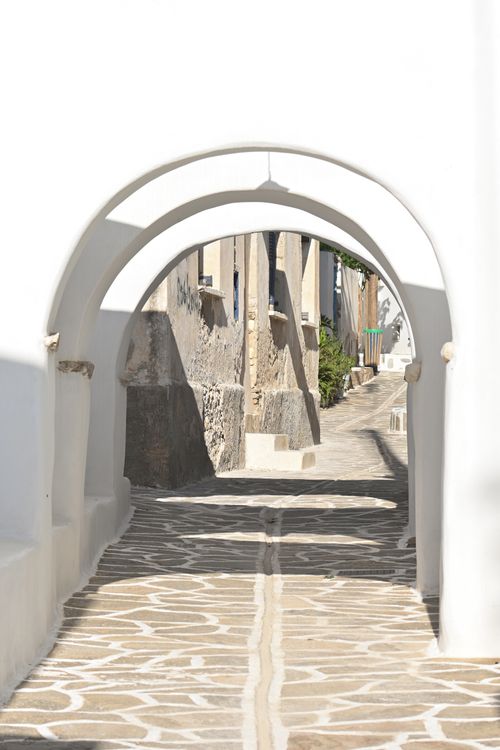
Pyrgos is the highest village on Santorini, built around the ruins of a Venetian castle, with winding medieval lanes, traditional tavernas, and panoramic views in every direction. Unlike the caldera villages, which face west over the volcanic basin, Pyrgos offers a 360-degree panorama: the caldera, the eastern coastline, the airport, and the southern tip of the island.
The village feels substantially more local than Oia or Fira. The central square has a few cafes and restaurants, but no souvenir shops, no crowds of day trippers, and almost no noise after dark. This is the Santorini that existed before mass tourism reshaped the caldera rim. Accommodation here tends to be boutique: renovated cave houses, small villa complexes, and family-run guesthouses, typically ranging from 80 to 300 euros per night.
The limitation is transport. A car is strongly recommended if you stay in Pyrgos. Buses connect the village to Fira and some beach areas, but the schedules are less convenient than the main caldera route, and evening options thin out early. With a car, however, Pyrgos becomes an excellent central base: close to wineries, beaches, Akrotiri, the airport, and Fira. Without one, evenings can feel isolating.
Megalochori and the Wine Country
Megalochori is one of the best-preserved traditional settlements on Santorini, located in the heart of the island’s wine-growing area. The village has a distinctive character: neoclassical mansions with high stone walls, arched doorways, bell towers, narrow lanes leading into hidden courtyards, and the kind of quiet that Oia lost decades ago.
Several of the island’s most respected wineries lie within a short drive, making this the natural base for travellers interested in Santorini’s famous Assyrtiko wines. The village square has a few good tavernas and cafes, but this is not a full-service base. Perissa and Perivolos beaches are about ten minutes away by car, and Fira is a similar distance in the other direction.
Like Pyrgos, Megalochori requires a car to work well as a base. The reward is a genuinely different Santorini experience: slower, quieter, and closer to the agricultural life that still exists beneath the tourism. Accommodation options are more limited but include some distinctive properties built around historic vineyards. This area suits couples and wine enthusiasts who have explored the caldera towns before and want something less performative.
Akrotiri: The Southern Quiet
Akrotiri sits at the southwestern tip of the island, near the famous Minoan archaeological site and Red Beach. It is one of the least developed tourist areas on Santorini, which brings both advantages and limitations. Some properties here do have partial caldera views, at prices significantly lower than Oia or Imerovigli. The atmosphere is peaceful, almost rural in places, and the Akrotiri ruins offer an excellent attraction within walking distance.
The southern coastline provides access to Red Beach, White Beach, and the lighthouse at the island’s tip. However, Akrotiri is poorly served by public transport, with bus service running roughly hourly and ending relatively early. A car or pre-booked transfer is essential for reaching Fira, Oia, or the eastern beaches. Travellers who are drawn to archaeology, southern landscapes, and low-key evenings will appreciate Akrotiri, but it does not suit visitors who want easy access to restaurants and nightlife.
Best Area by Traveller Type
| Traveller Type | Top Pick | Also Consider | Why |
|---|---|---|---|
| First visit, any budget | Fira | Firostefani | Central, walkable, best bus connections, widest dining |
| Honeymoon or anniversary | Imerovigli | Oia, Firostefani | Quietest caldera views, less crowded than Oia, better value |
| Families with young children | Kamari | Perissa | Flat terrain, beach access, larger rooms, lower prices |
| Families with teenagers | Fira | Kamari | Teens can walk to shops, cafes, and buses independently |
| Budget travellers | Perissa or Perivolos | Kamari, Fira (non-caldera) | Lowest prices, beach access, decent bus connections |
| Luxury, iconic setting | Oia | Imerovigli | The definitive Santorini aesthetic, premium service |
| Wine and culture focus | Pyrgos | Megalochori | Near wineries, traditional feel, car-based exploration |
| Repeat visitors | Pyrgos or Megalochori | Akrotiri | Quieter, more local, away from the well-trodden caldera path |
Getting Around Without a Car
Santorini’s public bus network, operated by KTEL, is centred entirely on Fira. Every route starts and finishes at the Fira bus station, which means connecting between any two non-Fira destinations requires travelling through Fira. This is efficient if you are based in Fira, Firostefani, or Imerovigli, and considerably less so from the beaches or southern villages.
During summer, the main routes run frequently. The Fira to Oia bus departs roughly every 30 minutes, taking about 25 minutes and costing around 2 euros. Fira to Kamari runs every 15 to 30 minutes, and Fira to Perissa roughly every 30 to 60 minutes. Fira to Akrotiri operates about hourly. All buses are cash only, so carry small change. In high season, buses on popular routes can fill up completely, particularly the Oia route before sunset. If the bus is full, it will pass your stop without stopping.
Taxis are available but limited in number, making them difficult to hail on demand during peak hours. Pre-booked private transfers work more reliably, especially for airport and port connections. Ride-sharing apps have limited coverage. For travellers based on the caldera and visiting the beaches as day trips, the bus system works reasonably well. For exploring the interior, southern coast, or wineries, renting a car for one or two days makes a significant difference.
When to Book and What to Expect on Price
Santorini accommodation prices are among the highest in the Greek islands, driven almost entirely by the scarcity of caldera-view cliff properties. Peak season runs from late June through August, when demand is strongest and prices reach their ceiling. September offers nearly identical weather with prices 20 to 30 per cent lower, and late September into October delivers the best value window: warm sea temperatures, thinner crowds, and rates 30 to 50 per cent below the August peak.
May and early June are the spring equivalent, with cooler water but exceptional light and green hillsides. Winter sees many caldera properties close entirely, though Fira and the beach towns maintain some options year-round.
For caldera-view accommodation in Oia or Imerovigli during August, booking four to six months ahead is advisable. The total cliff-edge inventory across the entire island is small, and the best properties sell out early. For Fira and the beach towns, two to three months’ notice is generally sufficient outside the absolute peak weeks of late July and early August.
| Oia caldera view | Approximately 300 to 1,500+ euros per night (July-August) |
| Imerovigli caldera view | Approximately 200 to 900 euros per night (July-August) |
| Fira caldera view | Approximately 150 to 500 euros per night (July-August) |
| Fira non-caldera | Approximately 70 to 150 euros per night (July-August) |
| Kamari beach | Approximately 60 to 180 euros per night (July-August) |
| Perissa / Perivolos | Approximately 45 to 120 euros per night (July-August) |
| Pyrgos / inland villages | Approximately 80 to 300 euros per night (July-August) |
These are approximate ranges for double rooms in high season and will vary by property, view, and booking timing. Shoulder-season prices are typically 30 to 50 per cent lower. Prices should be confirmed directly with properties before booking.
Accessibility and Mobility Considerations
Santorini’s volcanic geography creates genuine challenges for travellers with limited mobility. The caldera villages, including Fira, Firostefani, Imerovigli, and Oia, are built into steep cliffs with narrow staircases, cobblestone paths, and sharp elevation changes. Many caldera hotels have no lift access, and reaching your room may involve descending 30 or more steps.
For wheelchair users and travellers with significant mobility limitations, the beach towns of Kamari and Perissa offer substantially easier terrain. The promenades are flat, hotels are generally at ground level or have ramp access, and the beaches themselves are reachable without stairs. A small number of caldera properties do offer accessible rooms, but availability is extremely limited and should be confirmed well in advance.
Older travellers who can manage stairs slowly tend to do well in Firostefani or Imerovigli, where the pace is gentler and the distances shorter than Oia. Private drivers and accessible tours are available for caldera village visits without extended walking. The bus system involves steps on boarding and is not practical for wheelchair users.
Common Mistakes When Choosing a Base
Booking Oia on a tight budget. The caldera experience in Oia costs roughly double what you would pay in Fira for comparable quality. Many budget travellers book a low-priced room in Oia only to discover it sits on the non-caldera side, without the views they expected. If the caldera view matters and your budget is moderate, consider Fira or Firostefani instead.
Underestimating the steps. Caldera hotels look romantic in photographs, but reaching them often involves carrying luggage down steep, narrow staircases. If you travel with large suitcases, check transfer arrangements carefully. Many properties offer porter services, but some cliff locations are only accessible on foot.
Staying on the beach and expecting easy evening caldera access. The bus from Perissa to Fira takes 25 to 30 minutes, and the last return service can end before your dinner finishes. Splitting your stay, two or three nights on the caldera followed by two nights at the beach, is a practical alternative for travellers who want both experiences.
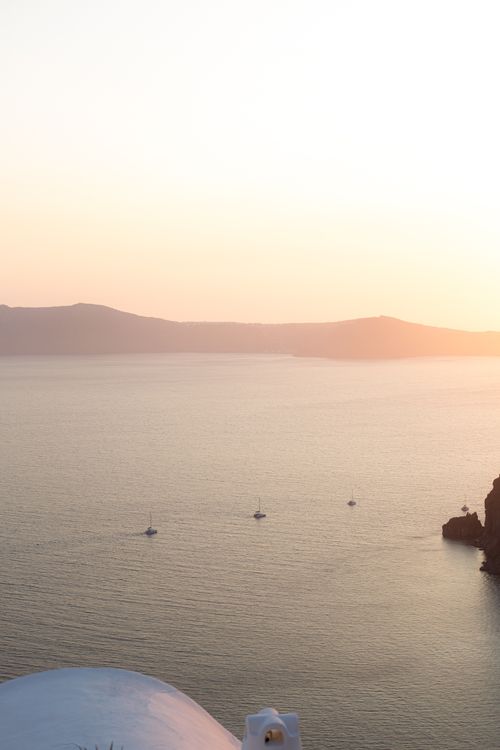
Assuming Oia for sunset is necessary. Imerovigli and Firostefani offer equally impressive sunsets with a fraction of the crowd. The sunset from a private terrace in Imerovigli, without hundreds of people jostling for position, is a far more pleasant experience than the packed castle ruins in Oia.
Ignoring the inland villages entirely. Pyrgos and Megalochori offer a Santorini experience that most visitors never see. If you have visited the caldera before, or if wine, food, and traditional architecture interest you more than the famous views, the interior deserves serious consideration.
Our Recommendation
For most first-time visitors, Fira remains the most practical base. It delivers caldera views, the widest restaurant selection, direct bus access to every corner of the island, and better value than Oia. If your priority is romance and quiet, Imerovigli offers the strongest combination of views, peace, and value anywhere on the caldera rim. Firostefani sits perfectly between the two.
Families with children under ten should seriously consider Kamari. The flat terrain, beach access, and lower prices make daily life with young children dramatically easier than navigating the caldera steps. Budget travellers will find the best rates in Perissa and Perivolos, though the trade-off is distance from the caldera.
For second-time visitors with a rental car, Pyrgos is the strongest recommendation. The 360-degree views, the medieval lanes, the proximity to wineries, and the complete absence of tourist crowds make it the most rewarding base for travellers who already know the caldera but want to understand the island more deeply.
Whichever area you choose, book early for peak summer dates, carry small change for the bus, and remember that Santorini is small enough that nothing is more than 30 minutes’ drive from anything else. The wrong base is inconvenient, not catastrophic.
For more on what to see and do on the island, read our complete Santorini travel guide. If you are deciding between Santorini and Mykonos, our Santorini vs Mykonos comparison covers the key differences. And for planning the wider trip, see our guides to Greek island hopping and the best time to visit Greece.
This article was researched and verified as of August 2026. Accommodation prices, bus schedules, and seasonal services may change. We recommend confirming transport details with KTEL Santorini and checking current rates directly with properties before booking. Vivid Greece does not accept payment for editorial recommendations.