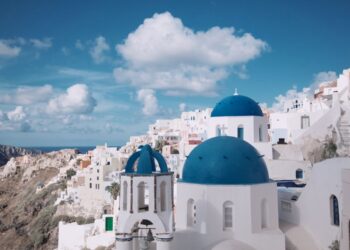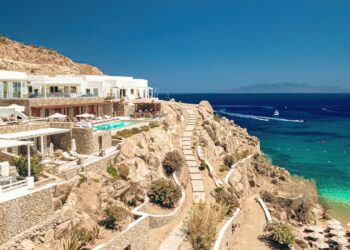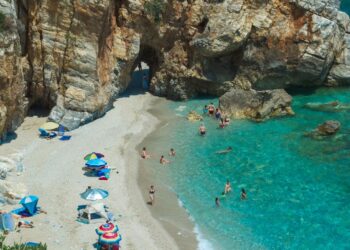
Most visitors to the Cyclades picture whitewashed cubes, windmills, and volcanic cliffs. Syros quietly breaks that mould. The administrative capital of the island group has a year-round population of roughly 21,000, a neoclassical harbour town that once rivalled Athens in wealth and culture, a medieval Catholic hilltop settlement, and a food tradition built on loukoumi, cured pork, and a PDO cow’s-milk cheese found nowhere else in Greece. It is an island where opera coexists with rebetiko, where Catholic bells answer Orthodox ones across a shared valley, and where the cafés on Miaouli Square are full in January.
This guide covers what makes Syros different from its neighbours, who it suits best, how to reach it, what to see and eat, which beaches to choose, and how many days you actually need. If you are planning a Cyclades trip and want something with a little more substance than the standard beach-and-sunset formula, Syros deserves serious consideration.
Syros at a Glance
An 84-square-kilometre island where 19th-century grandeur, Catholic-Orthodox coexistence, and a thriving year-round community make it unlike anything else in the Cyclades.
| Location | Central Cyclades, Aegean Sea |
| Area | Approximately 84 km² |
| Population | Around 21,000 (2021 census) |
| Capital | Ermoupoli (also the administrative capital of the Cyclades) |
| Ferry from Piraeus | Approximately 2–4 hours depending on vessel |
| Airport | Dimitrios Vikelas Airport (JSY) — domestic flights via Sky Express |
| Best for | Culture, architecture, food, year-round travel, couples, independent travellers |
| Consider elsewhere if | You want large sandy beaches, heavy nightlife, or a remote-island atmosphere |
Who Syros Suits — and Who It Doesn’t
Syros is ideal for travellers who value architecture, food, and cultural depth over beach-resort convenience. Couples will enjoy the evening atmosphere along the Ermoupoli waterfront and the narrow lanes behind Miaouli Square. History-minded visitors have the Apollo Theatre, the Industrial Museum, Ano Syros, and a town that genuinely reads like a textbook of 19th-century Greek nation-building. Independent travellers who dislike crowds will appreciate that Syros never gets as packed as Santorini or Mykonos, even in August.
Families can have a good time, though the island is not purpose-built for children in the way that some of the larger resort islands are. Galissas Beach has shallow, calm water and is probably the best option for families with small children. Those seeking dramatic cliff scenery, expansive sandy coastlines, or loud nightlife will find better options elsewhere — Milos for geological drama, Naxos for long beaches, Mykonos for parties.
A Brief History Worth Knowing
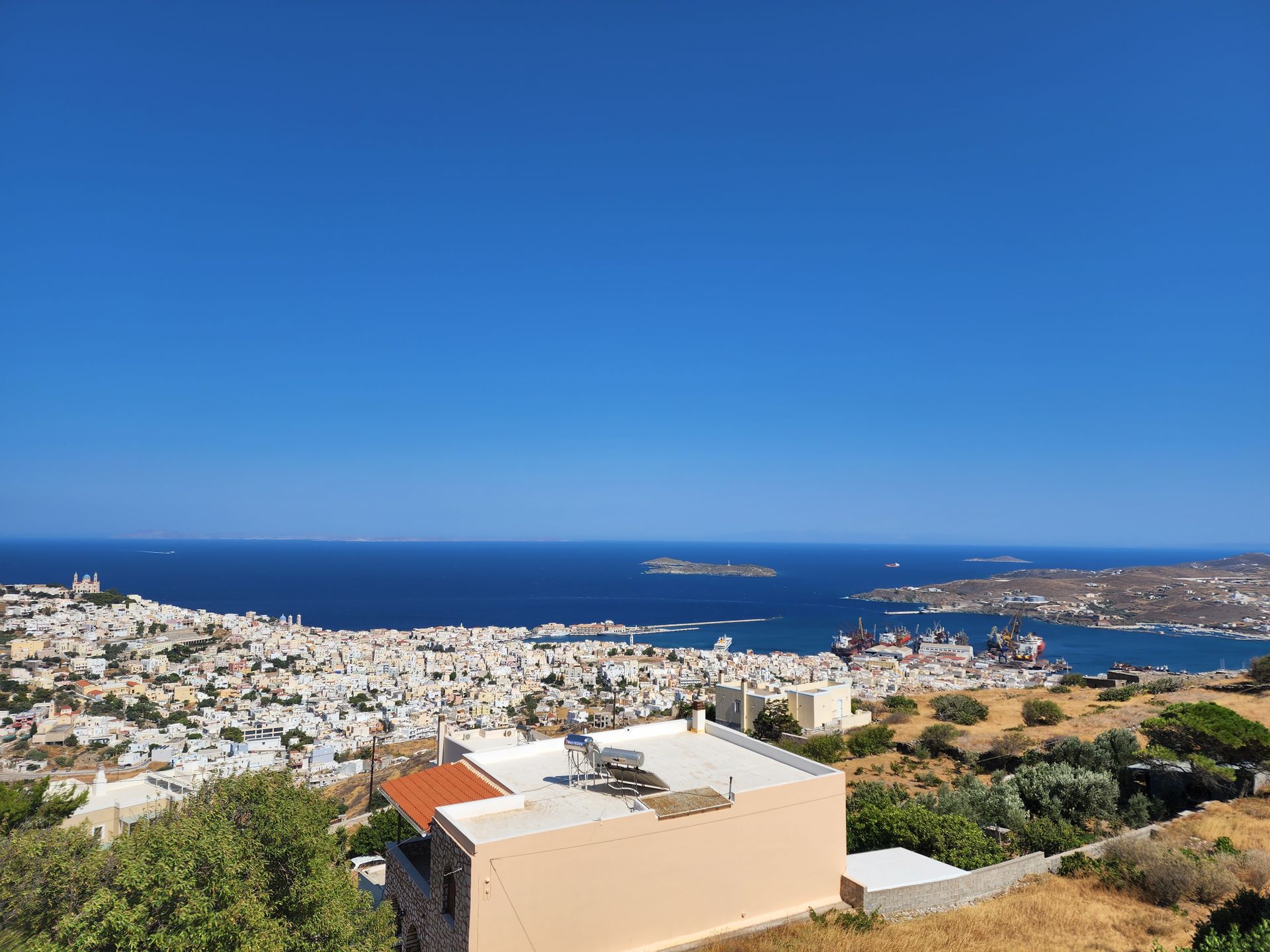
Understanding Syros means understanding why Ermoupoli looks nothing like a typical Cycladic town. After the Greek War of Independence in the 1820s, refugees from Chios, Psara, and other devastated islands settled here and built a new city essentially from scratch. Thanks to its deep natural harbour and neutral Catholic population — which had maintained ties with France and other Western powers — Ermoupoli became the most important commercial port in the newly independent Greek state, surpassing even Piraeus for much of the 19th century.
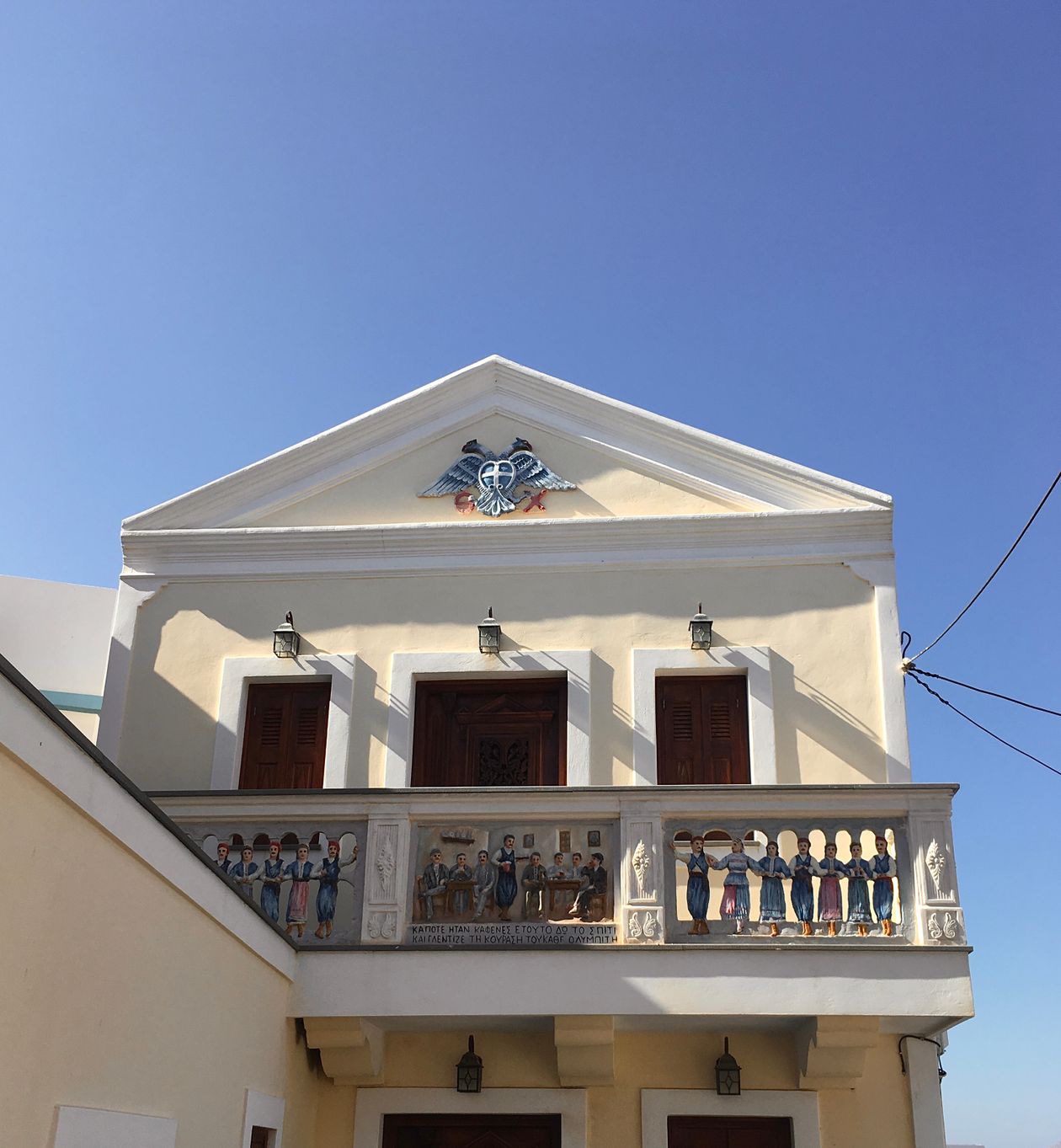
The wealth that flowed through shipping, shipbuilding, and textile manufacturing produced the neoclassical mansions, the Apollo Theatre (completed in 1864 and modelled on Italian opera houses including La Scala), the grand Town Hall designed by Ernst Ziller, and the elegant Vaporia quarter where ship-owners built their homes directly above the sea. When Piraeus eventually overtook Ermoupoli as the country’s main port in the late 19th century, the island’s economy slowed — but the architecture survived. The result is a Cycladic island that looks more like a miniature European capital than a Greek holiday postcard.
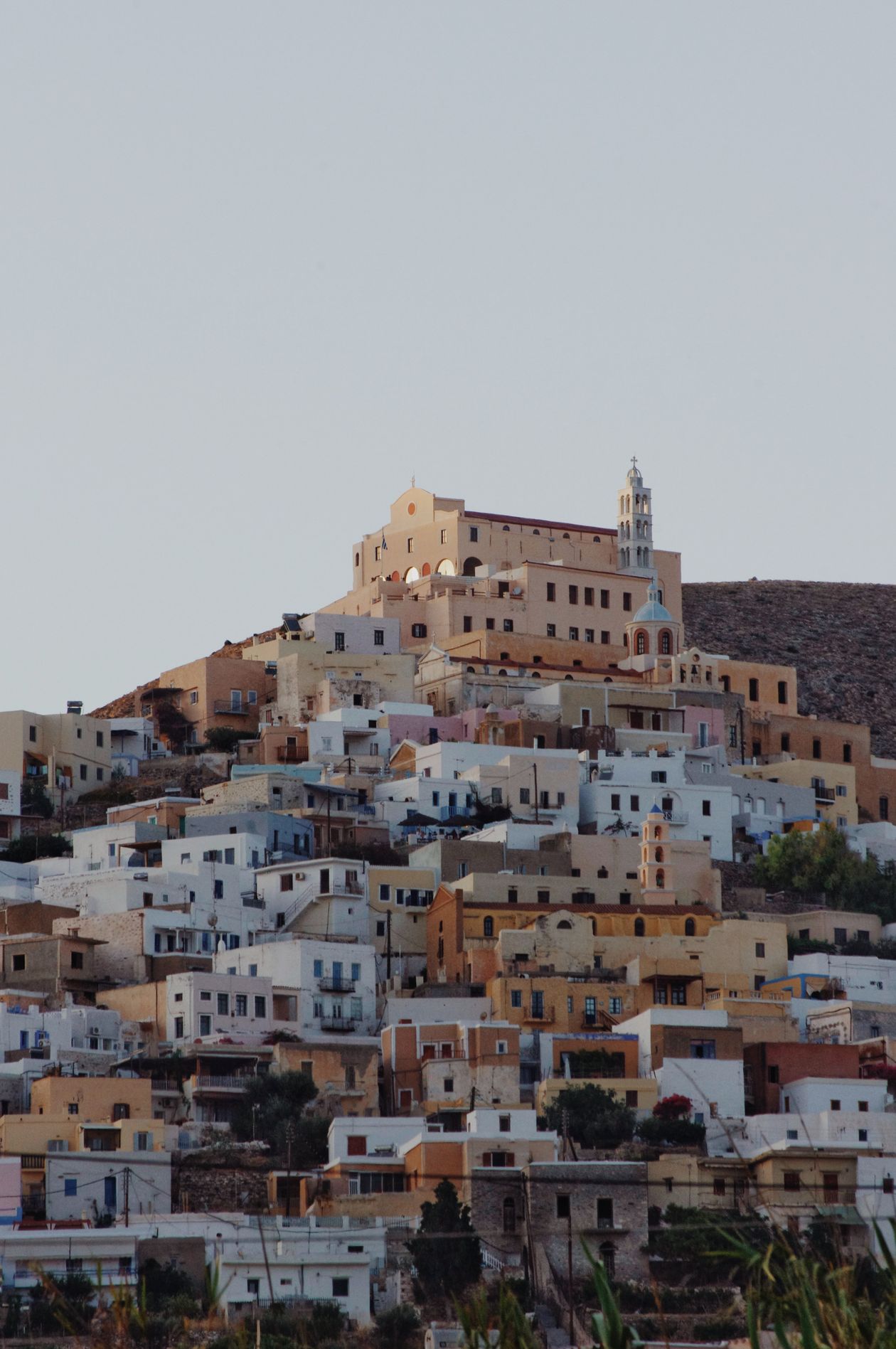
Above Ermoupoli sits Ano Syros, a medieval Catholic settlement founded by the Venetians in the 13th century. Its narrow, labyrinthine streets were designed partly as a defence against pirate raids, and at its summit stands the Cathedral of Agios Georgios. The Catholic community has been here continuously for roughly 800 years, and the coexistence of Catholic and Orthodox traditions — particularly visible during Easter, when both communities celebrate in their own way across the same town — is one of the island’s most distinctive features.
How to Get to Syros
By ferry
Syros is one of the best-connected islands in the Cyclades. Multiple daily ferries operate from Piraeus year-round, with high-speed catamarans (SeaJets) making the crossing in approximately two hours and conventional ferries (Blue Star) taking around three and a half to four hours. During summer, there are typically five or more daily departures in each direction. Deck-class tickets on conventional ferries start from around €36, while high-speed services cost more and fill quickly in peak season — booking a few days ahead is advisable for July and August.
Because Syros sits centrally in the Cyclades network, it also has regular connections to Mykonos (25–80 minutes depending on vessel), Tinos (15–30 minutes), Paros (40 minutes to 1 hour 40 minutes), and Naxos. These short hops make Syros a practical base for day trips or island combinations. Schedules should always be confirmed close to travel dates, as they can shift between seasons.
By air
Syros has a small domestic airport — Dimitrios Vikelas (JSY) — with regular Sky Express flights from Athens (approximately 35 minutes). Flights also connect Syros with Thessaloniki and, seasonally, other destinations. Fares from Athens start at around €63 one way, though prices vary significantly by season and booking lead time. The airport is roughly 3 km south of Ermoupoli.
Getting Around Syros
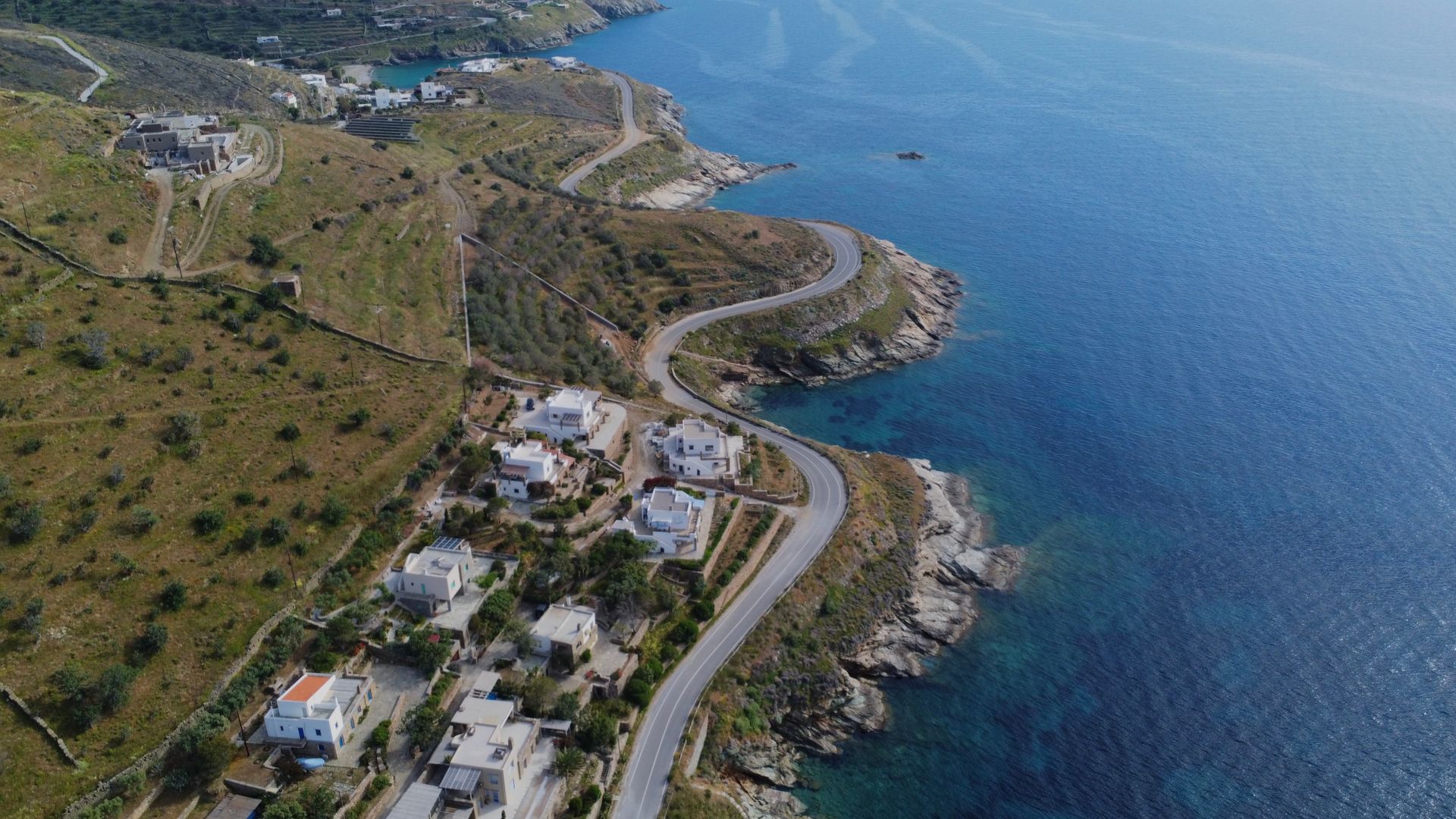
Syros is compact enough that a car is useful but not always essential. Roads are generally well maintained, and the farthest points of the island are within about 30 minutes’ drive of Ermoupoli. A rental car or scooter provides the most flexibility, particularly for reaching quieter beaches and the rural north.
A local KTEL bus service connects Ermoupoli with most of the main beach settlements — Galissas, Finikas, Posidonia, Megas Gialos, Vari, and Azolimnos — on a loop route that runs in both directions. During summer, buses run more frequently, with services roughly every hour on the main loop. A separate minibus service runs between the waterfront and Ano Syros. Taxis are available in Ermoupoli but can be in short supply during peak evenings.
For walkers, Ermoupoli itself is highly walkable, though hilly. The climb to Ano Syros takes 30–45 minutes on foot from Miaouli Square, or you can take the minibus. Outside the capital, a network of marked hiking trails connects villages, beaches, and viewpoints, particularly in the rural Ano Meria region in the north.
How Many Days to Spend on Syros
Three to four days is enough to see the main highlights comfortably: a day exploring Ermoupoli and Ano Syros, a day at the western beaches, and a day combining a southern village loop with food and evening time in town. A week allows you to hike the northern trails, take day trips to Tinos or Mykonos, attend a cultural event, and settle into the island’s rhythm without rushing between sights. Syros is one of those places where an extra day or two genuinely improves the experience, because so much of its appeal lies in atmosphere rather than ticketed attractions.
What to See and Do in Ermoupoli
Miaouli Square and the Town Hall
The heart of Ermoupoli is Plateia Miaouli, a large marble-paved square named after the War of Independence admiral Andreas Miaoulis, whose statue stands in the centre (erected 1889). The square is flanked by the imposing Town Hall, designed by the German architect Ernst Ziller and completed in 1891, which now serves as both a municipal building and a modest exhibition space. On summer evenings, Miaouli fills with families, café-goers, and the occasional street performer — it functions as the island’s living room in a way that few Greek town squares manage.
The Apollo Theatre
Just northeast of Miaouli Square, the Apollo Theatre (or Apollon Theatre) was built between 1862 and 1864 to designs by the Italian architect Pietro Sampo. Its interior, with gilded balconies and a painted ceiling, was influenced by the design of La Scala in Milan and other Italian opera houses. After decades of disuse, the theatre was restored and now hosts performances during the summer season. If the doors happen to be open, it is worth stepping inside even briefly — the scale and ambition of the building say a great deal about what 19th-century Ermoupoli aspired to be.
Vaporia Quarter
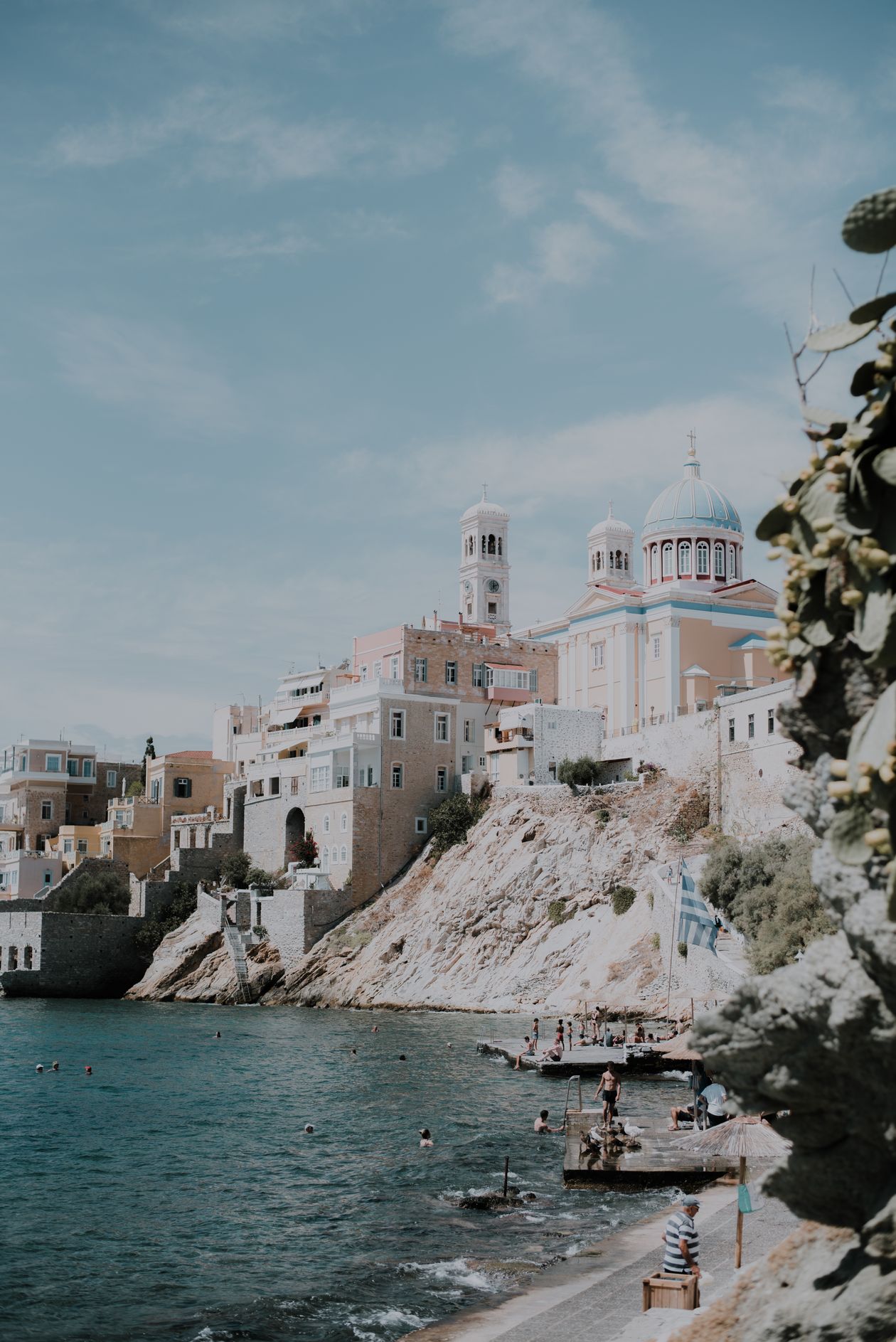
Northeast of the town centre, the Vaporia district was where Ermoupoli’s wealthiest ship-owners built their homes. The mansions here — with marble balconies, interior frescoes, and facades that drop directly to the sea — are among the finest examples of urban neoclassical architecture in the Cyclades. Asteria Beach, a small swimming platform at the foot of Vaporia, is the most central place to swim in Ermoupoli and offers a surreal combination of clear Aegean water and 19th-century grandeur rising directly above.
Church of Agios Nikolaos
The blue-domed Church of Agios Nikolaos, near the Apollo Theatre, is one of the most photographed buildings in Ermoupoli. It houses a notable icon attributed to the El Greco workshop, though the attribution has been debated by scholars. The interior is worth a quiet visit for its iconostasis and atmosphere.
The Industrial Museum of Ermoupoli
For visitors interested in the island’s economic history, this small museum documents Ermoupoli’s industrial past — shipbuilding, textiles, tanning, and printing. It is particularly useful for understanding why the town looks the way it does and how its decline after the rise of Piraeus shaped modern Syros.
Exploring Ano Syros
The walk (or minibus ride) up to Ano Syros is essential. Founded in the 13th century under Venetian rule, this is one of the oldest continuously inhabited medieval settlements in the Cyclades. Its tight alleys, archways, and whitewashed houses could belong to any Cycladic hilltop village — except for the Catholic churches, the Capuchin monastery, and the Cathedral of Agios Georgios at the summit, which reflect the community’s unbroken Catholic heritage.
Ano Syros is also the birthplace of Markos Vamvakaris (1905–1972), widely regarded as the founding figure of rebetiko music. A small museum on the main lane of the settlement preserves his personal belongings, photographs, and handwritten song texts. His most famous composition, Frangosyriani (“The Catholic Girl from Syros”), directly references the world he grew up in. The views from the upper lanes of Ano Syros — across Ermoupoli, the harbour, and the neighbouring islands — are among the best on the island, particularly around sunset.
Beaches on Syros
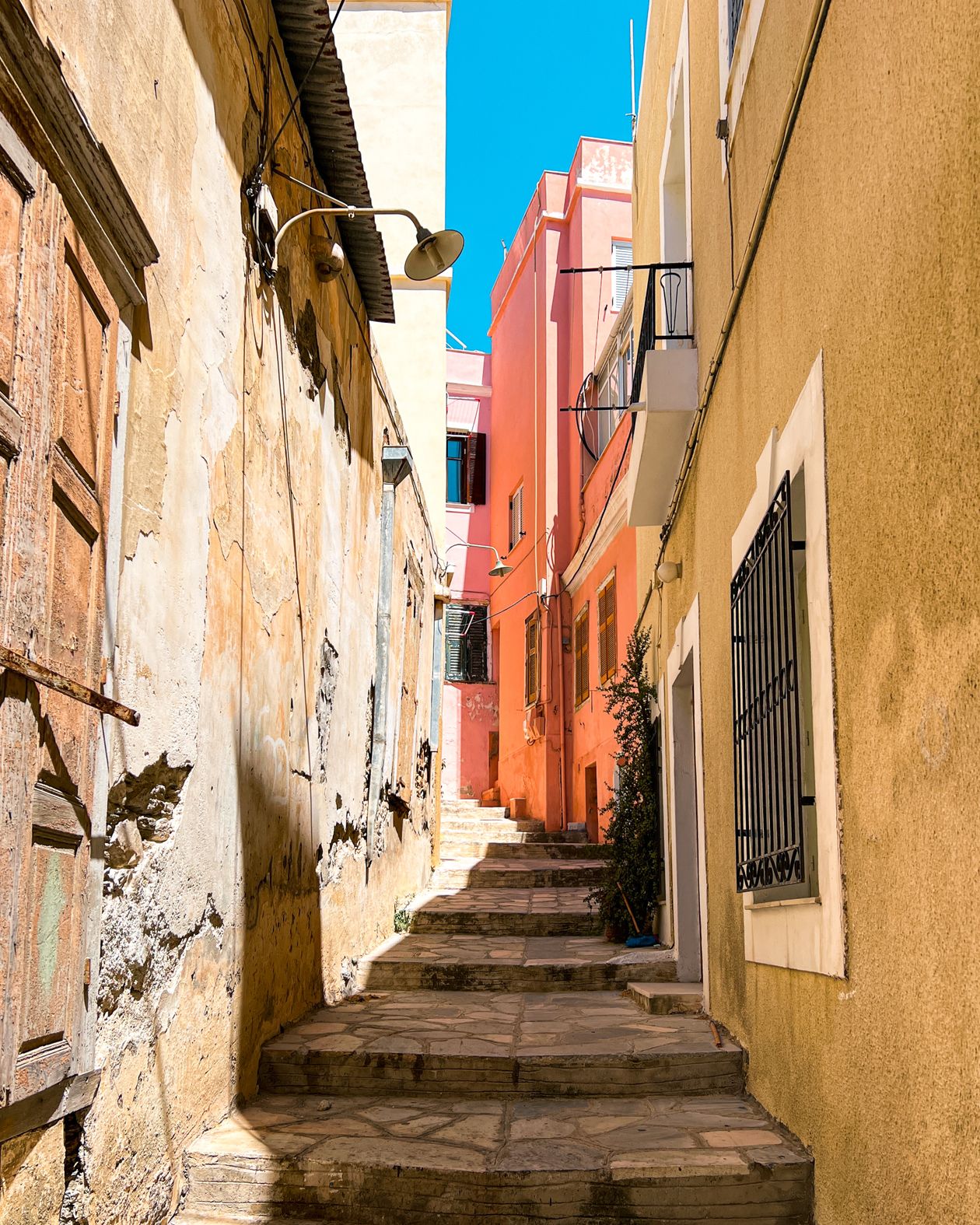
Syros is not primarily a beach island — visitors expecting the enormous sandy coastlines of Naxos or the volcanic theatre of Milos will need to recalibrate. That said, the western and southern coasts have a good selection of accessible, pleasant beaches with clean water, and several are well suited for families or a relaxed half-day between cultural excursions.
| Beach | Coast | Surface | Facilities | Best for |
|---|---|---|---|---|
| Galissas | West | Sand, shallow | Sunbeds, tavernas, water sports | Families, swimming, sunset |
| Kini | West | Sand | Sunbeds, bars, tavernas | Day trip from Ermoupoli, sunset |
| Vari | South | Sand, very shallow | Sunbeds, tavernas | Families with small children |
| Agathopes | South | Sand | Some sunbeds, natural shade | Relaxation, couples |
| Finikas | Southwest | Sand | Limited, taverna nearby | Quiet swim, fishing-village feel |
| Delfini | West | Sand and pebble | None | Sunset, solitude, hiking access |
| Asteria | Ermoupoli | Platform / rocky | Sunbeds, café | Quick swim in town, scenery |
Galissas is the island’s most popular beach and probably its best all-rounder. Sheltered in a west-facing bay, it catches the sunset and is generally protected from the strong northerly winds (meltemi) that can affect exposed Cycladic coasts in July and August. The sand is fine, the water shallow and warm, and facilities include sunbeds, a beach bar, and several tavernas within walking distance. A Blue Flag beach with accessible swimming facilities (Seatrac system), it is the obvious choice for families.
Kini, about 8 km west of Ermoupoli, is a former fishing village with a long sandy beach and one of the clearest stretches of water on the island. The seafront tavernas make it a popular destination for a combined lunch-and-swim outing, and the Panagia Gorgona mermaid statue on the waterfront is a local landmark. From Kini, a marked coastal path leads to Delfini Beach — a quieter option for those willing to walk roughly 30 minutes.
Vari on the south coast is extremely shallow and calm, making it suitable for toddlers. Agathopes, nearby, has a more natural feel with some tree shade. Finikas, in the southwest, has a small-harbour atmosphere and a couple of waterfront tavernas. None of these beaches are enormous, but they are clean, accessible, and rarely overcrowded outside the first three weeks of August.
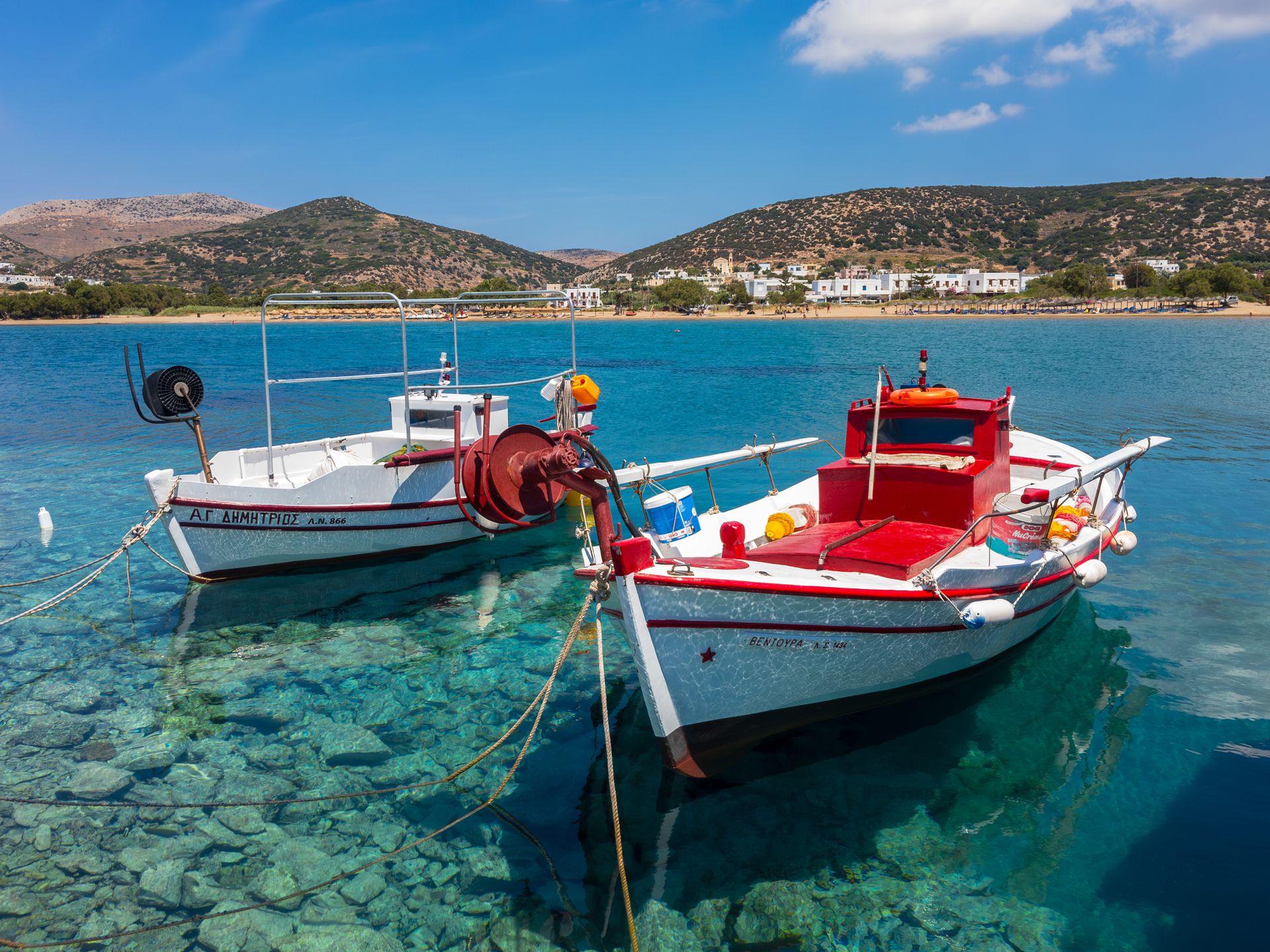
Villages and the Southern Coast
Beyond Ermoupoli and Ano Syros, the southern half of the island has several small settlements worth visiting, particularly if you have a car or are taking the bus loop.
Posidonia (Delagratsia) is a quiet seaside village known for its elegant 19th-century summer mansions, built by wealthy Ermoupoli families as country retreats. The architecture here is quite different from the typical Cycladic style — stone-built, neoclassical, surrounded by gardens. It has a small beach and a handful of tavernas, and makes a pleasant stop on the southern coast road.
Megas Gialos is another south-coast settlement with a sandy beach and a few seasonal tavernas. Azolimnos, closer to Ermoupoli on the southeast coast, is popular with locals for a quick afternoon swim.
The northern part of the island — Ano Meria — is more rugged and sparsely populated. The village of Kampos is the starting point for several hiking trails, including a route to the remote beach at Lia. The landscape here is drier and wilder, with low stone walls, scattered chapels, and views across to neighbouring islands. It is worth exploring on foot or by car if you enjoy quieter, less developed scenery.
Food on Syros
Syros has a more distinctive food identity than most Cycladic islands, shaped by its Catholic heritage, its refugee populations, its industrial history, and its centuries-long connections to other Mediterranean trading cultures.
What to look for
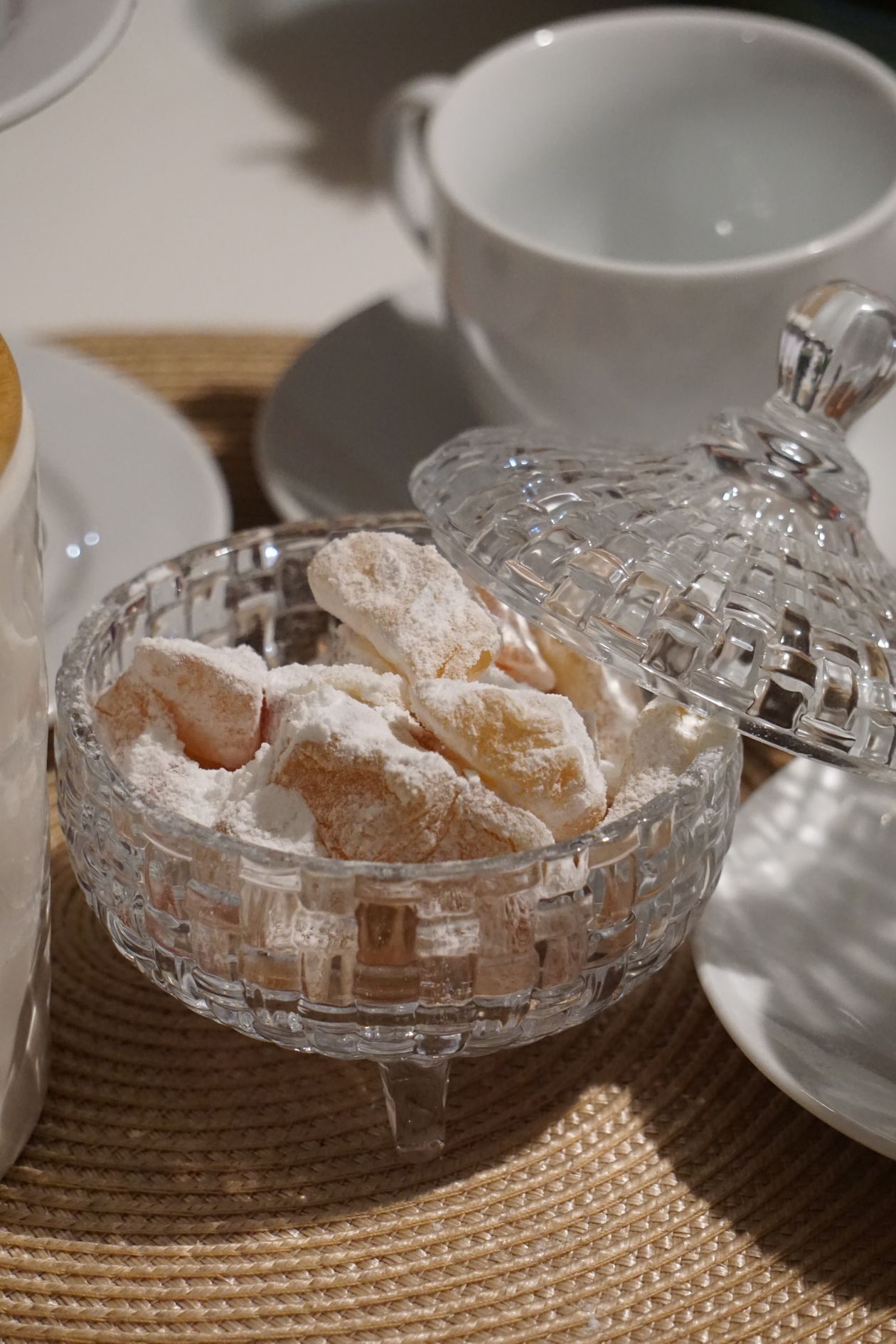
Loukoumi: Syros is the loukoumi capital of Greece. The island’s version of the confection known elsewhere as Turkish delight arrived with refugees from Chios and Asia Minor in the 1820s and 1830s. The traditional recipe uses starch, sugar, and local water — which some claim gives it a distinctive texture — and comes in flavours including rose, mastic, and bergamot. Several workshops in Ermoupoli still produce it by hand in copper cauldrons, and you will see vendors selling boxes on the ferry pier. The halvadopita (a thin nougat pie with almonds) is the other classic sweet, equally associated with the island.
San Michalis cheese: A hard, spicy cow’s-milk cheese with PDO (Protected Designation of Origin) status, produced exclusively on Syros in the village of San Michalis. Often compared to Parmesan for its sharp, nutty flavour, it is one of the rarest Greek cheeses — only two dairies on the island make it. Try it as a table cheese, fried in the saganaki style, or grated over pasta.
Louza: Thinly sliced cured pork loin seasoned with red wine and spices — a Syros meze staple, often served with local cheese and bread. The island also produces garlic-heavy pork sausages (skordoloukaniko) that pair well with ouzo.
Marathopita and kaparosalata: Fennel pie and caper salad, respectively — two dishes that reflect the island’s wild-food traditions. Capers grow freely on Syros, and the caper salad is a strong, pungent accompaniment that you either love immediately or need a couple of tries to appreciate.
The waterfront area of Ermoupoli and the lanes behind Miaouli Square have the highest concentration of places to eat. Kini also has well-regarded seafront tavernas. As with any Greek island, lunch is often better value than dinner, and the places where locals eat midweek tend to be more reliable than those positioned directly on the tourist waterfront.
Cultural Events and Festivals
Syros has a cultural calendar that most small islands cannot match, partly because of its year-round population and partly because of its artistic heritage.
The Animasyros International Animation Festival (typically late September — scheduled for 21–27 September in 2026) is the largest animation festival in Greece, attracting international entries and industry visitors. The Syros International Film Festival and the Ermoupoli International Music Festival add further programming across the summer months.
Carnival season (Apokries) is celebrated with particular enthusiasm on Syros, partly because of the island’s Catholic tradition. The festivities include parades, costumes, music, and a level of community involvement that can feel much more genuine than tourist-oriented carnivals elsewhere in Greece.
Easter on Syros is uniquely moving. Because the island has both a substantial Catholic and Orthodox population, both Easter traditions unfold in the same town, sometimes on different dates (when the calendars diverge) and sometimes simultaneously. The processions, the bells, and the shared rituals across both communities are unlike anything you will experience on other Greek islands.
Best Time to Visit Syros
Syros is one of the few Cycladic islands that genuinely works year-round. Unlike smaller islands where restaurants close and ferries thin out after October, Ermoupoli maintains a working economy, with shops, cafés, and cultural venues operating through winter.
May to June and September to October are the strongest months for most visitors — warm enough for swimming, uncrowded, and with full ferry and flight schedules. July and August bring peak temperatures (often above 30°C), the meltemi wind, and higher prices, though Syros never reaches the saturation levels of Santorini or Mykonos. The western beaches are generally more sheltered from the meltemi than exposed eastern coasts.
Late February to March is worth considering for carnival season. Winter (November to February) suits travellers who want to experience a working Greek island town rather than a beach holiday — expect cool weather (10–15°C), occasional rain, and a quieter but authentic atmosphere.
Where to Base Yourself
Most visitors stay in Ermoupoli, and it is the natural choice. The town has the widest selection of accommodation — from renovated neoclassical mansions to modest studios — plus the best eating, the easiest transport connections, and the most evening atmosphere. The Vaporia quarter is the most atmospheric area, with sea views and proximity to the centre, though it can be hilly.
Galissas is the main alternative, suitable for travellers who prefer a beach base with tavernas and a more relaxed rhythm. Bus connections to Ermoupoli are regular in summer. Kini is a quieter option on the west coast, with fewer services but a pleasant village atmosphere.
For those who want a combination, Ermoupoli is the stronger base — you can always take the bus or drive to the beaches during the day.
Suggested 4-Day Itinerary
Day 1: Arrive, settle in Ermoupoli. Walk Miaouli Square, the backstreets, and the Vaporia quarter. Evening along the waterfront.
Day 2: Morning walk to Ano Syros — cathedral, Vamvakaris Museum, views. Afternoon swim at Asteria or Kini. Evening in town.
Day 3: Beach day — Galissas for families, or combine Kini with a hike to Delfini. Lunch at a seafront taverna. Afternoon at Agathopes or Vari.
Day 4: Southern village loop — Posidonia, Finikas, Megas Gialos by car or bus. Pick up loukoumi and San Michalis cheese before departure.
Practical Costs
Syros is moderately priced by Cycladic standards — noticeably cheaper than Santorini or Mykonos, roughly comparable to Paros, and slightly more expensive than Naxos outside peak season. A midrange couple spending comfortably but not extravagantly might expect approximately €120–180 per day in summer, covering accommodation, meals, transport, and occasional attractions. Budget travellers staying in simpler studios and eating at local tavernas can manage on considerably less.
Ferry tickets from Piraeus start at around €36 for conventional services. Car rental in summer typically ranges from €35–55 per day. Dining out is reasonable — expect €10–18 for a main course at a good taverna, with seafood dishes at the upper end.
Common Mistakes to Avoid
Expecting a beach island. Syros has pleasant beaches, but they are not its main attraction. Visitors who arrive expecting Naxos-scale coastline may be disappointed. Come for the town, the food, and the culture — the beaches are a bonus.
Skipping Ano Syros. It is tempting to stay in the flat, comfortable streets of Ermoupoli, but the climb (or minibus ride) to the medieval hilltop is one of the best things on the island. Go in the late afternoon for the light and the views.
Not booking summer ferries in advance. High-speed services from Piraeus fill quickly in July and August. Conventional ferries are less likely to sell out but still benefit from advance booking, especially for vehicle transport.
Assuming everything closes in winter. Unlike most Cycladic islands, Syros has a genuine year-round community. Ermoupoli’s cafés, shops, and many of its cultural venues operate through winter, making it one of the rare islands where an off-season visit is both feasible and rewarding.
Day Trips from Syros
The island’s central position in the Cyclades makes it a good base for short ferry hops. Tinos is only 15–30 minutes away and offers the Panagia Evangelistria church, marble villages, and a growing food scene. Mykonos is 25–80 minutes by ferry and works as a day trip for those curious about the island’s atmosphere without committing to its prices. Paros is reachable in under two hours. These connections are most frequent in summer but some operate year-round.
Final Verdict
Syros is not the obvious Cycladic choice, and that is precisely its strength. It will not give you the caldera drama of Santorini or the beach abundance of Naxos, but it offers something that most Greek islands cannot: a real, working town with world-class 19th-century architecture, genuine cultural depth, a food tradition with real character, and a year-round atmosphere that does not depend on tourist season to sustain itself. For travellers who find that the most interesting part of a trip is understanding a place rather than simply photographing it, Syros may be the most rewarding island in the Cyclades.
This article was researched and verified as of July 2026. Ferry schedules, flight routes, admission fees, and opening hours may change between seasons. We recommend confirming transport details directly with operators before booking. Vivid Greece is an independent publication; all recommendations reflect editorial judgement.