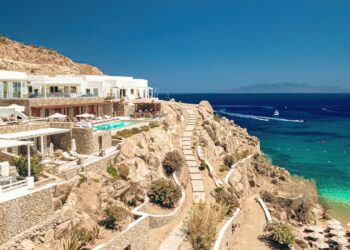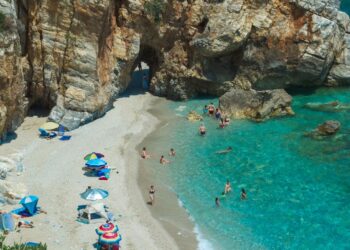
Serifos: The Untouched Cycladic Escape — Where Time Still Moves Slowly
There is an island in the Cyclades where the ferries dock gently in a quiet harbor, where the hillside village above glows white against the blue Aegean sky, and where — almost impossibly — the cafés are not playing commercial music and the only sound at noon is the distant clang of a church bell. That island is Serifos, and it is one of the most quietly extraordinary places in Greece.
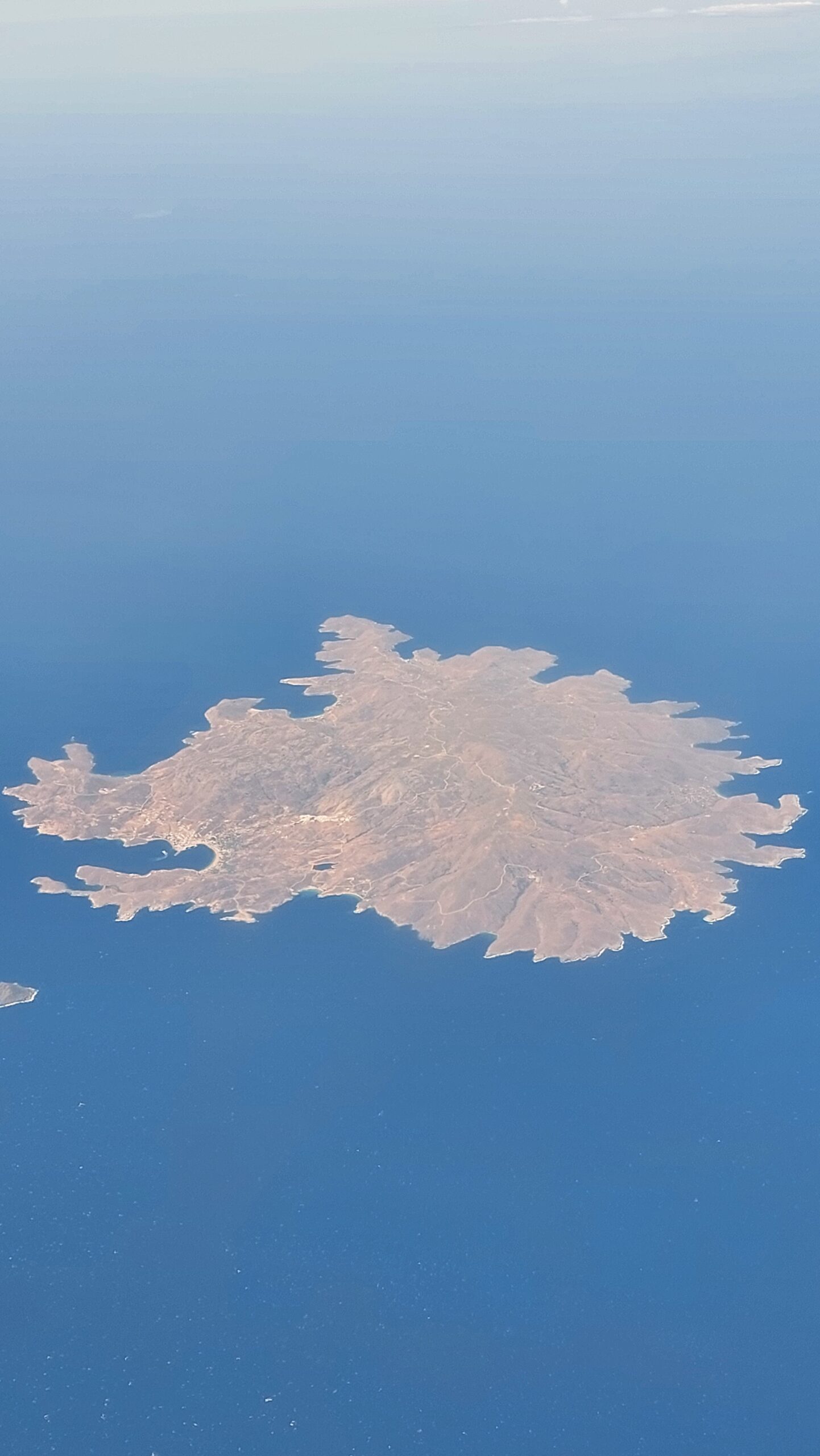
With a permanent population of just 333 people and no airport, Serifos has been left largely untouched by the forces that transformed Santorini and Mykonos into something closer to resorts than islands. It remains a place of rugged volcanic hills, cobblestone paths worn smooth by centuries of footsteps, and taverna owners who will sit down at your table without asking. This is not a hidden gem on the verge of being discovered — it is something rarer: a Cycladic island that has simply stayed itself.
Why Serifos: The Case for Untouched Beauty
In a Mediterranean summer where every Greek island seems to be trending on someone’s feed, Serifos offers something harder to find: genuine solitude. Not the performed solitude of a luxury retreat, but the real kind — a beach where you can spread your towel without negotiating for space, a hilltop alley where you can stop and listen to nothing.
The contrast with its famous Cycladic neighbors is stark. Santorini dazzles, but its clifftop villages now heave under the weight of cruise ship passengers from April to October. Mykonos glitters, but it has long since traded authenticity for spectacle. Even some of the so-called “alternatives” — Paros, Naxos — draw substantial summer crowds. Serifos receives a fraction of that traffic, not because it lacks beauty, but because it lacks the marketing machine.
The island’s landscape is dramatically different from the postcard Cyclades. Where Mykonos is flat and Santorini is volcanic and theatrical, Serifos is rugged and mountainous, with steep rocky hills rolling down to narrow coves and fine-sand beaches. It has the feel of a place shaped by wind and sea over millennia, with little human intervention. The 116 churches scattered across the island — many reached only by foot — are testament to a deep, quiet religiosity that still runs through island life.
Travel writers and island connoisseurs have been calling Serifos a “best-kept secret” for years. Lonely Planet, several leading travel blogs, and even the Sunday Times have noted its exceptional quality. But the island has absorbed that attention without fundamentally changing. Perhaps it is the residents themselves — fewer than 400 year-round — who set the tone: unhurried, proud, genuinely welcoming without being servile.
If Folegandros is the Cyclades’ most romantic cliff island, and Amorgos the most dramatically spiritual, then Serifos is the most quietly perfect — an island where slow travel is not a marketing concept but simply the way things work.
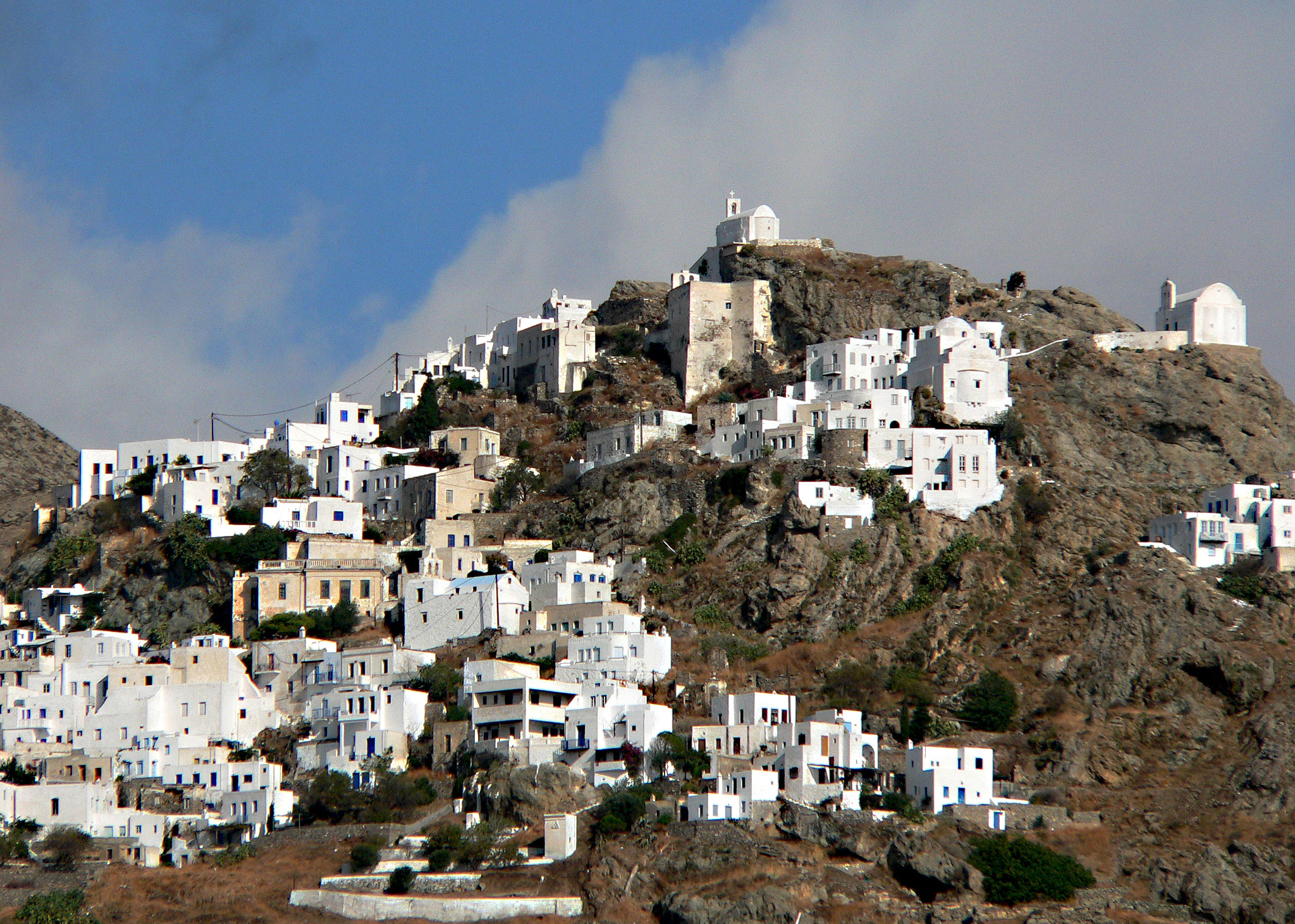
I arrived on an afternoon ferry from Piraeus and stood at the bow as the island came into view — a great rocky mass rising from the sea, with a village of white cubes clinging improbably to its summit. I thought: this is what the Cyclades must have looked like before everyone knew about the Cyclades.
Getting There and Practical Logistics
Serifos is accessed exclusively by ferry, which is — from the perspective of anyone seeking authentic island life — exactly as it should be. The main ferry connection runs from Piraeus (Athens’ port), with regular services operated by Blue Star Ferries and Seajets. The crossing takes approximately 2 to 3 hours depending on the vessel and route, making it one of the more accessible of the lesser-known Cycladic islands.
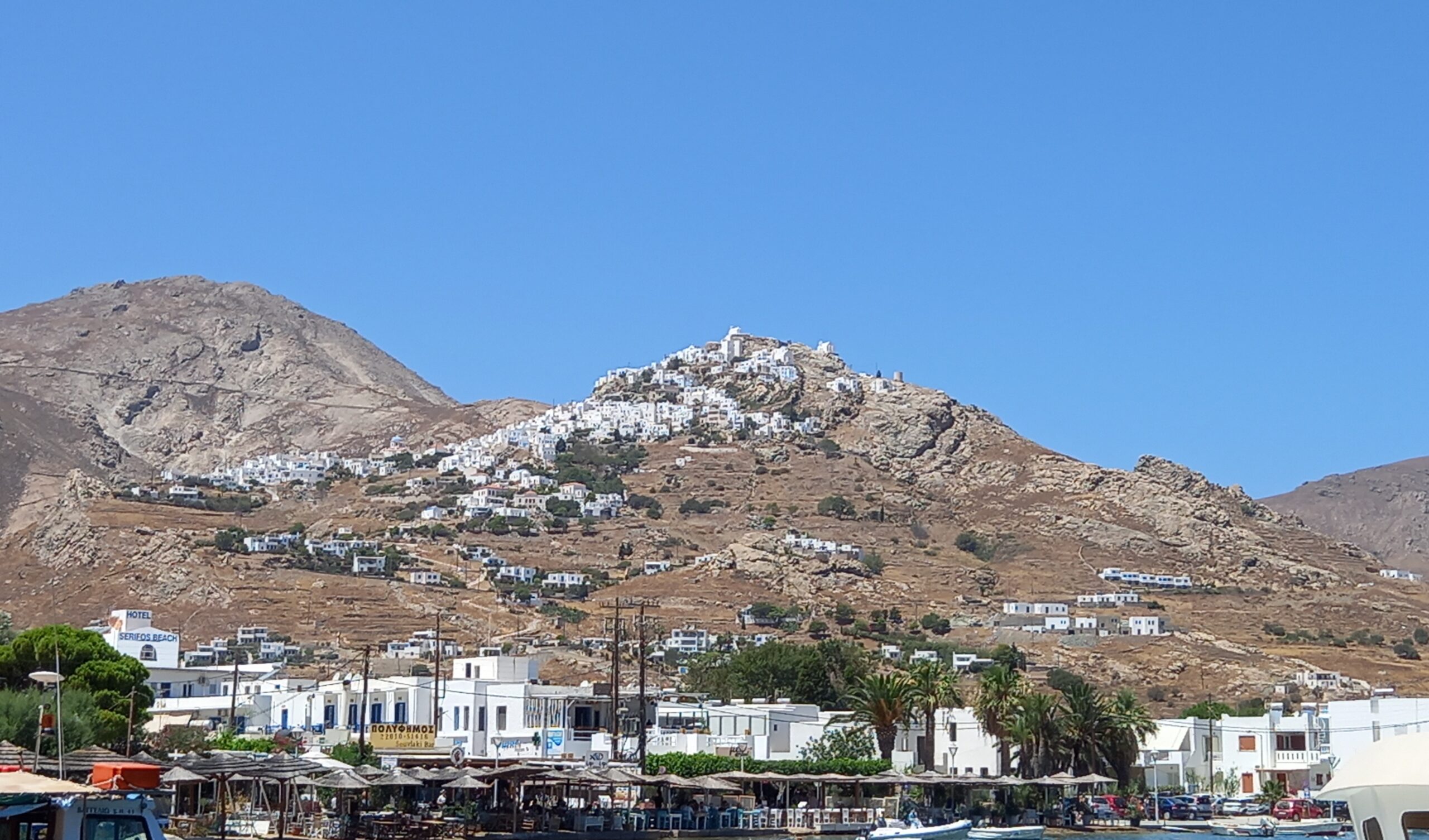
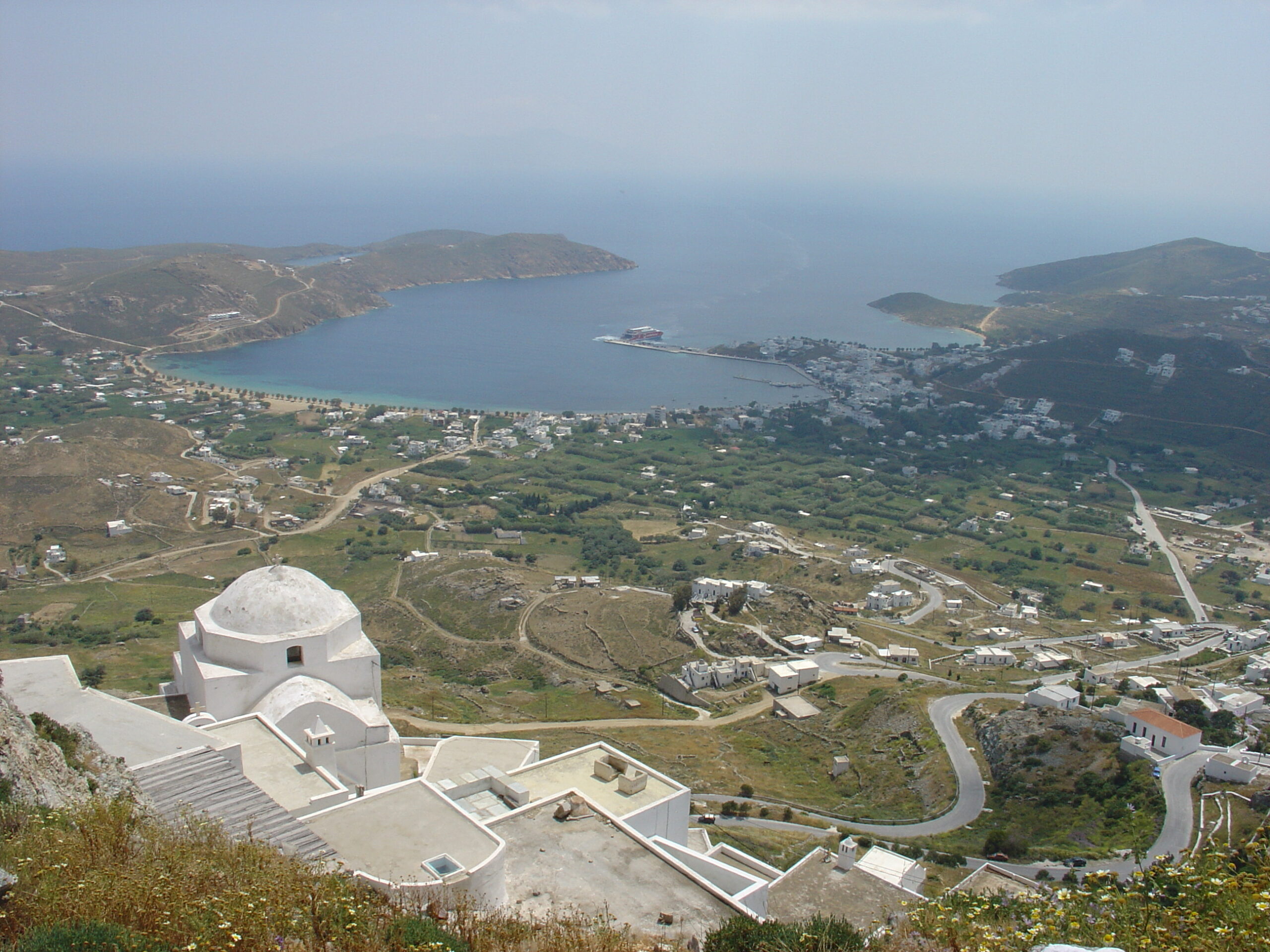
All ferries arrive at Livadi, the island’s port town and most populated settlement. From Livadi, the dramatic hilltop capital of Chora is visible immediately — a cluster of white buildings perched on a steep hill, connected to the port by a winding road (or a demanding footpath for the energetic).
Serifos also forms part of island-hopping circuits that include Sifnos, Milos, Kythnos, and Folegandros, making it an excellent anchor or transit stop for anyone exploring the western Cyclades. For ferry schedules and bookings, Seajets offers regular high-speed connections during the summer season.
On the island, renting a car or scooter is strongly recommended. The island covers roughly 74 square kilometers, and many of its best beaches and villages are accessible only by road or footpath. Rental options are available in Livadi; book in advance during July and August. Keep in mind that some of the island’s roads — particularly those leading to remote beaches — are unpaved, so a scooter rider should be comfortable on uneven surfaces.
Key practical notes:
– No airport; ferry-only access
– Summer season (June–September): frequent daily ferries from Piraeus
– Shoulder season (May, October): fewer connections; check schedules in advance
– November to April: very limited services; many local businesses close
– Bring sufficient cash — some smaller tavernas and guesthouses do not accept cards
Where to Stay: Small Hotels and Family Guesthouses
Accommodation on Serifos is almost entirely in the hands of local families, and this is one of the great pleasures of the island. Forget large resort complexes and hotel brands — here, you stay in small guesthouses run by people whose families have lived on the island for generations. Your host may also be the person who brings you breakfast, recommends a hiking trail, or knows who caught last night’s fish.
The main accommodation area is Livadi, the port town, where most options are clustered along the waterfront and on the surrounding hillsides. It is convenient, lively in a modest way, and within walking distance of Livadi beach and Livadakia beach. Hotel Maistrali is one of the better-known small hotels here, offering comfortable rooms close to the water.
For those who want to wake up to Aegean views and a quieter atmosphere, Chora offers a handful of rooms and small guesthouses with breathtaking panoramas. Staying in the capital, however, means navigating the steep alleys by foot (or by the local bus) rather than stepping out directly to the sea.
Booking advice: Serifos has limited accommodation for the size of its summer visitor flow, and quality rooms fill up quickly. Book at least two to three months in advance for July or August. In May, June, September, and October, last-minute availability is more realistic — and prices are considerably lower.
Beaches and Coves: Where to Swim on Serifos
For an island that does not advertise itself, Serifos has an extraordinary coastline. Its beaches are varied — from organized sandy stretches within walking distance of the port to completely wild coves that require a car or boat to reach. The water, as across the Cyclades, is clear and brilliantly blue.
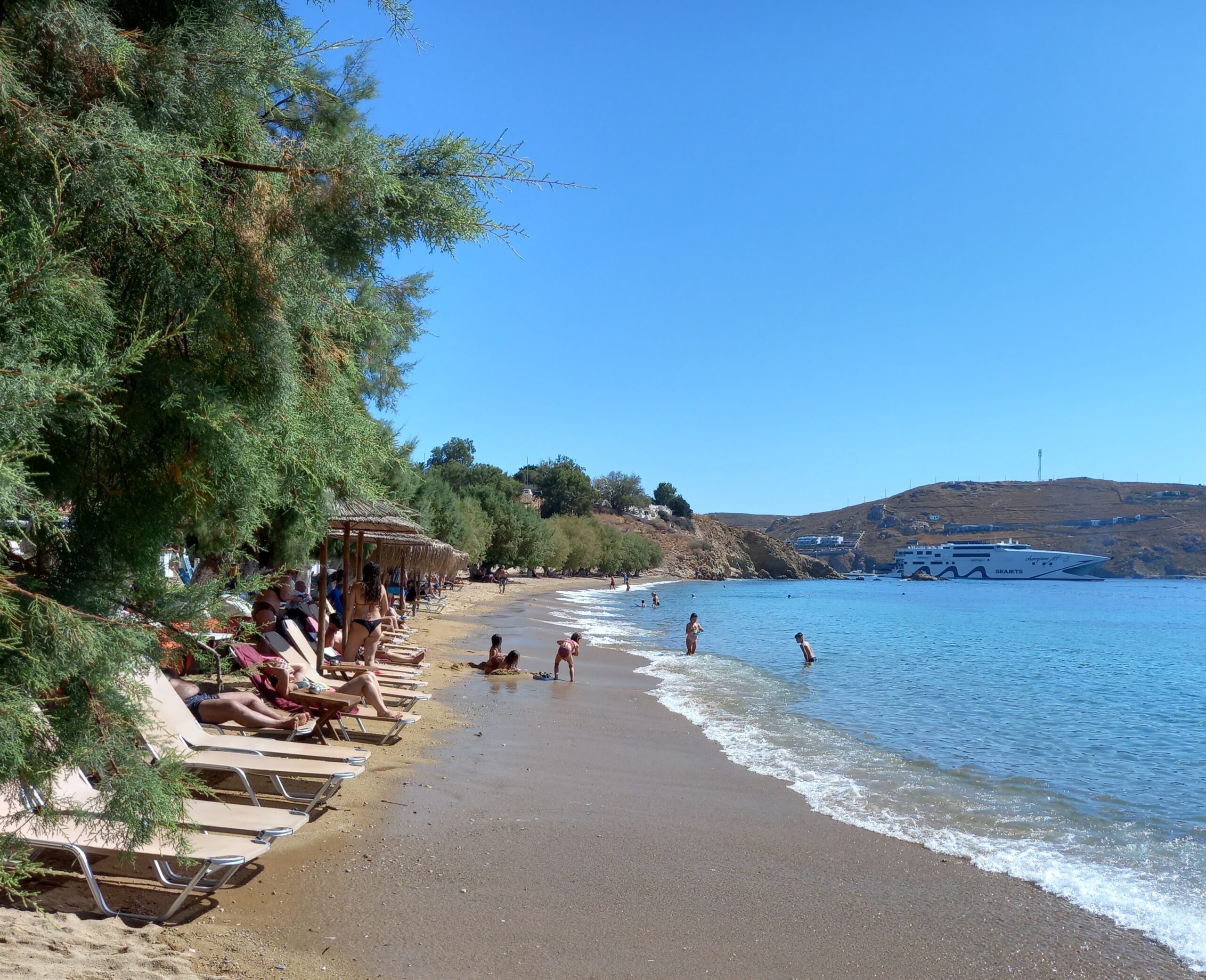
Psili Ammos — The Island’s Crown Jewel
The finest beach on Serifos — and one of the finest in the entire Cyclades — is Psili Ammos, located on the northern coast approximately 3.5 kilometers from Livadi. Its name means “fine sand,” and the name is exact: the beach is carpeted in powdery white sand, lapped by shallow, calm turquoise water that stretches out in gentle gradations of blue and green. In 2003, the Sunday Times singled it out as one of the best beaches in Europe — a designation that still holds today.
Two small tavernas operate at Psili Ammos during the summer, making it possible to spend a full day there without needing to bring provisions. Arrive early in July and August; even this tucked-away beach draws visitors who know the secret.
Livadi and Livadakia
Livadi beach runs along the waterfront of the port town itself, offering easy access, several cafés and tavernas nearby, and calm waters ideal for families. It is never entirely quiet in summer but is far from the packed beach scenes of Mykonos or Ios.
Livadakia is a short walk or drive south of Livadi — a smaller, calmer bay with crystal-clear water and a more natural feel. It is one of those beaches that rewards visitors who simply look past the main port: quieter, slightly more sheltered, and often uncrowded even in peak season.
Ganema, Agios Ioannis, and Beyond
Ganema beach is one of those places that makes you feel as though you have found something that was not meant to be found. Located on the southeastern coast, it is accessed by car along an unpaved track and remains genuinely unspoiled. Swim here and you will understand why some travelers come to Serifos and never quite recover from it.
Agios Ioannis, near the northern coast, is another calm, scenic swimming spot accessible by car — ideal for those who want to combine beach time with a coastal drive through the island’s interior landscape.
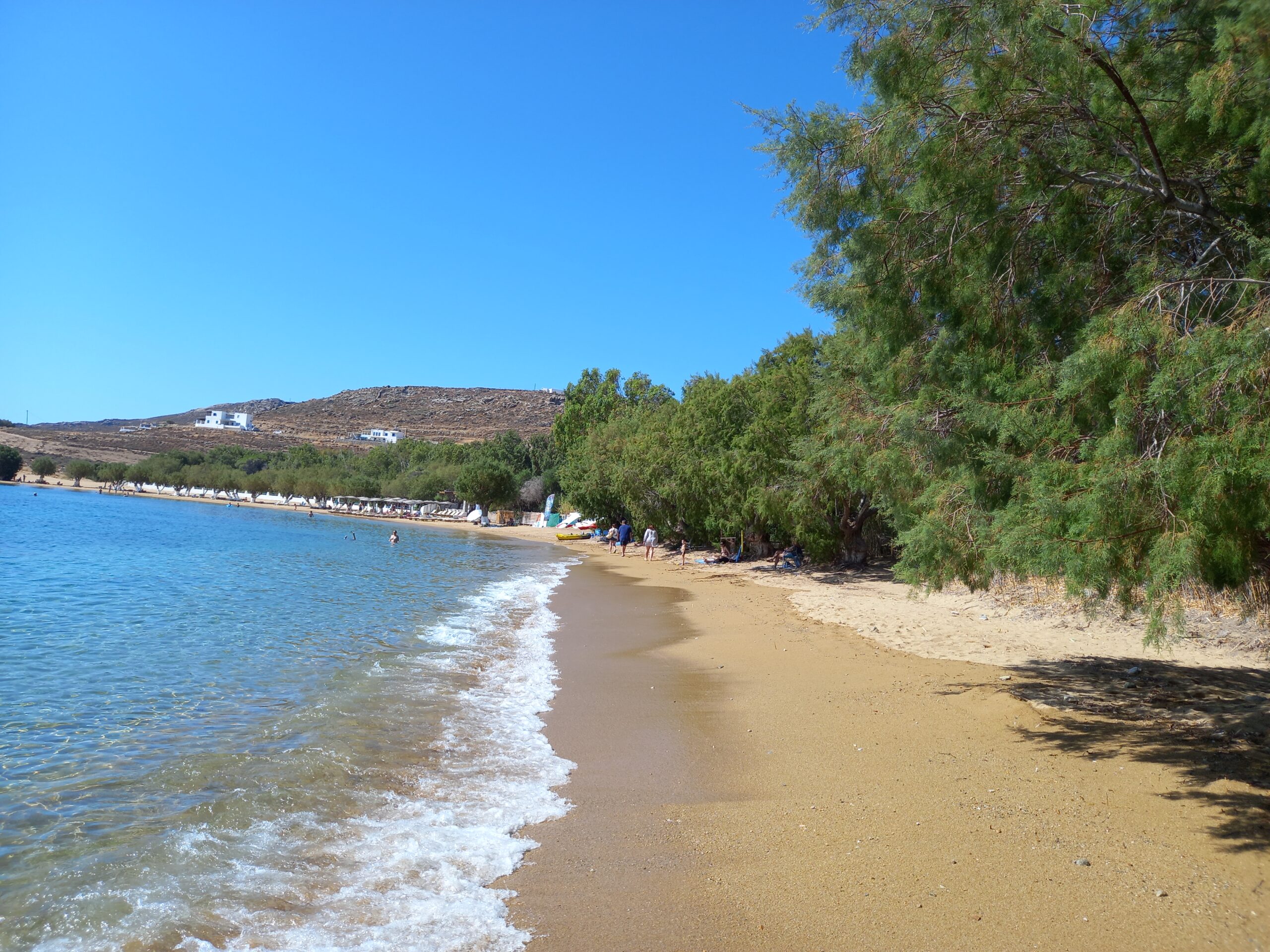
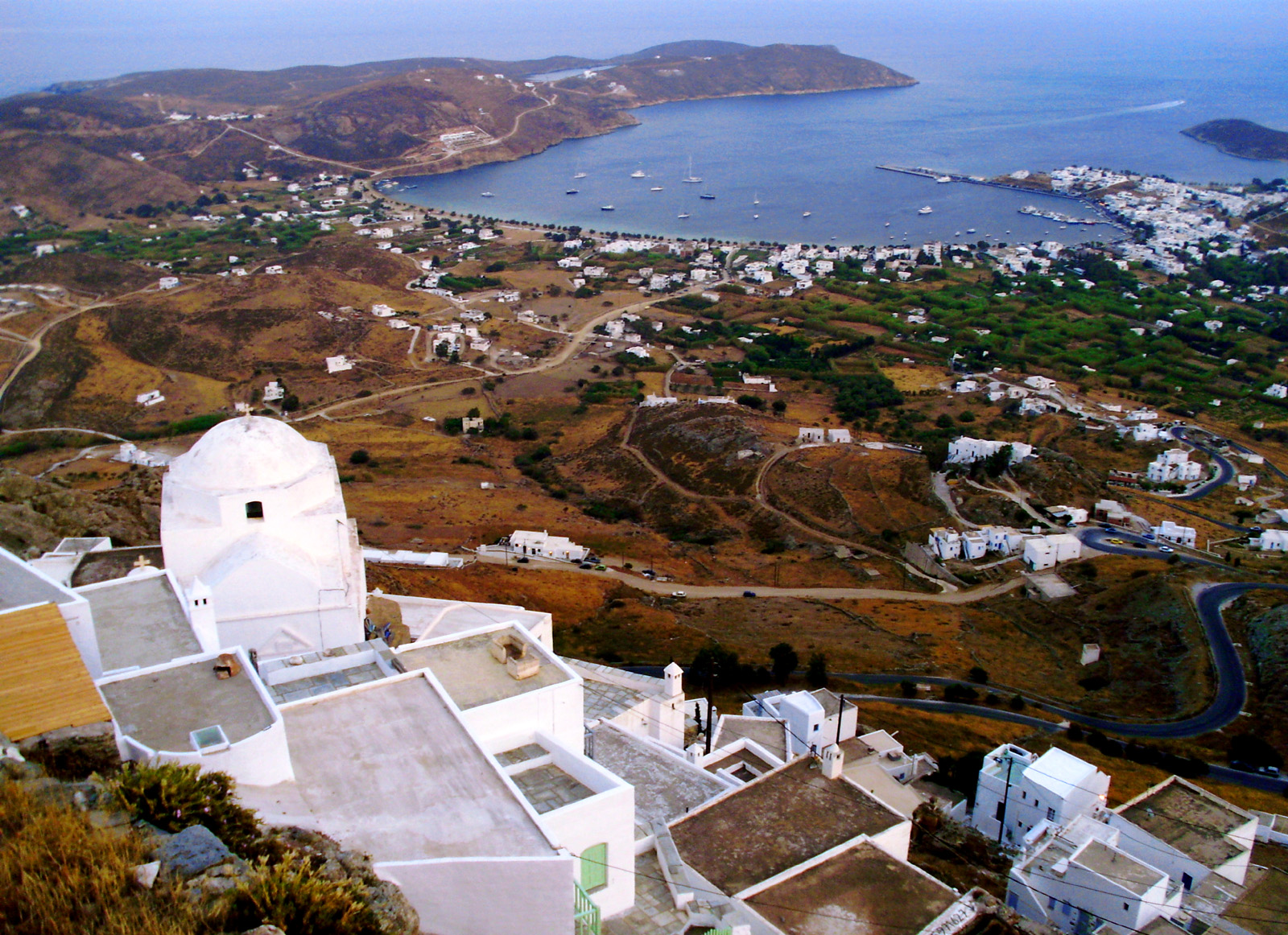
At Psili Ammos on a Tuesday morning in late June, I counted six other people on the entire beach. The water was so still and clear that I could see my shadow on the sand three meters below. I sat there for two hours without moving, which felt exactly right.
Hiking and Village Exploration
Serifos rewards walkers. The island has a well-developed network of marked paths connecting its villages, churches, and landscape features, ranging from easy coastal strolls to demanding mountain hikes that take the better part of a day. For those who love to travel on foot, Wikiloc and AllTrails both carry several Serifos trail profiles worth consulting before arrival.
Chora: The Hilltop Capital
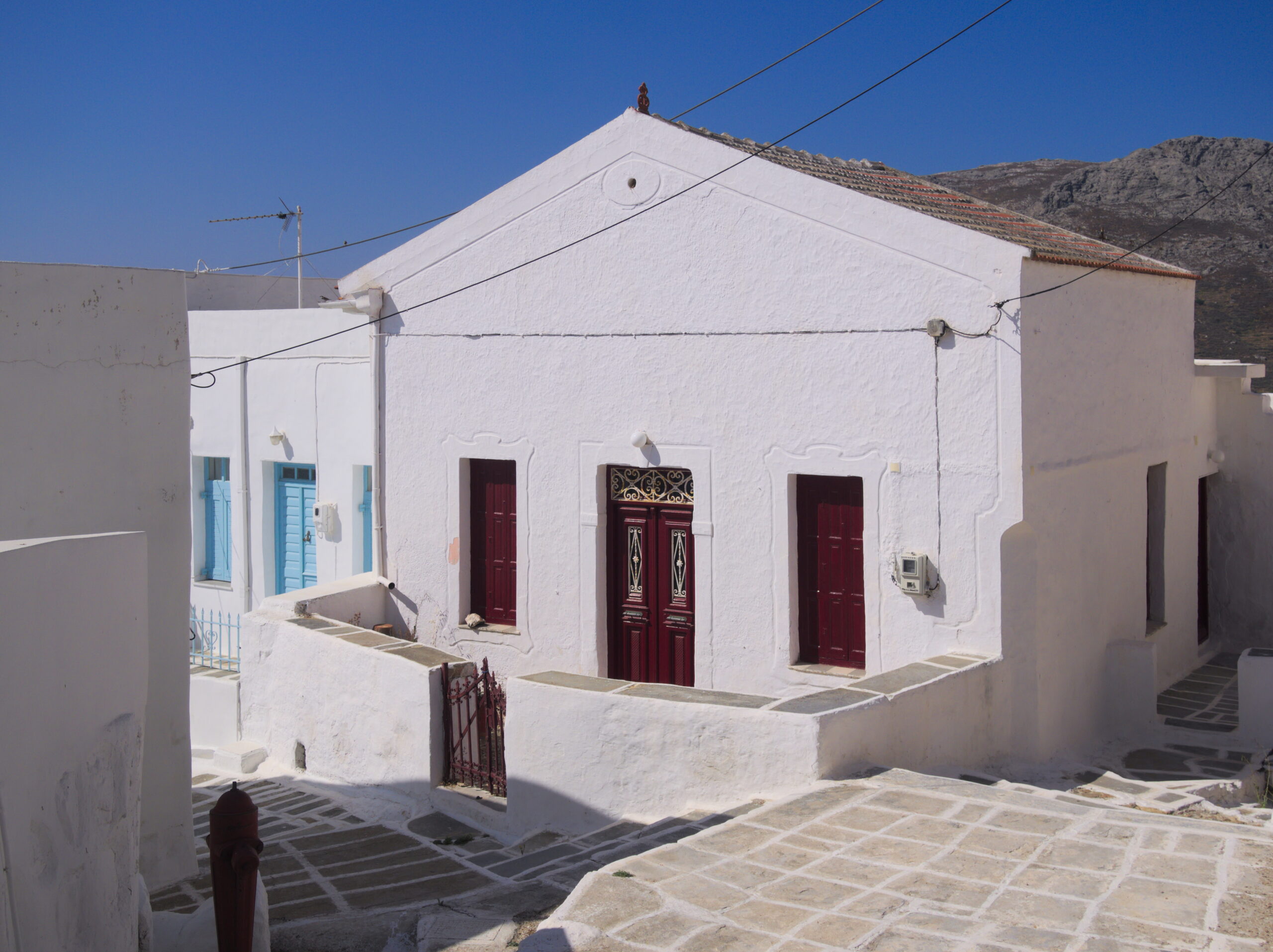
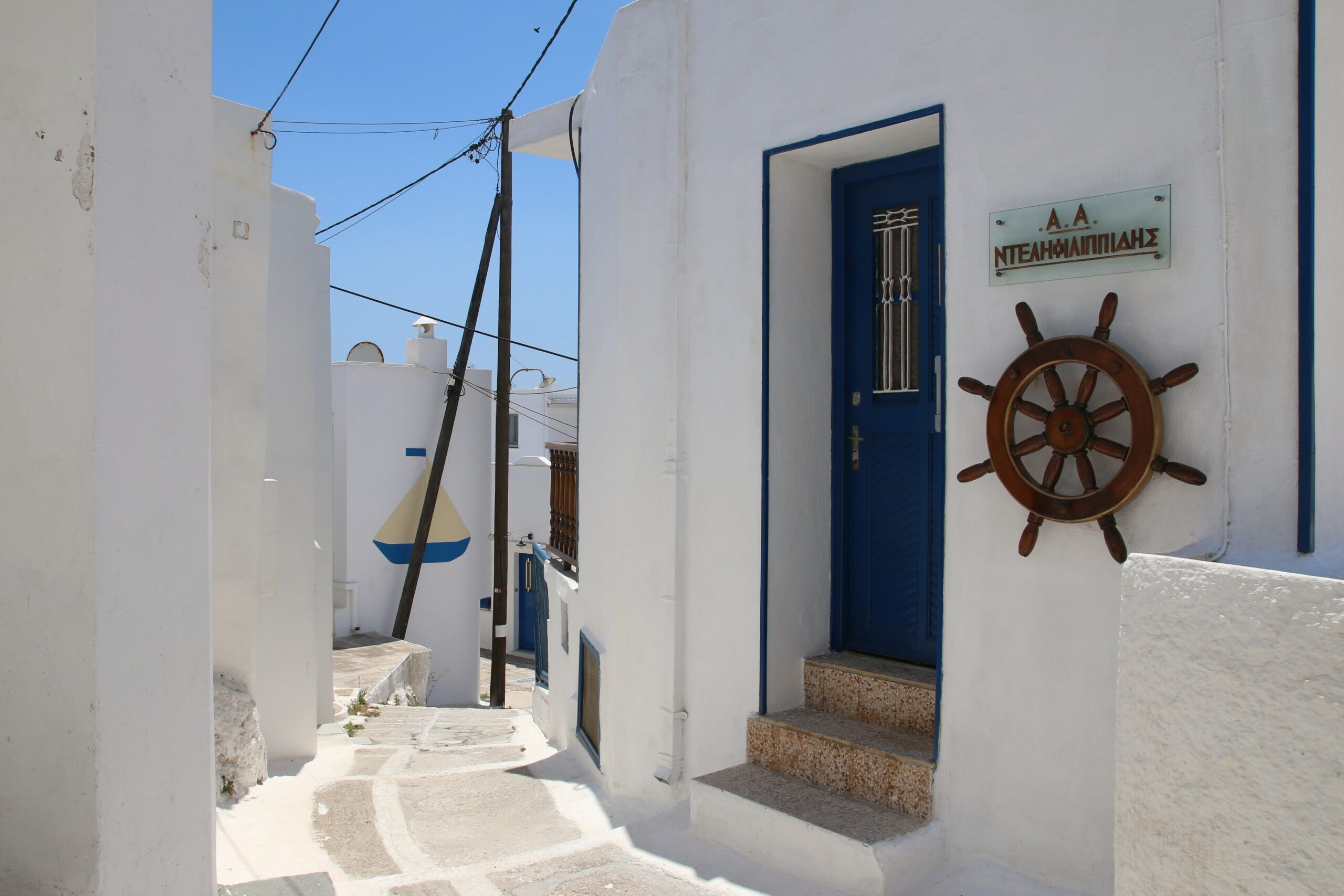
No visit to Serifos is complete without spending serious time in Chora, the island’s capital. Perched on a dramatic rocky summit at 230 meters above sea level, it is one of the most architecturally striking Cycladic villages anywhere in Greece — a tightly packed labyrinth of whitewashed houses, narrow arching alleyways, blue-doored chapels, and flower-filled terraces, all hanging above the sea.
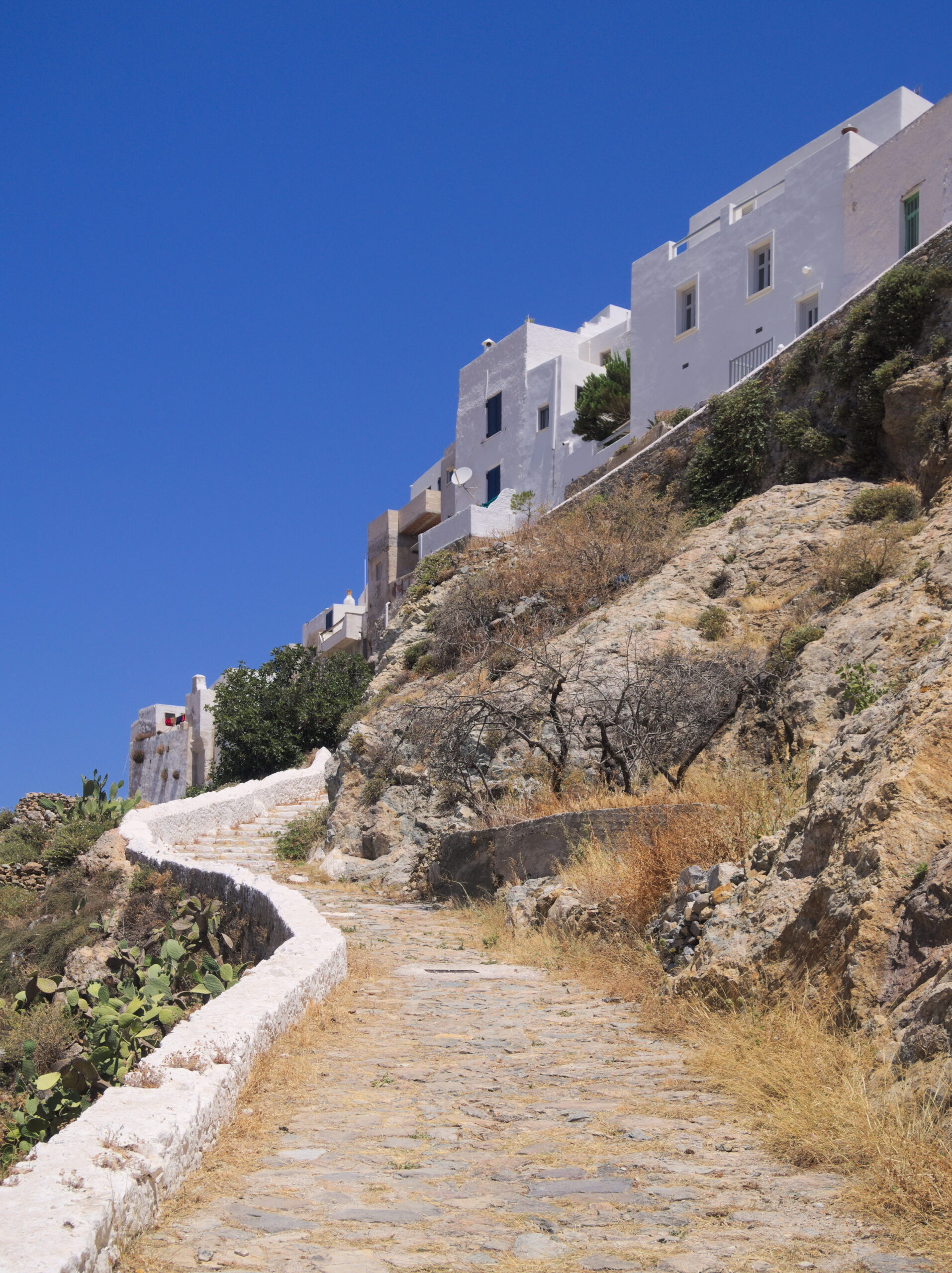
The village has two distinct zones: the lower part (Kato Chora), where the bus stops and most tavernas are located, and the upper medieval Kastro, a fortified settlement whose outer ring of houses forms a continuous defensive wall against the sea wind and — in earlier centuries — pirates. The Kastro still feels inhabited rather than merely preserved, which gives it a particular warmth.
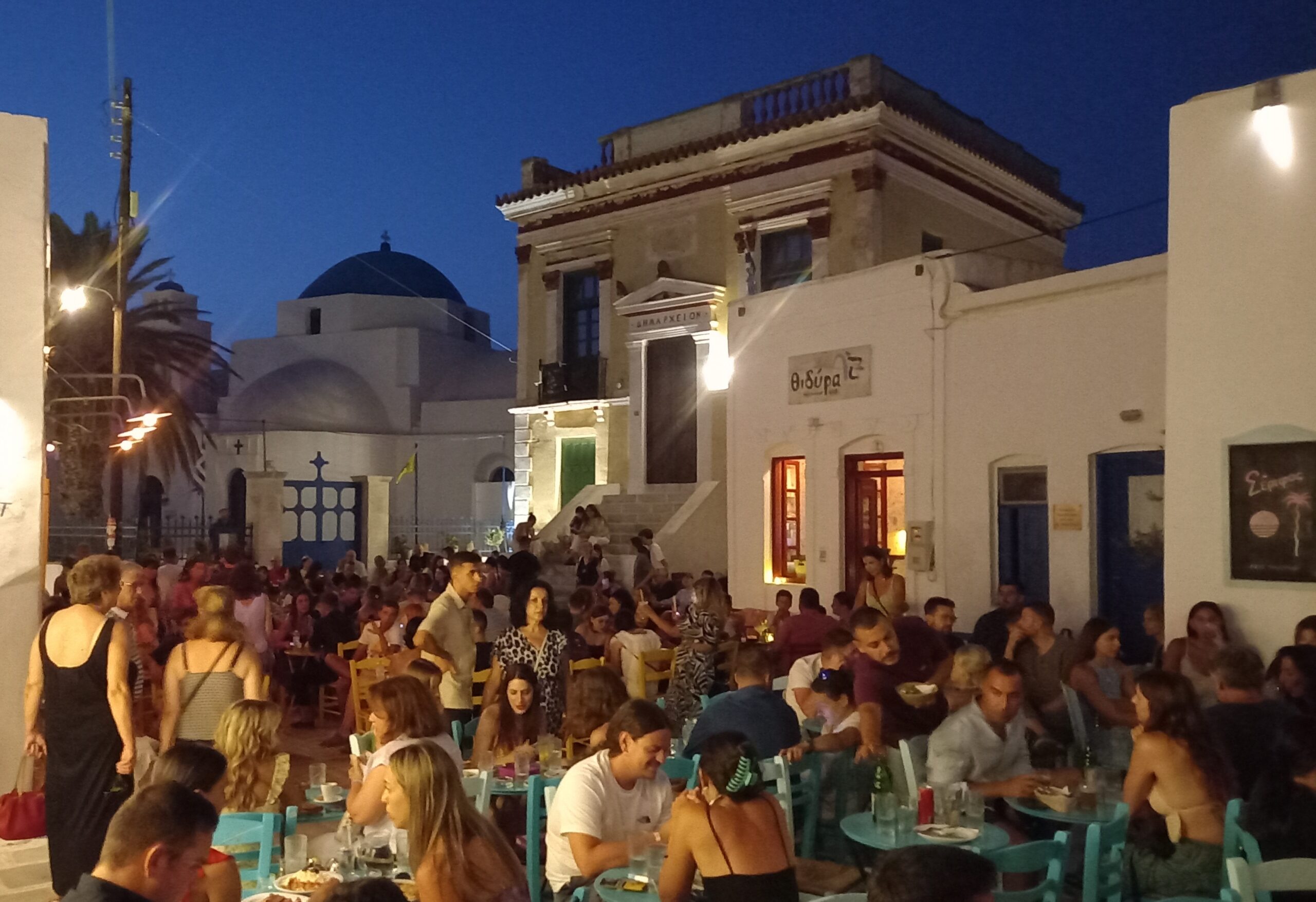
The main square, Plateia Dimarxeiou, is the social heart of the village — a few tables under a large tree, a café that opens at something like its own schedule, and in the evening a gathering of locals and visitors that feels organic rather than orchestrated. Arrive at sunset and stay for dinner. The views from the square down over the bay and out across the Aegean are spectacular.
The Taxiarches Monastery Trail
The most rewarding hiking destination on Serifos is the Monastery of Taxiarches, a Byzantine Orthodox monastery located in the mountainous interior of the island. The shortest trail from Chora takes approximately 1.5 hours on foot, passing through the ancient village of Pano Stavros, the plateau area of Vounaki, and finally arriving at the monastery’s secluded mountain setting.
The monastery itself — dedicated to the Archangels Michael and Gabriel — dates back to the 16th century and sits in remarkable isolation, surrounded by rocky hills with views stretching to the sea. It is still an active religious site. Visiting monks or caretakers may be present, and visitors should dress respectfully. The walk back to Chora, with the sea visible ahead of you through the mountain passes, is even better than the walk out.
For those who want to see more of the island on foot, the network of paths connecting Serifos’s 116+ churches offers almost limitless exploration. Many of the most scenic trails are detailed on Wikiloc’s Serifos collection. Like Andros, which has built an entire hiking culture around its ancient footpath network, Serifos rewards travelers who are willing to slow down and walk.
Halfway up the trail to Taxiarches, I paused on a rocky outcrop and looked back toward Chora — the village a white smudge against the blue horizon, the sea below it perfectly still. There is a particular quality to silence on a Greek island hilltop that I have not found anywhere else.
Food and Local Taverna Culture
Eating on Serifos is one of its quieter pleasures. There are no destination restaurants, no celebrity chefs, no menus designed for Instagram. What you get instead is home-cooked Greek island food made from ingredients that were either caught that morning, grown in a backyard plot, or foraged from the hillside — and served by people who genuinely want you to enjoy it.
The island’s signature dish is cured pork tenderloin, spiced with cumin, allspice, garlic, and black pepper — a preparation that reflects the traditional mountain character of the island, where pork was preserved to last through the off-season months. Pair it with locally grown vegetables, fresh bread, and a carafe of house wine and you have one of the most satisfying meals the Cyclades can offer.
For seafood lovers, the waterfront tavernas in Livadi serve grilled fish that was swimming in the Aegean the same morning. Order simply: grilled bream or sea bass with olive oil and lemon, a tomato salad, and a cold Mythos. The simplicity is the point.
Kyria Margarita’s Taverna is one of those places that travelers who find it never forget. An off-the-beaten-path family operation featured in Culinary Backstreets, it serves home-cooked dishes made with ingredients that Kyria Margarita grows or forages herself. The menu is limited and changes daily. Arrive early, or accept that you may find it closed. It is exactly this kind of place — quietly brilliant, totally uncommercialized — that defines eating on Serifos.
In Chora, Aloni Taverna offers a more accessible option with excellent views from its terrace and a menu of traditional Greek dishes rooted in local produce. The setting alone — looking out over the Aegean from a medieval hilltop — would make indifferent food taste better. The food is not indifferent.
For those interested in slow travel through Greece’s less-explored islands, the taverna culture of Serifos has a great deal in common with the rhythms of Koufonisia and other Small Cyclades: unhurried, community-centered, and deeply satisfying in proportion to how fully you surrender to it.
Tips for Solo Travelers and Couples
Traveling Solo
Serifos is an ideal destination for solo travelers, and not only because it is safe and easy to navigate. The island has an inherent sociability — the kind that develops when communities are small and everyone essentially knows one another. As a visitor, you are drawn gently into that social fabric rather than kept at arm’s length.
The family-run guesthouses are particularly welcoming to solo guests. Hosts will often offer advice on where to swim, which trail to take, or which taverna serves the best fish that day. The hiking trails are well-marked and entirely safe to walk alone. And evenings in the Chora square — nursing a glass of wine while the village settles into its nightly rhythm — offer effortless connection with other travelers without any need to seek it out.
For context and comparison with other solo-friendly Cycladic islands, our guide to September in Greece covers the shoulder season advantages that make late-summer solo travel particularly rewarding.
Traveling as a Couple
For couples seeking tranquility over social activity, Serifos is close to perfect. The combination of dramatic hilltop villages, secluded beaches, and intimate taverna dinners creates a natural romantic rhythm. Sunset from Chora’s main square — watching the light fade over the Aegean with a glass of something cold — is one of those moments that couples return to in memory for years.
Plan a day that begins with an early swim at Psili Ammos (before the midday heat and before other visitors arrive), followed by a slow lunch at a waterfront taverna, a rest during the afternoon, and an evening walk up to Chora for dinner. Repeat, with variations. It is not a complicated formula, but it is an extraordinarily effective one.
For similar romantic Cycladic experiences, you might also consider Folegandros as a companion island in an island-hopping itinerary — both share a commitment to authenticity and a complete lack of interest in mass tourism.
When to Go and Final Planning Tips
Best Times to Visit
Serifos is at its best in May, June, September, and October — the shoulder seasons when the weather is ideal (warm and sunny, with gentle sea breezes), the Aegean water is warm enough for comfortable swimming from late May onwards, and the island retains its character without the compression of peak-season visitor numbers.
July and August bring more visitors and slightly higher prices, but Serifos even at its busiest is a fraction of the crowd pressure you would experience on Santorini or Mykonos. Peak season is manageable on Serifos; it is simply less ideal. The island is also hotter and drier in August, which can make hiking uncomfortable during midday hours.
October is a special month — the light changes, the tourists largely depart, and the island reverts to its year-round self. Tavernas are still open, the sea is warm from summer, and you may find yourself eating dinner in a room of almost entirely Greek guests. This is Serifos at its most authentic.
For a fuller picture of why September and October reward Greek island travelers, our September in Greece guide explores the seasonal sweet spot in detail.
Practical Planning Checklist
Duration: Allow at least 3 full days; 5 days is ideal for experiencing the beaches, hiking, and village life without rushing.
Transport: Book ferry tickets in advance for summer travel, especially for weekends and the high season (mid-July to mid-August). Check Blue Star Ferries or Seajets for current schedules.
Accommodation: Book weeks in advance for summer; shoulder season allows more flexibility.
Packing: Comfortable walking shoes or trail runners are essential — Chora’s alleys are uneven, and the hiking trails require grip. Light cotton clothing, sun protection (the Cycladic sun is fierce), and a light jacket for evenings in Chora, which catches the sea wind.
Money: Bring cash. ATMs are available in Livadi, but many smaller establishments prefer or require payment in euros.
Connectivity: Mobile coverage is generally good in Livadi and Chora; more remote areas may have weaker signal — which, on an island like this, is not necessarily a problem.
Exploring the island: Combine Serifos with Milos for a two-island western Cyclades itinerary — both offer dramatic landscapes, excellent beaches, and authentic character, and ferry connections between them run regularly in summer.
Serifos in the Broader Cyclades Picture
There is a growing awareness among thoughtful travelers that the Cyclades contain far more than Santorini and Mykonos — that the archipelago’s true richness lies in the islands that have not been fully packaged and sold. Serifos belongs emphatically to that category, alongside Folegandros, Amorgos, and Koufonisia.
What makes Serifos distinctive within even this company is its combination of accessibility (a short ferry from Piraeus), visual drama (Chora on its summit is one of the great Cycladic sights), beach quality (Psili Ammos is genuinely world-class), and the depth of its walking culture. It is an island that rewards multiple visits and different kinds of traveler — the hiker, the beach-lover, the gastronome, the photographer — without requiring any of them to compromise.
For anyone building a Cyclades island-hopping itinerary or seeking an alternative to the island crowds, Serifos deserves a place at the top of the list. It is not undiscovered — the islanders are too proud and too clear-eyed for that fiction. But it is genuinely, stubbornly, beautifully itself.
That, in the Cyclades in 2026, is something worth taking a ferry for.
For official tourism information about Serifos and the wider Cyclades, visit Visit Greece.