Kythira is the Greek island for travellers who want their holiday to contain more than a single beach and a photogenic harbour. It has Venetian castles, Byzantine ruins, traditional villages, ravines, waterfalls, small coves and a coastline that changes character from one side to the next. It also sits in an unusual geographical position: close to the southern Peloponnese, linked historically with the Ionian Islands, and connected by sea routes that continue towards Crete and Antikythera. If you are considering a longer southern-Greece route, our Crete road-trip guide is useful for comparing the scale and driving demands of a much larger island.
That combination is the island’s appeal, but it is also the reason Kythira rewards preparation. The beaches are spread out, many roads are winding or partly unpaved, and the most beautiful coves are not always the easiest to reach. Kythira is not a compact island where every worthwhile stop lies a short walk from the port. It is better understood as a destination for exploring slowly, with a car or a carefully planned base and enough time for the journey between places.
This guide is for travellers deciding whether Kythira suits them, where to stay, how to arrive, and how to build an itinerary that balances swimming, villages, history and landscape. It is particularly well suited to couples, independent travellers, families with older children and anyone who enjoys choosing a different kind of day each morning. It may be less suitable for visitors who want a fully walkable resort, dependable high-frequency public transport or a classic island-hopping schedule.
| Planning question | Practical answer |
|---|---|
| Best for | Slow exploration, varied beaches, traditional settlements, castles, short walks and independent travel. |
| Less suitable for | A car-free resort break, a nightlife-led holiday or a short stop that depends on seeing the whole island. |
| Ideal first visit | Five to seven nights, with one base and a flexible plan for beaches, villages and historical sites. |
| Car necessary? | Not in every case, but strongly helpful for reaching scattered beaches, Mylopotamos, Paleochora and the north. |
| Main arrival points | Diakofti port by ferry or Kythira Airport by flight from Athens; routes and frequencies change seasonally. |
| Island character | A spacious, historically layered island with quiet stretches, small settlements and a coastline made for road days. |
An island for choosing your own pace
Kythira works best when the day is allowed to unfold between a village, a swimming stop and one place with a story.
Who Kythira is best for — and who should consider elsewhere
Kythira suits travellers who enjoy variety without needing constant activity. A morning might involve the Venetian castle above Chora, an afternoon at Kapsali, and an evening meal in a small village. Another day could combine the watermills and waterfall around Mylopotamos with a west-coast beach. The island offers enough material for a full week, but its attractions are distributed rather than concentrated in one resort.
It is a good choice for people who value atmosphere over spectacle. Chora’s lanes and old mansions, Avlemonas’s small harbour, the ruined churches of Paleochora and the ravines around Mylopotamos all reward attention, but none should be approached as a five-minute photo stop. Kythira’s strongest experiences come from allowing time for the setting around the headline attraction.
Families should choose their base and beaches carefully. Diakofti and Paleopoli can be more practical for a straightforward swimming day, while Kaladi involves a rougher approach and a steep descent. Kapsali offers services close to Chora, but the best choice depends on the age of the children, the amount of beach equipment you carry and the conditions on the day.
Kythira may disappoint travellers who want a dense cluster of restaurants, bars and activities immediately outside their accommodation. It can also frustrate anyone who dislikes driving on unfamiliar roads or expects every ferry connection to operate like a route between the most popular Cycladic islands. The island is not “untouched” in any literal sense, and it is not empty in high season. Its quieter character comes partly from its scale, access pattern and dispersed settlements rather than from an absence of visitors.
For a different kind of Greek island comparison, our Ionian Islands guide is a useful companion. Kythira is officially associated with the Ionian group, but it does not feel like a straightforward extension of Corfu, Kefalonia or Zakynthos. Travellers arriving through the capital can also use our Athens travel guide to plan the city portion separately from the island transfer.
When to visit Kythira
Late spring, early summer and September are usually the most comfortable periods for combining swimming with walking, village visits and archaeological sites. The island’s landscape changes across the year: the official tourism guide highlights spring colour and the different atmosphere of autumn, while summer naturally places the emphasis on the sea and evening life.
July and August offer the warmest swimming conditions and the fullest selection of open accommodation, tavernas and seasonal services. They also bring stronger demand for ferries, rental cars and popular beaches. If you are travelling with a vehicle, book the ferry and car early enough to leave options. Do not assume that a route or departure pattern seen in one summer will be repeated unchanged the next.
September can be particularly attractive for travellers who want warm water but a less pressured rhythm. It is still important to check the availability of beach facilities, boat excursions and restaurants, as seasonal businesses can adjust their schedules. Outside the main season, Kythira becomes quieter and more atmospheric, but transport, opening hours and accommodation availability require more deliberate planning.
For walks and exposed historical sites, start early during hot weather. Bring water, sun protection and shoes suitable for uneven ground. Wildfire risk, high winds and heat can affect roads, trails and swimming conditions across Greece; check current local and official advice before setting out.
How to get to Kythira
Kythira has two practical arrival options: ferry and flight. The island’s airport receives domestic services from Athens, and there are no direct international flights to Kythira. Travellers arriving from abroad therefore need to connect through Athens if flying.
Ferries reach Diakofti, the island’s main port, from several directions. Routes connect Kythira with Neapoli and Gythio in the Peloponnese, Piraeus, Kissamos in Crete and Antikythera. The best route depends on whether you are already travelling through southern Greece, whether you are bringing a car and how your wider itinerary is arranged.
| Route | Indicative sailing picture | Planning note |
|---|---|---|
| Neapoli–Kythira | The shortest mainland crossing; recent timetable information showed roughly 1 hour 15 minutes and frequent weekly service. | Often the most practical ferry route when driving through Laconia, but verify the current operator timetable and vehicle rules. |
| Gythio–Kythira | A longer southern Peloponnese connection, with schedules varying by season and operator. | Useful when combined with Mani or the Laconian coast; allow flexibility around departure days. |
| Piraeus–Kythira | A substantially longer crossing than Neapoli, with several weekly departures in recent schedule data. | Can be convenient from Athens without a long drive south, but compare sailing time, price and vehicle availability. |
| Kissamos–Kythira | A seasonal or changing connection linking western Crete with the island. | Potentially useful for a Crete combination, but never build the itinerary without checking the current sailing calendar. |
Recent ferry information checked during research gave indicative shortest crossing times of around 1 hour 15 minutes from Neapoli, around 2 hours 10 minutes from Gythio, around 6 hours 15 minutes from Piraeus and around 3 hours 15 minutes from Kissamos. These are planning references, not permanent facts. Confirm departure time, operating days, fares, vehicle space and the arrival port with the ferry operator or booking platform before travel.
Bringing a car makes sense for many visitors, particularly if Kythira is part of a wider Peloponnese itinerary. If you arrive without one, choose your base with care and ask your accommodation about current local transport, taxi availability and any seasonal bus links. A car-free Kythira trip is possible, but it should be designed around a smaller geographic area rather than the whole island.
Where to stay
Chora and Kapsali: best for atmosphere and first-time convenience
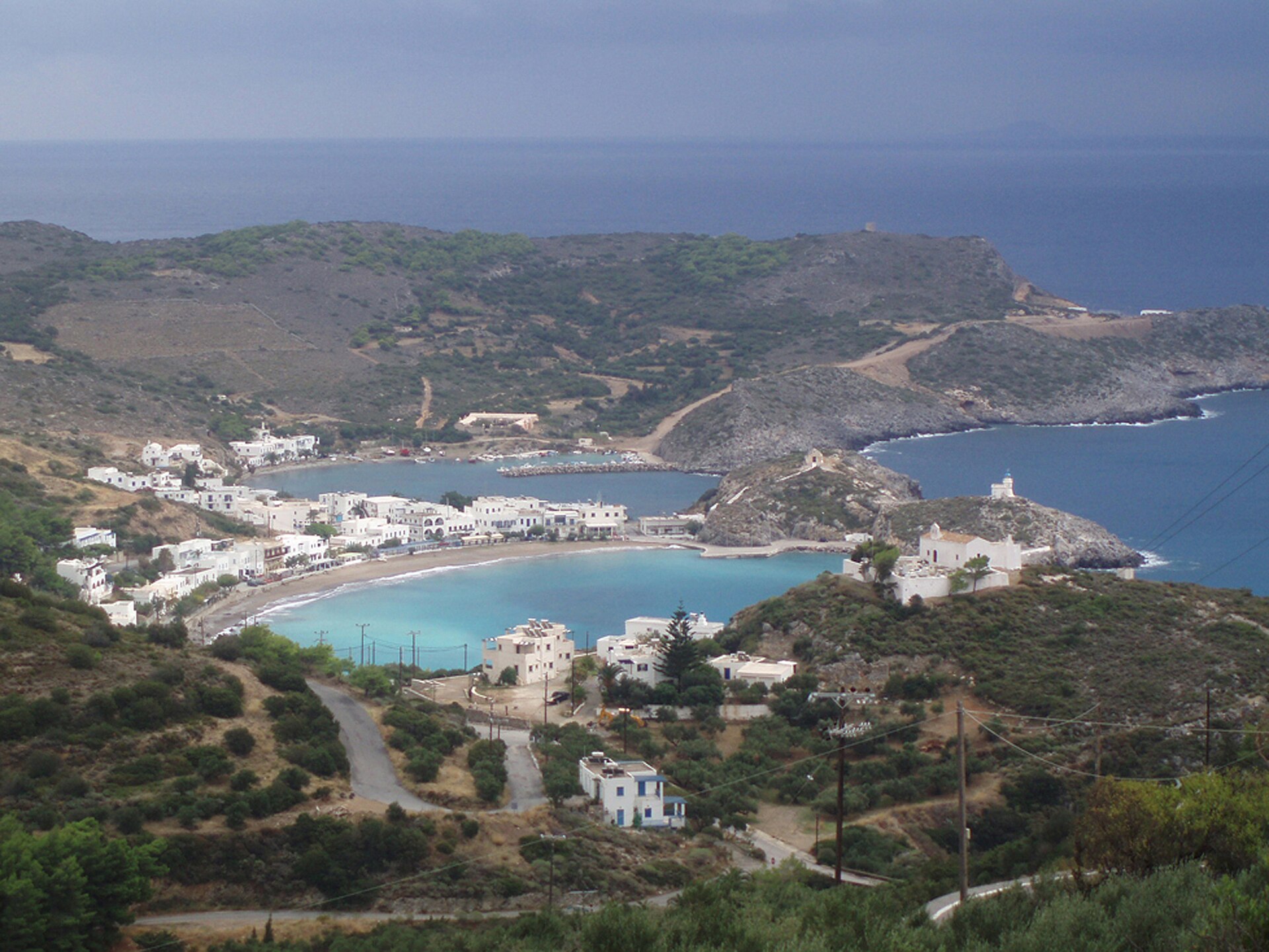
Chora is the island’s capital, built around old mansions, picturesque lanes and the Venetian castle. It is the natural choice for visitors who want evening walks, history and a base with character. The Belvedere viewpoint gives a broad view, while the Archaeological Museum stands at the entrance to the settlement.
Kapsali lies below Chora around a pair of bays and is the more beach-oriented option. It offers tavernas, swimming, accommodation and seasonal activities, including boat excursions towards the islet of Chytra. Staying here makes it easier to combine a morning in Chora with a sea-focused afternoon, although the area is not central for every northern and eastern excursion.
Avlemonas and Palaiopoli: best for the east coast
Avlemonas is a small, attractive seaside settlement on the east coast, useful for travellers who want to be near Palaiopoli, Kaladi, Diakofti and the eastern beaches. It is a lovely place for a harbour walk and a meal, but accommodation options can be more limited than in larger bases, so check availability early in high season.
Palaiopoli offers a more open coastal setting and easy access to one of the island’s longer beaches. It can work well for families or visitors who prefer a quieter base near swimming areas, though a car is especially helpful if you plan to explore the west and north.
Agia Pelagia and the north
Agia Pelagia is a practical northern base with a coastal settlement, accommodation and access to beaches such as Kakia Lagada and the northern coast. It suits visitors who want a quieter location than Kapsali while still having a recognisable seaside base.
The northern part of Kythira also makes sense for travellers interested in Platia Ammos, Fourni, Karavas and the Moudari lighthouse. It is less convenient for repeated evening trips to Chora or the far south, so choose it because the north is part of your plan, not simply because the map makes the island look small.
Diakofti: best for the port and an easy beach
Diakofti is the arrival point for ferries and has a beach known for pale sand and shallow, clear water. It can be convenient for a first or last night around a ferry crossing, and it may suit families who value an easier swimming environment. As a base for the entire island, however, it is more dependent on driving than Chora or Kapsali.
What to see in Kythira
Chora and the Venetian castle
Begin in Chora rather than rushing straight to the coast. The settlement’s lanes and mansions provide the clearest introduction to Kythira’s Venetian and island history, while the castle dominates the skyline and frames the view towards the sea. The fortress is a place for orientation as much as sightseeing: from above, the island’s position between maritime routes becomes easier to understand.
The Archaeological Museum of Kythira, at the entrance to Chora, presents the island’s history from the ninth millennium BC to the third century AD. The official museum listing shows parking, a lift and accessible toilets, but visitors should still confirm the current arrangements if accessibility is important to their trip. Its listed ticket price and opening hours are subject to change; the museum information checked for this guide showed Tuesday closure and different winter and summer hours.
Avlemonas, Palaiopoli and the east coast
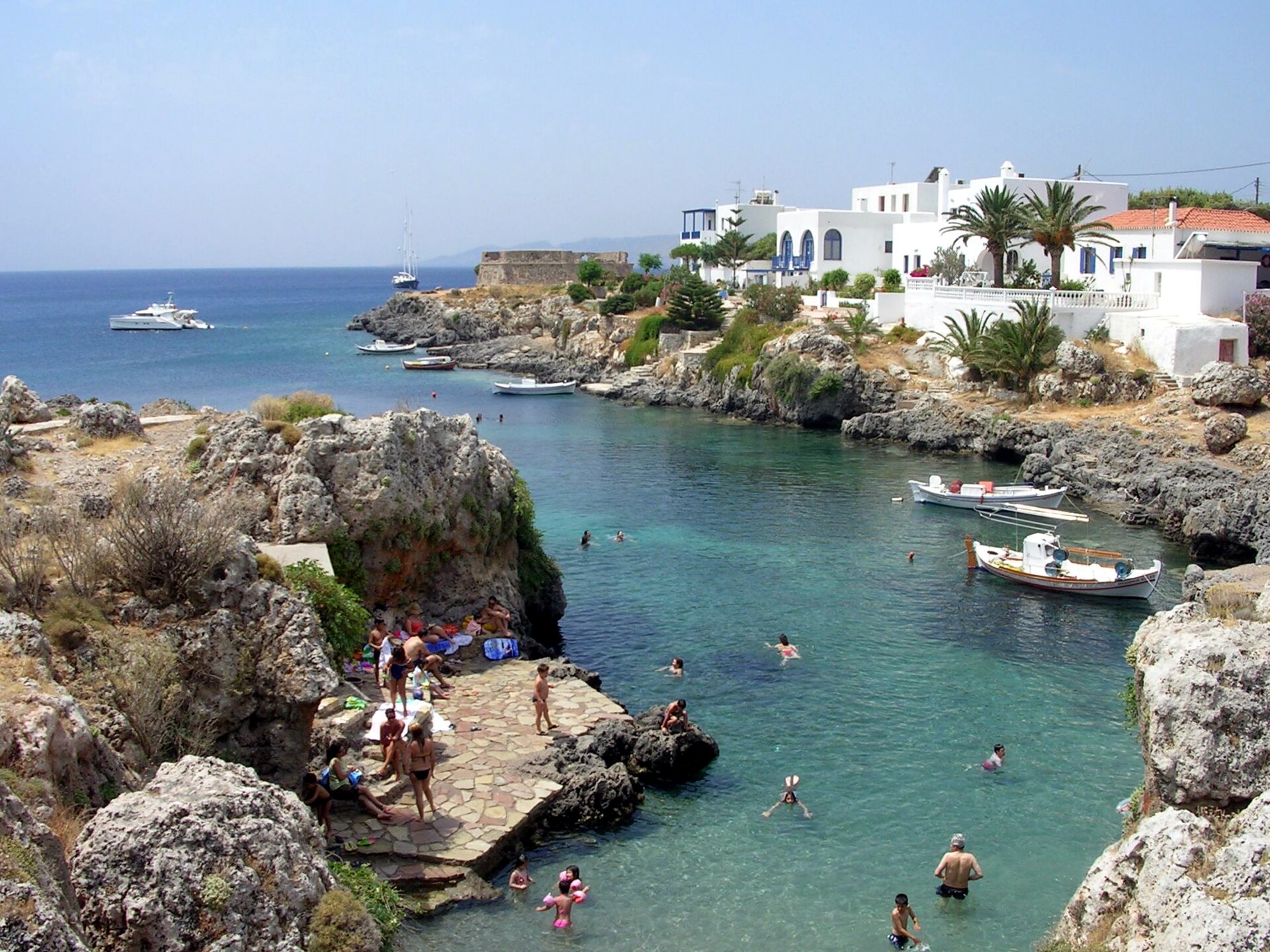
Avlemonas is one of the island’s most immediately appealing settlements, with a small harbour and a calm, east-coast atmosphere. It is best visited with time for a walk and a meal rather than treated as a quick stop between beaches. Nearby Palaiopoli adds a historical dimension: the area is associated with ancient Skandeia and with the island’s long relationship with the sea.
The east coast is also where several different beach experiences sit within a manageable regional loop. Paleopoli is broad and comparatively practical, Kaladi is more dramatic but physically demanding, and Diakofti is a useful option when shallow water and easier access matter more than isolation.
Mylopotamos and the Fonissa waterfall
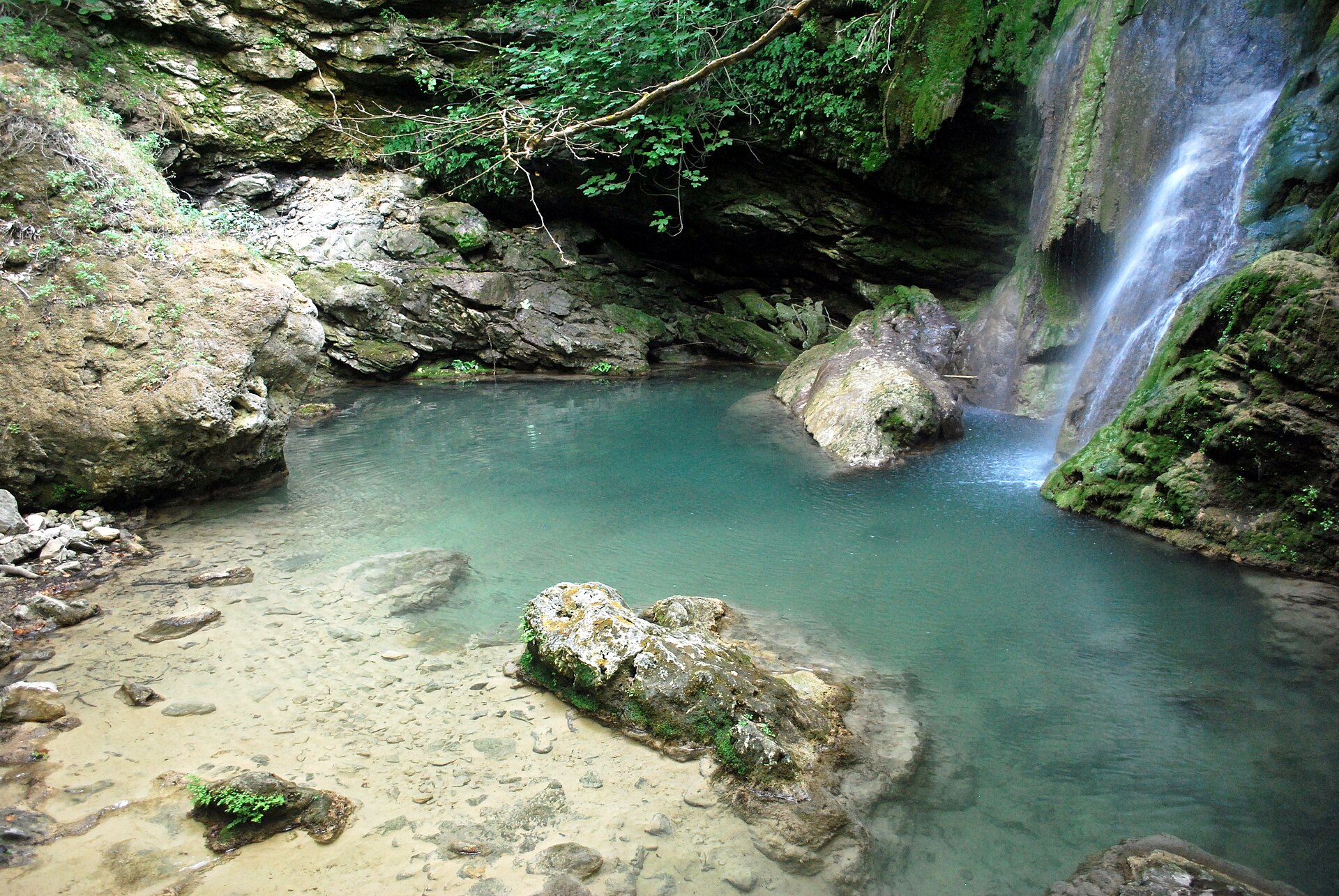
Mylopotamos demonstrates why Kythira is more than a beach destination. The village and its surrounding ravines bring shade, water and a different landscape to an island often described through its coastline. The Fonissa waterfall and the old watermills are the natural anchors of a short inland outing, although the route can be uneven and conditions vary with the season.
Combine Mylopotamos with the Castle of Kato Chora if you have time. The Venetian-era remains and village setting are more rewarding when approached as part of a slow west-coast day, perhaps with a later swim at Limnionas or another beach whose access matches the group.
Paleochora: a ruined Byzantine capital
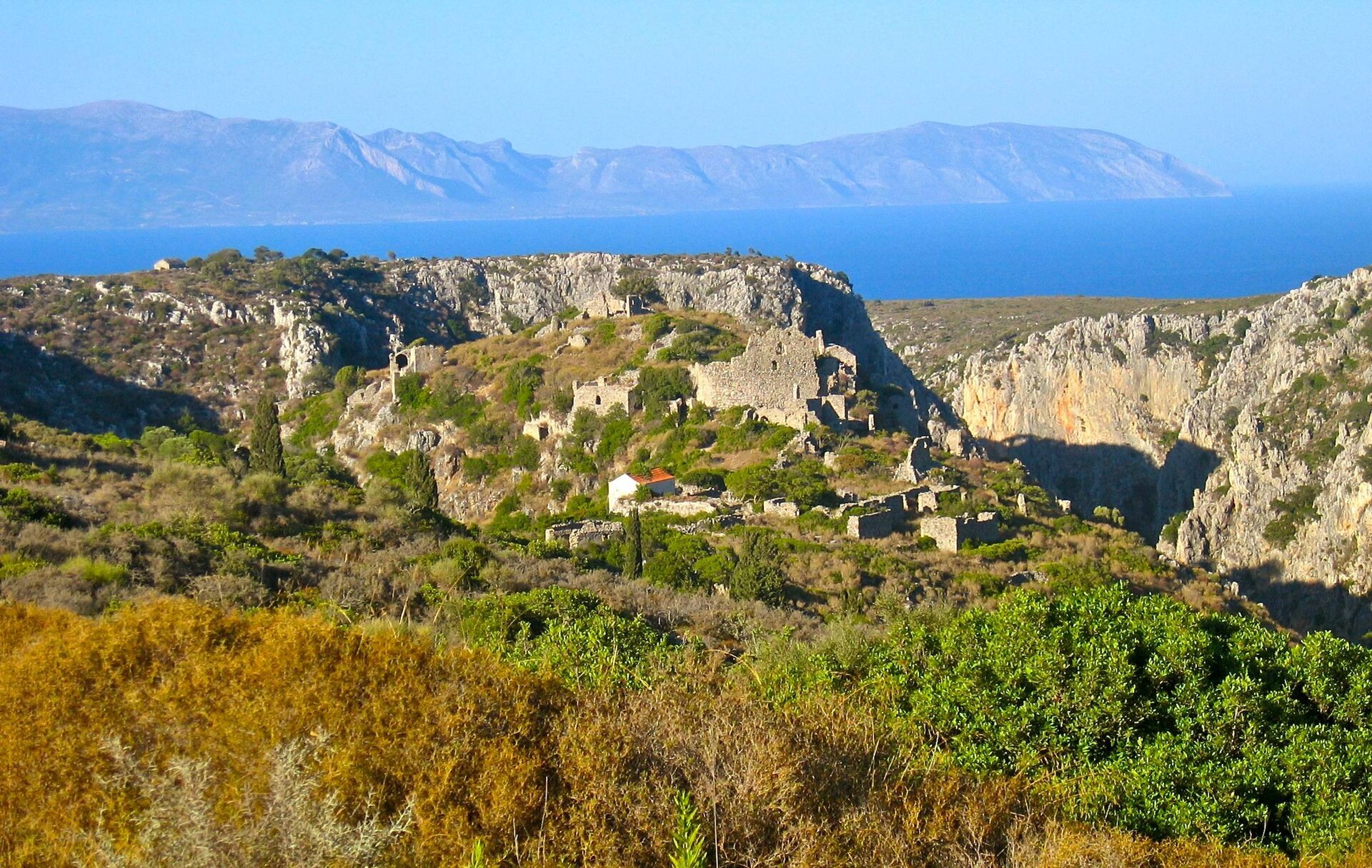
Paleochora, also known as Agios Dimitrios, was the island’s Byzantine capital. Today the site is a landscape of ruined walls, church remains and exposed stone set among ravines in the north-east. The official tourism account records its destruction after the attack of Barbarossa in 1537, after which the settlement was abandoned.
Paleochora is atmospheric precisely because it is not a polished monument complex. The approach includes a road to a parking area, followed by a dirt path, and visitors should wear proper shoes and avoid treating the site as suitable for every mobility level. There is little reason to hurry. The silence, terrain and fragments of the former settlement are the experience.
Kythira’s beaches: choose by conditions
Kythira’s coastline offers enough variety to avoid a simplistic “best beach” ranking. Some beaches are close to services; others require a rough track, steps or a walk. Wind direction, shade, sea entry and return access should influence the decision as much as the colour of the water.
For easier swimming and family practicality
Diakofti has pale sand, shallow turquoise water and tavernas nearby, making it one of the more straightforward choices for families and travellers who prefer easier access. Paleopoli is a longer beach with a mixture of sand and pebbles and is often described as family-friendly because of its clearer, shallower entry. Conditions still need checking on the day; no beach description replaces supervision or sensible sea judgment.
Kapsali is convenient rather than remote. Its position below Chora, services, tavernas and seasonal water activities make it practical for a day when you do not want to drive far. It is also the natural departure point for some excursions towards Chytra, the rocky islet visible offshore.
For scenery and a more demanding approach
Kaladi is one of the island’s most photographed beaches, but the photograph is not the whole decision. The approach includes a rougher road and a steep descent of roughly 120–150 steps, depending on the route and description. There is no reliable assumption of shade or full facilities at the water, so carry what you need and consider the return climb before descending.
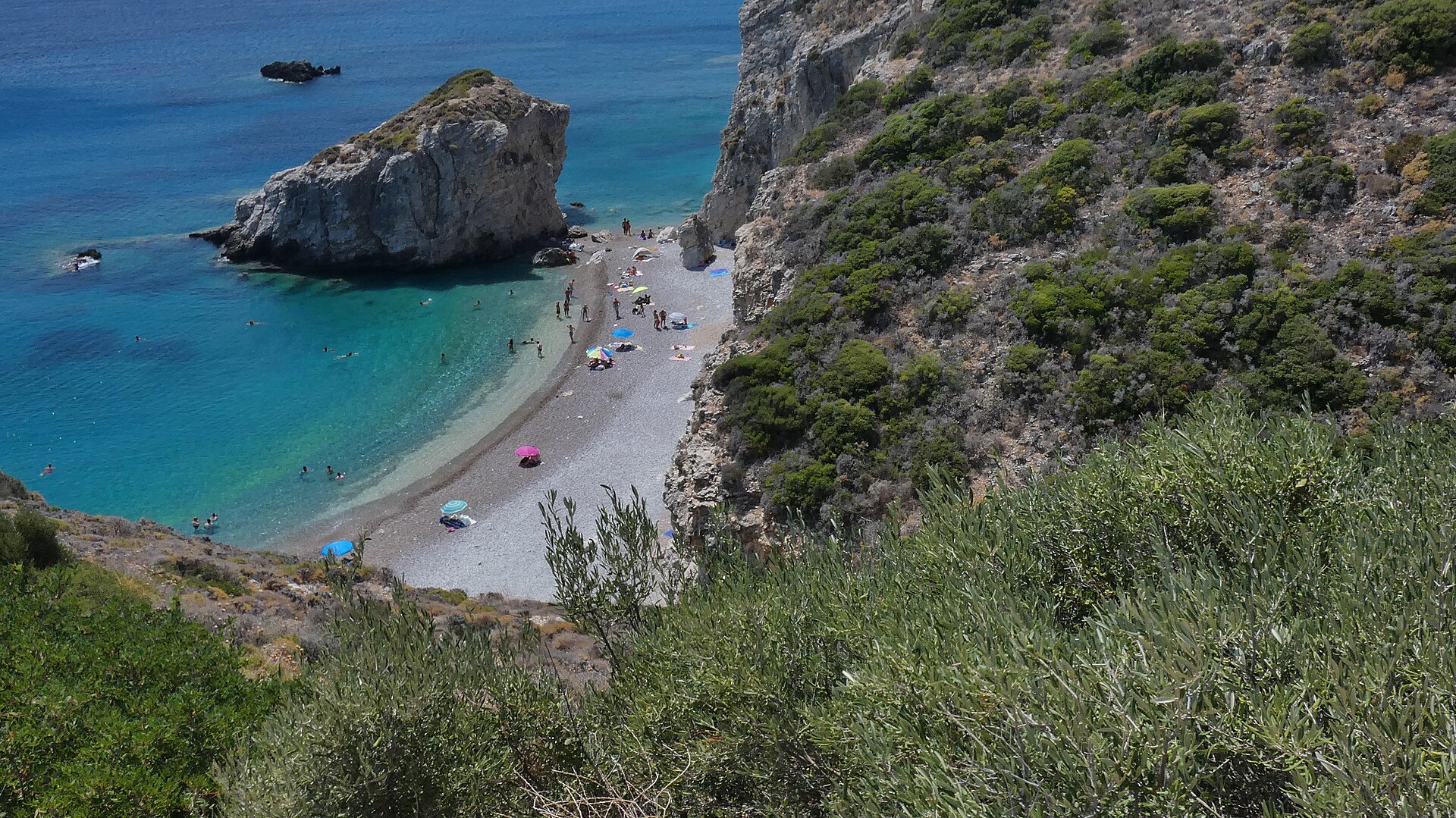
Chalkos combines smooth pebbles, clear water and some facilities. It is popular, so arriving early or later in the afternoon can make the experience easier. Firi Ammos near Kalamos is a larger beach with distinctive reddish or purple-toned pebbles and a final dirt-road section. The name is also used for another beach in the north, so check the location carefully when planning.
For a quieter or more exploratory day
Melidoni is a small cove in the south-west with clear water, views towards Chytra and seasonal water activities. Fourni, on the northern side, offers a quieter alternative when you want a beach day with fewer obvious resort elements. Platia Ammos is useful as part of a northern loop and can be paired with the Moudari lighthouse.
Some of Kythira’s more secluded beaches, including Kalami and smaller west-coast coves, involve dirt tracks, steep paths or awkward access. They are not automatically better because they are harder to reach. Check the route, your vehicle’s suitability, the weather and the return journey before committing.
A realistic five-day Kythira itinerary
| Day | Base plan | What it includes |
|---|---|---|
| 1 | Arrive and settle in | Ferry arrival at Diakofti or flight arrival; easy swim at Diakofti or Kapsali; evening in Chora. |
| 2 | Chora and the south | Venetian castle, Archaeological Museum if open, Belvedere, Kapsali and a relaxed dinner. |
| 3 | East-coast loop | Palaiopoli, Avlemonas and one beach chosen according to access and wind, such as Chalkos or Kaladi. |
| 4 | Mylopotamos and the west | Village, watermills, Fonissa waterfall, Kato Chora and a later swim if road and conditions allow. |
| 5 | North and departure choice | Paleochora or Platia Ammos and Fourni; keep the day flexible around ferry or flight timing. |
With seven nights, add a second beach day and a slower northern excursion rather than filling every available hour with driving. If Kythira is part of a Peloponnese journey, it can combine naturally with the Monemvasia guide or the wider Mani Peninsula route, but allow enough time for the transfer to the ferry port. Kythira should not be added as a hurried overnight detour simply because it appears close on a map.
Food, villages and island culture
The island’s cultural interest is not limited to its castles. Chora, Potamos, Mylopotamos, Avlemonas and the smaller inland settlements reveal different aspects of Kythira’s architecture and social geography. Potamos is associated with a traditional bazaar atmosphere, while the official tourism guide presents the island’s villages, feasts, festivals and customs as part of its living cultural route.
Plan at least one meal away from the most obvious beach setting. A village lunch or evening stop gives the island a different rhythm and helps prevent the holiday from becoming a sequence of identical waterfront visits. Look for local products and dishes on current menus rather than relying on a fixed list of “must-try” foods that may not reflect the season or the individual taverna.
Kythira’s position has encouraged layers of Venetian, Byzantine and wider Mediterranean influence. The island’s myths are part of its identity, including the association with Aphrodite, but mythology should remain distinct from archaeological evidence. The museum and historic sites offer a more grounded way to understand the island’s long past.
Common mistakes to avoid
- Underestimating distances. Kythira is not huge on a map, but bends, narrow roads, stops and beach access make every route longer than a simple point-to-point estimate.
- Booking transport too late. Ferry days, vehicle spaces and seasonal flights can narrow quickly in summer.
- Choosing a base only by the view. Check access to food, supplies, your preferred beaches and evening plans.
- Following a beach ranking blindly. Kaladi may be spectacular but its descent is not suitable for every visitor; a quieter, easier beach may produce the better day.
- Assuming “car-free” means effortless. A trip without a car needs a smaller geographic plan and confirmed local transport.
- Scheduling historical sites in the heat of the day. Chora, Paleochora and exposed coastal ruins are more enjoyable with an early start.
- Relying on old timetables. Confirm ferry departures, museum hours, beach facilities and boat trips immediately before travel.
- Trying to see everything in five days. Kythira’s value lies in the contrast between places, not in collecting every beach.
Is Kythira worth visiting?
Yes, if you want an island that asks you to explore. Kythira is strongest for travellers who enjoy moving between different kinds of landscape: from Chora’s castle and Kapsali’s bays to Avlemonas, Palaiopoli, the green ravines of Mylopotamos and the exposed ruins of Paleochora. Its beaches are varied rather than uniform, and its history is visible in the landscape instead of being confined to one museum.
The island is less convincing when treated as a quick, car-free resort stop. Access takes planning, the most appealing beaches may involve steps or rough roads, and transport information can change with the season. Those are not flaws to hide; they are the practical facts that determine whether Kythira will suit a particular traveller.
Give it five to seven nights, choose a base for the kind of holiday you actually want, and leave space for weather, road conditions and a spontaneous extra stop. Kythira does not need exaggerated promises about being undiscovered. Its quieter reward is simpler: a Greek island with enough history, terrain and local variation to make every day feel different.
Research note: this guide was checked on 21 July 2026. Ferry schedules, flight frequency, museum hours, beach facilities, road conditions and seasonal businesses can change; confirm current details with the relevant operator or official authority before travelling.