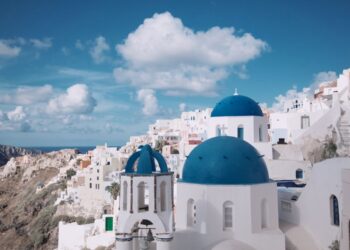
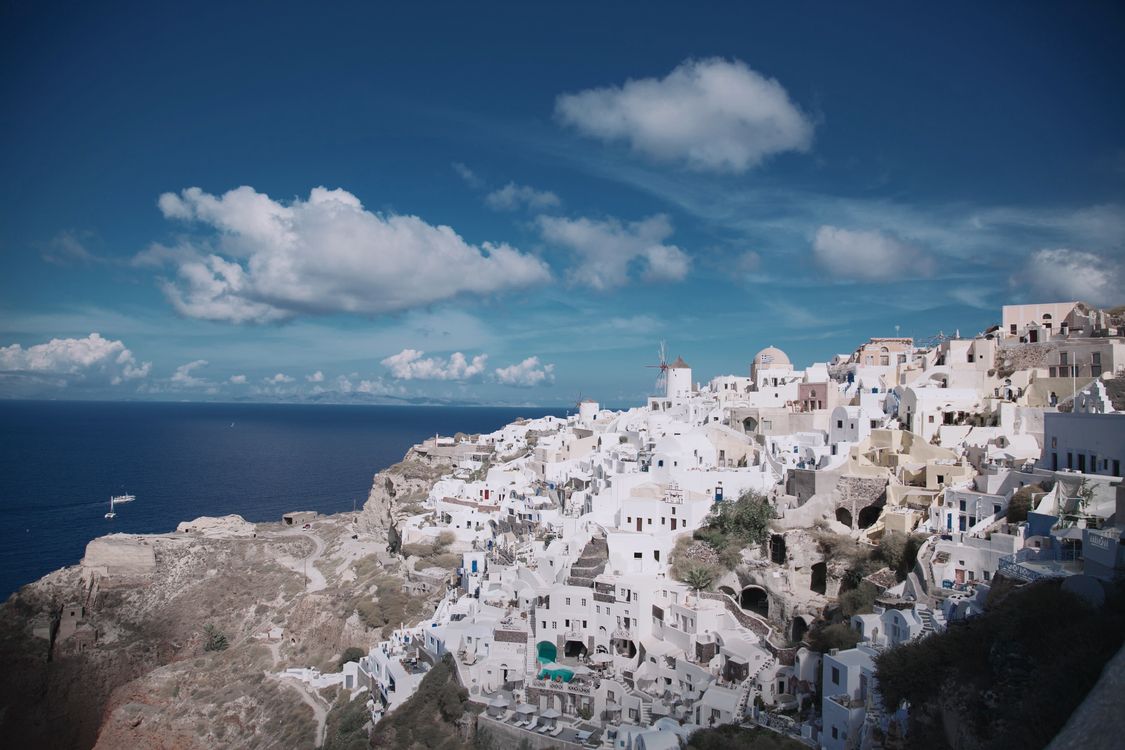
Santorini exists because of a catastrophe. Roughly 3,600 years ago, a volcanic eruption tore apart what had been a single round island, leaving behind a flooded crater, a crescent of steep cliffs, and the landscape that now appears on more postcards than probably any other place in Greece. The caldera — that sheer drop from whitewashed villages to deep blue water — is not a scenic backdrop. It is the wound the eruption left behind, and everything that makes Santorini distinctive follows from it: the cliff-perched architecture, the volcanic soil that flavours the wine, the dark sand beaches along the outer coast, the ruins of a Bronze Age city preserved beneath metres of ash.
This is a guide for travellers who want to understand what they are visiting and plan around what Santorini actually offers rather than what the photographs suggest. The island rewards curiosity, but it can also disappoint badly if you arrive expecting a quiet Greek paradise in high summer, or assume that every view comes free of crowds and expense. Santorini is one of the most visited islands in the Mediterranean, and its infrastructure, space and patience have been stretched by that popularity for years.
Who Santorini Suits — and Who Should Reconsider
Santorini works well for couples on a short trip who want dramatic scenery, good wine, decent food and an archaeological site that rivals anything on mainland Greece. It is excellent for photography, genuinely interesting for anyone drawn to geology or volcanology, and rewarding if you have the budget to stay somewhere with a caldera view and the discipline to visit in shoulder season rather than peak summer.
It is less suitable for families with young children. Most caldera villages involve steep steps, narrow paths without railings, and drops that would concern any parent. The beaches are volcanic — dark pebble or coarse sand — and the water deepens quickly at several popular spots. There is no water park, no soft golden shore, and limited shade. Families who want a relaxed beach holiday with toddlers should look seriously at Naxos, which sits roughly ninety minutes away by ferry and has the wide sandy beaches that Santorini simply does not.
Budget travellers will also find the island demanding. Accommodation on the caldera starts well above most Cycladic islands, and even beach-town prices run higher than equivalent rooms on Milos or Sifnos. A meal on a caldera terrace with a glass of local Assyrtiko often costs twice what you would pay for the same quality a few kilometres inland. If you are determined to visit but money is tight, the beach towns of Kamari and Perissa offer a more affordable alternative to the clifftop villages.
Between June and September, Santorini also receives cruise ship passengers daily. A cap of 8,000 cruise visitors per day was introduced in 2025 and tightened for 2026, which has noticeably reduced peak-day crowding compared with the worst years, when daily arrivals sometimes exceeded 17,000. The improvement is real, but the narrow lanes of Oia still fill up on busy cruise days, and the sunset viewpoint remains a competitive experience in high season.
The Caldera
A drowned volcanic crater 400 metres deep, formed by one of the most powerful eruptions in recorded history.
The Caldera: What You Are Looking At
Before the eruption — estimated at around 1600 BC, with a Volcanic Explosivity Index of 7 — the island was roughly circular and known as Strongili. The Minoan civilisation had a flourishing settlement here, part of the same culture that built the palaces of Crete. The eruption ejected an estimated 28 to 41 cubic kilometres of material, collapsed the island’s centre, and sent tsunamis across the eastern Mediterranean. The settlement at Akrotiri was buried under metres of pumice and ash, where it remained undisturbed until excavations began in the 1960s.
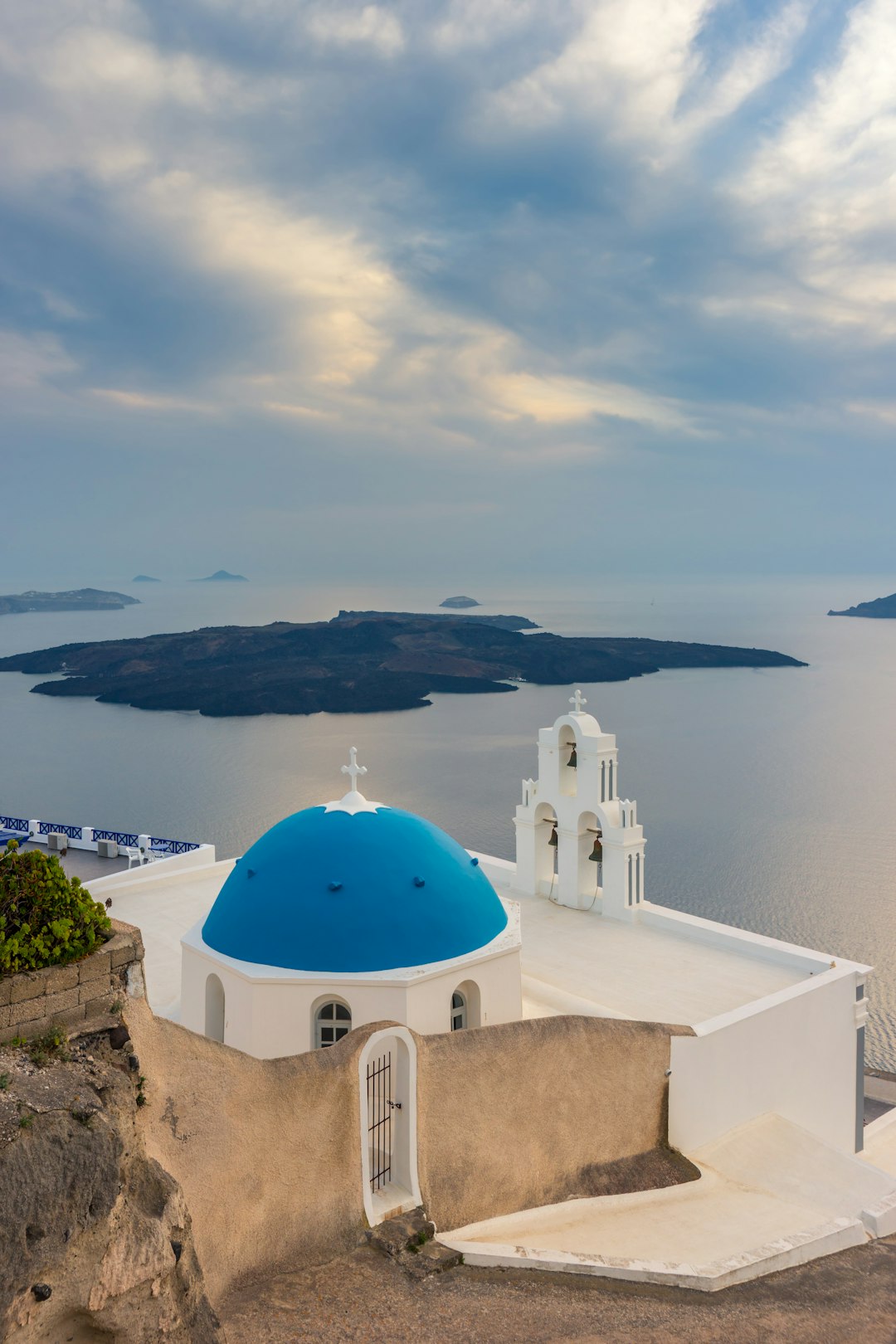
What you see today is the result of that collapse. The caldera — the flooded crater — is roughly 12 kilometres long and 7 kilometres wide, with the inner walls dropping steeply to a depth of around 400 metres. The main island, Thera, forms the eastern and southern rim. Two smaller islands, Therasia to the west and tiny Aspronisi to the southwest, are fragments of the original. In the centre sit Nea Kameni and Palea Kameni, volcanic islets that emerged from eruptions over the following millennia — the most recent activity on Nea Kameni was in 1950.
The caldera is not merely scenic. It is an active volcanic field, monitored continuously by the Institute of Geodynamics. The hot springs near Palea Kameni, where the water runs a few degrees warmer than the surrounding sea, are a direct reminder that the system beneath the seabed is still very much alive.
When to Visit
The honest answer: late April through mid-June, or September to late October. These windows give you warm weather without the crushing heat of high summer, calmer seas for ferry travel, lower accommodation prices, and noticeably fewer people at every viewpoint, restaurant terrace and archaeological site.
July and August are the busiest months. Daytime temperatures regularly exceed 35°C, the meltemi wind blows hard from the north, and accommodation prices on the caldera roughly double compared with late May. The meltemi also affects northern beaches such as Colombo and Baxedes, making swimming genuinely uncomfortable or unsafe on exposed days.
October remains warm enough for swimming — sea temperatures sit around 22°C — and offers some of the best light for photography. The grape harvest usually falls in August, but the wine-tourism season extends well into October, and most wineries remain open. By November, many hotels, restaurants and tour operators close for winter, and ferry connections drop sharply.
For more on how September across Greece balances weather, crowds and value, see our dedicated guide.
How to Get There
By air
Santorini Airport (JTR) receives flights year-round from Athens, with Aegean Airlines, Sky Express and Ryanair all operating the route. The flight takes around 50 minutes. In summer, there are roughly 130 weekly departures from Athens alone, making it one of the best-connected domestic routes in the country. Seasonal direct flights also operate from Thessaloniki, and from numerous European cities including London, Paris, Rome and several German hubs.
The airport is small and can be chaotic during peak hours. There is no rail link; a bus to Fira costs approximately €2.20 and takes around ten minutes, though many travellers pre-book a private transfer or taxi.
By ferry
Ferries from Piraeus run daily throughout the year, with up to eight crossings per day in summer. The main operators are Blue Star Ferries (conventional vessels, approximately 8 to 9 hours), SeaJets (high-speed catamarans, approximately 5 hours) and Cyclades Fast Ferries. Ticket prices start from around €46 for a deck seat on a conventional ferry and rise to €70 or more for high-speed services.
Ferries dock at Athinios, the main port, which sits at the bottom of a steep road roughly 10 kilometres south of Fira. Buses meet arriving ferries, though they fill quickly in summer. Booking a transfer in advance is worth the modest extra cost, particularly if you arrive in the evening.
Santorini also connects directly by ferry to most major Cycladic islands during the summer season — Naxos, Paros, Ios, Mykonos and Heraklion (Crete) all have regular routes. Check timetables through the official operators, as schedules change seasonally and weather cancellations are not unusual during meltemi season.
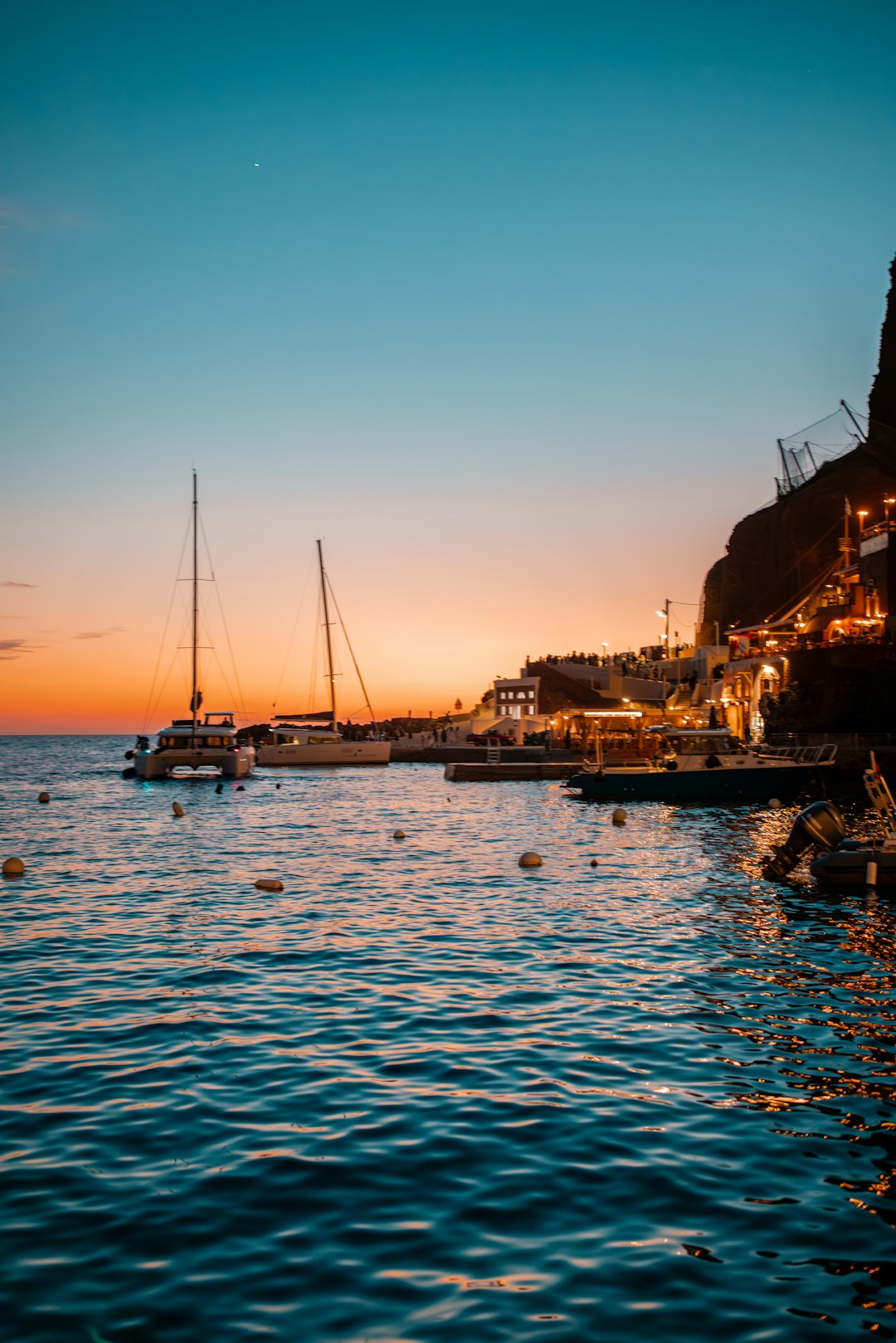
Where to Stay: Choosing Your Base
The single most important decision for a Santorini trip is where you sleep. The island is small — roughly 16 kilometres long — but the experience of staying on the caldera rim versus a beach town or an inland village is fundamentally different.
| Area | Best For | Caldera View | Limitations |
|---|---|---|---|
| Fira | First-timers, central access, nightlife | Yes | Crowded, noisy main streets |
| Oia | Photography, luxury stays, sunsets | Yes | Expensive, very crowded by afternoon |
| Imerovigli | Quiet luxury, couples | Yes (highest point) | Few restaurants, no nightlife |
| Firostefani | Couples wanting calm near Fira | Yes | Limited dining options |
| Kamari | Families, beach access, budget | No | No caldera views, more resort feel |
| Perissa / Perivolos | Budget travellers, beach bars | No | Removed from the caldera experience |
| Pyrgos | Traditional village feel, wine country | Panoramic (not cliff-edge) | Needs a car, few evening options |
Fira is the island’s capital and transport hub. Every bus route starts here. It has the widest choice of shops, tavernas and evening entertainment, and its caldera-edge path provides views almost as dramatic as Oia’s, with somewhat lower prices. For a first visit without a car, Fira makes the most practical base.
Oia draws the largest share of Santorini’s photography and social-media traffic, and the concentration of blue-domed churches against the caldera is genuinely beautiful. It is also the most expensive base, and the main lane through the village becomes extremely congested from late morning through sunset on cruise-ship days. If Oia is your priority, visit early in the morning and consider staying elsewhere.
Imerovigli sits at the highest point of the caldera rim and is the quietest of the four caldera villages. It suits couples who want a premium hotel experience without the crowds outside the door. The trade-off is that there are fewer than a dozen restaurants, minimal shopping, and no nightlife at all.
The four caldera villages — Fira, Firostefani, Imerovigli and Oia — are connected by a walkable path along the rim. From Fira to Imerovigli takes roughly 40 minutes on foot, mostly paved. The full walk from Fira to Oia covers about 10 kilometres and takes 2 to 2.5 hours, with the final stretch becoming rockier and more exposed.
If you are on a tight budget, or if beaches are more important to you than the caldera, Kamari and Perissa offer substantially lower accommodation costs, organised beaches with sunbeds and tavernas, and a more relaxed pace. Both are well connected to Fira by bus.
Getting Around
The KTEL public bus network is affordable and covers the main routes well during summer. Fira is the hub — all routes start and end there. Fares range from roughly €2.20 to €2.80 per ride. Buses to Oia and the beach towns run approximately every 30 minutes in high season, though they often fill to standing room on popular routes. If you are travelling between two non-Fira destinations, you will need to change buses at the Fira station, which adds time.
| Transport | Cost (approx.) | Best For |
|---|---|---|
| KTEL bus | €2.20–2.80 per ride | Main villages, budget travel |
| Car rental | €25–60 per day | Full island freedom, families |
| ATV / quad | €30–50 per day | Couples, light exploration |
| Taxi | €15–45 per ride | Airport/port transfers |
A rental car gives you the freedom to reach inland villages, quieter beaches and wineries without watching a bus timetable. Parking in Fira and Oia, however, is genuinely difficult in summer — arrive early or be prepared to walk. Taxis are scarce on Santorini, with approximately 40 licensed cars serving the entire island. Pre-booking is strongly recommended for airport and ferry-port transfers.
ATVs are popular but carry real risks on roads shared with tour buses and heavy summer traffic. If you choose to rent one, wear the helmet that is legally required and avoid riding after wine-tasting tours.
The Caldera Walk
Ten kilometres along the rim from Fira to Oia, through three villages and some of the finest coastal scenery in Europe.
Walking the Caldera Rim
The path from Fira to Oia is one of the best walks in the Cyclades and one of the few things on Santorini that costs nothing at all. It follows the caldera edge through Firostefani and Imerovigli before descending and climbing again through a less developed stretch to Oia. The total distance is roughly 10 kilometres and takes most walkers between 2 and 2.5 hours without stops, or a comfortable half-day if you pause for coffee, photographs and the occasional geological distraction.
Start early — by 8:00 in summer — to avoid the worst of the heat and the crowds. Carry at least a litre of water per person. There is very little shade on the exposed middle section between Imerovigli and Oia, and the path surface becomes uneven and rocky. Wear proper walking shoes, not sandals. The views are extraordinary throughout, but the stretch passing Skaros Rock — a Venetian-era fortress ruin jutting out from the caldera rim near Imerovigli — is particularly fine.
At the Oia end, reward yourself with something to eat before taking the bus back to Fira (approximately 25 minutes, €2.20).
Akrotiri and the Archaeological Sites
The Akrotiri archaeological site is the single most important cultural attraction on the island, and it deserves at least 90 minutes of your time. Buried under volcanic ash during the Minoan eruption, the settlement was preserved in remarkable detail — multi-storey buildings, drainage systems, ceramic storage jars and sophisticated wall paintings survived largely intact, giving archaeologists an unusually complete picture of Aegean Bronze Age life.
The site is covered by a modern protective structure, which keeps the interior shaded and cooler than the surrounding landscape. A walkway system lets you look down into the excavated streets. It is not as visually overwhelming as Pompeii, but the quality of preservation is in many ways superior, and the absence of human remains — residents apparently evacuated before the final eruption — suggests an organised departure that adds its own layer of interest.
Admission to Akrotiri costs €20 (full price) and includes access to Ancient Thera and the Museum of Prehistoric Thera in Fira on the same ticket. The museum is small but excellent, housing many of the frescoes and artefacts recovered from the excavation, including the famous Wall Paintings of the Spring and the Boxing Children. Opening hours vary seasonally — check with the Greek Ministry of Culture or the site entrance before visiting, as reduced hours may apply on certain days of the week.
Ancient Thera, the Hellenistic and Roman settlement on the ridge of Mesa Vouno, requires a steep uphill walk or drive and rewards visitors with both archaeological ruins and sweeping views over both Kamari and Perissa. It is less visited than Akrotiri and worth the effort for anyone interested in classical-era remains.
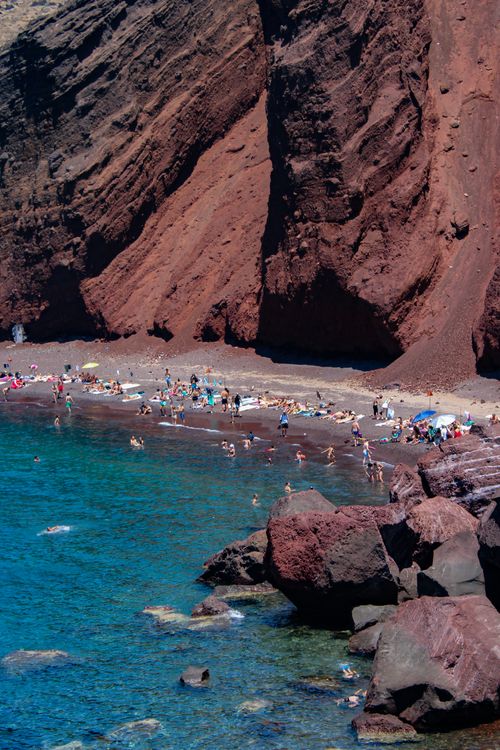
Beaches Worth Your Time
Santorini’s beaches are volcanic, which means dark sand, pebbles and unusual colours rather than the golden shores of Naxos or Paros. They are interesting rather than conventionally beautiful, and the swimming conditions vary significantly depending on wind direction and beach orientation.
| Beach | Surface | Organised | Best For | Caution |
|---|---|---|---|---|
| Perissa / Perivolos | Black sand | Yes (sunbeds, bars) | Swimming, socialising | Can be hot underfoot |
| Kamari | Dark pebbles/sand | Yes | Families, promenade dining | Catches northern wind, bring water shoes |
| Red Beach | Red volcanic pebbles | Minimal | Photography, snorkelling | Unstable cliff above, steep access path |
| Vlychada | Grey/white | Partial | Quiet visits, dramatic cliffs | Limited facilities |
| Monolithos | Dark sand, shallow | Yes | Young children | Less scenic, near airport |
| Colombo | Dark volcanic | No | Solitude, hot springs | Exposed to meltemi, unofficial nudist area |
Perissa and Perivolos form essentially one long stretch of black volcanic sand along the southeast coast. The water is generally calm, the entry gradual, and the beach-bar scene runs the full length. Perivolos tends toward livelier beach clubs; Perissa is slightly more family-oriented, with a playground and seasonal water sports. Mesa Vouno, the rocky headland at the northern end of Perissa, acts as a natural windbreak and keeps this stretch calmer than Kamari when the meltemi blows.
Kamari faces east and catches more wind from the north. The surface is darker pebbles rather than sand, which makes it less comfortable without water shoes but keeps the water noticeably clearer. The long waterfront promenade behind the beach has a solid line of tavernas and an open-air cinema that screens films against the backdrop of Mesa Vouno — one of Santorini’s more pleasant evening options.
Red Beach, near Akrotiri, is visually extraordinary — iron-rich volcanic cliffs in deep red dropping to dark pebbles and clear water. It is also small, gets extremely crowded from mid-morning in summer, and the cliff face above the beach has a history of rockfalls. Swimming conditions vary; the water deepens quickly and snorkelling is better than lounging. It is worth visiting early in the morning, ideally combined with a trip to the Akrotiri site nearby.
For families with young children, Monolithos on the east coast has the shallowest, calmest water on the island and a sandy bottom. It is not the most scenic beach on Santorini, but for toddlers who need gentle conditions, it is the practical choice. See also our guide to family-friendly Greek islands for alternatives with more suitable beaches.
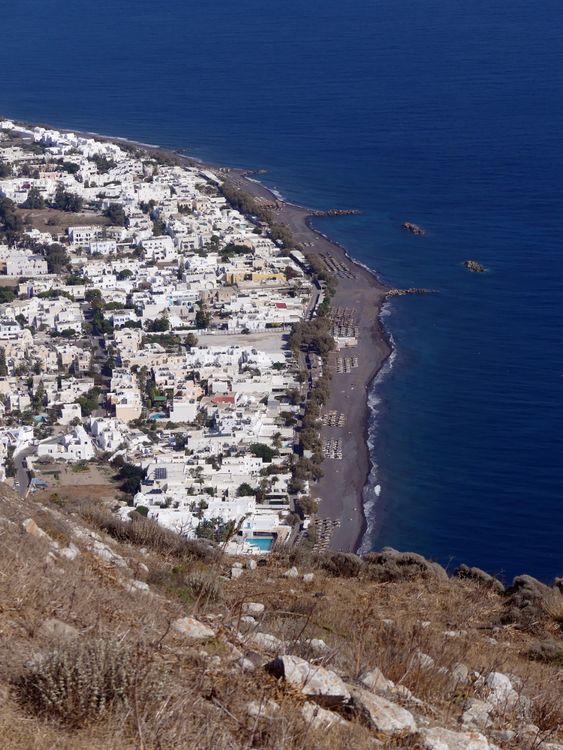
Wine on Volcanic Soil
Santorini has one of the oldest wine-producing traditions in the world, stretching back roughly 3,500 years. What makes the island’s wines distinctive is not age alone but geology: the vines grow in volcanic soil rich in minerals, with almost no organic matter, and the resulting wines carry a pronounced mineral character that you will not find in most other Greek regions.
The flagship grape is Assyrtiko, a bone-dry white with sharp acidity, citrus notes and a salty minerality that pairs exceptionally well with the island’s seafood and local cheeses. Most Santorini Assyrtiko carries PDO (Protected Designation of Origin) status, meaning it must be made from at least 85 per cent Assyrtiko grapes grown and vinified on the island. The other wines worth seeking out are Nykteri, a barrel-aged version of the same grape with a fuller body, and Vinsanto, a sweet dessert wine made from sun-dried grapes that ages in oak for a minimum of four years and develops rich flavours of dried fruit, caramel and spice.
The vines themselves are unusual. To protect the grapes from the fierce summer wind, growers train the vines into low, circular baskets called kouloura, keeping the fruit close to the ground and sheltered within the leaves. Many vines are ungrafted rootstock over 100 years old — survivors of the phylloxera epidemic that destroyed most European vineyards in the 19th century.
Around 20 wineries operate on the island, and most welcome visitors for tastings. A self-guided visit to two or three wineries costs roughly €8 to €20 per tasting. Organised half-day wine tours, typically covering three wineries with transport and a guide, run from approximately €130 per person. If you plan to drive between wineries yourself, designate a non-drinking driver — the roads are narrow, the drops steep, and enforcement exists.
What to Eat
Santorini’s volcanic soil concentrates the flavour of everything grown in it, and the island’s best dishes are built around a handful of local ingredients that you will not find at this quality elsewhere.
Fava — a creamy purée of yellow split peas, drizzled with olive oil and sharp onion — is the island’s most essential dish. Despite the name, it is not made from fava beans; the yellow split peas that grow in Santorini’s volcanic soil have a sweetness and density that distinguishes them from versions served on the mainland. Santorini fava holds PDO status.
Tomatokeftedes are tomato fritters made from the island’s cherry tomatoes, which are small, intensely flavoured and also carry PDO protection. The fritters are mixed with herbs and fried crisp — a reliable first course at almost any taverna on the island, and often suitable for vegetarians or vegans depending on the recipe.
Chlorotyri is a fresh, tangy goat’s cheese unique to Santorini. It sits somewhere between ricotta and a sharp cream cheese and is typically served as a meze with olive oil, sometimes alongside capers — another local product. You will see it in salads, on bread, and as a component of the local variation on the Greek salad, which replaces standard feta with chlorotyri and adds capers.
White eggplant, sweeter and less bitter than the purple variety, appears grilled, baked or in dips. Apochti, a cured pork fillet flavoured with pepper and cinnamon, is a traditional preserved meat that pairs well with Vinsanto. And melitinia, small pastries filled with soft cheese and scented with mastic, appear in bakeries across the island.
Eating well on Santorini does not require a caldera-view terrace. The inland villages — particularly Pyrgos and Megalochori — tend to have more affordable tavernas serving the same dishes at 30 to 40 per cent lower prices than the cliffside spots, often with better cooking and a more genuinely local atmosphere.
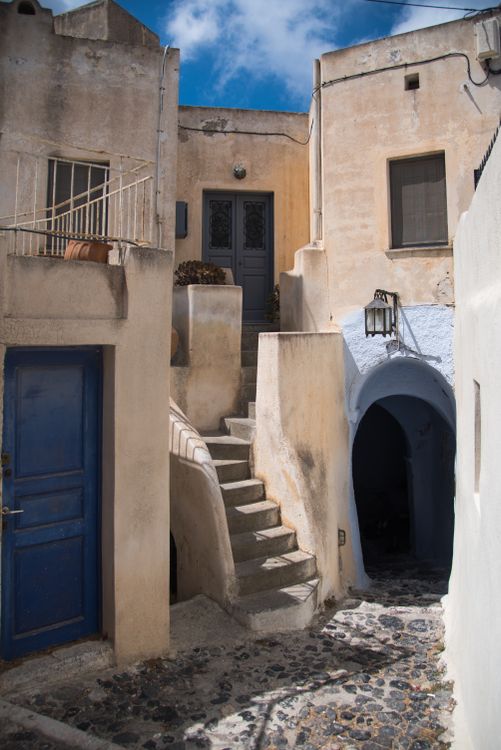
Beyond the Caldera: The Inland Villages
Most visitors never leave the caldera rim, which means that Santorini’s inland villages remain comparatively quiet and offer a more honest picture of how the island lives outside its tourism core.
Pyrgos is the most rewarding. Built on a hilltop with 360-degree views across the island, it has winding stone lanes, old churches, a ruined Venetian castle at the summit, and a growing number of good tavernas and wine bars. Late afternoon into sunset is the best time to visit — the light across the island is exceptional, and the viewing experience is more relaxed than the competitive crowd at Oia. If you have a rental car, Pyrgos also makes a sensible lunch stop on the way to or from a winery visit.
Megalochori feels even quieter: a village of neoclassical mansions, wine-merchant houses with tall wooden doors, church bell towers and a central square where you might be the only visitor at midday. Several wineries sit within easy driving distance, and the village functions well as the starting point for a wine-and-village afternoon.
Emporio has a compact medieval kasteli — a fortified settlement with narrow tunnels and interconnected houses designed for defence against pirate raids. It receives a fraction of the visitors that Oia attracts and offers a more authentic encounter with the island’s architectural history.
Boat Trips and the Volcano
A boat trip to the volcanic islets of Nea Kameni and Palea Kameni is the most popular excursion on Santorini, and for good reason. Walking across the black, barren surface of Nea Kameni to the crater rim — where sulphur vents still release gas — is a vivid encounter with the geology that created the caldera. The hike to the crater takes roughly 20 to 30 minutes and is manageable for most fitness levels, though the path is uneven and hot in summer.
Most tours continue to the hot springs near Palea Kameni, where underwater volcanic vents warm the sea by a few degrees. The swim from the boat to the warm zone covers roughly 50 metres; the water is murky and sulphurous rather than clear, and it will stain light-coloured swimwear. Bring a dark swimsuit.
Standard volcano-and-hot-springs tours cost approximately €25 to €40 per person. More expensive options include sunset catamaran cruises that combine swimming, a meal and a circuit of the caldera, typically costing €100 to €180 per person. These are genuinely enjoyable and offer the caldera views from a perspective that no clifftop terrace can match.
How Many Days You Need
Three full days is the minimum for a satisfying visit. That gives you time for the Fira-to-Oia caldera walk, the Akrotiri excavation, one beach day, a winery visit and enough unhurried meals to eat your way through the local specialities.
Four to five days is more comfortable. You can add a boat trip to the volcano, explore the inland villages properly, spend a second day at a different beach, and build in the kind of slow mornings that Santorini — at its best — rewards. A full week works for travellers who are content to linger, revisit favourite spots, and let the pace drop.
Fewer than three days feels rushed, especially if you factor in ferry or flight time at both ends. If your Greek itinerary only allows one or two nights, you will see the caldera and eat well, but much of what makes Santorini interesting beyond the postcard — the archaeology, the wine, the inland villages — will be left out.
Practical Costs
| Item | Approximate Cost (2026) |
|---|---|
| Caldera hotel (mid-range, double room) | €180–350 per night (summer) |
| Beach-town hotel (double room) | €80–160 per night |
| Meal for two with wine (mid-range) | €50–80 |
| Meal for two (caldera terrace) | €100–150+ |
| Akrotiri ticket (full price) | €20 (includes Ancient Thera + museum) |
| Wine tasting (self-guided, per winery) | €8–20 |
| Volcano boat trip | €25–40 |
| Sunset catamaran cruise | €100–180 |
| Car rental | €25–60 per day |
| Bus fare (single) | €2.20–2.80 |
Santorini is not a budget destination by Greek island standards. A couple staying in a mid-range caldera hotel for four nights, eating out twice daily and taking a wine tour and a boat trip, should budget roughly €2,000 to €3,000 for accommodation, food and activities — more if the hotel is in Oia. Travelling in late September or October rather than July or August can reduce these costs by 30 to 40 per cent while offering comparable or better conditions.
Common Mistakes and How to Avoid Them
Arriving in July or August without a plan. Peak summer on Santorini means heat, wind, full buses, booked-out restaurants and the highest prices of the year. If those months are your only option, book accommodation and transfers well in advance, start each day early, and retreat to the pool or a shaded taverna during the hottest afternoon hours.
Expecting soft sandy beaches. Santorini’s beaches are volcanic — dark, coarse and hot underfoot. If long golden strands and gentle shallows are important to you, the island will disappoint. Pack water shoes.
Spending your entire trip on the caldera. The cliffside villages are extraordinary, but three days of caldera-terrace meals and crowded lanes will leave you feeling you have seen a stage set rather than an island. Drive or bus to Pyrgos, visit a winery, eat in Megalochori, swim at Vlychada. The inland side of Santorini is where you discover what the island is like when it is not performing for tourists.
Skipping Akrotiri. Many visitors come to Santorini for photographs and sunsets and never see the archaeological site that makes the island genuinely significant to European history. Akrotiri is not a ruin you admire from a distance — it is a city you walk through, preserved to an extraordinary degree. Do not miss it.
Driving an ATV after a wine tour. This happens regularly and is both dangerous and illegal. If your plan involves wine tasting, arrange separate transport.
This article was researched and verified as of July 2026. Ferry schedules, admission fees, bus timetables and seasonal services are subject to change. We recommend confirming time-sensitive details with official operators before travelling. Vivid Greece has no commercial relationship with any business mentioned in this guide.