Thasos: Greece’s Greenest Island — Marble Beaches, Ancient Ruins & Mountain Villages
There is an island in the far north of the Aegean that most international visitors never consider. Thasos sits just a 30-minute ferry ride from the mainland, closer to Bulgaria and Turkey than to Athens, and the moment you step off the boat in Limenas, something feels different. The air smells of pine resin. The mountains behind the port are a deep, almost violent green — nothing like the brown, windswept Cyclades that dominate Greek travel brochures. And the ancient marble city beneath your feet, the one whose walls once rose nine metres high and gleamed white against the sea, has been here since the 7th century BC.
Voted the Most Authentic Greek Island in 2025 and a European Best Destination in 2024, Thasos is no longer a complete secret. But it remains, stubbornly, an island that feels more like a well-kept local favourite than a tourist product. This is where Thessaloniki weekenders come to swim, where northern Greek families return to the same rented rooms every August, and where the beaches are made not of sand but of actual marble.
What Makes Thasos Different
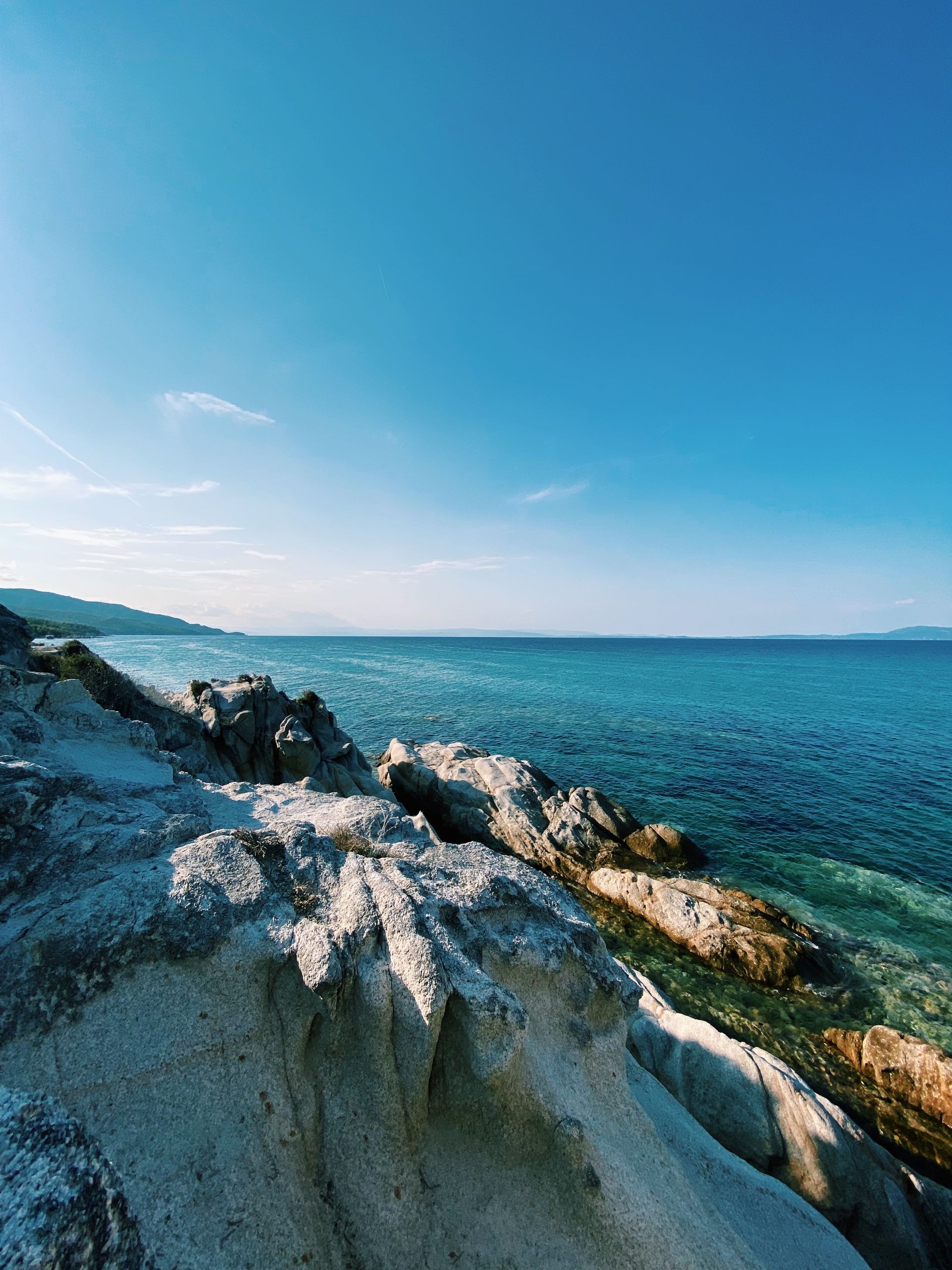
Most Greek islands trade on a formula: whitewashed villages, a caldera or a windmill, a famous sunset spot. Thasos does none of that. It is the 12th largest Greek island by area — 380 square kilometres of mountainous, forested terrain, ringed by 95 kilometres of coastline. Mount Ipsarion, the highest point, reaches 1,203 metres, and its slopes are thick with Aleppo pine, chestnut, and plane trees. Fire has damaged parts of the south and east in recent decades, but the northwest, between Limenas and Pachis, remains some of the densest forest in the Aegean.
The island belongs to the East Macedonia and Thrace region — about as far north as Greece goes. This geography matters. Thasos has none of the meltemi wind that batters the Cyclades in July and August. The water is warmer earlier in the season. The landscape is lusher. And the food draws more from Macedonian and Thracian traditions than from the island cooking you might expect — think roasted goat over pine wood, dark aromatic honey, and Throumba olives cured naturally on the tree.
With a permanent population of roughly 13,000 spread across about ten villages, most perched in the hills rather than on the coast, Thasos has an interior life that many beach-centric islands lack entirely. You could spend a week here and divide your days cleanly between swimming, archaeology, mountain hiking, and eating, without the sense that you were stretching thin material.
An island where the beaches are made of marble, the ruins predate the Parthenon, and the honey tastes like the pine forest smells.
The Beaches of Thasos: Marble, Sand, and One Extraordinary Lagoon
Thasos has more than 40 beaches, and the variety between them is remarkable. You can swim off fine golden sand one morning and white marble pebbles the next, then end your day floating in a rock pool carved by the sea itself. Here are the ones worth planning around.
Marble Beach (Saliara) and Porto Vathy
The northeast coast of Thasos sits close to the island’s marble quarries, and this proximity has produced something genuinely unusual. At Saliara — marketed as Marble Beach — the shore is composed of smooth white marble pebbles that reflect so much sunlight the whole cove seems to glow. The water in front of it shifts between milky turquoise and deep Mediterranean blue depending on the angle, and the contrast with the dark pine trees framing the bay is startling.
It is, predictably, very popular. In July and August the small beach fills fast, sunbed prices are high, and the access road is unpaved and dusty. If you have a standard rental car, expect a 20-minute walk from where you can reasonably park. Porto Vathy, about 2.5 kilometres further along the same dirt track, has a near-identical marble look with more space, fewer people, and no facilities at all. Bring water and a towel, and you will likely have a better morning than the crowd at Saliara.
Either way, arrive before 09:30 or come after 16:30. The light at those hours is better for swimming and photography, and you will actually find somewhere to sit.
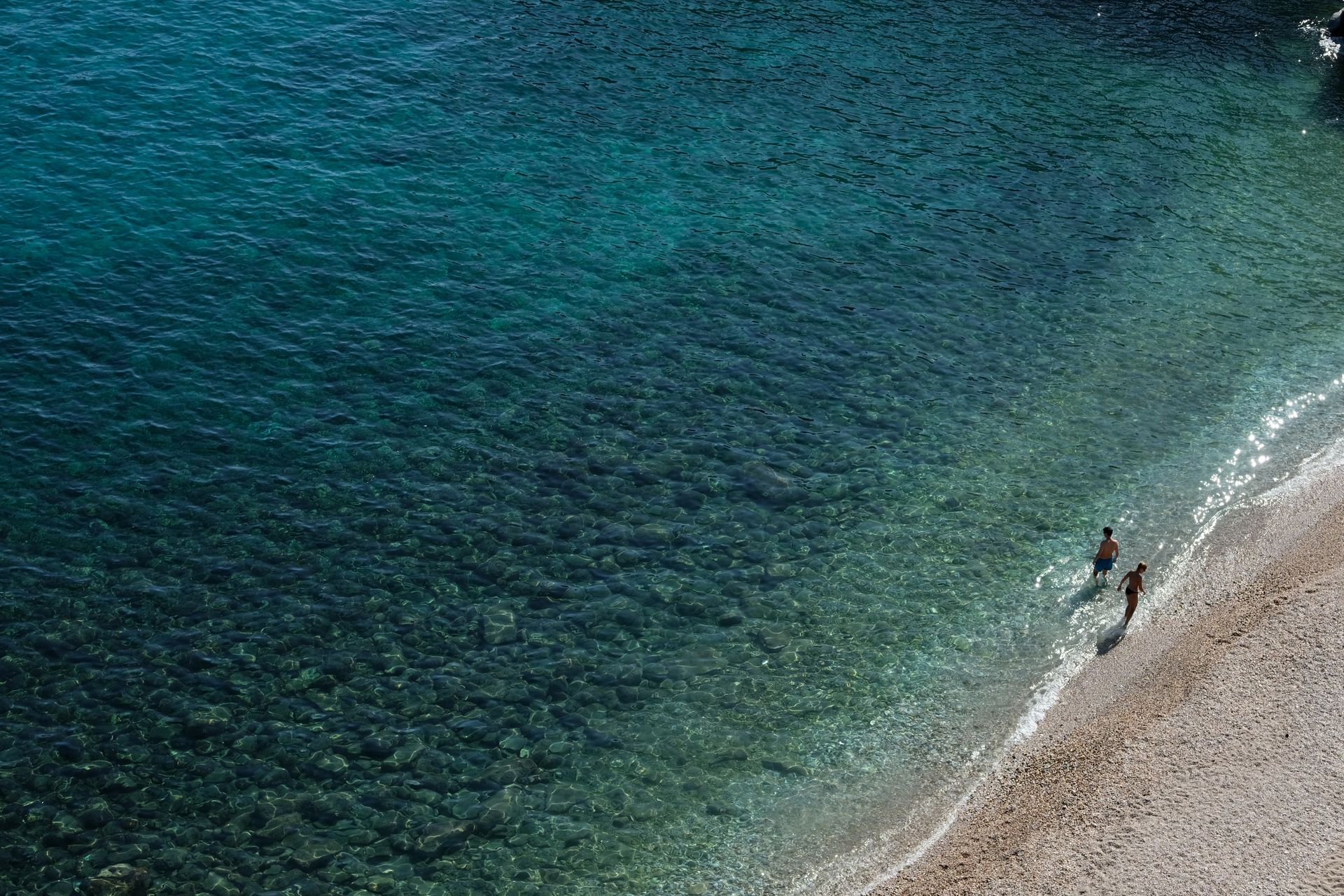
Golden Beach (Chrisi Ammoudia)
If Marble Beach is the island’s spectacle, Golden Beach is its workhorse. This is the longest sandy stretch on Thasos — well over a kilometre of gently shelving, family-friendly coast on the east side, backed by low dunes and a handful of hotels. The sand is genuinely golden, the water shallow enough for small children to wade far out, and there is enough space here that even in peak season you can find an uncrowded patch if you walk south.
Behind the beach, at the northern end, archaeologists uncovered a 3rd-century BC well and the ruins of a 4th-century BC pharos — a lighthouse that once guided ships into the coast. Most visitors walk right past it without knowing.
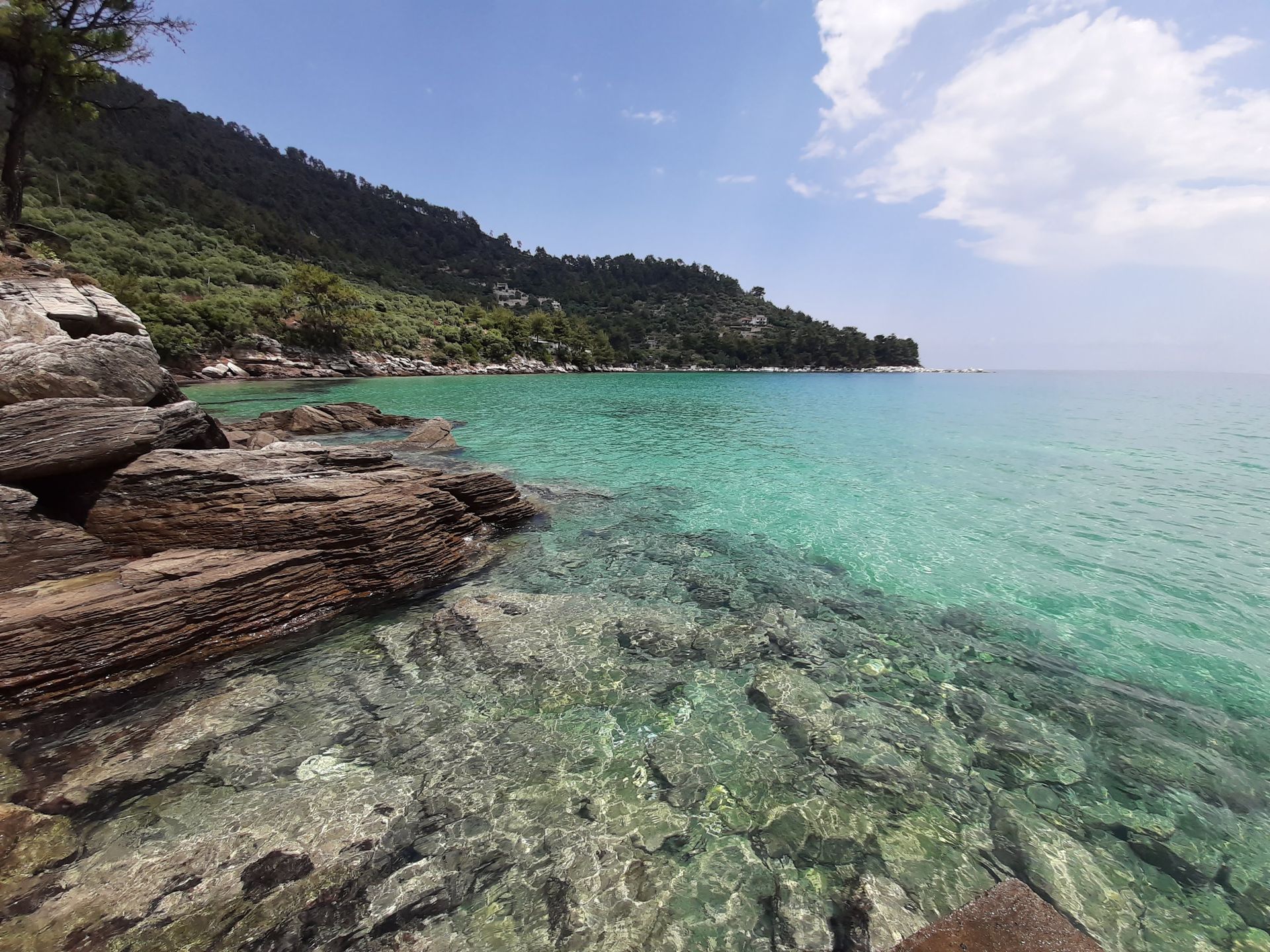
Alyki: Where the Quarry Meets the Sea
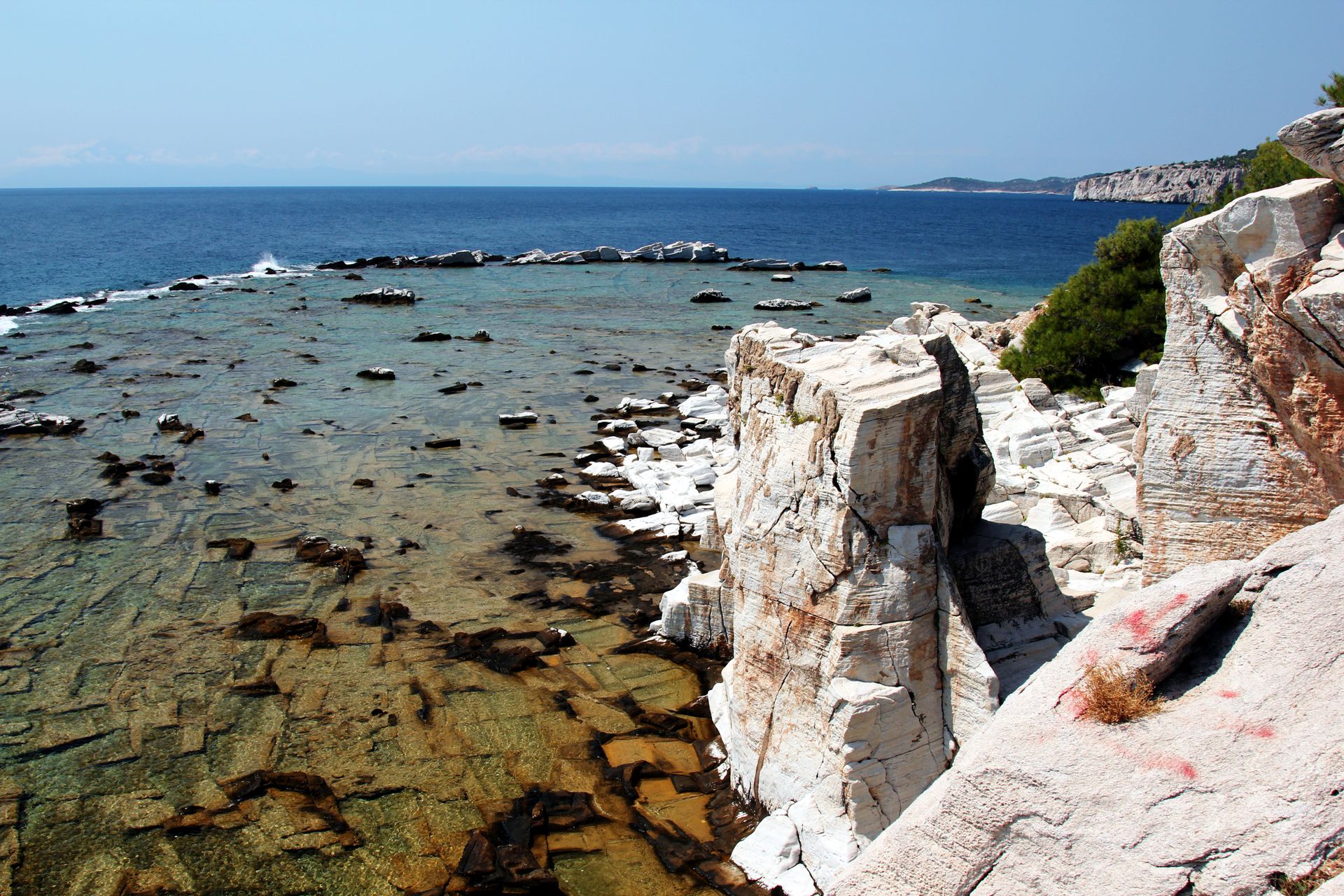
Alyki is not a village — it is a peninsula on the southeast coast with a couple of tavernas, two small bays, and one of the most unusual archaeological landscapes in Greece. This is where Thasos’s famous white marble was quarried for over 1,200 years, from the 7th century BC through the Byzantine era. Hundreds of labourers — many of them enslaved — cut, carved, and loaded marble blocks directly onto boats bound for temples and monuments across the Mediterranean.
Today, the quarry ruins occupy the tip of the peninsula, partially submerged in the sea. You can see abandoned half-finished columns and enormous blocks underwater, along with the foundations of guard towers that once protected both the workers and the marble from pirates. On the peninsula itself, there are remains of two ancient temples (probably dedicated to Apollo, protector of sailors) and two early Christian basilicas from the 5th and 6th centuries AD. It is free to enter, the circuit walk takes about 45 minutes, and you can swim in the bay afterwards. Few places in Greece combine archaeology and swimming so effortlessly.
Giola: The Natural Rock Pool
South of Alyki, near the village of Astris, a circular rock pool carved by the sea into the coastal cliffs has become one of Thasos’s most photographed spots. Giola is a natural lagoon — a hollowed-out bowl of rock filled with seawater that warms several degrees above the open sea. It is not large (perhaps 20 metres across), and reaching it requires a scramble down a rough path from the road. But the colour of the water inside — a pale, almost luminous green against the dark rock — makes it worth the effort.
A word of caution: the rocks around Giola are uneven and can be slippery. Wear shoes with grip, not flip-flops. And do not expect solitude in summer — the pool’s social media fame means queues to jump in during peak hours.
More Beaches Worth Your Time
Paradise Beach, on the east coast below Skala Potamia, is a long sandy strip popular with a younger crowd and families alike. Tripiti, near Limenaria, is famous for its rock arch — a natural hole in the cliff face that frames the sea behind it. Metalia, just north of Limenaria, combines good snorkelling with the industrial ruins of an old German mining operation (the Palataki building above the beach is worth a look). And Pachis, northwest of Limenas, is an underrated stretch of sand and pine shade that fills up much later than the headline beaches.
If you are looking for volcanic landscapes and the kind of beaches that feel like another planet, you might prefer Milos and its 70 shores. But for sheer accessibility and variety — marble coves, long sandy stretches, natural lagoons, and archaeological swim spots — Thasos is hard to match.
Ancient Thasos: 2,700 Years Underfoot
Thasos’s historical significance is easy to underestimate if you arrive expecting a simple beach island. The ancient city beneath modern Limenas was one of the wealthiest in the northern Aegean, made rich by gold mines on the island and the nearby mainland. Colonists from the Cycladic island of Paros settled here in the 7th century BC, but the site was already old — Herodotus mentions earlier Phoenician settlers who worked the island’s gold deposits. A school of sculpture flourished here, and the marble quarries supplied raw material to builders across the Mediterranean world.
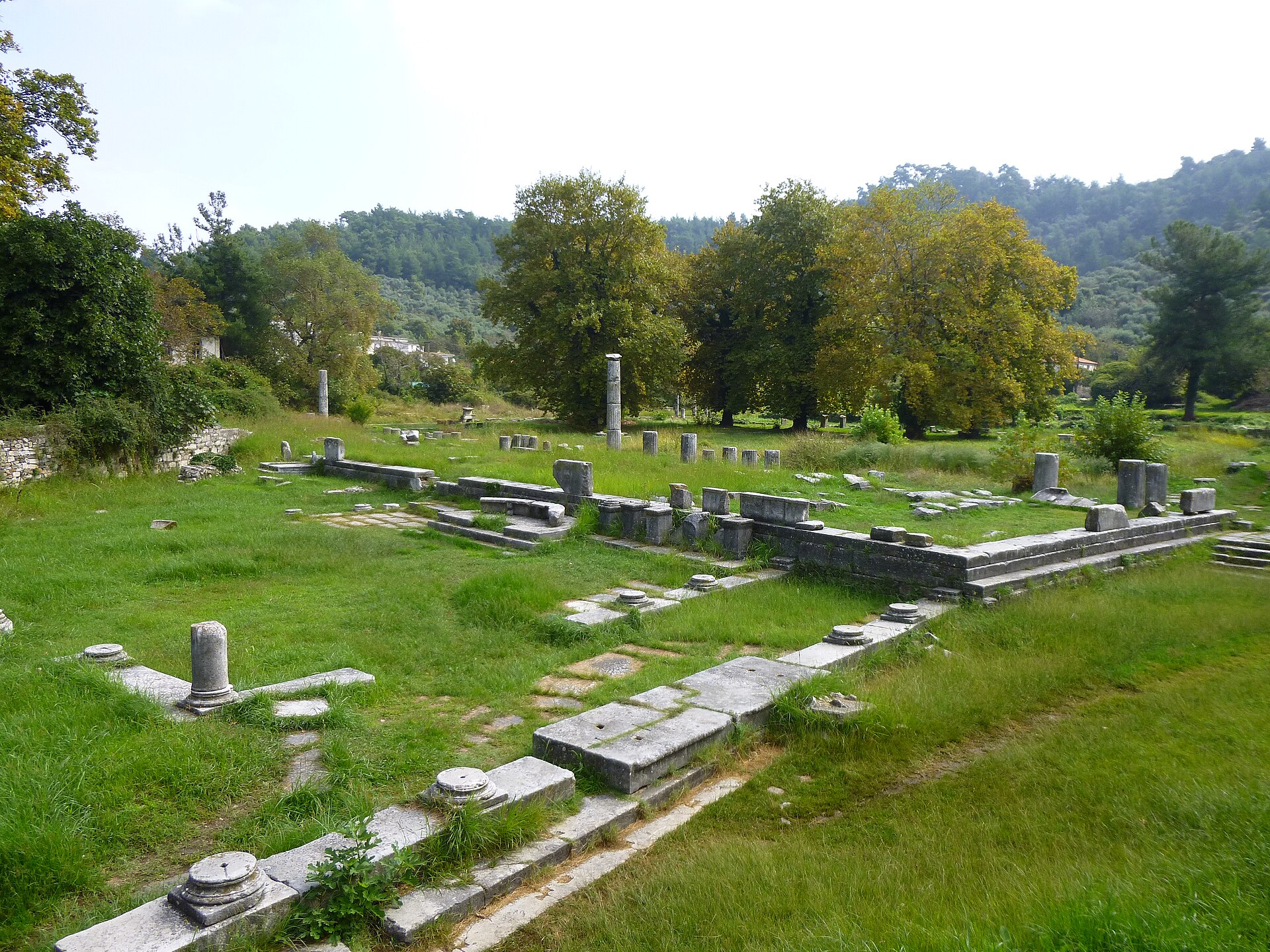
The Ancient Agora and Archaeological Museum
The agora sits on the hill just behind the old harbour of Limenas, and you will stumble across it almost accidentally — foundation stones and column fragments appear between modern buildings as you walk uphill from the waterfront. The site includes remains of temples to Herakles, Dionysus, Artemis, and Poseidon, a bouleuterion (council chamber), and a portico that once lined the marketplace.
Next to the agora, the Archaeological Museum of Thasos is one of the better small museums in Greece. Its centrepiece is the Kouros of Thasos — a colossal marble figure standing about 3.5 metres tall, dated to around 600 BC. There is also Hellenistic jewellery, pottery spanning from the Palaeolithic to the Byzantine period, and reliefs from the city walls. The collection is laid out chronologically, room by room, and manages to tell the story of the island’s long, layered past without overwhelming you.
The Acropolis Walk
From the museum, a marked trail follows the ancient defensive walls uphill to the acropolis. The walls themselves are remarkable — built from white Thasian marble, they once rose up to nine metres high and enclosed the entire ancient city. You can still walk along surviving sections, passing carved gate reliefs (look for the Gate of Zeus and Hera and the Gate of Silenus) and, partway up, the Sanctuary of Pan, carved directly into a cliff face.
The ancient theatre, on the hillside below the acropolis, is one of those quiet, undervisited sites where you can sit on marble seating and look out over the harbour and the open sea without another person in sight. The views alone justify the climb. The whole circuit — museum, walls, Pan sanctuary, theatre, acropolis viewpoint, and back down — takes about two hours at a comfortable pace. Parts of the path are uneven, so wear proper shoes.
If you are drawn to ancient Greek history, you will find Thasos more rewarding than most islands outside of Delos or Crete. For more on Greece’s cultural depth, the Meteora monasteries — reachable with a few hours’ drive from Kavala on the mainland — make a natural pairing with a Thasos trip.
Mountain Villages: The Interior Life of Thasos
Most visitors to Thasos circuit the coast road and never turn inland. This is a mistake. The mountain villages are where the island keeps its character — stone houses built into steep hillsides, narrow paths shaded by plane trees, and a pace of life that has more in common with rural Macedonia than with the beach bars below.
Panagia and Potamia
These two villages sit in a valley on the northeastern slopes of Mount Ipsarion, connected by a winding road and an old footpath. Panagia is the prettier of the two, with marble-paved streets (that famous Thasian marble again), natural springs, and a handful of shops selling local honey and olive oil. The Polygnotos Vagis Museum, dedicated to a local sculptor who emigrated to America and produced remarkable work in exile, occupies a traditional stone house in Potamia. It is a small, thoughtful museum that most visitors to the island never find.
From either village, hiking trails lead up towards the summit of Mount Ipsarion. The full ascent is demanding — over 1,000 metres of elevation gain — but shorter loops through the forest are manageable for anyone with reasonable fitness and good shoes.
Theologos
On the southern foothills, Theologos was the island’s capital during Ottoman rule and retains the feel of that era: Macedonian-style stone architecture, watermills along the stream that runs through the village, and small wooden bridges connecting its two halves. The churches of Agia Paraskevi and Agios Dimitrios have ornate wooden iconostases worth stopping for, and the folklore museum in the Hatzigeorgis Mansion — once the home of a resistance fighter — recreates daily life in a traditional Thasian household.
But the real reason to come to Theologos is the food. The tavernas here serve roasted goat — slow-cooked over pine wood — as a speciality, alongside local wine, wild greens, and homemade bread. If you visit in late August, you might catch the re-enactment of a traditional Thasian wedding, complete with folk music and dancing.
From Theologos, a newly paved road leads to the abandoned village of Kastro, a former pirate-watch settlement perched high in the hills. The walk up through the Valley of the Ancient Trees, where centuries-old plane trees line a dry riverbed, is one of the finest half-day hikes on the island.
Sotiras and Kallirachi
These are the quiet ones — small settlements on the western slopes with a few dozen permanent residents each. Sotiras offers panoramic views of the west coast from its church square, and a 10-kilometre hiking loop passes through the Monastery of Agios Panteleimon and some of the island’s least-visited forest. Kallirachi is known locally for its halvas — a traditional sweet — and its position above the coast makes it a peaceful base for anyone who wants to trade convenience for calm.
If you are someone who gravitates towards mountain walks and traditional villages over organised beaches, Thasos will remind you of Skopelos in the Sporades — both are green, forested islands that reward exploration on foot rather than from a sunbed.
The villages of Thasos were built inland for a reason — the sea brought pirates. The mountains brought safety. The view was a bonus.
What to Eat and Drink on Thasos
Thasos is not a foodie island in the curated, Instagram-ready sense of Sifnos. There are no Michelin stars, no tasting menus, no celebrity chefs. What there is, instead, is a food culture rooted so deeply in the landscape that almost everything you eat has a direct, visible connection to where it grew.
Throumba Olives
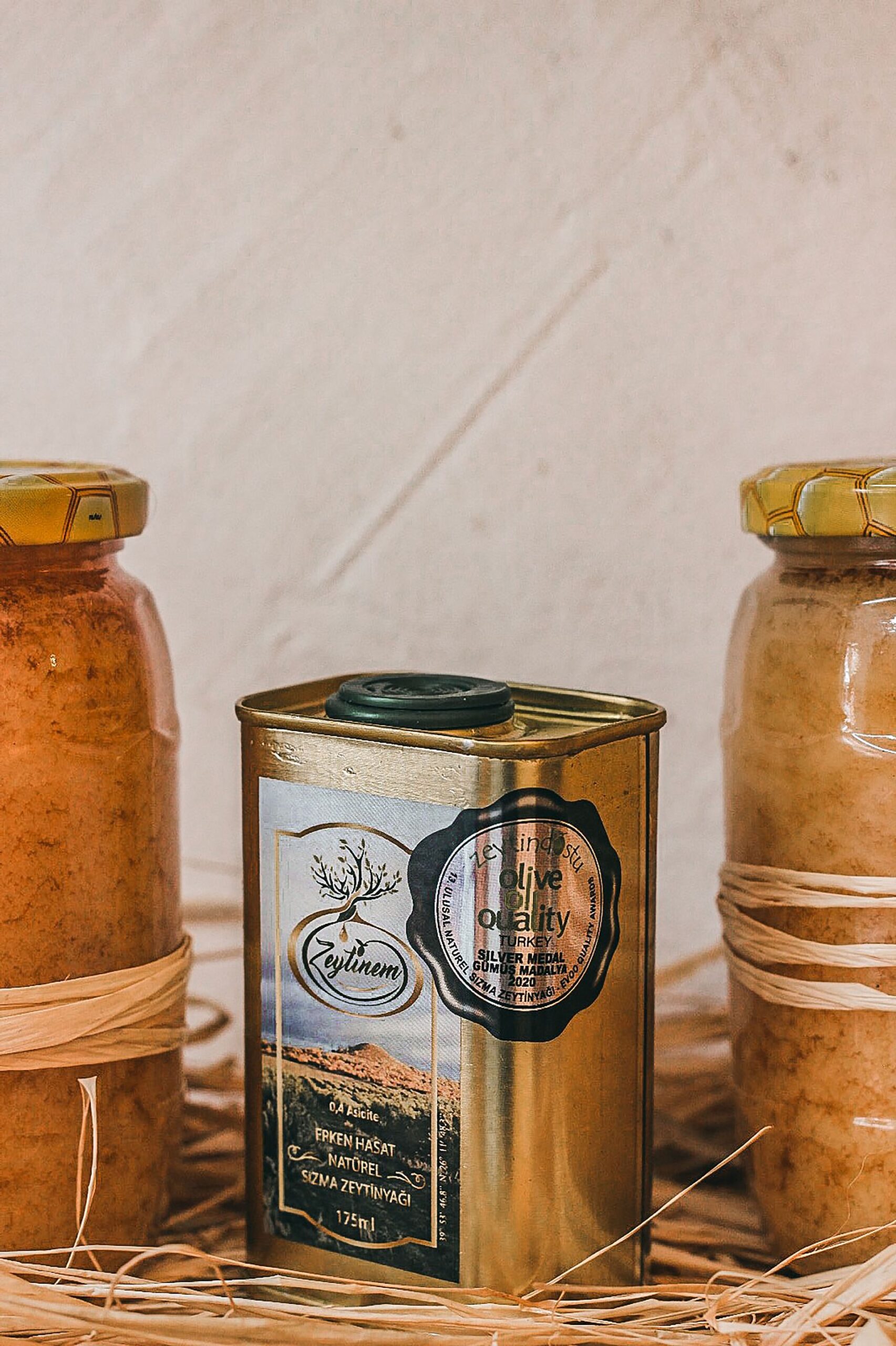
The star of Thasos’s larder is the Throumba olive — a wrinkled, dark variety that is left to cure naturally on the tree rather than being harvested green and processed in brine. The result is an olive with an intense, slightly sweet flavour and a soft, almost buttery texture. Throumba olives from Thasos carry a Protected Designation of Origin (PDO), meaning the name is legally tied to this island. You will find them on every taverna table, sold loose in markets, and packed in jars at roadside stalls. Buy a bag to take home — they are one of the best edible souvenirs in Greece.
Pine Honey
The island’s extensive pine forests support a thriving beekeeping tradition, and Thasian pine honey is dark, thick, and intensely aromatic — quite different from the lighter thyme honey common on southern Greek islands. It is used in desserts (saragli, a pastry of layered filo with walnuts and honey, is a local speciality), drizzled over yoghurt, or sold straight from the apiary. The family-run Melissa operation in Potos is one of several producers where you can buy directly.
Olive Oil, Wine, and Tsipouro
Olive trees cover much of Thasos’s lower slopes, and the oil production here is serious — you can visit small presses in Prinos and Panagia, and some producers infuse their oil with local herbs. The wine tradition is ancient (Thasian wine was prized in the classical world and strictly regulated by law), though production declined centuries ago as olives replaced vines. A modest revival is underway, and local bottles are worth trying alongside the island’s tsipouro — a strong grape pomace spirit served cold in small glasses, ideally with a plate of meze.
At the Taverna
Fresh fish, grilled simply with olive oil and lemon, is the coastal default. Inland, roasted goat and lamb dominate, particularly in Theologos. Look for locally made feta-style cheese, wild greens gathered from the hillsides, and loukoumades — fried dough balls drenched in the local honey — for dessert. Portions are generous, prices are reasonable by island standards, and the cooking is the kind of honest, ingredient-driven food that does not need complicating.
How to Get to Thasos
Thasos has no airport. The nearest one is Kavala International Airport (officially “Megas Alexandros”), about 12 kilometres from the ferry port at Keramoti. Several European airlines operate seasonal flights to Kavala in summer, and Thessaloniki Airport — with far more international connections — is roughly a 2.5-hour drive away.
The Ferries
Two ferry routes connect Thasos to the mainland, and the difference between them matters:
| Route | Duration | Summer Frequency | Best For |
|---|---|---|---|
| Keramoti → Limenas | ~30 minutes | Up to 38 crossings per day (Jun–Sep) | Coming from Kavala Airport; arriving in the capital |
| Kavala → Skala Prinou | ~1 hour 15 minutes | 5 crossings per day (Jun–Sep) | Coming from Thessaloniki or Kavala city centre |
Tickets cannot be booked online or in advance — you buy them from kiosks at the port just before departure, cash or card. This system feels archaic but works smoothly outside of Friday afternoons and Saturday mornings in peak season, when the Keramoti queue can stretch for a kilometre or more. If you are arriving on a Friday in July or August, consider taking the Kavala–Prinos route instead; the queue is shorter and the crossing, though longer, is more relaxed.
A taxi from Kavala Airport to the Keramoti ferry port costs roughly €20. If you are coming from Thessaloniki by bus, the KTEL intercity service runs to Kavala (about 2.5 hours), from where you can either take the ferry directly or catch a local bus to Keramoti.
Getting Around the Island
A rented car is the most practical way to explore Thasos. The main coastal ring road is well-paved and the full circuit takes about two hours without stops. The mountain roads to villages like Theologos and Kastro are narrower but manageable in a standard car — though a vehicle with some clearance is helpful for the dirt tracks leading to Saliara and Porto Vathy beaches.
There is a limited bus service connecting the main coastal settlements, but it runs infrequently and will restrict your options significantly. Scooters and quad bikes are available for hire in Limenas and Limenaria, and a number of operators now offer e-bike tours of the mountain villages — a good option if you want guided access to trails without the exertion of a full hike.
When to Visit Thasos
Thasos’s season runs from roughly May through October, with July and August being the busiest and hottest months. Summer temperatures regularly hit 30–35°C, and the beaches are at their most crowded.
June and September are the better choices. The sea is warm enough for comfortable swimming by early June, and by September the temperatures ease off, the crowds thin, and the light turns golden. For more on why September is underrated for Greek travel, we have written about it at length.
May and October are feasible for hiking, archaeology, and village exploration, but the water will be cool and some seasonal businesses may be closed. Winter on Thasos is quiet and cold — this is northern Greece, and snow occasionally dusts the upper slopes of Ipsarion.
Where to Base Yourself
Your base depends on what you want from the trip:
- Limenas (Thasos Town) — the capital and ferry port, with the best access to the archaeological sites, the museum, and a range of restaurants. Not the best beach, but the most convenient all-round base.
- Skala Potamia / Golden Beach — ideal for families and beach-focused stays. Long sandy shore, shallow water, and a good selection of accommodation within walking distance.
- Limenaria — the second-largest settlement, on the south coast. A working town with a proper marina, a long promenade, and easy access to the beaches of the south and west.
- Potos — the liveliest spot for nightlife and a younger crowd. The beach is decent, though not the island’s best.
For something quieter, look at rooms in the mountain villages — Panagia and Theologos both have small guesthouses that offer an entirely different pace.
Practical Tips for Thasos
- Rent a car. The island is compact enough to drive end to end in an hour, but you will want the flexibility. Book in advance for July and August — availability tightens fast.
- Bring cash. While cards are accepted at most hotels and larger restaurants, some tavernas, roadside stalls, and beach bars still prefer cash, particularly in smaller villages.
- Protect your feet. The marble pebble beaches are beautiful but can be scorching in midday sun. Water shoes or thick-soled sandals will save you.
- The ring road is deceptive. It looks short on a map, but the constant stopping — for a beach here, a cove there, a roadside honey stall — means the “two-hour drive” around the island easily becomes a full day.
- Do not skip the interior. A beach holiday on Thasos is fine, but you would be missing the mountain villages, the hiking, and the archaeology that make the island genuinely distinctive. Budget at least two days for the inland side of things.
- Mosquitoes. The forests and streams mean more mosquitoes than you might expect on a Greek island. Bring repellent, particularly for evenings in the mountain villages.
Thasos at a Glance
| Location | North Aegean Sea, East Macedonia & Thrace |
| Area | 380 km² |
| Population | ~13,000 |
| Highest Point | Mount Ipsarion, 1,203 m |
| Coastline | 95 km |
| Nearest Airport | Kavala (Megas Alexandros), ~12 km from Keramoti port |
| Ferry Access | Keramoti–Limenas (~30 min) or Kavala–Skala Prinou (~1h 15m) |
| Best Months | June & September |
Is Thasos Right for You?
Thasos works for a wider range of travellers than it gets credit for. Families with young children will find safe, shallow beaches and a compact island that is easy to navigate. Couples looking for something more grounded than the typical Cycladic honeymoon circuit will appreciate the mountain tavernas, the quiet villages, and the archaeology. Solo hikers have enough trail variety — from coastal walks to a serious summit attempt on Ipsarion — to fill a week. And anyone who cares about food provenance, about knowing where the honey on your yoghurt came from and what the olives were doing on the tree before they landed on your plate, will find Thasos deeply satisfying.
It is not an island that tries to impress you. There are no dramatic caldera views, no designer boutique hotels, no sunset cocktail bars with DJs. What there is, instead, is a place with real depth — geological, historical, culinary — that reveals itself gradually, one marble beach, one mountain path, one slow evening meal at a time.
If you are planning a wider trip through northern Greece, Thasos pairs naturally with Meteora or the mainland city of Kavala, which has its own Ottoman-era old town, a Roman aqueduct, and a tobacco museum that is better than it sounds. Together, they make a compelling case for a Greece beyond the postcard.
The information in this article was researched and verified as of July 2026. Prices, transport options, schedules, and conditions may have changed since publication — we recommend double-checking key details before your trip.