Karpathos: The Dodecanese Island Where Time Stands Still — Matriarchy, Makarounes & 180 Beaches
The first time we reached Karpathos, we felt as if we had stepped into a time capsule. Not in the cliché sense of a “picturesque island” you forget after two days. But in the way a place looks you straight in the eye and tells you: “Here, the rules are different.”
In Karpathos, women wear traditional dress not for the tourists but because that is simply how they dress. The dialect spoken in the northern villages has Dorian roots — words Homer would recognise. And when someone offers you makarounes with sitaka, it is not a “gastronomic experience”; it is a grandmother cooking for you what she learned from her own grandmother.
This guide was not written from a distance. We wrote it walking its footpaths, talking with the women of Olympos, sweating down the steps of Apella, and eating pseftomakarounes on a caïque off Saria. This is Karpathos as we lived it — and as we hope you will live it too.
Why Karpathos Is Unlike Any Other Greek Island
Let us say it from the start: Karpathos is not for everyone. If you are looking for the beach bars of Mykonos or the sunset cocktails of Santorini, you may be on the wrong page. But if you are seeking an island that has not sold its soul — a place where tradition is not a tourist spectacle but an everyday act — then you have just found your next destination.
Stretched between Crete and Rhodes in the Dodecanese, Karpathos is the second-largest island in the archipelago yet one of the least understood. Its northern half is wild and mountainous, home to the legendary village of Olympos, one of the last matriarchal societies in Europe. Its southern half is gentler, dotted with whitewashed villages, fishing hamlets, and — here is the number that makes even Greeks pause — one hundred and eighty beaches.
Most travel guides reduce Karpathos to a checklist: Apella beach, Olympos village, done. But the Karpathos we found is infinitely richer. It is an island where linguists come to study archaic Greek that survives in everyday speech. Where the meltemi wind shapes not just the coastline but an entire culture of windsurfing that draws athletes from across the world. Where an uninhabited satellite island called Saria hides early Christian ruins and absolute, almost unnerving silence.
There are places in Greece that still feel like Greece felt a hundred years ago. Karpathos is not one of those places. It is the place that never changed in the first place.
If you have travelled around the Greek islands, you may have noticed that the Dodecanese have a different texture from the Cyclades. The colours are deeper, the history more layered — Venetian, Ottoman, Italian — and the traditions more fiercely guarded. On an island like Tinos, tradition is carved in marble and worn as faith. On Karpathos, it is worn as clothing and spoken as dialect. And on Ikaria, time itself slows to the rhythm of siga-siga (slowly, slowly). Karpathos does not slow time — it seems to have opted out of it entirely.
Olympos: Europe’s Last Matriarchal Village
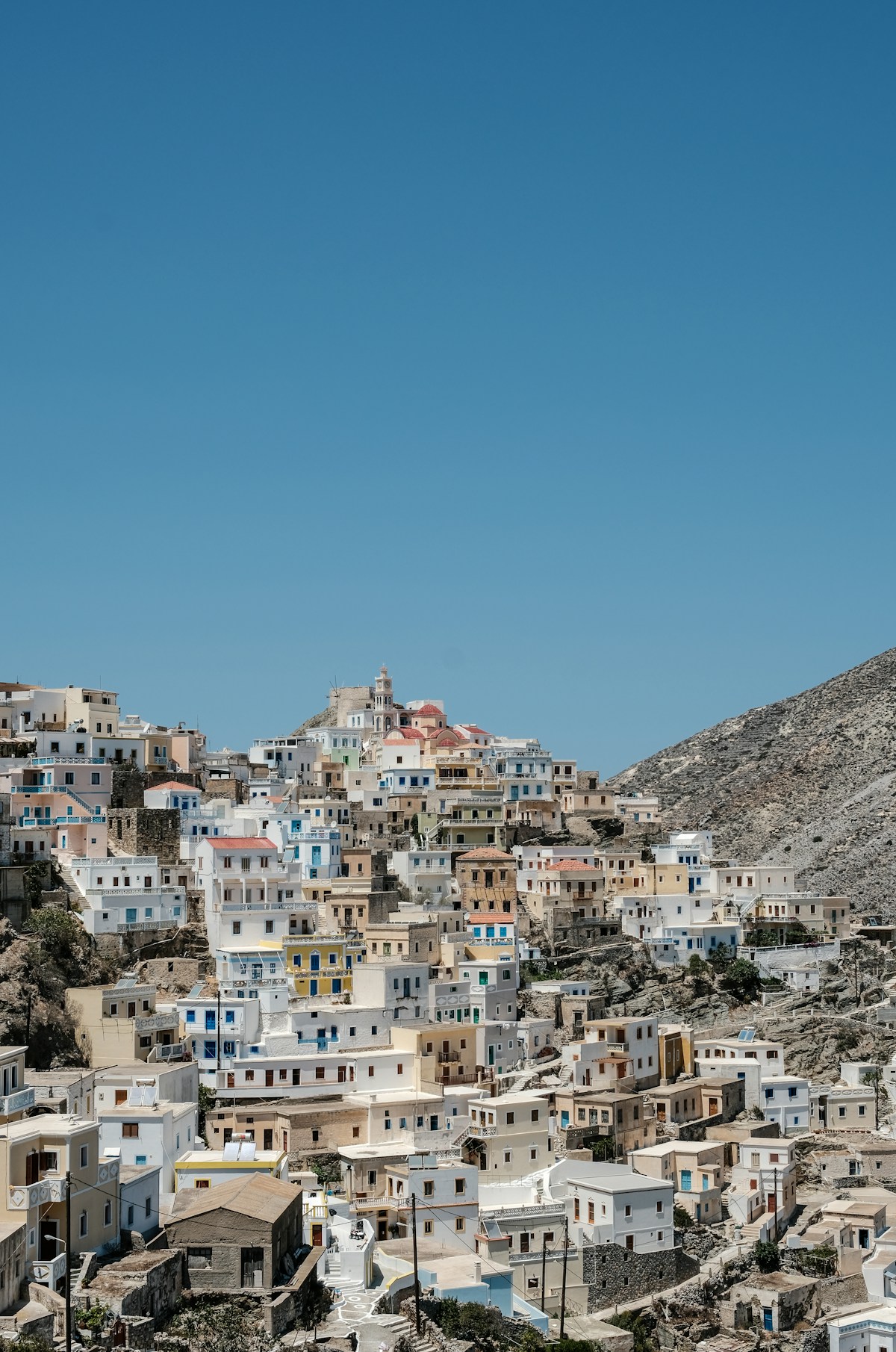
Every traveller who has heard of Karpathos has heard of Olympos. The images are arresting: a cluster of pastel-coloured houses clinging to a mountain ridge, women in embroidered headscarves and layered skirts walking cobbled lanes, windmills turning lazily against a sky so blue it almost hurts. But Olympos is not a living museum. It is a living village, and its most extraordinary feature is not architectural — it is social.
Women Who Wear Their History Every Day
Walk through Olympos in the morning and you will see women dressed in traditional costume — not for a festival, not for tourists, but because this is how they dress. The kavai, the embroidered bodice, the vraka, the long pleated skirt — these are not relics. They are a uniform of continuity. In Olympos, women inherit their clothes from their mothers and grandmothers, along with the land and the household. For centuries, the village has been organised around a matrilineal system: property passes from mother to eldest daughter, and women are the keepers of the home, the fields, and the culture.
International media — France24, New Lines Magazine, Greek Reporter — have covered this matriarchy as an exotic curiosity. But spend even a few hours in Olympos and you understand it is not a curiosity. It is a survival strategy. The men of Olympos were historically migrant workers — sailors, sponge divers, shipbuilders — absent for months or years at a time. The women stayed. They tended the land, raised the children, managed the finances, preserved the rituals. The matriarchy was born of necessity, and it endured by force of identity.
A Dorian Dialect and Words That Refuse to Die
Linguists love Karpathos for a reason that has nothing to do with beaches. In Olympos and the surrounding villages, speakers still use words and grammatical forms that trace directly to the Doric dialect of ancient Sparta. We are not talking about a few quaint expressions. Phonological features — the retention of the ancient long a where standard Greek shifted to i, Doric verb endings, lexical fossils — survive robustly. To hear an Olympos grandmother speak is to hear an echo of the seventh century BC.
Festivals that Feed the Whole Village
The great feast of Olympos falls on the 15th of August — the Dormition of the Virgin. If you are on the island then, go. The church offers free food, cooked in enormous cauldrons by the women of the village. After the liturgy, the eating begins, and after the eating comes the dancing — karpathikos choros, a slow, stately circle dance led by the eldest women, who dictate the steps and the song lyrics. It is not a performance. You are welcome to join, but be respectful: this is sacred time.
Diafani — The Seaport of Another Era
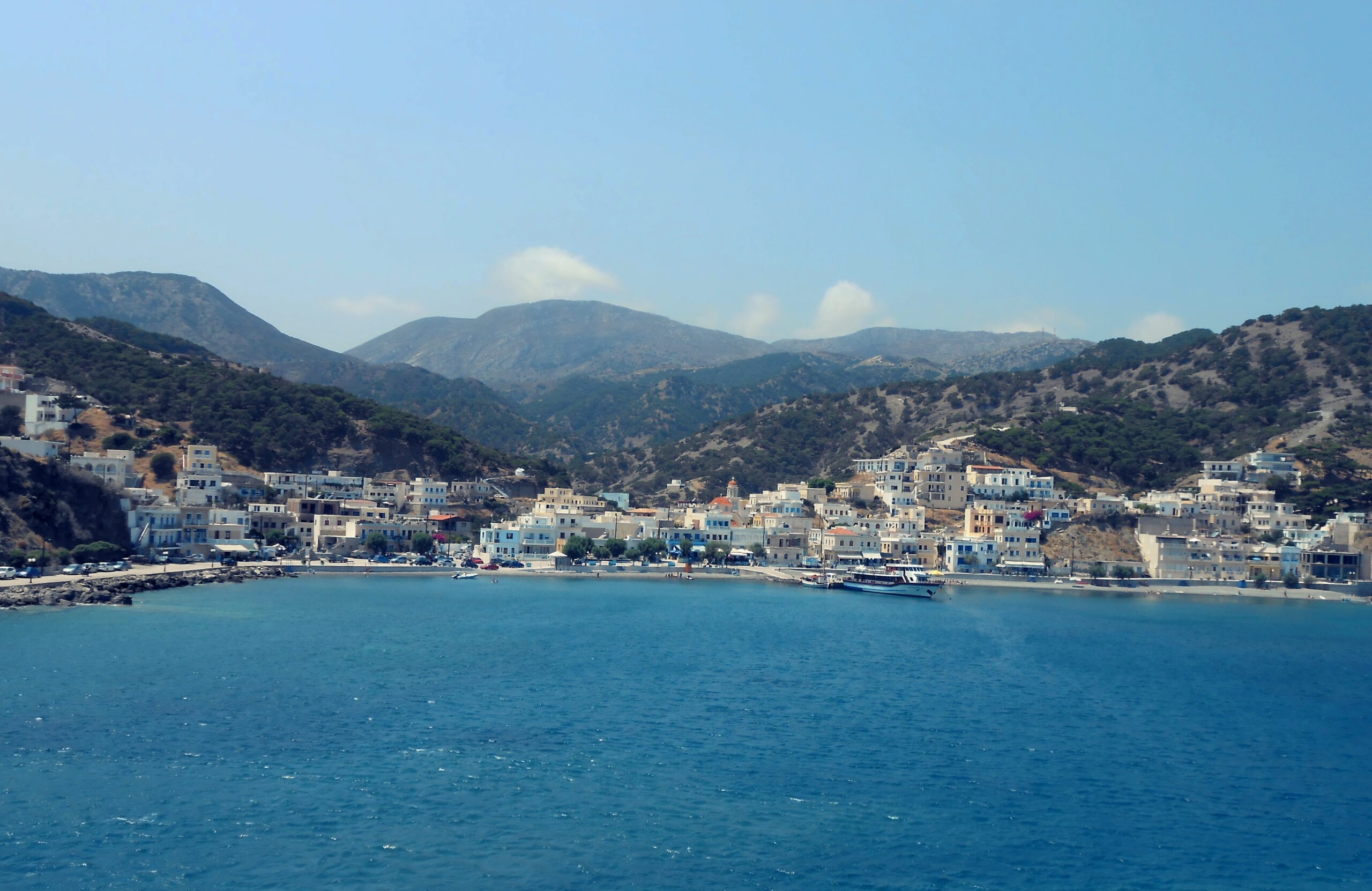
Just below Olympos, on the northern coast, lies Diafani — a tiny port that feels like a film set from the 1950s. There is a single row of tavernas, a pebble beach, and the boats that connect to Saria. Diafani is where you stay if you want silence so deep that you can hear the stars. It is also the only departure point for the uninhabited island of Saria, which we will get to shortly.
The Beaches of Karpathos: 180 Choices (and How to Pick)
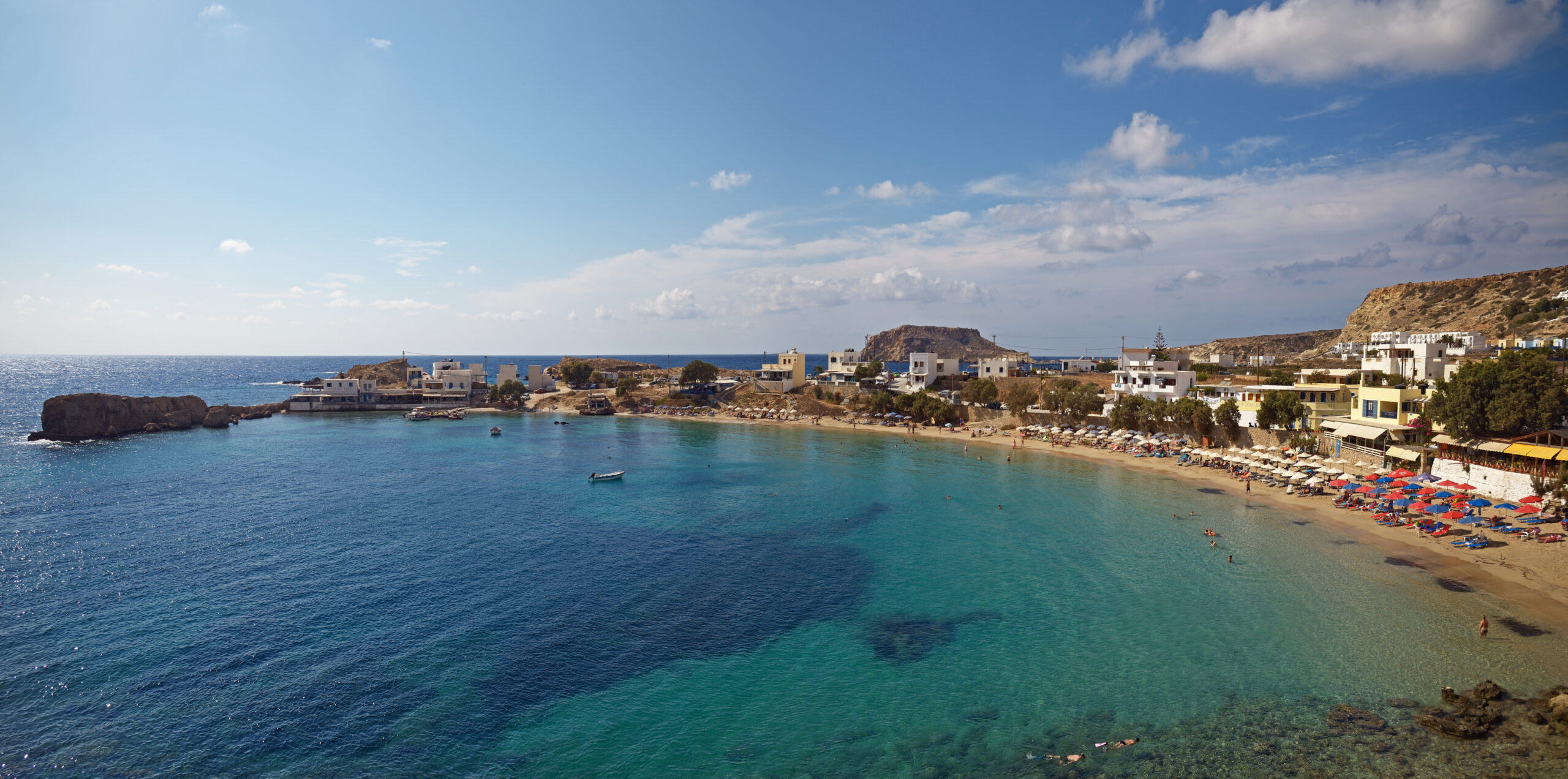
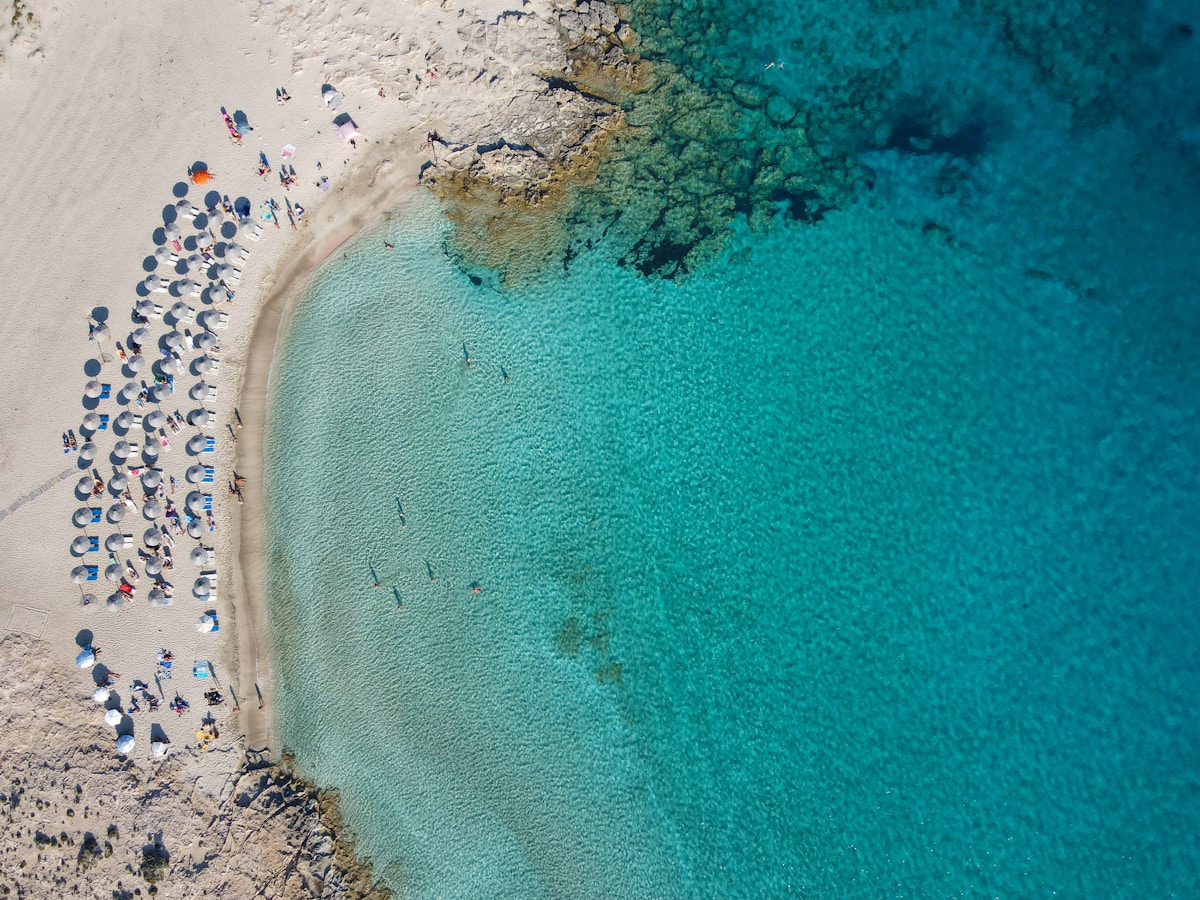
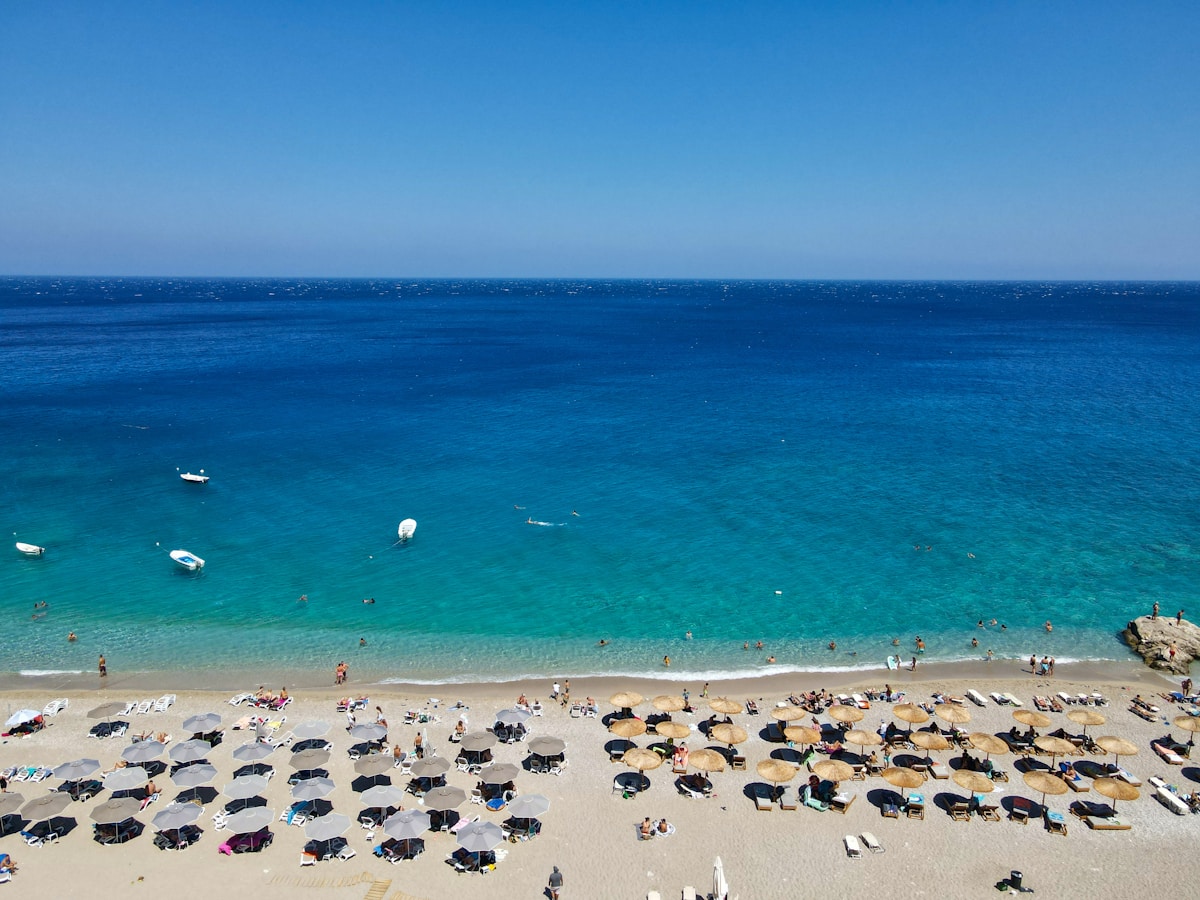
Yes, one hundred and eighty. The number is not a marketing exaggeration — Karpathos has one of the most indented coastlines in the Aegean, with coves tucked behind coves and headlands that reveal new strips of sand at every turn. The challenge is not finding a beach; the challenge is choosing which one.
Apella — The Famous One (and the Most Photographed)
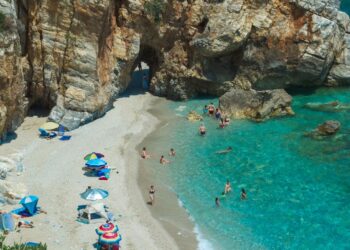
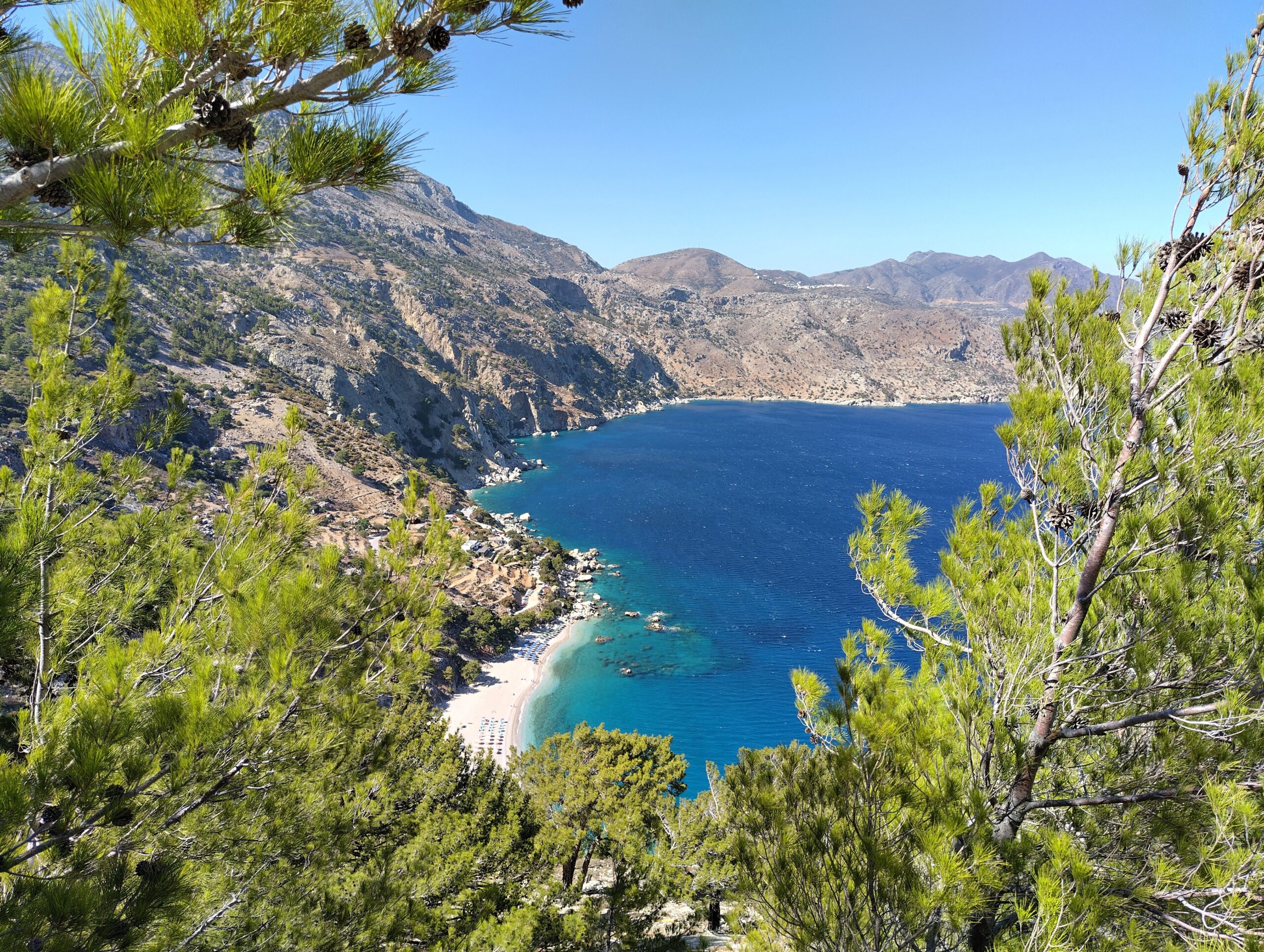
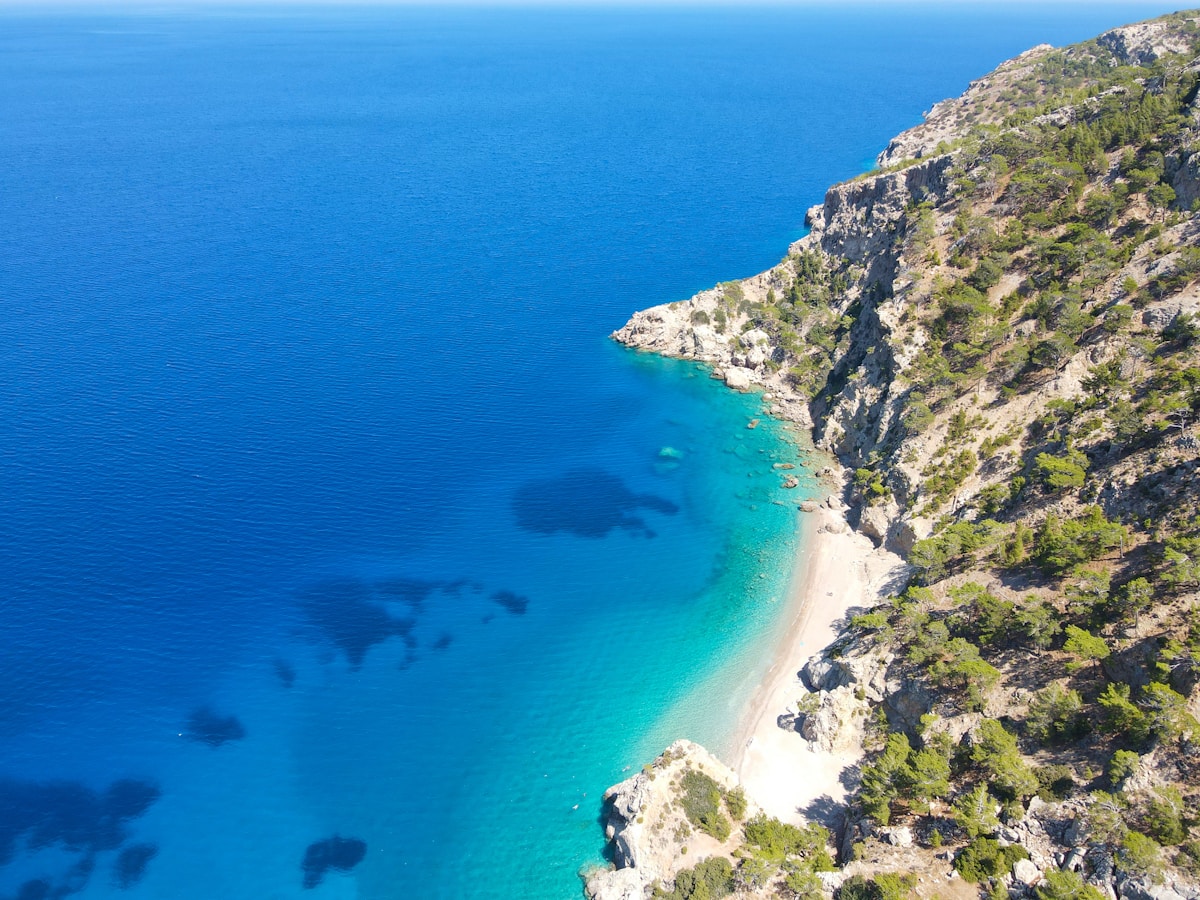
If you have seen one photo of a Karpathos beach, it was probably Apella. Pine trees lean almost to the water’s edge. The pebbles are white and smooth. The sea is that impossible shade of turquoise that looks photoshopped even when you are standing in it. Access requires a steep staircase — count about 200 steps — which deters the crowds just enough. Go early. There is a small canteen in summer, but bring water.
Kyra Panagia, Diakoftis, Achata — The “Hidden” Gems
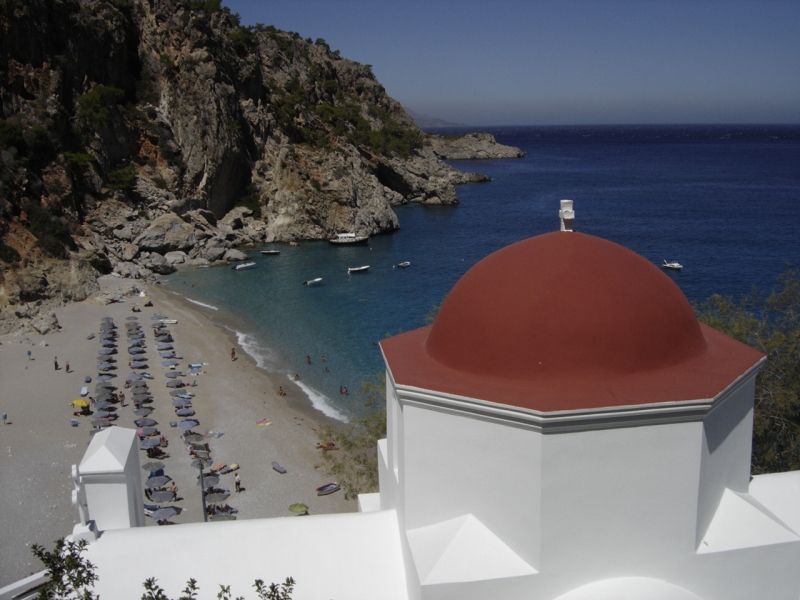
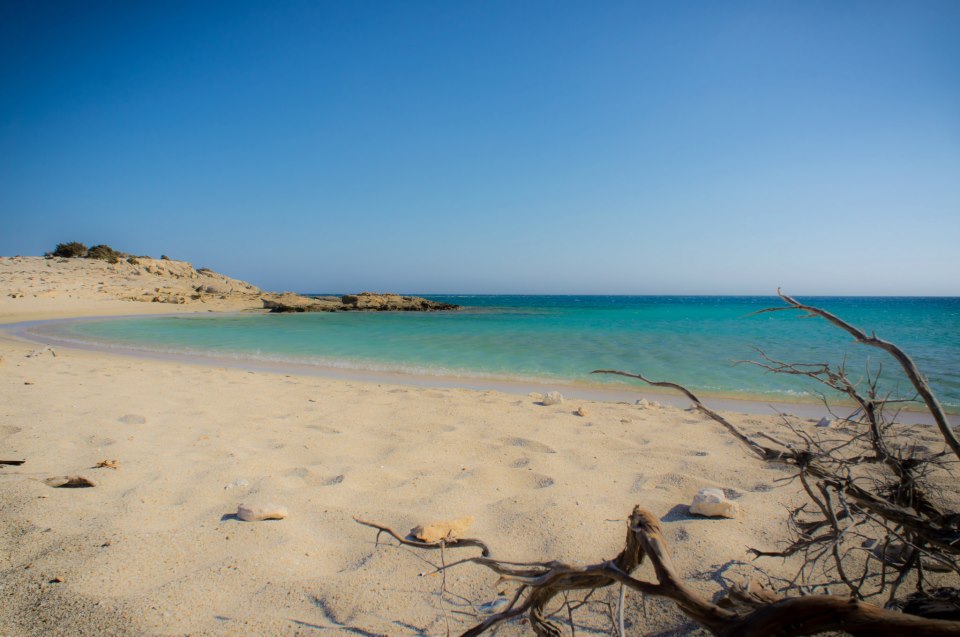
On the southeastern side of the island, Kyra Panagia is a sheltered bay of fine sand with a white chapel at one end. The water is shallow and warm — excellent for families. A little further south, Diakoftis is the beach everyone whispers about: Caribbean-white sand, a lagoon-like feel, utterly remote. Access is by car along a rough dirt road, and there are no facilities. Bring everything you need and leave nothing behind.
Achata, north of Apella, is reached by a short but steep hike and rewards you with white pebbles, sea caves, and almost guaranteed solitude. For those who have explored the beaches of Lefkada, Achata offers a similar wildness but with a Dodecanese twist — drier, more rugged, more elemental.
Lefkos, Amoopi, Finiki — For Families and Relaxation
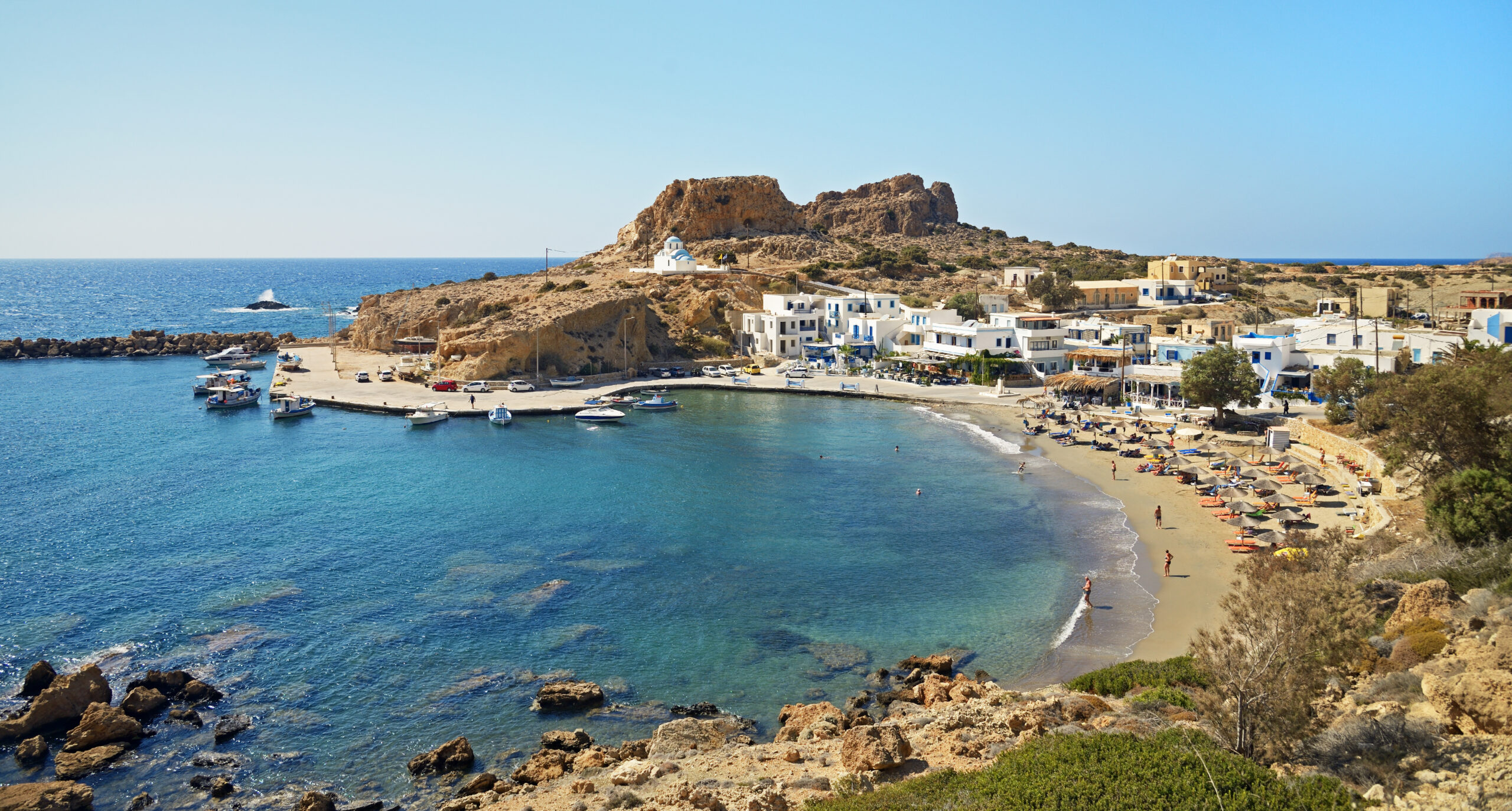
On the western coast, Lefkos is a small fishing settlement wrapped around a sandy bay. The water is shallow, the sunsets are spectacular, and several excellent tavernas line the waterfront. Amoopi, near the capital, is actually three connected beaches — ideal for families with children who need easy access, shade, and a taverna within walking distance. Finiki, a little further south, is a tiny harbour with a pebble beach, a handful of fish tavernas, and the kind of light that turns the sea silver in the late afternoon.
Agios Nikolaos (Arkasa) — A Beach with a View of Kassos
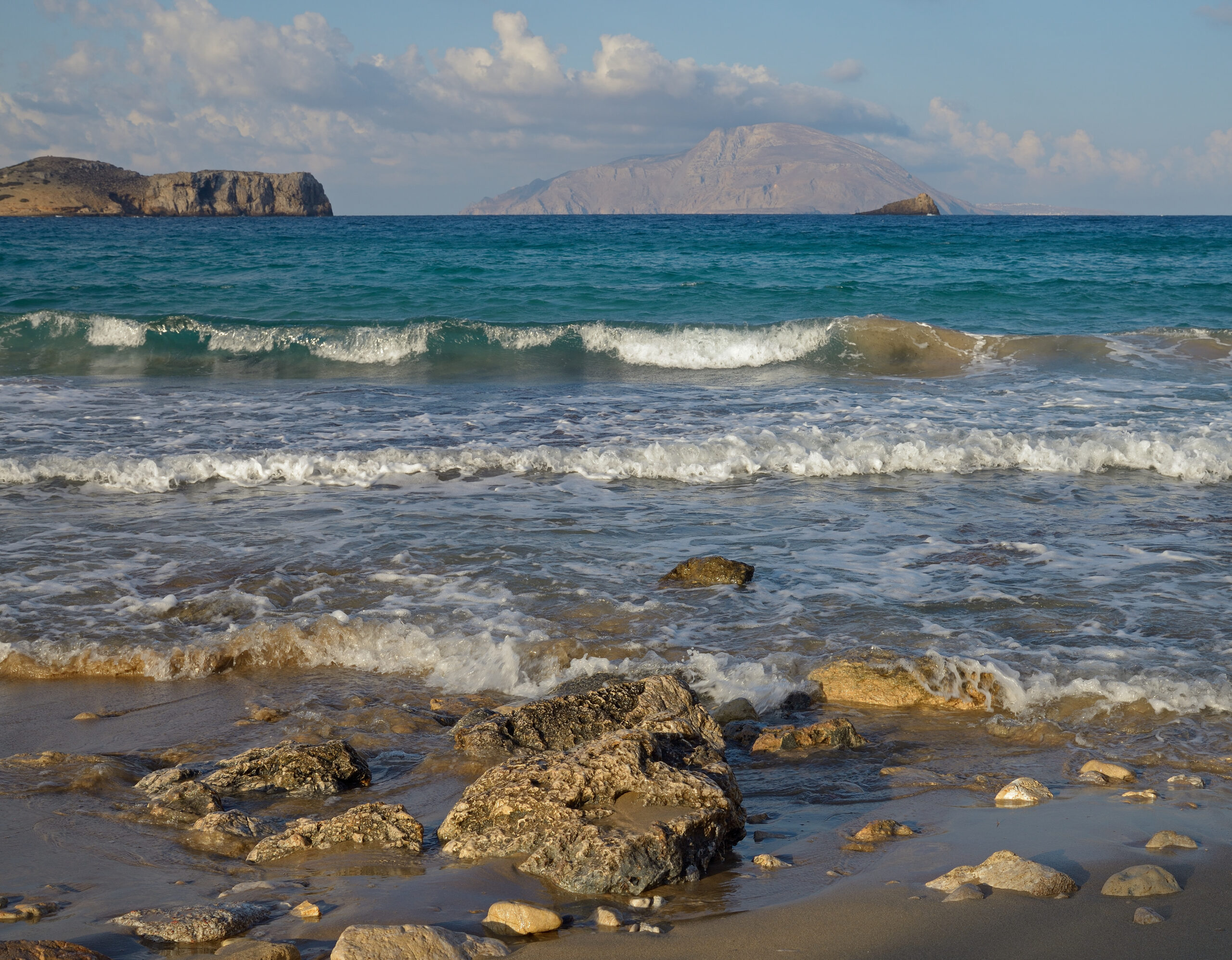
Near the village of Arkasa in the southwest, Agios Nikolaos is a sandy beach with a peculiar gift: a direct view of the island of Kassos across the narrow strait. Kassos is Karpathos’ tiny sister island — barely visited, fiercely traditional, and accessible by a short ferry ride. Standing on Agios Nikolaos beach and watching the ferry glide towards Kassos is one of those moments that remind you how many layers the Dodecanese still hold.
Which Beach for Which Traveller
- For the bucket-list photo: Apella.
- For total escape: Diakoftis or Achata.
- For families: Kyra Panagia, Amoopi, Agios Nikolaos.
- For sunset and tavernas: Lefkos, Finiki.
- For off-the-beaten-path explorers: Any unnamed cove between Pigadia and the northern tip.
We have stood on beaches so silent that the only sound was the tide pulling pebbles back into the sea — a whisper older than Homer, older than the Dorians, older than anyone who ever called this island home.
Afiartis: Where the Meltemi Meets Adrenaline
Karpathos is not only about tradition and slow rhythms. At the southern tip of the island, the landscape opens into a long, windswept coastline called Afiartis — and for a certain tribe of traveller, this is the only reason they come.
Chicken Bay, Gun Bay, Devil’s Bay — The Three Surf Bays
The Afiartis coast is divided into named windsurfing spots that sound like a pirate map: Chicken Bay, Gun Bay, Devil’s Bay, Makris Gialos. Each offers a different combination of wind angle, wave height, and difficulty. Chicken Bay is the beginner-friendly zone — shallow, flat water, steady wind. Gun Bay is for intermediates. Devil’s Bay lives up to its name: strong gusts, waves that can break a mast, and the kind of conditions that windsurfers chase across the planet.
What You Need to Know
The meltemi — the summer wind that blows across the Aegean from the north — hits Karpathos with particular intensity. From June to September, 4 to 7 Beaufort winds are typical, and they blow all day, every day. This is exactly what windsurfers want. The Karpathos Surf Club rents equipment, offers lessons for all levels, and hosts international competitions. If you are a beginner, book a course in the morning when the wind is lighter.
Even if you have never touched a sail in your life, Afiartis is worth visiting for the spectacle alone: dozens of sails cutting across the bay, skimming over the water at improbable speeds, against a backdrop of barren hills and enormous sky.
Saria: The Uninhabited Island Sanctuary of Wild Nature
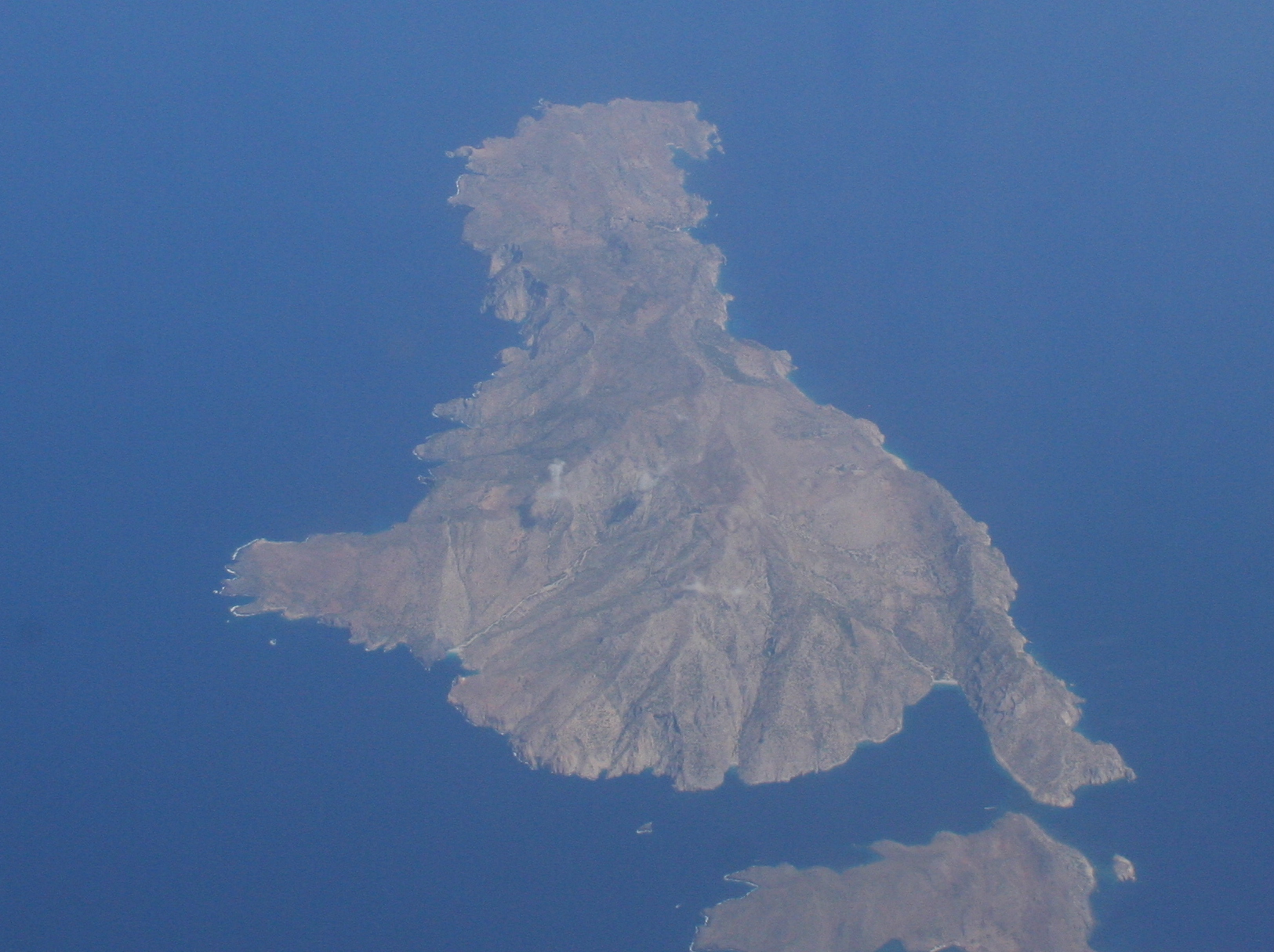
Twenty minutes by caïque from Diafani lies Saria — a small, uninhabited island that most travellers skip because they simply do not know it exists. Saria is part of the Natura 2000 network of protected areas (site code GR4210003). It has no permanent residents, no shops, no roads — only a wild landscape of low scrub, sea cliffs, and the scattered ruins of an early Christian settlement.
Getting There and What to Do
Boats leave from Diafani in the morning (the schedule depends on demand and weather — ask at the port the day before). The crossing takes about 20 minutes. Once on Saria, you can hike across the island, visit the ruins of the early Christian basilica at Palatia, and swim from deserted beaches that feel like they belong to another planet. Take water, food, sun protection, and a sense of proportion — you are entirely on your own here.
For hikers, Saria is the ultimate day trip. The trail from the landing point to the northern tip is about 7 kilometres over open terrain. The sense of isolation is profound. You will likely see more goats than people. The island is also part of the Karpathos-Saria Important Bird Area, home to the Eleonora’s falcon and the Audouin’s gull.
The Villages of Karpathos Beyond Olympos
Olympos gets the headlines, but the interior and southern half of Karpathos are stitched together by a necklace of villages, each with its own character, history, and reason to stop the car.
Menetes and Aperi — Medieval Settlements Above Pigadia
Menetes clings to a hillside a short drive from the capital, Pigadia. Its narrow lanes and stone houses recall the medieval period, and the views across the southeastern coast are panoramic. Aperi, a little further inland, was once the island’s capital and still holds a certain gravitas — old mansions, a shaded plateia, and a pace of life that rewards lingering.
Mesochori and Spoa — A Double View of Two Seas
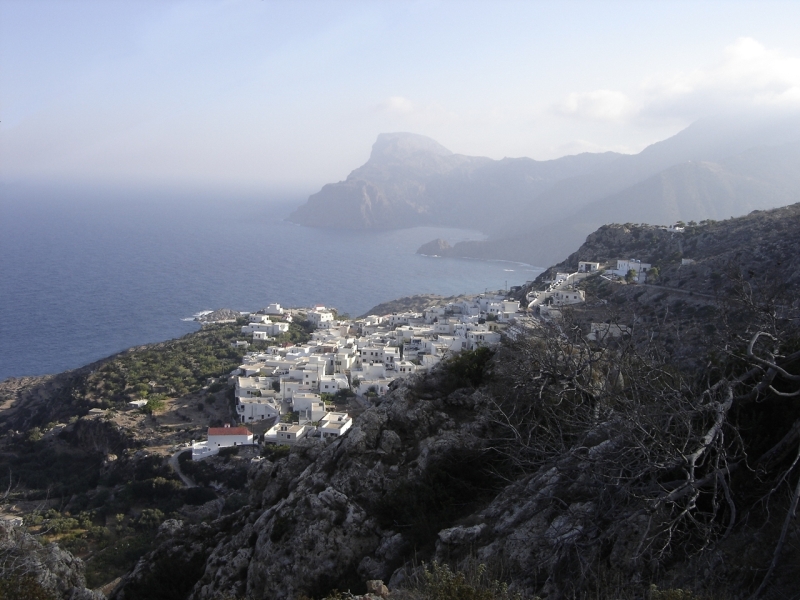
Mesochori sits high on a ridge with a rare geographical gift: a view of the Aegean on one side and the Karpathian Sea on the other. The village is compact, whitewashed, and deeply quiet. Nearby Spoa is another mountain hamlet, even smaller and even quieter. Both reward the driver who takes the inland road instead of the coastal route.
Finiki and Arkasa — Fishing Harbours and Sunsets
We have already mentioned Finiki as a beach stop, but it is also a real village — a working fishing harbour where the day’s catch appears on taverna tables within hours. Arkasa, just inland, is larger, with a history stretching back to the Byzantine era. The two together make a wonderful afternoon: a walk through Arkasa’s old quarter, a swim at Agios Nikolaos, dinner at Finiki as the sun drops into the sea.
Pigadia (Karpathos Town) — The Capital That Embraces the Bay
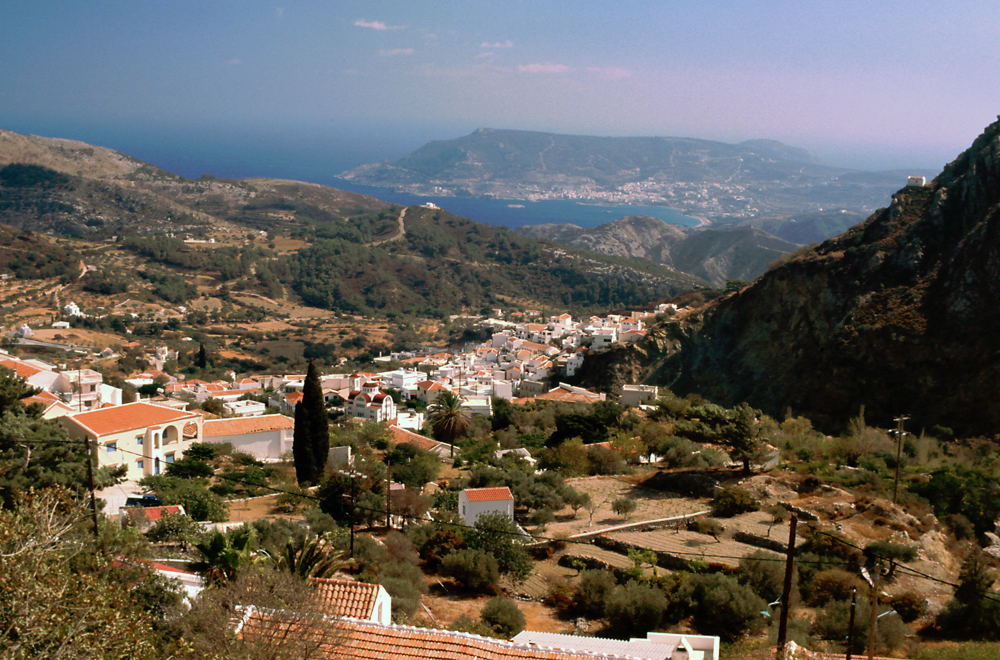
Pigadia is where most visitors arrive, and while it lacks the fairy-tale drama of Olympos, it has a confident, lived-in charm. The town curves around a deep bay, with ferries coming and going, cafes lining the waterfront, and a lively evening atmosphere. It is also the main hub for car rental, shops, and practical services. Do not dismiss it — wander the back streets behind the port, climb to the ruins of the Venetian citadel, and sit for an ouzo at a kafeneion where the old men still argue politics in Doric-inflected Greek.
The Cuisine of Karpathos: Makarounes, Sitaka & Other Stories
Greek cuisine is justly celebrated, but Karpathos has dishes you will not find anywhere else — not in Athens, not in Crete, not on any other Dodecanese island. The island’s relative isolation and its pastoral traditions have preserved a food culture of remarkable specificity.
Makarounes — The Signature Dish of Karpathos
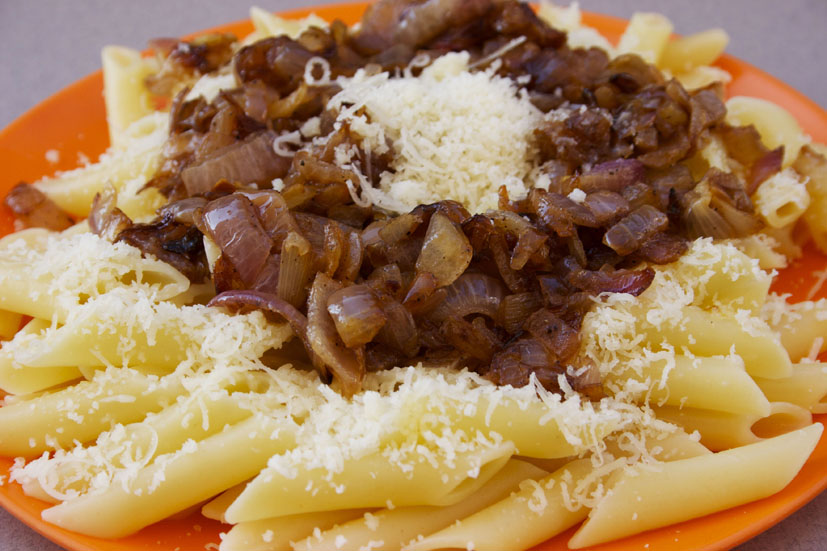
Makarounes are handmade pasta — not rolled but shaped by hand into small cylinders or twists — made from hard wheat flour and water, then dried in the sun. They are boiled and served with a generous topping of caramelised onion and sitaka, a unique dairy product that sits somewhere between butter, cheese, and yoghurt. The taste is earthy, sweet, and deeply comforting. If you eat one thing on Karpathos, make it this.
A simpler cousin is pseftomakarounes (“fake makarounes”) — boiled pieces of bread dough served with the same onion and sitaka. It is the dish of frugality elevated to art. On Sifnos, the food tells the story of Cycladic refinement. On Karpathos, every dish tells the story of survival — and the deep, rich flavour that survival can produce.
Sitaka, Vyzanti, Anterizia — Dishes You Won’t Find Anywhere Else
- Sitaka — made by repeatedly boiling and skimming sheep or goat milk, then fermenting the result. It is tangy, rich, and completely unique to Karpathos. You will find it as a spread, a cooking fat, and a table condiment.
- Vyzanti — lamb or goat stuffed with herbs and rice, baked in a clay pot. This is the traditional Easter dish, but in some tavernas you can find it year-round if you ask a day ahead.
- Anterizia — intestines stuffed with rice and herbs. An acquired taste, but one that speaks to the nothing-wasted philosophy of island cooking.
- Karpathian sausages — spiced with garlic, fennel, and black pepper, air-dried and intensely savoury.
The local cheeses — manouli, armotyri, meriari — are made from sheep and goat milk. The bread is dark, thick-crusted, and baked in wood-fired ovens. The honey is wild thyme honey, dark and aromatic.
Tavernas with History — From Finiki to Olympos
- Mama Cuisine (Finiki) — fresh fish, waterfront tables, legendary local reputation.
- Taverna Kapetan Yiannis (Finiki) — traditional dishes, slow-cooked meats.
- Kiros Restaurant (Arkasa) — creative Greek cuisine with local ingredients.
- To Steki tou Markou (Arkasa) — grilled meats, generous portions.
- Esperida Restaurant (Amoopi) — seafood with a view.
- Aniksis Restaurant (Diafani) — fresh fish straight off the boat.
- Milos Restaurant (Olympos) — sunset views and homemade makarounes.
- Meltemi Taverna (Lefkos) — beachside classics.
Sweets and Koufeto — The Wedding Sweet
Koufeto is a traditional wedding sweet made from honey, almonds, and sesame — a kind of rustic halva that is offered to wedding guests and shared with the whole village. If you are lucky enough to visit during a panigyri (festival), you will likely taste it. The sweetness is balanced, nutty, and carries the flavour of celebration.
The cuisine of Karpathos deserves a journey of its own. For a broader exploration of Greek food across the islands, our guide to Crete’s food and wine offers a complementary perspective from Greece’s largest island, which happens to be connected to Karpathos by ferry.
Hiking in Karpathos: 50+ Trails on the Path of the Ancients
Karpathos is a hiker’s island, and remarkably few travellers realise it. The island’s network of over 50 marked trails connects villages, beaches, and mountain ridges — many following paths that have been in use since antiquity.
Kali Limni (1,215m) — The Highest Peak with a View of Two Seas
Kali Limni is the highest point on Karpathos, and the ascent is one of the most rewarding hikes in the Dodecanese. From the summit, you can see the Aegean Sea to the west and the Karpathian Sea to the east — a rare dual-sea panorama. The most popular route starts from the village of Lastos and passes through high plateaus before the final climb. Distance: approximately 11.3 km. Duration: around 5 hours. Difficulty: moderate.
Trails Connecting Villages — Menetes to Aperi, Volada to Mesochori
The trails between the interior villages are gentler, often through terraced farmland and olive groves. The walk from Menetes to Aperi is particularly lovely in spring, when wildflowers blanket the hillsides. From Volada, a trail leads up towards Kali Limni through a landscape of stone walls and grazing goats — pure pastoral Greece.
Saria for Hikers — Wilderness at Its Most Raw
We mentioned Saria earlier as a day trip, but for serious hikers it is a destination in its own right. The entire island can be crossed on foot, with no infrastructure whatsoever. Check trail maps on AllTrails before you go, inform someone of your plans, and take more water than you think you need.
For those who love hiking in Greece’s wilder regions, our guide to Zakynthos beyond Navagio explores another island where nature, not nightlife, sets the agenda.
Practical Information for Your Karpathos Trip
How to Get There
- By air: Karpathos International Airport (AOK) is located near the southern tip of the island. Year-round flights from Athens (Sky Express, Aegean Airlines), seasonal direct flights from several European cities. Check the official airport site for schedules.
- By ferry: Ferries connect Karpathos with Piraeus (a long journey, around 18 hours), Rhodes (2.5 hours, €25–40), Crete (about 3 hours), and the neighbouring islands of Kassos and Halki. The official municipality site provides updated information.
Where to Stay
- Pigadia (Karpathos Town): The widest choice of accommodation, from budget rooms to boutique hotels. Central, practical, and well-connected.
- Amoopi: Family-oriented, beachside, calm. Several hotels and apartments directly above the coves.
- Lefkos: A quieter alternative, with small guesthouses and a few tavernas.
- Finiki / Arkasa: For a village atmosphere by the sea. Charming, local, and relaxed.
- Afiartis: For windsurfers. Accommodation is basic but functional, and you are steps from the surf.
- Diafani: For total disconnection. A handful of rooms, absolute silence, and access to Saria.
When to Go
- June to September: The main season. Warm sea, meltemi winds (excellent for windsurfing, cooler for everyone else), everything open.
- May and October: Shoulder months. Quieter, pleasant temperatures, ideal for hiking. Some tavernas and accommodation may have reduced hours.
- August: The busiest month, but also the month of panigyria — the great village festivals. The 15th of August in Olympos is unforgettable.
- Winter: Limited options. Many businesses close. Ferries and flights are reduced.
For a broader seasonal perspective, our article on September in Greece explores why the shoulder season might be the very best time to experience islands like Karpathos — fewer crowds, gentler heat, and a sense of having the place to yourself.
Getting Around the Island
You will need a car. Public buses connect Pigadia with Amoopi, Lefkos, and occasionally Olympos and Diafani, but the schedules are infrequent and do not serve remote beaches. Rent a small 4×4 if you can — the dirt roads to Diakoftis, Achata, and some of the interior villages are rough. Scooters are popular but be cautious: the roads are winding and wind gusts can be strong.
Budget and Prices
Karpathos is more affordable than the Cyclades but not as cheap as mainland Greece. Expect to pay:
– Accommodation: €40–100 per night for a double room, depending on the area and season.
– Meals: €12–25 per person for a full meal with wine.
– Car rental: €35–60 per day for a small car; 4x4s cost more.
– Ferries: Rhodes to Karpathos around €25–40 one way.
Karpathos does not try to impress you. It does not need to. It simply waits — windswept, stubborn, fiercely itself — for the travellers who understand that the most precious destination is the one that has not been rewritten for their arrival.
Epilogue: Why Karpathos Is the Journey You Will Remember
We left Karpathos on a ferry from Pigadia as the sun was setting behind the mountains. The woman serving coffee in the ship’s cafe was wearing a traditional Olympos headscarf — she was going to Rhodes to visit her daughter, she told us, just for a few days, then back home.
That is Karpathos. It is not a museum, not a resort, and certainly not a secret — the secret, if there ever was one, has been out for years. But it is an island that has negotiated with the modern world on its own terms. The women of Olympos still wear their grandmothers’ dresses. The makarounes are still rolled by hand. The meltemi still blows every summer, and the surfers still chase it to Devil’s Bay. The wild silence of Saria still settles over you like a spell.
If you are looking for a Greek island that offers something more than a beach and a sunset cocktail, Karpathos is waiting. It has been waiting for a very long time. It is in no hurry.
For more about the Dodecanese’s timeless character, read our guide to Hydra, another island that said no to the car — and yes to something rarer: the sound of footsteps on cobblestones and the sight of a harbour unchanged for a century.