Skiathos is the smallest of the four main Sporades islands, but it packs more beaches per square kilometre than almost anywhere else in Greece. With over 60 sandy coves scattered along its pine-forested coastline, a lively harbour town that stays up well past midnight, and direct flights from a dozen European cities, it has become one of the most popular summer islands in the Aegean — and for good reason.
What separates Skiathos from the Cycladic crowd is its landscape. This is not the dry, whitewashed minimalism of Mykonos or Santorini. The island is green year-round, thickly covered in Aleppo pine and olive groves, with walking trails that wind through forest to reach quiet northern coves. The southern coast is where the action concentrates — a single bus route connects dozens of beaches from town to the famous Koukounaries — while the north remains wilder, reachable only by boat or unpaved road.
This guide covers what you genuinely need to plan a trip: the beaches worth prioritising, the ones that suit families versus those better for a party, how to get around without a car, how long to stay, and the cultural sites that most beach-focused guides overlook entirely.
Skiathos at a Glance
| Location | Northwestern Aegean Sea, Sporades island group |
| Area | Approximately 50 sq km |
| Beaches | Over 60, mostly sandy |
| Getting there | Direct international flights (UK, Germany, Italy, France, others); ferries from Volos (1h 15min), Mantoudi/Evia (35min), Thessaloniki (3h 10min) |
| Best for | Beach holidays, couples, young travellers, families with older children |
| Less suitable for | Travellers seeking isolation, budget peak-season trips, those avoiding crowds |
| Recommended stay | 3–5 nights (enough for beaches, town, Kastro, and a boat trip) |
Best Time to Visit Skiathos
The island’s season runs from late April through mid-October, with most businesses, boat services, and international flights operating between May and September. Peak season — July and August — brings the warmest water (around 25°C), the liveliest nightlife, and the highest prices. Accommodation can cost 40–60% more than in June, and popular beaches like Koukounaries fill quickly after mid-morning.
June and September offer the best balance for most travellers. The sea is warm enough for comfortable swimming, the bus runs frequently, boat trips operate daily, and you can still find a sunbed at Vromolimnos without arriving at dawn. Temperatures hover around 27–30°C during the day, and evenings are pleasant for wandering the old town without a jacket.
May and early October work well for hikers and those who prefer quiet, though some north-coast boat services may not run daily, and a handful of beach bars remain shuttered. The water is cooler in May (around 19–20°C) but warms through the month. Skiathos essentially closes for winter: by November, most tavernas, hotels, and transport services wind down until spring.
How to Get to Skiathos
By air
Skiathos Island National Airport (JSI), named after the writer Alexandros Papadiamantis, sits just two kilometres from the harbour — close enough that you can watch planes approach over the water from your taverna table. The runway’s position along the shoreline has made it famous among aviation enthusiasts, and the low-altitude approach over the road at the runway’s edge draws crowds of spectators during summer.
Around 16 airlines serve the airport seasonally, connecting Skiathos directly with cities across Europe. Jet2 operates from ten UK airports, including Manchester, Birmingham, and London Gatwick. Ryanair, easyJet, and TUI fly from additional UK and European hubs. Volotea connects Italian cities, Transavia serves Paris and Amsterdam, and Discover Airlines and Condor offer routes from Frankfurt and Munich. Most of these services operate from May through October.
Year-round domestic flights from Athens take approximately 40 minutes, operated by Olympic Air and Sky Express. These provide the fastest connection from the capital, though ferry access from the mainland is often more practical for travellers already in central or northern Greece.
By ferry
The most common ferry route runs from Volos, the large port city on the Pagasetic Gulf. SeaJets, Aegean Flying Dolphins, and Mantoudi Lines operate daily sailings throughout the year, with multiple departures during summer. High-speed catamarans make the crossing in around 1 hour 15 minutes, while conventional ferries take approximately 2 hours 30 minutes. Foot-passenger fares start from around €27.
From Mantoudi on the island of Evia — reachable by road from Athens in roughly 2 hours — SeaJets and Saronikos Leve Ferries run services taking between 35 minutes and 1 hour 45 minutes depending on the vessel. This route is a practical option for travellers who want to avoid the longer drive north to Volos.
A seasonal service from Thessaloniki operates between late June and early September, run by SeaJets. The crossing takes approximately 3 hours 10 minutes and runs 3–5 days per week. For travellers already visiting Thessaloniki, this can be a convenient add-on.
Inter-island ferries also connect Skiathos to Skopelos (approximately 25 minutes to Glossa port) and Alonissos (around 55 minutes), making Sporades island-hopping straightforward.
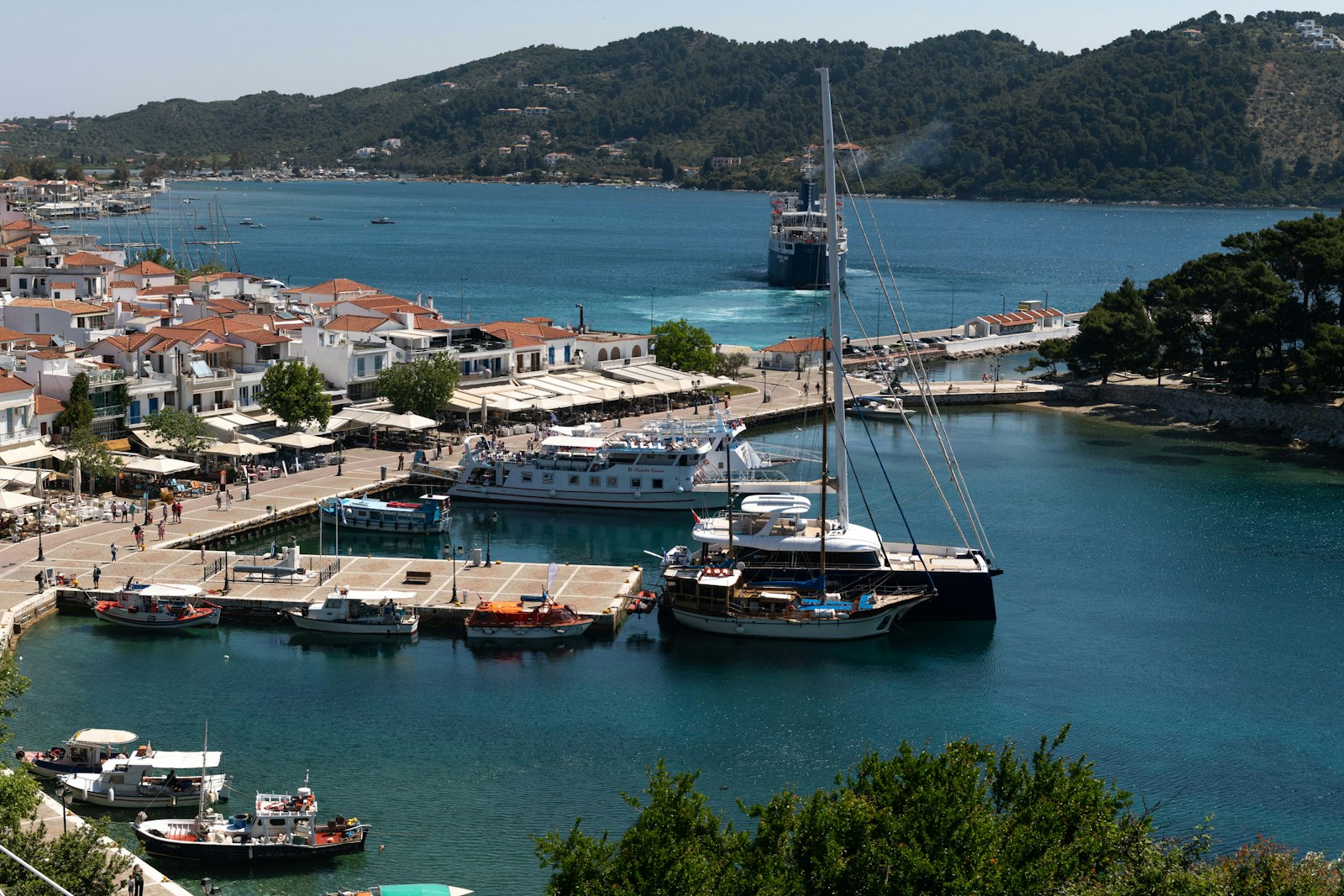
Photo by Nicholas Harhalakis on Unsplash.
Skiathos Town
Skiathos has only one settlement of any size, and it functions as the island’s port, commercial centre, nightlife hub, and cultural heart all at once. The town wraps around a double harbour, divided by the small Bourtzi peninsula — a Venetian-era fortification built in 1207 by the Ghisi brothers, who ruled the island after the Fourth Crusade. Today, the Bourtzi is a shaded public space with a café, a small open-air theatre that hosts summer performances, and views across both sides of the harbour. It is one of the most pleasant spots on the island for a late-afternoon coffee.
The main commercial street, named after the writer Alexandros Papadiamantis, runs inland from the waterfront and is lined with shops, jewellers, and clothing boutiques that stay open until late. The lanes branching off to either side climb into the old town, where whitewashed houses with terracotta roofs, wooden balconies, and bursts of bougainvillea create a more traditional atmosphere. These upper streets are where you will find some of the town’s better dining options — tavernas tucked into small squares and along narrow stone paths, away from the louder waterfront strip.
The Papadiamantis House Museum
Just off the main street, a narrow dead-end lane leads to the two-storey stone house where Alexandros Papadiamantis (1851–1911) grew up, wrote much of his work, and eventually died. Papadiamantis is considered one of the most important figures in modern Greek literature — his short stories and novels, written in a distinctive blend of formal Katharevousa and local dialect, depict the daily life, customs, and landscape of Skiathos with an intimacy that has never been replicated. The house, built by his father (a priest) in 1860, preserves his desk, inkstand, and bed, along with family photographs and a small library of his published works in 23 languages. It is a short visit — perhaps 20 to 30 minutes — but it gives the town a literary identity that most Greek island capitals lack.
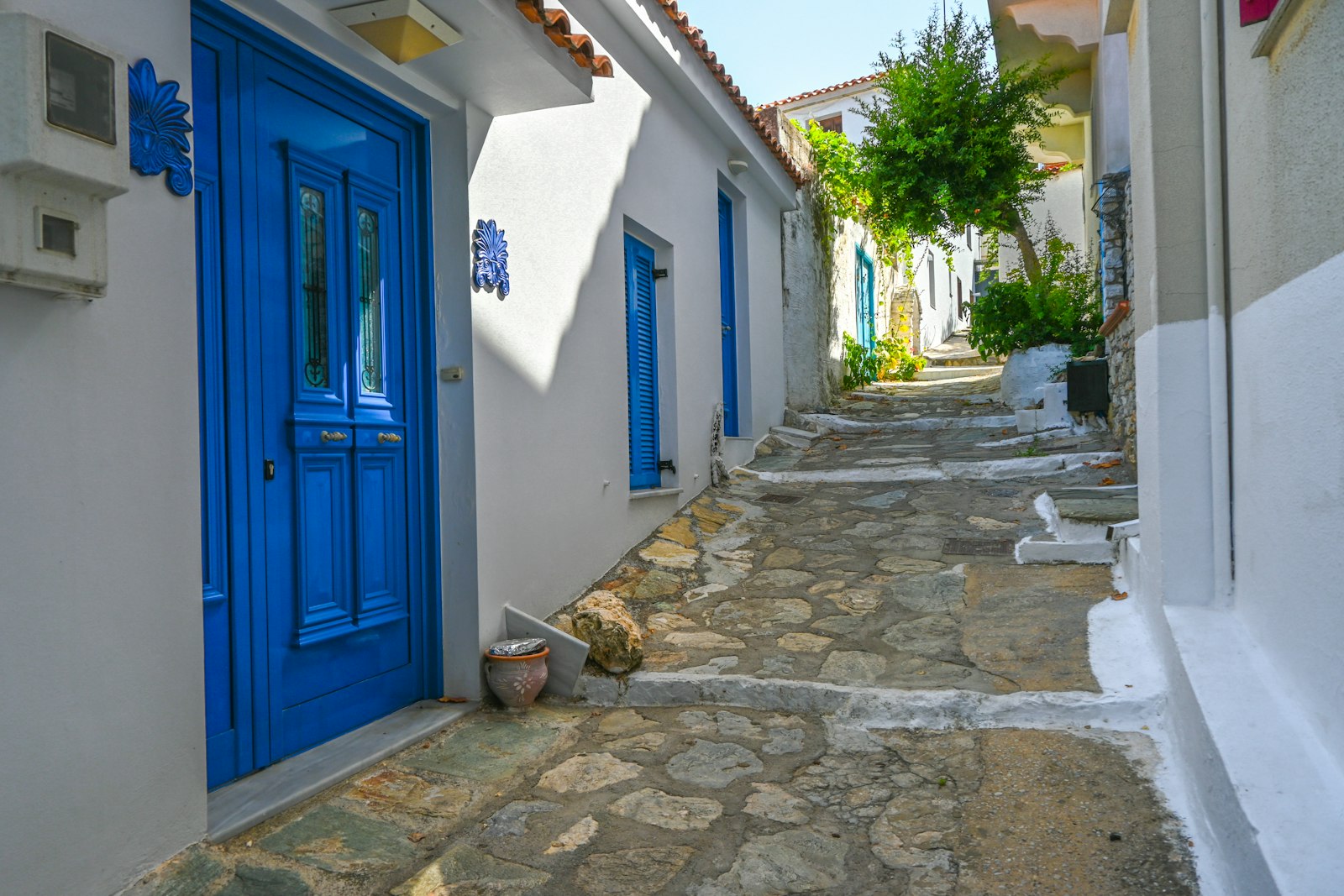
Photo by Ondrej Bocek on Unsplash.
Nightlife
Skiathos has long been one of the liveliest nightlife islands in Greece outside the Cyclades. The waterfront bars around the new port fill up after dinner, and the Papadiamantis street area has a concentration of cocktail bars and late-night venues that stay busy until the early hours in July and August. The atmosphere is more relaxed than Mykonos — think sociable rather than exclusive — and the proximity of everything to the harbour means you are never far from your accommodation. For travellers who prefer a quiet evening, the old town’s upper lanes and the Bourtzi café offer a markedly different pace.
The Beaches
Beaches are the main reason most people come to Skiathos, and the island delivers. The southern coast, served by the KTEL bus route, holds the majority of the organised beaches — sandy, pine-backed, and equipped with sunbeds, water sports, and at least one beach bar each. The northern coast is rougher, often exposed to northerly winds, and accessible mainly by boat or unpaved road. The contrast is part of what makes Skiathos work: you can spend the morning at a fully serviced beach and the afternoon at a quiet cove that feels entirely different.
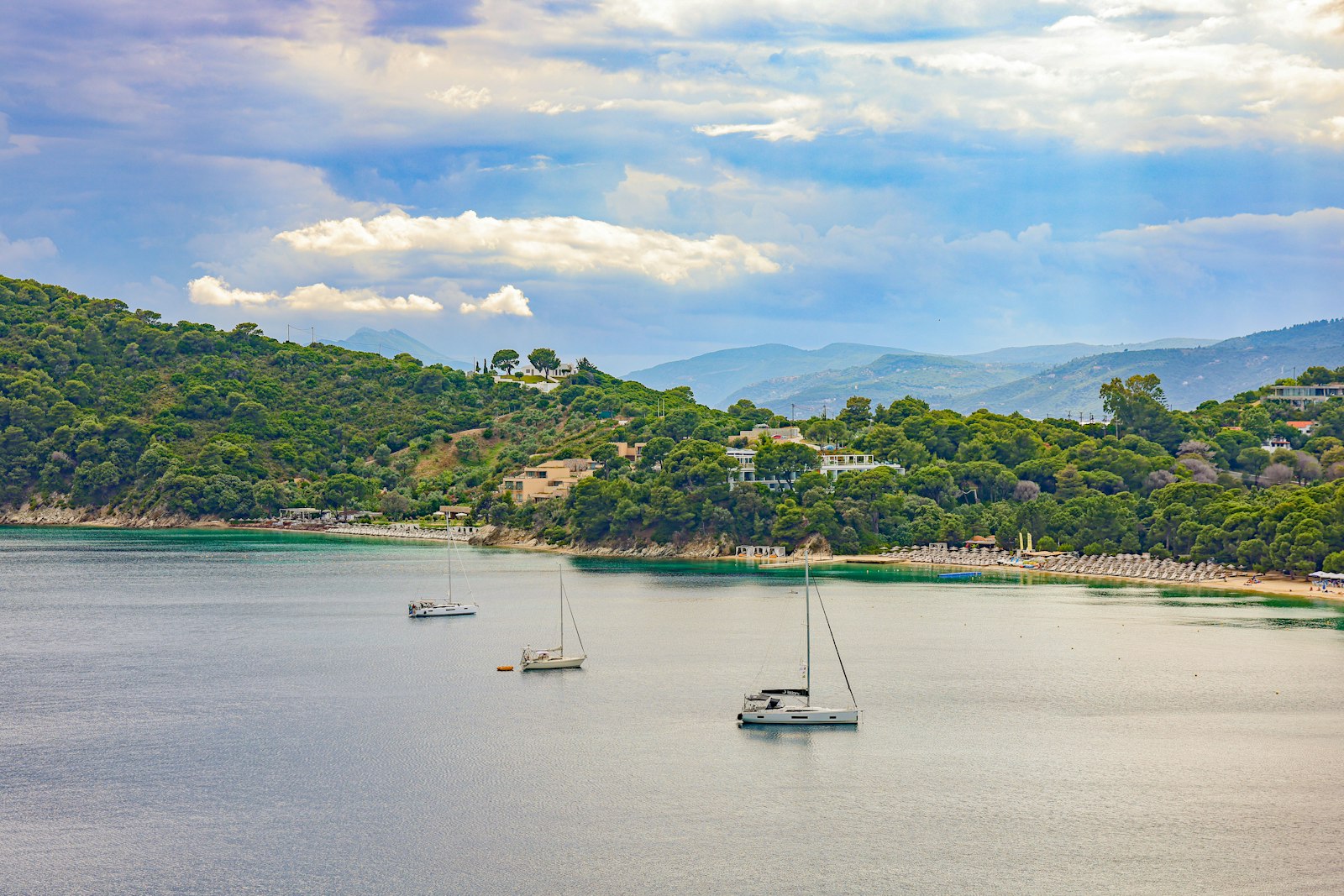
Photo by Nick Karvounis on Unsplash.
Koukounaries
The island’s most famous beach runs for approximately one kilometre along a protected bay on the western end. The sand is fine and golden, the water is shallow and generally calm (the bay faces south-west, sheltered from the prevailing northerly wind), and the backdrop is a dense Aleppo pine forest that borders the Strofilia wetland lagoon — a protected area home to herons, ducks, and migratory birds. Koukounaries is well organised with sunbeds, multiple beach bars, and water sports including jet skiing, windsurfing, and diving through the Skiathos Diving Center. It also has Seatrac wheelchair-accessible bathing equipment. Expect it to be busy in July and August, particularly by mid-morning. Getting there early, or visiting in June or September, makes a substantial difference.
Banana Beach
Just around the headland from Koukounaries, Banana Beach (also called Big Banana) is the island’s party beach. The crescent-shaped bay has fine sand and good swimming, but the draw is the atmosphere — beach bars play music throughout the day, and the crowd skews young. A footpath over the rocks at the southern end leads to Little Banana (Mikri Banana), a smaller and quieter cove that has long been popular with naturists. Reaching Banana requires a 15-minute walk from the nearest bus stop at Koukounaries, partly uphill.
Vromolimnos
Roughly mid-way along the south coast, Vromolimnos is one of the most popular all-round beaches. The sand is good, the water is clear, and there are water sports and a beach bar that sometimes extends into evening events. The right side of the beach tends to be louder, while the left offers a bit more space. It is easily reached by bus and has adequate parking.
Agia Paraskevi
A long, wide, well-organised beach that works particularly well for families. The water is shallow for a good distance, making it suitable for younger children, and there are water sports facilities, sunbed rental, and a few tavernas nearby. It holds Blue Flag certification and has Seatrac equipment for wheelchair users. The bus stops right at the beach, making it one of the most accessible options without a vehicle.
Lalaria
This is the beach that appears on most Skiathos postcards: a dramatic pebble cove beneath tall white limestone cliffs, with a natural stone arch rising from the sea. Lalaria sits on the exposed northern coast and is reachable only by boat — excursion boats depart from Skiathos Town harbour throughout the summer, usually combined with visits to nearby sea caves (Skotini, Galazia, and Halkini). The water is extraordinarily clear, though the beach itself is pebble rather than sand, and there is no shade, no facilities, and no lifeguard. Conditions on the north coast can change quickly — when northerly winds pick up, boat services to Lalaria are cancelled, and the sea can become rough. Check conditions on the morning of your planned visit before booking.
Agia Eleni
Located just north of Koukounaries (a short drive or 15-minute walk), Agia Eleni is a quieter pine-fringed beach with a notably good sunset position — the beach faces west, and swimming in the late-afternoon light here is one of the island’s small pleasures. It has a beach bar, sunbed rental, water sports, and Seatrac accessibility equipment. It can become choppy in strong northerly wind, so check the forecast before heading out.
Mandraki and Elias
These two north-coast beaches lie beyond Koukounaries, reached by car or scooter via unpaved roads (or on foot through the forest from bus stop 21 or 23). Mandraki is sandy and relatively sheltered, surrounded by dunes and red rocks. Elias (also written Elia) sits further along and is more exposed to wind. Both are considerably quieter than the south-coast beaches but have limited or no facilities, and neither is served by the bus. On calm days, they reward the effort of getting there.
Beach Comparison
| Beach | Type | Access | Best For | Wind Protection |
|---|---|---|---|---|
| Koukounaries | Sand, organised | Bus (stop 26) | All-rounders, families, water sports | Good (south-facing bay) |
| Banana | Sand, party beach | Walk from bus stop 26 | Young travellers, sunset | Moderate |
| Vromolimnos | Sand, organised | Bus (stop 13) | Couples, water sports, beach parties | Good |
| Agia Paraskevi | Sand, family-friendly | Bus (stop 18) | Families, accessibility | Good |
| Lalaria | Pebble, dramatic | Boat only | Photography, swimming, day trips | None (cancels in wind) |
| Agia Eleni | Sand, relaxed | Car/walk from Koukounaries | Sunset, quieter crowd | Moderate (exposed to north) |
| Mandraki | Sand, natural | Car/scooter + walk | Peace and quiet, nature | Moderate |
| Tsougrias (island) | Sand, remote | Water taxi or boat rental | Day trips, snorkelling | Varies by beach |
Four beaches on Skiathos have Seatrac autonomous wheelchair-accessible bathing systems: Koukounaries, Vromolimnos, Agia Paraskevi, and Agia Eleni. This is a notably high number for a Greek island of this size.
Beyond the Beach
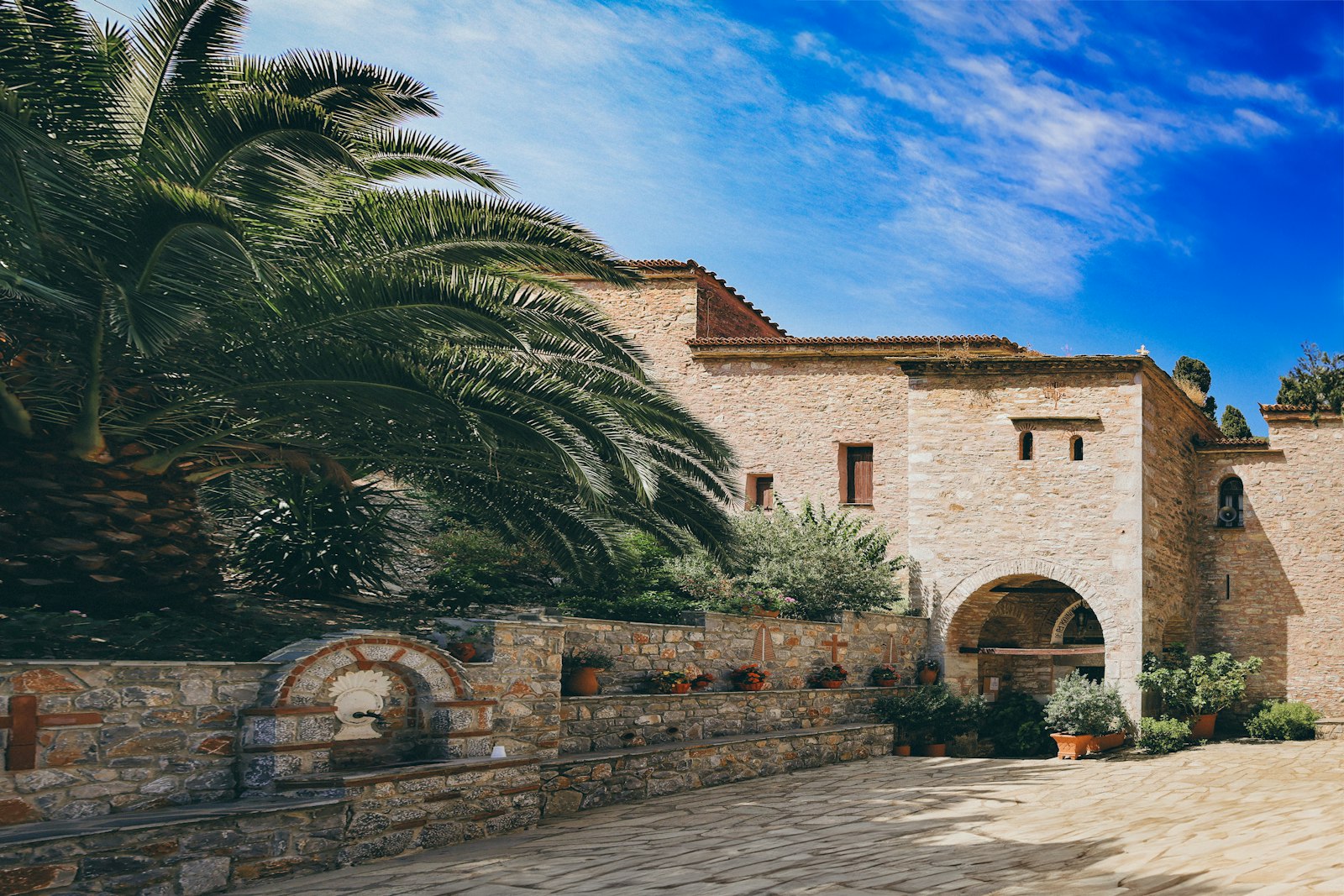
Photo by Nick Karvounis on Unsplash.
Evangelistria Monastery
Set on a wooded hillside approximately 4 kilometres north of Skiathos Town, the Monastery of the Annunciation (Evangelistria) is the island’s most historically significant site. Founded in 1794 by a group of Kollyvades monks who had left Mount Athos following a dispute over matters of ritual, the monastery became an important centre of the Greek independence movement. In 1807, a group of revolutionary leaders — including Theodoros Kolokotronis and Andreas Miaoulis — gathered here and swore an Oath of Freedom over a newly designed flag: a white cross on a sky-blue background, woven on a loom at the monastery. That flag became the basis for the modern Greek national flag.
The monastery complex includes a Byzantine-style church with 17th- and 18th-century icons, a small museum displaying ecclesiastical artefacts, rare manuscripts, and the original loom, and a shop selling local honey, oils, and preserves produced by the monks. The grounds are peaceful, shaded by tall pines, and there is a café with a good view. A minibus runs from the bus terminal in town during summer, though many visitors walk or take a taxi. Allow around an hour for a visit.
Kastro
At the northern tip of the island, perched on a rocky promontory above the sea, stand the ruins of Kastro — the fortified settlement where the entire population of Skiathos lived from the mid-14th century until 1829. The move to this remote, defensible site was driven by relentless pirate raids that made the exposed harbour town uninhabitable. The fortress was surrounded by walls, accessible only through a single gate protected by a wooden drawbridge and a cauldron of boiling oil (the zematistra, still partially visible). At its peak, Kastro contained 400–500 houses, more than 20 churches, cisterns, and — during Ottoman rule — a mosque and governor’s residence.
When Skiathos became part of the newly independent Greek state in 1829, the inhabitants abandoned Kastro and returned to the harbour, taking with them doors, windows, roof timbers, and anything else they could reuse. The result is a fascinating ruin: two churches survive (Christos and Agios Nikolaos), along with sections of the defensive wall, the gate, the remains of the mosque, and scattered house foundations. The views from the promontory are dramatic, dropping steeply to the sea on three sides.
Kastro can be reached by excursion boat from Skiathos Town (often combined with a Lalaria trip), by car to a parking area followed by a 10-minute walk, or on foot via a longer hiking trail through the forest. There is a small beach below the ruins with a taverna, making it possible to combine the visit with a swim.
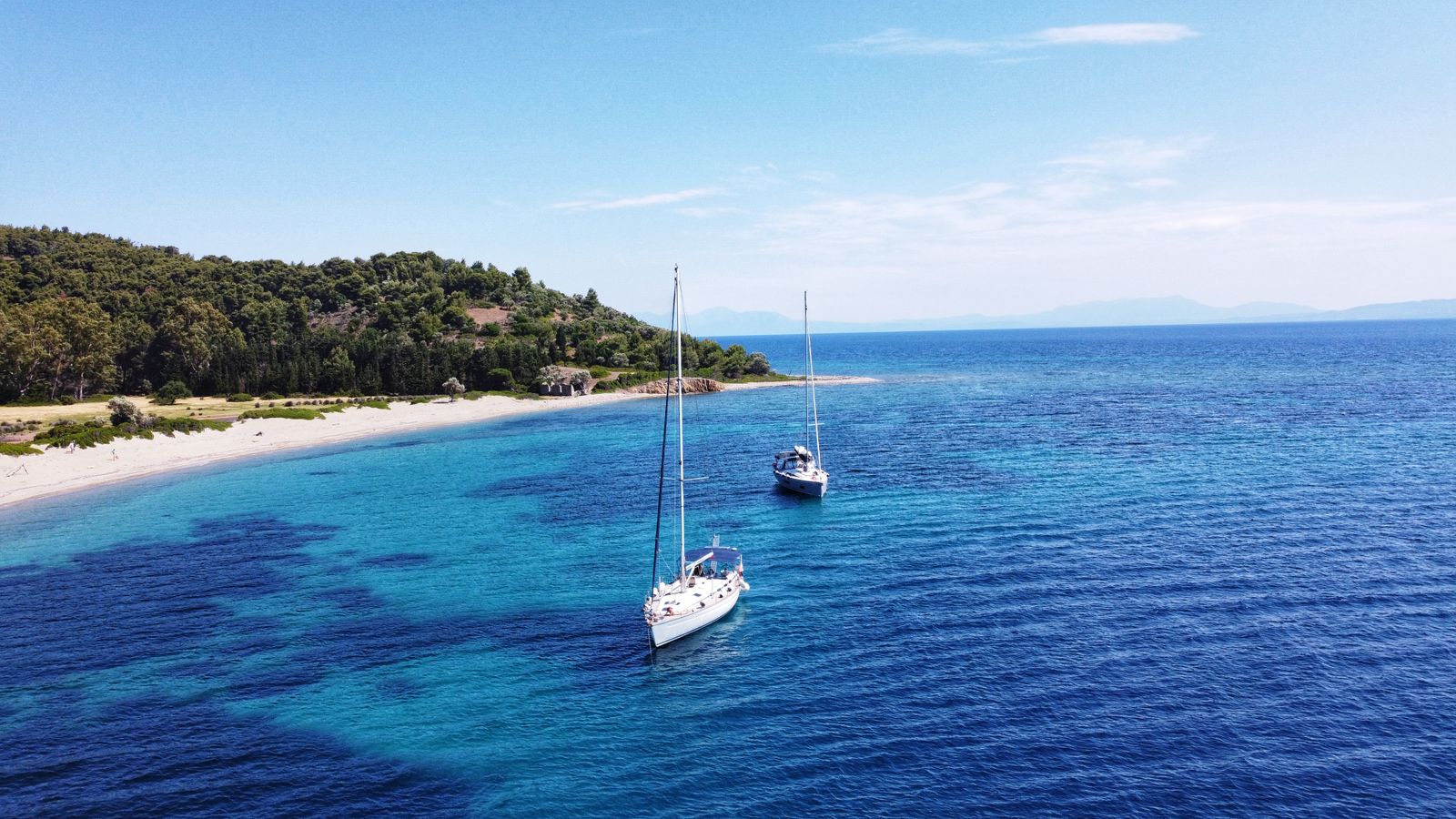
Photo: Lazar Krstić, Pexels.
Tsougrias Island
Visible directly across the harbour from Skiathos Town, the small uninhabited island of Tsougrias is a popular half-day or full-day excursion. Water taxis run regularly from the harbour in summer (around €5–10 each way), and two sandy beaches with clear water and basic taverna service make it an appealing alternative to the busier south-coast beaches. The island is also a common stop on private boat-rental circuits — renting a small motorboat for the day and visiting Tsougrias along with other north-coast beaches is one of the best ways to see the island’s more inaccessible coastline.
Hiking
Skiathos has approximately 26 marked walking trails, ranging from one to six hours. The pine cover provides welcome shade, and several routes connect the southern bus stops with north-coast beaches through the forest interior. One well-regarded route runs from Koukounaries to Kastro via Agia Eleni and the Agistros area, taking roughly 3–4 hours. The municipality has signposted many of these trails, though conditions vary — a paper map (available free at rental agencies and some hotels) is more useful than relying solely on phone GPS for the less-frequented paths.
Where to Stay
With only one town and a single main road, Skiathos is small enough that your base matters less than on larger islands. The key decision is between proximity to nightlife and restaurants (Skiathos Town) and proximity to the best beaches (Koukounaries and the south-west coast). Everywhere is within 25 minutes by car or 30 minutes by bus.
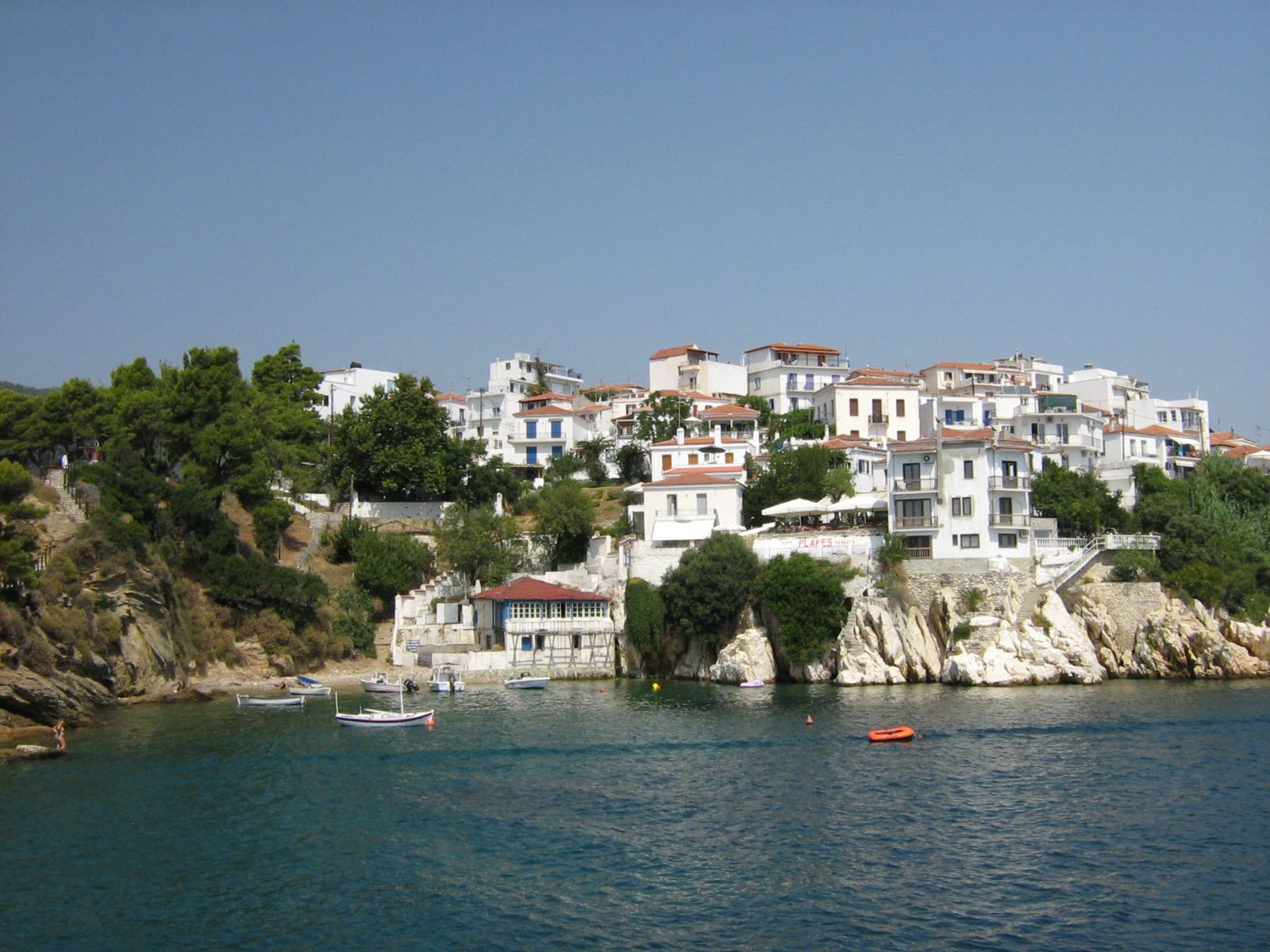
Photo: Lajos Kristóf Kántor, Pexels.
Skiathos Town is the best base for travellers who want evening options, easy access to the port and airport, and the ability to walk to shops and dining. The downside is that parking is difficult and the town beaches (Megali Ammos, in particular) are less impressive than those further west. Most mid-range and boutique accommodation is concentrated here and along the near coast towards Kanapitsa.
Troulos, Kolios, and the mid-coast offer a middle ground — close enough to both town and Koukounaries by bus, with a handful of tavernas and quieter surroundings. This area works particularly well for families and couples who want a calmer base but still want the option of a night out in town.
Koukounaries and the south-west put you within walking distance of the island’s best beaches but further from nightlife. A few accommodation clusters here include upmarket properties near Banana Beach and family hotels around Troulos. If you prioritise beach time and are content with early evenings, this is the more scenic option.
Accommodation benchmarks for 2025–2026: budget studios range from approximately €60–90 per night, mid-range hotels from €100–180, and premium properties from €180–350. Expect to add 40–60% during July and August, when Skiathos fills faster than many comparable islands — partly due to the high proportion of returning Greek and British visitors who book early. Reserving two to three months ahead for peak season is advisable.
Getting Around
The KTEL bus is the backbone of the island’s transport system. A single route runs along the 15-kilometre southern coastline from Skiathos Town (stop 1) to Koukounaries (stop 26), passing every major south-coast beach. Buses run every 10–20 minutes during peak summer, and a single journey costs approximately €2. The trip from town to Koukounaries takes around 30 minutes. Bus stops are marked with green numbered signs, and some have shelters. For most visitors staying on the south coast, the bus is all you need.
Scooters and ATVs are the traditional way to explore beyond the bus route. Rentals are available throughout Skiathos Town from around €25–35 per day. The north-coast roads are unpaved and winding — manageable on a scooter with some confidence, but not recommended for inexperienced riders. If you plan to visit Kastro, Elias Beach, or the remote north-coast coves, a scooter or small car is the most practical option. Parking is free everywhere but can be hard to find in Skiathos Town; a scooter is considerably easier to park than a car.
Water taxis and shuttle boats fill an important role. Services run from Skiathos Town harbour to various beaches, from the Kanapitsa area to nearby coves, and out to Tsougrias Island. Prices range from approximately €5 to €15 each way, depending on distance. For Lalaria and the north-coast sea caves, the boat excursion from the harbour is the only practical option — check departure boards at the port for current schedules and weather-dependent cancellations.
Private boat rental is another option and, for many visitors, the highlight of a Skiathos trip. Small motorboats (no licence required for boats under a certain engine size) are available from the old port at around €80–120 per day plus fuel. This allows you to reach beaches inaccessible by road, circumnavigate the island, and stop wherever the water looks inviting. Operators provide a safety briefing that typically lasts around 45 minutes.
Food and Drink
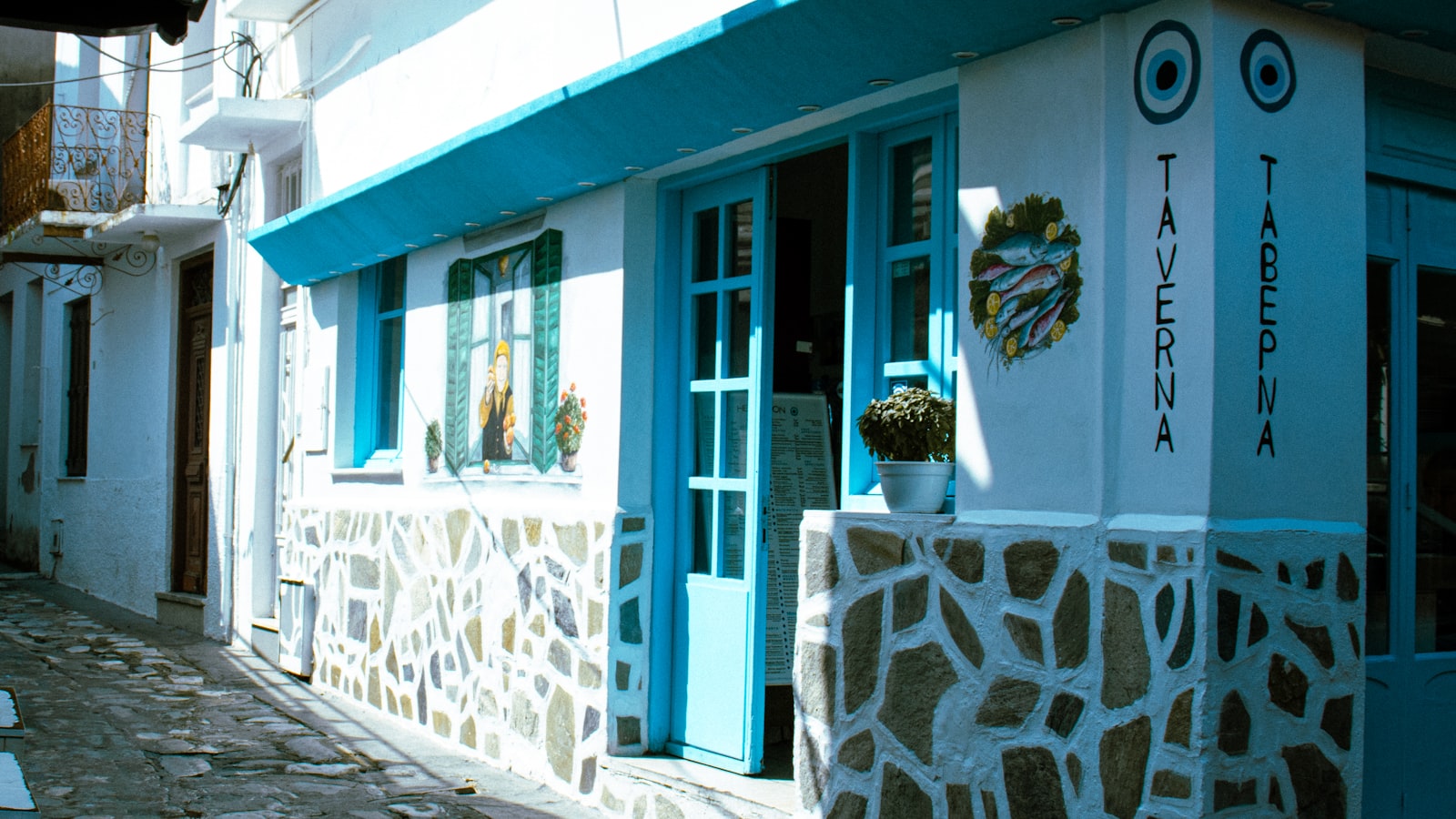
Photo by Stratiya Stratiev on Unsplash.
Skiathos is not a culinary destination in the way that Sifnos or Crete might be — the food is solid, tourist-friendly Greek cooking, with plenty of choice but no particularly strong local identity. That said, eating well here is not difficult if you know where to look. The general rule is to avoid the harbour-front restaurants with laminated photo menus and head instead into the old town’s upper lanes, where smaller tavernas serve grilled fish, slow-cooked meat dishes, and seasonal salads with better ingredients and lower prices.
Skiathos does have one local specialty worth seeking out: Skiathos pie (skiathopitta), a coiled phyllo pastry typically filled with local goat’s cheese, greens, or sometimes a sweet version with custard. The monastery shop at Evangelistria sells excellent honey, olive oil, and preserves. Fresh fish is available island-wide, though prices have risen in recent years — expect to pay by weight, and ask before ordering if the price is unclear.
For beach eating, several of the south-coast beaches have decent tavernas or canteens serving simple grilled food, salads, and cold drinks. The taverna below Kastro on the north coast is a particularly atmospheric spot for lunch after exploring the ruins.
Combining Skiathos with Other Destinations
Skiathos fits naturally into a Sporades itinerary. The ferry to Skopelos (Glossa port) takes roughly 25 minutes, and onward connections reach Alonissos — home to the National Marine Park of the Northern Sporades — in under an hour. A common combination is 3–4 nights on Skiathos (beaches, nightlife, town) followed by 2–3 nights on Skopelos (quieter pace, Mamma Mia filming locations, greener scenery).
On the mainland side, the ferry from Volos puts you within reach of Pelion — the mountainous peninsula south of Volos with stone villages, forest trails, and its own excellent beaches. A week combining Pelion with Skiathos and Skopelos is one of the best summer itineraries for travellers interested in both mainland Greece and the islands without the intensity of the Cyclades.
Who Should Consider Somewhere Else
Skiathos is not for everyone, and it is worth being direct about the trade-offs. In July and August, the island is genuinely crowded — this is not the place to find empty beaches and solitary walks during peak season. The airport’s proximity to town means occasional aircraft noise (though many visitors consider the low-flying approaches more entertaining than annoying). Nightlife-focused areas of town can be noisy until late, which matters if your accommodation is nearby.
The island is also not cheap during summer. Accommodation, dining, and sunbed rental all sit at the higher end of the Greek island scale, particularly relative to the island’s size. Budget travellers may find better value in the Sporades by basing themselves on Skopelos or Alonissos and visiting Skiathos as a day trip.
Travellers seeking a deeply traditional or remote Greek island experience will be happier elsewhere. Skiathos is a developed, well-connected holiday island with an established tourist infrastructure — that is both its strength and its limitation. The northern part of the island and the hiking trails offer a taste of something wilder, but the overwhelming character of a Skiathos visit is beach, town, and port.
For families with very young children, the south-coast beaches (especially Agia Paraskevi and Koukounaries) work well, but reaching the north-coast sights and quieter beaches requires a vehicle or boat, which adds complexity with toddlers. Families with older children who can manage the bus independently will find Skiathos excellent.
A Suggested 4-Night Itinerary
Day 1: Settle in and explore Skiathos Town. Walk the harbour, visit the Bourtzi, browse the old town lanes, and have dinner at a taverna in the upper streets. If you arrive early enough, Megali Ammos beach is a short walk from town for a first swim.
Day 2: Take the bus to Koukounaries (stop 26) and spend the morning at the beach. After lunch, walk to Agia Eleni for sunset. Alternatively, continue from Koukounaries to Banana Beach for a livelier afternoon scene.
Day 3: Book a boat trip to Lalaria, the north-coast sea caves, and optionally Kastro. Most tours depart from the harbour in the morning and return by mid-afternoon. If conditions cancel the boat, use the day for Vromolimnos or Agia Paraskevi, or rent a scooter and explore the north coast by road.
Day 4: Visit Evangelistria Monastery in the morning (take the minibus or walk the trail from town — approximately 45 minutes on foot). Spend the afternoon on a beach you have not yet visited — Tsougrias Island by water taxi is a rewarding option. Return to town for a final evening on the waterfront.
Day 5 (departure): If your ferry or flight is in the afternoon, a morning swim at Megali Ammos or a final coffee at the Bourtzi makes a good send-off. The airport and port are both within the town, so last-minute logistics are minimal.
This article was researched and verified as of July 2026. Ferry schedules, flight routes, and prices are subject to seasonal changes. We recommend confirming transport details directly with operators before booking. Accommodation prices are approximate and vary by season and provider.