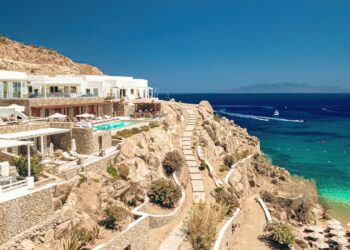
Greece has roughly 230 inhabited islands, connected by a ferry network that runs from early spring through late autumn. Travelling between them — spending a few nights on each, then catching a morning boat to the next — is one of the most satisfying ways to experience the country. The rhythm is simple: arrive by sea, settle in, explore beaches and villages at your own pace, then move on when you are ready.
But island hopping in Greece rewards planning. Ferry schedules vary by season, not every island connects to every other, and some of the most common mistakes — booking too many islands, ignoring wind patterns, or choosing the wrong departure port — can turn a relaxed trip into an exercise in logistics. This guide covers the practical side: which island groups to consider, how ferries actually work, what routes make geographical sense, and how to avoid the errors that waste time and money.
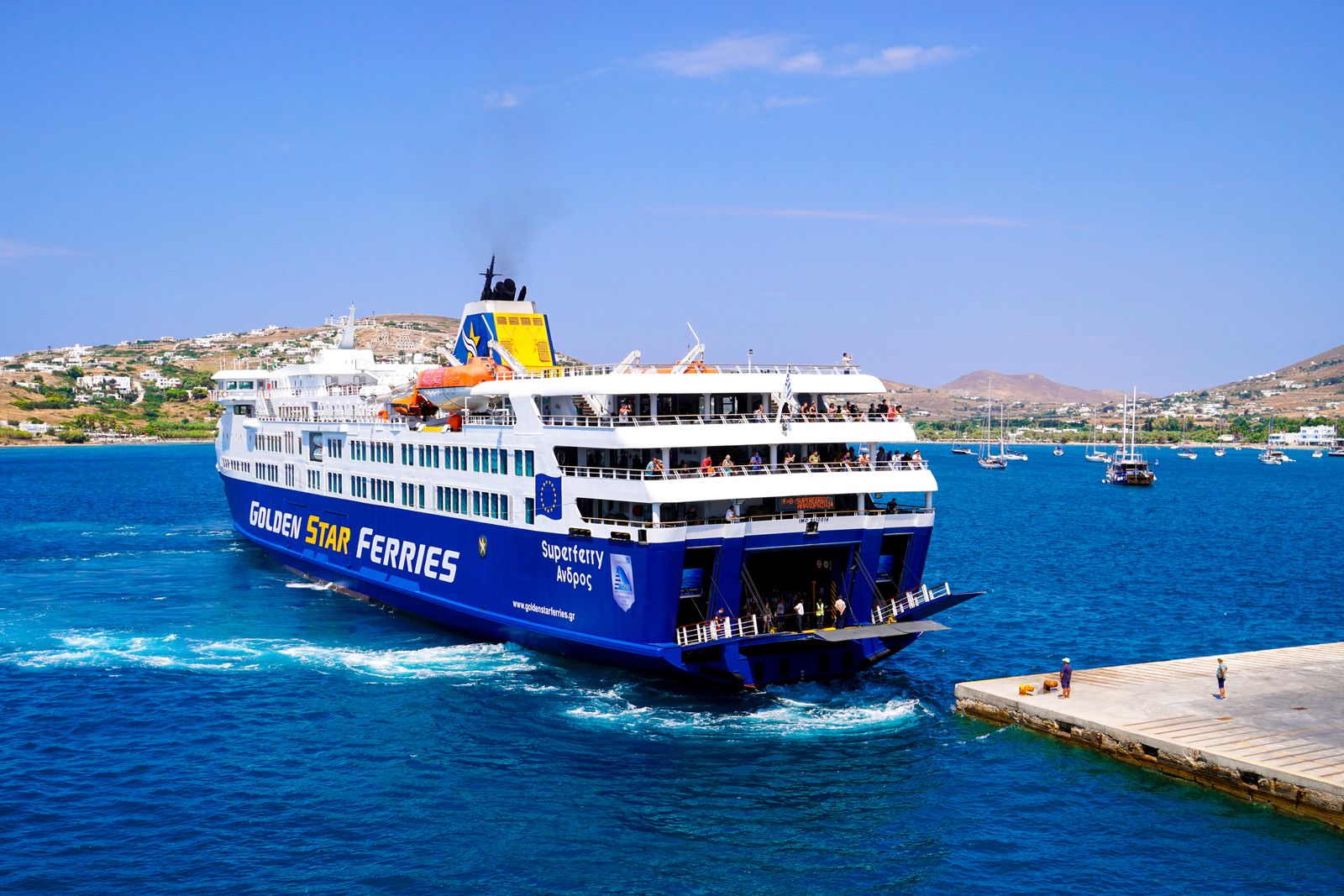
Photo: Oliver LOK, Pexels
Greek Island Hopping at a Glance
| Best months | Late May to early October; June and September offer the best balance of weather, connections, and fewer crowds |
| Main departure ports | Piraeus (all groups), Rafina (Cyclades, especially Mykonos, Tinos, Andros) |
| Major ferry operators | Blue Star Ferries, Hellenic Seaways, SeaJets, Fast Ferries, Minoan Lines |
| Typical ferry cost | €20–€70 per person for inter-island routes; €60–€110 for Athens–Cyclades high-speed |
| Minimum recommended trip | 7 nights for two to three islands; 10–14 nights for a more relaxed pace |
| Key rule | Stay within one island group — mixing regions means long detours and limited connections |
When to Go
The island-hopping season runs roughly from late April through October, though ferry frequency and accommodation availability vary considerably within that window. Most travellers find the sweet spot in June or September, when the sea is warm enough for swimming, ferries run on their full summer schedules, and the crowds that define July and August have not yet arrived or have already thinned.
July and August bring the most ferry departures and the longest operating hours, but they also bring the highest prices, fully booked accommodation on popular islands, and the Meltemi — a strong northerly wind that blows through the Aegean from mid-July into early September. The Meltemi can delay or cancel ferry services, particularly affecting high-speed catamarans and routes between exposed islands. If your trip falls in August, build buffer days into your itinerary and avoid scheduling a ferry arrival in Athens on the same day as an international flight.
May and October sit at the edges of the season. Connections are less frequent, some smaller islands may have limited services, and the sea temperature in May hovers around 19–20°C. However, prices drop sharply, popular villages feel unhurried, and you can often walk onto a ferry without a reservation. Late September combines warm seas with thinning crowds, making it arguably the best single month for a first island-hopping trip.
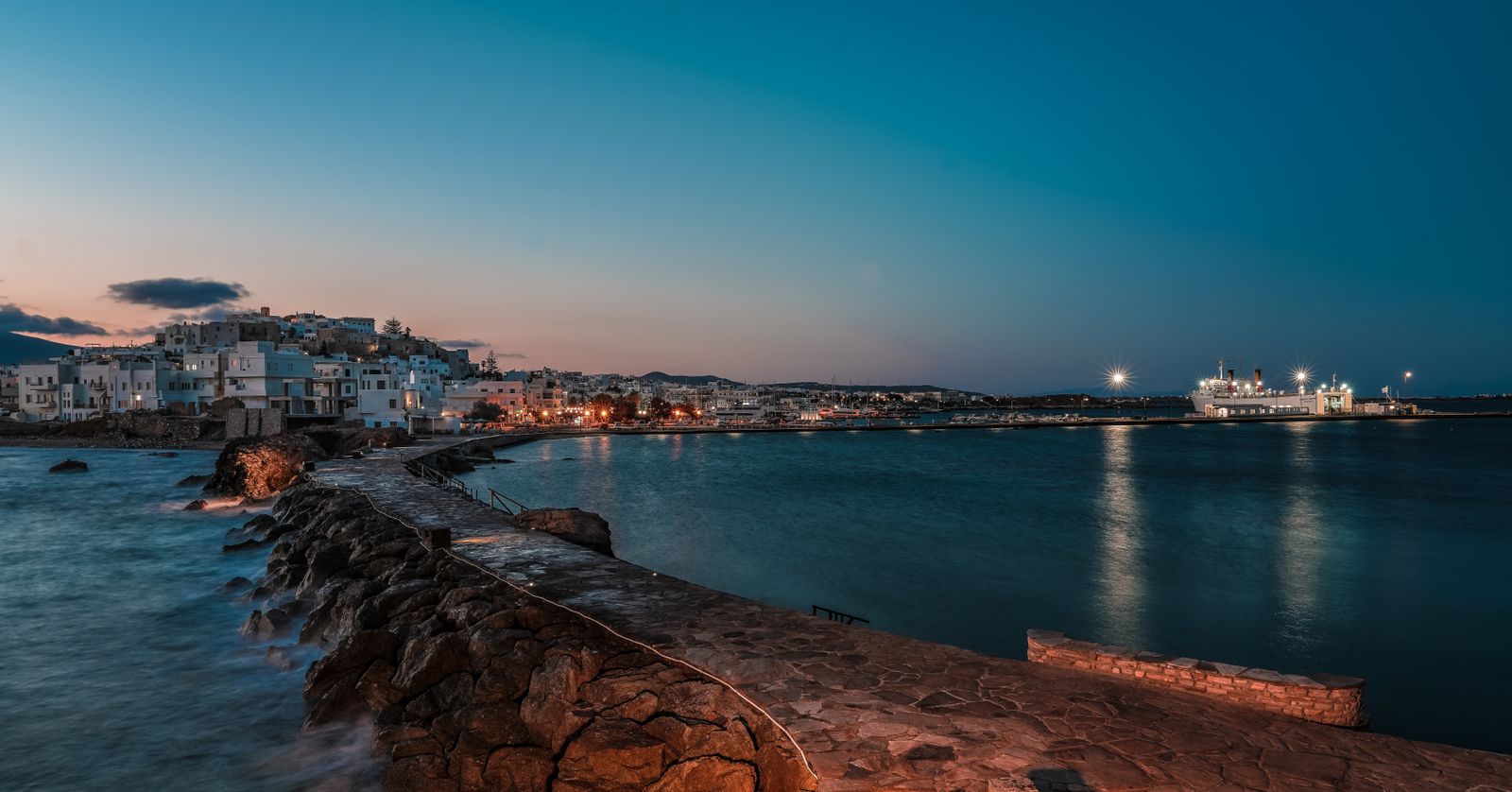
Photo: Peter Mayer, Pexels
Choosing Your Island Group
The most important planning decision is not which individual islands to visit but which island group to explore. Greece’s islands are organised into geographical clusters, and ferry connections within a group are far more frequent and reliable than connections between groups. Trying to combine Cyclades islands with Dodecanese islands, for example, means long crossings, awkward transfers through Athens, and days lost to travel rather than spent on beaches.
Pick one group and commit to it. If you have two full weeks, you might stretch to islands that sit near the border of two groups, but a one-week trip should stay firmly within a single cluster.
| Island Group | Best For | Starting Port | Connections | Wind Exposure |
|---|---|---|---|---|
| Cyclades | First-timers, couples, photographers | Piraeus or Rafina | Excellent (daily in summer) | High (Meltemi belt) |
| Ionian | Green scenery, calm seas, families | Fly into Corfu, Kefalonia, or Zakynthos | Moderate (fewer crossings) | Low |
| Dodecanese | History, diversity, slow travel | Fly into Rhodes | Good within the chain | Moderate |
| Sporades | Nature, quiet villages, pine forests | Volos or Mantoudi (Evia) | Good (compact group) | Low to moderate |
| Saronic | Short trips, Athens add-on, car-free | Piraeus | Excellent (year-round) | Low |
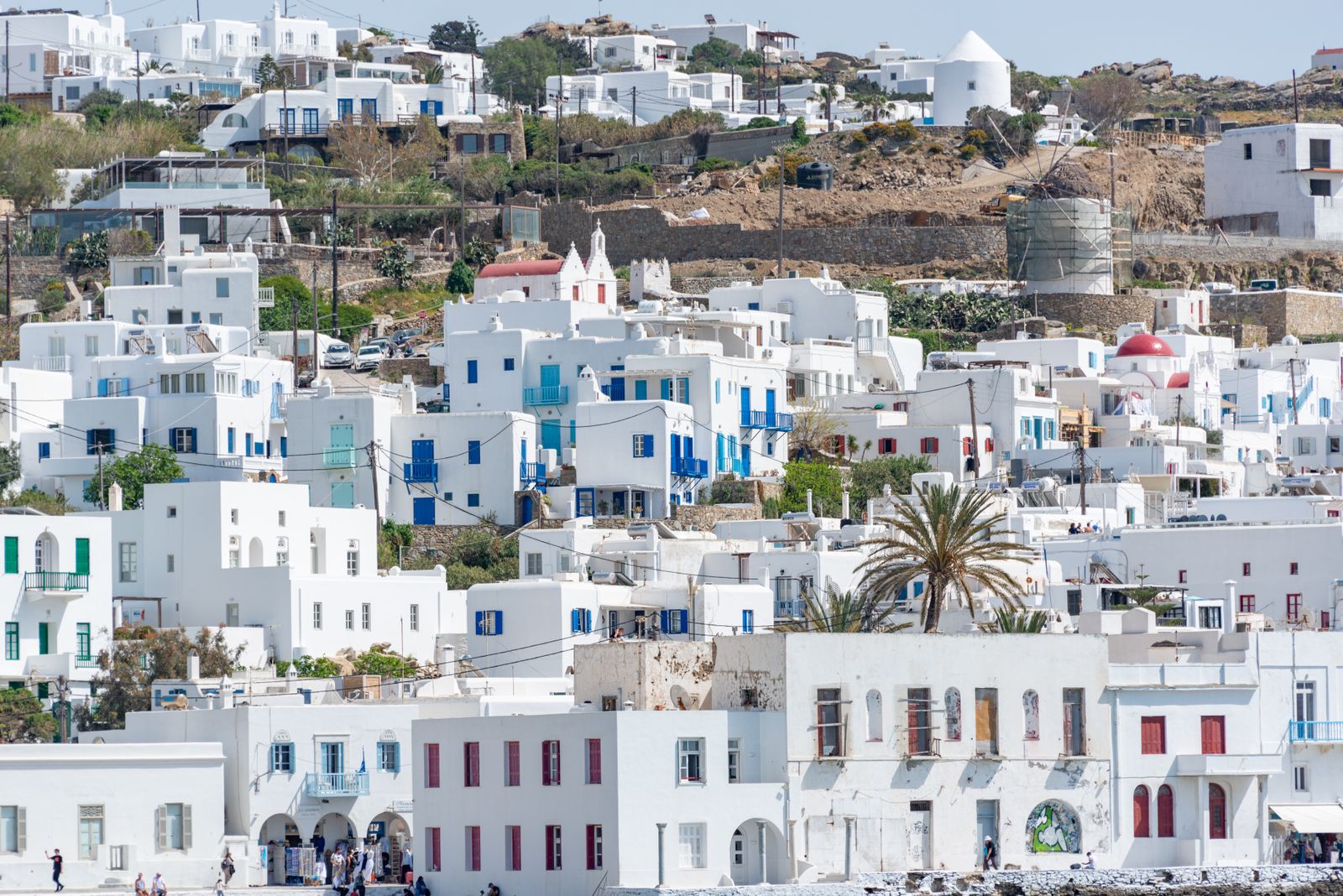
Photo: Diego F. Parra, Pexels
Cyclades: The Classic Route
The Cyclades are where most first-time island hoppers begin, and for good reason. The group includes some of Greece’s most recognised islands — Mykonos, Santorini, Paros, Naxos — and the connections between them are frequent and fast. Paros works as a natural hub, with ferries radiating out to Naxos in thirty minutes, Mykonos in under an hour, and smaller islands like Koufonisia, Folegandros, and Milos within easy reach.
The trade-off is exposure to the Meltemi wind, which can blow hard through the Cyclades in late July and August. Smaller, high-speed ferries are more vulnerable to cancellations, while the larger Blue Star vessels generally continue running unless conditions are severe. If you are visiting in peak wind season, keep your route flexible and consider booking conventional ferries for the legs where timing matters most.
Ionian Islands: Greener, Calmer, Different
The Ionian Islands — Corfu, Kefalonia, Zakynthos, Lefkada — offer a markedly different experience. The landscape is lush and mountainous rather than arid and windswept, the sea tends to be calmer, and the architecture carries a Venetian rather than Cycladic character. Ferry connections between the Ionian islands are less frequent than in the Cyclades, and schedules often are not published until close to the season. Flying directly into one island and out of another is often the most practical approach. Lefkada is also reachable by road from the mainland, making it an easy first or last stop.
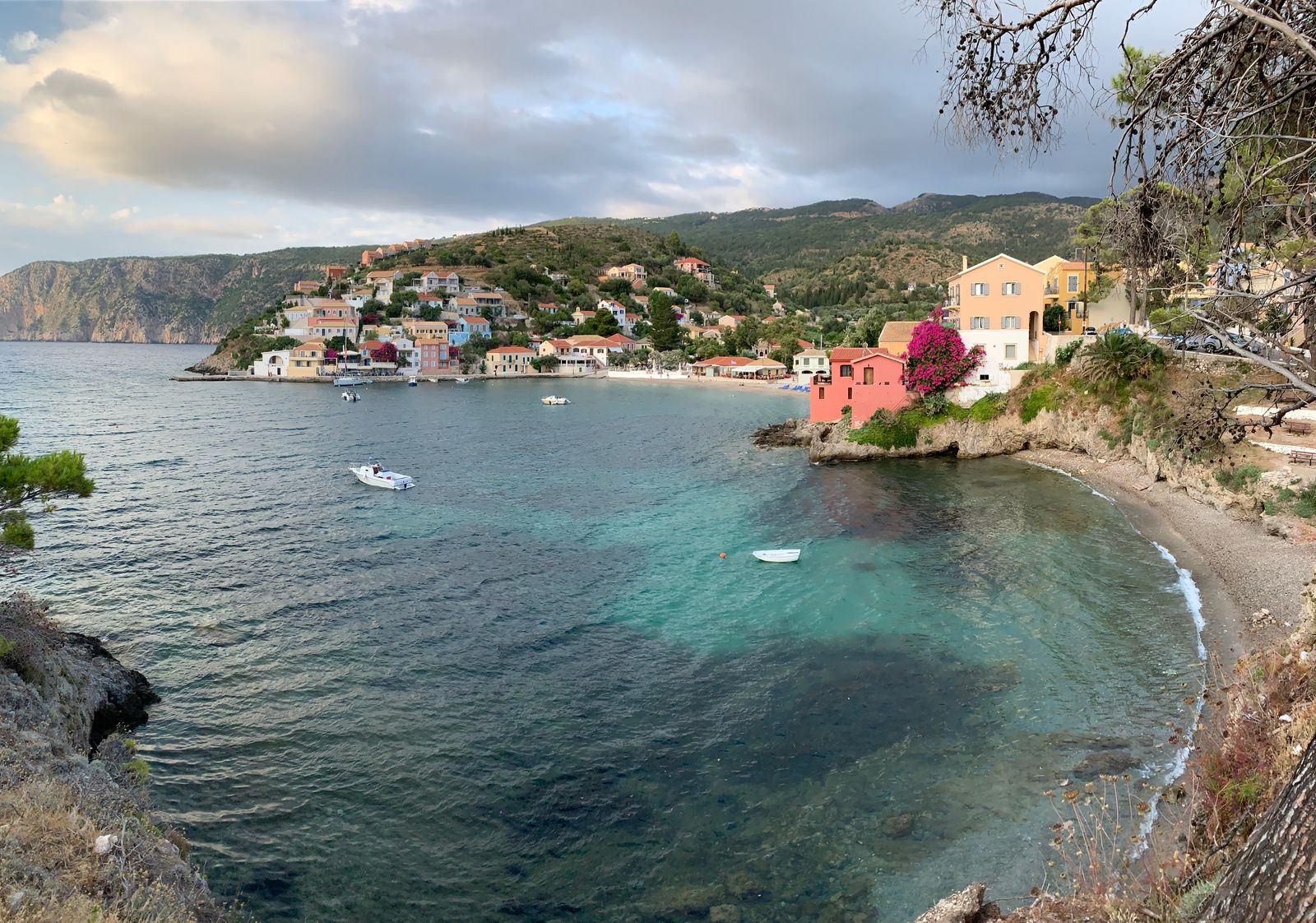
Photo: Vasilis Spyrou, Pexels
Dodecanese: History at Every Turn
The Dodecanese chain runs along Turkey’s southwestern coast, from Patmos in the north to Rhodes in the south. Rhodes, with its medieval Old Town and international airport, makes the most practical starting point. From there, ferries connect to Kos, Symi, Nisyros, and the quieter islands further along the chain. The Dodecanese suit travellers who want historical depth alongside their beach time — Byzantine churches, crusader castles, and ancient sanctuaries appear on nearly every island.
Sporades: Pine-Covered and Compact
The Sporades — Skiathos, Skopelos, and Alonissos — are a tight cluster off the Thessaly coast, reached by ferry from Volos or Mantoudi on Evia. The islands are green, forested, and less international in character than the Cyclades. Alonissos is home to one of Europe’s largest marine parks. The group is small enough to visit all three islands in a week without feeling rushed, and the short ferry distances mean you rarely spend more than ninety minutes on a boat.
Saronic: The Weekend Option
The Saronic Gulf islands — Aegina, Poros, Hydra, and Spetses — sit close to Athens and operate year-round ferry services from Piraeus. Hydra, where no cars or motorbikes are allowed, is reachable in under two hours. The Saronic islands work well as an add-on to an Athens stay or a short island-hopping trip when you do not have time for a longer Cyclades itinerary.
How Ferries Work
Greek ferries come in two main categories, and the difference matters for both your budget and your comfort.
Conventional ferries are the large vessels operated primarily by Blue Star Ferries, Hellenic Seaways, and ANEK Lines. They are slower — Athens to Naxos takes roughly five and a half hours on a conventional ferry — but they are cheaper, more stable in rough weather, can carry vehicles, and have multiple deck levels with restaurants, bars, and sometimes cabins. The cheapest ticket class, economy or deck, gives you no assigned seat; you find space in the lounges, cafés, or on the outdoor deck. For a few euros more, an air-type seat gets you a reserved, numbered spot in an air-conditioned cabin, which is worth it on any crossing longer than two hours.
High-speed ferries and catamarans — primarily SeaJets, Hellenic Seaways’ fast services, and Golden Star — cut travel times dramatically. Athens to Naxos drops to around three hours, and Athens to Mykonos to under three. They cost roughly twice as much as conventional ferries, seat capacity is limited, and they are more susceptible to cancellation in high winds. If your schedule is tight, the speed is worth the premium. If you have flexibility, the slower boats are a more comfortable and affordable choice.
Booking Ferries
Ferry tickets in Greece are one-way. There are no multi-stop passes, no return discounts, and no meaningful price difference between booking early and buying at the port — prices are generally fixed, unlike airline fares. However, popular routes in July and August do sell out, especially for vehicle spaces and cabin berths. High-speed ferries, which have fewer seats, sell out before conventional vessels.
For most travellers, booking through an aggregator such as Ferryhopper is the most practical approach. It searches across all operators, shows schedules and prices side by side, and issues electronic tickets. You can also book directly through operator websites such as Blue Star Ferries or Hellenic Seaways. Prices are the same either way.
A practical booking timeline: for July and August travel, book your ferries two to three months ahead, particularly if you want high-speed services or are travelling with a car. For June and September, one to two weeks in advance is usually sufficient. In May and October, you can often buy tickets at the port on the day of travel.
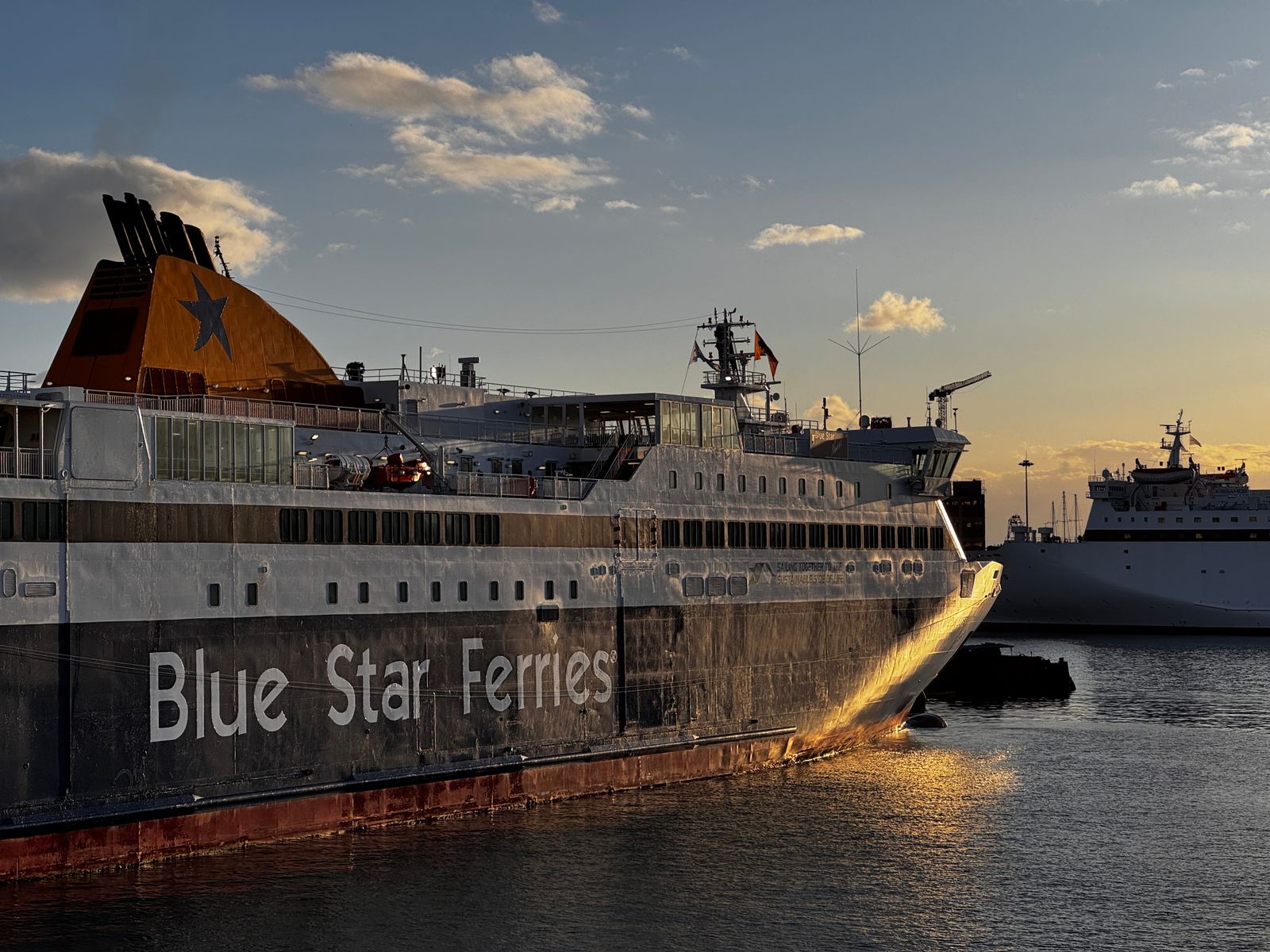
Photo: Tom Schönmann, Pexels
Piraeus vs Rafina: Which Port?
Most island-hopping trips begin at one of Athens’ two main ferry ports.
Piraeus is the main port, serving the Cyclades, Dodecanese, Crete, North Aegean, and Saronic islands. It handles over twenty million passengers per year and has twelve departure gates spread across a large area — it can take an hour to walk from one end to the other. Arrive at least sixty minutes before your departure, and confirm your gate number in advance. The Athens Metro (Line 1 from Monastiraki, or Line 3 from Syntagma) runs directly to Piraeus station, and the fare is €1.20.
Rafina, on the eastern coast of Attica, is smaller, calmer, and closer to Athens Airport. It primarily serves Andros, Tinos, and Mykonos, with some connections to Naxos and Paros during summer. If Mykonos or Tinos is your first stop and you are arriving by air, Rafina can save you a cross-city transfer through Athens. Fast Ferries, Golden Star, and SeaJets all operate from Rafina, with up to three daily departures to Mykonos in summer.
Three Sample Island-Hopping Routes
These routes use connections that operate reliably in summer. Always confirm specific schedules on operator websites before finalising your dates.
Route 1: Cyclades Classic — 7 Nights
This is the most popular first-timer route, and it works because every connection is frequent and short.
Athens → Paros (3 nights) → Naxos (2 nights) → Santorini (2 nights) → fly home from Santorini or ferry back to Athens.
Start in Paros rather than Santorini. Paros is the Cyclades’ practical hub — ferries fan out in every direction — and its mix of beaches, fishing villages, and the smaller island of Antiparos makes it a more relaxed introduction than diving straight into Santorini’s caldera. The crossing from Piraeus takes roughly four hours on a conventional ferry or about two and a half on a fast service.
From Paros, Naxos is a thirty-minute hop. It is the largest Cycladic island, with long sandy beaches, mountain villages, and enough variety that two full days feel rewarding without feeling rushed. The final leg to Santorini takes between one and two hours depending on the service, and ending your trip on the caldera gives you the option of flying home directly from Santorini’s airport.
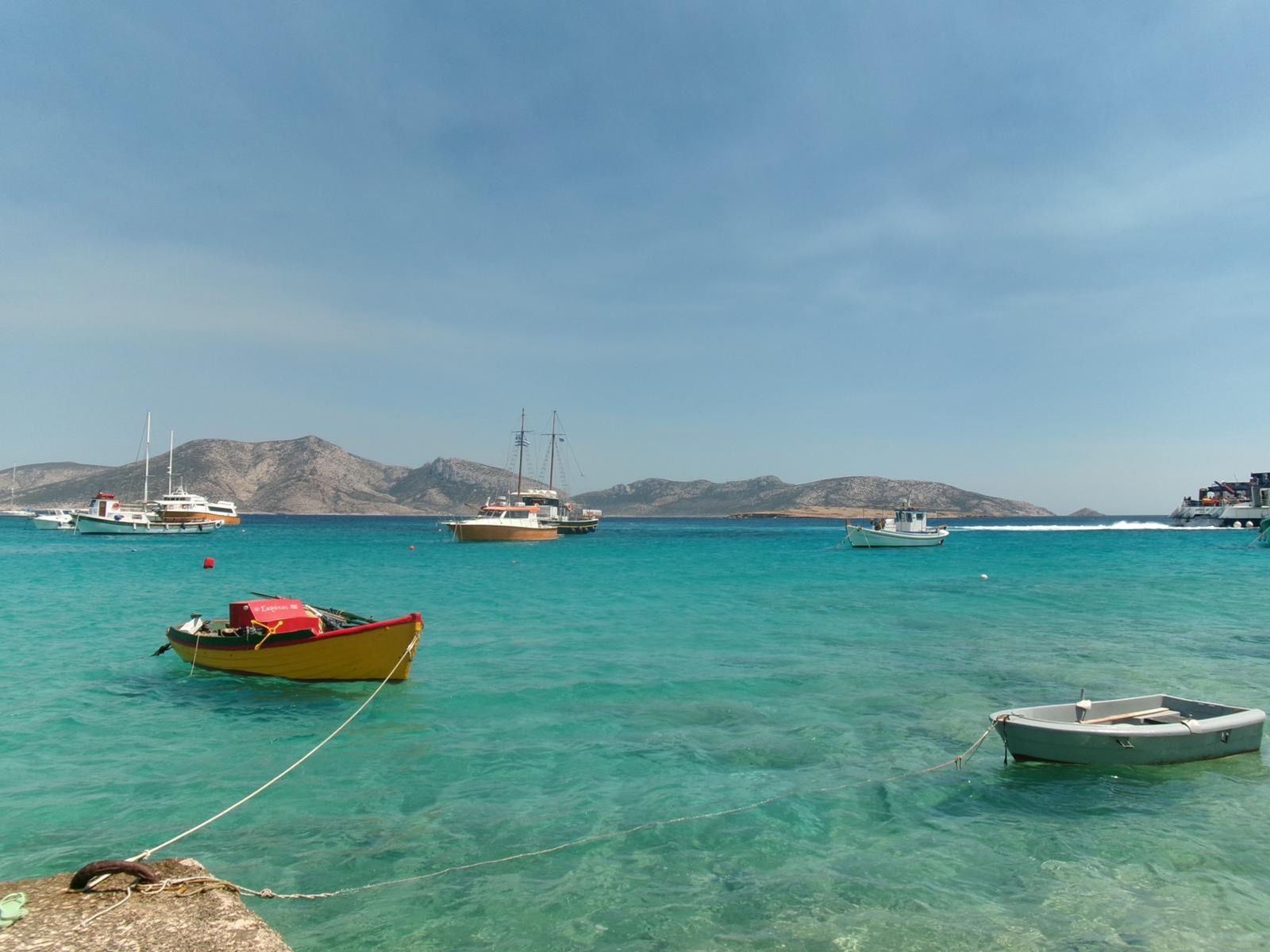
Photo: Tommy Elliott, Pexels
Route 2: Deeper Cyclades — 10 Nights
Athens → Milos (3 nights) → Paros (2 nights) → Naxos (2 nights) → Mykonos (3 nights) → ferry or fly back to Athens.
Adding Milos at the start brings volcanic landscapes and some of Greece’s most unusual coastline — Sarakiniko’s white rock formations are unlike anything else in the Cyclades. The ferry from Piraeus to Milos runs daily, taking roughly four to five hours. From Milos, connections run to Paros, and from there the route follows the same Naxos–Mykonos corridor. Mykonos at the end works well for travellers who want nightlife or a day trip to the archaeological island of Delos.
Route 3: Dodecanese — 7 Nights
Fly into Rhodes (2 nights) → Symi (2 nights) → Kos (2 nights) → fly home from Kos or back to Rhodes.
Rhodes‘ medieval Old Town needs at least a full day, and Lindos deserves a half-day excursion. The fast ferry to Symi takes about an hour and delivers you to one of the most visually striking harbours in Greece. Kos, the final stop, has its own airport, flat cycling roads, and the ancient Asklepieion. The Dodecanese generally see less wind than the Cyclades, and the crossing distances between these three islands are manageable even in rougher conditions.
How Much Does It Cost?
Island hopping does not have to be expensive, but ferry costs add up faster than most people expect, especially on high-speed services. A family of four taking three high-speed ferry rides can easily spend €400–€600 on transport alone. Planning with conventional ferries, travelling in shoulder season, and staying on each island long enough to justify the journey all help control the budget.
| Expense | Budget | Mid-Range | Comfort |
|---|---|---|---|
| Accommodation per night | €40–€70 | €80–€150 | €160–€300+ |
| Ferry per leg (economy) | €20–€40 | €35–€70 | €70–€110 (high-speed) |
| Food per day | €20–€30 | €40–€60 | €70–€120 |
| Local transport | Bus (€2–€4) | Scooter rental (€15–€25/day) | Car rental (€40–€70/day) |
| Typical daily total per person | €70–€110 | €130–€200 | €250–€400+ |
Prices rise sharply in July and August, particularly on Santorini and Mykonos, where even modest rooms can exceed €200 per night. The same room in June or September might cost half as much. Islands further from the main tourist corridor — Syros, Serifos, Folegandros, Amorgos — tend to be more affordable while offering equally rewarding experiences.
A useful rule of thumb: budget around €30–€50 per person per ferry leg when using conventional services, and factor in approximately three to four ferry crossings for a week-long trip. Food remains relatively good value across most islands — a taverna meal with wine typically costs €15–€25 per person — though waterfront locations on the most popular islands charge a premium.
Should You Take a Car?
For most island-hopping trips, the answer is no. Vehicle spaces on ferries must be booked separately, cost significantly more than a foot-passenger ticket, and sell out earlier than standard seats — especially in July and August. Loading and unloading adds time at each port, and on small islands like Hydra or Symi, cars are either prohibited or unnecessary.
A more practical approach is to rent locally on islands where you need a car. Naxos, Milos, and Kefalonia all benefit from having your own wheels for a few days, and local rental agencies are accustomed to short-term hires. On compact islands like Paros, a scooter or ATV is often sufficient. On Hydra, walking and water taxis are the only options.
The exception is a road trip that includes ferry crossings as part of a longer driving route — the Peloponnese loop, for instance, or a Crete road trip that begins with a ferry from Piraeus. In those cases, bringing a car makes sense because the vehicle is central to the trip rather than just a way of getting around one island.
Wind, Weather, and Cancellations
The Meltemi is the defining weather feature of Aegean island hopping. This northerly wind blows from approximately mid-July through early September, often reaching force 7 or higher. It affects the Cyclades most intensely, particularly exposed routes between Mykonos, Tinos, and the smaller islands. The Dodecanese and Saronic islands experience it less severely, and the Ionian Islands, on Greece’s western coast, are largely unaffected.
When the Meltemi is strong, port authorities can issue sailing bans that suspend all departures. In August 2025, gale-force winds above 60 km/h shut down ferry traffic from Piraeus and Rafina for an entire morning, stranding thousands of passengers. These disruptions are not unusual — they happen several times each summer.
Practical responses: always leave a buffer day before an international flight; book the larger conventional ferries for critical legs, since they are cancelled less often than catamarans; check wind forecasts using apps like Windy or Poseidon (the Hellenic Centre for Marine Research forecast); and carry enough flexibility in your plans that losing a day to weather does not ruin your trip. If you are particularly sensitive to rough seas, the Saronic Gulf and Sporades are gentler alternatives to the open-Aegean Cyclades routes.
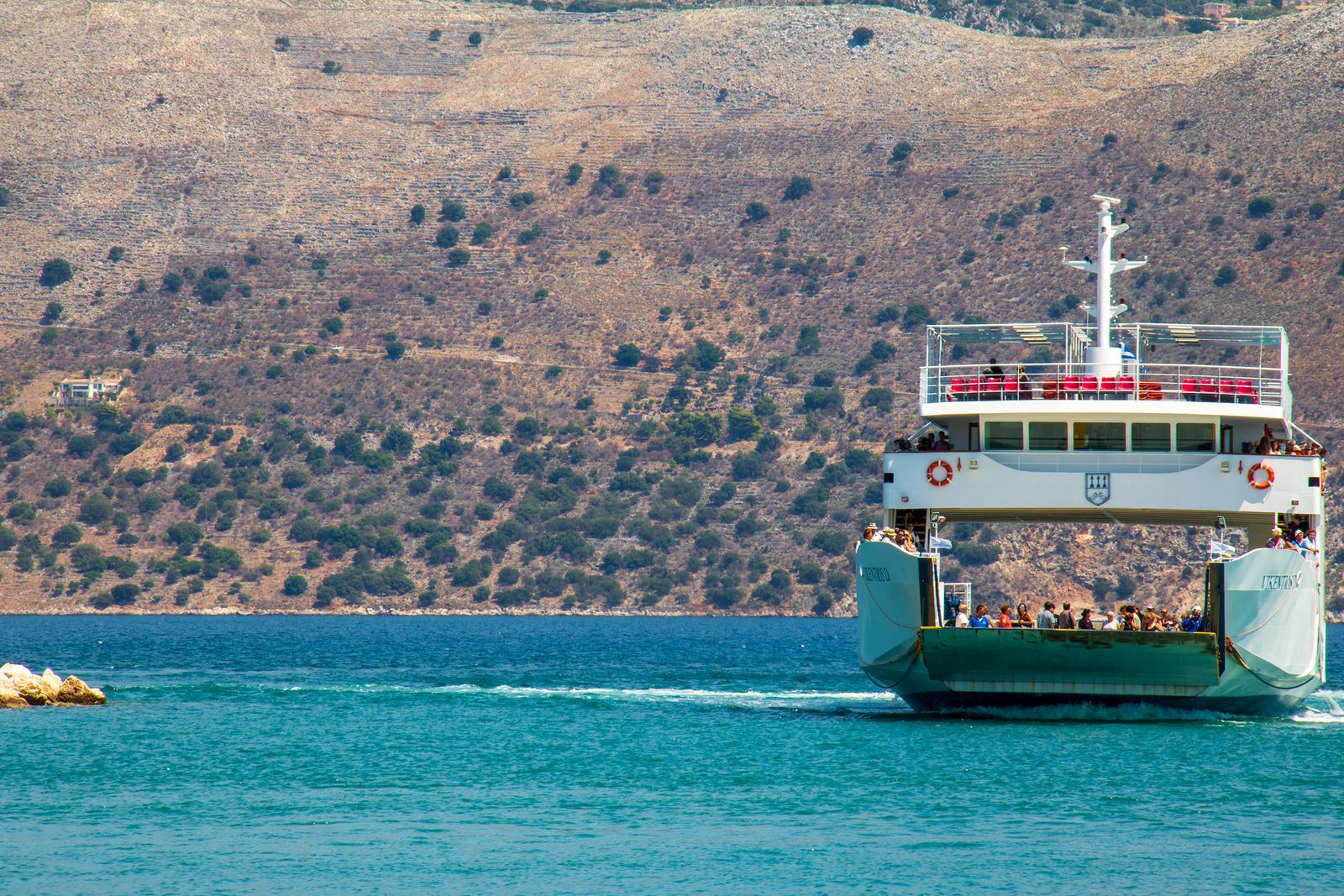
Photo: George Stathis, Pexels
Ten Mistakes That Waste Time and Money
1. Visiting too many islands. Three islands in seven nights is comfortable. Four is possible but tiring. Five means you spend more time on ferries than on beaches. Each move costs a morning of packing, checking out, reaching the port, and settling into a new place.
2. Mixing island groups. Trying to combine Santorini with Rhodes or Corfu with Mykonos means routing back through Athens and losing at least a full day to travel in each direction.
3. Booking flights and ferries on the same day. A cancelled or delayed ferry can mean a missed flight. Always spend your last night in Athens or on an island with its own airport if you have a departure the next morning.
4. Arriving at the wrong Piraeus gate. The port has twelve gates, and walking between them can take thirty minutes or more. Check your gate assignment before leaving your accommodation. A free shuttle bus runs within the port, but it does not cover every gate.
5. Assuming all ferries run daily. During summer, major routes operate daily. But services to smaller islands may run only two or three times per week, and shoulder-season schedules are reduced further. Always check the actual timetable before building your itinerary.
6. Ignoring the Meltemi. Planning a rigid day-by-day schedule in August without weather buffers is a recipe for stress. The wind does not negotiate with your booking confirmations.
7. Relying only on high-speed ferries. They are faster but more expensive, more crowded in peak season, and more likely to be cancelled in rough seas. Conventional ferries offer a reliable and often more pleasant alternative.
8. Not carrying cash. Card payments are increasingly accepted, but smaller islands, local buses, port kiosks, and some tavernas still prefer or require cash. Carry euros.
9. Skipping travel insurance. Weather cancellations, missed connections, and medical issues can turn expensive quickly. A policy that covers trip disruption is worth the cost.
10. Booking accommodation far from the port. On arrival days, a room within walking distance of the ferry dock saves you the cost and hassle of a taxi while you figure out your bearings. You can always explore further afield the following day.
Your Planning Checklist
| 3–6 months before | Choose your island group, book flights, reserve accommodation on popular islands (Santorini, Mykonos) if travelling July–August |
| 2–3 months before | Book ferry tickets for high-season travel, especially high-speed services and any vehicle crossings |
| 2–4 weeks before | Book accommodation on remaining islands, arrange airport transfers, confirm ferry schedules |
| 1 week before | Download ferry operator apps, save e-tickets offline, note Piraeus gate numbers, check wind forecast for your dates |
| Day before each ferry | Confirm departure time and gate, check weather updates, arrive at port at least 60 minutes early |
| Throughout | Keep one buffer day before your return flight; carry cash; bring motion-sickness tablets if prone to seasickness |
Making It Work
The best island-hopping trips are the ones where the travel between islands feels like part of the experience rather than an obstacle. Standing on the deck of a Blue Star ferry as a new island rises from the sea, watching dolphins off the bow in the morning light, arriving at a harbour you have never seen before — these moments are a genuine part of what makes Greece’s islands worth visiting in sequence rather than in isolation.
The planning matters because it protects that experience. Choose one island group, give each island enough time to breathe, leave room for the wind to change your plans, and resist the temptation to add just one more stop. Greece’s islands will still be there next time, and the best trips leave you with a reason to come back.
This article was researched and verified as of July 2026. Ferry schedules, ticket prices, and port information may change seasonally. We recommend confirming all transport details with official operators before travelling. Vivid Greece is an independent publication and is not affiliated with any ferry company or booking platform mentioned in this guide.