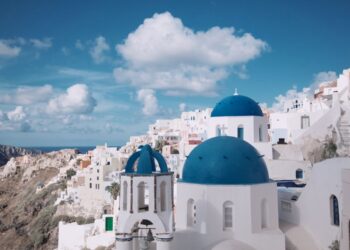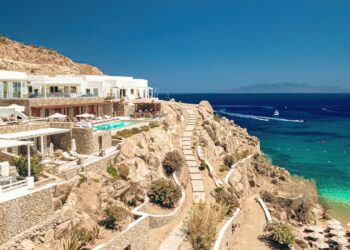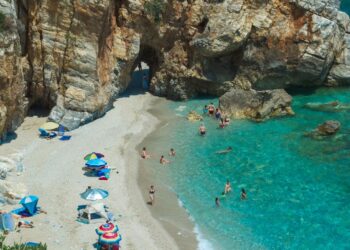
Milos sits at the southwestern edge of the Cyclades, closer to Crete than to Mykonos, and looks nothing like either of them. This is an island shaped entirely by volcanic geology — white rock formations that could pass for a lunar landscape, multicoloured cliffs rising above golden sand, and sea caves accessible only by boat. The Venus de Milo was pulled from the earth here in 1820, early Christian catacombs tunnel beneath the hillside, and rows of colourful boathouses still line the waterfront in fishing settlements that feel genuinely untouched by mass development.
What makes Milos worth planning around, rather than squeezing into a day trip, is the sheer variety packed into roughly 151 square kilometres. Over 70 beaches, each shaped differently by the volcanic forces beneath, spread across the coastline. The northern shore faces the open Aegean and takes the full force of summer winds, while the southern beaches sit in relative shelter. Between them, hill villages, a Hellenistic theatre, a working mining heritage, and food traditions you will not find elsewhere in the Cyclades all compete for your attention.
Milos at a Glance
| Location | Southwestern Cyclades, Aegean Sea |
| Area | Approximately 151 km² |
| Population | Around 5,000 permanent residents |
| Capital | Plaka (hilltop village with Aegean views) |
| Main port | Adamas (Adamantas) |
| Ferry from Piraeus | 2.5–7 hours depending on vessel (from approximately €33) |
| Flight from Athens | 40 minutes (Sky Express, Olympic Air) |
| Best time to visit | June and September |
| Recommended stay | 4–5 nights minimum |
Best Time to Visit Milos
June and September stand out for a reason. June delivers long sunny days, warm enough water for swimming, and roughly half the crowds you would face in August. Boat tours to Kleftiko still have same-week availability, parking near Sarakiniko is possible before mid-morning, and accommodation prices sit noticeably below peak rates.
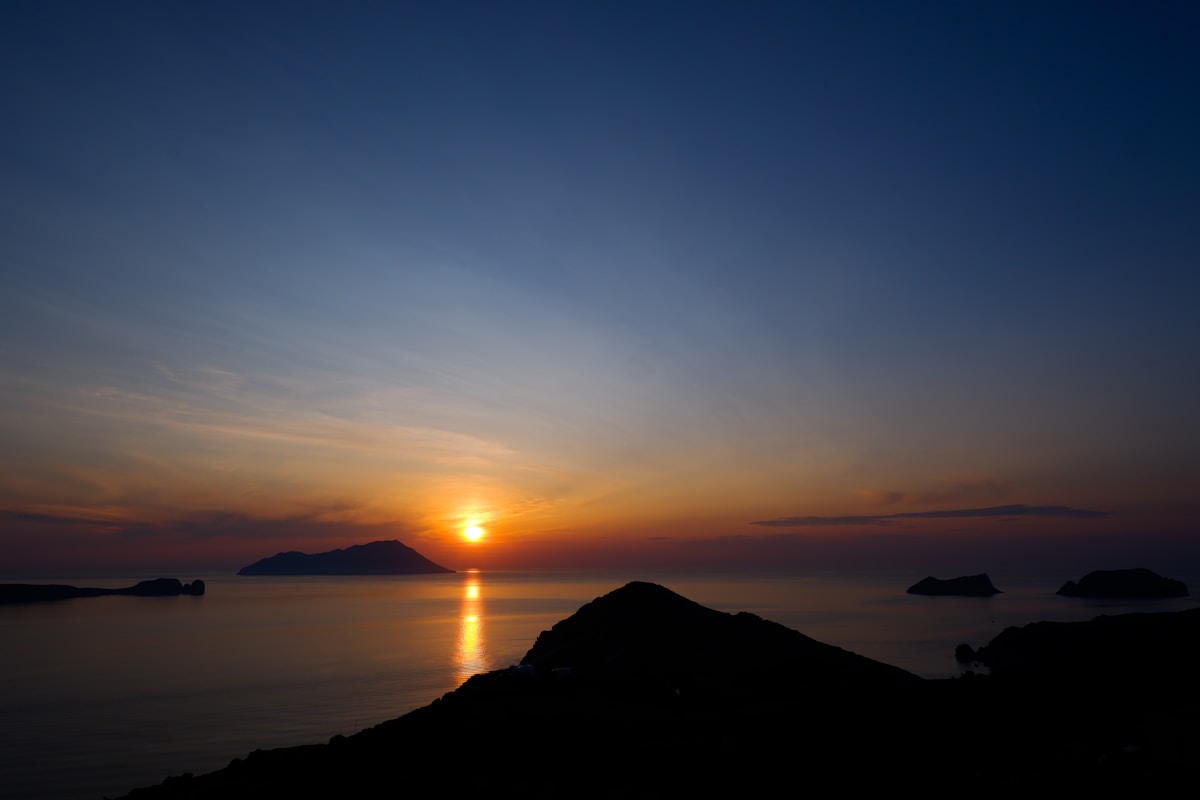
September offers something arguably better: the sea at its warmest — around 24 to 25 degrees — with crowds thinning sharply after the first week. The meltemi winds that batter the northern coast through July and August lose their intensity, making full-day sailing trips more reliable and more pleasant. Prices ease back toward shoulder-season levels without any loss of sunshine or services.
July and August work, but they demand forward planning. Sarakiniko fills before 9am, the ladder queue at Tsigrado stretches to twenty minutes, and boat tours sell out days in advance. The meltemi can ground smaller vessels for consecutive days, cancelling excursions without warning. If these months are your only option, book accommodation and boat tours well ahead, and expect to share the island with a lot of people.
May and October reward flexible travellers. May brings wildflowers and mild temperatures, though the sea is still cool for extended swimming. October remains warm enough for beaches, but some services start winding down after mid-month. Both months suit walkers, history-focused visitors, and anyone who values quiet over guaranteed heat.
How to Get to Milos
Ferry from Athens (Piraeus)
Daily ferries connect Piraeus to the port of Adamas year-round. The fastest option is a high-speed catamaran operated by SeaJets, reaching Milos in roughly 2.5 to 3.5 hours, with one-way fares starting around €52 in peak season. Conventional ferries run by Blue Star, Minoan Lines, Aegean Sea Lines, and Fast Ferries take between 4 and 7 hours and cost from approximately €33 for a deck-class ticket. In summer, expect multiple daily departures in both directions.
Conventional ferries have open decks, cafeterias, and vehicle transport, making them the practical choice if you plan to bring a car. High-speed vessels carry vehicles on most sailings but offer less deck space. Schedules shift between seasons, so confirm exact departure times through the ferry operator’s website or a booking platform before committing to connecting travel arrangements.
Flights from Athens
Milos has a small domestic airport (MLO) near Zefyria, roughly five kilometres from Adamas. Sky Express and Olympic Air operate daily flights from Athens, with a flight time of around 40 minutes. One-way fares start from approximately €49, though summer prices run higher and seats fill quickly. The runway is short — only turboprop aircraft land here — so luggage allowances tend to be stricter than on jet routes. There are no direct international flights to Milos.
From other Cycladic islands
Milos connects well with neighbouring islands, especially in summer. Sifnos is a 40-minute to 1.5-hour ferry ride away, Serifos takes roughly 1.5 to 2 hours, and Paros around 1.5 to 2 hours by high-speed vessel. Connections to Santorini (around 2.5 hours), Folegandros (1 to 2 hours), and Naxos (around 2.5 hours) also run during peak season, though frequency varies. Milos works well as a starting or ending point for a Cycladic island-hopping route.
Getting Around the Island
A rental car makes a substantial difference on Milos. Public bus service connects Adamas, Plaka, Pollonia, and a handful of beach stops during summer, but frequencies are limited and many of the best beaches sit at the end of unpaved roads with no bus access at all. Without a vehicle, you will miss a good portion of what the island offers.
Book a car as early as possible for July and August — demand genuinely outstrips supply on this small island, and last-minute arrivals sometimes find nothing available. A compact car handles most roads, though a vehicle with higher clearance helps on the rougher tracks to western beaches. ATVs and scooters are popular alternatives, particularly for solo travellers, but they offer less protection on steep gravel descents and are uncomfortable in the meltemi wind.
Taxis exist but are few. Ride-hailing apps do not operate reliably. A few boat-taxi services run along the southern coast in summer, which can be useful for reaching otherwise inaccessible coves without joining a full tour.
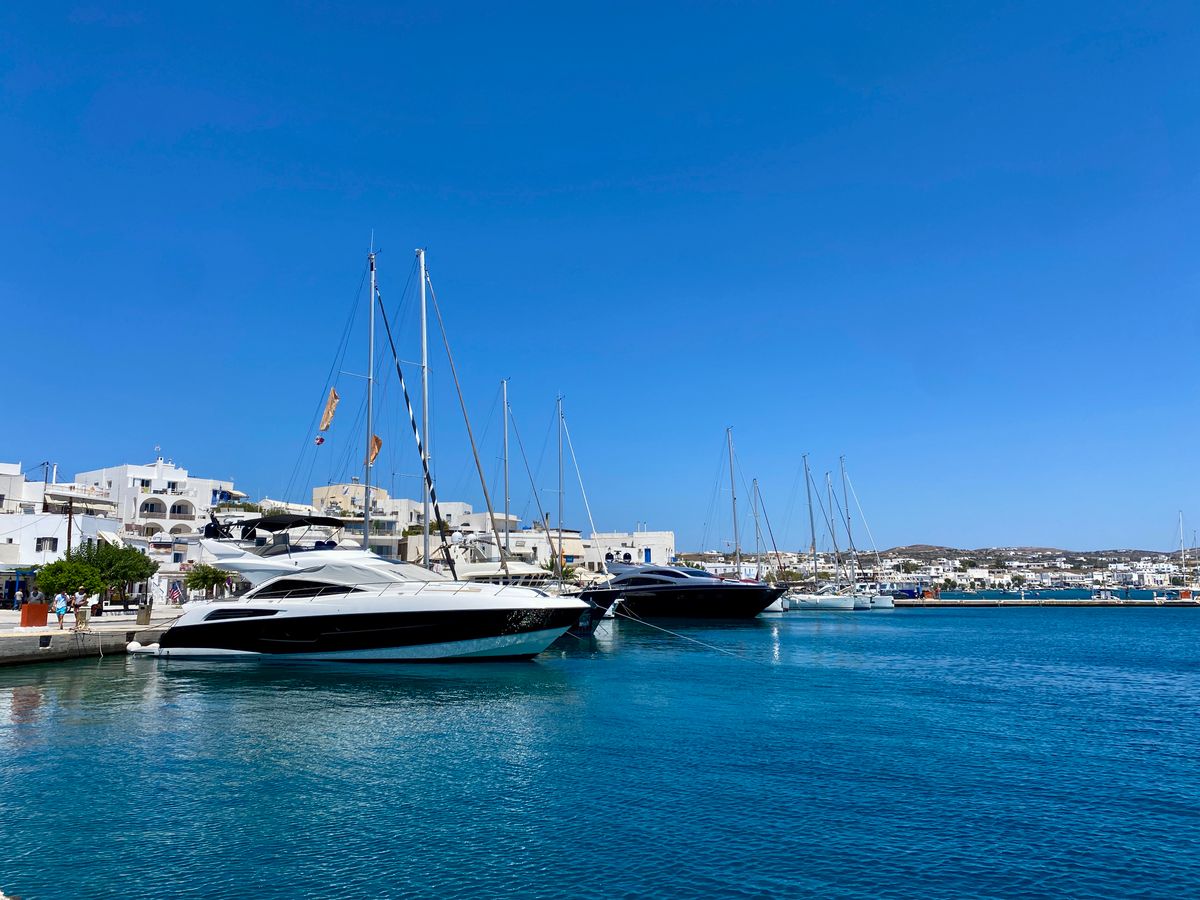
Where to Base Yourself
Three settlements account for the majority of accommodation on Milos, each suited to a different type of stay. The decision matters because the island is small enough that everywhere is reachable within 20 to 25 minutes by car, but large enough that walking between bases is impractical.
| Base | Best for | Drawbacks | Beach access |
|---|---|---|---|
| Adamas | Short stays, ferry convenience, most bus connections | Port-town atmosphere, less character than Plaka or Pollonia | No notable beach in the town itself; all beaches require transport |
| Plaka | Sunset views, village atmosphere, history walks | Hilltop location, steep streets, limited parking, quieter at night | 10-minute drive to northern and southern beaches |
| Pollonia | Longer stays, seafood dining, relaxed pace, Kimolos ferry | Northeast corner means longer drives to southern beaches | Sandy beach in the village; Sarakiniko and Papafragas nearby |
Adamas is the arrival point and transport hub. It has the widest range of accommodation at every price level, the best bus connections, and easy access to car-rental offices near the port. What it lacks is atmosphere — the waterfront is functional rather than scenic, and the town feels more like a transit point than a destination. For stays of two nights or fewer, this convenience might be worth the trade-off.
Plaka, the official capital, sits on a hill overlooking the bay, with whitewashed lanes, a Venetian kastro, and sunset views that are genuinely difficult to improve upon. The Archaeological Museum is here, and the walk up to the castle at golden hour is one of the best things to do on the island. On the downside, parking is tight, the streets are steep, and the evening dining scene is smaller than in Pollonia.
Pollonia, on the northeast coast, is the most appealing base for travellers staying four nights or longer. It is small, walkable, and centred around a sandy beach and a cluster of waterfront tavernas. The small ferry to Kimolos departs from here, and Sarakiniko is a short drive west. The main limitation is distance: the southern beaches require a 25- to 30-minute drive each way.
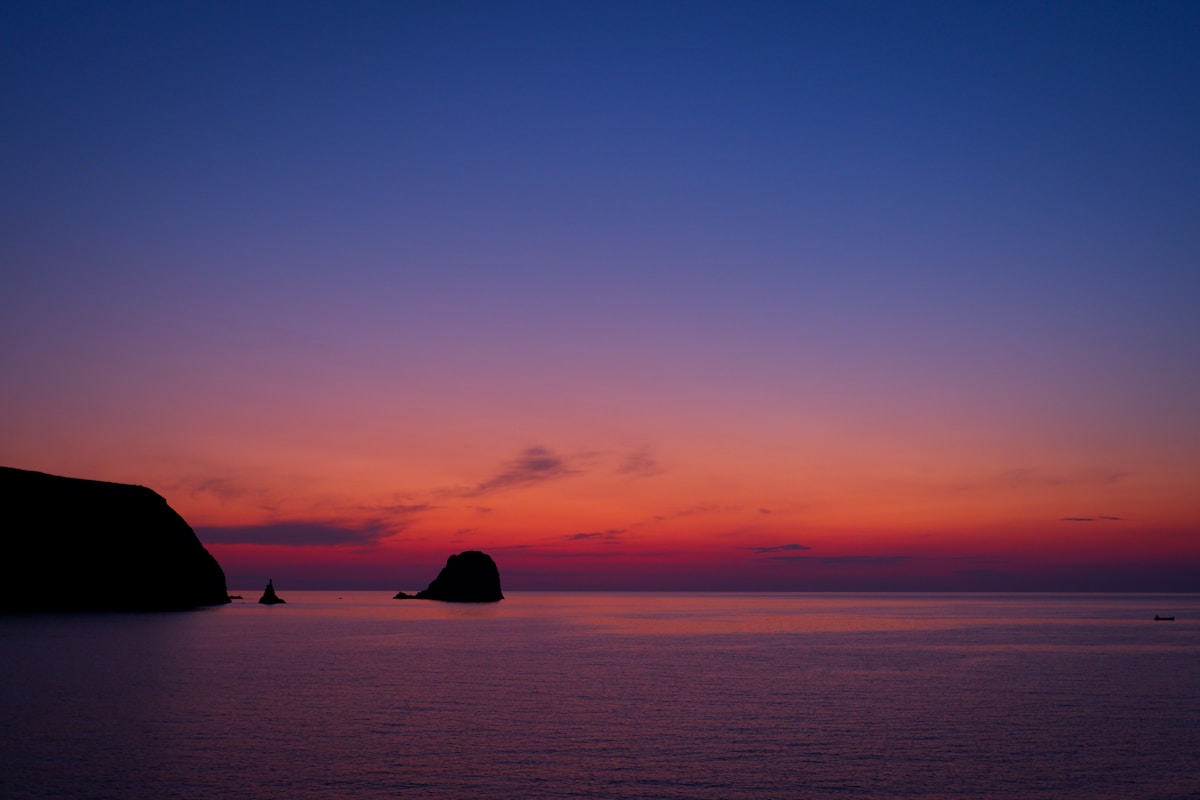
The Beaches
Milos claims over 70 beaches, which sounds like marketing until you start driving around the island and realising that almost every accessible cove has its own geological personality. The volcanic origins mean that two beaches separated by a single headland can look entirely different — white pumice on one side, red and orange clay on the other, with a strip of golden sand around the next corner. Below are the ones worth prioritising if your time is limited.
Sarakiniko
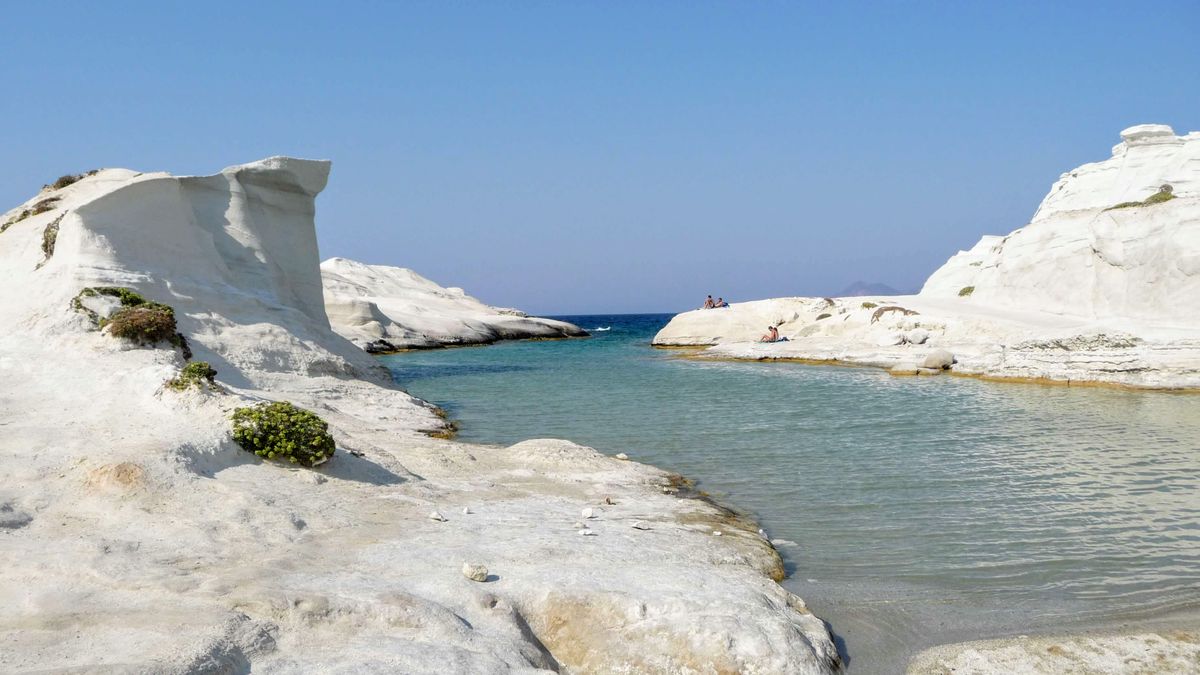
The most photographed spot on the island, and the one that usually draws people to Milos in the first place. White volcanic rock — bleached smooth by wind and salt water over millennia — plunges into deep turquoise water, creating a landscape that looks more lunar than Mediterranean. There is a small sandy beach at the bottom of the formation, a natural swimming channel, and several cliff-jumping spots of varying height and questionable wisdom.
Sarakiniko faces north, which means it catches the full force of the meltemi in July and August. On windy days, the sea becomes rough and cliff edges slippery. Arrive early in the morning or late in the afternoon during peak season — by 10am in August, every flat rock is claimed. There are no permanent facilities beyond a seasonal food truck, so bring water and sun protection. Free parking is available a short walk from the formations.
Kleftiko
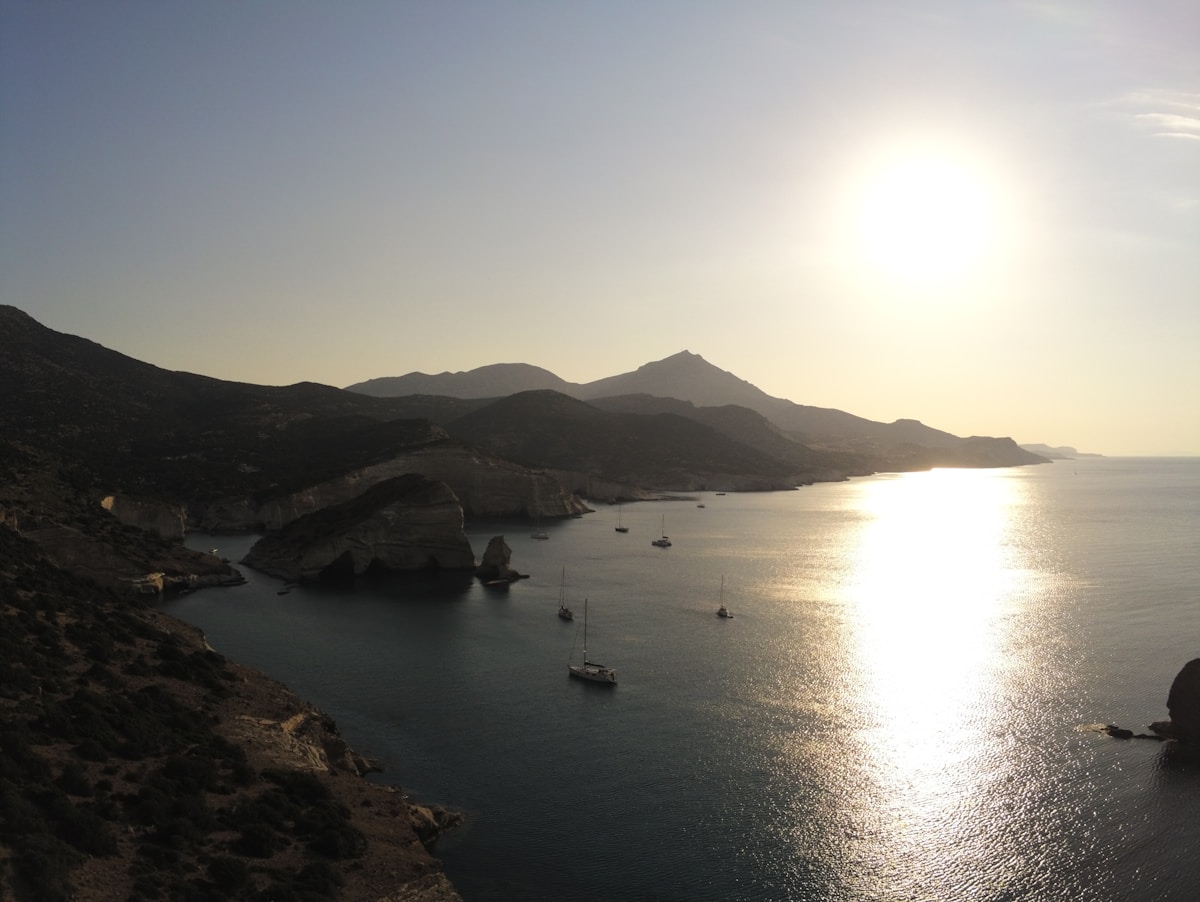
Kleftiko is accessible only by boat, which is both its limitation and its appeal. Towering sea stacks and caves — once used as a pirate hideout, according to local tradition — rise from deep water on the southwestern coast. Most visitors reach Kleftiko on a half-day or full-day sailing tour departing from Adamas, which typically includes several swimming stops along the coast and sometimes a visit to the uninhabited island of Polyegos.
These tours are among the most popular activities on Milos, so book at least a few days ahead in summer. Full-day sailing tours generally run from around €100 to €200 per person depending on the vessel, group size, and inclusions. Conditions at Kleftiko depend entirely on the wind — if the meltemi is strong, tours may reroute or cancel. September, when winds ease, is the most reliable month for a calm visit.
Firiplaka
On the southern coast, Firiplaka offers something closer to a conventional beach experience — a long stretch of sand backed by multicoloured volcanic cliffs in red, white, and orange. The water is shallow enough near the shore for comfortable swimming, and the position provides natural shelter from northern winds. Sunbeds and umbrellas are available for hire, and there is a small beach bar serving drinks and basic food.
Firiplaka sits alongside Tsigrado, and most visitors combine both in a single trip. Parking can be difficult from mid-morning onward in July and August, so arriving before 10am is worth the effort.
Tsigrado
Tsigrado is a genuinely small cove reached by climbing down two wooden ladders through a narrow rock passage. The beach itself is beautiful — clear turquoise water, fine sand, dramatic cliff walls — but it fills quickly because there is barely room for a dozen groups. The access is not suitable for young children, elderly visitors, or anyone uncomfortable with unsteady ladders and steep drops. On busy days, a queue forms at the top. If the ladder situation does not appeal to you, skip it — Firiplaka is a two-minute drive away and far more practical.
Papafragas
A narrow sea gorge on the northeast coast, carved between vertical rock walls, with a small sandy beach at the base accessible by a steep path. The swimming channel is dramatic and photogenic, though the actual usable beach space is tiny. Worth a brief visit — perhaps 30 to 45 minutes — rather than a full beach day. It is near Sarakiniko and can easily be combined in the same drive.
Paliochori
One of the more developed southern beaches, with sunbeds, tavernas, and good shelter from northern winds. The cliffs behind the beach show layers of volcanic colour. The water is warm and clear, and the beach is wide enough that it rarely feels oppressively crowded even in peak season. Some areas of the beach have naturally heated sand due to residual geothermal activity — a reminder that the volcano beneath Milos is dormant, not extinct.
The Fishing Villages
The fishing villages of Milos are as much a reason to visit as the beaches, though they require a different pace. Scattered along the northern and eastern coasts, each consists of a row of syrmata — small two-storey boathouses with brightly painted doors at water level and living quarters above. Fishermen once stored their boats in the ground-floor garages; today, some have been converted into guesthouses, though many remain in active use.
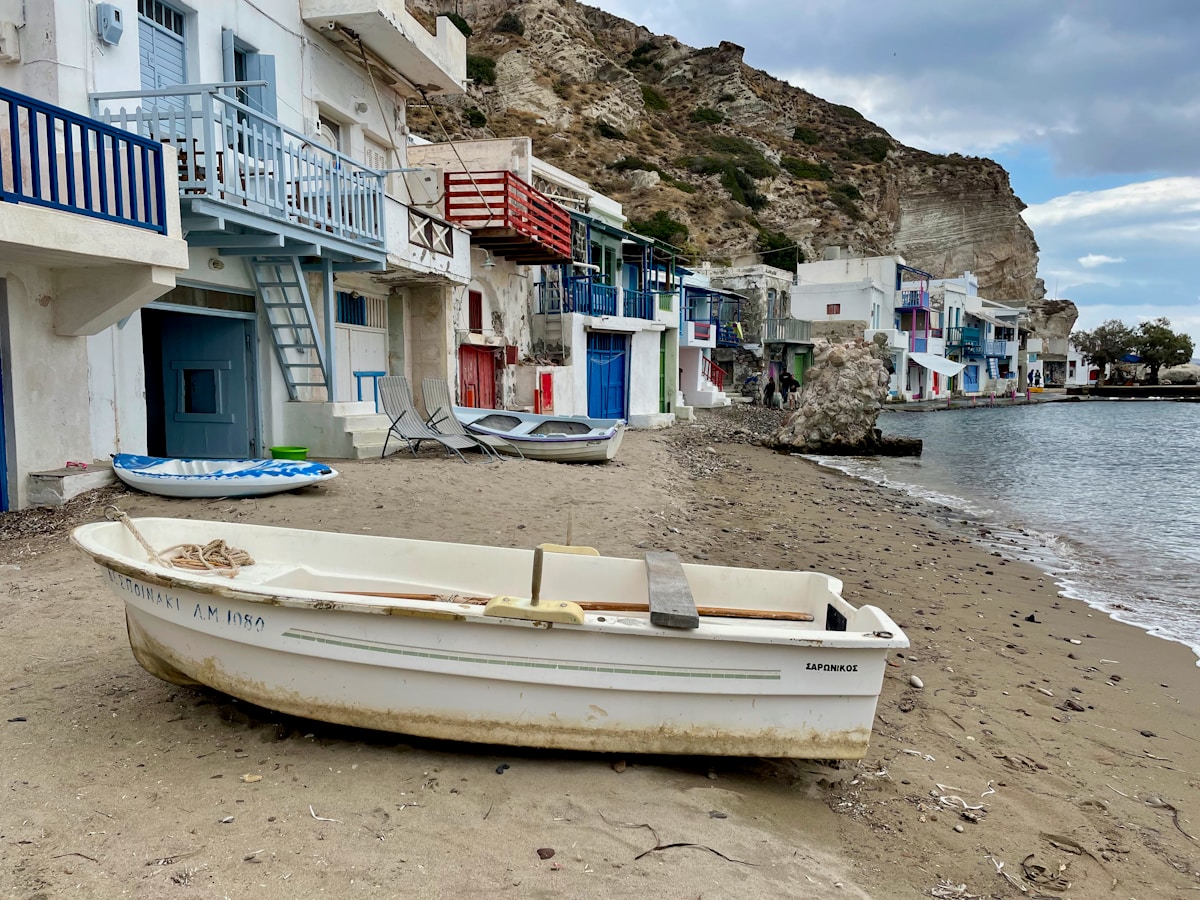
Klima is the most visited and the most photogenic, with a longer row of multicoloured syrmata than any other settlement on the island. Access is via a narrow, steep road from Tripiti — drive carefully and be prepared for limited turning space. The waterfront path is short and there is nowhere to spend more than 30 to 45 minutes, but the setting is memorable enough that most people consider it essential.
Mandrakia, tucked into a small bay further north, is quieter and less polished. Fishing boats rest in the water alongside syrmata, a small whitewashed church overlooks the scene, and the pace feels slower than at Klima. There is usually a taverna open in season, and swimming from the rocks is possible in calm conditions.
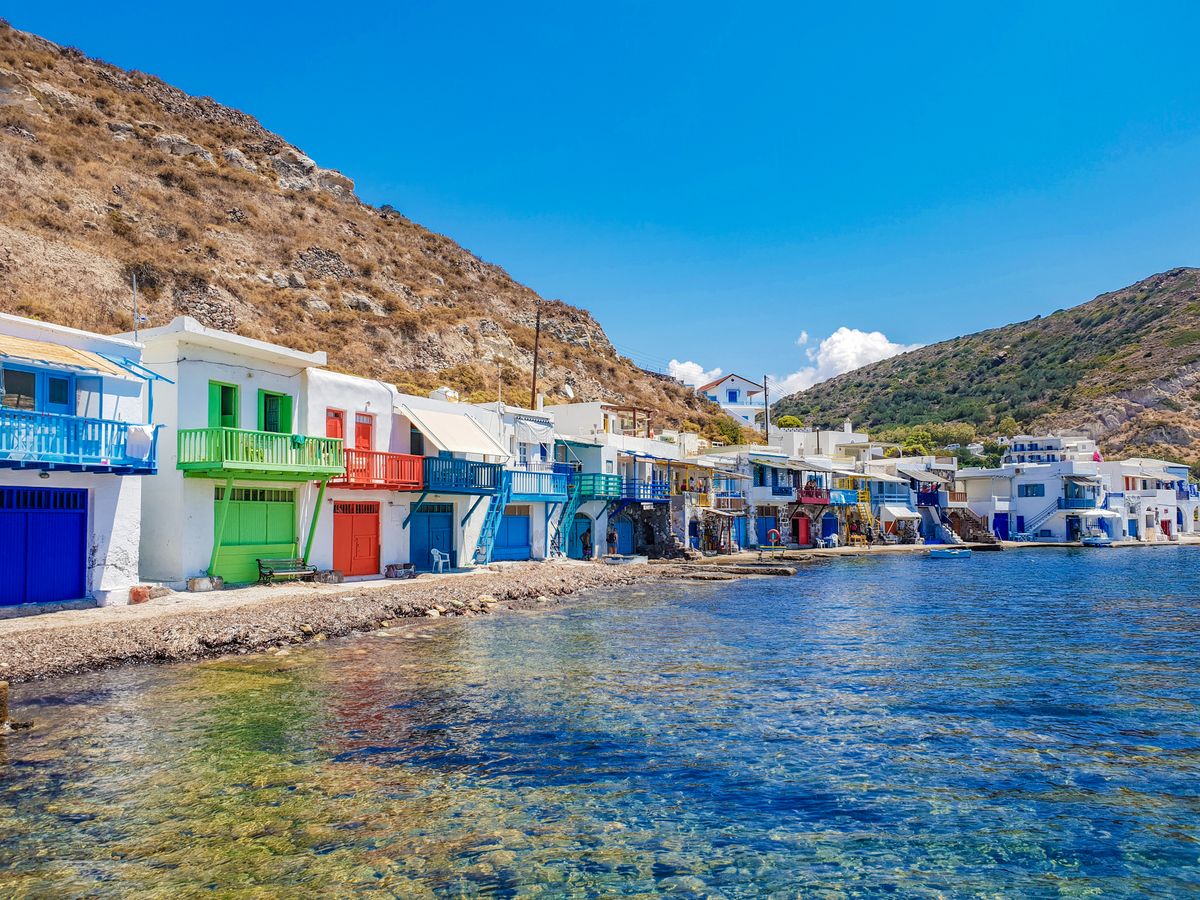
Firopotamos and Fourkovouni are smaller still, each worth a short stop for anyone driving the northern coastal roads. Firopotamos has a sandy beach beside its syrmata, making it one of the few fishing villages where you can combine a swim with a village walk.
History and Culture
Milos has been continuously inhabited for roughly 12,000 years, thanks partly to its obsidian deposits — a volcanic glass prized across the ancient Aegean for tool-making. The island’s strategic position on Mediterranean trade routes brought successive waves of Minoan, Mycenaean, classical Greek, Roman, Byzantine, Venetian, and Ottoman influence, each leaving traces in the landscape.
The Venus de Milo
The island’s most famous export left in 1820, when a farmer near the village of Tripiti unearthed a marble statue of Aphrodite — now displayed in the Louvre and known worldwide as the Venus de Milo. The circumstances of the discovery and the statue’s subsequent acquisition by France remain the subject of historical debate. A replica stands in the Archaeological Museum in Plaka, and the approximate discovery site near the ancient theatre is marked, though there is not much to see beyond the view.
The Catacombs of Milos
Cut into the hillside below Tripiti, the early Christian catacombs of Milos date to the 1st through 5th centuries AD. They are considered one of the three most significant early Christian burial sites in the world, alongside the catacombs in Rome and the Holy Land. An estimated 7,000 to 8,000 Christians were buried here in carved niches along underground corridors. Visitors can walk through a portion of the network on guided tours. The site was partially buried by an earthquake in the 6th century and rediscovered by the German archaeologist Ludwig Ross in 1843.
The Ancient Theatre
Above the catacombs, the Hellenistic theatre — later modified by the Romans — occupies a hillside with views across the bay of Adamas. Built in the 3rd century BC, it originally held around 7,000 spectators; today roughly 700 marble seats remain, and the theatre occasionally hosts summer performances. The setting alone makes it worth a visit, and combining it with the catacombs and the Klima walk below creates a satisfying half-day itinerary.
The Mining Museum
Milos has been mined since antiquity — obsidian, sulphur, kaolin, bentonite, and perlite have all been extracted here at various points. The Mining Museum in Adamas documents this industrial heritage through tools, photographs, and mineral specimens. It is one of the better-curated small museums in the Cyclades and provides useful context for the island’s unusual landscapes, many of which are direct products of mining activity or volcanic mineralogy.
Milos for Island Hoppers
Milos connects easily with several Cycladic neighbours. Sifnos (40 min–1.5 hr) pairs well for food-focused travellers. Serifos (1.5–2 hr) offers a quieter, less developed counterpoint. Naxos (2.5 hr by fast ferry) adds mountain villages and long sandy beaches. And a 20-minute local ferry from Pollonia reaches Kimolos — one of the best-value day trips in the Cyclades, with traditional village life and an excellent beach at Prassa.
Food Worth Seeking Out
Milos has a handful of local dishes that genuinely belong to the island rather than being borrowed from the broader Cycladic repertoire. Seek them out rather than defaulting to the standard taverna menu — they are part of what makes a visit here distinctive.
Pitarakia are small hand-pies filled with chickpeas and herbs, shaped into half-moons and fried until crisp. They appear on menus across the island and are best eaten warm, as a meze alongside ouzo or local wine. Ladenia is a flatbread topped with onions, tomatoes, and olive oil — closer to a focaccia than a pizza — and functions as street food in Adamas and Plaka.
Karpouzenia (watermelon pie) is a sweet pastry unique to Milos, made with watermelon, flour, honey, and sesame seeds. It appears in bakeries and traditional delicatessens rather than tavernas, and makes a good mid-afternoon snack. Koufeto, the island’s traditional spoon sweet, is made from white pumpkin, honey, and almonds — dense and very sweet, typically served alongside Greek coffee.
Local cheeses, particularly manoura, are worth trying — they are aged in the island’s natural caves, giving them a distinctive mineral quality. The wines of Milos are produced in very small quantities, with Assyrtiko and Malagouzia the most common white varieties. Ask at waterfront tavernas for whatever arrived that morning — the seafood quality on Milos is consistently good, particularly in Pollonia and the fishing-village tavernas.
A Suggested 4-Day Itinerary
Day 1: Arrive by ferry or flight. Settle into accommodation, explore your base village on foot, and have a waterfront dinner. If you arrive early enough, drive to the kastro in Plaka for sunset.
Day 2: Morning at Sarakiniko (arrive early). Walk the rock formations, swim, and photograph the landscape. Drive to Papafragas for a brief stop, then continue to Pollonia for a seafood lunch. Afternoon: visit Klima and the ancient theatre and catacombs near Tripiti.
Day 3: Full-day boat tour to Kleftiko and the southwest coast, with swimming stops and a possible visit to Polyegos. These tours typically depart from Adamas in the morning and return in late afternoon. Book in advance during summer.
Day 4: Southern beach day — Firiplaka and Tsigrado in the morning, Paliochori in the afternoon. Drive through Mandrakia and Firopotamos on the return route. Final evening in Plaka or Pollonia.
With a fifth day, add the Kimolos day trip from Pollonia (the 20-minute ferry crossing costs approximately €3 to €6 per person), or explore the western side of the island if you have a suitable vehicle.
Who Milos Suits — and Who Should Consider Elsewhere
Milos is an excellent choice for couples, small groups, and independent travellers who enjoy mixing beach time with exploration and are comfortable driving on island roads. It rewards curiosity — the more you move around, the more the geological variety reveals itself. Photographers, geology enthusiasts, and anyone tired of overly manicured resort islands will find a lot to appreciate here.
Milos is also a reasonable option for families with older children who can handle moderate hikes and rocky beach access. Pollonia’s sandy beach and the shallow waters at Firiplaka are suitable for younger swimmers, though much of the island’s coastline involves climbing or uneven terrain.
Milos is less ideal for travellers who rely on public transport — without a car, you will miss most of what makes the island distinctive. It is not a nightlife destination: evening entertainment consists almost entirely of waterfront dining and the occasional bar. If you need organised beach infrastructure with sunbeds on every shore, you may find the more remote beaches frustratingly basic. And if the meltemi wind bothers you, July and August on the north coast will test your patience.
Travellers seeking a calmer, less-visited Cycladic experience should consider Serifos or Amorgos as alternatives. If you specifically want September warmth with fewer crowds, our September in Greece guide covers several options across the islands and mainland.
Practical Costs
| Ferry (Piraeus, conventional) | From approximately €33 one way |
| Ferry (Piraeus, high-speed) | From approximately €52–78 one way |
| Flight (Athens) | From approximately €49 one way |
| Car rental | From approximately €40–70 per day in peak season |
| Taverna meal for two | Approximately €35–60 including wine |
| Boat tour (Kleftiko full day) | Approximately €100–200 per person |
| Kimolos day trip ferry | Approximately €3–6 per person each way |
| Sunbed hire | Approximately €10–20 per set at organised beaches |
Prices above are approximate and based on research conducted in July 2026. Ferry fares, flight prices, and tour costs fluctuate by season and should be confirmed directly before booking.
This article was researched and verified as of July 2026. Transport schedules, admission arrangements, and prices may change between seasons. We recommend confirming current details directly with ferry operators, airlines, and local services before travelling. Vivid Greece is an independent publication and does not accept payment for editorial recommendations.