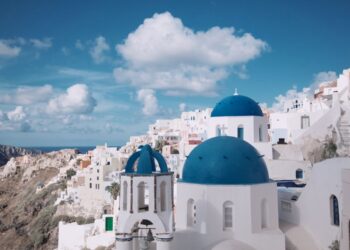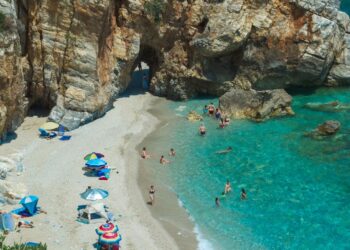
Santorini or Mykonos? It is the most common question travellers ask when planning a first trip to the Greek islands. The answer depends entirely on what kind of holiday you want. Santorini delivers volcanic drama, caldera sunsets, and a contemplative atmosphere suited to couples and wine lovers. Mykonos offers golden-sand beaches, cosmopolitan nightlife, and an energy that rewards social travellers. Both islands sit in the Cyclades, connected by a two-hour ferry, and many visitors combine them in a single trip.
This guide compares the two islands across every category that matters: beaches, scenery, culture, food, nightlife, costs, and logistics. Rather than declaring one island universally superior, we match each island to the type of traveller it serves best.
Two Islands, Two Moods
Santorini is the caldera, the sunset, the wine. Mykonos is the beach, the party, the golden sand. Choosing well starts with knowing what you actually want from a Greek island.
Quick Comparison Table
Before diving into the detail, here is a side-by-side summary of the main differences.
| Category | Santorini | Mykonos |
|---|---|---|
| Best for | Couples, honeymooners, wine lovers, photographers | Beach lovers, party-goers, groups of friends |
| Beaches | Volcanic black and red sand, dramatic scenery, limited swimming comfort | Golden sand, clear turquoise water, organised beach clubs |
| Scenery | Caldera cliffs, whitewashed villages perched on volcanic rim | Flat landscape, windmills, Little Venice waterfront |
| Nightlife | Cocktail bars, wine tastings, caldera-view dining | International DJs, beach parties, clubs open until dawn |
| Food | Volcanic produce, Assyrtiko wine, local specialities | Cosmopolitan dining, international restaurants, seafood |
| Culture | Akrotiri excavation, Museum of Prehistoric Thera, Fira-to-Oia hike | Delos UNESCO site (day trip), Mykonos Town lanes |
| Mid-range daily cost | Approximately €200–350 per couple | Approximately €250–400 per couple |
| Getting around | Bus network centred on Fira, taxis, car rental possible but roads narrow | Bus network plus water taxis between south-coast beaches |
| Terrain | Steep cliffs, many stairs, challenging for mobility-limited visitors | Mostly flat, more walkable overall |
| Crowds | Cruise-ship passengers flood Oia and Fira during the day | Beach clubs busy in peak summer, town crowded at night |
| Ferry connection | Direct ferries between both islands, approximately 2–3.5 hours, seasonal (March–November) | |
Which Island Is Best for You?
The simplest way to choose is to match your travel priorities with the island that delivers them most reliably.
Choose Santorini if you want: dramatic landscapes, romantic evenings, volcanic wine, caldera sunsets, archaeological depth, and a quieter pace once the day-trippers leave. Santorini is the better choice for honeymooners, couples seeking atmosphere over activity, wine enthusiasts, and photographers.
Choose Mykonos if you want: proper sandy beaches, water sports, beach-club culture, serious nightlife, a cosmopolitan social scene, and a more energetic holiday. Mykonos suits groups of friends, solo travellers who want to meet people, beach lovers, and anyone who values swimming over sightseeing.
Choose both if you have time: with seven nights or more, combining both islands makes sense. The ferry takes roughly two to three and a half hours depending on the vessel. Our island-hopping guide covers the practical details of planning a multi-island route.
Beaches
If beaches are the main reason for your trip, Mykonos wins comfortably. The island has more than twenty-five named beaches, most with golden sand and clear, swimmable water. The south coast has a chain of popular beaches — Platis Gialos, Paraga, Paradise, Super Paradise, and Elia — linked by water taxis. Ornos and Platis Gialos are the most family-friendly, with shallow water and accessible facilities. For something quieter, Agios Sostis and Fokos on the north side have no loungers or beach bars, just sand and sea.
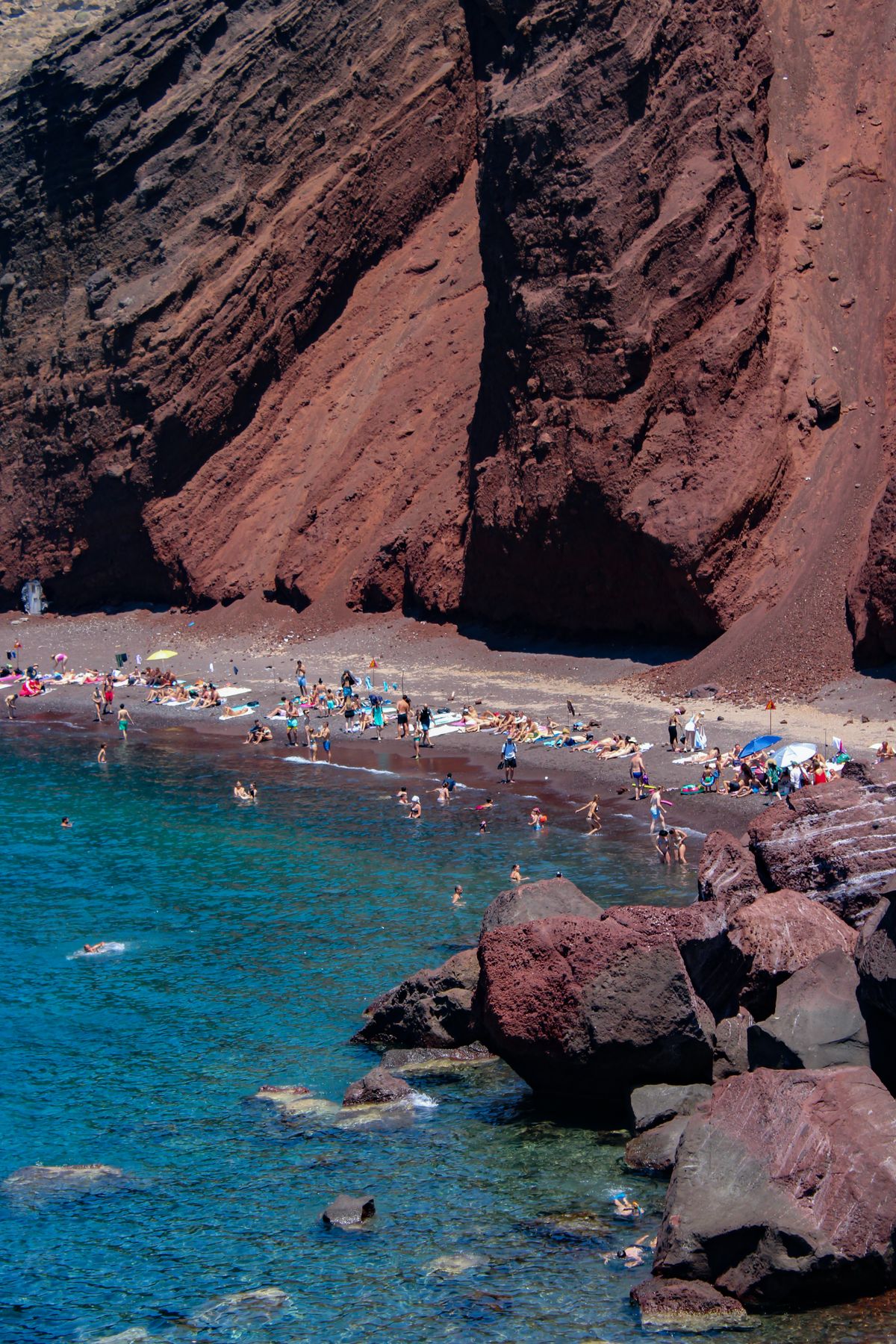
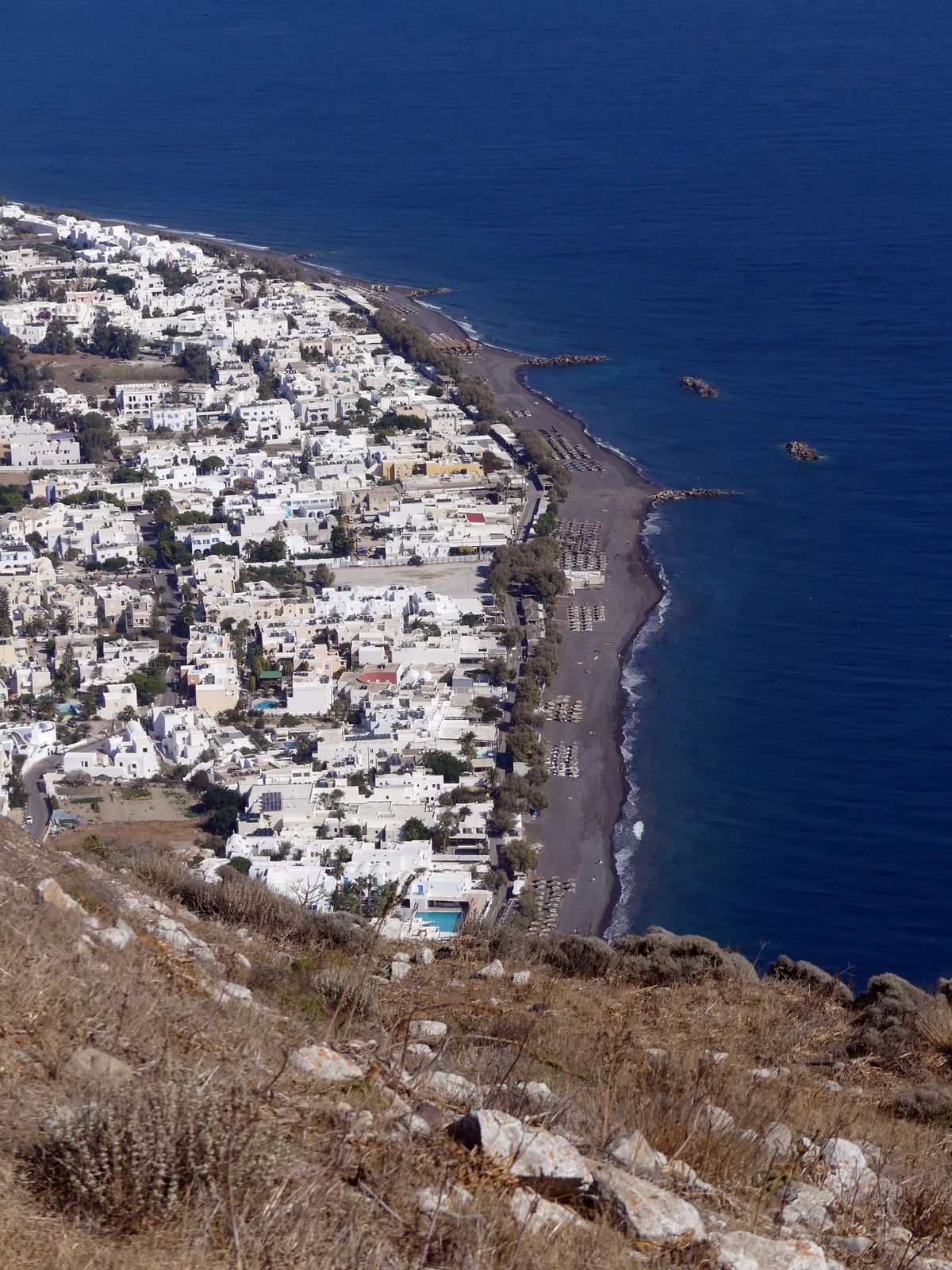
Santorini’s beaches are a different proposition entirely. Formed from volcanic eruptions, they feature black, red, and grey sand that looks extraordinary in photographs but heats up significantly under the summer sun. Red Beach, below the ancient Akrotiri site, is the most photogenic — dramatic red cliffs dropping into deep blue water. Kamari and Perissa, the two main black-sand beaches on the east coast, offer organised sunbeds and waterfront tavernas. The swimming is perfectly fine, but visitors expecting the soft golden sand of Mykonos or the wider Cyclades may find the experience less comfortable.
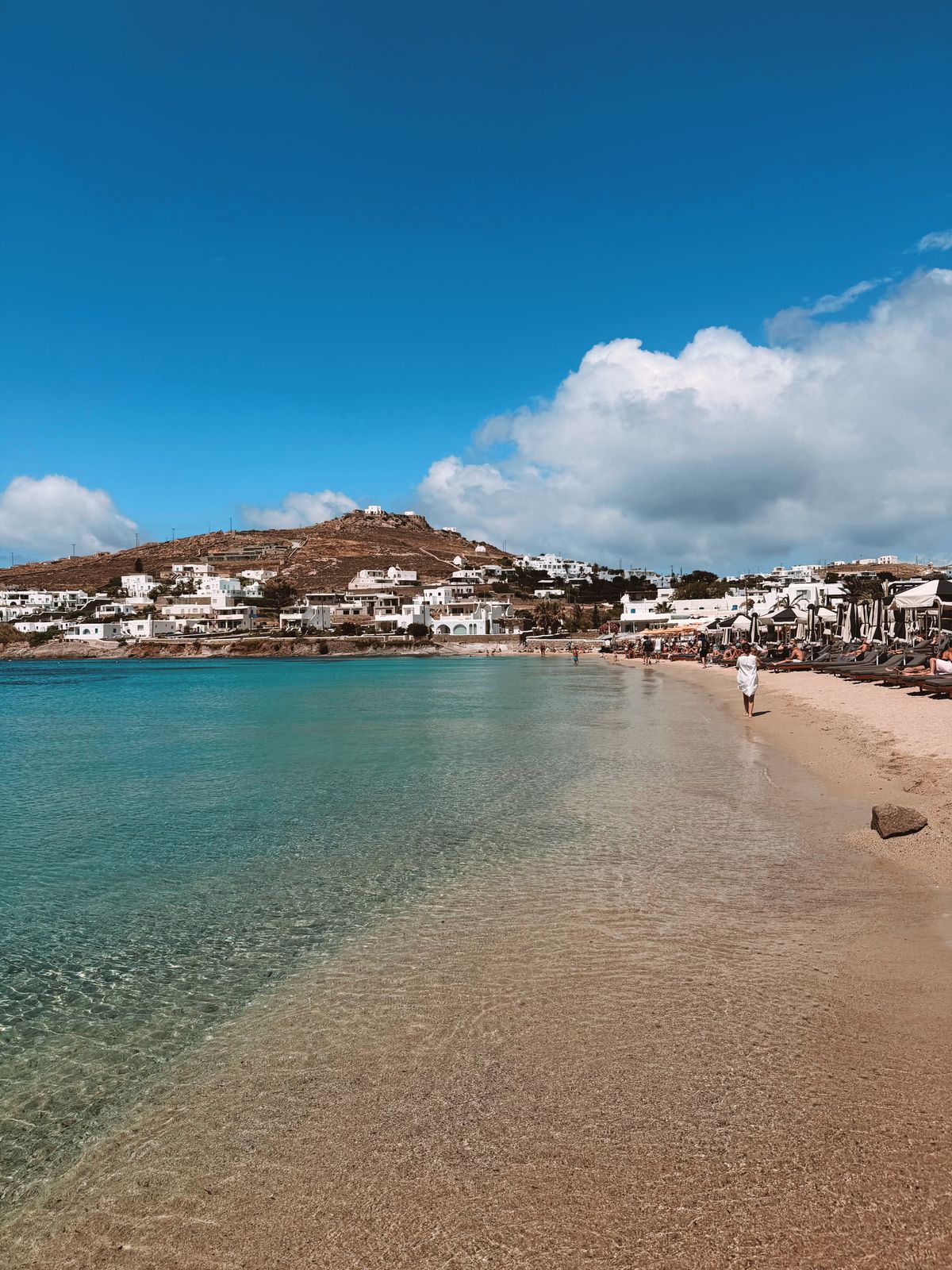
The beach-club culture also differs markedly between the two islands. Mykonos has built its reputation on high-energy beach clubs like Nammos on Psarou, Scorpios on Paraga, and SantAnna, where international DJs play from afternoon until sunset. Sunbed prices at premium clubs can range from €30 to well over €100, sometimes with minimum-spend requirements. Santorini has far fewer beach clubs, and the atmosphere tends toward relaxed taverna dining rather than curated music and cocktails.
Views, Scenery and Sunsets
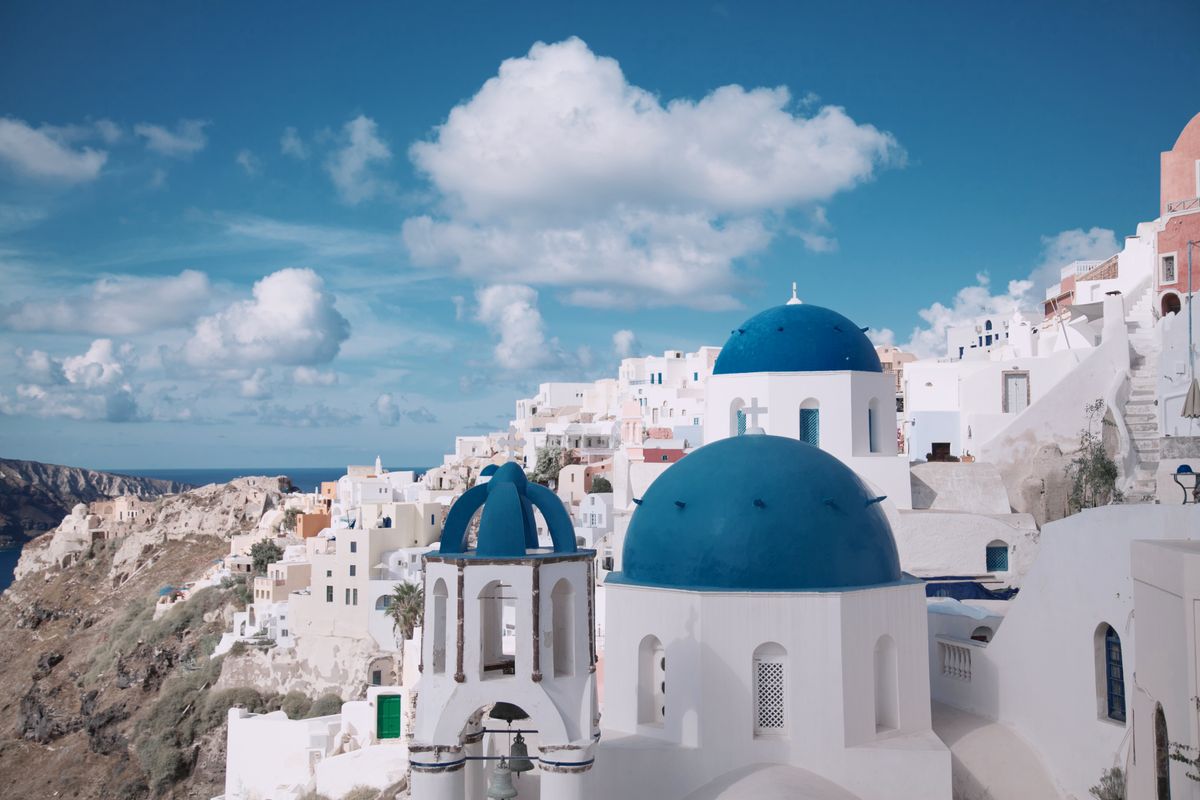
Santorini dominates this category so thoroughly that it barely qualifies as a comparison. The island is the remnant of a collapsed volcanic caldera. The western cliff face runs from Akrotiri in the south through Fira, Firostefani, Imerovigli, and Oia in the north, creating some of the most dramatic scenery in the Mediterranean. Whitewashed buildings cascade down the cliff edge, and cave hotels are carved into the volcanic rock. The views across the caldera to the volcano and Thirassia island are extraordinary at any time of day.
The sunset in Oia has become one of the most famous spectacles in Greek tourism. Crowds gather along the castle ruins and surrounding terraces each evening, and the experience is genuinely striking when conditions are right. That said, the sheer number of visitors can diminish the atmosphere — arriving early is essential during peak summer. Many regular visitors prefer watching sunset from a caldera-view hotel terrace in Imerovigli or Firostefani, where the same colours play out without the crowd.
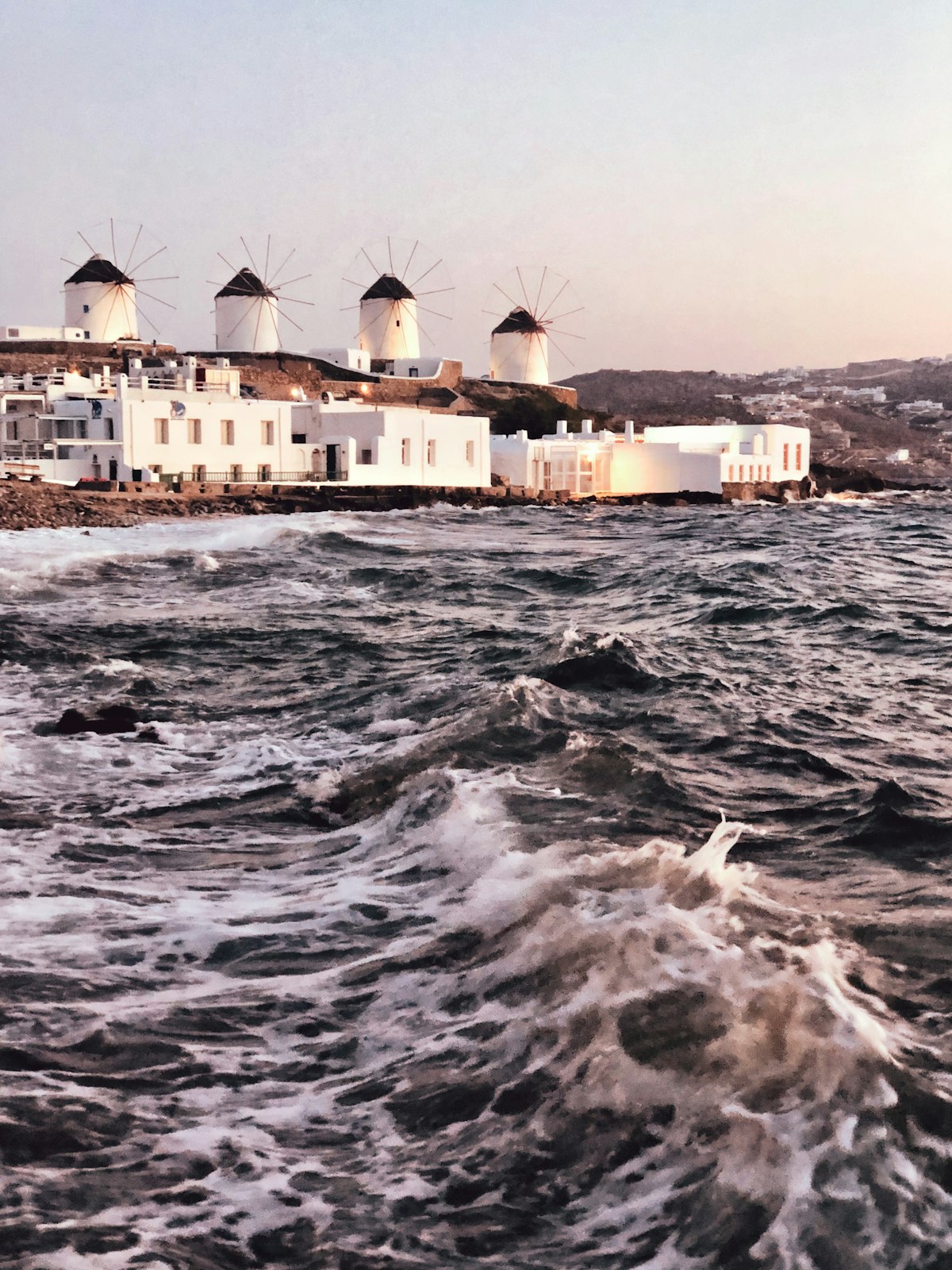
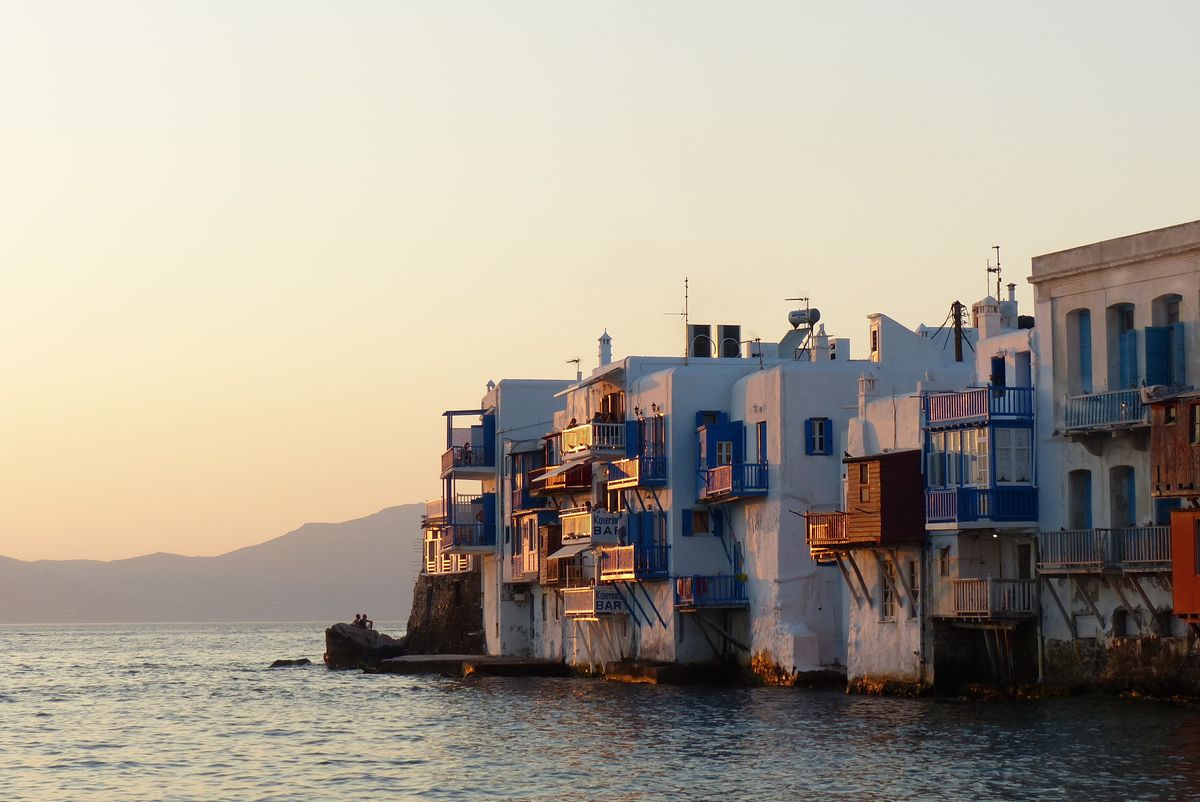
Mykonos is attractive in its own way, with the iconic windmills above Mykonos Town, the colourful waterfront houses of Little Venice, and the labyrinthine lanes of Chora. But it is a flatter island without the geological drama. The sunset from Little Venice is pleasant, with waves sometimes splashing against the waterfront bars, though it does not match the scale of the Santorini caldera.
The full Santorini guide covers each caldera village in detail, including the famous Fira-to-Oia hike. That trail runs roughly 10 kilometres along the cliff edge and takes three to five hours.
Culture and Sightseeing
Both islands offer genuine cultural depth beyond their beach-and-sunset reputations, though the character of the experience differs.
Santorini’s most significant attraction is the Akrotiri archaeological site, a Bronze Age settlement preserved under volcanic ash since around 1600 BCE. The covered excavation reveals multi-storey buildings, frescoes, and drainage systems from a civilisation predating classical Greece by over a thousand years. The Museum of Prehistoric Thera in Fira houses the major finds, including vivid wall paintings. Together, these two sites form one of the most compelling archaeological experiences in the Cyclades.
Mykonos’s cultural highlight is the day trip to Delos, a nearby uninhabited island sacred to the ancient Greek world. In mythology, Delos was the birthplace of Apollo and Artemis. Today it is a UNESCO World Heritage Site with temples, a theatre, the Terrace of the Lions, and well-preserved Hellenistic mosaics. Boats run daily from Mykonos Old Port between April and November, with the crossing taking roughly thirty minutes.
Mykonos Town (Chora) is also worth exploring on foot. The maze of narrow whitewashed lanes was designed to confuse pirates, and navigating it today remains genuinely disorienting in the best way. Small churches, bougainvillea-draped corners, and independent boutiques fill the passages between the waterfront and the upper lanes. Santorini’s villages are more dramatic vertically but less labyrinthine — the focus is on viewpoints rather than getting lost.
Food and Wine
Santorini has a distinct culinary identity that sets it apart from most Greek islands. The volcanic soil produces ingredients found nowhere else in Greece: intensely sweet cherry tomatoes with PDO protection, yellow split peas for the island’s famous fava purée, white aubergines, and small capers. Tomatokeftedes — crisp fried fritters made from local cherry tomatoes — appear on almost every taverna menu.
The wine is equally distinctive. Santorini’s Assyrtiko grape grows in basket-trained vines close to the ground, a technique that protects against the Meltemi winds. The result is a mineral-driven white wine with a crisp acidity that pairs naturally with seafood. Several wineries along the caldera rim offer tastings, including Santo Wines near Pyrgos, which combines wine flights with a sweeping caldera panorama.
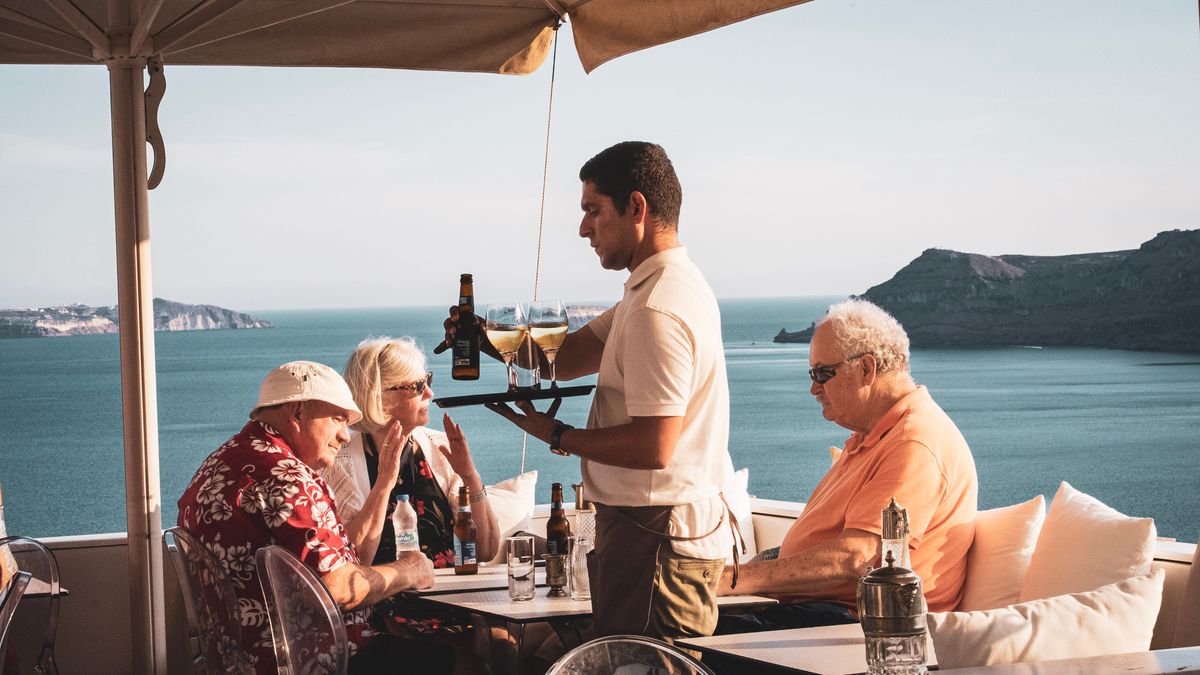
Mykonos has a broader and more cosmopolitan dining scene, mixing international restaurants with traditional tavernas. The quality of seafood is excellent, and waterfront restaurants in Mykonos Town serve well-prepared Greek dishes in atmospheric settings. The island does not share Santorini’s agricultural identity, though. Its culinary reputation rests more on restaurant quality and beach-club dining than on local produce. Prices at popular Mykonos restaurants tend to run higher than equivalent options on Santorini.
For more depth on both islands’ food scenes, see our Santorini travel guide and Mykonos travel guide.
Nightlife and Evening Atmosphere
The gap here is wide and decisive. Mykonos is one of Europe’s premier nightlife destinations, with clubs and bars that run until dawn throughout summer. Beach parties at Paradise and Super Paradise fill the afternoons, cocktail bars in Little Venice own the sunset hour, and a cluster of late-night clubs keeps Mykonos Town moving well past midnight. Cavo Paradiso, perched on a cliff above Paradise Beach, ranks among the most famous open-air clubs in the Mediterranean. The LGBTQ+ nightlife scene is well established, anchored by JackieO’ Beach Club on Super Paradise.
Santorini’s evenings are quieter and more contemplative. The emphasis falls on sunset cocktails with caldera views, wine bar visits, and long dinners rather than dancing and DJs. Fira has a modest cluster of bars and clubs that stay open late, but they bear no comparison to the scale or intensity of the Mykonos scene. Oia is effectively silent after the sunset crowds disperse. Travellers who enjoy a glass of wine on a terrace followed by an early night will find Santorini’s pace ideal. Those expecting club-level nightlife should plan their evenings in Mykonos.
Getting Around
Both islands have functional public bus networks, though neither is especially large.
Santorini’s KTEL bus system centres on Fira, with regular routes to Oia, Kamari, Perissa, Akrotiri, the airport, and the Athinios port. Fira is the most practical base if you intend to rely on buses, since almost every route passes through its central station. The caldera villages of Fira, Firostefani, and Imerovigli are connected by a walkable cliffside path. ATVs and car rentals are available, though narrow roads, steep gradients, and limited parking make driving less pleasant than on many other Cycladic islands.
Mykonos buses run from two stations in Mykonos Town. The Fabrika station serves south-coast beaches including Platis Gialos, Paraga, and Paradise. The other station covers Elia, Kalafatis, and the airport. In summer, a water-taxi service connects the south-coast beaches, making it easy to hop between Platis Gialos, Paraga, Paradise, Super Paradise, and Elia. The island is flatter, and walking in Mykonos Town is generally easier on the legs than navigating Santorini’s staircases.
Neither island strictly requires a car, and parking headaches in both Oia and Mykonos Town make renting one a mixed blessing. A car is most useful on Santorini if you want to visit the east-coast beaches, Akrotiri, and the caldera villages without depending on bus schedules.
Costs
Both Santorini and Mykonos rank among the most expensive destinations in Greece. Expect to pay roughly 40 to 60 per cent more than islands like Naxos or Paros for equivalent accommodation quality.
Accommodation costs on Santorini vary dramatically by location. A caldera-view room in Oia or Imerovigli might cost €250 to €800 per night during peak summer. An equivalent-quality room on the east coast in Kamari or Perissa drops to €80–€200. The caldera premium is entirely about the view, not room quality.
Mykonos accommodation is similarly expensive in the popular areas. Beach-area hotels range from roughly €200 to €500 per night in summer, with Chora boutique properties at €250–€600. The additional cost on Mykonos often comes from beach-club spending. A day at a premium club with sunbeds, cocktails, and lunch can reach €150–€300 per person.
For a mid-range couple in the shoulder season, a realistic daily budget on either island is approximately €200–€350, covering accommodation, meals, and transport. In peak July and August, this rises by 30 to 50 per cent. Greece’s Climate Resilience Fee adds a mandatory nightly charge per room, ranging from €1.50 to €10 depending on the property’s rating and the season.
A practical way to reduce costs on either island is to stay in a non-premium area and eat at local tavernas one block from the main tourist strip. Kamari rather than Oia on Santorini, or a back-street hotel rather than beachfront on Mykonos, can save hundreds over a week.
Families
Neither island is the most natural choice for families with young children. Naxos and Paros are generally better suited, with wider sandy beaches, lower prices, and a more relaxed pace. That said, families do visit both islands successfully with the right expectations.
On Mykonos, Ornos and Platis Gialos are the most family-appropriate beaches, with shallow water, organised facilities, and nearby restaurants. The water-taxi network makes moving between beaches easy without a car, and Mykonos Town is flat enough for pushchairs in most areas. The day trip to Delos can interest older children, particularly those studying ancient history.
Santorini presents more practical challenges for families. The steep stairs and cliffside paths in the caldera villages are difficult with pushchairs and toddlers. The black sand can burn young feet in summer. However, families based at the beach towns of Kamari or Perissa avoid most of these issues. The enclosed Akrotiri excavation is easier to manage with children than open-air ruins. Boat trips around the caldera also offer a welcome change of pace. For timing advice, see our seasonal guide to Greece.
Couples and Honeymoons
Santorini is the stronger choice for couples and honeymooners, and this is not particularly close. The caldera views, cave hotels with private terraces, and candlelit cliff-edge dining create one of the most romantic settings in the Mediterranean. Imerovigli and Firostefani tend to offer a stronger balance of romance and value than Oia, where higher prices do not always translate to a better experience.
Mykonos can work well for couples who prioritise activity, beach time, and social dining over quiet romance. The island is livelier and more outward-facing, which suits some couples perfectly. Little Venice at sunset, a seafood dinner by the harbour, and a walk through the moonlit lanes of Chora all have genuine appeal. But for the classic honeymoon or anniversary trip, Santorini’s atmosphere is difficult to match.
Best Time to Visit
Both islands share broadly similar weather patterns, with hot, dry summers and mild, wetter winters. The peak season runs from July through August, when temperatures regularly exceed 30°C, accommodation prices peak, and crowds are at their densest.
The Meltemi winds, strong northerlies that blow across the Aegean from roughly mid-July through August, affect both islands. On Mykonos, the Meltemi can make northern beaches uncomfortable and churn up the water at exposed sites. On Santorini, the wind is noticeable on the caldera rim and can make the Fira-to-Oia hike demanding. The winds typically ease in September.
The shoulder seasons offer the best balance. Late May through June brings warm weather (25–30°C), swimmable seas, and substantially lower accommodation prices. September through mid-October offers similar temperatures with the bonus of a warm sea from months of summer heating. Crowds thin noticeably in September, and both islands remain fully operational.
For detailed month-by-month guidance including ferry schedules and seasonal pricing, see our guide to the best time to visit Greece.
Can You Visit Both?
Yes, and many travellers do. Direct ferries run between Santorini and Mykonos from March through November, operated primarily by SeaJets and Golden Star Ferries. The fastest crossings take approximately two hours and ten minutes, with slower services taking up to three and a half hours. In peak summer, multiple daily departures are available in both directions. Ticket prices generally start from around €50–80 per person for a standard seat.
The ferry journey, including port transfers at each end, consumes most of half a day. A common approach is to spend three or four nights on each island, connected by a morning departure. Many travellers start with Mykonos’s energy before winding down on Santorini. The reverse works equally well for those who prefer to begin with caldera views before shifting to beach days.
Both islands have international airports with direct flights from numerous European cities during summer. Frequent short-hop flights from Athens also operate year-round. This makes it easy to fly into one island and depart from the other, avoiding a return leg.
The Verdict
Choose Santorini for the caldera, the wine, and the romance. Choose Mykonos for the beaches, the nightlife, and the energy. Better yet, visit both.
Final Verdict
There is no universally correct answer to the Santorini-or-Mykonos question. Both islands earn their fame for genuine reasons, and both deliver experiences that justify the higher Cycladic prices. The deciding factors are straightforward:
Santorini is the better island for scenery, sunsets, wine, archaeology, romance, and a contemplative holiday pace. Its caldera is unlike anything else in Greece, and the volcanic terroir produces food and wine with genuine local character. The trade-offs are limited swimming beaches, steep terrain, and heavy cruise-ship crowds during the day.
Mykonos is the better island for beaches, nightlife, beach-club culture, social energy, and LGBTQ+ travellers. Its golden-sand coastline is among the best in the Cyclades, and the nightlife is on a different level from anywhere else in Greece. The trade-offs are higher spending temptations (particularly at beach clubs), a less dramatic natural landscape, and peak-summer noise levels that may not suit everyone.
Travellers with a week or more will find the strongest itinerary combines both islands — three or four nights on each, connected by ferry. Our Santorini travel guide and Mykonos travel guide cover each island in full depth for more detailed planning.
This article was researched and verified as of August 2026. Ferry schedules, prices, and operating seasons are subject to change. We recommend confirming transport details and accommodation availability directly with operators before finalising your trip. Vivid Greece has no commercial relationship with any business mentioned in this article.