Spetses is the kind of Greek island that rewards a particular disposition. It suits travellers who value an evening walk along a gaslit waterfront over a countdown to the next ferry. Sitting at the southern edge of the Saronic Gulf, roughly two hours from Piraeus by high-speed ferry, it shares its car-free character with neighbouring Hydra. But where Hydra is stark and concentrated, Spetses trades drama for pine-covered slopes and accessible coastline. The island spreads across a 25-kilometre coastal road, a dozen named beaches, and a town shaped by an extraordinary naval past. For travellers based in Athens or the eastern Peloponnese, it makes a convincing weekend escape. Those with more time will find it reveals a slower side of the Saronic chain.
| Location | Saronic Gulf, approximately 100 km south of Athens |
| Area | Approximately 22.5 sq km, 25 km perimeter road |
| Population | Around 4,000 permanent residents |
| Ferry from Piraeus | 1 hour 35 minutes to 2 hours 50 minutes, from approximately €38 |
| Cars | Private cars not freely permitted; visitors cannot bring vehicles |
| Best for | Couples, weekend breaks, history, cycling, quiet beaches |
| Best time | May–June and September–October; peak in July–August |
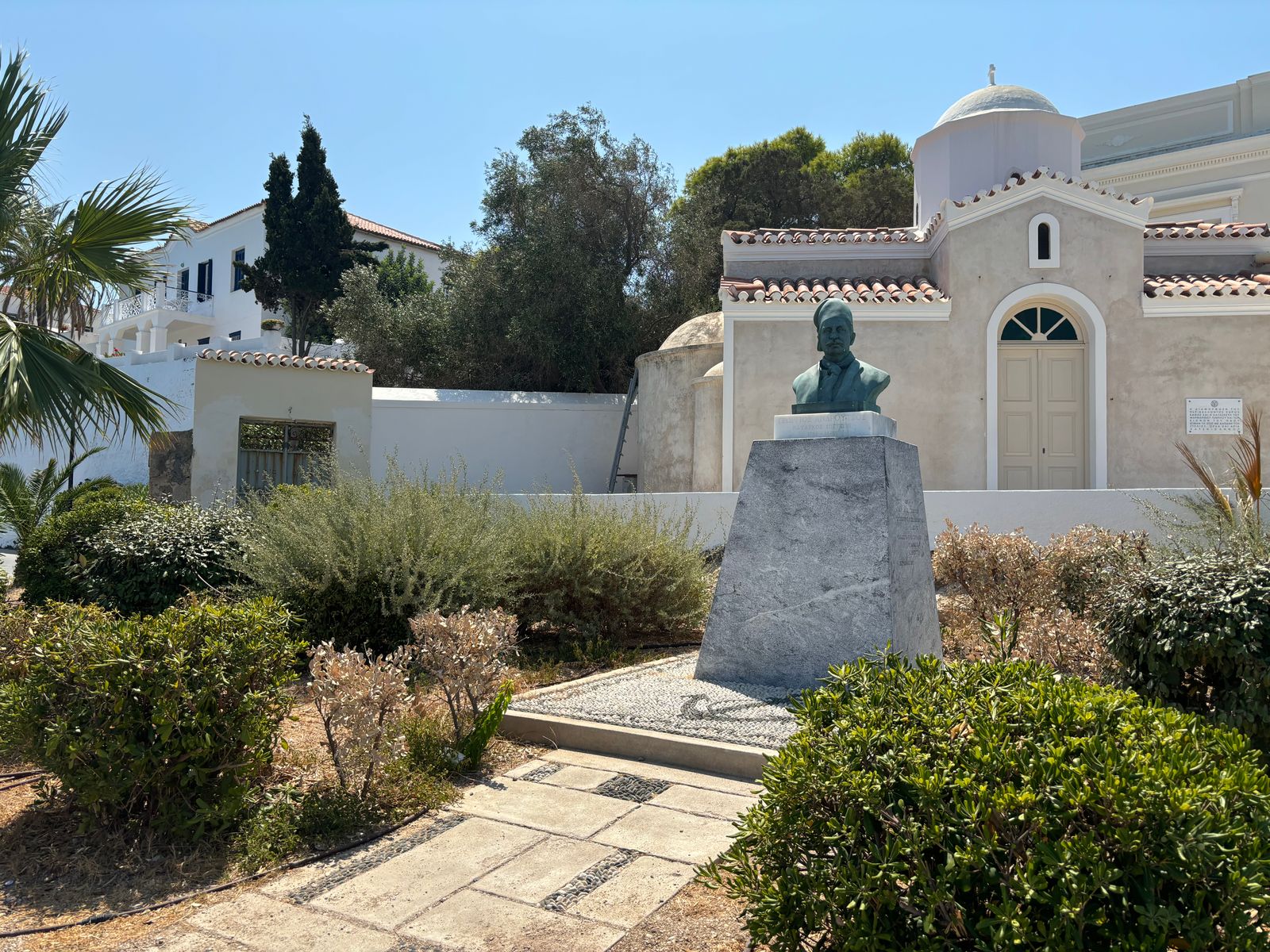
Photo: Tota Da, Pexels.
Why Spetses Deserves Its Own Trip
The Saronic Islands are the closest island group to Athens, and that proximity works both for and against them. Aegina draws day-trippers who never leave the harbour; Hydra attracts an international crowd concentrated around its photogenic port. Spetses occupies a different position entirely. It is far enough from Piraeus to filter out casual visitors — the ferry takes two hours rather than forty minutes. Yet it sits close enough to the Peloponnese coast to function as a genuine base for longer stays.
The island has an identity that goes beyond its beaches, though the beaches are very good. Spetses was the first island to raise the flag of revolution against the Ottoman Empire, on 3 April 1821 — twelve days before the war officially began. Its fleet, built from the fortunes of the island’s shipowning families, fought at Nafplio and Monemvasia. The decisive naval battle took place in the strait between Spetses and the Peloponnese in September 1822. That history lives in the mansions along the waterfront, in the Bouboulina Museum, and in the Armata festival that draws thousands every September.
For English-language readers, there is another layer. John Fowles taught at the Anargyrios and Korgialenios School on Spetses in the early 1950s. He used the island as the basis for the fictional Phraxos in The Magus, one of the most widely read English novels of the twentieth century. The school still stands, and the beaches in the novel — particularly Agia Paraskevi — remain recognisable.
Who Spetses Is Best For
Couples looking for a weekend escape from Athens without the intensity of Mykonos. History-minded travellers interested in the Greek War of Independence. Cyclists and walkers who enjoy a full coastal circuit. Returning visitors to Greece who have already covered the Cyclades and want something different.
Who Might Prefer Somewhere Else
Families with toddlers who need a sandy beach within walking distance of accommodation. The town beaches are mostly pebbly, and the best sand requires a bus or water taxi. Travellers wanting lively nightlife beyond a few harbour bars. Budget travellers — Spetses has historically attracted a wealthier Greek clientele, and prices reflect this, particularly for accommodation and dining along the waterfront.
When to Visit Spetses
The season on Spetses runs from roughly April to late October, with the island at its liveliest during July and August. Peak summer brings Athenian weekenders, higher accommodation prices, and full water taxis to the beaches. That said, Spetses never reaches the density of a Cycladic party island.
May, June, and September are the more comfortable months. Temperatures in May and June hover between 20 and 28°C. The sea is warm enough for swimming from late May, and ferry services run frequently. September holds particular appeal because of the Armata festival, held during the second week of the month. The celebration commemorates the Naval Battle of Spetses of 8 September 1822. A week of cultural events culminates in the burning of a replica Ottoman flagship and a fireworks display over the harbour. The reenactment takes place on the second Saturday of September, and the Hellenic Navy sends a ship to mark the occasion.
October remains pleasant but quieter, with some beach facilities and dining options beginning to close. Winter visits are possible — the Saronic Islands are often described as having the mildest winters in the Aegean. Services and ferry frequency are reduced considerably, however, and many businesses close.
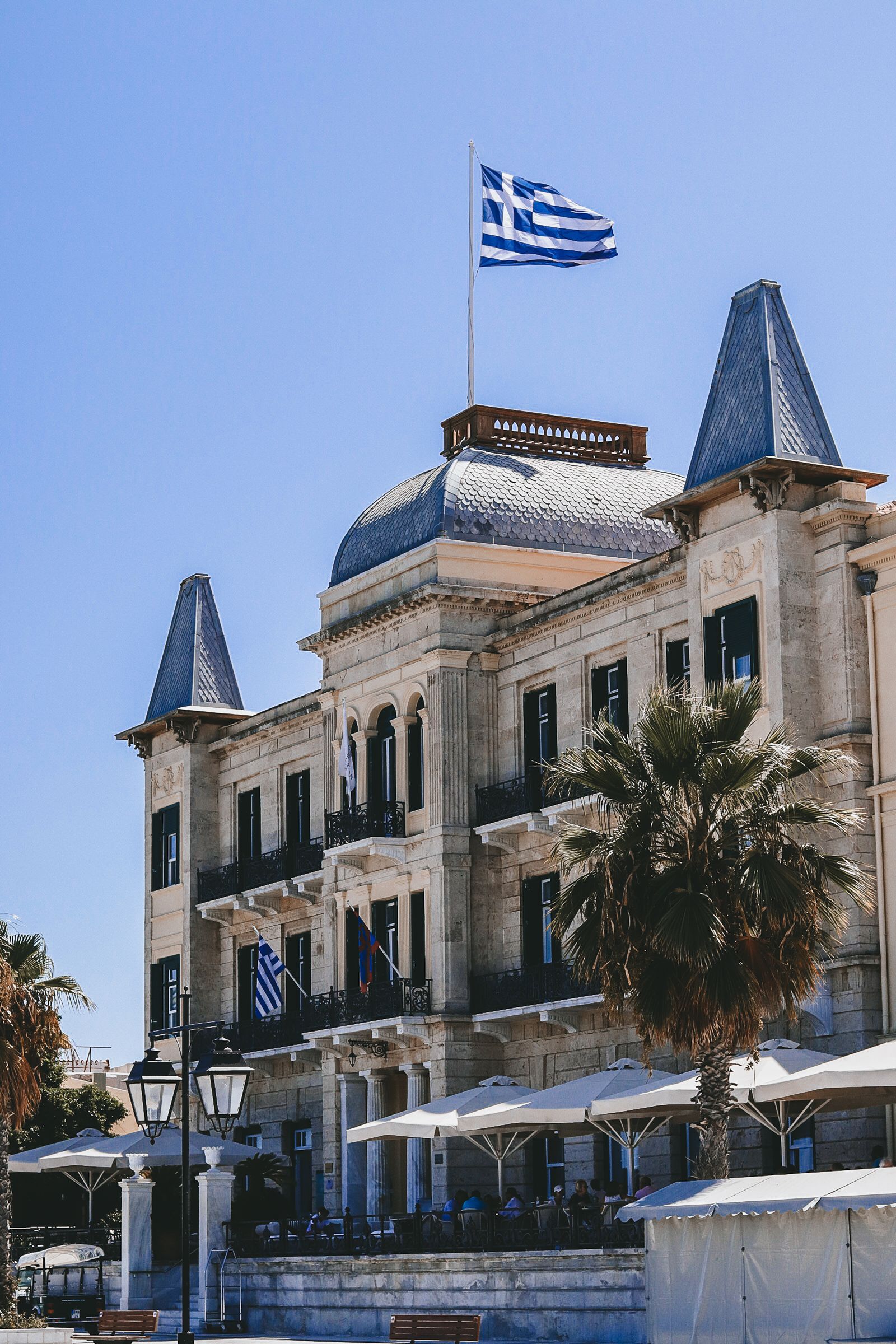
Photo: Vasilis Karkalas, Pexels.
How to Get to Spetses
There are two practical approaches: ferry from Piraeus or driving to the Peloponnese coast and crossing from there.
By ferry from Piraeus
High-speed ferries and catamarans operate daily from Gate E8 at Piraeus port. Most services stop at Poros and Hydra before reaching Spetses, though some also call at Ermioni. The journey takes between 1 hour 35 minutes and 2 hours 50 minutes, depending on the route. Blue Star Ferries, Alpha Lines, and Magic Sea Ferries all serve this route, with standard tickets from around €38 to €50. During peak summer, expect six or more daily departures.
These are high-speed vessels with numbered airline-style seats, and they do not carry vehicles. The smaller vessels can be affected by strong winds, so delays or cancellations during rough weather are possible. This is more common in spring and autumn than during the settled summer months.
By car to the Peloponnese coast
An increasingly popular option is to drive from Athens to the eastern Peloponnese and take a short crossing. The drive to the small port of Kosta takes roughly 2 hours 30 minutes via the Corinth motorway. From Kosta, a sea taxi reaches Spetses in about ten minutes, and dedicated parking areas are available for visitors leaving their car on the mainland.
The larger town of Porto Heli, a few kilometres further south, also offers regular ferry connections. From Ermioni, the high-speed crossing takes approximately 20 minutes. Both approaches work well for travellers combining Spetses with Nafplio or a wider Peloponnese itinerary.
For details on planning a multi-island Saronic trip, see our guide to Hydra and our Aegina article, which cover ferry connections between the Saronic Islands.
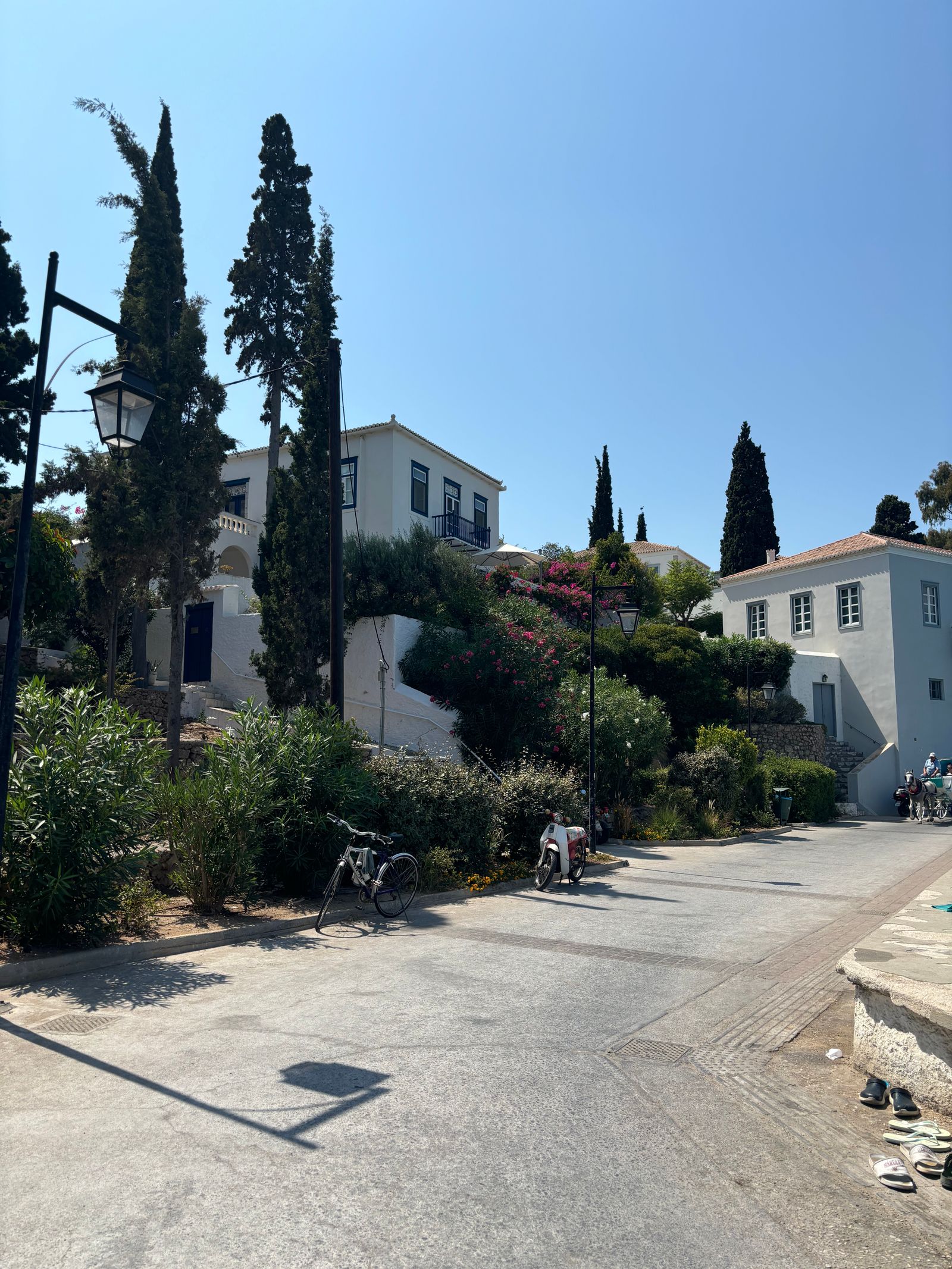
Photo: Tota Da, Pexels.
Getting Around Without a Car
Spetses is car-free in practice, though the situation is more nuanced than on Hydra, where motorised transport is essentially absent. On Spetses, private cars are not freely permitted — visitors cannot bring vehicles to the island, and there are no car rental agencies. Some permanent residents own cars but keep them parked. The coastal road, however, is shared with scooters, quadbikes, and delivery vehicles. The atmosphere in town is not quite as traffic-free as many guides suggest.
Motorbikes and mopeds are the most common way for locals and returning visitors to get around. Their use on the coastal road is banned between 7 pm and 2 am to reduce noise. The municipality also prohibits mopeds within certain parts of the town centre.
For visitors, the realistic transport options are as follows. Bicycles can be rented near the main port for approximately €10 to €15 per day. The 25-kilometre perimeter road is mostly flat, making it an appealing circuit for reasonably fit cyclists. Two bus lines operate during the summer season, connecting the main beaches. Water taxis run from Dapia port to the island’s major beaches and cost between €3 and €8 per trip. Horse-drawn carriages, stationed at Dapia and near the Poseidonion, serve as both transport and atmosphere. Expect to pay around €15 to €20 for a short ride within town, more for a longer route.
The town itself is entirely walkable. From the main port at Dapia to the Old Harbour takes around 15 minutes on foot. The total waterfront walk from one end of the settlement to the other can be covered in under half an hour.
Dapia, the Waterfront and the Old Harbour
Arriving at Spetses means arriving at Dapia, the main port square. This is the operational centre of the island. Ferry arrivals, water taxi departures, horse carriages, bicycle hire, and most of the evening activity all happen here or within a few hundred metres. The square opens directly onto the harbour, with views across to the Peloponnese coast.
Walking southeast from Dapia brings you to the Old Harbour, known locally as Baltiza, which is the more interesting half of the waterfront. This is where the traditional wooden boatyards still operate and fishing boats are hauled up for repair. The architecture shifts here from grand to working. The neoclassical mansions lining the route between the two harbours were built by shipowning families in the 18th and 19th centuries. Many survive in good condition. The distinctive pebble-mosaic pavements — using black and white stones laid in patterns unique to each house — are a traditional Spetsiot craft that repays attention.
Photo: BAB2056, Pexels.
Above the Old Harbour stands the monastery of Agios Nikolaos, the island’s cathedral and the site where the revolutionary flag was raised on 3 April 1821. The courtyard offers fine views over the harbour and contains one of the best examples of the pebble-mosaic technique.
Bouboulina and the Revolution
Laskarina Bouboulina (1771–1825) is the most famous figure associated with Spetses and one of the most remarkable individuals in the history of the Greek War of Independence. Born in a Constantinople prison where her father was held for his involvement in an earlier uprising, she moved to Spetses as a child. Twice widowed — both husbands were killed by pirates — she inherited and expanded a shipping fortune that she used to finance the revolution.
Bouboulina commissioned the construction of her own warships, including the Agamemnon, the largest vessel in the Greek rebel fleet. She participated directly in the naval blockade of Nafplio and the siege of Monemvasia. Hers was real operational authority, not a symbolic figurehead role. She was posthumously recognised as a Rear Admiral by the Hellenic Navy — an honour that underlines the seriousness of her military contribution.
The Bouboulina Museum, housed in her 300-year-old mansion behind Dapia harbour, operates guided tours of approximately 40 minutes in Greek and English. Tours are conducted by her fifth-generation descendants, which gives the visit an unusual intimacy. The museum displays weapons, personal items, documents, and the Florentine carved ceiling of the Grand Salon. Entry costs approximately €12 for adults, and advance booking is advisable during July and August. The museum typically operates from March to October.
A short walk from Dapia, the Spetses Museum occupies the Hatzigiannis Mexis mansion. Its collection spans roughly 4,000 years, from prehistoric finds to the War of Independence.
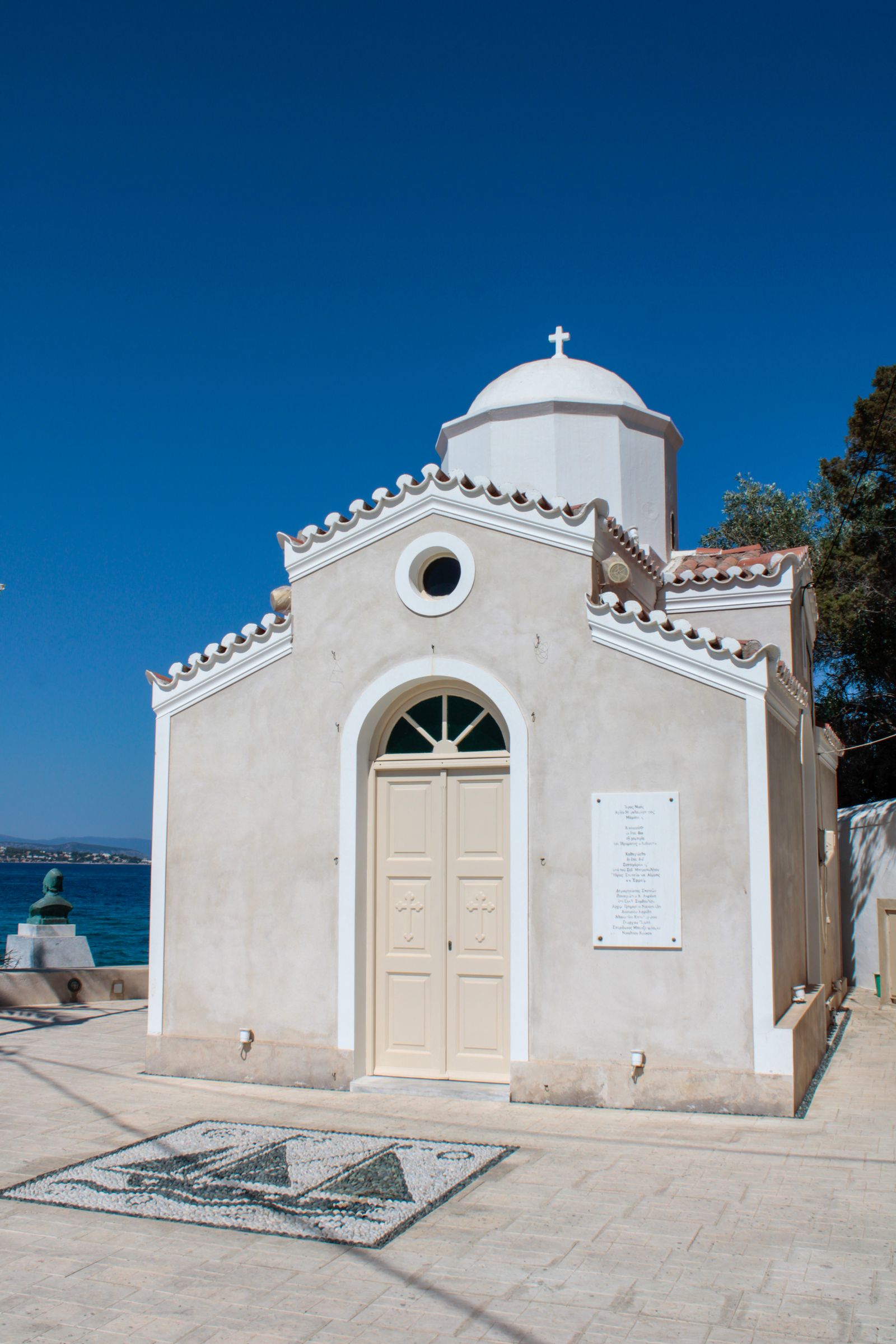
Photo: BAB2056, Pexels.
John Fowles and The Magus
John Fowles arrived on Spetses in 1951 to teach English at the Anargyrios and Korgialenios School. The institution had been modelled after Eton College by the same Sotirios Anargyros who built the Poseidonion Grand Hotel. Fowles spent two years on the island, and the experience became the foundation for The Magus, published in 1965 and revised in 1977.
In the novel, the island is called Phraxos, but the geography is recognisable. The school, the pine forests, and the southern beaches — particularly Agia Paraskevi, which features in key scenes — are all drawn directly from Spetses. The villa known locally as Botassi is reputedly the model for the novel’s Bourani. The novel’s psychological intensity has attracted readers to the island for decades. Walking the route from the school grounds to Agia Paraskevi remains one of the more interesting literary pilgrimages in the Aegean.
The school itself, known locally as AKSS, is a significant piece of early 20th-century architecture and occasionally hosts cultural events during the Armata festival. Visitors can walk the grounds, though access to the interior may be restricted.
Beaches on Spetses
The island’s beaches are distributed around the coastline, with the most appealing on the western and northern sides. Most require either a water taxi, the summer bus, a bicycle ride, or a scooter to reach. The town beaches — Agios Mamas and the adjacent coves — are convenient for a quick swim but not the island’s strongest suit. Agios Mamas does have a wheelchair-accessible sea track, which is worth noting for visitors with mobility needs.
| Beach | Surface | Distance from Town | Access | Best For |
|---|---|---|---|---|
| Agia Paraskevi | Sand and fine gravel | ~12 km west | Bus, water taxi, bicycle | Swimming, pine shade, literary interest |
| Agioi Anargyroi | Sand and pebbles | ~10 km west | Bus, water taxi, bicycle | Snorkelling, sea cave, watersports |
| Zogeria | Sand | ~10 km northwest | Water taxi, bicycle, hike | Quiet swimming, taverna lunch, pine forest |
| Agia Marina | Sand and rocky seabed | ~1.5 km south | Walk, bus, water taxi | Organised beach, watersports, families |
| Xilokeriza | White pebbles | ~8 km southwest | Bus (Anargyroi line) | Clear water, quieter than main beaches |
| Vrellos | Pebbles and sand | ~5 km north | Bus, bicycle | Pine forest setting, organised beach bar |
| Ligoneri | Sand and pebbles | ~2 km northwest | Walk, bicycle | Quick escape, unorganised, relaxation |
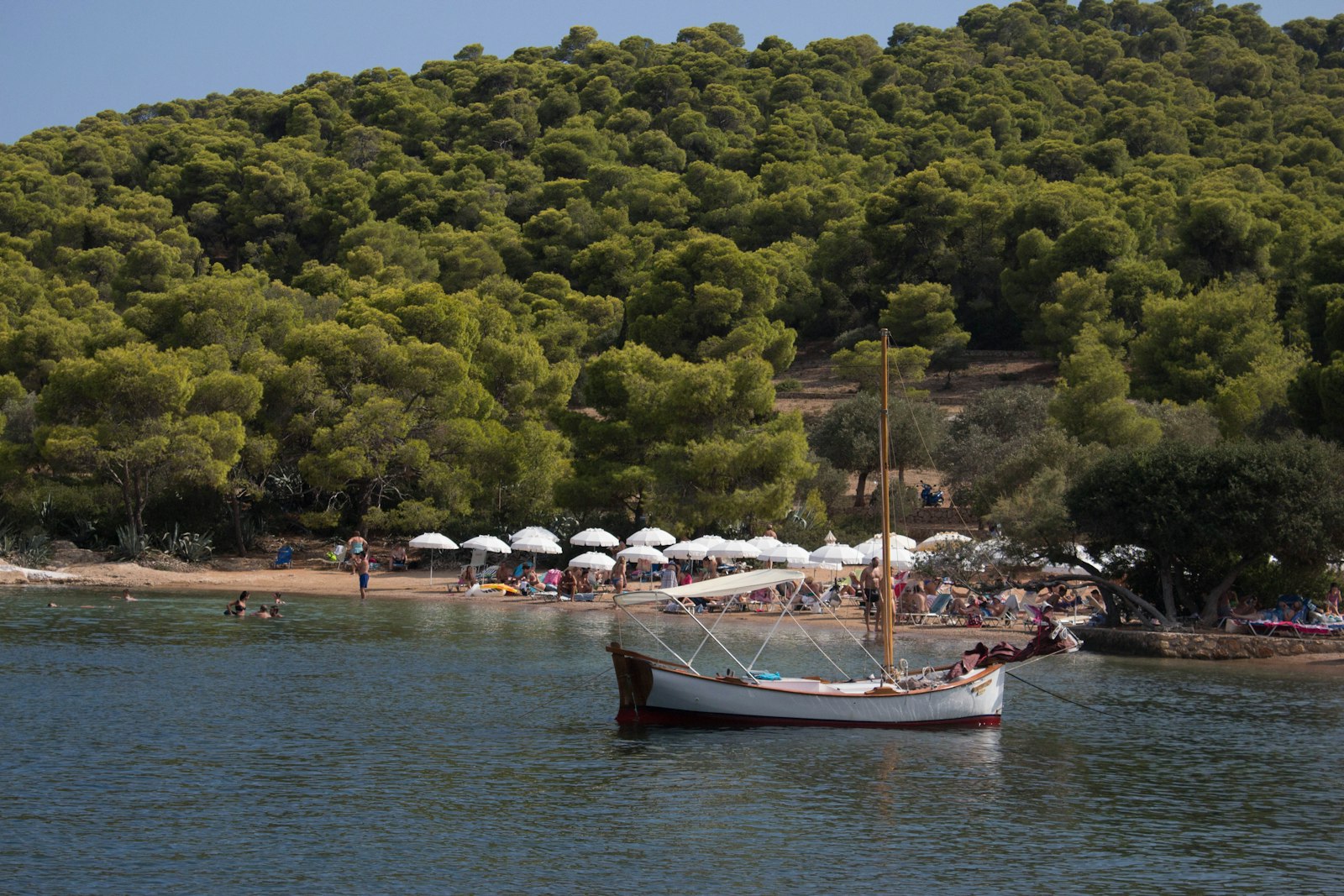
Photo by Theo Maroulis on Unsplash.
Agia Paraskevi is widely considered the finest beach on the island. Set in a sheltered cove on the western coast, it combines soft sand with pine trees that reach close to the water’s edge. A small church of the same name sits a few metres from the shore. The beach is partly organised with sunbeds and a beach bar in summer, and can be reached by the island bus or water taxi. The swimming is excellent in calm conditions. Any beach on the open western coast can become choppy when winds pick up from the northwest.
Agioi Anargyroi, the island’s largest beach, sits nearby and is better organised for watersports. Swimmers can reach Bekiris Cave from the water. The setting — backed by low scrub rather than dense pine — is different in character from its neighbour. Zogeria, on the northern coast, is a smaller bay with a summer taverna and sand sheltered by pine forest. It is a favourite among locals and yacht crews, best reached by water taxi.
Photo: Tota Da, Pexels.
Food and Dining on Spetses
Spetses is not a food destination in the way that Athens or Sifnos might be, but it eats well for its size. The island’s tavernas concentrate around three areas: the Dapia waterfront, the Old Harbour, and — to a lesser extent — the back streets between the two.
Fish is the default strong suit, as it should be for an island with an active fishing tradition. The Old Harbour area tends to serve better food at somewhat lower prices than the main waterfront, and the atmosphere is more local. Barrel wine is common and usually good value at around €8 to €12 per carafe. Regional dishes follow the broader Attic-Saronic tradition rather than any strong local speciality. The spoon sweets — preserved fruits in heavy syrup — are genuinely well made here and worth trying with coffee.
Expect to pay more than you would on a less fashionable island. A harbour-front dinner for two with fish and wine will typically run between €50 and €80. Back-street tavernas serving grilled meat and salads come in somewhat lower. The price premium is the clearest reminder that Spetses has traditionally attracted a well-heeled Athenian clientele.
Where to Stay on Spetses
Most accommodation is concentrated in and around the main town, which is the practical choice for first-time visitors. Three areas are worth distinguishing.
The Dapia waterfront area offers the most convenient location for ferries, dining, and the evening promenade. This is where the island’s most prominent hotel stands, along with several smaller guesthouses and boutique properties. It is the noisiest area on weekend evenings during summer, though “noisy” by Spetses standards remains modest.
The Old Harbour side of town is quieter, closer to the traditional boatyards, and within walking distance of everything. This area suits travellers who prefer character over convenience, though the walk to the main port takes only 15 minutes. Several traditional guesthouses and restored mansions operate here.
For beach-oriented stays, a smaller number of properties are scattered along the coastal road south towards Agia Marina. These offer easier access to swimming but require a bicycle or water taxi to reach the town for dinner and the ferry.
Booking well in advance is important for the Armata weekend in September. The same applies to any weekend between mid-June and mid-September, when Athenian demand pushes prices up sharply.
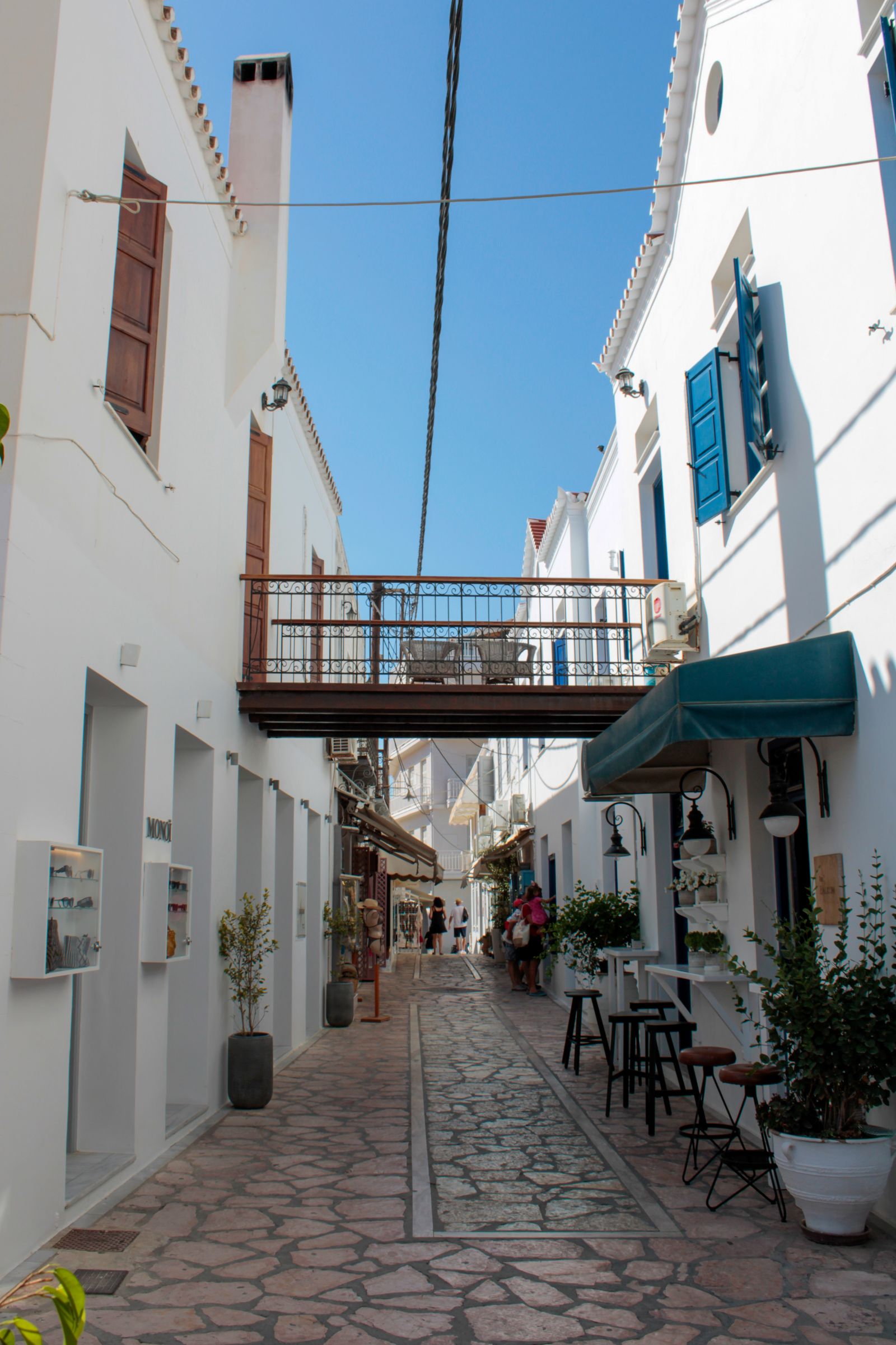
Photo: BAB2056, Pexels.
A Suggested Two-Day Itinerary
Day 1 — Town and history. Arrive on a morning ferry. Walk from Dapia to the Old Harbour, stopping at the Bouboulina Museum. Continue to Agios Nikolaos monastery for the view and pebble mosaics. Lunch at the Old Harbour. In the afternoon, swim at Agios Mamas or Ligoneri, both within walking distance. Evening promenade along the waterfront.
Day 2 — Beaches and the coast. Take the morning bus or a water taxi to Agia Paraskevi. Spend the morning swimming and walking along the coast to Agioi Anargyroi if you are feeling energetic. Alternatively, rent a bicycle in the morning and ride the full perimeter road — allow 2 to 3 hours with stops. Return to town for a late lunch and catch the afternoon or evening ferry, or stay a third night if the pace suits.
What Spetses Gets Wrong
No destination review is honest without its caveats, and Spetses has a few that are worth acknowledging before you book.
The car-free label, first. Spetses is not car-free in the way that Hydra is car-free. Scooters and mopeds are everywhere, particularly on the coastal road. Their presence — both the noise and the speed — undercuts the pedestrian atmosphere that many visitors expect. During peak summer weekends, the density of mopeds in the town centre can feel genuinely aggressive. The evening ban on motorised vehicles on the coastal road (7 pm to 2 am) helps, but the daytime reality is noisier than the marketing implies.
The town beaches are adequate for a quick swim but unlikely to justify a trip on their own. The better beaches are all on the far side of the island. Reaching them means a water taxi (which fills up quickly on summer weekends), a bus (every 30 minutes at best), or a bicycle ride of 30 to 45 minutes. This is manageable but worth planning around, especially for families.
Prices are high relative to most Greek islands of comparable size. Spetses has long served as a retreat for affluent Athenians, and the dining and accommodation markets reflect this. Budget travellers will find fewer options here than on, say, Aegina or many Cycladic islands outside peak season.
Finally, the literary connection, while genuine, should be kept in proportion. There is no Magus Museum, no official walking trail, and nothing on the ground that specifically marks the novel’s locations. The pleasure is in knowing the landscape and recognising it from the text, rather than in any formal heritage experience.
Getting Spetses Right
The travellers who enjoy Spetses most treat it as a place to slow down rather than a list of attractions to check off. The island has perhaps four or five genuinely distinctive things: the Bouboulina story, the walk between the two harbours, a day at Agia Paraskevi, the September Armata, and cycling the coastal road under the pines. All of them are best appreciated at a pace that allows for long coffee breaks and unplanned swimming stops.
Two nights is the minimum for a satisfying visit. Three gives space for a full beach day and a proper circuit of the island. Combining Spetses with Hydra is straightforward — the ferry between the two takes 30 minutes to an hour. The contrast between the two car-free islands is itself worth the detour. For travellers arriving from the Peloponnese coast, Spetses pairs naturally with time in Nafplio or the Argolid.
However long you stay, make time for the evening walk from the Old Harbour back to Dapia as the light drops. It is the single experience that defines the island for most visitors. The gaslit waterfront, the smell of pine and salt, the sound of horse carriages on stone — it is a particular combination. Spetses manages it better than almost anywhere else in the Saronic Gulf.
This article was researched and verified as of July 2026. Ferry schedules, museum hours, and prices may change seasonally. We recommend confirming transport details with official ferry operators before travel. Vivid Greece has no commercial relationship with any business mentioned in this guide.