The Sporades Island With Europe’s Largest Marine Park
Alonissos combines pine-covered coastline, a protected underwater world, and a clifftop village rebuilt after an earthquake — all without the crowds that define its neighbours.
Alonissos sits at the eastern edge of the Sporades, roughly three hours by ferry from Volos and a world away from the ferry-hopping frenzy of the Cyclades. It is the least visited of the three main Sporades islands, which is precisely why a certain kind of traveller chooses it over Skiathos or Skopelos. There are no beach bars pumping music along the coast, no package resorts crowding the harbour, and no film-location tourism driving bookings. What there is, instead, is the largest marine protected area in Europe, water clarity that regularly reaches twenty metres of visibility, and an old hilltop capital that was abandoned after an earthquake in 1965 and slowly rebuilt, stone by stone, by the people who fell in love with its ruins.
The island suits nature-focused travellers, couples who prefer reading over nightlife, families comfortable with pebble beaches, and anyone who considers a day-trip to an uninhabited island a better use of time than shopping for souvenirs. It does not suit travellers who want organised entertainment, sandy beaches with full facilities, or easy public transport connections from a major airport. That distinction is important, and understanding it before booking will save either a flight change or a disappointed arrival.
What Makes Alonissos Different
The defining feature of Alonissos is the National Marine Park of Alonissos Northern Sporades, established by presidential decree in 1992. Covering approximately 2,220 square kilometres of the northern Aegean, it is the largest marine protected area in Europe and the Mediterranean, encompassing the waters and coastlines of seven main uninhabited islands alongside Alonissos itself. The park was created specifically to protect the Mediterranean monk seal (Monachus monachus), which is considered the most endangered seal species in Europe, with a global population estimated at around 700 individuals. Approximately 60 of those seals live within the park boundaries, and the birth rate of roughly nine pups per year is considered adequate by conservation biologists for the species’ survival in the region.
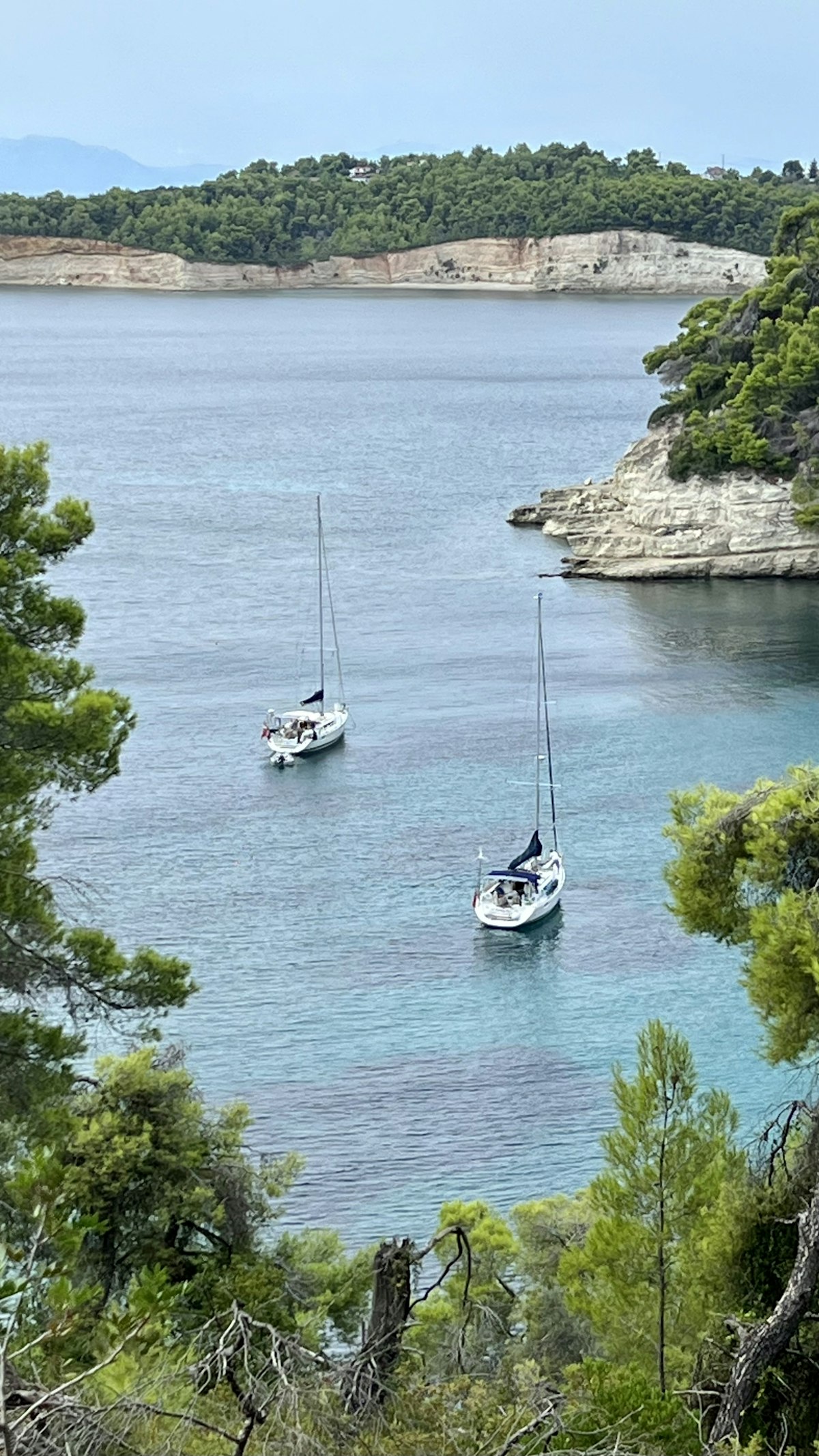
This protected status has a practical consequence that most visitors appreciate only after arriving. Jet skis are prohibited in the park zone. Fishing is heavily restricted. There is no anchoring in protected areas, and boat discharge is regulated. The result is water quality that divers describe as extraordinary, with horizontal visibility frequently exceeding twenty metres. Even from the shore, you can see the seabed clearly at depths where the bottom would be invisible elsewhere in the Aegean. The marine park is not a marketing label; it is the reason Alonissos looks and feels the way it does.
The Peristera Underwater Museum
Off the neighbouring islet of Peristera, at a depth of twenty to thirty-three metres, lies a fifth-century BC merchant ship that sank while carrying an estimated four thousand clay amphorae. When the wreck was first surveyed in 1992, it was the largest transport vessel known from the Classical period, roughly twice the size of comparable Roman ships built four centuries later. The cargo, probably wine from Mende in Chalkidiki and from Skopelos, remained remarkably intact on the seabed, with the lower layers of amphorae still arranged in something close to their original loading pattern.
In 2020, the site was opened to the public as Greece’s first underwater museum, and it has been called the “Parthenon of shipwrecks” by archaeologists and media alike. Certified divers can explore the wreck with an approved dive centre operating from Patitiri or Steni Vala. The experience requires at minimum an Open Water diving qualification, and the dive itself takes approximately forty minutes including the descent. For those without diving certification, the island offers an alternative: the Information and Awareness Centre in Chora provides a virtual-reality experience of the wreck using three-dimensional models and footage from underwater cameras that monitor the site in real time. The centre is a genuinely worthwhile visit, even for experienced divers, since the VR reconstruction reveals details that are difficult to appreciate at depth.
Chora: The Village That Came Back
The old capital of Alonissos, locally called Chora and officially signposted as the Old Village, occupies a defensive hilltop position roughly two hundred metres above sea level at the southern tip of the island. It was built in a tight cluster during the Byzantine period, with houses forming a continuous outer wall and only two gated entrances, designed as protection against the pirates who used the Sporades as a base well into the nineteenth century. The views across to Skopelos and the open Aegean are among the most dramatic of any island settlement in Greece, although the village is rarely crowded enough for the view to feel competitive.
On the evening of 9 March 1965, a severe earthquake struck Alonissos and Skopelos, causing landslides, aftershocks, and a small tsunami that reached Skiathos. Chora was devastated. The ruling military junta subsequently declared the village uninhabitable and relocated its residents to basic housing at Patitiri, the harbour below. Chora remained largely abandoned for more than a decade until foreign visitors began buying the ruins and restoring them, maintaining the original stone architecture. Today, the village functions again as a residential and tourist settlement with several small guesthouses, a handful of tavernas, gift shops selling local products, and narrow stone-paved alleys lined with bougainvillea and restored facades. The atmosphere is quiet, even in peak summer, and the sunset from the upper terraces is worth the steep walk or short drive from Patitiri.
Patitiri, Steni Vala and the Coastal Settlements
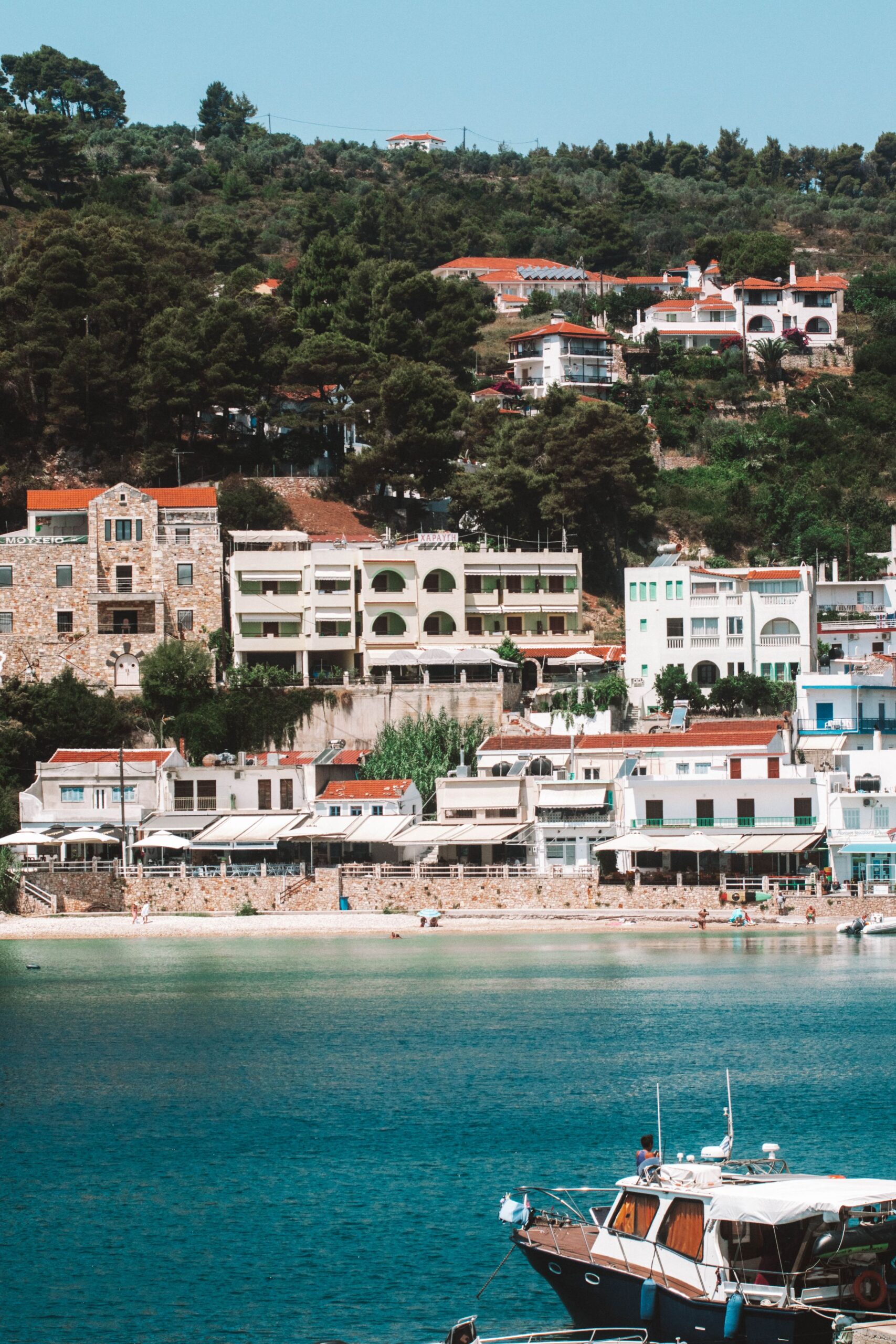
Patitiri became the island’s capital and main port by necessity rather than design, absorbing the displaced population of Chora after 1965. Its name derives from the wine presses (patitiri in Greek) that once operated on this stretch of coast, a reminder that Alonissos was known throughout the ancient world for its wine, exported in amphorae stamped with the inscription “IKION” after the island’s classical name, Ikos. The modern harbour is functional and reasonably attractive, with a stone-paved waterfront, a row of cafés and tavernas, the ferry terminal, and most of the island’s practical services including supermarkets, a pharmacy, a medical centre, and car-rental offices.
Steni Vala, on the northeast coast about fifteen minutes’ drive from Patitiri, is a small fishing settlement with a handful of waterfront tavernas serving the catch of the day. It serves as an informal gateway to the marine park, with boat trips departing from its harbour for excursions to the uninhabited islands. The village of Votsi, between Patitiri and Steni Vala, has a sheltered bay and a few accommodation options. Neither Steni Vala nor Votsi could be described as lively in any conventional sense, but for travellers who consider “nothing to do except swim, eat, and read” a recommendation rather than a warning, they deliver exactly that.
Best Beaches
Alonissos beaches are predominantly pebble, with only a few exceptions offering any sand. This is worth noting before arrival, because travellers expecting the white-sand expanses of the Cyclades or Ionian Islands may find the adjustment difficult. What the beaches lack in sand, they compensate for with water quality that is genuinely exceptional, thanks in part to the marine park protections, and a level of quiet that is increasingly rare in the Greek islands during July and August.
| Beach | Type | Access | Facilities | Best For |
|---|---|---|---|---|
| Agios Dimitrios | White pebble | Road + short walk | Sunbeds, tavernas | Families, snorkelling |
| Leftos Gialos | Pebble, some sand | Road | Tavernas, loungers | Full beach day, swimming |
| Chrisi Milia | Sand and pebble | Car needed | Beach bar, sunbeds | Sand seekers, families |
| Kokkinokastro | Red pebble, rocky | Road + walk | None | Snorkelling, solitude |
| Tzortzi Gialos | Pebble | Boat taxi or hike | None | Remote swimming |
| Megalos Mourtias | Pebble | Path from Chora | Seasonal taverna | Walking, quiet swims |
| Glifa | Pebble | Walk from Steni Vala | None | Families with calm water |
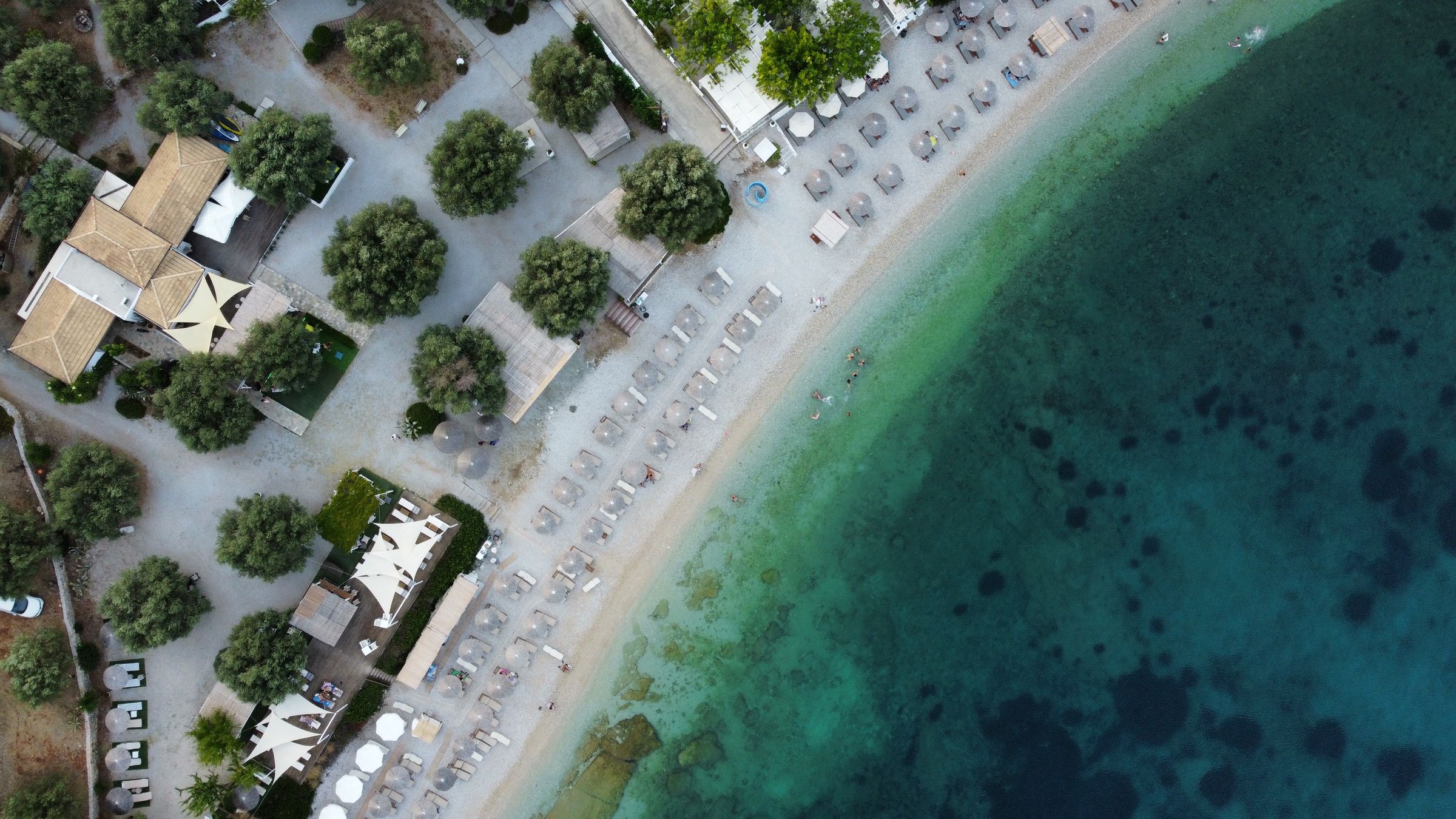
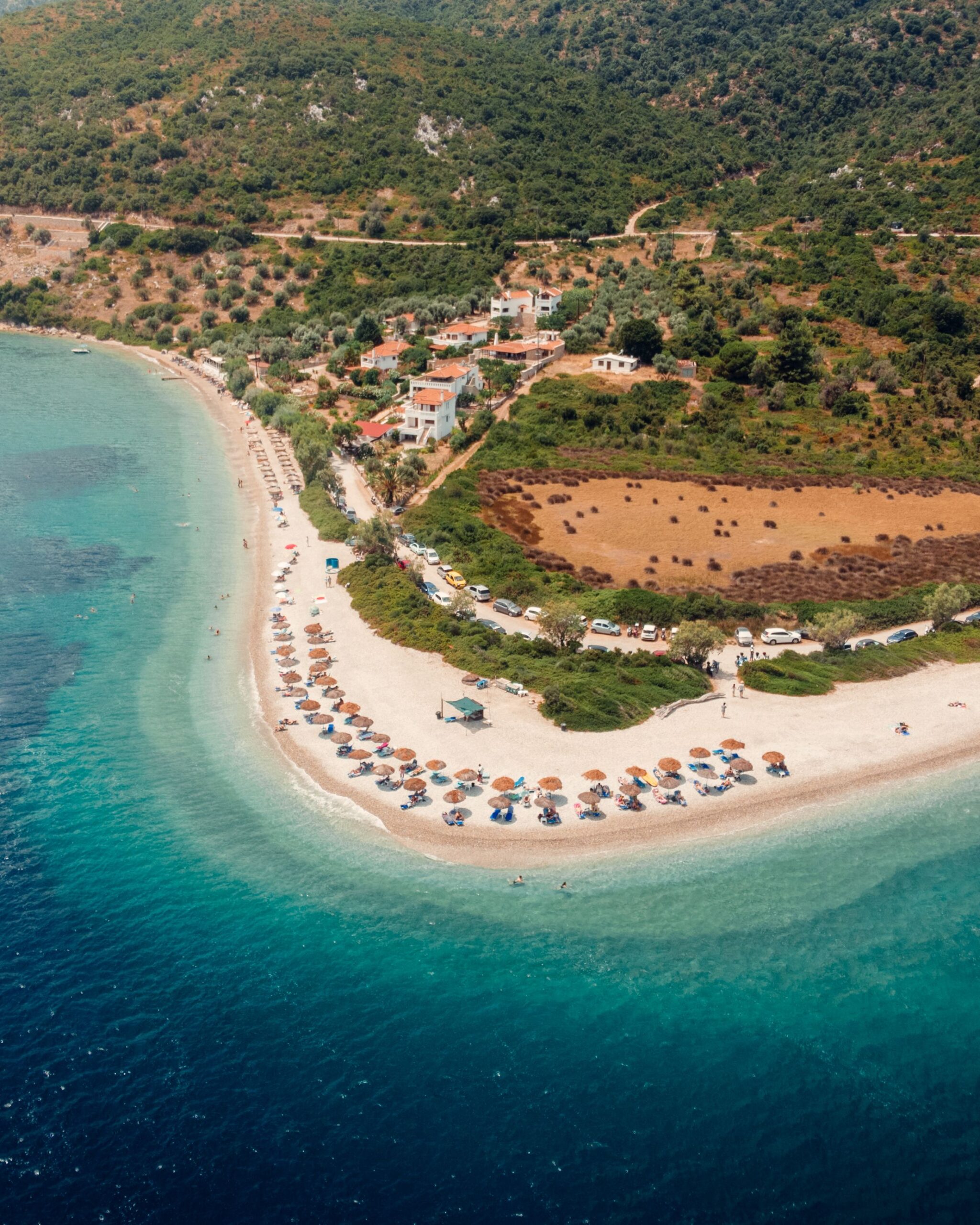
Agios Dimitrios is widely regarded as the island’s signature beach, forming a V-shape of white pebbles with shallow, clear water at the entrance. It sits on the western coast and is somewhat protected from the northerly meltemi winds that affect the eastern side. The tavernas at the southern end serve straightforward fish and salads, and the northern side tends to be quieter. The shallow entry makes it reasonable for younger children, although the pebble surface requires water shoes.
Leftos Gialos, backed by olive groves and pine trees, is one of the better options for a full day by the sea, with two tavernas and a range of lounging options. The snorkelling along the rocky edges of the bay is good for beginners. Chrisi Milia is the closest thing Alonissos has to a conventional beach, with a strip of sand mixed with pebble and a beach bar, though reaching it requires a car or scooter.
Kokkinokastro stands out for its dramatic red-brown cliffs, which are actually the remains of one of the island’s two ancient cities. There is no shade, no facilities, and the surface is rocky, but the snorkelling is excellent and the setting is visually striking. Many of the more remote beaches on the island are best reached by boat taxi from Patitiri, which typically costs between fifteen and thirty euros return and allows access to coves that have no road connection. Conditions can become rough when northern winds pick up, particularly on the east coast, so checking the forecast before committing to a boat trip is advisable.
Hiking and Birdwatching
Alonissos has approximately forty kilometres of marked trails, making it the largest and most varied hiking terrain of any Sporades island. The network of fifteen numbered trails was established through a restoration programme in the early 2000s and connects Chora, Patitiri, and the main beaches through pine forests, olive groves, and maquis scrubland. Some trails have suffered from weather damage and can present local passability problems, so sturdy footwear is recommended and checking conditions locally before setting out is sensible.
The most popular walk is the Patitiri to Chora path, a cobbled route of approximately three kilometres that climbs through olive groves with progressively expanding views, taking thirty to forty-five minutes at a comfortable pace. The Gerakas Nature Trail on the northeast coast passes through maquis and pine forest near one of the monk seal’s key protected areas, with information boards explaining the conservation programme. The Island Ridge Trail to Kastaniorema follows the central spine of the island with views west to Skopelos and Skiathos and east across the open Aegean, passing ruined farmsteads and wildflowers in spring.
The marine park supports approximately 160 recorded bird species. The most notable breeding species is Eleonora’s falcon (Falco eleonorae), a migratory raptor of which more than eighty per cent of the global population breeds on Greek islands. A 2021 survey recorded 329 active nests across thirteen islands within the park. Other noteworthy species include the peregrine falcon, Bonelli’s eagle, Audouin’s gull, Scopoli’s shearwater, and the European storm petrel. The best birdwatching months are April and May, when spring migration brings waders, herons, and raptors through the area. Good observation points include the Agios Dimitrios lagoon, the Kastanorema water dam, and boat trips around the park islands.
Day Trips to the Uninhabited Islands
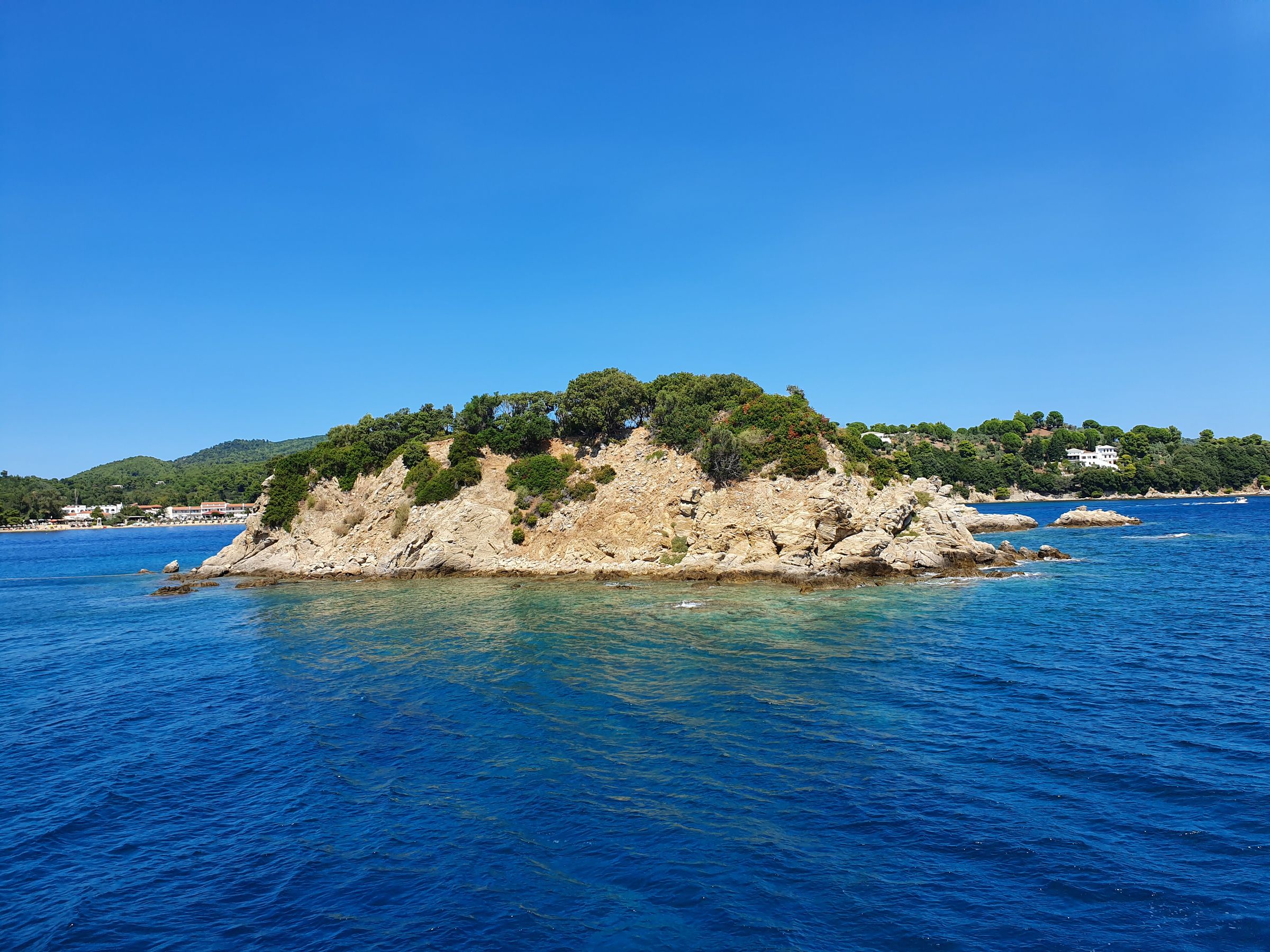
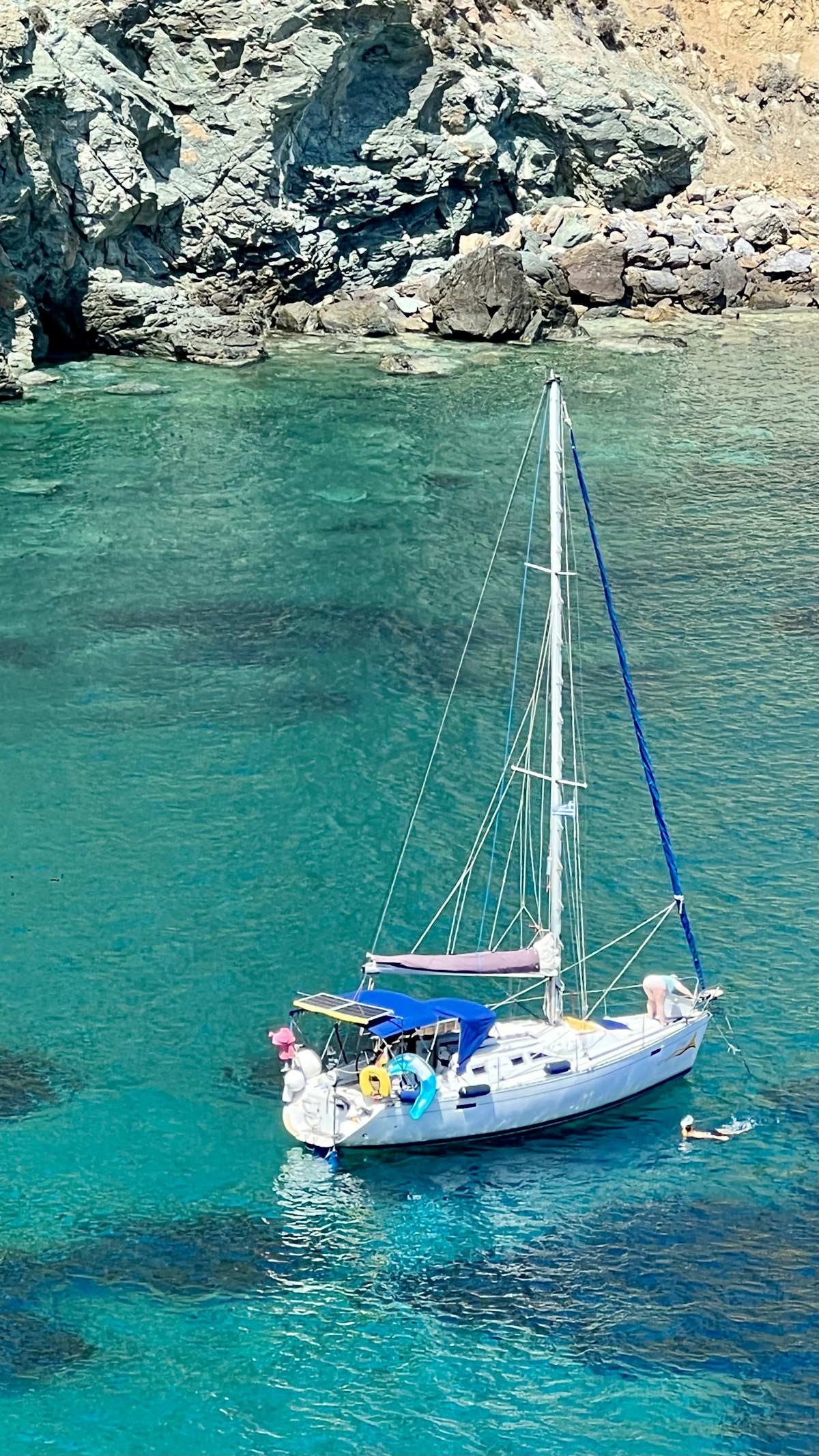
Boat excursions to the uninhabited islands of the marine park are one of the defining experiences of an Alonissos visit. Day trips typically depart from Patitiri or Steni Vala and visit some combination of Peristera, Kyra Panagia, Gioura, and the outer islets, depending on weather and sea conditions. Kyra Panagia, the largest uninhabited island in the group, has two protected bays suitable for swimming and a Byzantine-era monastery. Gioura is notable for the Cave of the Cyclops, where archaeological remains dating to approximately 10,000 BC have been found, although landing on Gioura is restricted during certain periods to protect wildlife.
Piperi, the core of the marine park and the primary breeding site for the monk seal population, is entirely off-limits to visitors. No boats may approach within a three-nautical-mile radius of its coast. This restriction is not negotiable and any boat operator suggesting otherwise should be avoided. Psathoura, the most remote islet, has the only submerged lighthouse in the Aegean and is accessible on some longer excursions, weather permitting.
Local Food
Alonissos does not have the elaborate food culture of Crete or the Cycladic wine reputation of Santorini, but its seafood is consistently good and a few local specialities are worth seeking out. The island is known for its cheese pie (tyropita), a pan-fried spiral of thin phyllo pastry filled with local goat’s cheese, quite different from the baked versions found on the mainland. Tuna, as the island sits on an important migratory route, features on menus when the season permits, along with the expected grilled octopus, fried calamari, and small-fish platters.
Lobster pasta (astakomakaronada) appears on taverna menus in Steni Vala and Patitiri, typically at a premium price that reflects the limited fishing permitted within the park. The island’s honey, thyme-based and produced in small quantities, is good enough to bring home. Local wine production has a heritage stretching back to antiquity, when Ikos wines were exported across the ancient world, though modern production is on a small scale and primarily consumed locally.
The best waterfront fish tavernas are concentrated along the harbours of Patitiri and Steni Vala, where the catch is typically delivered the same morning. In Chora, the options are fewer but the setting compensates, with meals taken at tables overlooking the sea and the neighbouring islands. Expect to pay between fifteen and twenty-five euros per person for a full meal with local wine, slightly more if lobster is involved.
Best Time to Visit
The tourist season on Alonissos runs from May to early October, with peak visitor numbers in July and August. However, the island never approaches the crowding levels of Skiathos or the major Cycladic destinations, even at peak. The combination of limited ferry capacity, no airport, and relatively few large hotels means that August in Alonissos feels approximately like early June on Mykonos.
| Period | Weather | Sea Temp | Crowds | Notes |
|---|---|---|---|---|
| May – mid-June | 24–29°C, low humidity | 19–22°C | Low | Wildflowers, best hiking, cool sea |
| Late June – August | 29–32°C, dry | 23–26°C | Moderate | Peak season, warm sea, meltemi possible |
| September | 27°C, lower humidity | 24–26°C | Low | Arguably the best month: warm sea, soft light, fewer visitors |
| October | 22°C, occasional rain | 21–23°C | Very low | Many facilities closing, reduced ferries |
September is arguably the finest month. Sea temperatures peak at their highest after a full summer of warming, the afternoon light takes on a quality that flatters every photograph, and the modest crowds of peak season thin further. May and early June suit hikers and birdwatchers, with wild herbs in flower and the spring migration bringing unusual species through the park. Those planning to dive on the Peristera shipwreck should note that the underwater museum’s operating season typically runs from June through October, though exact dates should be confirmed with the dive centres before booking.
How to Get to Alonissos
Alonissos has no airport. The island is reached exclusively by ferry, and understanding the ferry logistics before booking accommodation is essential because the journey from any starting point involves at least one connection.
Getting There: Key Routes
From Athens via Volos: Drive or take the bus/train to Volos (approximately 3.5 hours from Athens). Ferries from Volos to Alonissos take 2.5 to 5 hours depending on the vessel, with daily services in summer operated by Seajets and Aegean Flying Dolphins. Foot passenger fares start from approximately €42.
From Athens via Skiathos Airport: Fly to Skiathos (40 minutes, served by Aegean/Olympic Air and SKY express), then take the ferry from Skiathos to Alonissos (50 minutes to 1 hour 25 minutes). This is the fastest door-to-harbour option and the most practical route for international travellers arriving via Athens.
From Thessaloniki: A summer-only Seajets high-speed service runs from Thessaloniki to Alonissos via Skiathos and Skopelos, taking approximately four hours. This operates from late June through early September on selected days, not daily.
From Evia (Mantoudi): A shorter ferry crossing of roughly two hours, useful for travellers driving from Athens who want to avoid the longer route through Volos.
A few practical notes that most guides omit: the Volos ferries stop at Skiathos and Skopelos before reaching Alonissos, which means the last segment is short but the total journey involves waiting at intermediate stops. If you are connecting through Skiathos Airport, allow at least two hours between your flight arrival and ferry departure to account for luggage collection, the short taxi ride to Skiathos port, and potential delays. In winter and shoulder season, ferry frequency drops significantly and some routes may not operate at all. Always check schedules directly with the operators before booking.
Getting Around the Island
Alonissos is small enough to feel manageable but spread out enough that walking between key locations is impractical. The island is roughly thirteen kilometres long and four kilometres wide, with most destinations connected by a single main road running from Patitiri northward along the coast.
A local bus service connects Patitiri with Chora and with several beaches, including Chrisi Milia and Steni Vala. During summer, buses run several times daily, though the schedule is limited enough that relying solely on the bus for a short visit may feel restrictive. Renting a car or scooter is the most practical option for travellers planning to explore multiple beaches and trails. Roads are generally in reasonable condition on the main routes, though side roads to some beaches can be rough and narrow. A small car is sufficient and easier to park than anything larger.
Boat taxis operate from Patitiri to several beaches on the east coast that lack road access or are reached by difficult tracks. This is one of the more enjoyable ways to beach-hop, and costs are reasonable if shared between a group. Day-trip boats for marine park excursions typically depart in the morning and return by late afternoon.
Where to Stay
Accommodation on Alonissos is concentrated in three areas, each with a distinct character.
Patitiri is the most practical base for first-time visitors. It has the widest range of accommodation, from simple rooms and studios to boutique hotels, along with the port, restaurants, supermarkets, and car-rental agencies. The main drawback is that Patitiri is a working port town rather than a postcard-pretty settlement, and it lacks the atmosphere of Chora.
Chora (Old Town) is the atmospheric choice, perched on the hilltop with restored stone houses and spectacular views. Accommodation here consists mainly of small guesthouses and restored apartments. The trade-off is practical: reaching the beach requires driving or a steep walk, dining options are limited (though pleasant), and you are a drive from the port for ferry departures and boat trips. It suits couples and travellers who prioritise setting over convenience.
Steni Vala and Votsi suit travellers who want to be near the sea in a quiet fishing-village atmosphere. These settlements are small, with a handful of accommodation options and waterfront tavernas, and work best for those with their own transport.
Accommodation on Alonissos books out earlier than you might expect during late July and August, because the supply is genuinely limited. Booking at least two to three months ahead for peak-season stays is advisable.
How Many Days
Three days is enough to see Chora, visit several beaches, and take a marine park boat trip. Five days allows a more relaxed pace with time for hiking, a dive on the Peristera wreck, and a dedicated day for exploring the uninhabited islands. A full week suits travellers who want to combine Alonissos with a day trip to Skopelos by inter-island ferry, add a second dive day, or simply enjoy the particular rhythm of an island where doing very little is the point. Most visitors find that four to five days strikes the right balance between seeing enough and not rushing.
Limitations Worth Knowing
Alonissos is not for every traveller, and pretending otherwise would be unhelpful. The beaches are predominantly pebble, which matters if you have strong sand preferences or travel with toddlers who find rocky surfaces uncomfortable. Public transport is limited to a small bus network that covers the main routes but leaves remote beaches inaccessible without a car or boat taxi. There is effectively no nightlife beyond a handful of quiet bars in Patitiri and Chora that close before midnight. The island has no airport, which makes reaching it slower and more logistically demanding than destinations with direct flight access. Shopping is minimal, and the range of restaurants, while good in quality, is narrow in variety.
Medical facilities are limited to a small health centre in Patitiri with basic capabilities. For anything beyond minor treatment, evacuation to Volos or Skiathos may be necessary. Mobile phone signal is reliable in built-up areas but patchy on some hiking trails and remote beaches. These are not criticisms so much as realities that affect trip planning, and knowing them in advance allows for better decisions about whether Alonissos is the right fit.
Island Hopping from Alonissos
Alonissos connects directly by ferry to Skiathos and Skopelos, making a Sporades island-hopping itinerary straightforward. Skopelos is the nearest island, reachable in as little as twenty-five minutes by fast ferry, and works well as a day trip for travellers who want to see Skopelos Town’s waterfront architecture or visit the church from Mamma Mia! without changing accommodation. Skiathos offers a dramatically different experience, with organised sandy beaches, international restaurants, and an active nightlife scene, and is reachable in fifty minutes to ninety minutes.
A popular Sporades itinerary involves spending two to three days on Skiathos for beaches and accessibility, two days on Skopelos for villages and forest, and three to four days on Alonissos for the marine park and solitude, moving eastward through the chain. Our Greek island-hopping guide covers the logistics of multi-island planning, including ferry booking strategies and seasonal considerations.
For travellers exploring more of the region, the mainland port of Pelion is worth considering as a pre- or post-island extension, combining mountain villages and quiet beaches with easy ferry access to the Sporades.
This article was researched and verified as of July 2026. Transport schedules, admission arrangements, and operating seasons may change. We recommend confirming time-sensitive details directly with ferry operators and local businesses before travelling. Alonissos Marine Park regulations are set by the Organisation for the Environment and Climate Change (OPECAC) and should be respected at all times.