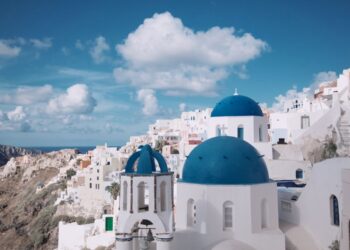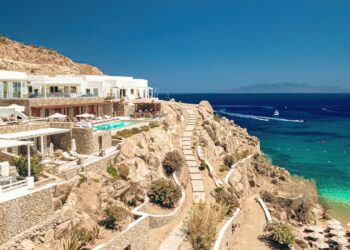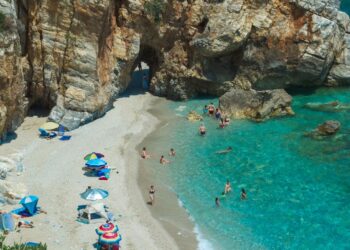
Nisyros is the Dodecanese island for travellers who want the landscape to do more than decorate the beach. A volcanic caldera occupies the centre, whitewashed settlements sit above it, and the roads connect black-pebble shores with monasteries, thermal springs and a village square made for a slower stop between excursions.
The island is also easy to misunderstand. Many visitors arrive from Kos for a few hours, see Stefanos crater and leave before the light changes over Mandraki. That works if the volcano is the only objective. It misses the more interesting decision, however: whether Nisyros deserves a night or two of its own. This guide looks at that choice, along with the practical realities of ferries, crater access, hot springs, beaches, villages and getting around without turning an active volcanic landscape into a theme park.
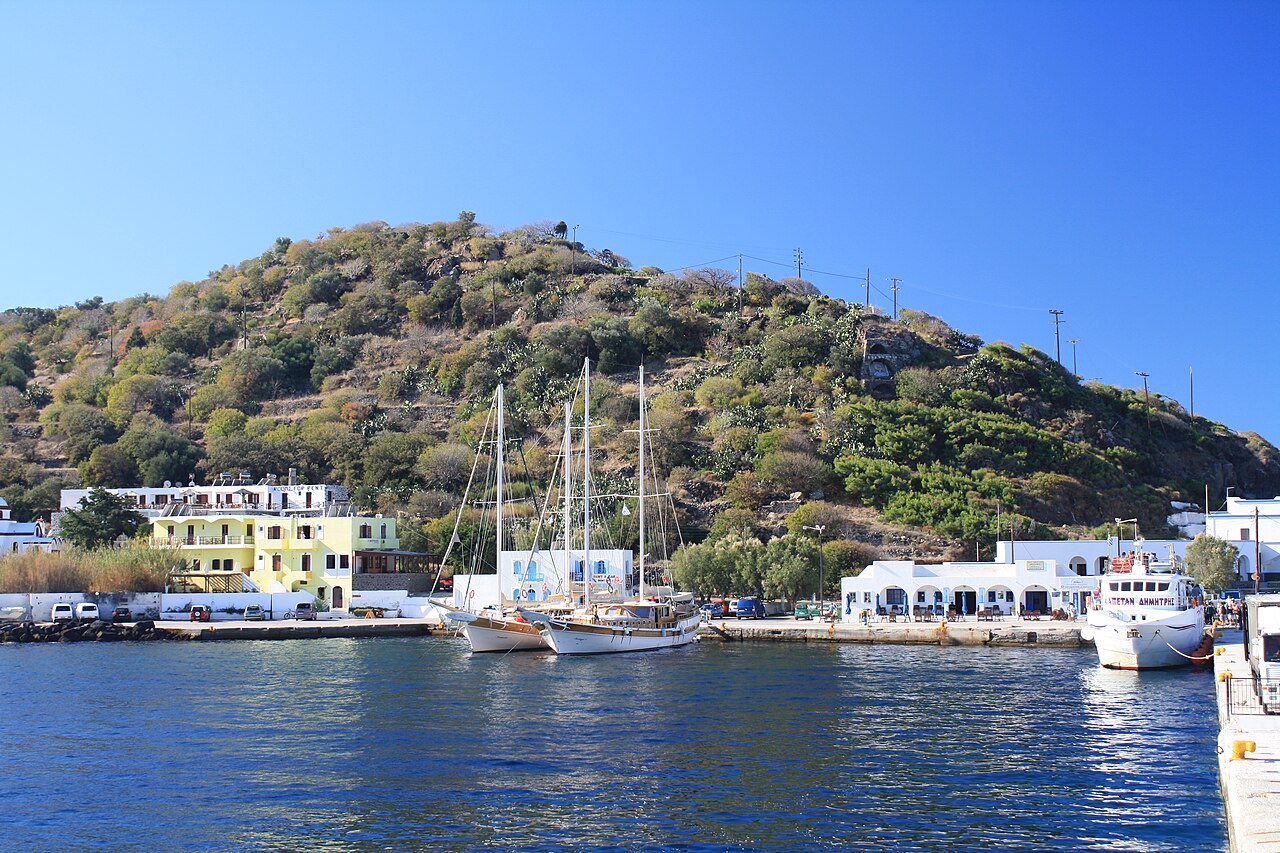
Nisyros is more than a volcano stop
Stay long enough to see how the crater, villages, coast and island table form one landscape.
Is Nisyros right for your trip?
Nisyros suits curious travellers, walkers, couples, independent visitors and families with older children who can manage heat, steps and uneven ground. It is especially good for anyone who prefers a distinctive landscape to a long list of organised activities. The volcano gives the island its identity, but the best days combine it with Mandraki, Nikia or Emporeios, a meal and a swim rather than stopping at the crater car park.
It is less suitable for visitors who want broad sandy beaches, easy high-frequency transport or a resort with everything on one level. Many coasts are rocky or pebbled. Pachia Ammos is reached by a walk after a rougher approach, and the most interesting villages are uphill or on the caldera rim. Nisyros can be visited without a car, particularly from Mandraki, but a full island itinerary needs either careful bus planning, taxis or an organised excursion.
| What you want | Why Nisyros works | What to allow for |
|---|---|---|
| A distinctive island | Volcanic craters, caldera views, white villages and dark beaches create a coherent sense of place. | The terrain is exposed and the island is not designed around a single resort beach. |
| A Kos excursion | The volcano and Mandraki can form a memorable day if the sailing gives enough time ashore. | A day trip follows the ferry timetable and can feel rushed in the hottest hours. |
| A slower stay | Mandraki evenings, Nikia, Emporeios, food and walks reward an overnight visit. | Accommodation and services are seasonal, with fewer alternatives outside Mandraki. |
| Thermal water | Loutra, Thermiani and Avlaki are associated with the island’s geothermal character. | Not every spring is an operating bath; temperatures and access are not interchangeable. |
How long should you stay?
A day trip from Kos can cover the basic volcanic experience: arrive at Mandraki, travel to Stefanos, visit Nikia and return to the port. It is a legitimate introduction, but it is not a relaxed island visit. The day is shaped by the arrival and departure times, and a delayed boat or a long queue at the crater can remove the flexibility you thought you had.
Two nights is the better minimum for Nisyros itself. It allows a volcano morning, a separate village and monastery day, and one period when you can simply walk Mandraki or swim near the port. Three or four nights gives you room for the eastern beaches, a thermal stop if operating, a longer footpath and a second look at the caldera when the light is different.
The island is small in area but not frictionless. Roads climb, the caldera is exposed, and the distance between an accommodation check-in, Nikia, the volcano and an evening meal is longer in practice than it appears on a small map.
Getting to Nisyros
For most international travellers, Kos is the practical gateway. Ferries operate from Kos town and, during the seasonal excursion period, from Kardamena. The latest Ferryhopper listings show Nisyros connections from Kardamena, Kos, Piraeus, Rhodes, Tilos, Symi, Kalymnos and other Dodecanese ports. The exact operator and sailing time depend on the date and vessel.
On the Kos–Nisyros route, booking data available at research shows crossings ranging roughly from 45 minutes to 1 hour 40 minutes. That is a useful orientation, not a permanent schedule. Fast passenger vessels, conventional ferries, intermediate stops and weather can all change the calculation. Check whether your departure is from Kos town or Kardamena, and leave enough time to reach the correct port. If Nisyros is one stop in a longer Dodecanese route, compare the connection with your next island rather than booking each leg in isolation; the Rhodes guide can help when Rhodes is your larger gateway or onward base.
| Arrival plan | Best for | Main risk |
|---|---|---|
| Day trip from Kos | A first look at Stefanos, Nikia and Mandraki. | A tight timetable leaves little room for delays, heat or a longer crater visit. |
| Overnight from Kos | Travellers who want Mandraki after the excursion boats leave. | Return sailings may be less frequent than the outward options. |
| Island-hopping | A Dodecanese route involving Tilos, Rhodes, Symi or Kalymnos. | Schedules change by season and may not connect cleanly with accommodation bookings. |
| Mainland ferry | Travellers bringing a vehicle or building a long sea journey. | The sailing is much longer, so check cabins, vehicle space and the onward journey. |
Mandraki is the arrival port. If you are staying outside the town, arrange how you will reach the accommodation before travelling. Do not assume that a late arrival will be matched by a taxi waiting on the quay, especially outside the peak months.
Where to stay
Mandraki: the practical first base
Mandraki is the strongest base for a first stay and the most practical choice without a car. The port, restaurants, shops, Archaeological Museum, Folklore Museum and Panagia Spiliani are all within the wider settlement. Hohlaki beach is close enough for a quick swim, while the waterfront is pleasant after the day visitors have left.
Mandraki has a real harbour rhythm and a walkable evening rather than a resort-strip layout. The limitation is that the prettiest caldera views and the higher villages require a road or a steep excursion.
Nikia: best for caldera views
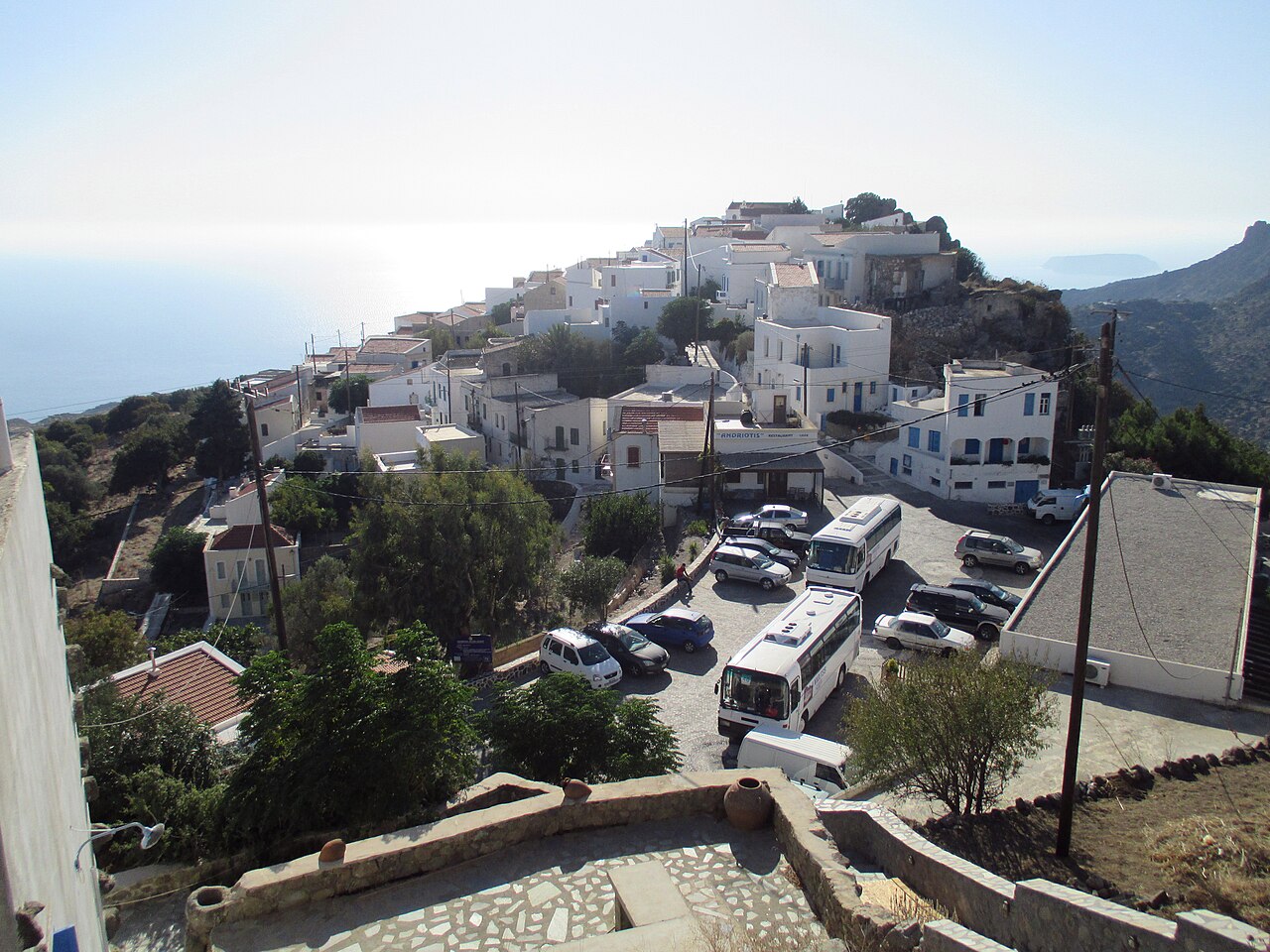
Nikia sits on the caldera rim and is the most atmospheric choice for travellers who want volcanic scenery at the door. Its pebbled central square and traditional houses make it a natural companion to the volcanological museum and the observatory view over Lakki and the craters.
It is less convenient for supplies, frequent meals and ferry transfers. Choose Nikia for the setting, not because it is the easiest base. If you do not have a car, confirm the bus or taxi arrangement before booking. There is no city-style network to rely on at any hour, so a pre-arranged transfer or organised excursion may be more dependable than trying to improvise from the port.
Emporeios: a small village above the caldera
Emporeios is a quieter mountain settlement associated with the Castle of Pantoniki, the Church of Taxiarchis and a natural sauna created by volcanic heat. It suits travellers seeking a rural atmosphere and wide views. The trade-off is limited evening choice and greater dependence on transport.
Pali: best for the coast and thermal history
Pali is a coastal settlement with a sandy beach, fish restaurants and access towards Lies and Pachia Ammos. It can suit visitors who prefer a seaside base, though Mandraki remains more convenient for a first trip and for ferry logistics.
Stefanos crater and the volcanic landscape
Stefanos is the best-known crater, but the official Nisyros Geopark description presents it as one part of a much wider volcanic system. The elliptical crater measures approximately 260 by 350 metres and reaches a maximum depth of 27 metres. Fumarolic vents, altered rock and geothermal steam make the floor visually striking, but they also make it an environment to approach carefully.
Nisyros is not a lava-flow spectacle. The active features visitors encounter are hydrothermal: steam, fumaroles, altered ground and craters formed by explosive interaction between water and heat. The Geopark describes continuing fumarolic activity and hydrothermal explosions within the caldera. That is why the crater should be treated as a monitored geological site, not as a place to improvise a route or touch the ground.
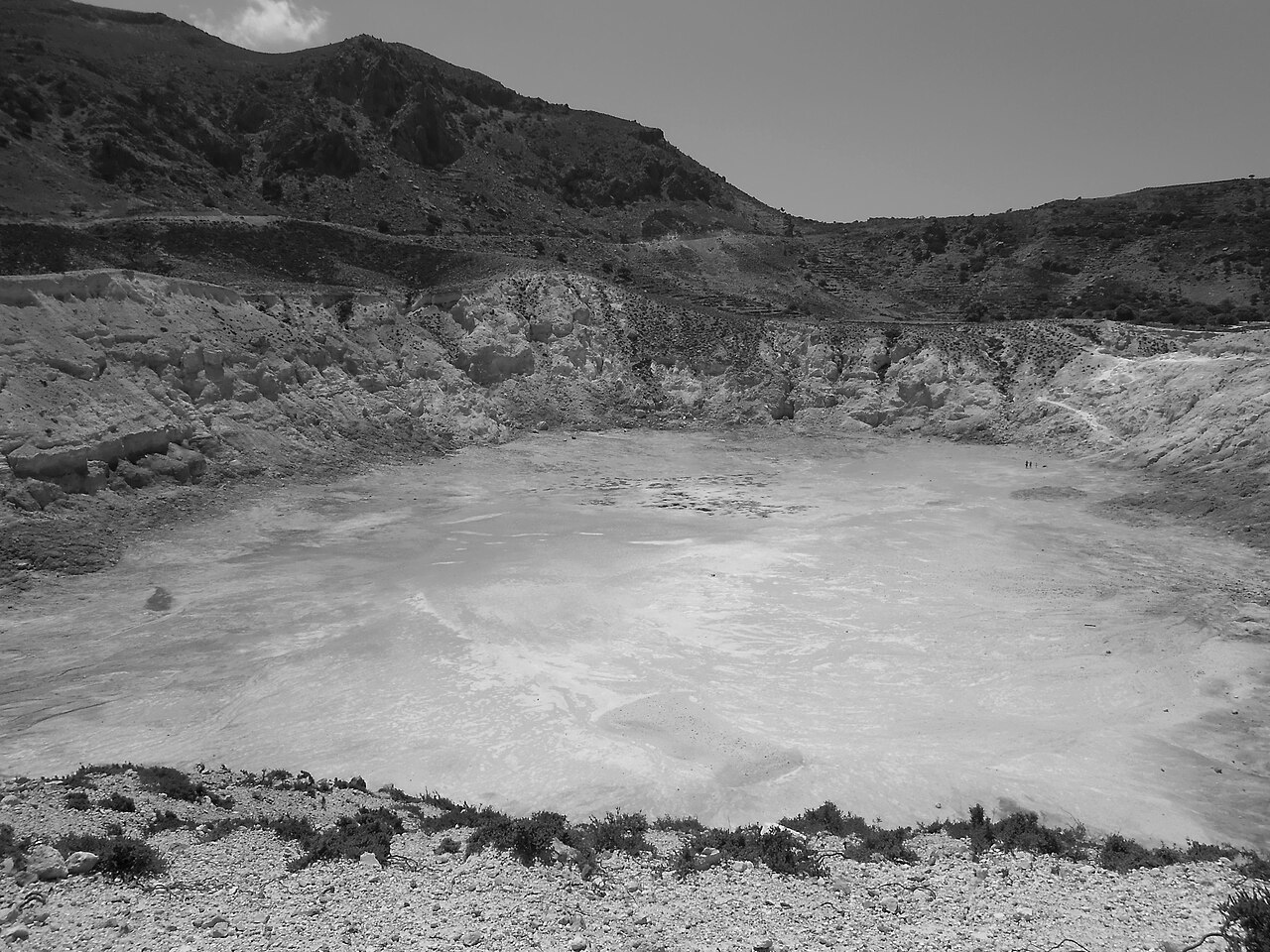
Wear closed shoes with a firm sole, carry water and follow marked routes and any local instructions. Sulphurous fumes can be unpleasant, particularly when the wind drops. Do not step across barriers, disturb monitoring equipment or touch fumaroles, mud or hot rocks. Anyone with breathing difficulties, reduced mobility or a strong reaction to heat should decide whether descending into the crater is appropriate.
The best first view is from the crater area itself, but Nikia’s volcanic observatory gives the island’s scale more clearly. From there, the Lakki plain, Stefanos and the surrounding hydrothermal craters form a landscape that is easier to understand as geology than as a single attraction.
Nikia and the volcanological museum
Nikia is worth visiting even if the crater has already been the centre of your day. The village is compact, built around its famous pebble-paved square, and the caldera opens beyond it. The visual pleasure is in the details: white walls, dark volcanic stone, narrow lanes and the way the architecture sits on a difficult rim rather than a level seaside plain.
The volcanological museum at Nikia is a useful place to visit before the crater. It explains the island’s formation, volcanic products and the wider volcanic complex around Nisyros, Kos, Gyali and the smaller islets. Museum information available at research lists seasonal opening hours and warns that visitors should confirm locally because closures can occur. That caveat matters more than a fixed timetable copied into a guide. If your route continues through the Dodecanese, plan the gateway and onward connections before you arrive.
Mandraki, Panagia Spiliani and Palaiokastro
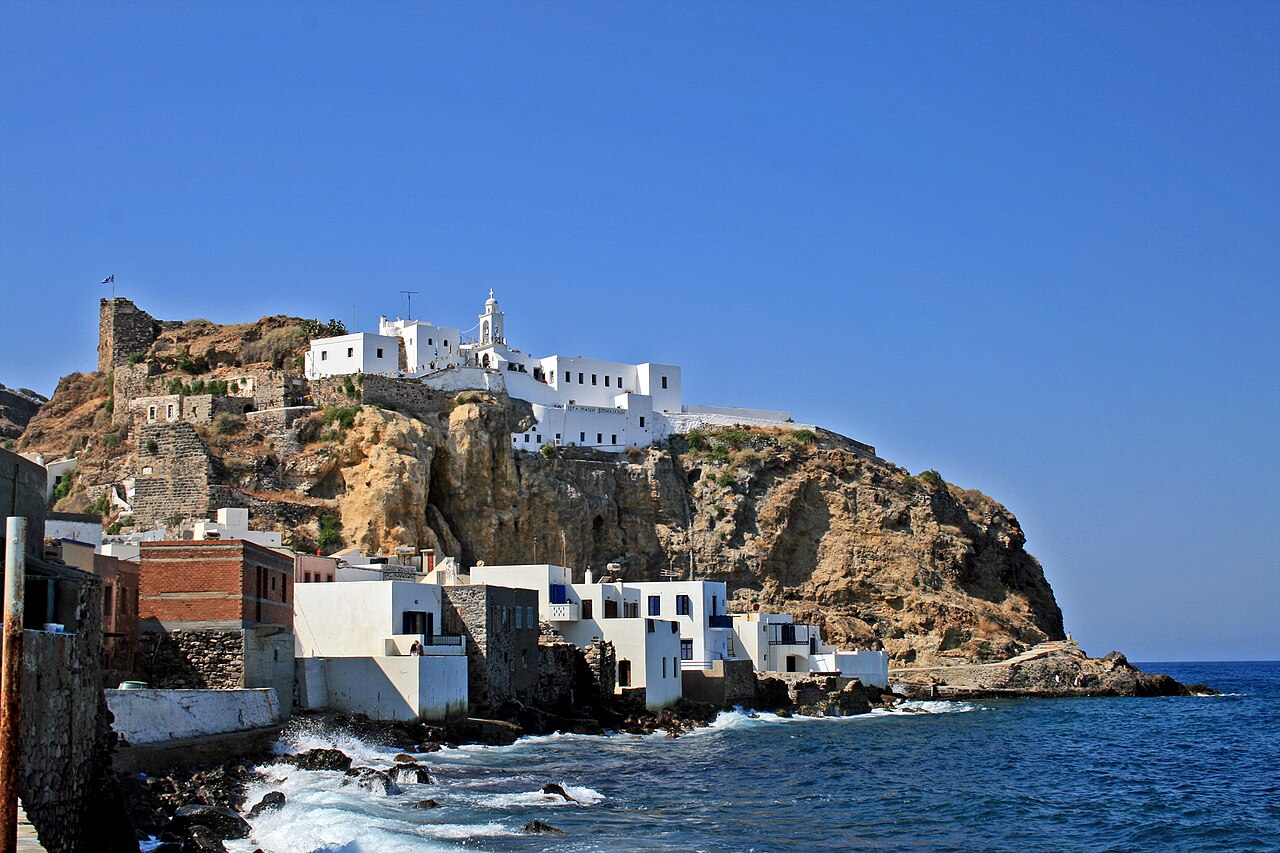
Mandraki deserves a morning or an evening without a timetable. Walk the harbour, follow the lanes behind the waterfront and climb towards Panagia Spiliani. The monastery is built into a rocky height above the town, and the cave chapel is reached by steps. The island’s local tourism information describes a wooden altarpiece dating to 1725 and a religious tradition that brings pilgrims to the island around the August feast. Treat the date as the source’s description rather than an independently verified catalogue record.
Palaiokastro is the ancient fortress above Mandraki. The local tourism material describes the surviving wall as dating to the fourth century BC, with the earlier city established by at least the eighth century BC. The scale of the stonework and the position above the modern settlement make it valuable even when little of the ancient city remains visible. Wear shoes for uneven ground and avoid treating the site as a quick viewpoint.
The Archaeological Museum in Mandraki is a useful companion to Palaiokastro and the island’s ancient history. It is not a substitute for a major museum on Rhodes or Kos, but it helps put Nisyros’ settlements, inscriptions and religious history into a local context. Check opening arrangements before making it part of a short day.
A sensible order is to visit the museum when the heat is strongest, then take the climb towards Spiliani or Palaiokastro later in the day. The two sites are close enough to belong to the same Mandraki walk, but they are not interchangeable: the ancient wall explains the island’s earlier settlement, while the monastery remains part of its living religious landscape. Allow time for the steps rather than treating both as brief photo stops.
From Mandraki, the road north and east leads towards the thermal sites and Pali. That makes the springs an easy addition to a coastal day, but their condition is more variable than the road map suggests.
Hot springs: what is actually open?
Nisyros’ geothermal water is part of the island’s character, but “hot springs” does not mean that every site is a functioning spa. The best-known locations are Loutra north of Mandraki, Thermiani near Pali and Avlaki on the coast. Local tourism information lists temperatures up to 46°C at Loutra, about 33°C at Thermiani and substantially hotter water at Avlaki where it reaches the sea.
The old Thermiani baths have been restored but are not ready to operate according to municipal information. The quoted temperature describes the spring, not an open public bath that visitors can assume is available. Loutra has a longer bathing history, while Avlaki should be approached with particular caution because hot water enters the sea. Confirm the latest access and operating status before planning a thermal day, and do not enter water whose temperature or condition you cannot assess safely.
Think of the springs as a changing geothermal feature rather than a guaranteed wellness facility. A site may have historic baths, warm water or a coastal outflow without offering changing rooms, supervision or a maintained bathing pool. Bring the same practical caution you would use at a remote beach, and leave immediately if the heat, fumes or footing feel wrong.
Beaches and the coast
Nisyros is not the island to choose for a long catalogue of soft sandy beaches. Its coast is more geological: black pebbles, dark sand, lava formations and small bays. That makes swimming memorable, but it also means that entry, shade and comfort vary.
- Hohlaki: the closest Mandraki option, known for its black pebbles and sunset atmosphere.
- Agios Savas: a coastal swimming and food stop along the road from Mandraki.
- Pali: a more conventional sandy beach near the fishing settlement and tavernas.
- Lies: a dark-sand and pebble coast that can be combined with a journey towards Pachia Ammos.
- Pachia Ammos: the island’s best-known remote beach, reached by a path after a rougher road approach. It has limited services and is associated with free camping, so plan accordingly.
- Avlaki and Agia Irini: small coastal openings in the lava-dominated south and west, where access and swimming conditions need local judgement.
The beach decision is therefore about the whole day. If you want easy food and a quick swim, choose Mandraki or Pali. If you want isolation, carry water, wear proper footwear and allow time for the return walk. Do not use the phrase “hidden beach” as a substitute for checking the road and trail. After a coastal day, the island’s food traditions provide a better reason to return to a village than another generic sunset viewpoint.
Food and island culture
Nisyros’ food is grounded in what could be grown, stored or prepared locally. The local tourism information highlights pithia, chickpea fritters; boukounies, pork cooked in fat; and kapamas, goat stuffed with rice. It also lists capers, almond-based skordalia, local cheeses such as mezithra and sakouliasti, and trigias, cheese cooked in red wine.
For sweets, look for xerotigana, diples, loukoumades, foinikia, moustalevria and pastelaries, figs opened around almonds and sesame. Soumada, an almond drink, and koukouzina, distilled from grapes or figs, are part of the island’s traditional drinks. Menus vary, and not every taverna will serve every dish every day. Ask what was prepared locally rather than ordering from a checklist.
Agriculture survives in terraces and small pockets of cultivation. The island’s official land information describes stone-built terraces, known locally as “tavles”, and the continued presence of almond, fig, olive and citrus trees despite the shift towards tourism. That landscape is easy to miss from a day-trip bus. Walking or taking a slower road through the interior makes the food culture more intelligible.
Food is also one of the clearest arguments for staying overnight. A day visitor may find a taverna between the volcano and the ferry, but an overnight guest can eat without watching the clock and ask what has actually been cooked that day. That does not guarantee a traditional dish on every menu; recipes are seasonal and small kitchens work with what they have. The useful approach is to ask, listen and order locally rather than arrive with a rigid list of “must-try” dishes.
Getting around without a car
Mandraki is the best base for a car-free stay. You can walk to the waterfront, Hohlaki, museums and Panagia Spiliani, while seasonal buses and organised excursions may cover the volcano and higher villages. The difficulty is not reaching one attraction; it is linking several of them at the time and pace you want. Ask the accommodation or local travel office about the day’s service before committing to a beach, museum and ferry connection in one timetable.
A rental car or scooter gives more freedom, but roads around the caldera are not a reason to drive carelessly. Choose a vehicle you can control on steep or narrow sections, check insurance restrictions and avoid assuming that a dirt-road approach to a remote beach is suitable for every rental. For a first visit of two or three nights, an arranged volcano transfer may be enough. For a week, a vehicle becomes more useful if you want beaches, springs and footpaths on separate days.
| Travel style | Best base | Realistic plan |
|---|---|---|
| Kos day trip | Kos accommodation | Book the ferry first, then prioritise Stefanos, Nikia and a short Mandraki walk. |
| Short stay without a car | Mandraki | Use walking, the seasonal local service or an organised excursion; avoid remote beaches. |
| Slow island week | Mandraki, Pali or a village | Hire a car or arrange transfers for separate volcano, village, beach and spring days. |
| Walking-focused visit | Mandraki or Nikia | Start early, use marked paths and treat heat, shade and return transport as part of the route. |
A practical three-day itinerary
| Day | Plan | Why it works |
|---|---|---|
| 1 | Arrive in Mandraki, walk the harbour, see Panagia Spiliani and swim at Hohlaki. | The first day stays close to the port and leaves room for a delayed arrival. |
| 2 | Visit Nikia and the volcanological museum, see Stefanos and return through Emporeios. | The caldera is explored as a landscape rather than one isolated crater. |
| 3 | Choose Pali and a thermal stop if operating, or Lies and Pachia Ammos with a longer coastal day. | You can match the day to access, weather and the condition of the springs. |
With a fourth or fifth night, add Palaiokastro, the Archaeological Museum, a footpath or a second village evening. A longer stay also changes the volcano experience: you can visit early, before day-trippers arrive, and see Mandraki after the harbour has quietened.
Common mistakes to avoid
- Treating Nisyros as only a crater: the villages, food, springs and coast are what make an overnight stay worthwhile.
- Relying on an old ferry timetable: Dodecanese routes change by season and vessel, so book around the sailing confirmed for your date.
- Touching geothermal ground: fumaroles, mud and hot rocks are not harmless photo props.
- Choosing a remote base without transport: the island is small, but services are concentrated and the roads are not flat.
- Expecting a resort beach: most swimming is about volcanic coast, pebbles and a sense of place rather than endless sand.
- Scheduling the crater at midday: heat, fumes and exposed ground make an early visit more comfortable.
The verdict
Nisyros is worth staying on if the volcano is the beginning of your interest rather than the end of it. Mandraki gives you a real port town, Nikia gives the caldera a human scale, Emporeios and Pali reveal different sides of the island, and the coast turns volcanic geology into an everyday setting for swimming and food. It is not a replacement for the larger historical and beach-focused islands nearby; it is a different kind of Dodecanese stop, and that difference is precisely its value.
Choose Nisyros for two or more nights if you value geology, walking, village architecture and a slower Dodecanese rhythm. Choose a Kos day trip if time is limited and Stefanos is your priority. Either way, treat the volcano as a living geological environment, not a decorative ruin, and let the latest ferry, weather and access information decide the final shape of the day.
Research and review note: this guide was checked in July 2026. Ferry schedules, crater access, geothermal conditions, thermal-bath operation, museum opening hours, road and trail conditions, beach facilities and seasonal services can change. Confirm the relevant details directly before travelling.