Photo by Daciana Cristina Visan on Pexels.
Naxos is the largest island in the Cyclades and one of the most versatile destinations in Greece. It has long sandy beaches on its western coast, fertile mountain villages in the interior, significant archaeological sites, and a food culture built on local produce rather than imports. For travellers who want a Greek island that rewards more than a few days of exploration, Naxos delivers in a way that smaller Cycladic islands cannot.
The island suits families, couples, hikers, and independent travellers equally well. It is large enough to offer genuine variety — a week spent on Naxos can include mornings on sandy beaches, afternoons wandering marble-paved villages, sunset at an ancient temple, and evenings eating food made from ingredients grown within sight of your table. Yet it remains manageable enough that a rental car and a few days are sufficient to see the highlights.
This guide covers how to get to Naxos, where to stay, the best beaches and villages, what to eat, and how to plan your time. All transport and access information was researched in July 2026, though ferry schedules and opening hours should always be confirmed before travelling.
Naxos at a Glance
| Region | Cyclades, South Aegean |
| Size | Largest Cycladic island (429 km²) |
| Highest point | Mount Zas, 1,004 m (highest in the Cyclades) |
| Ferry from Piraeus | 3 h 15 min (high-speed) / 5–6 h (conventional) |
| Flight from Athens | 40–50 min (Olympic Air, Sky Express) |
| Best months | May, June, September |
| Ideal stay | 5–7 nights (3 minimum) |
| Best for | Families, food lovers, hikers, couples seeking variety |
| Known for | Portara, Naxian potatoes, graviera cheese, kitron liqueur, long sandy beaches |
Why Visit Naxos
Naxos is often compared to its neighbours Paros and Mykonos, but it occupies a different category. Where Paros has refined its charm into a polished holiday package and Mykonos has leaned into nightlife and luxury, Naxos has kept its agricultural roots and its sense of scale. The interior mountains are high enough to create their own climate. The Tragea valley produces olive oil, cheese, and potatoes that supply restaurants across the Cyclades. The western beaches stretch for kilometres without becoming overwhelmingly developed.
The archaeological record is unusually rich for a Cycladic island. The Portara — a monumental marble doorway from an unfinished temple dedicated to Apollo — is visible from the ferry before you even dock. Inland, the Temple of Demeter near Sangri is one of the best-preserved Archaic temples in Greece. Unfinished marble statues called kouroi lie in the landscape exactly where ancient sculptors abandoned them.
The practical advantages are significant too. Naxos has a functioning public bus network, a domestic airport with multiple daily flights from Athens, and enough accommodation variety to suit budgets from backpacker to boutique. Unlike smaller Cycladic islands where a strong meltemi wind can leave you with nothing to do, Naxos is large enough that you can always find a sheltered beach or head inland to the villages.
Who Naxos Suits — and Who May Prefer Somewhere Else
Naxos is an excellent choice for families with children of any age. The western beaches have shallow, gradually deepening water, and the island’s size means there is always something to do beyond the beach. Couples looking for a quieter Cycladic alternative to Mykonos or Santorini will find Naxos rewarding, particularly if they enjoy food and rural landscapes. Solo travellers and hikers will appreciate the mountain trails and the villages where tourism has not displaced daily life.
Naxos may disappoint travellers whose primary interest is nightlife or luxury shopping. The island has bars and a lively waterfront in Chora, but it does not compete with Mykonos or Ios for late-night entertainment. Travellers who want a very small, car-free island experience may prefer Koufonisia, Amorgos, or Folegandros. Those who prioritise volcanic drama and caldera views should look to Santorini instead.
Best Time to Visit
May and September are the strongest months for most travellers. In May, the island is green from winter rains, wildflowers cover the hillsides, the sea is swimmable, and the meltemi winds have not yet arrived. Crowds are manageable and accommodation prices are noticeably lower than peak season. September brings the warmest sea temperatures of the year, a relaxed post-summer rhythm, and lower prices, while most restaurants and services remain fully operational. If you are considering a September trip, our guide to September in Greece covers why it works so well across the country.
June is excellent, especially in the first half. By mid-June the meltemi begins to appear, which can make exposed beaches uncomfortable and some ferry crossings rougher. July and August are peak season in every sense: hot, busy, windy, and expensive. Accommodation fills months in advance, traffic on the road to Agios Prokopios can be frustrating, and the persistent meltemi requires careful beach selection. That said, if summer is the only window available, Naxos handles peak season considerably better than smaller islands.
Average temperatures reach approximately 27°C in July and August, with sea temperatures around 23–24°C. The meltemi, a strong dry northerly wind, is strongest from mid-July to mid-August, with gusts that can reach force 7 on exposed coasts. October is still warm enough for swimming in the first half but sees reduced ferry schedules and some business closures.
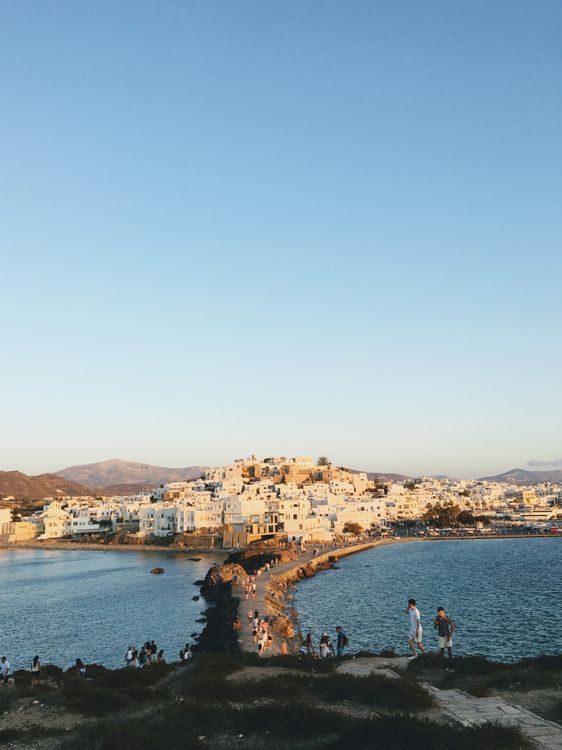
Photo by Theo Sousi on Pexels.
An island big enough to lose yourself in, fertile enough to feed you from its own soil, and old enough that marble temples still frame the sunset.
How to Get to Naxos
By ferry from Athens
Most visitors arrive by ferry from Piraeus, the main port of Athens. Two operators serve the route year-round. Blue Star Ferries runs conventional vessels that take approximately five to six hours and offer seats, business-class lounges, cabins, and vehicle transport. Economy deck tickets start from around €52. SeaJets operates high-speed catamarans that make the crossing in approximately three hours and fifteen minutes, with tickets starting from around €63. SeaJets runs primarily from April to mid-October.
In peak summer, there can be up to seven daily departures from Piraeus. Even in winter, Blue Star maintains at least one daily sailing. Travellers arriving at Athens Airport may find it more convenient to use the port of Rafina on the eastern coast of Attica, which is a 20 to 30-minute taxi ride from the airport compared to over an hour to Piraeus. Ferries from Rafina to Naxos take approximately four hours.
Naxos also has direct ferry connections to Paros (30 to 50 minutes), Mykonos (approximately 1.5 to 2.5 hours), Santorini (approximately 2 to 3 hours), and most other Cycladic islands during the summer season.
By air
Naxos has a domestic airport (JNX) served by Olympic Air and Sky Express, both operating ATR turboprop aircraft. The flight from Athens takes approximately 40 to 50 minutes. In summer 2026, there are multiple daily flights, with one-way fares starting from approximately €46. Sky Express also operates seasonal connections from Thessaloniki and other Greek cities. The airport is located approximately three kilometres south of Naxos Town.
Flights are faster but considerably more expensive than ferries and have strict baggage limits on the small aircraft. The ferry remains the practical choice for most travellers, especially those bringing a vehicle or significant luggage.
Getting Around the Island
Naxos has a public bus system that works well for the most popular routes. Line 1 runs from the port to Agios Prokopios, Agia Anna, and Plaka beaches roughly every 30 minutes during the summer high season, with tickets costing €1.80 to €2.60. Line 2 serves the mountain villages of Halki, Filoti, and Apiranthos several times daily. Additional lines reach Mikri Vigla, Kastraki, Pyrgaki, and the northern village of Apollonas, though with less frequency.
Bus tickets must be purchased in advance from the bus station at the port or from village shops. The official timetable is published at naxosbuses.com and updated seasonally.
A rental car is recommended for travellers who want to explore the mountain villages thoroughly, combine interior and coastal visits in a single day, or reach the quieter southern beaches. For a holiday based in Chora or Agios Prokopios with occasional beach days and one village excursion, renting a car for two or three days is usually sufficient. Book early in July and August — availability tightens quickly.
Where to Stay
Location matters on Naxos more than on smaller islands. The main areas for accommodation each offer a distinct experience.
Naxos Town (Chora) is the best base for first-time visitors. It has the widest selection of restaurants, the liveliest evening atmosphere, the port for ferry arrivals, and good bus connections to every major beach and village. Agios Georgios beach is walkable from the town centre. The old town and Venetian castle quarter are immediately accessible on foot.
Agios Prokopios is the most popular beach area, roughly five kilometres southwest of Chora. It suits families and couples who want to be on the beach with easy access to restaurants, beach bars, and bus connections back to town. The bay faces west-southwest and is relatively sheltered from the meltemi.
Agia Anna sits between Agios Prokopios and Plaka and offers a more affordable, village-like alternative. A small fishing port anchors the southern end, and the protected cove beside it stays calm when wind affects more exposed beaches. The range of tavernas and shops covers daily needs without feeling overly developed.
Plaka suits travellers who prioritise the beach itself above all else. At roughly five kilometres long, it is the finest stretch of sand on the island, with a developed northern section and a progressively quieter southern stretch. Couples and those seeking a slower pace will appreciate Plaka, though a car or regular bus use becomes important for dining variety and village visits.
Mikri Vigla and further south suit windsurfers, kitesurfers, and travellers who prefer seclusion. A car is necessary for these areas. The headland at Mikri Vigla creates two beaches: the northern side catches the meltemi for watersports, while the southern side remains sheltered for swimming.
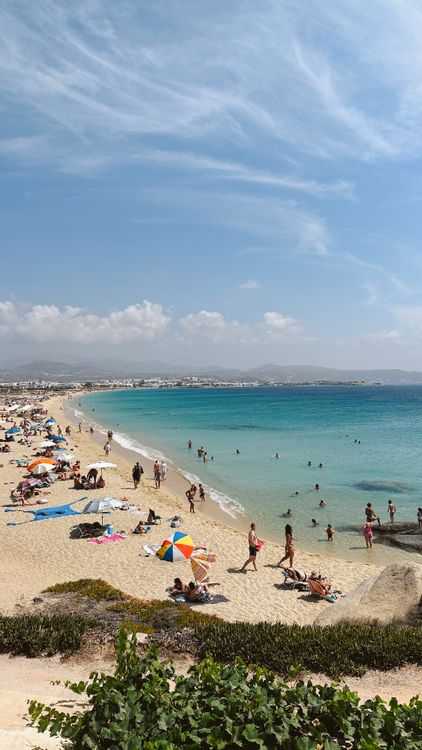
Photo by Vasiliki Ritsou on Pexels.
Best Beaches
The western coast of Naxos has an almost continuous strip of sandy beaches running south from Chora. Wind direction and strength should guide your choice, especially in July and August when the meltemi blows from the north.
Agios Georgios is the town beach, walkable from Chora in five minutes. It has shallow, generally calm water and is practical for families staying in town. A windsurfing and paddleboard school operates here. It is convenient rather than exceptional — dedicated beach days are better spent further south.
Agios Prokopios is the island’s most popular beach. The bay faces west-southwest and is partly sheltered from northerly winds, particularly at the northern end. The sand is golden and the water is clear. Beach bars, sunbed rentals, restaurants, and a small dive centre line the shore. The bus from Chora takes approximately 15 minutes.
Agia Anna continues south from Agios Prokopios and has a quieter, more local character. The small cove near the fishing port is protected from the wind and stays calm on days when more exposed beaches are uncomfortable. Several relaxed tavernas serve the beach.
Plaka is the standout. Roughly five kilometres of golden sand, backed by low dunes, stretching from the developed northern section — with beach bars and restaurants — to increasingly quiet and undeveloped sand further south. Parts of the southern end are used by naturists. On calm days, Plaka is among the finest beaches in the Cyclades. On strong meltemi days, the exposed sections can be sandy and wind-blown.
Mikri Vigla is where the coast gets wilder and the wind gets stronger. The headland divides two beaches: the north-facing side is one of the best windsurfing and kitesurfing spots in Greece, while the south-facing Sahara or Limanaki beach is sheltered, with shallow water suitable for families. A few tavernas serve both sides.
Alyko is distinctive. A cedar forest backs the beach, and the remains of an abandoned hotel project — now covered in street art — give the area an unusual atmosphere found nowhere else on the island. The swimming is excellent in calm conditions.
Hawaii Beach is a small, striking cove between rocky cliffs south of Mikri Vigla. Access is via a short walk from the road. It is scenic and photogenic but can be crowded in summer precisely because of its compact size.
| Beach | Wind shelter | Families | Watersports | Bus access |
|---|---|---|---|---|
| Agios Georgios | Good | Great — shallow water | Beginner windsurf/SUP | Walk from Chora |
| Agios Prokopios | Moderate — north end sheltered | Great | Dive centre | Frequent (15 min) |
| Agia Anna | Good — sheltered cove | Great | Limited | Frequent |
| Plaka | Exposed on windy days | Good (north end) | Limited | Frequent |
| Mikri Vigla (south) | Good — sheltered side | Great — shallow water | World-class (north side) | Limited service |
| Alyko | Moderate | OK | None | Car needed |
| Hawaii Beach | Moderate — cliffs help | Small — gets crowded | None | Car + short walk |
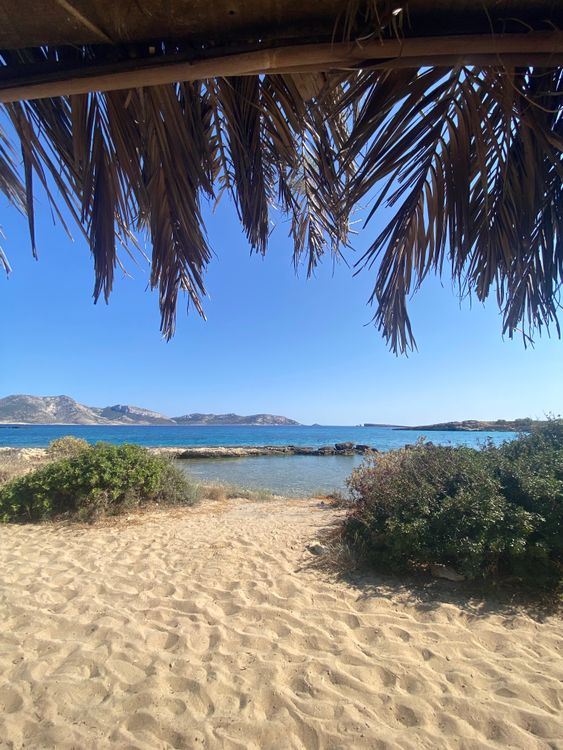
Photo by Lydia Griva on Pexels.
Mountain Villages and the Tragea Valley
The interior of Naxos is dramatically different from the coast — and if you have enjoyed the marble villages of neighbouring Tinos, Naxos offers a similar depth of craft and tradition in a greener, more fertile setting. The Tragea valley, a fertile basin of olive groves, orchards, and scattered Byzantine churches, connects the island’s most important mountain villages. A day driving or busing through the interior is one of the best things to do on the island.
Halki was the former administrative centre of Naxos and retains an understated elegance. Restored mansions, small galleries, and quiet cafés line its streets. The main draw is the Vallindras Distillery, which has been producing kitron — the island’s signature citron liqueur — since 1896. Entry is free; a small fee covers a tasting of three kitron varieties. The Fish & Olive gallery, selling fine ceramics, is also worth a visit. From Halki, a 10-minute walk through olive groves leads to the Byzantine church of Agios Georgios Diasoritis, which contains notable frescoes and is typically open during summer mornings.
Filoti is the largest village on the island, built in a natural amphitheatre on the slopes of Mount Zas. The main square, shaded by a large plane tree, is lined with cafés and tavernas and serves as the social centre of the upper island. The white marble church of Panagia Filotissia, near the top of the village, rewards the uphill walk. Filoti is also the primary starting point for the hike to the summit of Mount Zas.
Apiranthos (also written Apeiranthos) is the most architecturally distinctive village on Naxos. Built at approximately 600 metres elevation on the slopes of Mount Fanari, it is constructed almost entirely of local stone and marble rather than the whitewash typical of the Cyclades. The village has five small museums, marble-paved alleys, and a population whose dialect preserves traces of Cretan origin. Tavernas here are known for local meat dishes, particularly rosto, a slow-cooked pork casserole. The views from the village across the Naxian mountain ranges are exceptional.
Koronos, further north, is a steep and traditional village rarely visited by tourists, offering an unhurried atmosphere and small tavernas on its main square. Apollonas, on the northern coast, is a small fishing port with a nearby Kouros — an unfinished marble statue roughly 10.7 metres long, dating to the seventh century BCE, lying in the quarry where it was abandoned.
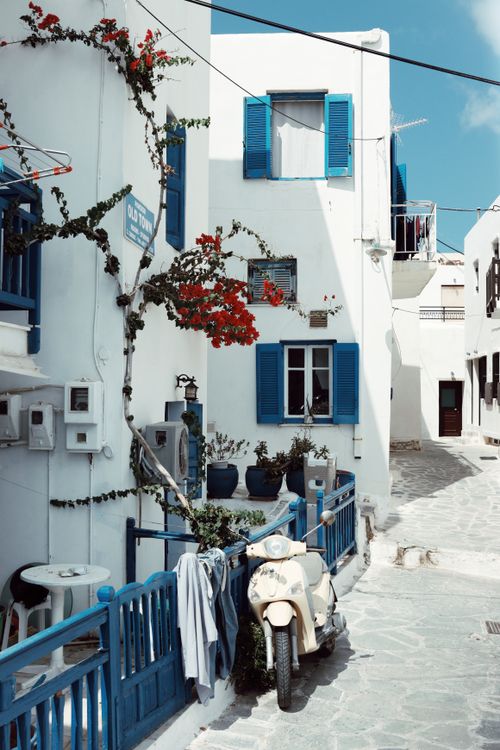
Photo by Efrem Efre on Pexels.
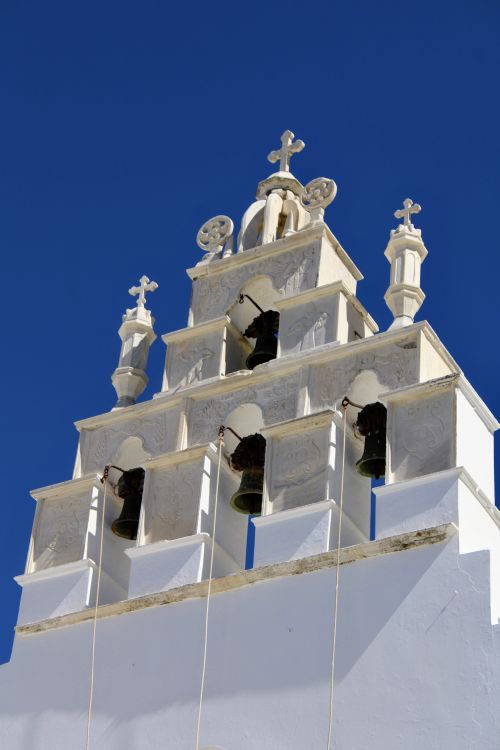
Photo by Zach LeBlanc on Pexels.
Archaeological Sites and History
Naxos was one of the most powerful islands in the ancient Aegean, and its archaeological sites reflect that ambition. The tyrant Lygdamis, who ruled in the sixth century BCE, planned monuments intended to rival anything on the Greek mainland.
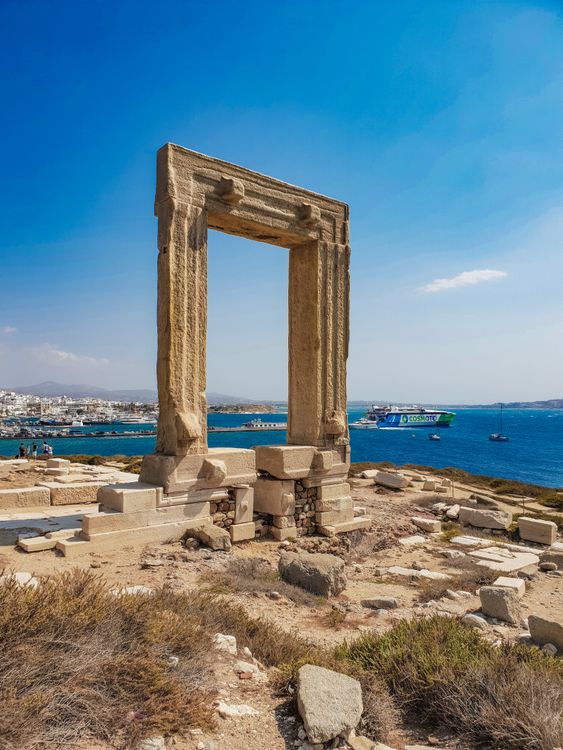
The Portara is the most recognisable landmark on the island. This massive marble doorway — roughly six metres high and 3.5 metres wide — is all that remains of an unfinished temple on the islet of Palatia, connected to Chora by a causeway. Construction began around 530 BCE under Lygdamis, but the temple was never completed after his overthrow in 506 BCE. The site is freely accessible at all hours and is the most popular spot on the island for sunset. According to Greek mythology, Palatia is where Theseus abandoned Ariadne after escaping the Cretan labyrinth, and where the god Dionysus later found her.
The Temple of Demeter near Ano Sangri is one of the most important Archaic temples in Greece, dating to approximately 530–520 BCE. Also commissioned by Lygdamis, the marble temple was built in an early form of the Doric style that later influenced the design of the Parthenon. A small museum beside the site displays original architectural fragments. The temple is open daily except Tuesdays from 8:30 to 15:00. Admission is €4 and only cash is accepted at the time of writing. Check current hours with the Ministry of Culture before visiting.
The Venetian Castle (Kastro) in Chora dates from the thirteenth century, when Marco Sanudo established the Duchy of Naxos after the Fourth Crusade. The castle quarter, with its towers, Catholic churches, and coat-of-arms carved above doorways, offers a different architectural atmosphere from the Cycladic whitewash of the surrounding town. The Archaeological Museum of Naxos is housed within the castle.
Panagia Drossiani, near Halki, is one of the oldest continuously functioning churches in Greece, with parts dating to the sixth or seventh century. Its stone construction and preserved frescoes make it a quiet but significant cultural stop.
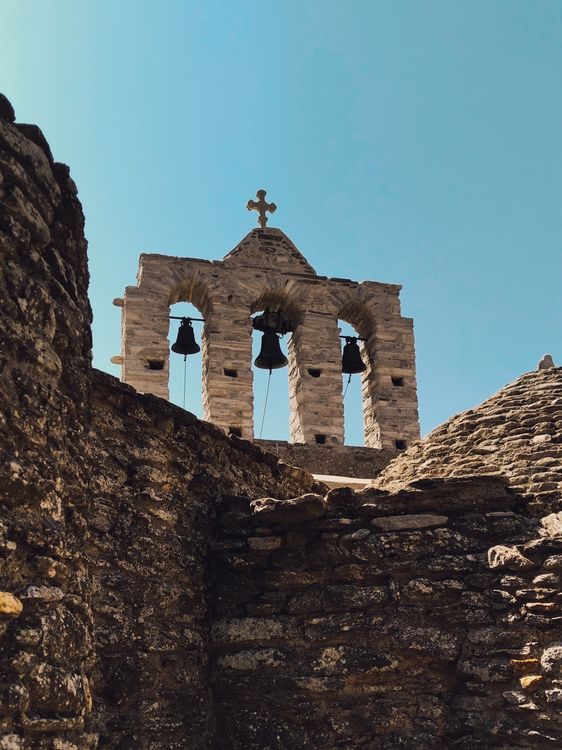
Photo by Jerry Apples on Pexels.
Food and Drink
Naxos is the most fertile island in the Cyclades, and its cuisine reflects this. If Sifnos is the Cycladic island foodies discover first, Naxos is the one that keeps them coming back — its range of local produce is unmatched in the archipelago. Unlike drier neighbouring islands that depend on imported ingredients, Naxos produces much of what appears on restaurant tables.
Potatoes are the island’s most celebrated crop. Naxian potatoes have been cultivated here since at least the eighteenth century, and the island was historically Greece’s official potato seed producer. They have a distinctive creamy texture that holds up well when roasted or fried. Most tavernas serve them alongside grilled meat or fish, and they appear in salads that rival the standard Greek version.
Graviera cheese is Naxos’s major dairy product. Approximately 14 per cent of Greece’s total dairy production comes from the island. Unlike most Greek graviera, the Naxian variety is made primarily from cow’s milk, giving it a sweeter, more buttery flavour. Cheese shops in Chora, particularly Tyrokomia Naxou, offer tastings.
Kitron is a liqueur distilled from the leaves and fruit of the citron tree, a variety of citrus found on Naxos and in very few other places. It comes in three strengths: green (strongest), yellow (medium), and clear (sweetest). The Vallindras Distillery in Halki, operating since 1896, is the traditional place to taste and buy it. Many restaurants offer a complimentary glass of kitron after dinner.
Other local specialities include louzes (cured pork sausages), rosto (a slow-cooked pork casserole associated particularly with Apiranthos), melachrino (a dense walnut cake moistened with kitron), and locally produced honey, olive oil, and wine. The mountain villages are the best place to try meat dishes, while coastal tavernas excel with fresh seafood.
Things to Do
Hike Mount Zas
Mount Zas (Zeus) is the highest peak in the Cyclades at 1,004 metres. The most popular route starts from the Aria Spring trailhead near Filoti, passes the Cave of Zeus — where, according to mythology, the god was raised — and continues to the summit. The round trip takes approximately three and a half to four and a half hours and covers roughly 9.5 kilometres with significant elevation gain. The terrain is rocky and steep in sections, requiring sturdy footwear. Water, sun protection, and an early start or late-afternoon timing are essential, especially in summer. The summit views across the Cyclades are the reward.
Explore Chora’s old town and castle
The lanes of Naxos Town’s old quarter wind uphill from the waterfront through arched passages, past small shops, and into the Venetian castle district. The area is best explored without a plan — the layout is designed to confuse invaders, which makes it pleasantly disorienting for visitors. Allow one to two hours for a thorough wander.
Visit the Small Cyclades
Day-trip boats run from Naxos to the Small Cyclades — Koufonisia, Iraklia, Schinoussa, and Donoussa — a cluster of tiny, sparsely populated islands with excellent swimming. Sailing tours combining two or three islands with swimming stops and lunch are popular and should be booked in advance during peak season.
Windsurfing and kitesurfing
The meltemi winds that frustrate some beachgoers create world-class conditions for watersports. Mikri Vigla is the main centre, with rental and instruction available. Agios Georgios is better for beginners, with calmer conditions and a dedicated sports club.
Cooking classes
Several operators offer hands-on cooking classes using local ingredients, often based in family tavernas in the mountain villages. These typically include a market or farm visit and run for three to four hours.
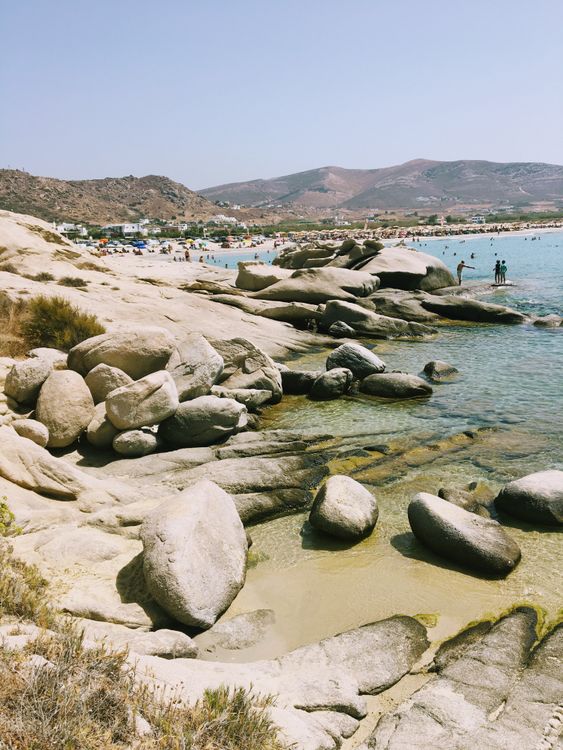
Photo by Theo Sousi on Pexels.
How Many Days Do You Need
Three nights is sufficient for a beach-focused visit with an evening in Chora and one excursion. Five nights allows comfortable time for the beaches, a mountain village day, the Portara, the Temple of Demeter, and a cooking class or boat trip. Seven nights is ideal for travellers who want to hike Mount Zas, visit the Small Cyclades, explore the northern coast, and enjoy the island without rushing. Naxos is one of the few Cycladic islands that can genuinely fill two weeks without repetition.
Suggested Five-Day Itinerary
Day 1: Arrive by ferry, settle into accommodation in Chora or Agios Prokopios. Walk through the old town and castle quarter. Watch sunset from the Portara. Dinner at a waterfront taverna in Chora.
Day 2: Beach day on the western coast. Morning at Agios Prokopios, afternoon at Plaka. Try the local potatoes and graviera at a beachside taverna.
Day 3: Mountain villages by car or bus. Start at Halki (kitron distillery, Panagia Drossiani), continue to Filoti for lunch in the main square, then Apiranthos for afternoon coffee and the marble alleys. Return via the Temple of Demeter near Sangri.
Day 4: Morning at Mikri Vigla or Alyko beach. Afternoon cooking class or boat trip to the Small Cyclades. Evening in Chora.
Day 5: Final swim at Agia Anna or Agios Georgios. Cheese tasting in Chora. Departure by ferry or flight.
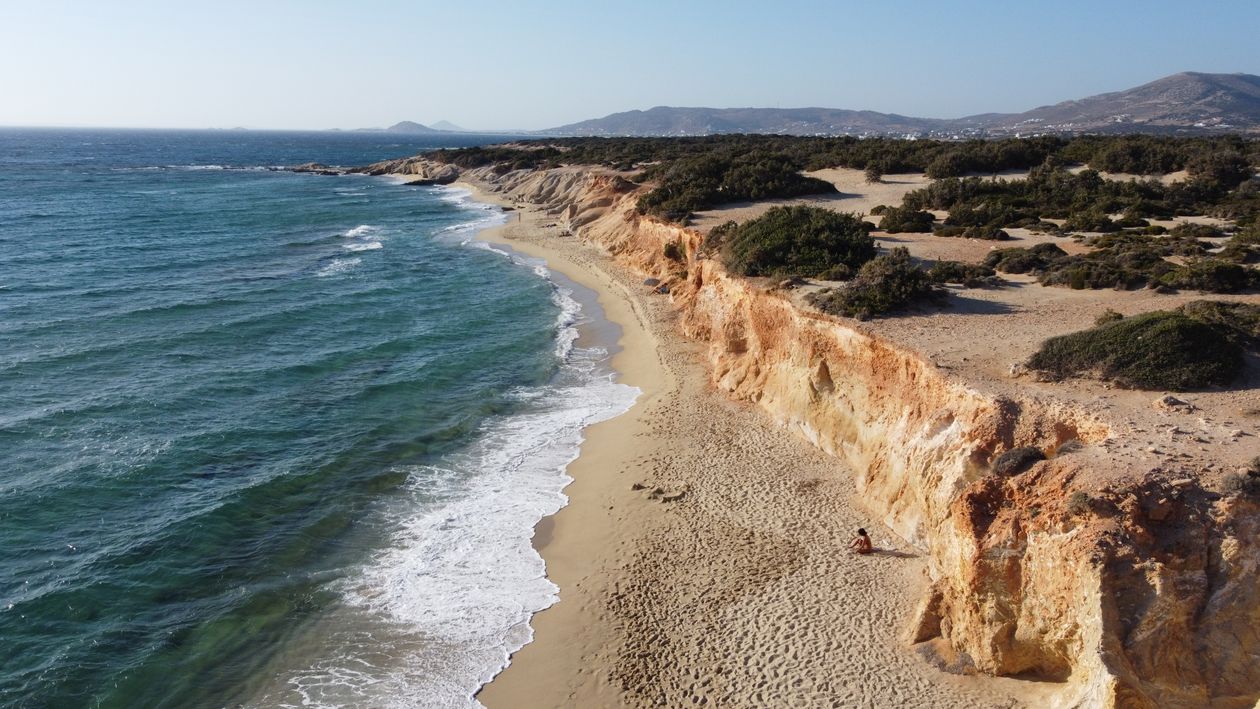
Photo by Charalampos Kiriakou on Pexels.
Practical Tips and Common Mistakes
Book ferries and accommodation early in July and August. Naxos fills up faster than many visitors expect. Blue Star Ferries and SeaJets tickets can be booked through platforms such as FerryHopper or directly from operator websites.
Check the wind before choosing your beach. On strong meltemi days, head to Agios Prokopios (north end), Agia Anna’s port cove, or the southern side of Mikri Vigla. Avoid long exposed stretches of Plaka on very windy days unless you enjoy sandblasting.
Bring cash for the Temple of Demeter. Card payment is not accepted at the time of writing. The temple is also closed on Tuesdays.
Do not underestimate driving times. The road to Apiranthos from Chora is roughly 26 kilometres but takes 40 to 50 minutes on narrow mountain roads. The northern road to Apollonas is longer still. Plan accordingly, especially if you need to catch a ferry.
Rent a car for at least one or two days if you want to see the interior properly. The bus system serves the main villages, but combining multiple stops, the Temple of Demeter, and a beach on the return requires a car to do comfortably in a single day.
Do not skip the villages for the beaches. Many visitors spend their entire trip on the western coast and miss the most distinctive part of the island. Halki, Filoti, and Apiranthos are worth at least a full day.
Carry water and sun protection for the Mount Zas hike. There is no shade or water source on the upper trail, and summer temperatures can make the exposed sections punishing. Start early in the morning or time your hike for the late afternoon.
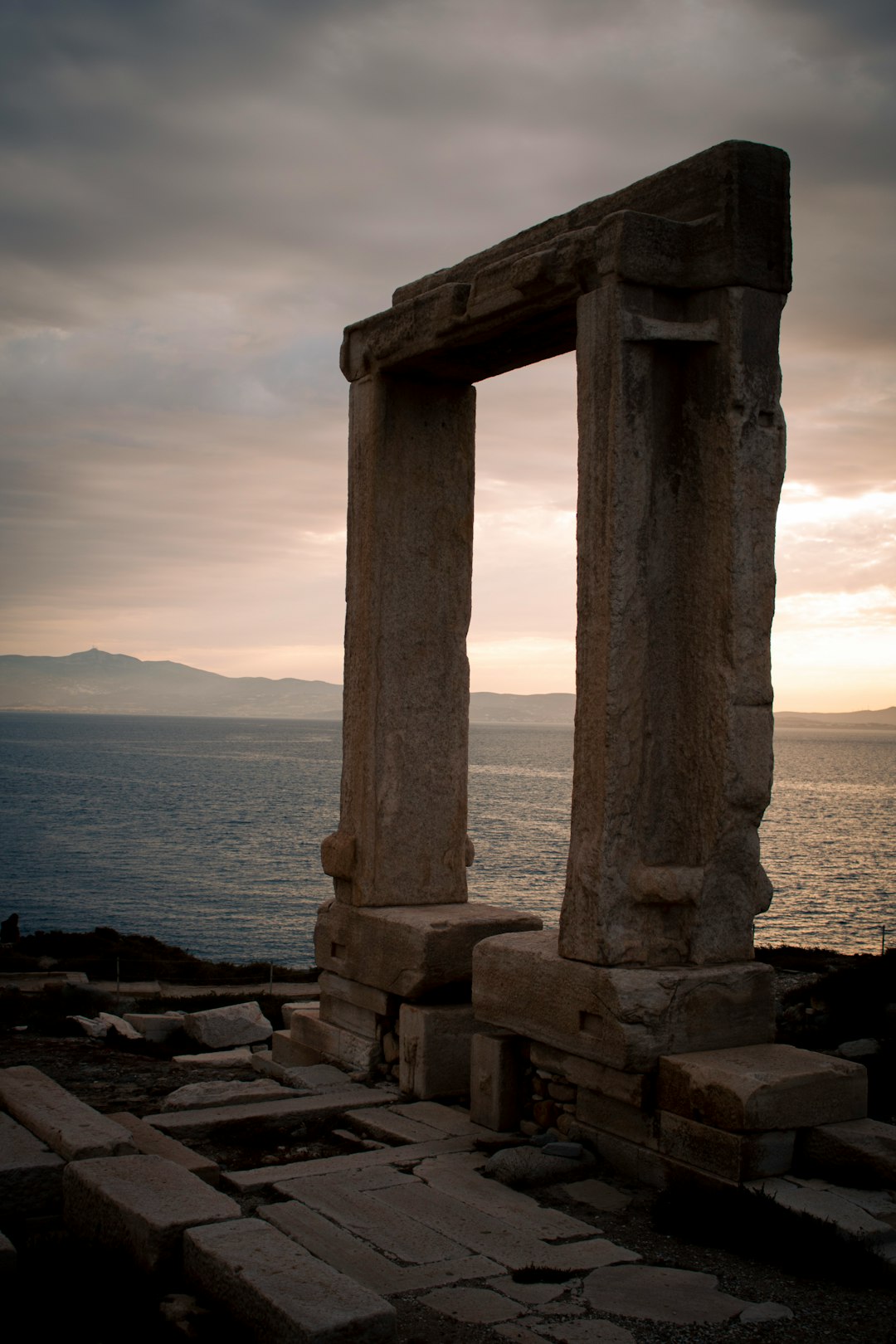
Photo by Sebastiano Corti on Unsplash.
The Portara catches the last light. Behind you, Chora hums with the evening. Ahead, the Aegean turns copper. This is why people come back.
Final Verdict
Naxos is one of the most complete Greek island experiences available. It has beaches that rival anywhere in the Aegean, a mountain interior that most Cycladic islands cannot match, an archaeological record stretching back three millennia, and a food culture rooted in genuine local production. It is large enough to reward a week or more without feeling exhausted, yet connected enough that a long weekend still delivers a satisfying visit.
The island works best for travellers who want variety within a single destination rather than a pure beach holiday or a pure cultural trip. It is exceptional for families, rewarding for food-focused travellers, and quietly romantic for couples who prefer substance over spectacle. For those exploring the Cyclades for the first time, Naxos makes a strong case as the island to start with — and for many, the one they return to.
The information in this article was researched and verified as of July 2026. Prices, transport options, schedules, and conditions may have changed since publication — we recommend double-checking key details before your trip.