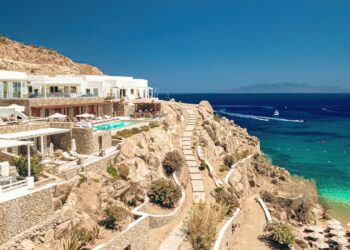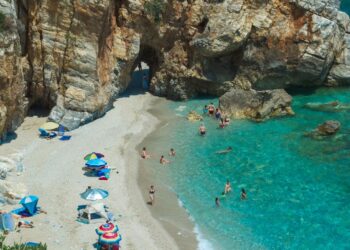
Somewhere between Athens and Santorini, in the middle of the Aegean where ferry routes branch into quieter water, there is an island that does not perform for you. It does not dazzle with pyrotechnics or flood its coastline with luxury sunbeds. It cooks for you instead. It feeds you chickpeas slow-cooked overnight in clay pots, pours you a glass of something biodynamic on a whitewashed terrace, and invites you to walk its ancient stone trails the next morning while the light is still soft and the wild herbs brush against your ankles.
This is Sifnos — the island that gave Greece its first cookbook, its oldest culinary tradition, and its most quietly confident food culture. And in 2026, the world is beginning to notice.
Condé Nast named it one of the fifteen Greek islands to visit this year. The World’s 50 Best Restaurants platform recently featured a brand-new opening on its shores. And yet, Sifnos remains blissfully free of cruise ships, day-trippers, and the hollow tourism that hollows out so many beautiful places. It has no airport — intentionally. What it has instead is 72 square kilometres of rugged hills and golden coast, nineteen marked hiking trails stretching back three thousand years, a pottery tradition recognised by UNESCO, and tables that have been feeding honest, extraordinary food since long before the word “foodie” existed.
If you are the kind of traveller who believes the kitchen is the heart of any culture, read on. Sifnos is waiting for you.
There are islands that demand your attention. Sifnos simply asks you to sit down and eat something beautiful.
The Culinary Heritage: How One Island Shaped an Entire Nation’s Kitchen
To understand why food lovers make pilgrimages to Sifnos, you need to know the name Nikolaos Tselementes.
Who Was Nikolaos Tselementes?
Born on Sifnos in the late nineteenth century, Nikolaos Tselementes trained in Vienna and New York before returning to Greece and, in 1910, publishing the country’s first systematic cookbook. The book — simply called Οδηγός Μαγειρικής (Guide to Cooking) — became so foundational that his surname entered the Greek language as a common noun. In Greece today, any cookbook is still called a tselementes. Think about that for a moment: an entire category of human knowledge named after one island’s son.
His influence on modern Greek cuisine is immense and sometimes contested — Tselementes favoured French techniques and refined certain vernacular dishes — but the real story of Sifnian cooking is older and earthier than any cookbook. It lives in the clay pots.
The Dishes That Define Sifnos
Sifnian cuisine is built around patience and fire. The island’s two most iconic dishes could not exist without slow heat, darkness, and time.
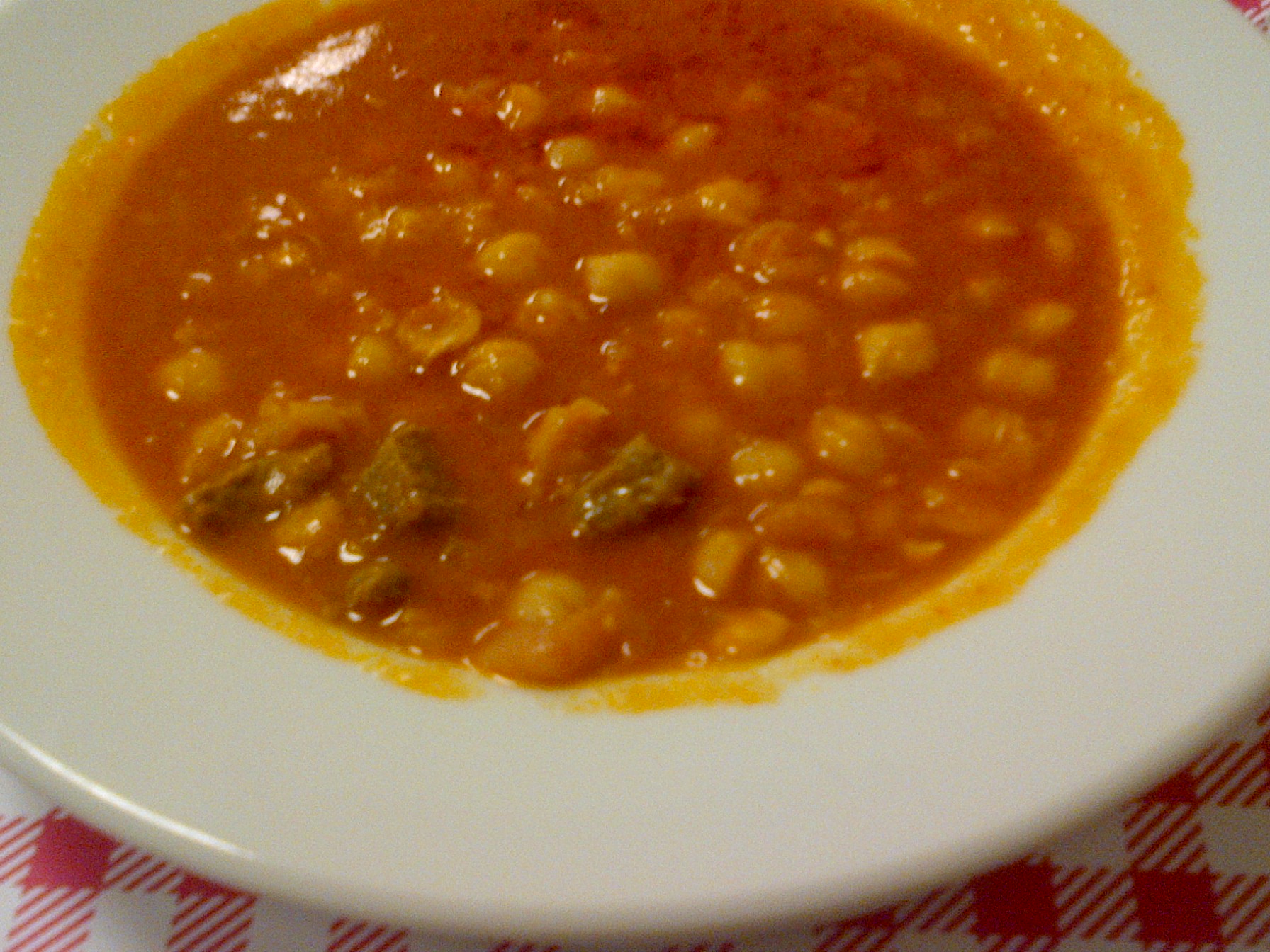
Revithada is a chickpea stew that has been cooked here for centuries. On Sunday mornings, households would seal their clay pots — called skepastaria — fill them with soaked chickpeas, onion, olive oil, salt, and lemon, then carry them to the communal baker’s oven before dawn. The pots would cook overnight, low and slow, sealed with dough. By Sunday morning, the chickpeas would be impossibly creamy, the broth rich with the mineral flavour of the clay itself. This is still how the best revithada in Sifnos is made — and you can taste the difference.
Mastelo is the island’s other signature: lamb or goat slow-cooked with dill and wine inside a terracotta mastelo pot, sealed and buried in embers or left in a baker’s oven for hours. The result is falling-tender meat that smells faintly of the earth that shaped its vessel.
Beyond these two icons, the Sifnian table offers ampelofasoula (green beans in olive oil and tomato), manoura (a sharp local cheese cured in wine lees), xerotigana (fried pastry ribbons drizzled with honey), and amygdalata — dense almond sweets that have been made on this island since the Byzantine era.
Where to Eat in Sifnos in 2026
The restaurant scene here rewards exploration. Each village has its own character, and the best meals often happen at the most unassuming tables.
In Apollonia and Artemonas, the island’s main towns, you will find the widest range — from traditional kafeneions serving revithada on Sunday mornings to more refined contemporary dining. The Bostani restaurant at Verinia Astra Hotel in nearby Poulati has earned quiet acclaim for its kitchen garden cooking and panoramic views.
At the port of Kamares, Meropi Restaurant offers beachfront tables and the kind of simply prepared fresh fish that reminds you why Greece’s coastline is worth travelling for.
Down at Platis Gialos, the beach taverna Omega 3 has developed something of a celebrity reputation — Tom Hanks and Jeff Bezos have reportedly eaten here, though the real reason to visit is the grilled seafood and the soft afternoon light on the water.
In Kastro, the medieval clifftop village, the relatively new Loggia wine bar has brought something genuinely exciting: biodynamic Greek wines, seasonal small plates, and a terrace perched over the sea where the sunset arrives like an event.
And most excitingly for 2026: Lamarina, which opened in May of this year under chef Giorgos Samoilis (who also runs Pelicanos and Cantina on the island), is an honest, home-style deli devoted to traditional Sifnian cuisine — ladera (slow-braised vegetables), moussaka, pastitsio, seasonal greens. It has already attracted attention from the World’s 50 Best Restaurants platform as a new voice in authentic Greek cooking. Book ahead.
The Pottery Tradition: Three Thousand Years of Clay
The connection between Sifnian food and Sifnian pottery is not coincidental. They grew from the same soil.
A 3,000-Year Legacy
Archaeologists have found pottery fragments on Sifnos dating to the Middle Cycladic period — roughly 2000 to 1500 BC. The island’s red clay is exceptionally dense and heat-resistant, its drying conditions ideal, and for millennia there was abundant wood for kilns. These were the conditions that created an unbroken tradition of ceramic production stretching from the Bronze Age to the present day.
In 2022, UNESCO formally recognised Sifnian pottery as part of Greece’s intangible cultural heritage — an acknowledgment of what the islanders have always known: that the pots are not just objects. They are the reason the food tastes the way it does.
The Language of Clay
Sifnian potters have specific names for every vessel, each shaped for a particular purpose. The mastelo is the baking dish. The tsikali is the everyday cooking pot. The kouroupou is a small jar. The flaros is a chimney pot. Walk into a Sifnian kitchen and you are walking into a vocabulary that has not changed in two thousand years.
Local potters still create bespoke vessels inscribed with taverna names in glaze — a living link between the ceramic tradition and the culinary one. The clay oven in which revithada is baked is as much an artisan object as the chickpeas inside it.
Where to See and Buy Pottery
In Vathi, the family workshop of Atsonios Ceramics has been producing traditional pieces for four generations. Open from 9am daily, you can often hear the wheel and smell the wood smoke before you see the workshop itself. The pieces here range from strictly functional cooking pots to elegant decorative works.
In Leivadas, Apostolidis Ceramics offers something even more immersive: hands-on pottery workshops lasting approximately two and a half hours at around €110 per person. You will leave with clay on your hands, a new respect for every pot on your kitchen shelf, and almost certainly something to carry home wrapped in newspaper.
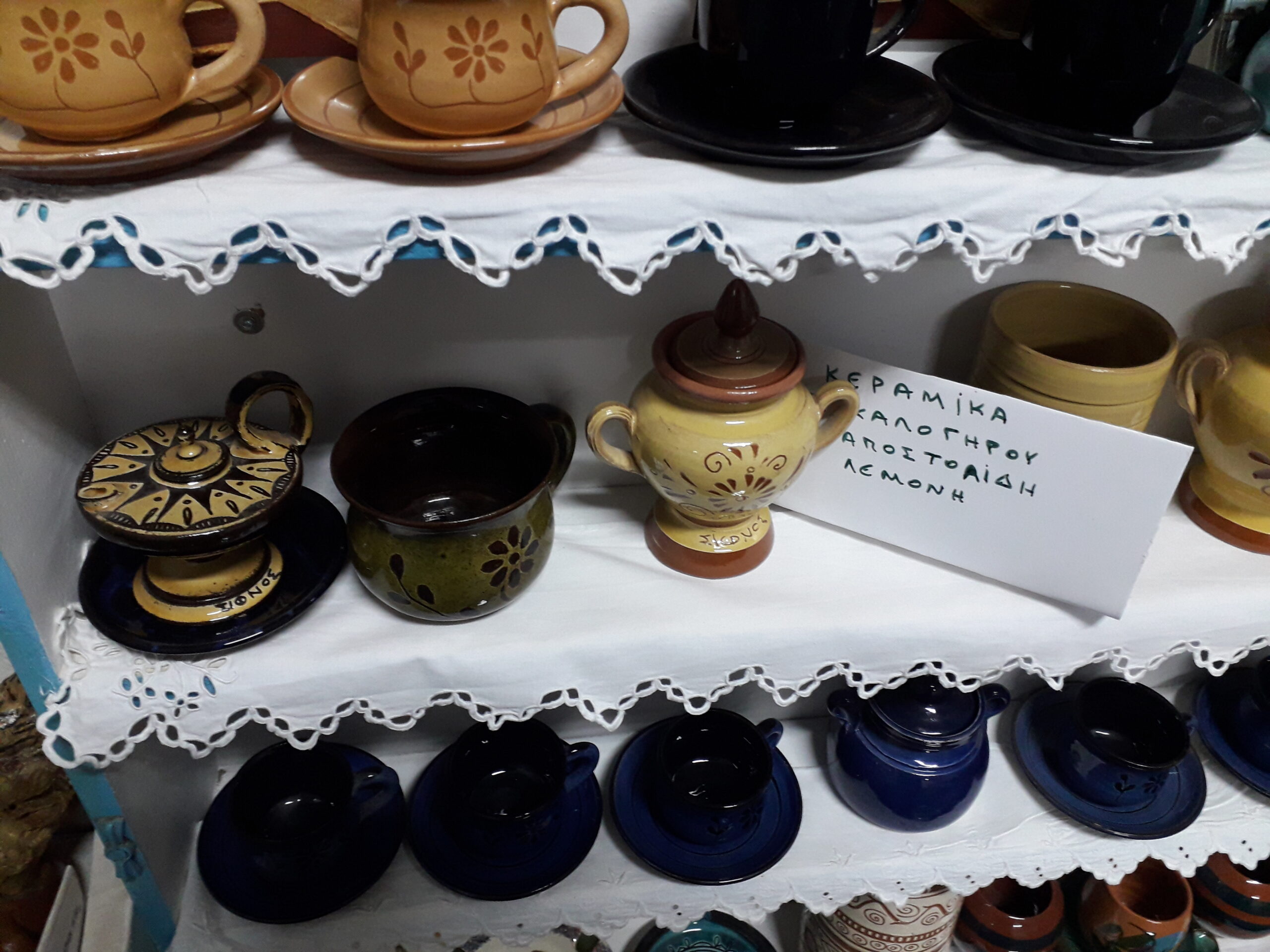
The same hands that shape clay pots before dawn shape the food they hold by night — on Sifnos, pottery and cooking are one conversation.
Sifnos Trails: Walking Paths That Predate History
The same landscape that shaped the pottery and grew the chickpeas is also one of the finest walking landscapes in the Aegean.
Nineteen Trails, One Living Network
Sifnos has nineteen officially marked hiking trails covering more than a hundred kilometres of the island. Some of these paths are not simply old — they are ancient. The oldest routes were forged by Bronze Age farmers, silver miners, and soldiers moving between settlements that existed three thousand years before the first tourist ever set foot on a Greek beach.
Restoration of the trail network began in earnest in 2015, driven by the local community in partnership with the Paths of Greece cooperative. Today the trails are well-signposted, mapped, and accessible to walkers of varied fitness levels. National Geographic has featured the network as one of the most remarkable hiking experiences in the Mediterranean.
The Trails Worth Walking
Trail 10: Apollonia to Kamares (5.7 km, easy, approximately 1.5 to 2 hours) is perhaps the island’s most celebrated walk. It descends from the hilltop capital down through terraced hillsides, flowering scrubland, and ancient mule paths to the port, arriving at the waterfront with just enough time to feel that you have genuinely earned your lunch.
Trail 2: Kastro to Chrissopigi Monastery winds through the island’s southern hills with views of both the sea and the monastery’s dramatic promontory. The whitewashed chapel of Chrissopigi — built on a rocky islet connected to the shore by a narrow causeway — is one of the most photographed sights in the Cyclades, and arriving on foot rather than by car gives it a completely different quality of meaning.
Other trails connect Apollonia to Artemonas, descend to Faros’s fishing coves, and climb to the ridge of the Prophet Elias — where on clear days you can see Paros, Antiparos, and the faint silhouette of Naxos to the east.
When to Hike
The best hiking season runs from April through October, with September being the sweet spot. By then, the brutal midsummer heat has softened, the crowds have thinned, and the landscape is beginning to exhale after a long summer. Wildflowers are less abundant in autumn than spring, but the quality of light in September on these hillsides is extraordinary — gold and amber and the particular blue of the Aegean on the cusp of cooler weather.
For a full exploration of why September is the best month in Greece, read our guide to September in Greece: The Secret Sweet Spot.
The Beaches: More Varied Than You Expect
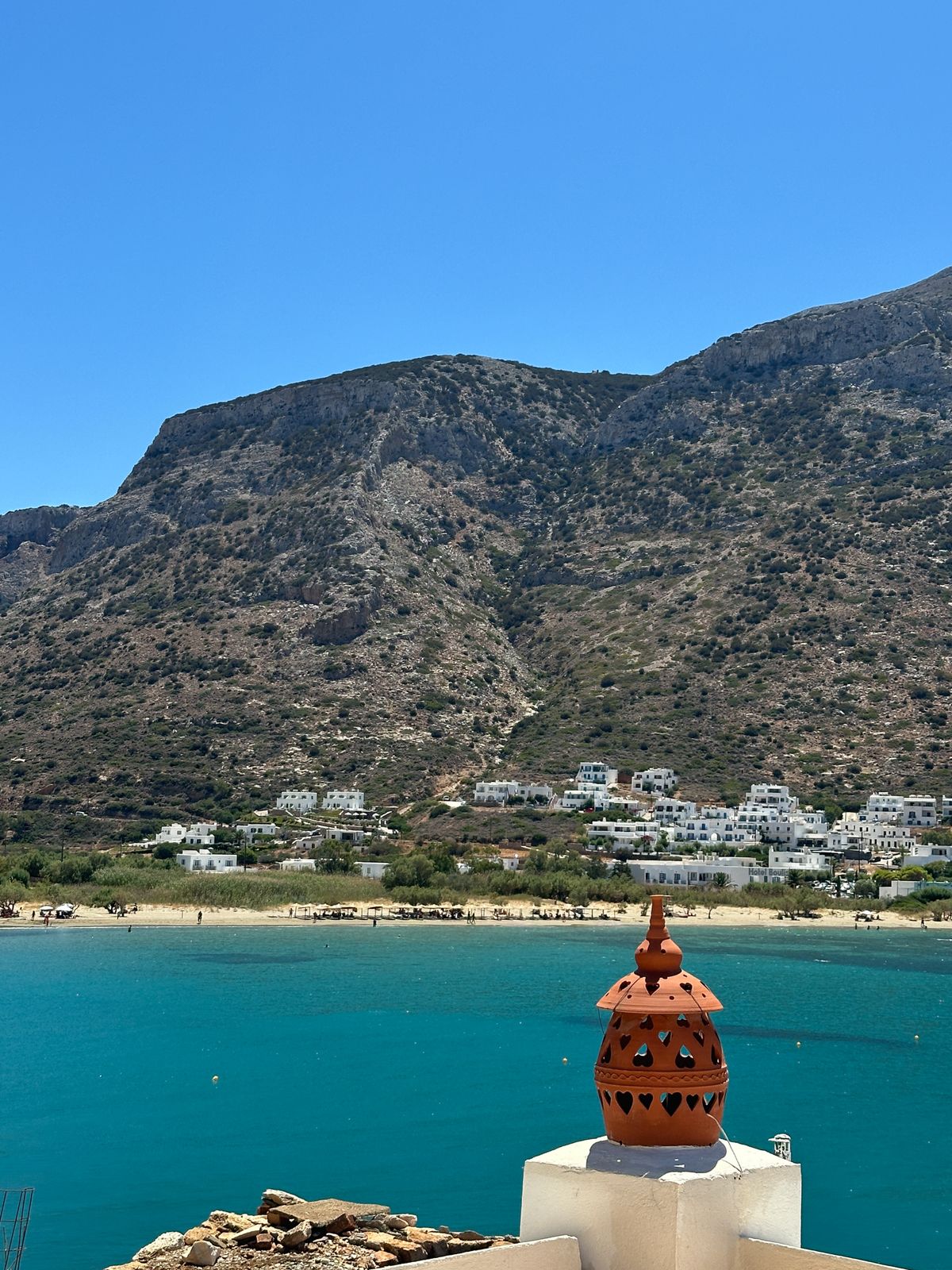
Beach islands in the Cyclades are common. What makes Sifnos different is the variety: the full-facility beach for families, the wild cove accessible only on foot, the sandy bay sheltered enough for small children, the monastic shore with its sacred silence.
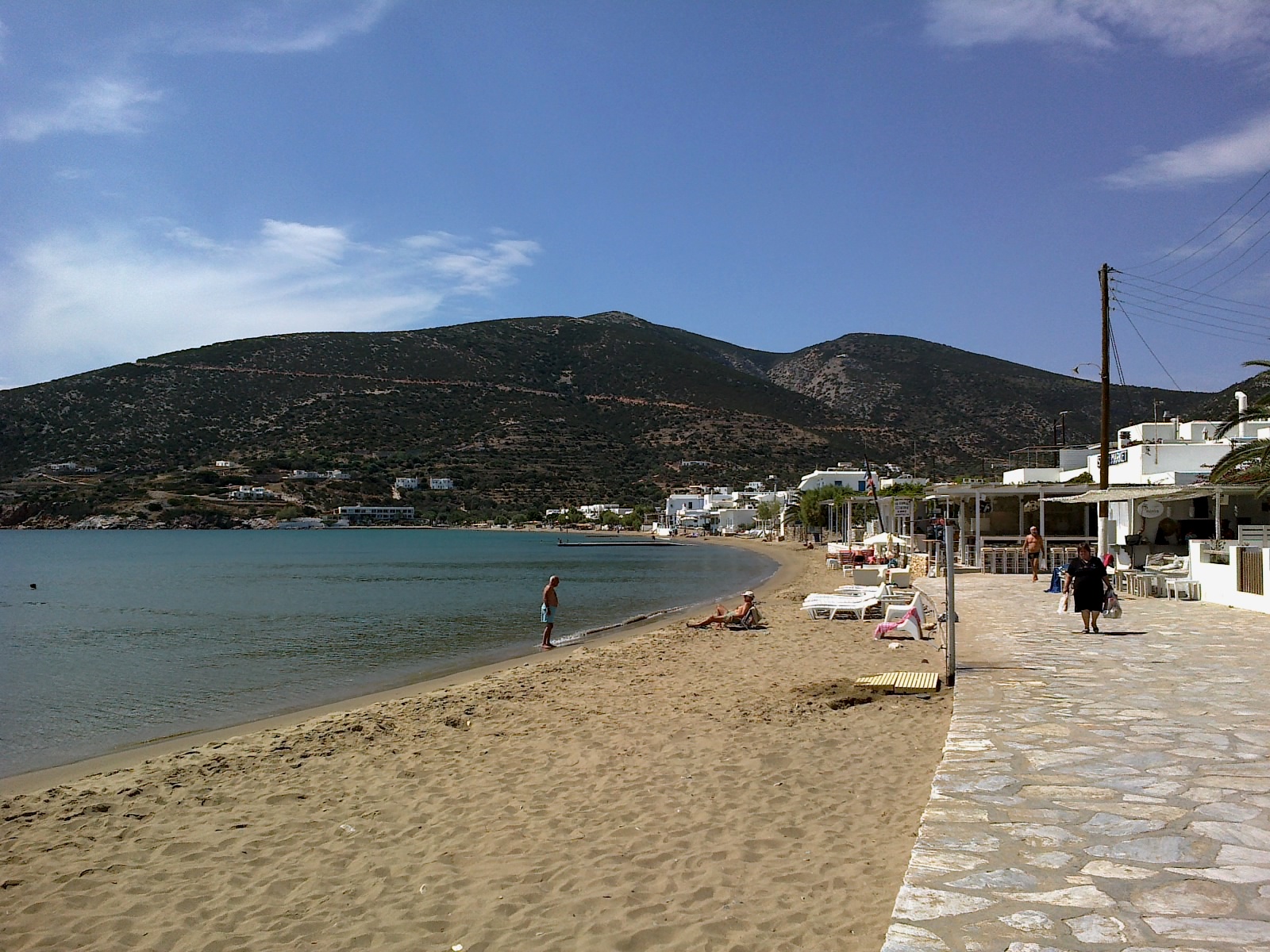
Platis Gialos is the island’s longest and most organised beach — a long sweep of pale sand with clear, shallow water, lifeguards, sunbeds, and some of the island’s best beachside restaurants. It is the place to settle in for a full day. The accessibility is excellent; it is also one of the few beaches in the Cyclades where wheelchair access is realistic.
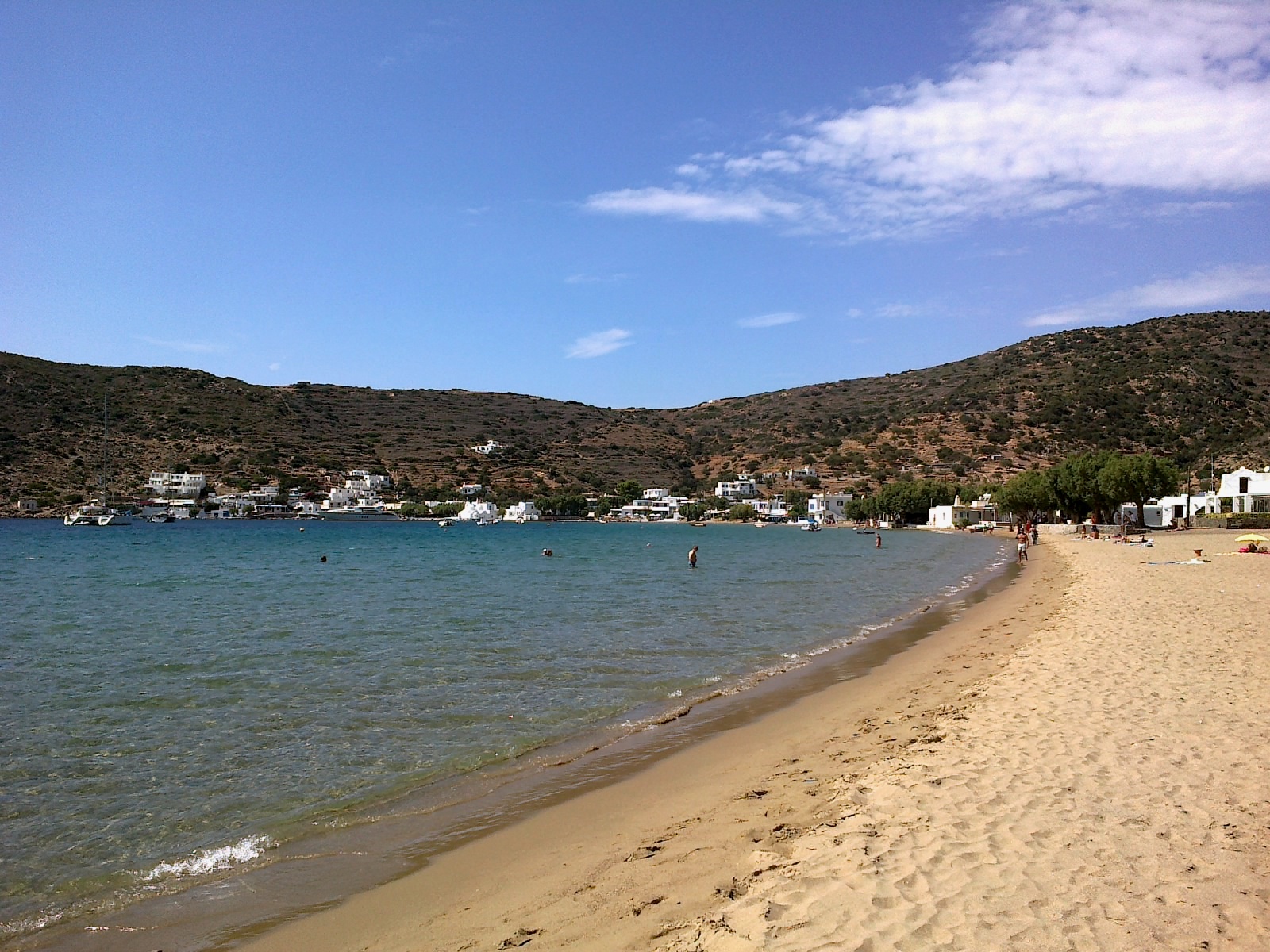
Vathi is Sifnos at its most sheltered: a deep, almost circular bay where the water sits so still and so blue it seems lit from below. Families with young children love it. So does anyone who simply wants to float in water warm enough to forget about time.
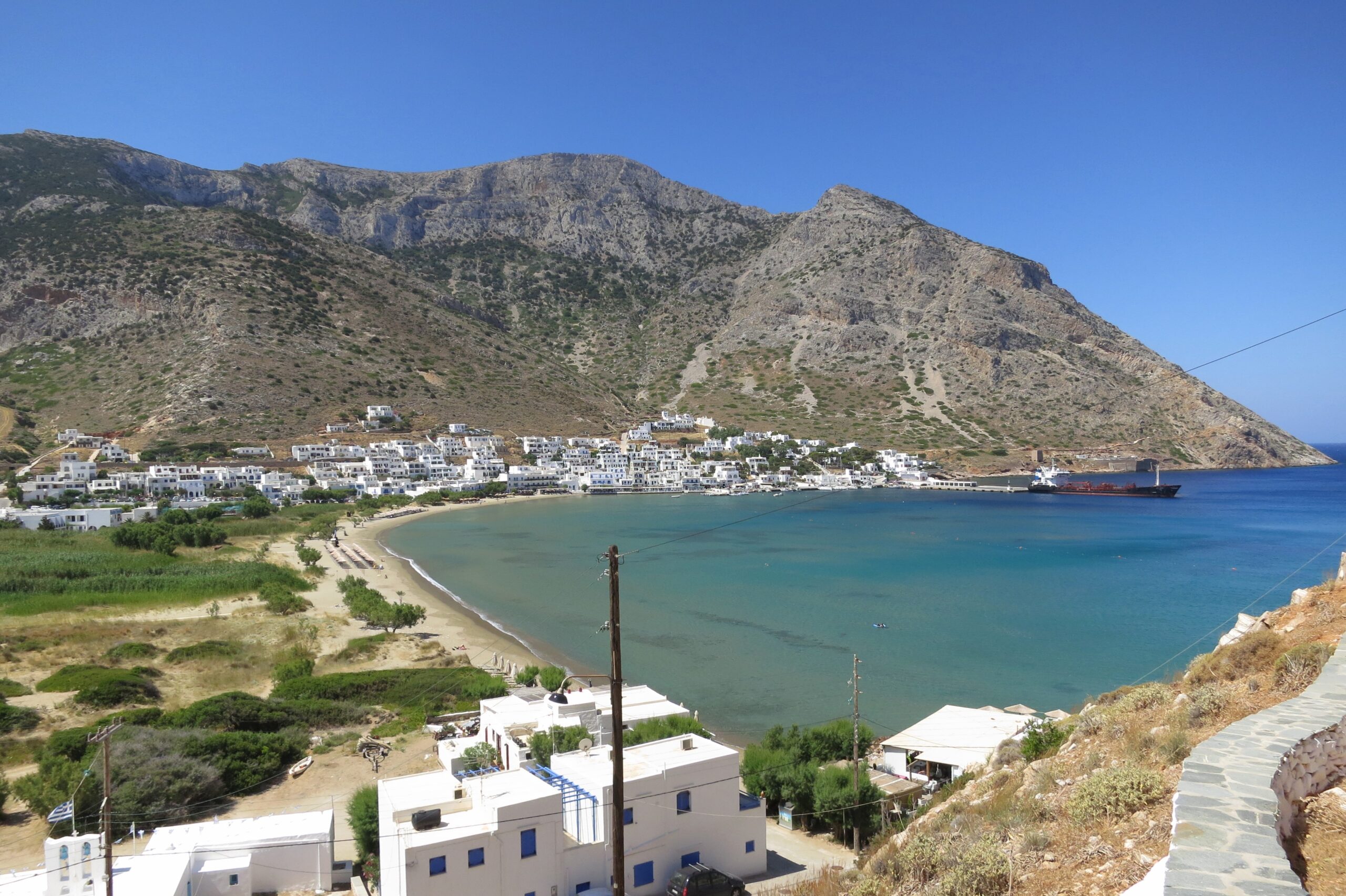
Kamares, the port beach, wraps around the western-facing bay and catches Sifnos’s finest sunsets. The town’s bars and tavernas are steps away; the Sifnos Diving Center operates from here for anyone wanting to explore the underwater world.
Faros is a cluster of three small coves — Faros, Glyfo, and Fasolou — nestled into a fishing village that seems to belong to a different, slower century. The water is calm, the fishing boats still go out in the early morning, and the hiking trail to Chrissopigi starts from here.
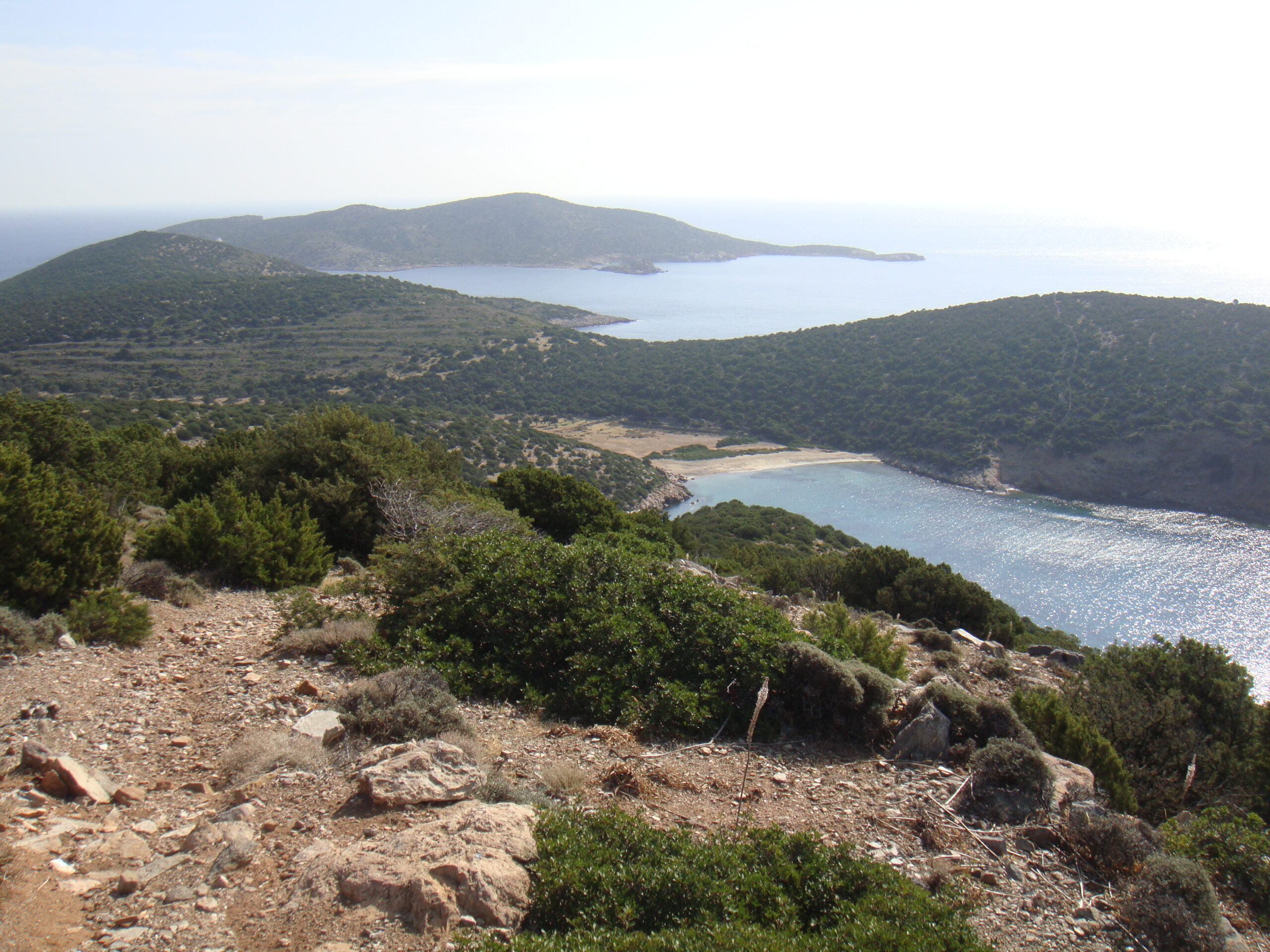
Fykiada is the island’s best argument for renting a car: a hidden turquoise bay accessible primarily on foot or by boat, rarely crowded even in August, with the kind of colour that makes you recalibrate what you thought “blue” meant.
For those who have fallen in love with volcanic beaches and otherworldly landscapes, Milos offers a dramatic contrast just a short ferry hop away — but Sifnos’s beaches have a quieter, more intimate beauty that is entirely their own.
The Villages: A Map of Character
Sifnos is an island of distinct villages, each with its own personality. The geography encourages wandering between them — they are close enough to walk but different enough to feel like separate discoveries.
Apollonia
The island’s capital sits at the top of a hill at the centre of the island — and this central position says something about how Sifnos is organised. Apollonia is not the port; it is the heart. A handsome town of whitewashed pedestrian streets, bell towers, and café tables that spill onto paved squares, it is where the island goes about its daily life. Good tavernas, practical services, nightlife modest enough not to feel intrusive, and excellent connections by bus and taxi to every corner of the island. Most visitors base themselves here.
Artemonas
A ten-minute walk from Apollonia along a paved path, Artemonas is the quieter, slightly more elegant sister village — known for its Venetian-influenced captain’s mansions, its flowered courtyards, and a small-village atmosphere that Apollonia, for all its charms, cannot quite replicate. Eat at a local taverna here if you can; the crowds never really arrive.
Kastro
Perched on a cliff above the eastern sea, Kastro is medieval Sifnos. The village was the island’s capital during the Middle Ages and Venetian rule, and its concentric whitewashed lanes were designed specifically to confuse invaders. Walking into Kastro feels like walking into a different century entirely — narrow passageways, arched doorways, small windows overlooking the sheer drop to the water below. The Loggia wine bar here is worth the visit alone. But even without food and wine, the sunset from Kastro’s eastern promontory is one of the most affecting views in the Cyclades.
For those who love the drama of a cliffside island, our guide to Folegandros explores a similarly spectacular Cycladic gem with its own distinct character.
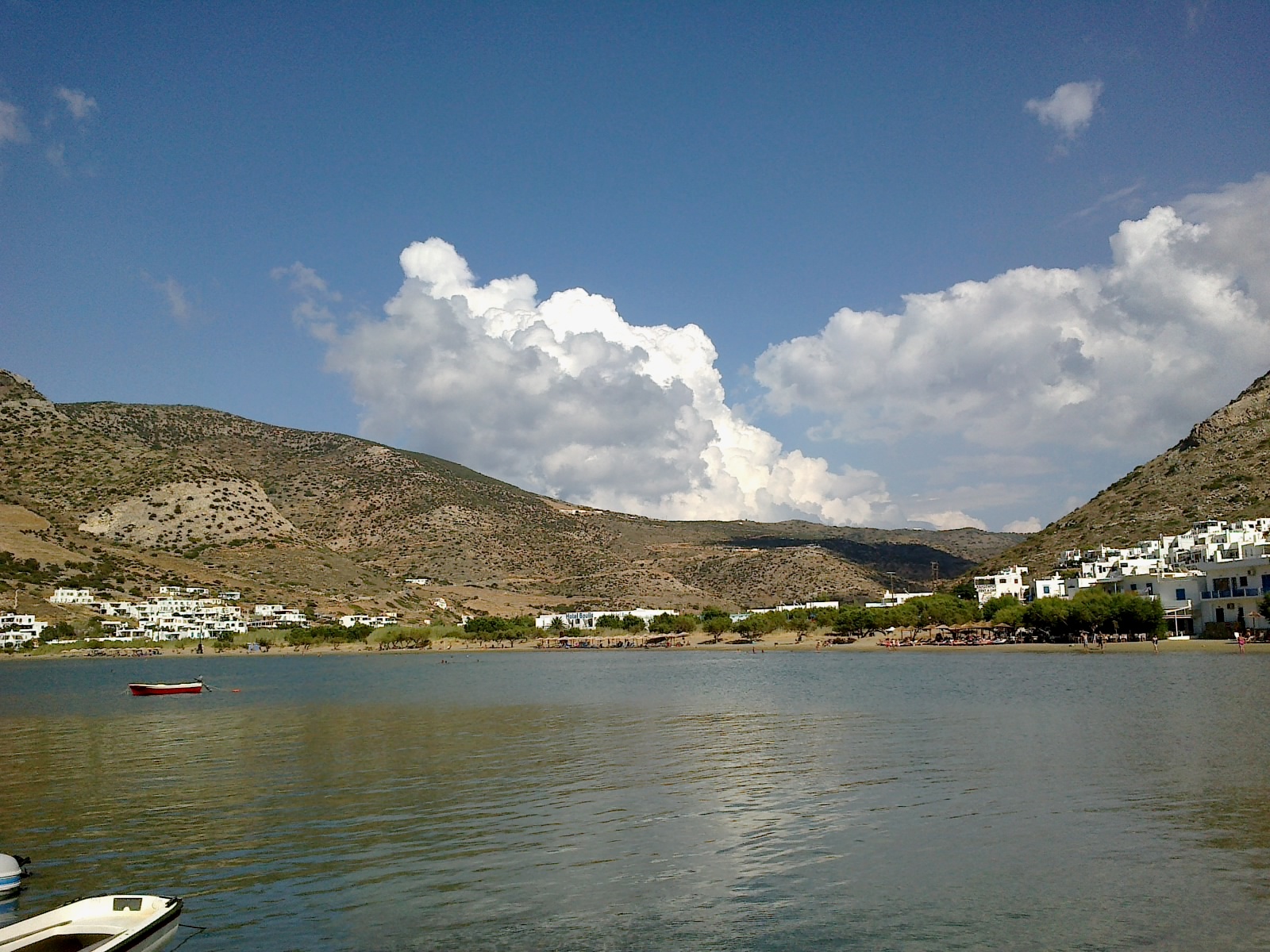
Kamares
The ferry port is also, it turns out, a perfectly pleasant place to spend a night or two. The bay curves gently westward, the sunsets are among the island’s best, and the row of waterfront tavernas serves exactly the kind of seafood that you wanted when you boarded the boat in Piraeus. This is also where the island’s rhythm becomes most legible: watch the ferries arrive and the motorbikes unload and the café tables fill, and you will understand, within an hour, that Sifnos has its own pace and will not be hurried.
Faros and Vathi
These two smaller villages represent Sifnos at its most retreated. Faros is a fishing village that has barely changed its essential character in generations. Vathi is a deep sandy bay with a handful of tavernas and the profound silence of a place that the 21st century has not yet fully colonised. Both reward a full day’s visit or, better, an overnight stay.
Getting to Sifnos
Sifnos has no airport, and this is a feature, not a bug. The island has made a conscious choice — one increasingly recognised as wisdom — to protect itself from the scale of tourism that only air access makes possible. No planes means no day-trippers, no cruise-ship overflow, no Instagram hordes landing for four hours and then leaving.
You get to Sifnos by ferry, and the ferry is part of the experience.
From Athens (Piraeus)
The port of Piraeus is approximately 15 km from central Athens and 45 km from Athens International Airport. Ferryhopper is the most useful booking platform for comparing routes and times.
- Fast catamaran (Sea Jets): approximately 2.5 hours, €80–88 per person
- Conventional ferry: 5 to 5.5 hours, €68–70 per person; significantly cheaper and, many would argue, the proper way to arrive — sitting on the upper deck with a coffee as the Cycladic islands materialise out of the morning haze
- Vehicle transport: additional €78–90 for a car
In high season (June through September), there are usually at least two daily connections. Check departure gates E6, E7, E9, or E10 at Piraeus — always confirm your boarding gate on your ticket.
Island Hopping
Sifnos connects naturally with its Cycladic neighbours. Serifos and Kythnos are the closest; Milos is reachable to the south; Ios and Santorini are further options for those building a multi-island itinerary. If you have time to explore more of the mainland before heading to the islands, our Peloponnese road trip guide covers one of Greece’s most rewarding overland routes departing from Athens.
Getting Around the Island
The KTEL bus service connects Kamares to Apollonia in about ten minutes, then continues to Artemonas, Platis Gialos, Kastro, Faros, and Vathi — timed to meet the ferries. Taxis are available throughout the villages. A car rental is strongly recommended if you want flexibility for beaches and hiking trailheads, particularly if you are based in Vathi.
When to Visit: The Case for September 2026
Sifnos is accessible from April through November, with the summer peak running from late June through August. All of these months have something to offer, but if you are asking when to go — the answer in 2026 is September.
By September, the fierce heat of August has softened. The crowds have thinned without the island feeling closed. The harvest season brings a different energy to the markets and kitchens — new grape must, early olives, the particular concentration of flavour that only late-summer produce has. The hiking trails are at their most comfortable. The sea is still warm from three months of summer sun. And the new restaurants that opened in spring — Lamarina among them — have found their rhythm.
Spring (April and May) is also beautiful on Sifnos: the wildflower meadows along the hiking trails are at their peak, Easter traditions are observed with great seriousness, and the island belongs almost entirely to its own people. But September is the moment when Sifnos is most fully itself.
A Suggested Itinerary: Four Days on Sifnos
Day One: Arrival and Apollonia. Come by morning ferry if possible — the approach to Kamares from the sea, with the mountains rising behind the port, is worth seeing in full daylight. Take the bus to Apollonia, find your accommodation, and spend the afternoon wandering the pedestrian lanes. In the evening, find a table at one of the traditional tavernas and order whatever is on the daily menu. This is not the night for making reservations; it is the night for being a guest.
Day Two: Beach and Village. Morning at Platis Gialos — settle in early before the sunbeds fill. Lunch at Omega 3. Afternoon: drive or take a taxi to Artemonas for a gentle wander through the Venetian lanes. Finish the day in Kastro: arrive at least an hour before sunset, climb to the eastern promontory, and watch the light turn the Aegean from blue to copper to rose. Dinner at Loggia, with a glass of something natural and a view that no restaurant in Athens can match.
Day Three: Pottery and Hiking. Begin the morning at Apostolidis Ceramics in Leivadas — the hands-on workshop runs two and a half hours and is one of the most genuinely memorable experiences on the island. A simple taverna lunch, then in the afternoon, take Trail 10 from Apollonia down to Kamares. The descent takes about two hours and ends at the port waterfront just in time for the evening ferry-watching, a cold beer, and dinner by the water.
Day Four: Faros and Chrissopigi. Drive or taxi to Faros in the morning. Walk to the Chrissopigi Monastery along Trail 2 — the path through the southern hills, with views of the sea on both sides, is one of the island’s finest. Swim below the monastery in the afternoon. That evening, if you haven’t already, make your reservation at Lamarina for a final dinner of traditional Sifnian cooking before your morning ferry.
A Note on Visiting Responsibly
Sifnos is at a crossroads. The same qualities that make it so compelling — its authenticity, its small-scale culinary culture, its intact pottery tradition — are precisely what overtourism threatens. A 2026 investigation in The New Republic identified water scarcity, waste management pressure, and unregulated development as growing challenges. The island is actively developing a sustainability plan.
Visiting Sifnos well means: staying more than two nights, eating at local family tavernas rather than only the famous names, buying pottery directly from the workshops, hiking the trails rather than renting ATVs, and respecting the rhythms of an island that has not yet been entirely reshaped by outside demand. The difference between a tourist and a traveller has never been more consequential than here.
In Sifnos, the ancient stone paths still lead exactly where they always led — to a neighbour’s kitchen, a potter’s kiln, a hidden chapel, a deep blue cove. All the island asks is that you walk them mindfully.
If traditional island culture — the kind that has stood still for generations — is what draws you to the Greek islands, Sifnos delivers it, quietly and without fuss, as long as we take care of it.
Practical Information at a Glance
- Getting there: Ferry from Piraeus (Athens); fast catamaran ~2.5 hours (€80–88); conventional ferry ~5 hours (€68–70). Book via Ferryhopper.
- No airport: Fly to Athens, then ferry.
- Getting around: KTEL bus (Kamares ↔ Apollonia ↔ villages); taxis; car rental recommended for flexibility.
- Best time to visit: September (ideal balance of weather, fewer crowds, harvest energy); June–October for beaches; April–May for wildflowers.
- Hiking: Sifnos Trails — 19 marked trails, 100+ km, detailed maps available.
- Pottery workshops: Apostolidis Ceramics, Leivadas (~€110, 2.5 hours); Atsonios Ceramics, Vathi (viewing and purchase, daily from 9am).
- 2026 highlights: Lamarina restaurant (opened May 2026, chef Giorgos Samoilis); Loggia wine bar, Kastro; Condé Nast recognition.
- Where to stay: Apollonia (most central); Artemonas (quieter, charming); Kamares (port, easy access, good sunsets); Vathi (secluded, family-friendly).
- What to order: Revithada (especially Sunday), mastelo, manoura cheese, xerotigana, local wines.