
Crete is Greece’s largest island, but its scale matters less than its geography. The north-coast highway makes Chania, Rethymno, Heraklion and Agios Nikolaos look close on a map; mountain roads, southern detours and worthwhile stops tell a different story. A road trip works when it gives each region enough time, rather than treating the island as a checklist.
This guide is for travellers deciding how long to hire a car, where to sleep, and whether a full-island route is realistic. It focuses on the trade-offs that shape a better trip: which drives are straightforward, where a car is essential, and when an itinerary needs slack for heat, ferries, parking and changing conditions.
Crete road trip at a glance
| Question | Practical answer |
|---|---|
| Is a car necessary? | Not for the main north-coast cities, but strongly recommended for beaches, mountain villages, trailheads and most of the south coast. |
| How long should you allow? | One week suits a focused western or eastern route. Allow 10 to 14 nights for a broader west-to-east journey with rest days. |
| Best arrival airports | Chania suits western Crete; Heraklion suits central and eastern Crete. An open-jaw flight can reduce backtracking if fares work. |
| Easiest driving | The north-coast corridor is least demanding. South-coast and mountain routes are slower, narrower and best tackled in daylight. |
| Best months | Late spring and early autumn usually offer the best balance of daylight, swimming weather and manageable heat. |
Build the route around regions, not kilometres
Crete rewards two- and three-night bases. The important decision is not how much ground you cover, but how much time you keep once you arrive.
Who this trip is best for
A self-drive trip suits travellers who want to combine coast, archaeology and inland villages without depending on a fixed bus timetable. It is especially useful for families carrying beach gear, walkers heading for trailheads, and anyone who wants to sleep outside the large north-coast resorts. A small car is normally easier to park and manoeuvre than an SUV, although the correct vehicle still depends on the roads your rental agreement permits.
It is less suitable for travellers who dislike narrow mountain roads, are arriving for only three or four nights, or want every day at a hotel beach. In those cases, one base plus buses, taxis or occasional tours can be the better holiday. Crete is not a place to drive simply because a map makes a beach look reachable.
Limitations worth knowing
Do not plan a full-island route as a chain of day trips from one hotel. Parking around Chania, Rethymno and Heraklion takes time, and many attractive southern roads are slow even when paved. In summer, heat changes the calculation: a beach descent, gorge walk or late-afternoon drive can become much more demanding than its nominal distance suggests.
Choose the route before booking accommodation
For a first trip, the cleanest choice is between western Crete and a wider island crossing. The west is best for Chania, the far-west beaches, gorges and the Libyan Sea. A central-and-eastern route makes more sense for Heraklion, Knossos, the Lassithi Plateau, Agios Nikolaos and Spinalonga. Trying to do both in seven nights tends to produce an itinerary built around check-outs.
| Route | Suggested bases | What it does well | What to leave out |
|---|---|---|---|
| 7 nights: western Crete | Chania; south coast or Rethymno | Old town, far-west beaches, gorge logistics and mountain drives | Lassithi and Vai |
| 10 nights: west and centre | Chania; Rethymno or Plakias; Heraklion | Adds Phaistos, Matala, Knossos and the museum without rushing | A far-eastern overnight |
| 14 nights: island crossing | Chania; Rethymno/south coast; Heraklion; Agios Nikolaos or Elounda; Sitia | Allows rest days and a real eastern section | Nothing essential, but retain a weather buffer |
Where to stay on a road trip
Your overnight stops determine whether the car feels liberating or burdensome. Chania is the strongest first base for western Crete because the old town, harbour and restaurants are walkable once you have parked. Choose accommodation just outside the narrowest lanes if private parking matters. Rethymno works well as a north-coast pause, while Plakias or Paleochora make sense only when you intend to spend real time on the south coast rather than merely tick it off.
Heraklion is practical for the museum, Knossos and an early flight, but it is not the most restful beach base. East of the city, Agios Nikolaos offers a compact town base, while Elounda suits travellers who want easy access to Spinalonga and a quieter evening routine. In each place, compare the parking arrangement before booking. A property described as “near the centre” can still leave you with a long walk from the nearest legal space.
Can you do this trip without a car?
Yes, if you narrow the route. Crete’s intercity KTEL network links the principal north-coast towns, and both KTEL Heraklion–Lasithi and KTEL Chania–Rethymno publish revised seasonal timetables. These services are useful for Chania, Rethymno, Heraklion, Agios Nikolaos and selected resort corridors. They are much less useful when a day depends on a remote beach, a trailhead, an early departure or a ferry connection.
A sensible car-free version is Chania, Rethymno and Heraklion by bus, with a guided day trip for a far-west beach or Samaria. That route gives up spontaneity, but it avoids difficult parking and one-way hike logistics. For a self-drive itinerary, collect the car after the first city stay and return it before the final urban nights. This approach avoids paying for a vehicle that will sit unused while you explore pedestrian centres.
Start in the west: Chania, Balos and Elafonisi
Chania is a strong opening base because it has an airport, a walkable old town and sensible access to western Crete. Keep at least one car-free day here. Once you collect the car, use it for the places that public transport does not make easy rather than for short urban journeys.
Balos: beautiful, but not an easy beach stop
Balos is best treated as a full excursion. The access road beyond Kissamos is rough in places, rental-company restrictions can apply, and the final approach involves a steep exposed walk. A boat from Kissamos removes the road and return climb, but fixes your time on the beach and normally brings you in with other visitors. Read the rental agreement, carry more water than expected, and avoid treating the lagoon as a casual stop between other destinations.
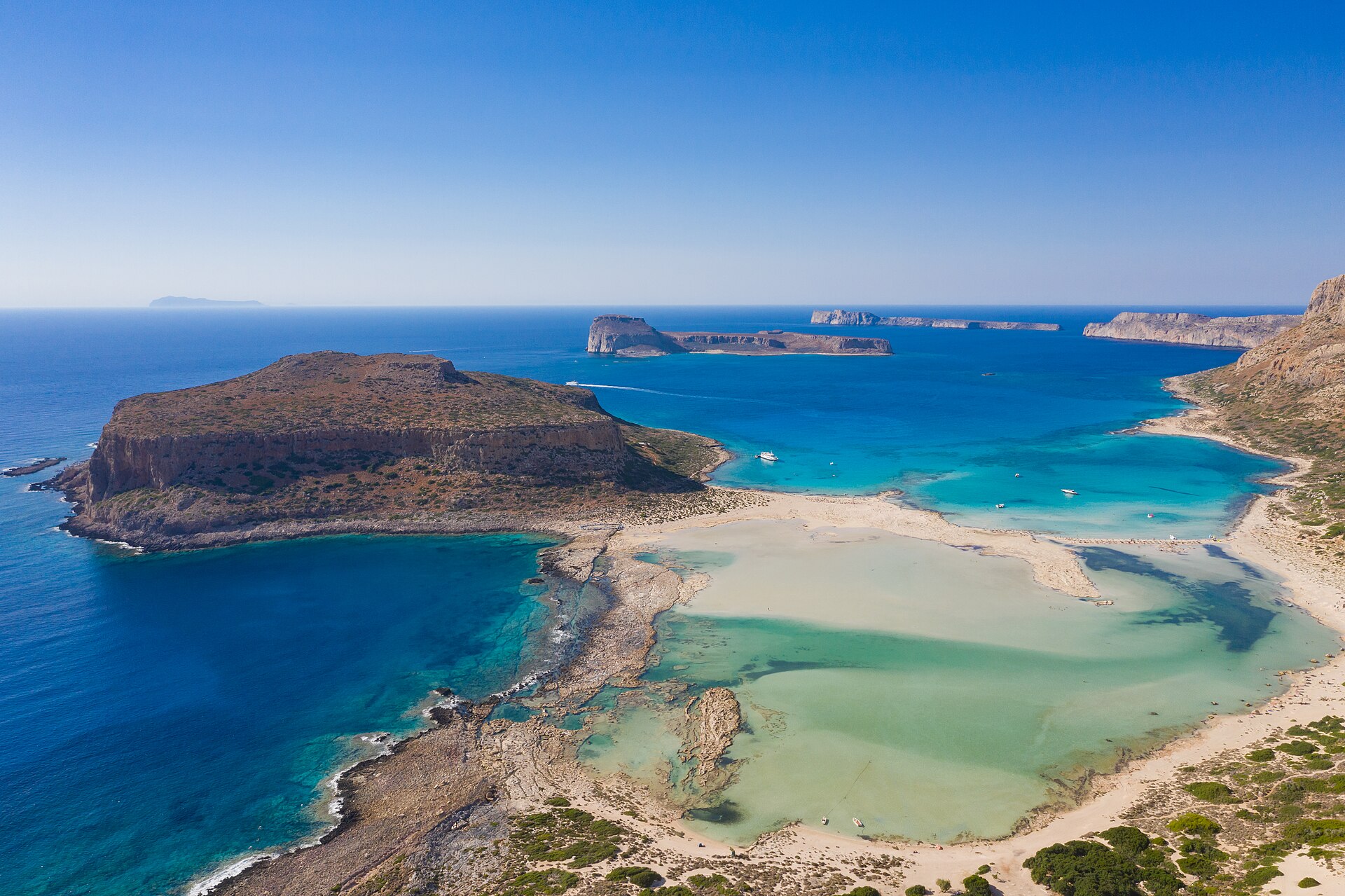
Photo by dronepicr, via Wikimedia Commons, licensed under CC BY 2.0.
Elafonisi: give the protected landscape more than an hour
Elafonisi is a shallow lagoon and protected coastal landscape, not a private pink-sand cove. The colour varies with light, tide and shell fragments, so it should not be sold as a guaranteed visual effect. It is busy in high summer and has little natural shade. The useful planning question is whether your group can manage a long mountain-road return after a beach day; if not, stay nearby or choose a closer west-coast beach.
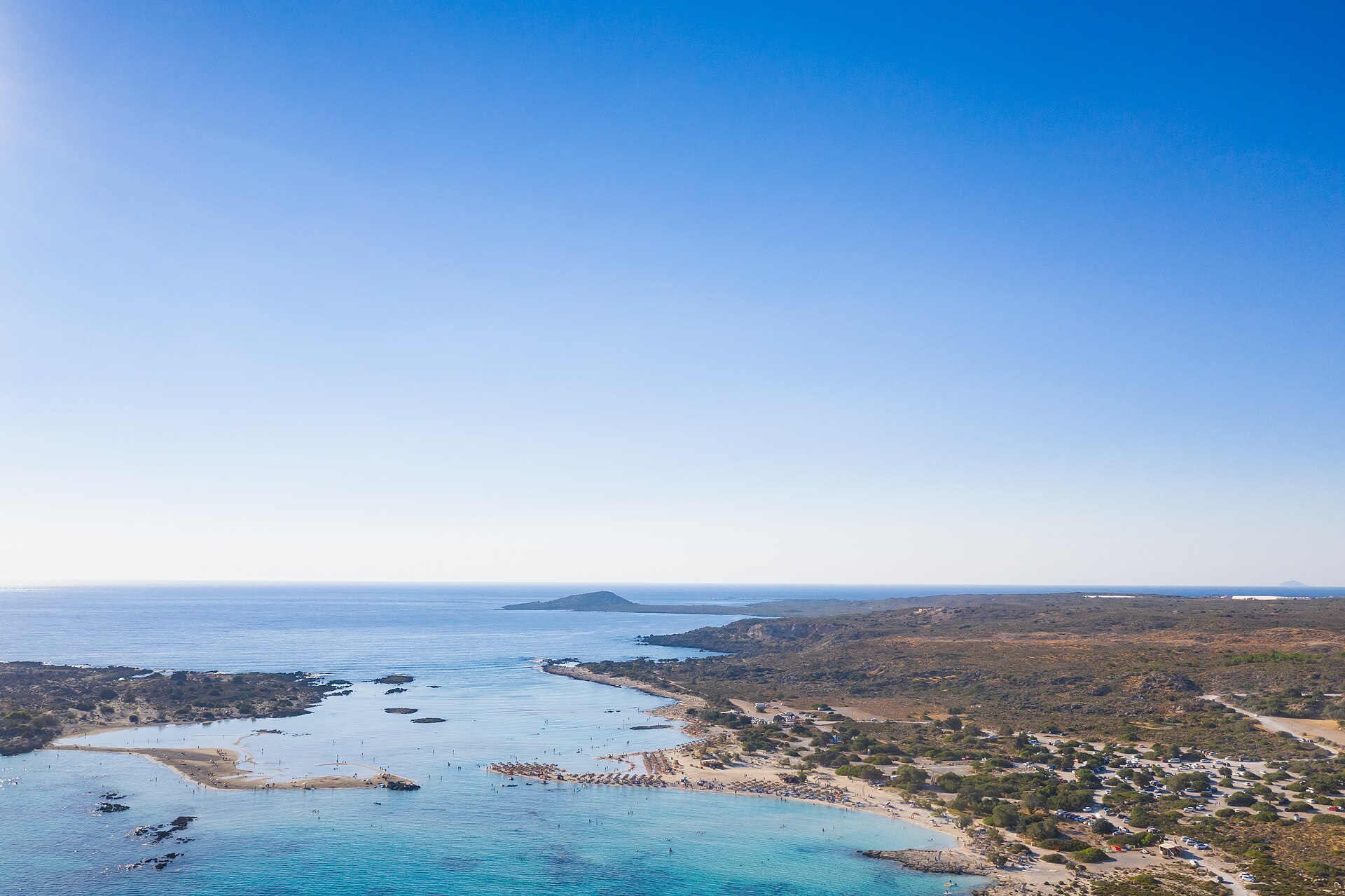
Photo by dronepicr, via Wikimedia Commons, licensed under CC BY 2.0.
Samaria Gorge: a transport day as much as a hike
Samaria is a serious point-to-point walk rather than an ordinary viewpoint trail. Check official park notices the evening before because weather and safety assessments can change access. The full route is long, descends continuously and ends at Agia Roumeli, a village without a road connection. That means arranging a ferry and onward transport, or staying on the coast, before you begin.
For 2026, published park rules require visitors to use the marked route and comply with staff instructions; operations can be suspended in hazardous conditions. It is not a good choice for anyone with an unstable knee, unsuitable footwear or a flight that evening. If you drive to the northern entrance, make a credible plan to retrieve the car rather than assuming the return will work itself out.
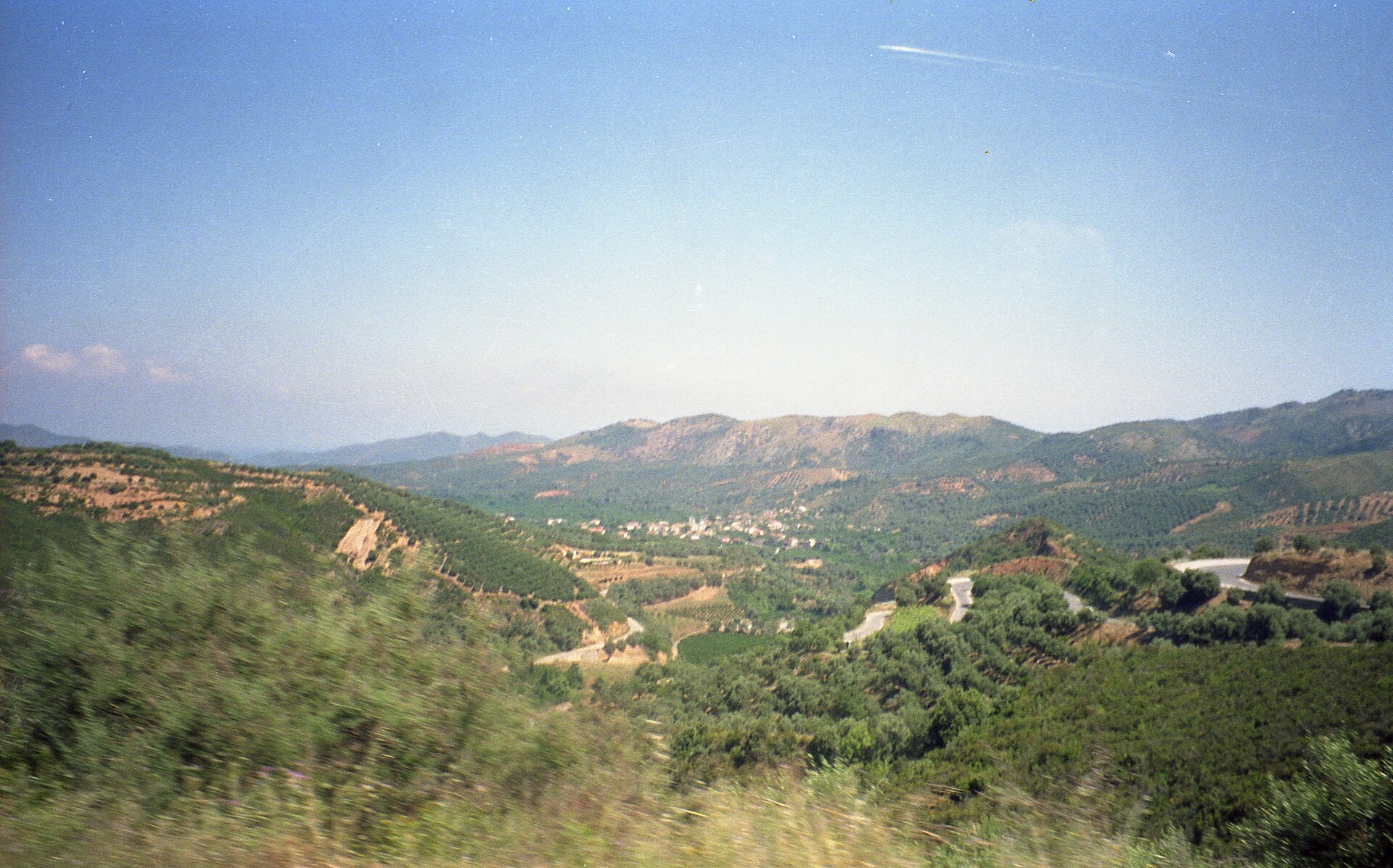
Photo by Robert Linsdell, via Wikimedia Commons, licensed under CC BY 2.0.
Use Rethymno or the south coast as a deliberate pause
Rethymno makes a practical link between Chania and Heraklion, particularly if you want an old-town evening without moving every night. It also gives access to roads south towards Plakias, Preveli and the Libyan Sea. The important distinction is that these are mountain journeys, not quick coastal hops.
Preveli is rewarding because the river, palms and beach meet in one compact landscape, but access includes a long descent and a correspondingly harder climb back. A boat service from the Plakias area can be useful when operating, but should not be assumed outside the main season. Choose between road-and-walk and a boat only after checking the day’s wind and timetable.
Central Crete: archaeology without a rushed stop
Heraklion is an efficient overnight before or after a flight, but it deserves more than a brief lunch break if Knossos matters to you. The Archaeological Museum supplies the original objects and context that the reconstructed palace cannot. Give the two sites a full day, or split them across two mornings in hot weather.
Knossos is one of the six sites in the Minoan Palatial Centres UNESCO World Heritage property inscribed in 2025. UNESCO describes the sites as administrative, economic and religious hubs of Minoan civilisation. Arthur Evans’s early twentieth-century reconstructions remain debated by archaeologists, so treat them as interpretation rather than an untouched ancient fabric. Pairing the site with the museum gives a much fuller visit.
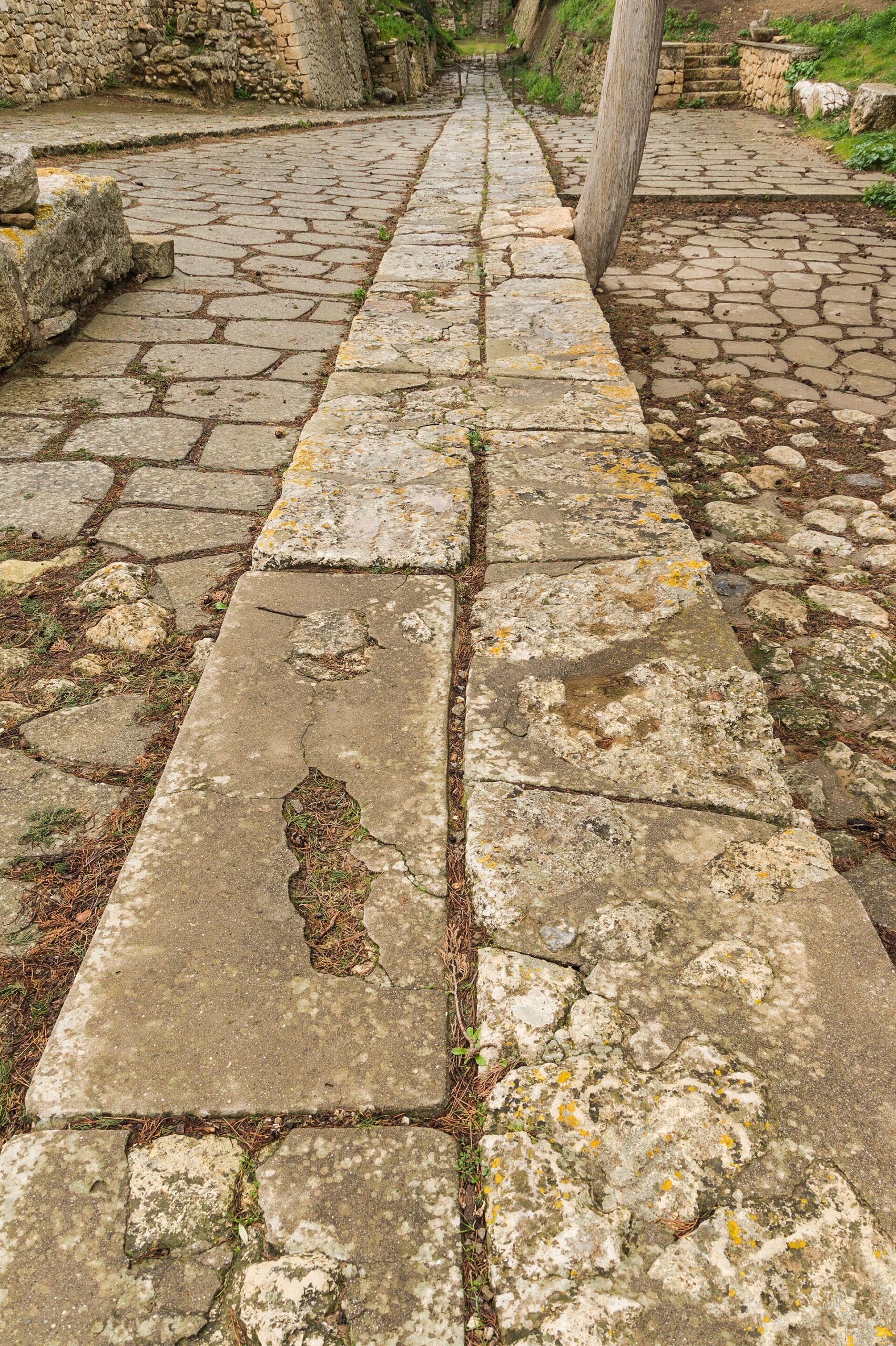
Photo by Jebulon, via Wikimedia Commons, dedicated to the public domain under CC0.
East of Heraklion: slow down around Agios Nikolaos and Elounda
The north-coast route east from Heraklion is easier than most south-coast driving, making Agios Nikolaos or nearby Elounda a sensible base after the central part of the trip. This is the right place to leave the car parked for a day and take a boat to Spinalonga. Departures, crossing times and site opening arrangements are seasonal, so check the operator and Ministry of Culture information for the exact day.
Spinalonga’s significance lies in its layered history: a Venetian fortress, an Ottoman settlement and, later, a leprosy colony that closed in 1957. It is not an attraction to rush through between lunch and a beach booking. Allow time for uneven paths, heat and the historical interpretation on site.
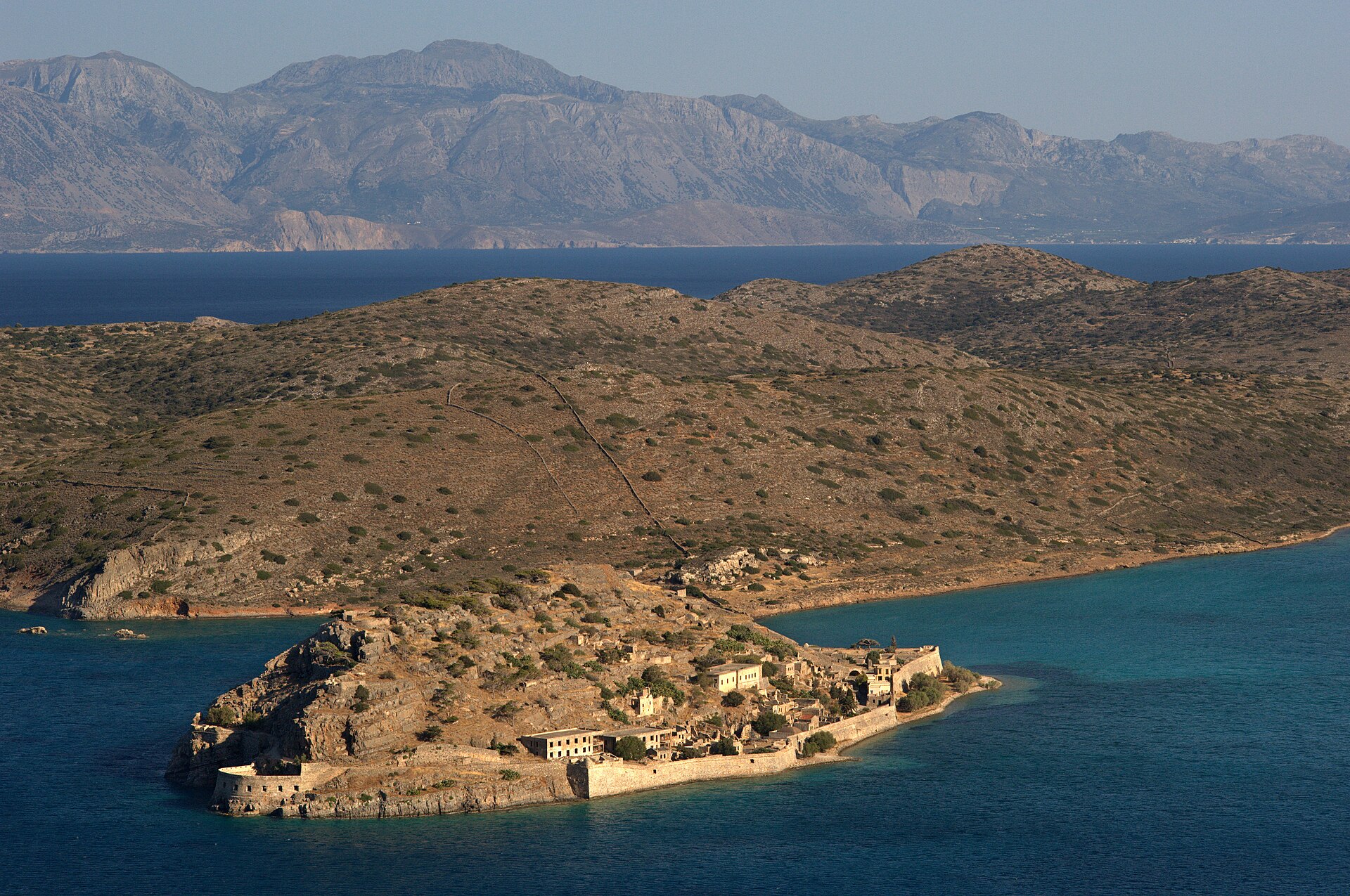
Photo by Ggia, via Wikimedia Commons, licensed under CC BY-SA 3.0.
The Lassithi Plateau and Dikteon Cave
The plateau is a worthwhile inland diversion when you want a change from the coast, but the approach is a mountain drive with bends and elevation. Dikteon Cave above Psychro reopened in 2026 after restoration work, according to local municipal and regional reporting, but operating details changed during the reopening period. Confirm same-day access before driving up solely for the cave. The cave is traditionally associated with Zeus’s birth in Greek mythology; that association is mythology, not documented history.
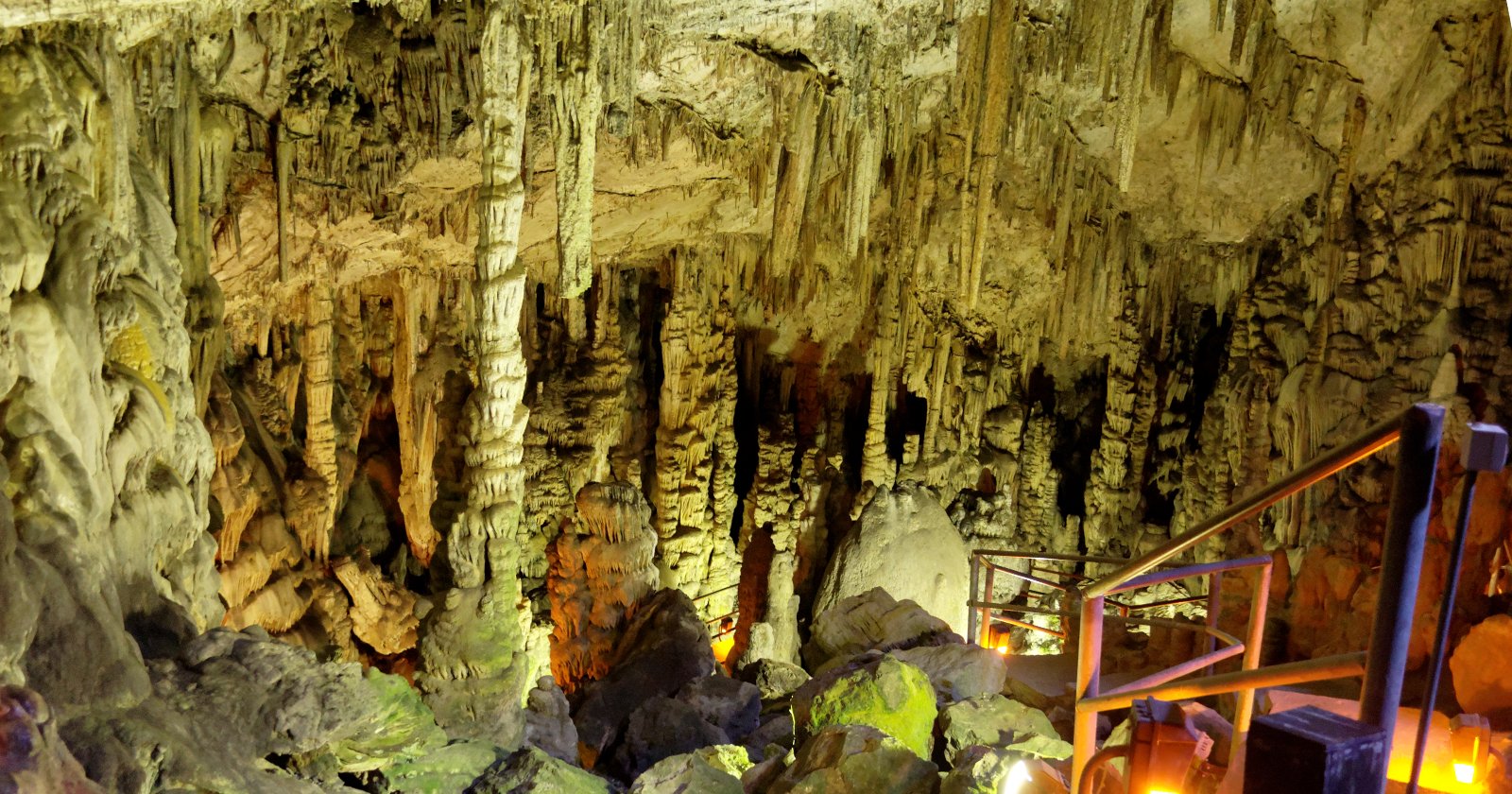
Photo by Pathwaygr, via Wikimedia Commons, licensed under CC BY 3.0.
Driving in Crete: habits that make the trip easier
The main north-coast road is the least stressful part of a Crete road trip. Treat mountain and rural routes differently. They can be narrow, have sharp bends, limited lighting and occasional livestock. Do not rely on a mapping app to distinguish a public road from an unsuitable track; if a route looks wrong for your car, turn around. Avoid unfamiliar rural driving after dark, refuel before long southern or inland sections, and pull into a safe lay-by rather than stopping in a running lane for a view.
Parking is most difficult in old-town centres and at headline beaches in summer. A hotel with parking is worth prioritising when using Chania, Rethymno or Heraklion as a base. For the rest of the island, one significant driving objective per day is normally enough.
When to take this road trip
May, June, September and October generally give the best balance for a self-drive route. The days are long enough for inland detours, the sea is usually inviting, and major roads are less pressured than in midsummer. Conditions still vary: Samaria access is seasonal, beach facilities can open late or close early, and mountain weather is cooler and more changeable than the coast.
July and August work best for travellers who accept crowds, earlier starts and a slower midday pace. For those months, book airport cars and parking-friendly accommodation earlier than usual. Winter offers a different Crete, with active cities and quieter villages, but it is not the season for a beach-and-gorge itinerary. Check weather warnings before any high-elevation drive.
Food stops that justify leaving the main road
Crete’s road-trip advantage is not simply that it reaches famous beaches. It also makes a lunch in an inland village possible without turning the day into a tour. The food changes subtly between regions, but the useful approach is the same: ask what is seasonal, keep the order small, and avoid adding another long drive after a heavy lunch. Mountain villages are particularly good places to pause because shade, parking and a slower pace are often easier to find than on the coast.
Look for dishes rooted in the wider Cretan table rather than a generic “Greek menu”. Dakos combines barley rusk, tomato, olive oil and soft local cheese. Kalitsounia are small pies, commonly filled with cheese or greens. Chochlioi boubouristi are snails cooked in olive oil and vinegar, while wild greens appear regularly as a side dish. In wine country south of Heraklion, local grapes such as Vidiano, Vilana and Kotsifali offer a useful reason to take an overnight break rather than drive straight through.
Food is also a planning tool for families and drivers. A tavern lunch can give everyone a break before a mountain section, but it is not a substitute for water, snacks and a realistic departure time. Small villages may keep shorter hours outside the main season. If a particular winery or rural restaurant matters to your plan, contact it directly before setting out.
How to make the route work for families
Families often benefit from fewer bases, not more attractions. Choose accommodation with a pool or an easy beach on the days between long drives, and avoid pairing a gorge, a long transfer and a late restaurant dinner. Elafonisi’s shallow areas can be convenient for children, but the lack of shade and the long journey from Chania still matter. Balos involves a steep exposed approach, making it less straightforward with toddlers, buggies or anyone who struggles on uneven ground.
For younger children, north-coast bases reduce the number of demanding road days. A car remains helpful for flexibility, but adults should share driving where possible and retain a backup plan for strong wind or heat. If a boat day is central to the trip, choose the accommodation and parking arrangement around that departure rather than trying to fit it between two hotel changes.
Before you collect the car
Read the rental terms rather than relying on a comparison-site summary. Confirm the fuel policy, deposit, roadside-assistance procedure, additional-driver conditions and which unpaved roads are excluded. Photograph existing marks with the representative present, and check that the spare wheel or repair kit is in place. A small detail at the airport can save a difficult conversation after a gravel road or tight village parking space.
Download offline maps before leaving the airport, but use road signs and common sense as the final authority. Mobile coverage can weaken in the interior, and routing systems occasionally favour tracks that are unsuitable for ordinary cars. Keep paper or saved copies of key booking addresses, ferry times and accommodation phone numbers. When a route needs a steep descent or a narrow approach, arriving in daylight is the conservative choice.
What to pack for the driving days
Keep a separate day bag in the car instead of unpacking it at every stop. It should contain refillable water bottles, sun protection, a light layer for exposed boat crossings, proper walking shoes and a basic first-aid kit. For beach days, add shade if travelling outside the organised sections, dry clothes for children and something warm for the return journey. The aim is not to carry expedition equipment; it is to avoid buying unsuitable replacements at the last petrol station.
A practical 10-night outline
| Nights | Base | Use the time for |
|---|---|---|
| 1–3 | Chania | Old town, one relaxed local day, then either Balos or Elafonisi |
| 4–5 | Rethymno, Plakias or Paleochora | A south-coast stay, Preveli or a carefully planned Samaria day |
| 6–7 | Heraklion | Knossos, the Archaeological Museum, Phaistos or Matala |
| 8–10 | Agios Nikolaos or Elounda | Spinalonga, the Lassithi Plateau and a final no-driving day |
This outline is deliberately uneven. It leaves decisions open when a boat, a hike or a mountain road does not suit the weather. If you have fewer nights, remove a region rather than compressing every stop into a one-night stay.
The best itinerary leaves room to change course
Wind can cancel a boat, heat can shorten a hike, and an inland lunch can become the day’s best stop. Build those possibilities into the plan.
Common planning mistakes
Using Chania as a base for the entire island. It works for the west, not for a serious eastern itinerary. The return drive to Heraklion and beyond consumes days that could be better spent on the road less.
Scheduling Balos, Elafonisi and Samaria back-to-back. All three are substantial western-Crete days. Sequencing them without a slower day turns the trip into logistics.
Booking non-refundable accommodation before choosing the route. Decide whether the trip is west-focused, central-and-east-focused or a crossing first. Then book bases around that decision.
Assuming every beach suits every wind. A calm lagoon on one day can feel exposed on another. Check conditions locally and keep a second option.
Forcing the full island into one week. A focused route feels like a holiday. A rushed crossing feels like a transfer between car parks.
Final recommendation
For a first Crete road trip, choose the west if you want beaches, gorges and Chania’s old town; choose the centre and east if archaeology, the Lassithi Plateau and Spinalonga matter more. With 10 to 14 nights, join those regions through Rethymno or the south coast and give yourself at least two no-driving days. The island is generous with scenery, but the better decision is almost always to see less of it more carefully.
This article was researched and verified in July 2026. Archaeological-site hours, boat services, hiking access, road conditions and transport schedules may change. Confirm time-sensitive details with official providers before travelling.


_(9453257774).jpg)


_01.jpg)