Arriving in Symi by boat is one of the more arresting first impressions in the Greek islands. As the ferry rounds the headland, the horseshoe-shaped harbour opens before you: tiers of ochre, terracotta, and lemon-yellow neoclassical mansions climbing the steep hillside above the water, each one a reminder of a time when this small island was genuinely wealthy. The scene has a completeness about it — a harbour that has held its shape and character through centuries of changing ownership and economic fortune.
It was not planning but prosperity that built Symi. During the 19th century, the island’s shipbuilders and sponge divers amassed sufficient fortunes to construct this concentration of grand merchant houses. The economy has long since shifted, but the architecture remains — protected by a Greek archaeological decree that prevents non-traditional construction anywhere on the island. Symi has consequently aged with unusual grace, and it is among the most visually consistent of the Dodecanese islands.
The island is small. At roughly 65 square kilometres, with a permanent population of around 2,600 people, Symi demands a different kind of visit from the larger Aegean destinations. There are no international flights, no large resort hotels, and no sandy beaches within walking distance of the harbour. What it offers instead is coherence: a town that has maintained its character, a celebrated monastery on the southern coast, a series of coves accessible mainly by boat, and a pace of life that quietens noticeably once the day-trip crowds have departed.
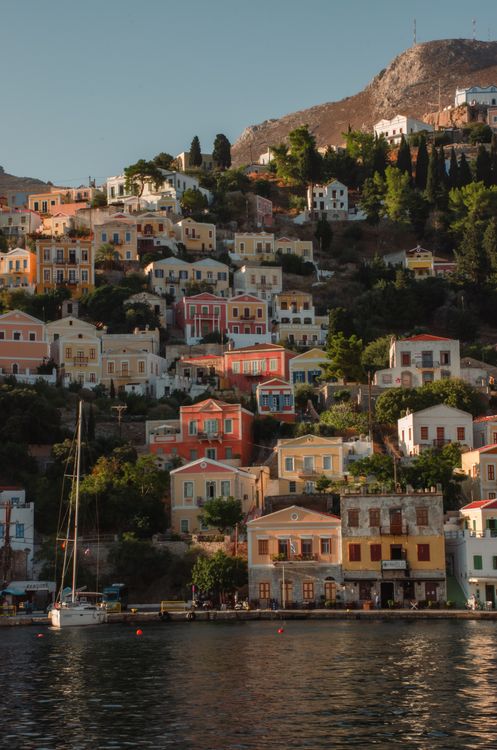
Photo: Mervelernerede, Pexels
Who Symi Is Best For
Symi works well for travellers who want a compact, architecturally distinctive island without the mass-tourist infrastructure of Rhodes or Kos. It suits independent visitors comfortable with ferry travel, walkers willing to climb steps, and anyone with at least two nights to spare — enough time to see beyond the harbour and understand why the island rewards staying rather than passing through.
It is less suitable for families with very young children who require shallow, sandy beaches; travellers who need a car or frequent public transport; or anyone unprepared for serious summer heat. Symi is one of the hottest places in Greece during July and August, with average daytime temperatures around 32°C. This does not make the island unwelcoming in high season, but it does require thoughtful planning.
A Brief History
Symi’s history as a maritime settlement goes back to antiquity, with evidence of Bronze Age habitation and references in ancient texts to the island’s position along Aegean trade routes. In mythology, Symi is said to be the birthplace of the Charites — the three goddesses of grace — and the island took its name, according to one ancient account, from the nymph Syme.
The Knights of St John, who controlled much of the Dodecanese, held Symi from 1309. The Ottomans took the island in 1522 and called it Sömbeki. Under Ottoman rule, Symians were granted unusual trading privileges in exchange for supplying sponges and maritime skills. This arrangement helped fund the golden age of the 19th century, when the island’s sponge-fishing fleet was reportedly the largest of its kind in the world, and the Petridis family’s international sponge-trading business maintained offices in Syros, Piraeus, Paris, and London.
The revenues from sponge trading funded the construction of the neoclassical mansions, public schools, and civic buildings that still define the harbour today. The population at this time is estimated to have been around 22,500 — a figure that makes the current 2,600 permanent residents feel all the more striking. The introduction of synthetic sponges in the 20th century, combined with the shift to steam-powered shipping and successive periods of occupation during the Second World War, accelerated a decline that had already begun. Many Symians emigrated to Rhodes, North America, and Australia; the island notes, with some pride, that a significant proportion of those emigrants eventually returned. Symi formally became part of Greece in 1948, alongside the rest of the Dodecanese.
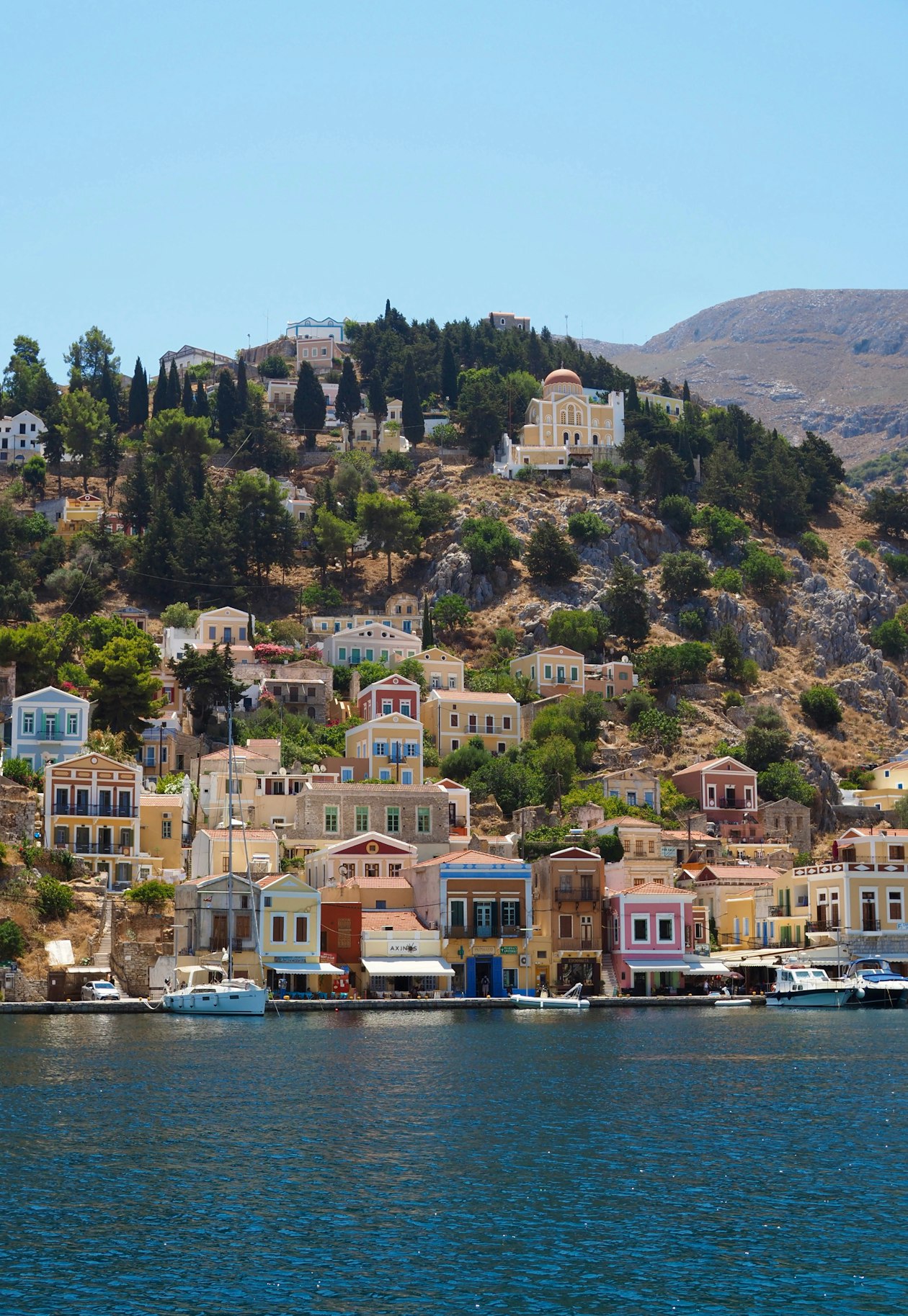
Photo by Dimitris Kiriakakis on Unsplash
Getting to Symi
Symi has no airport. The nearest is at Rhodes, which has frequent connections from Athens and direct flights from several European cities during the summer season.
From Rhodes, multiple ferry operators connect to Symi’s port of Gialos. The journey takes approximately 45 minutes on Dodekanisos Seaways catamarans, or between one and one and a half hours on conventional ferries operated by Blue Star Ferries, Saos Ferries, Sea Dreams, and Sebeco Lines. In summer, there are multiple daily sailings — in peak season, as many as a dozen round trips per day across all operators combined. Prices and timetables vary by operator and change seasonally; check directly with operators or through ferry-booking platforms for current information before travelling.
One logistical detail worth noting in advance: Rhodes Town has more than one harbour. Dodekanisos Seaways and some smaller operators depart from the harbour near the Sea Gate of Rhodes Old Town, while Blue Star Ferries and others use the larger Akandia harbour, a short walk further along the coast. Confirming your departure point when booking avoids unnecessary confusion on the day.
Blue Star Ferries also operates a direct connection from Piraeus, Athens’s main port, though the journey takes roughly 14 to 17 hours and involves stops at other Dodecanese islands. This route suits travellers building a longer island-hopping itinerary rather than those making a specific trip to Symi.
Symi is additionally a very popular day-excursion destination from Rhodes. Organised boat trips run daily from various points in Rhodes throughout the summer, typically including time in Gialos and a stop at Panormitis Monastery or Saint George’s Bay. These excursions are well-established and widely available. For travellers who want to experience Symi’s highlights without spending the night, a day trip is a practical and cost-effective option — though it means sharing the harbour with considerable numbers of fellow visitors between roughly 10:30am and 5pm, when the island is at its most crowded.
Day Trip or Overnight Stay?
A day trip gives a reasonable view of Gialos, the Kali Strata steps, and possibly Panormitis Monastery. An overnight stay changes the island’s character significantly. By late afternoon, once the excursion boats have left, Symi becomes a different place: the waterfront restaurants fill with residents and staying guests, the light on the harbour houses shifts to long amber, and the scale and quiet of the island become apparent. Two nights is a workable minimum for a genuine visit. Three to four nights allows time to reach the more remote beaches by water taxi, explore Chorio properly, and take a boat trip around the island.
Gialos: The Harbour Town
The port of Gialos is the centre of life on Symi. It wraps around the inner harbour, with the main square at its eastern end and a waterfront promenade lined with cafes, restaurants, and small shops. Arriving from the ferry on foot is simple: the quayside leads directly into the town, and the entire harbour area is compact enough to explore without a map.
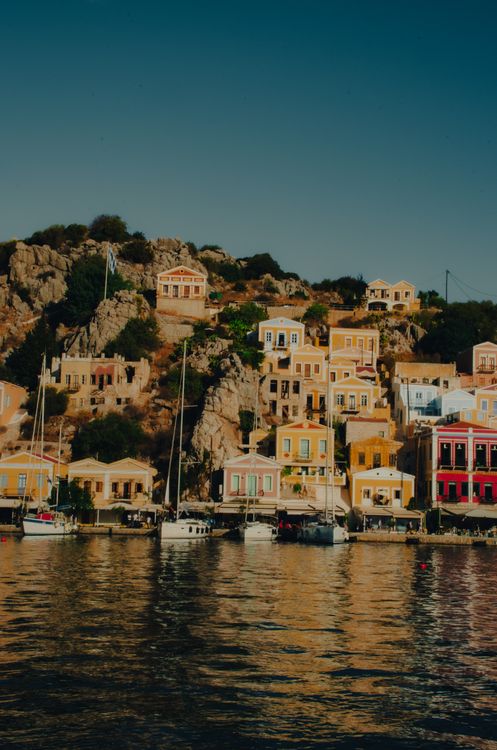
Photo: Mervelernerede, Pexels
The Petrideio clock tower, built in 1881, stands at the harbour’s edge. It was funded by Georgios Petridis — the head of the wealthy Symian sponge-trading dynasty whose revenues built much of Symi’s civic infrastructure. Local legend holds that its design drew inspiration from London’s Big Ben, though this remains more colourful story than documented architectural history. The tower is a useful orientation point in the harbour and marks the edge of the main commercial area.
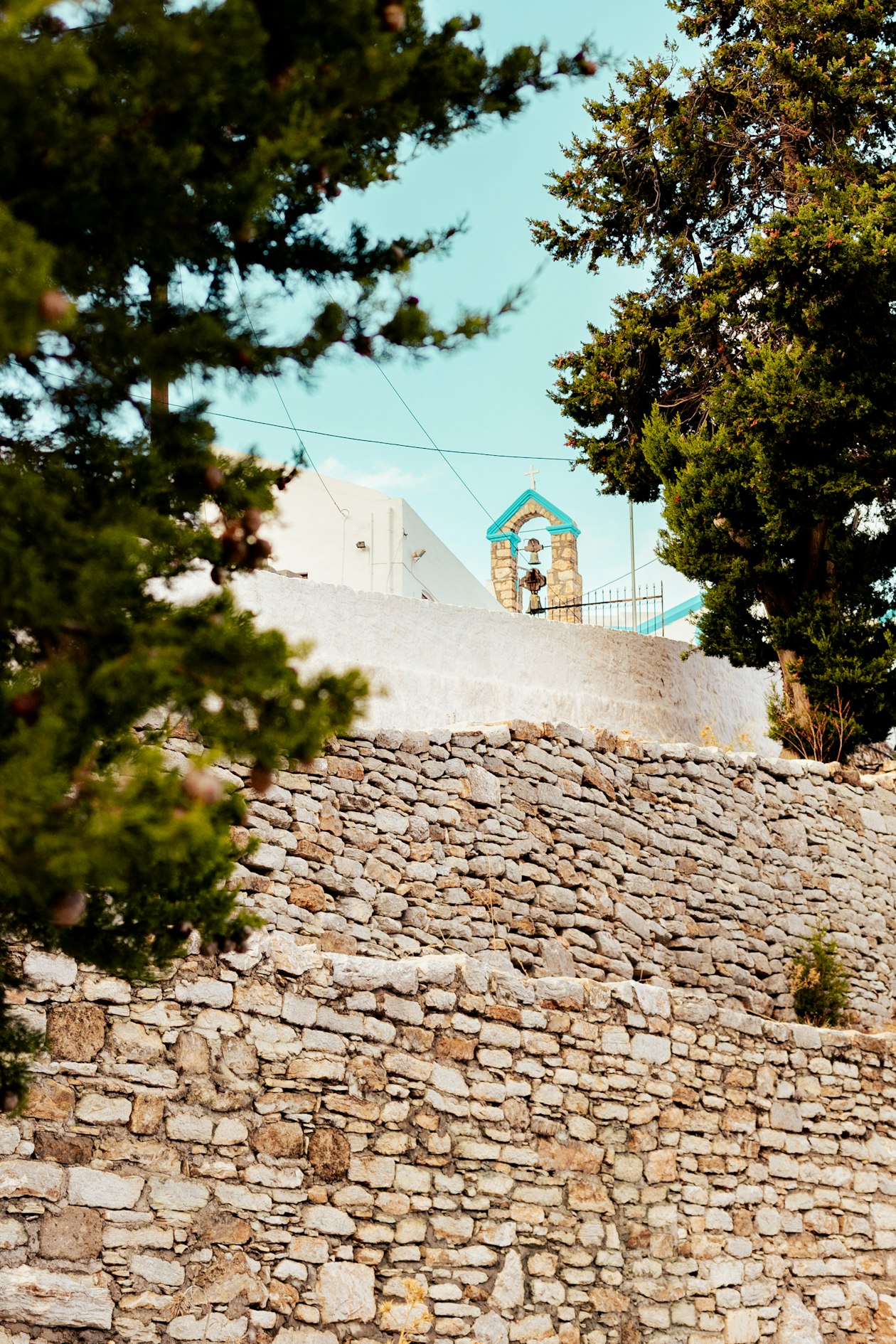
Photo by Kirk Photographer on Unsplash
The Archaeological and Folklore Museum occupies three floors of several restored neoclassical mansions near the harbour. The upper floors hold the archaeological and Byzantine collections: Roman sculptures, pottery, and coins excavated from Symi and nearby islands, alongside Byzantine icons, manuscripts, and painted panels. The ground floor is arranged as a restored merchant’s house from the island’s prosperous era, displaying traditional Symian costumes, furniture, musical instruments, and carved woodwork. A shaded courtyard contains additional sculptures. The museum provides context for the wealth that built the houses outside its windows, and is worth an hour of any visit.
The restaurants on the main waterfront are convenient and often well-priced, though those in the quieter streets behind tend to be calmer and sometimes better value. The harbour is liveliest in the morning and early afternoon; by evening, when the day-trip boats have departed, the atmosphere is considerably more relaxed.
Chorio: The Hilltop Town
Above Gialos, connected by a stairway called the Kali Strata, lies Chorio — also known as Horio or Ano Symi. The Kali Strata climbs approximately 500 steps and was originally built as a formal route for wealthy merchants travelling between the port and their hilltop homes. It remains the most visually rewarding approach to Chorio, particularly in the early morning before the heat builds, when the neoclassical facades on either side are at their most photogenic.
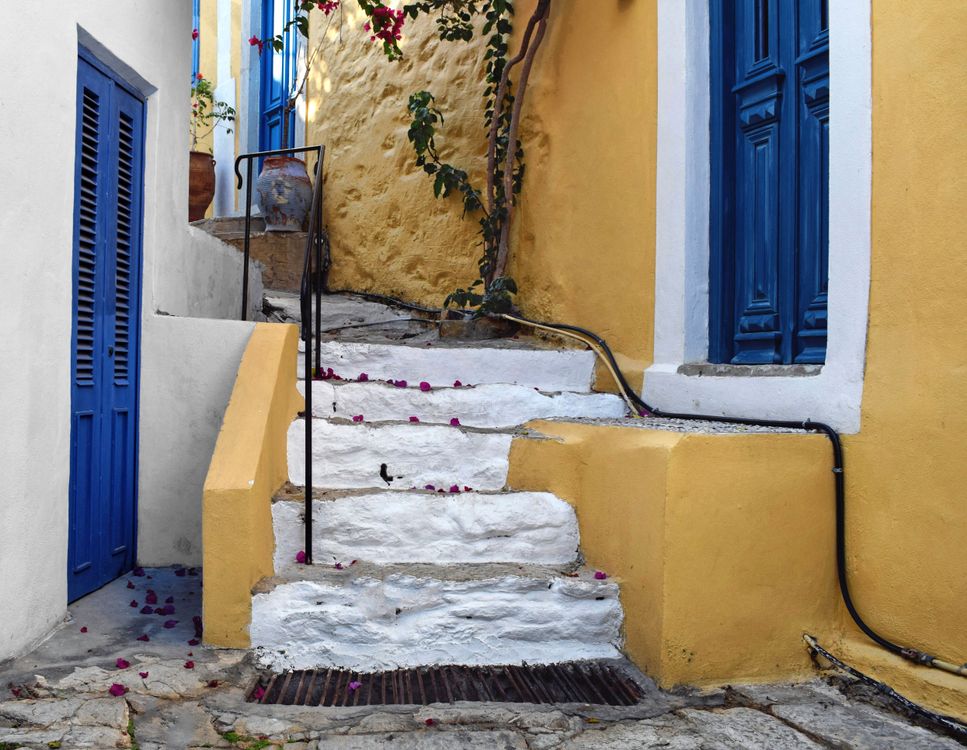
Photo: Jocelyn Erskine-Kellie, Pexels
Chorio has a distinctly different character from Gialos. The streets are narrower, many are car-free, and the combination of church towers, sleeping cats, and partially restored mansions creates the impression of a village in the middle of its own slow renovation. Some houses have been carefully returned to their 19th-century condition; others carry the patina of decades of quieter maintenance. The effect is less polished than the main waterfront, and more characteristically Greek.
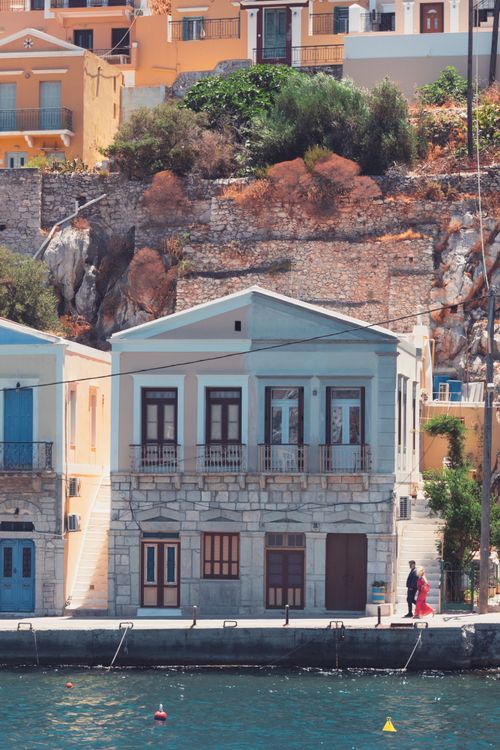
Photo: Márton Novák, Pexels
Near the top of Chorio stand the remains of a medieval castle, originally fortified by the Knights of St John after they took control of the island in 1309. The walls incorporate stonework from an earlier Byzantine structure. The views from the upper reaches extend across the harbour and towards the Turkish coast, clearly visible from here — a reminder that Symi lies within sight of the Datça Peninsula, and that the Dodecanese’s position on the boundary of two countries has shaped its history repeatedly.
A local bus connects Gialos and Chorio roughly every hour in summer, making the climb optional for those who prefer to save energy for the beaches or the monastery. In July and August, the Kali Strata climb is best avoided between about 10am and 5pm; the steps retain heat and offer limited shade.
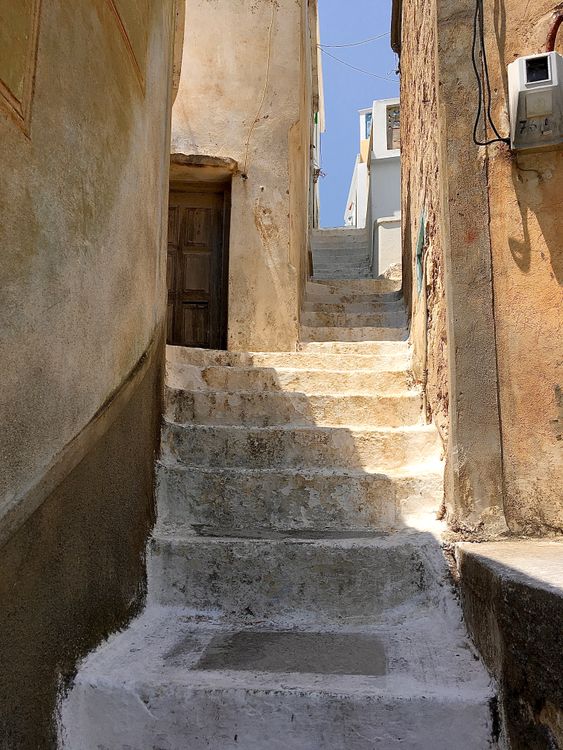
Photo: Lydia Griva, Pexels
Panormitis Monastery
The Monastery of Taxiarchis Mihail Panormitis, on Symi’s southern coast, is the island’s most visited site and one of the most significant religious landmarks in the Dodecanese. It is dedicated to the Archangel Michael — known here as the Taxiarchis, or commander — and is considered the second largest monastery in the Dodecanese after the Monastery of Saint John the Theologian on Patmos.
The current church dates from a renovation completed in 1783, though the site is thought to have been sacred considerably earlier. The complex sits at the southern end of the island in a sheltered cove, with a small beach, pine trees on the surrounding slopes, and a collection of buildings that includes a museum of religious art, accommodation for pilgrims, and a café. Entrance to the monastery is free. Visitors must dress appropriately — shoulders and knees covered — but clothing can be borrowed at the entrance if needed.
The church interior contains the famous icon of the Archangel Michael Panormitis, covered in a silver casing. The Archangel is regarded as the guardian of sailors across the Dodecanese, and the monastery receives significant numbers of Greek Orthodox pilgrims alongside tourists throughout the season. A persistent local legend holds that the Archangel will not allow a vessel to depart if someone on board has made an unfulfilled promise to him. Captains of the excursion boats that serve the monastery occasionally acknowledge this story over the public-address system — whether entirely in jest or not varies by captain.
The monastery is accessible from Gialos by bus (approximately one hour on the winding interior road), by taxi, or by excursion boat. The boat option is popular as it allows swimming stops at coves en route. Driving takes roughly the same time as the bus. Walking the full distance is possible but takes several hours and is not generally advisable in summer heat. Check current bus schedules locally, as times vary by season and can change without advance notice online.
Beaches on Symi
Symi’s topography does not produce wide sandy beaches. The island is rocky and mountainous, and most of its coastline drops sharply into the sea. The beaches that do exist are predominantly pebble, often small, and frequently accessible only by boat or on foot across uneven terrain. Travellers who find pebble beaches disagreeable, or who need shallow water for young children, may find Symi limiting in this respect. For travellers who accept these conditions, the swimming is generally very good: clear water, excellent visibility, and protected coves.
| Beach | Access | Character | Facilities |
|---|---|---|---|
| NOS | 5 min walk from Gialos | Small pebble town beach | Sun loungers, café |
| Nimborio | 10 min by car or boat | Sheltered pebble bay | Taverna, loungers |
| Pedi | Short drive south | Calm bay, quieter | Taverna, loungers |
| Agia Marina | Boat taxi | Small cove, islet with chapel | Restaurant nearby |
| Agios Nikolaos | Boat taxi | Clear water, popular | Taverna, loungers |
| Nanou | 40 min boat or foot | Longer pebble beach, cypress trees | Taverna, loungers |
| Marathounda | Bus or boat | Pebble, near Panormitis | Taverna |
| Agios Georgios Dysalonas | Boat only | Dramatic cliffs, spectacular setting | None — bring everything |
NOS Beach is the only beach within comfortable walking distance of Gialos — about five minutes from the clock tower. Small and exposed to some boat traffic, it serves mainly guests who want a swim without a water taxi journey. It has sun loungers, umbrellas, and a café.
Nimborio lies around three kilometres northwest of Gialos in a sheltered bay, accessible by car, by road in roughly ten minutes, or by taxi-boat. It is a small pebble beach with a taverna and is quieter than the town beach, making it a practical choice for a morning swim.
Nanou is a longer pebble beach in a green valley with cypress trees, accessible by taxi-boat or on foot in approximately 40 minutes. The water is clear and suitable for snorkelling. A taverna operates in season. It is one of the more peaceful options on the island.
Agios Georgios Dysalonas is the beach most frequently described by visitors as the island’s most spectacular. It lies beneath a near-vertical rock face approximately 300 metres high, accessible only by sea. There are no facilities at all: no shade, no taverna, no fresh water. Arriving by taxi-boat is the only practical option. The setting — deep blue water against sheer white rock — is genuinely dramatic in calm conditions. In choppy sea, boat access may not be possible. Bring everything you will need for a full morning.
Water taxis from Gialos serve most beaches throughout the day in season. Those from Pedi additionally cover some of the eastern coves. For an efficient beach day, confirming departure times and return options with the water-taxi operator before setting out avoids being stranded at a remote cove with no facilities when the last boat of the day has already left.
Food and Local Specialities
Symi has a signature dish that is worth seeking out: the Symi shrimp, known locally as garidaki or garides Symis. These are very small, intensely flavoured prawns, typically fried whole and eaten as a meze with ouzo or chilled white wine. They are genuinely associated with the waters around Symi rather than being a borrowed regional claim, and they appear on the menu at most waterfront restaurants in Gialos. The flavour is concentrated and distinctly saline; the texture is crisp when freshly fried. They are among the more honest expressions of Dodecanese seafood cooking.
Beyond the shrimp, Symi’s restaurants follow the pattern of most small Dodecanese islands: grilled fish, grilled octopus, fresh seafood pasta, simple salads, and a range of mezedes. Quality varies considerably by establishment. Restaurants a street or two back from the main waterfront are often preferable to those with prime quayside positions, where table turnover can be high and menus occasionally drift towards the tourist-facing side. The smaller restaurants in Chorio tend to be quieter, and a number of visitors consider the food there generally more carefully prepared.
Getting Around Symi
Walking is the primary mode of transport for visitors in Gialos. The town itself is small enough to cover on foot, and the harbour, museum, clock tower, and main restaurants are all within a compact area. Beyond Gialos, options are more limited.
A local bus runs between Gialos and Panormitis via Chorio in summer, but frequency is limited to a few journeys per day. Schedules change by season; check the current timetable on arrival in Gialos rather than relying on information found online in advance.
Taxis are available but the island’s fleet is small, and demand can exceed supply during peak periods in high season. Scooters can be hired and offer practical independence for reaching Nimborio and Pedi, or for the longer road to Panormitis — a winding drive of approximately 15 kilometres that takes around an hour each way. Car hire is limited by the island’s size and road conditions on some routes.
For most beaches beyond Nimborio and Pedi, water taxis departing from the main Gialos waterfront are the most practical and often the most enjoyable option. Fares are reasonable for shorter distances and higher for remote coves. Confirming return times with the operator before boarding is always advisable.
Where to Stay
Accommodation on Symi ranges from small guesthouses and self-catering studios in Gialos to boutique hotels in converted neoclassical buildings. There is no large-scale hotel development; the archaeological decree that protects the island’s architecture has equally prevented the construction of modern resort accommodation. This keeps the island’s character intact but also means that availability in July and August is genuinely limited. Booking accommodation several months in advance for peak-season dates is strongly advisable.
Gialos offers the greatest concentration of places to stay and is the most convenient base for ferries, restaurants, and boat-taxi departures. Chorio is quieter and more atmospheric but requires either a willingness to climb the Kali Strata regularly or dependence on the local bus. Pedi has a small number of rental properties for those seeking a calmer village setting.
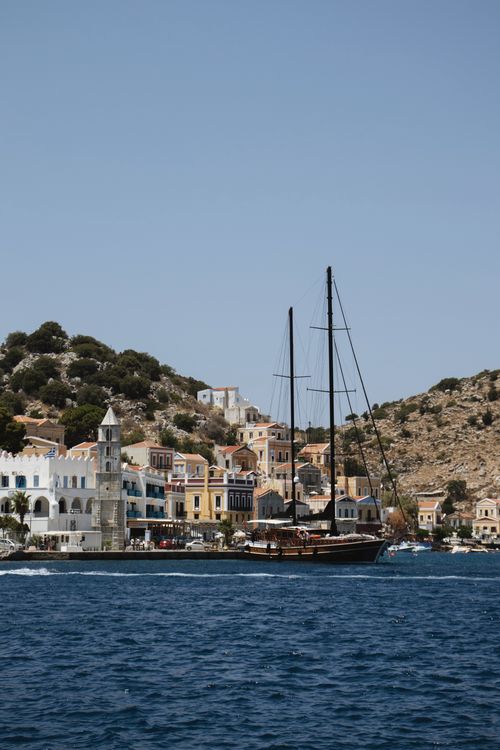
Photo: Laura Meinhardt, Pexels
Practical Considerations
Water supply
Symi has no natural source of fresh water. All water is transported to the island by tanker from nearby islands. This is not immediately apparent to day visitors, but it is a genuine resource constraint that the island manages carefully. Hotels and apartments will generally ask guests to be conservative with water use, and this is a reasonable request rather than an inconvenience. Travellers who find water conservation annoying in practice may find this aspect of Symi difficult; most visitors adapt without difficulty.
Heat
Symi is consistently among the hotter places in the Aegean in summer. Average highs of around 32°C in July and August are common, and shade is limited in many parts of the island, particularly on the Kali Strata. Sun protection, a hat, and adequate water are not optional extras for a July visit — they are necessary equipment. Early morning and late afternoon are the best times to walk, climb, or explore during peak summer.
Day-tripper timing
Excursion boats from Rhodes arrive in Gialos around 10:30am and generally depart around 5pm. This is the period when the harbour is at its most crowded. For those visiting as part of a day trip, this simply defines the window available for exploration. For those staying on the island, planning activities in the morning or after 5pm generally makes for a more comfortable experience than trying to swim, eat, or explore the old town during the midday peak.
Medical facilities
There is a medical centre on Symi, but serious medical emergencies require transfer to Rhodes. Travel insurance that includes medical evacuation is sensible for any visit to a small island some distance from major hospital facilities.
Best Time to Visit
The shoulder seasons — late April to early June, and September through October — offer the most comfortable conditions for visiting Symi. Temperatures are pleasant rather than extreme, the sea remains warm enough for swimming into October, and the island is considerably less crowded than in the peak summer months. Many visitors find the September and October combination particularly good: warm days, a genuine shift in atmosphere from the summer peak, and enough cafes and restaurants still open to make a visit practical.
July and August are busiest, with the daily Rhodes day-trip boats adding to visitor numbers during the middle of the day. For those who prefer to visit in high season, staying overnight rather than day-tripping, and orienting activities towards early morning and evening, makes the island considerably more enjoyable.
The Symi Festival, which takes place intermittently from July to September, brings international music, theatre, and cinema performances to the island. The programme changes annually; check for current schedules through local sources or the municipality’s official channels before planning a visit around specific events.
Outside summer, ferry connections reduce in frequency, and many businesses in Gialos close for winter. The island continues to function for its permanent population through the quieter months, but visitor infrastructure beyond the basics is limited from November to March.
Combining Symi with Rhodes
Symi and Rhodes make a natural pairing. The ferry journey between them is short enough that switching between the two requires no complex planning. Visitors based in Rhodes can take Symi as a full day excursion, while those building a longer Dodecanese trip might spend two or three nights in Rhodes and two or three in Symi, or combine them both with Kos, Nisyros, or other islands in the chain.
Flying into Rhodes and spending time on both islands — perhaps three days in Rhodes and three or four in Symi — gives a reasonable introduction to the Dodecanese without rushing. The Old Town of Rhodes and the harbour of Symi are among the most architecturally significant sites in the southern Aegean, and they complement each other well despite their very different scales.
For those who have already visited Rhodes and are looking for something smaller and less touristically developed, Symi can work as a standalone destination accessed via a brief Rhodes connection. The ferry journey is short enough that even travellers with limited time can manage a two-night stay in Symi by building in a transit day through Rhodes at either end.
What Symi Does and Doesn’t Offer
Symi’s reputation tends toward superlatives. The photographs that circulate online are consistently striking, and the harbour is genuinely as photogenic as they suggest. The architecture is exceptional for a small Aegean island. The atmosphere in the evenings, once the excursion boats have gone, is calm and distinctive.
But Symi has real limitations that are worth understanding before booking. The beaches are not the island’s main draw — a visitor prioritising long sandy swimming beaches should look at Kos, Rhodes, or the Cyclades. In July and August, the harbour is genuinely crowded between mid-morning and mid-afternoon. The heat is serious and fairly constant in peak summer. Water is scarce. The island is small enough that two or three days exhausts most of its named sights unless boat trips and beach-hopping form a significant part of the plan.
For travellers who understand what Symi actually is — a beautifully preserved harbour town built on maritime wealth, with a celebrated monastery, a series of coves reached by water taxi, and a noticeably slower pace once the ferries have come and gone — the island is an excellent choice in the Dodecanese. It asks only that visitors come with appropriate expectations, which is true of most destinations that have become genuinely popular for the right reasons.
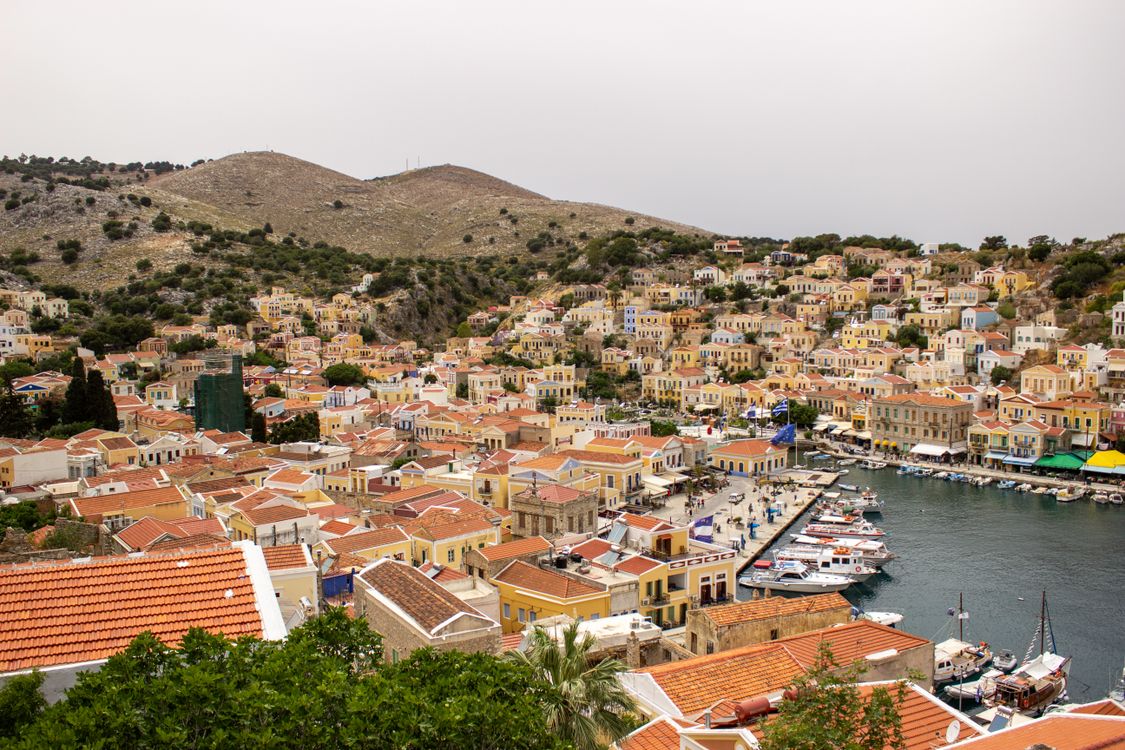
Photo: George Alex, Pexels
Ferry schedules and prices on all routes to Symi change seasonally. Always confirm current timetables and ticket prices directly with ferry operators or through official booking platforms before travelling. Opening hours for museums and the monastery are also subject to seasonal change — verify locally on arrival.