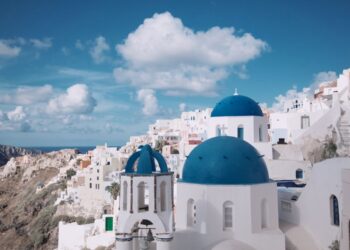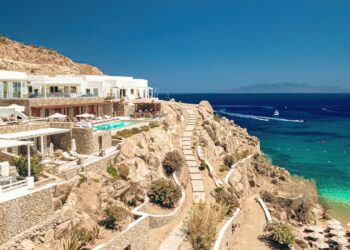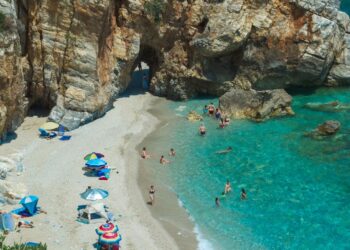
Mykonos has a reputation problem. Mention the island and most people picture beach clubs, bottle service, and crowds — which is fair enough for July and August. But the island has more range than its nightlife marketing suggests. The Cyclades take their name from the Greek word for circle because the archipelago rings sacred Delos, visible just off the western shore. Beyond the party beaches, you will find quiet northern coves shaped by the meltemi, a UNESCO archaeological site thirty minutes away by boat, and a Chora whose backstreets remain genuinely difficult to navigate even after your fourth visit.
This guide covers the practical side of the island. It explains which beaches suit families and which ones do not, how the wind determines your plans each morning, and how to reach Delos without overpaying. It is written for travellers who want more than a party weekend — though if that is your goal, we will tell you exactly when to show up for it.
| Island group | Cyclades, central Aegean |
| Area | Approximately 85 km² |
| Permanent population | Around 10,000 (municipality) |
| Best for | Couples, groups, beach lovers, culture seekers, nightlife |
| Less suitable for | Budget travellers in peak season, those seeking total isolation |
| Airport | Mykonos (JMK) — year-round domestic, seasonal international |
| Ferry from Athens | 1 h 50 min – 5 h 50 min (Rafina or Piraeus) |
| Car necessary? | Helpful but not essential — good bus and water-taxi network |
Best Time to Visit Mykonos
The island’s season runs roughly from late April to late October, though the sweet spot depends on what you prioritise. June offers warm weather, swimmable seas around 22°C, and manageable crowds — all at prices well below peak. September is arguably even better. The sea reaches its warmest at 23–25°C, the meltemi eases, and the frenetic energy of August softens noticeably. Be aware that early September now draws nearly as many visitors as August, so late September is the true calm window.
July and August bring guaranteed sunshine, maximum nightlife intensity, and strong north winds. Temperatures frequently exceed 30°C, though the meltemi makes it feel cooler. Accommodation costs double or triple compared with June. The south-coast beaches fill their loungers before midday. If your primary goal is the party scene, this is when Mykonos delivers — but expect premium pricing and occasional ferry disruptions when the wind exceeds force seven.
May and October suit couples and anyone who prefers quiet lanes and uncrowded swimming. Water temperature hovers around 19–21°C in May and drops gradually through October. Some beach facilities may not yet operate or may have already closed for the season.
The Windmills and the Wind
The meltemi — a strong, dry north wind — defines summer life on Mykonos. It determines which beaches are calm, which routes ferries skip, and why the iconic Kato Mili windmills were built here in the first place.
How to Get There
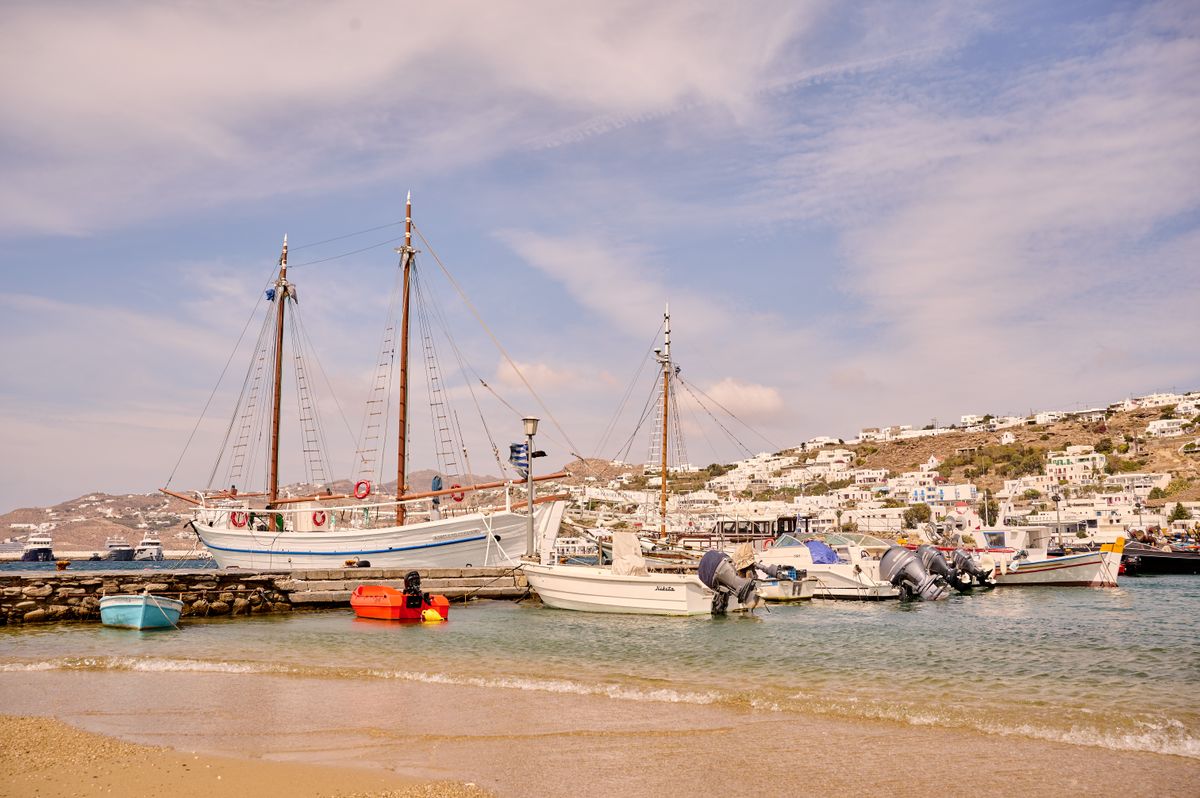
By ferry
Most travellers arrive by ferry from one of two Athens-area ports. Rafina is generally the smarter choice for Mykonos. It sits closer to Athens International Airport, offers shorter crossing times, and is served by more operators on this route. High-speed catamarans from Rafina (SeaJets, Golden Star Ferries) cover the distance in roughly 1 hour 50 minutes to 2 hours 20 minutes. Conventional ferries (Fast Ferries) take around 3 hours 45 minutes but cost less and handle vehicles more easily.
From Piraeus, Blue Star Ferries runs conventional services taking 4–5 hours. SeaJets offers high-speed crossings of around 2 hours 40 minutes from the same port. In summer, expect up to ten daily sailings from Rafina and several more from Piraeus. One-way tickets typically range from €38–80 depending on speed and seat class. Book ahead in July and August — high-speed services sell out, especially on Friday afternoons.
All ferries arrive at the New Port in Tourlos, about 2 km north of Chora. A public SeaBus runs to Mykonos Town every 30 minutes for €2 — far cheaper than the taxi queue.
By air
Mykonos Airport (JMK) receives year-round domestic flights from Athens, taking approximately 40 minutes. Aegean Airlines and Sky Express operate the domestic route. In summer, around 30 airlines serve the island with direct connections from London, Paris, Rome, Frankfurt, Amsterdam, and elsewhere. The airport sits about 4 km southeast of Chora.
Island hopping
Mykonos connects directly by ferry to Santorini (around 2 hours by high-speed), Paros (40–50 minutes), Naxos (30–60 minutes), and Milos (3–4 hours). These frequent links make the island a natural stop on a wider Cyclades itinerary.
Where to Base Yourself
Mykonos is small — about 10 km across — so nowhere is truly remote. But your choice of base determines whether you need a vehicle, how far you walk for dinner, and whether you can hear bass at 3 a.m.
Mykonos Town (Chora) is the obvious base for first-timers. Everything is walkable: restaurants, shops, the Old Port for Delos boats, and the Fabrika bus station for the south-coast beaches. The downside is that it can feel relentless in August. You are never far from the nightlife corridor, and motor vehicles cannot enter the pedestrianised centre.
Ornos sits about 3 km south of Chora and works as the strongest all-round beach base. The bay is sheltered from the meltemi and the sand is good. Bus connections are frequent, and the area has enough tavernas to avoid repeating a meal. It works particularly well for families.
Platis Gialos has a more resort-oriented feel and serves as the starting point for the south-coast water taxi. From here, boats hop to Paraga, Paradise, Super Paradise, Agrari, and Elia. If beach-hopping by boat appeals, this is where to stay.
Agios Stefanos, just north of the New Port, offers a quieter atmosphere and a decent beach. The easy walk to Tourlos makes it useful if your ferry arrives late. It suits travellers who want proximity to town without being inside it.
Ano Mera, the only inland village, is for travellers who want genuine quiet and own a rental car. You will need to drive to every beach and back to Chora for evening life. The trade-off is considerably lower accommodation costs and a village square with the unhurried feel the rest of the island lost decades ago.
Beaches: The Wind Decides
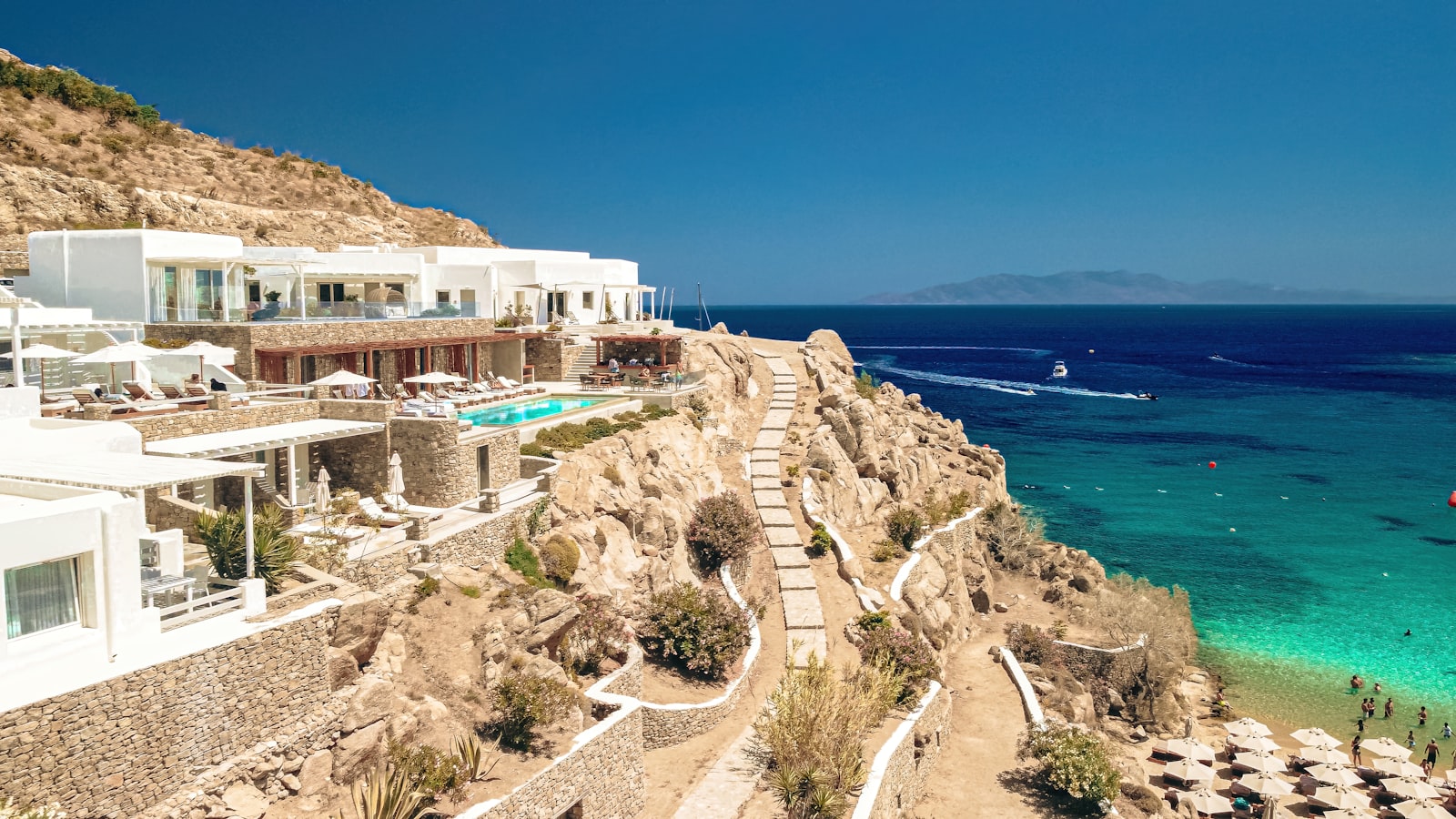
Mykonos has more than 25 accessible beaches, but you cannot simply pick the prettiest one on a map. The meltemi — a persistent north wind blowing from roughly late June through September — makes the north-facing beaches rough and the south-facing ones calm. On meltemi days (which is most summer days), the south coast is where you swim. When the wind drops or rotates, the undeveloped north coast becomes spectacularly clear.
| Beach | Coast | Character | Best for | Wind shelter |
|---|---|---|---|---|
| Ornos | South | Organised, calm bay | Families, all-rounders | Excellent |
| Platis Gialos | South | Organised, water-taxi hub | Beach-hoppers, couples | Good |
| Psarou | South | Upscale, shallow, calm | Luxury seekers | Excellent |
| Paradise | South | Party beach clubs | Nightlife crowd | Good |
| Elia | South | Long, spacious, relaxed | Those wanting space | Good |
| Kalo Livadi | South-east | Wide, golden sand | Families, space | Moderate |
| Kalafatis | South-east | Water sports, calm | Active families | Moderate |
| Agios Sostis | North | Undeveloped, no facilities | Solitude seekers (calm days) | None |
| Panormos | North | Broad cove, some shelter | Car-based travellers | Partial |
| Ftelia | North | Windy, bohemian | Windsurfers, kitesurfers | None (exposed) |
Practical beach tips
The water taxi operates from Platis Gialos to Paraga, Paradise, Super Paradise, Agrari, and Elia — roughly €10 per person one way in 2026, or around €20 for a day pass. It runs approximately every 30 minutes from late morning until early evening during the summer season. This is the easiest way to beach-hop along the south coast without a vehicle.
Families with small children will find Ornos and Agios Stefanos the most practical: both have shallow entries, wind protection, and nearby services. Kalo Livadi and Kalafatis are good secondary options with more space but less frequent bus service. Avoid Paradise and Super Paradise if travelling with young children — the atmosphere is geared entirely toward late-night socialising.
On rare calm days when the meltemi pauses, Agios Sostis and Fokos on the north coast offer some of the clearest water on the island. There are no facilities at either beach — bring water, shade, and everything you need. Access requires a car or long walk.
Mykonos Town: Chora
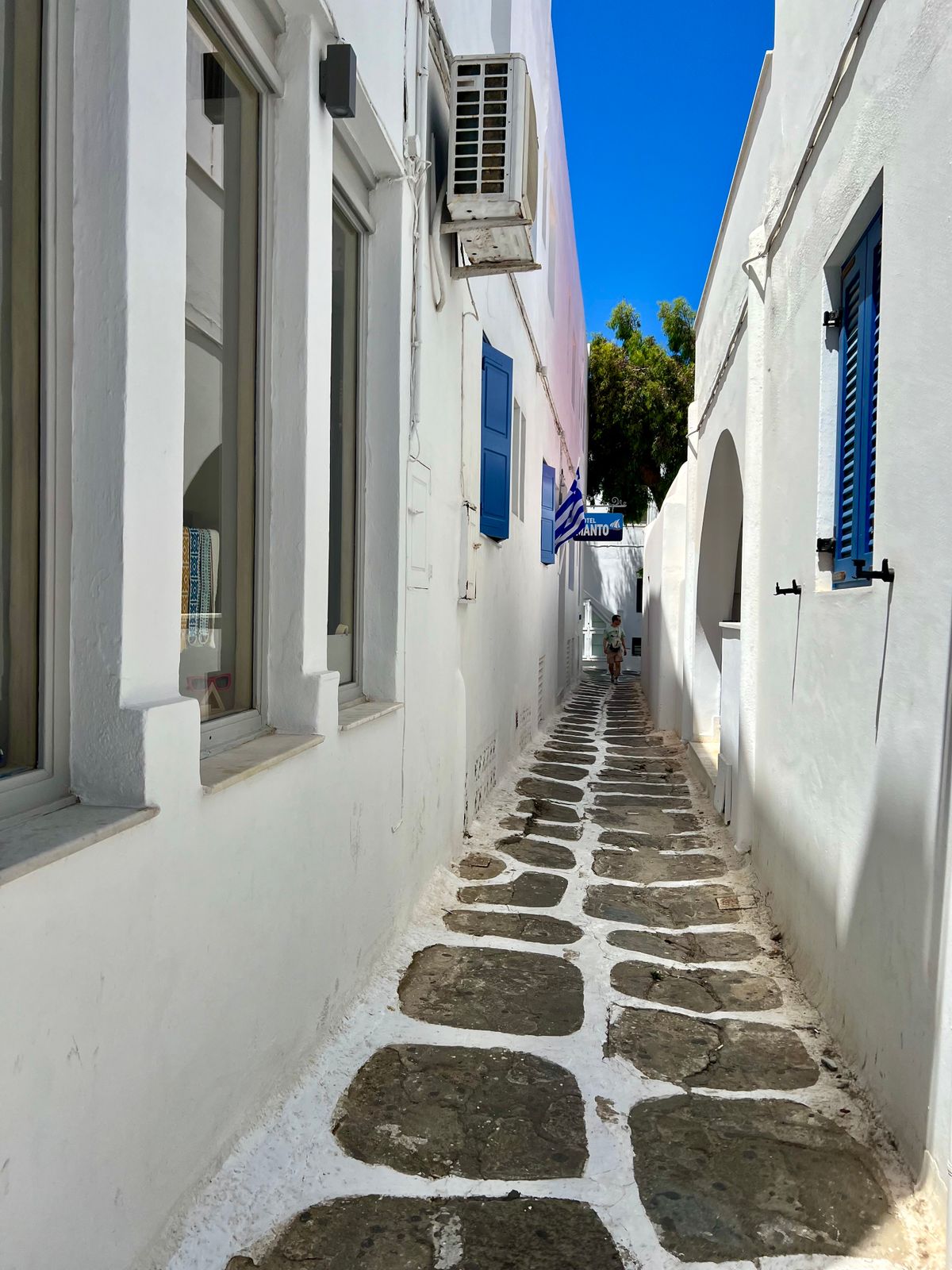
The capital is the reason most visitors spend at least a full day away from the beach. Chora is a genuine maze — the Venetians designed it that way to confuse raiding pirates, and it still works on tourists. You will get lost. Accept this. The lanes eventually loop back toward the harbour or deposit you at one of the recognisable landmarks: the windmills, Little Venice, or the Panagia Paraportiani church.
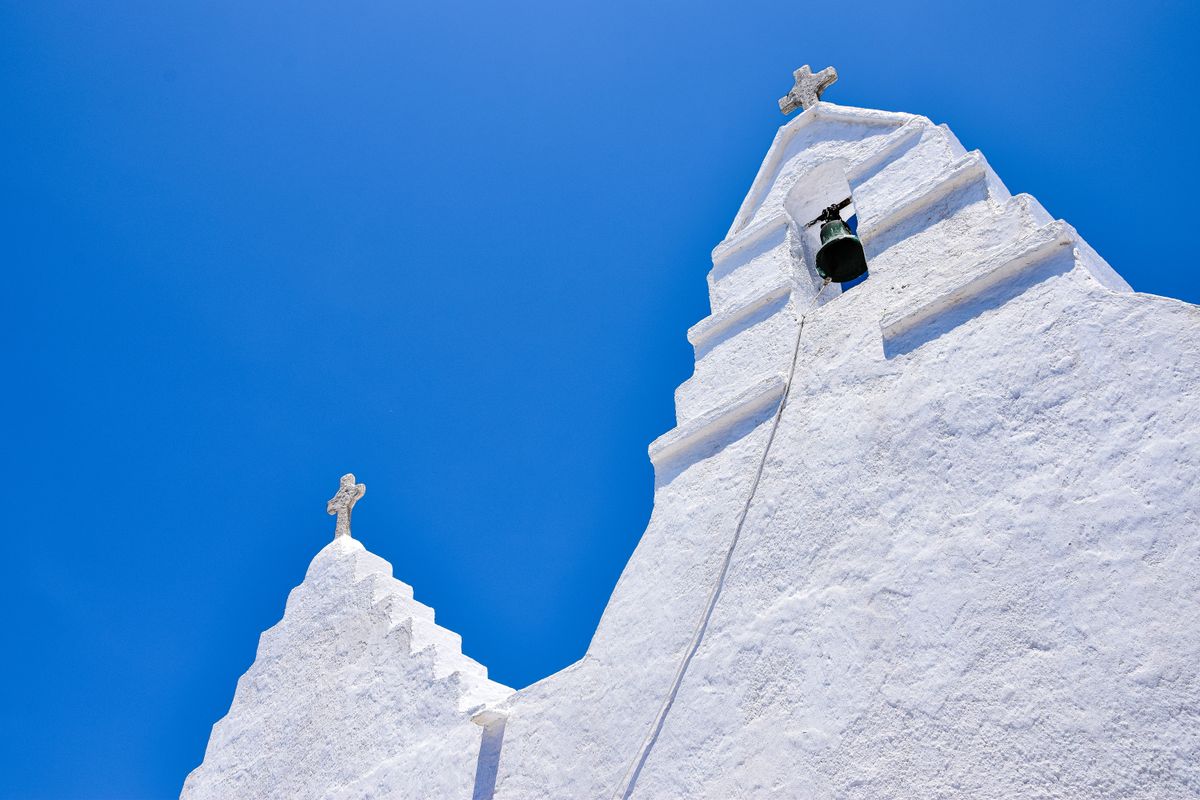
Panagia Paraportiani is not one church but five, constructed on top of and beside each other between the fifteenth and seventeenth centuries in the Kastro quarter near the sea. The resulting asymmetrical white mass looks as if it were shaped by wind rather than architects — which, in a sense, it was. It functions as an active church, so dress appropriately if entering.
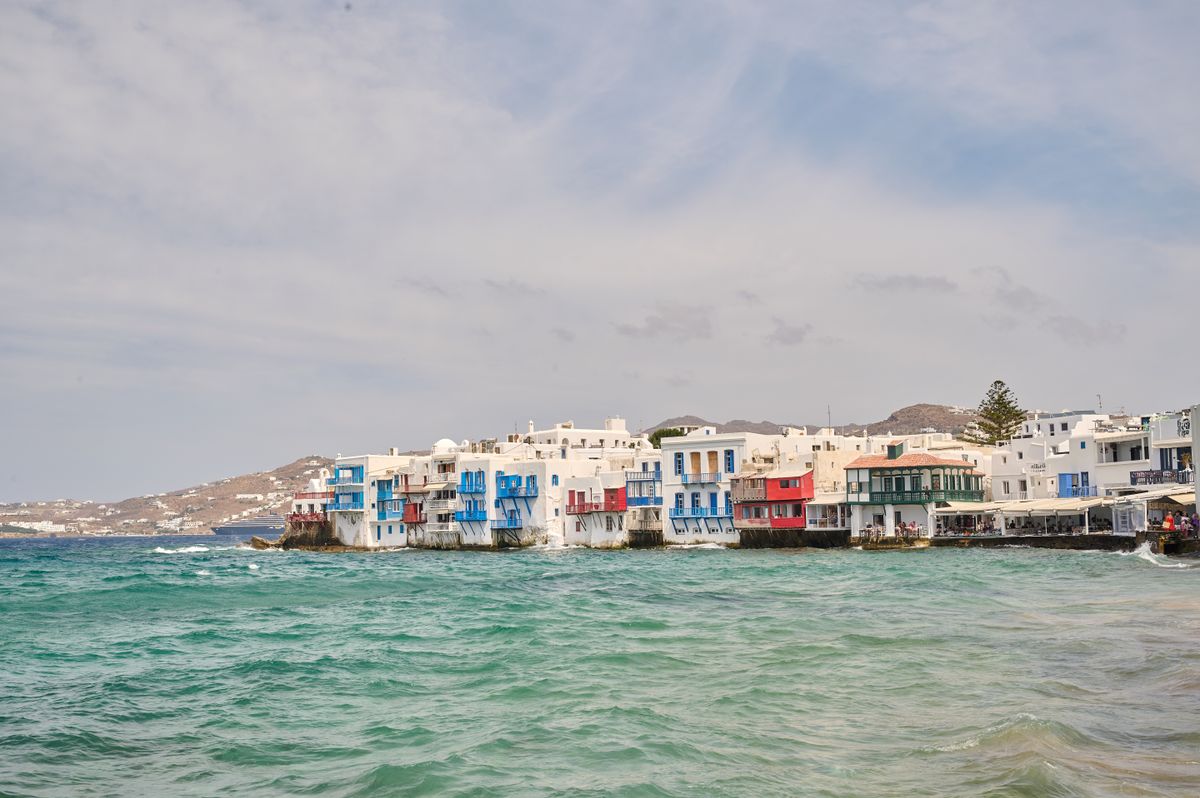
Little Venice is the waterfront row of eighteenth-century houses whose balconies hang directly over the sea on the western edge of Chora. The buildings were originally merchants’ houses with ground-floor storage opening to the water for easier loading. Today, the bars along this strip are where half the island gathers for sunset cocktails — arrive early or watch from the windmills above.
The Kato Mili windmills, perched on the ridge between Chora and the sea, are perhaps the most photographed landmark on the island. Built by the Venetians to mill grain using the persistent north wind, several of the row of five still have their thatched roofs. The view from beside them at sunset — across Little Venice toward Delos — draws large crowds, particularly in July and August.
Beyond the landmarks, Chora rewards aimless wandering. The Matogianni Street area is the main shopping and dining corridor. The Archaeological Museum near the port houses finds from Delos and the island burial ground on Rhenia. The Aegean Maritime Museum documents the region’s seafaring history. Neither requires more than an hour but both offer welcome context for the rest of the island.
Delos: A Day Trip You Should Not Skip
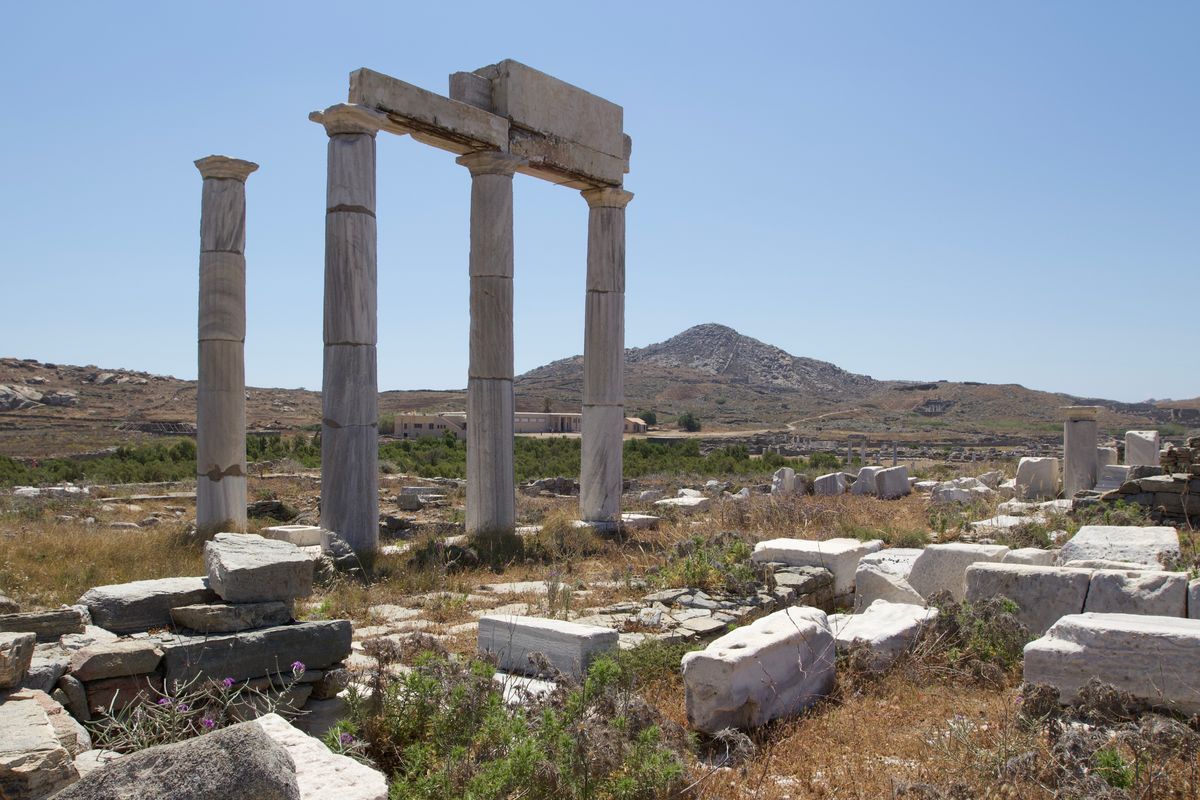
Delos is a thirty-minute boat ride from the Old Port and one of the most significant archaeological sites in the Mediterranean. According to Greek mythology, it was the birthplace of Apollo and Artemis. In historical terms, it served as the political and religious centre of the Cyclades for centuries. At its peak in the second and first centuries BCE, the island’s population may have reached 30,000.
The entire island is an archaeological site, designated a UNESCO World Heritage Site in 1990. You will see the Terrace of the Lions (replicas — the originals are in the museum), the Temple of Apollo, and the Theatre Quarter with remarkably intact mosaic floors. The on-site museum holds sculptures and artefacts from excavations that began in 1872 and continue today.
Practical details: Boats depart from the Old Port, typically at 09:00, 10:00, and 11:00 in high season. Returns run at 12:00, 13:30, and 15:00 — check the chalkboard at the ticket office for the day’s schedule. The return ferry costs approximately €25 (children 6–12 half price, under 6 free). Entry to the site and museum is €20, purchased on arrival. Guided tours including ferry, entry, and an English-speaking guide run to approximately €79 per person. Allow two to four hours on the island.
There is virtually no shade on Delos. Bring a hat, sunscreen, water, and proper walking shoes — the terrain is uneven ancient stone. The site may close in very strong winds, so check conditions before heading to the port.
Ano Mera and the Interior
The only inland settlement of any size, Ano Mera sits roughly in the centre of the island and feels like a different world from Chora. The main square has tavernas with checked tablecloths, a bakery, and the unhurried pace that characterised all of Mykonos before the tourism boom. It is worth a lunch stop, particularly combined with a drive to the north-coast beaches.
The village’s centrepiece is the Monastery of Panagia Tourliani, founded in the sixteenth century and recognisable by its whitewashed walls and red-domed bell tower. Inside, the church houses a carved wooden iconostasis brought from Florence and crafted in 1775, along with a collection of icons attributed to Cretan painters. It is open to visitors in the morning — confirm locally, as hours vary.
Local Food Worth Seeking Out
Mykonos has a genuine local food tradition that predates the fine-dining scene by several centuries. The island’s climate — windy, dry, limited freshwater — shaped a cuisine built on preserved meats, sharp cheeses, and barley rather than wheat.
Kopanisti is the island’s signature cheese: a soft, peppery, slightly fermented spread with an assertive kick that pairs well with bread and tomatoes. It carries a PDO (Protected Designation of Origin) label. If you see it on a menu described simply as “local cheese spread,” that is likely kopanisti.
Louza is wind-dried pork loin seasoned with pepper and spices — sometimes compared to prosciutto but with a different, more aromatic character. Sliced thinly and served as a meze, it reflects the island’s long tradition of curing meat in the persistent wind.
Onion pie (kremidopita) is a savoury pastry filled with local onions and cheese, baked until the crust crisps. It appears in bakeries and tavernas across the island, particularly in Ano Mera.
The waterfront fish tavernas serve good seafood across most of the island, though prices in Chora and along the fashionable south coast are substantially higher than in Ano Mera or Tourlos. Expect to pay well above mainland prices for fresh fish everywhere on Mykonos — this is one of the most expensive islands in Greece for dining.
Getting Around
Mykonos has a functional public bus network running from two stations in Chora. The Fabrika station (south side of town) serves Ornos, Platis Gialos, Paraga, Paradise Beach, and the airport. The Old Port station covers Agios Stefanos, Tourlos, Ano Mera, Elia, and Kalafatis. Fares are under €2 per ride. In summer, buses run every 30–60 minutes to the popular beaches, with some late-night routes.
A rental car or ATV is useful for reaching the north-coast beaches — Panormos, Agios Sostis, and Fokos — or for exploring without a timetable. Roads are narrow and parking in Chora is extremely limited. Most visitors park outside the centre and walk in. Scooters are the common choice for younger travellers, though inexperienced riders should be cautious on the steep, windy roads.
Taxis exist but are famously difficult to flag in summer. The official taxi rank sits at the square in Chora. Booking by phone is possible but unreliable on busy nights. The SeaBus (€2, every 30 minutes from the New Port) and the south-coast water taxi are more dependable options.
How Long to Stay
Three days covers Chora, Delos, and a few beaches comfortably. Four days lets you explore the north coast, eat properly in Ano Mera, and have a spare day for wind adjustments. Five or more is ideal if combining Mykonos with neighbouring islands.
Who Should Consider Somewhere Else
Mykonos is expensive — probably the priciest island in Greece outside of private-resort Santorini. If your budget is tight during July or August, you will find better value on Naxos or Paros. Both are reachable in under an hour by fast ferry and offer comparable beaches at significantly lower prices.
If you want genuine isolation, Mykonos is the wrong island even in the shoulder season. Its infrastructure is built for high-volume tourism and the energy reflects that. Smaller Cycladic islands like Serifos or Folegandros will suit you better.
If you dislike wind, avoid July and August entirely. The meltemi is not a gentle breeze. It can blow at 30–40 km/h for days, making north-coast swimming inadvisable and occasionally stranding ferries in port.
If none of those concerns apply, Mykonos is a genuinely rewarding island. Its reputation as a pure party destination undersells a varied, well-connected, and historically significant place to spend time. You just need to know which side of the island to face into the wind from.
This article was researched and verified as of July 2026. Ferry schedules, admission fees, and seasonal operations may change — we recommend confirming details with official operators before travel. Vivid Greece is an independent publication and has no commercial relationship with the businesses mentioned in this guide.