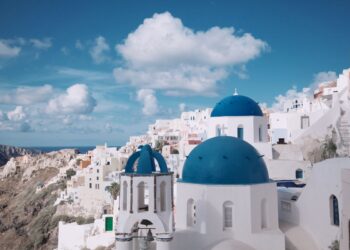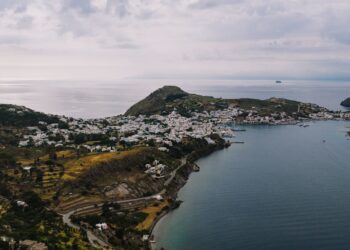
Ionian Islands Showdown: Which Island Is Right For You? The Complete 2026 Comparison Guide
They stretch down the western edge of Greece like a necklace of green jewels — the Ionian Islands. Lush, mountainous, washed by the bluest water in the Mediterranean, and steeped in a history that reads like a roll call of empires: Venetian, French, British, Ottoman, all of them leaving their mark on these remarkable shores. Unlike the stark white architecture of the Cyclades, the Ionians are verdant and layered, smelling of cypress and wild herbs, their coastlines dramatic rather than postcard-perfect.
But here’s the dilemma we hear from travelers again and again: Which one do I choose?
Corfu, Zakynthos, Kefalonia, Lefkada, Paxos, Ithaka — each island is genuinely different. Different vibes, different beaches, different food cultures, different travel logistics. The wrong choice can mean spending your holiday on an island that doesn’t match your personality. The right choice can feel like Greece chose you back.
We’ve explored all six in depth, and in this guide we break down every island honestly — the beauty, the trade-offs, the beaches, the food, the logistics — so you can choose the island that’s truly right for you.
The Quick Comparison Matrix
Before we dive deep, here’s the at-a-glance snapshot. Use this as your starting filter, then dive into the island profiles below for the full picture.
| Island | Best For | Main Vibe | Iconic Beach | Accessibility | Budget | Peak Season |
|---|---|---|---|---|---|---|
| Corfu | Culture + variety | Cosmopolitan, Italian-influenced | Palaiokastritsa | Direct flights (EU hubs) + ferry | Mid–High | Jun–Sep |
| Zakynthos | Nature + romance | Scenic, wildlife-focused | Navagio Shipwreck | Direct flights + ferry | Mid–High | May–Oct |
| Kefalonia | Adventurers + foodies | Rugged, authentic | Myrtos Beach | Limited flights + ferry | Mid | Jun–Sep |
| Lefkada | Water sports + easy access | Active, outdoorsy | Porto Katsiki | Bridge (no ferry!) | Budget–Mid | Jun–Sep |
| Paxos | Romance + quiet | Ultra-peaceful, slow | Lakka Harbor | Ferry from Corfu | Mid–High | May–Oct |
| Ithaka | Literature + history | Literary, bohemian | Gidaki Beach | Ferry from Kefalonia | Budget–Mid | Jun–Sep |
Who Should Go Where: A Travel Personality Guide
The best way to choose your Ionian island isn’t by googling “best beaches” — it’s by knowing yourself as a traveler. Here’s how we’d match personality to island:
🌹 Romantic Couples
If romance is the priority, Paxos is our top pick. Tiny, olive-grove-covered, and blissfully free of nightlife and package tourism, it’s an island that seems designed for two. For couples who want dramatic romance — cliffs, sunsets, boat trips — Zakynthos delivers that cinematic quality that makes you catch your breath.
🏄 Adventure Seekers
Lefkada for water sports: windsurfing at Kathisma, kitesurfing out of Nydri, coastal hiking along some of the most dramatic cliff paths in Greece. For deeper wilderness — hiking, cave exploration, wild coastlines — Kefalonia is your island. It’s the largest, the most rugged, and the least crowded despite its size.
🏛️ Culture & History Lovers
Corfu wins here, unambiguously. The UNESCO-listed Old Town is one of the finest Venetian urban landscapes in the Mediterranean. British cricket grounds, Venetian fortresses, French arcades, Byzantine museums, and a culinary culture shaped by centuries of foreign influence — Corfu rewards curiosity at every corner.
👨👩👧 Families
Corfu again, for sheer variety. Diverse beaches (sandy, pebbly, calm, surf), plenty of infrastructure, direct flights, and enough activities to keep everyone happy. Kefalonia is a strong second: the Xi Beach golden sands are rare in the Ionians, and the Melissani Cave rowboat tour is genuinely magical for children.
💰 Budget Travelers
Lefkada is the gateway: drive from the Greek mainland (no ferry fare), find affordable accommodation, and access its excellent beaches without the premium pricing. Ithaka is even quieter on the wallet — if you can manage the ferry logistics to get there.
✍️ Solo Travelers & Writers
Ithaka is the answer that writes itself. The legendary home of Odysseus has a bohemian, literary soul: hiking trails, tiny harbors, genuine local life, and the quietest creative atmosphere in the Ionian chain. Paxos is a close second for those who need solitude and space to think.
Standing on the Corfu Old Town ramparts at dusk, looking west over an amber sea toward Albania’s mountains, we understood why the Venetians held onto these islands for four centuries. Some places earn their empires.
The Six Islands: Deep Dives
1. Corfu (Kérkyra) — The Cosmopolitan Island
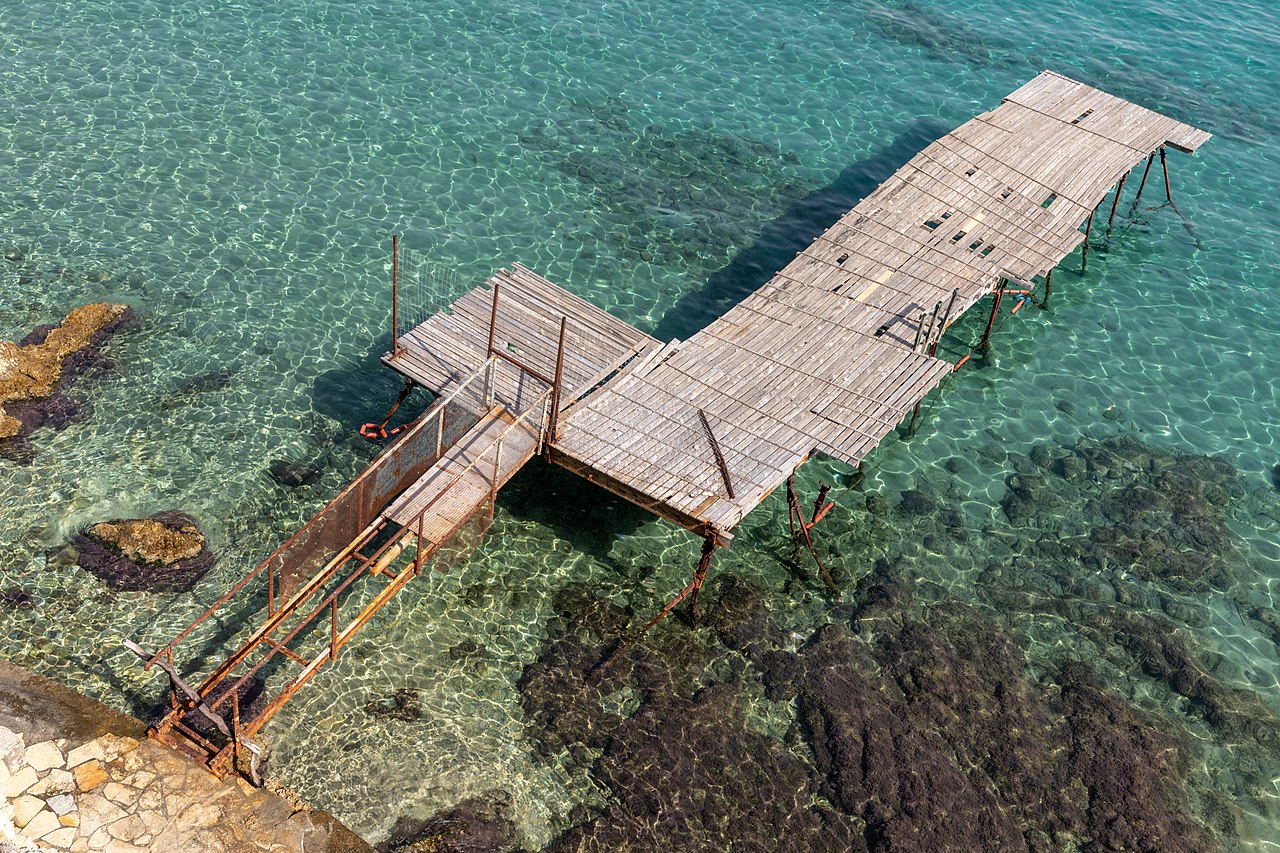
Corfu is unlike any other Greek island. Where most Greek islands feel distinctly Hellenic — white walls, blue domes, sun-bleached simplicity — Corfu feels like it was assembled from the best parts of Venice, Paris, and Athens and then set down on an island too beautiful for any of them to claim alone.
The UNESCO-listed Old Town (Kérkyra) is the centerpiece. Wander its narrow kantounia (alleyways) and you’ll find Venetian bell towers rising over French arcades (Liston, modeled on the Rue de Rivoli), British neoclassical buildings, and Byzantine churches that predate all of them. This is the most architecturally rich town in the Ionian, and it rewards slow exploration on foot.
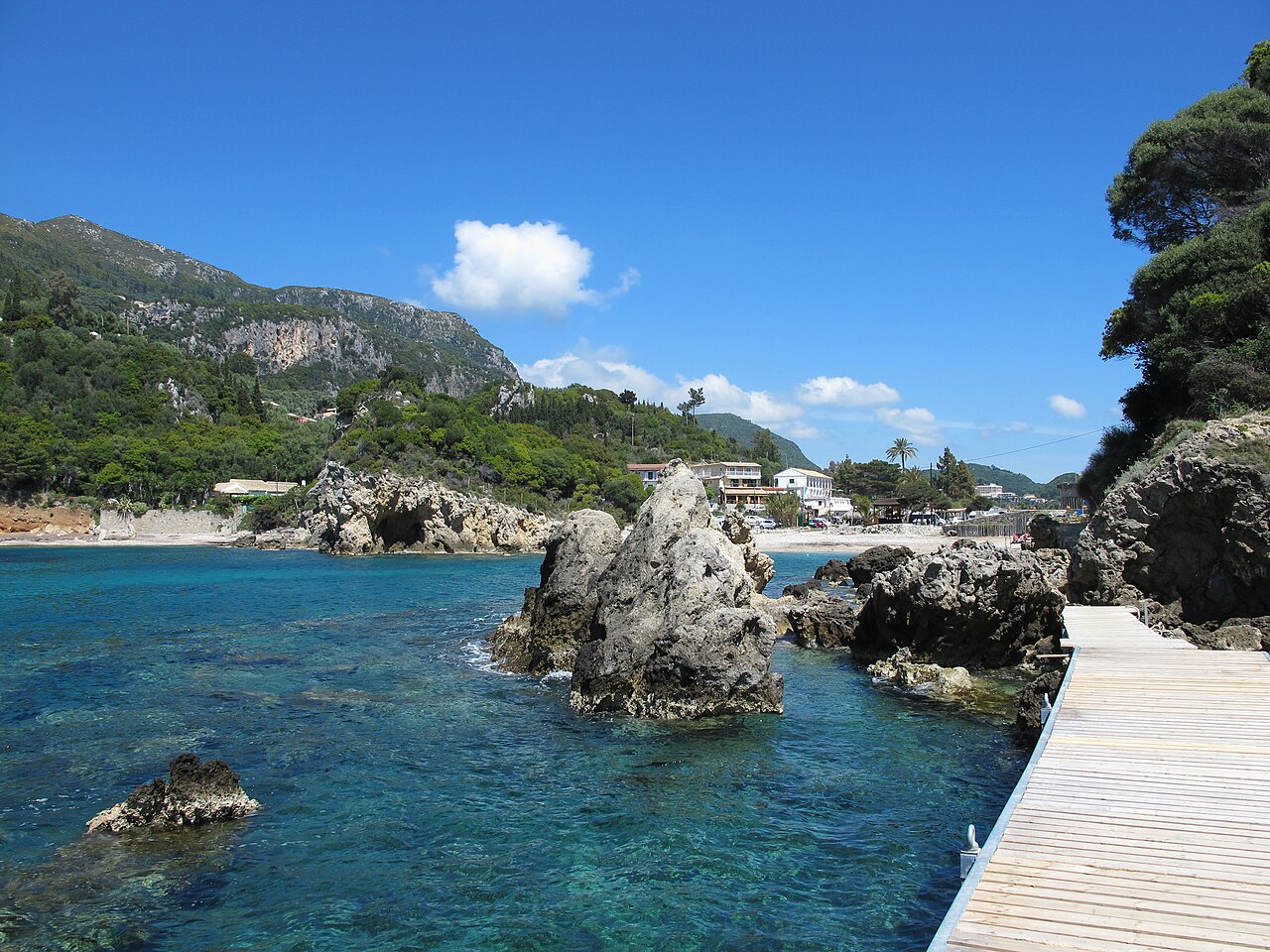
Beyond the Old Town, Corfu’s beaches are genuinely varied — something rare in the Ionians. Palaiokastritsa on the west coast offers one of the most dramatic bay settings in Greece, where turquoise coves nestle between limestone headlands. Glyfada catches the sunset in golden light. Agios Gordis curves south in a long arc of pale sand.
Corfu’s food culture is the most sophisticated in the Ionians. Order pastitsada (rooster in cinnamon-tomato sauce over pasta) and sofrito (beef braised in white wine and garlic) — dishes that taste unmistakably Italian in their depth and complexity. Don’t leave without trying kumquat liqueur, made from the tiny citrus fruit that only Corfu grows commercially in Greece.
The honest trade-off: Corfu is the most visited Ionian island, and peak season (July–August) means busy beaches and higher prices. The north of the island can feel overwhelmingly touristic. Stick to the Old Town, the west coast, and the mountain villages of the interior to find the island’s soul.
Corfu in numbers: Direct flights from most Northern European hubs. Budget travelers: €80–120/day. Mid-range: €150–250+/day.
2. Zakynthos (Zante) — The Nature Island
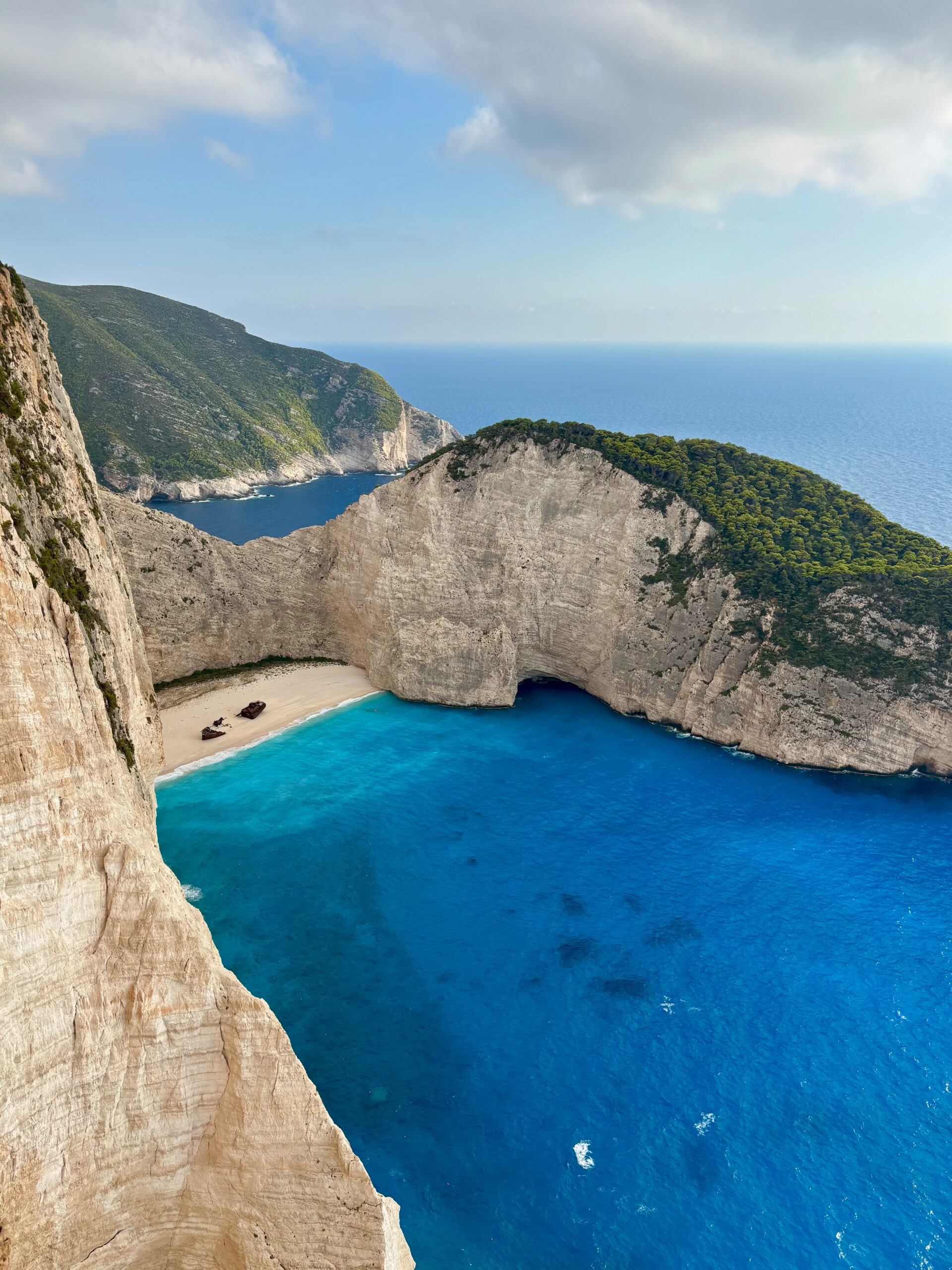
No photograph does Navagio justice. You see it on Instagram, on postcards, on the sides of travel agency buses — and still, when your boat rounds the headland and those white limestone cliffs drop 200 meters into a secret cove of electric-blue water where a rusted shipwreck lies embedded in the white sand, it hits you fresh every time.
But Zakynthos — known locally as “the flower of the Levant” — is far more than its famous shipwreck. This is fundamentally a nature island, shaped by its role as the main nesting ground of the Caretta-caretta loggerhead sea turtle in the Mediterranean. The Zakynthos National Marine Park protects the beaches of Laganas Bay, where hundreds of turtles come ashore each summer to nest. Watching a turtle make her way up Kalamaki Beach at dusk, between May and August, is one of the most quietly moving wildlife experiences we’ve had anywhere in Greece.
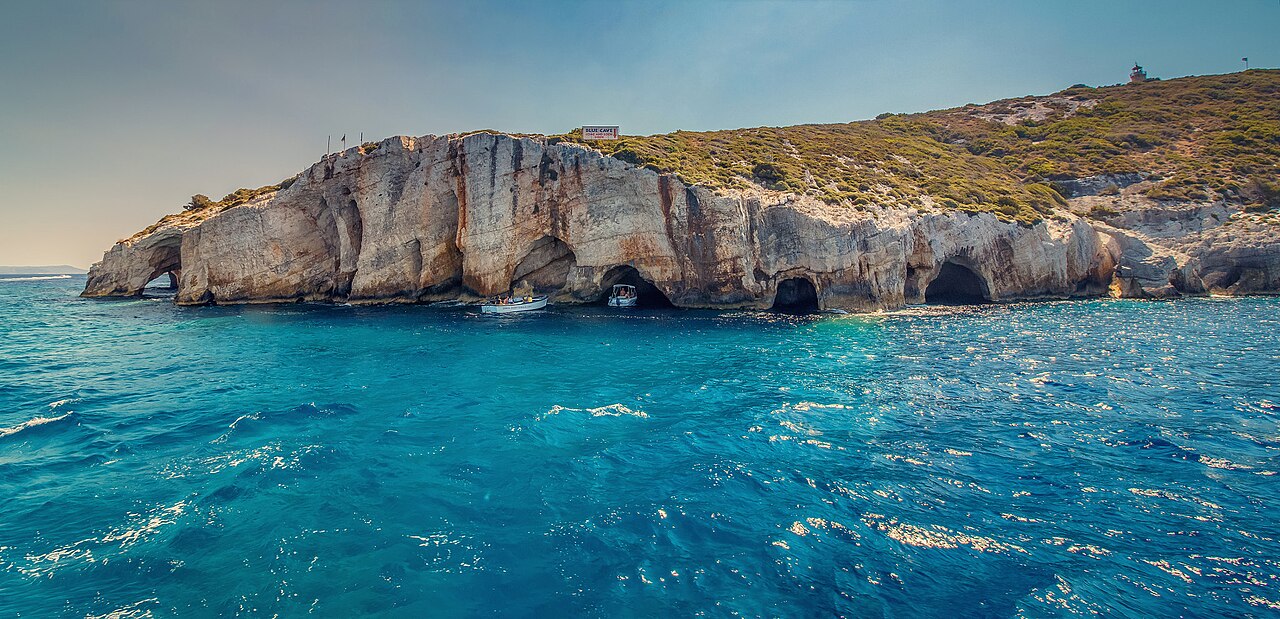
The Blue Caves on the northern tip are best experienced early morning, when the light refracts through the sea floor and fills the cave chambers with a surreal, luminous cobalt. Take a local boat tour and, if you’re brave enough, jump in and swim.
For a deeper read on Zakynthos — the turtles, the hidden coves, the secret beaches away from the crowds — read our full Zakynthos travel guide which covers the island in detail.
The honest trade-off: Zakynthos has a split personality. The south (Laganas Bay, Tsilivi) is heavily developed package-holiday territory. If this isn’t your scene, base yourself in the north or center, and use a car to reach the better beaches.
Zakynthos in numbers: Direct flights from Northern Europe. Budget travelers: €70–110/day. Mid-range: €130–220+/day.
3. Kefalonia (Cephalonia) — The Adventurer’s Island
Kefalonia puzzles travelers who don’t know it. It’s the largest Ionian island — bigger than Corfu — and yet somehow less visited, less developed, and more authentically itself. Perhaps it’s the slightly awkward ferry logistics, or the mountains that make it feel more like mainland Greece than an island escape. Whatever the reason, Kefalonia has stayed genuine in a way that the more accessible islands haven’t.
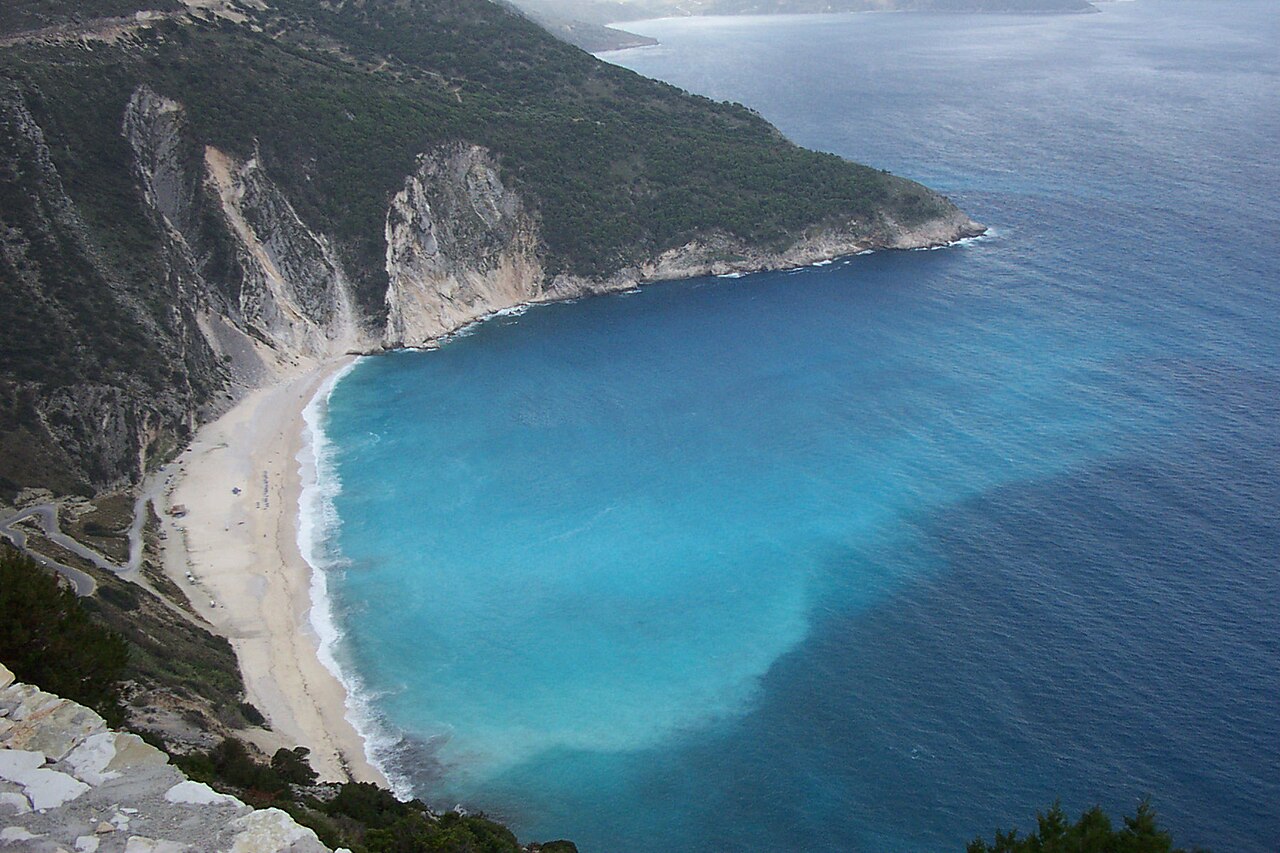
Myrtos Beach is the island’s signature image: a curved arc of brilliant white pebbles set between limestone cliffs that drop sheer into water of an almost impossible blue-green intensity. You can see it from the road above — a view that will stop even the most jaded traveler mid-sentence — and then descend to swim in it. It’s one of the most dramatic beach experiences in the Ionian chain.
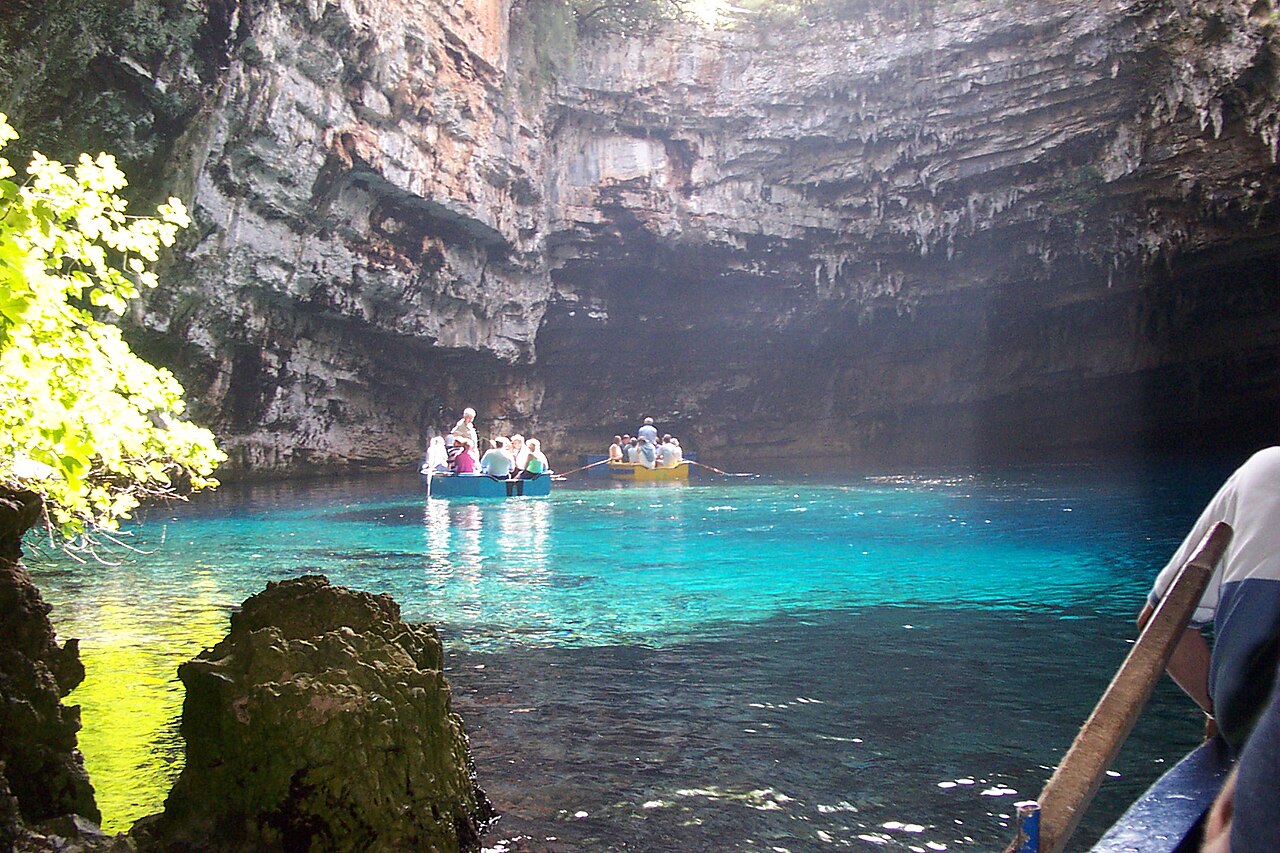
But Kefalonia’s real rewards go underground. Melissani Cave contains a subterranean freshwater lake, open to a circular skylight where the roof collapsed thousands of years ago. You row across it in a wooden boat, and when the morning sun hits the water through the opening above, the cavern glows emerald and gold. The Drogarati Cave nearby fills with stalactites so old that concerts are held in its main chamber.
Food lovers take note: Kefalonia has a quietly distinguished culinary culture. The island produces Robola wine — a crisp, mineral-driven white from the Robola grape variety that grows almost nowhere else in the world. Pair it with local white cheese in brine (effectively an artisanal feta) and fresh octopus at a harbor taverna in Assos, one of the most beautiful villages in Greece.
The honest trade-off: Getting to Kefalonia requires more planning — limited direct flights, longer ferry crossings. But for travelers who find that added effort quietly rewarding, this is exactly the kind of island that repays it.
Kefalonia in numbers: Connections via Athens or limited direct summer flights. Budget travelers: €60–100/day. Mid-range: €110–180+/day. (The most affordable of the main islands.)
4. Lefkada — The Easy-Access Adventure Island
There’s one fact about Lefkada that changes everything: you can drive there.
A short causeway bridge connects Lefkada to the Greek mainland. No ferry queues, no timetables, no sea-crossing anxiety. Just load up the car, drive south from Athens (5–6 hours), cross the bridge, and you’re on an island. For road-trippers, budget travelers, and families with young children, this is a genuinely significant logistical advantage.
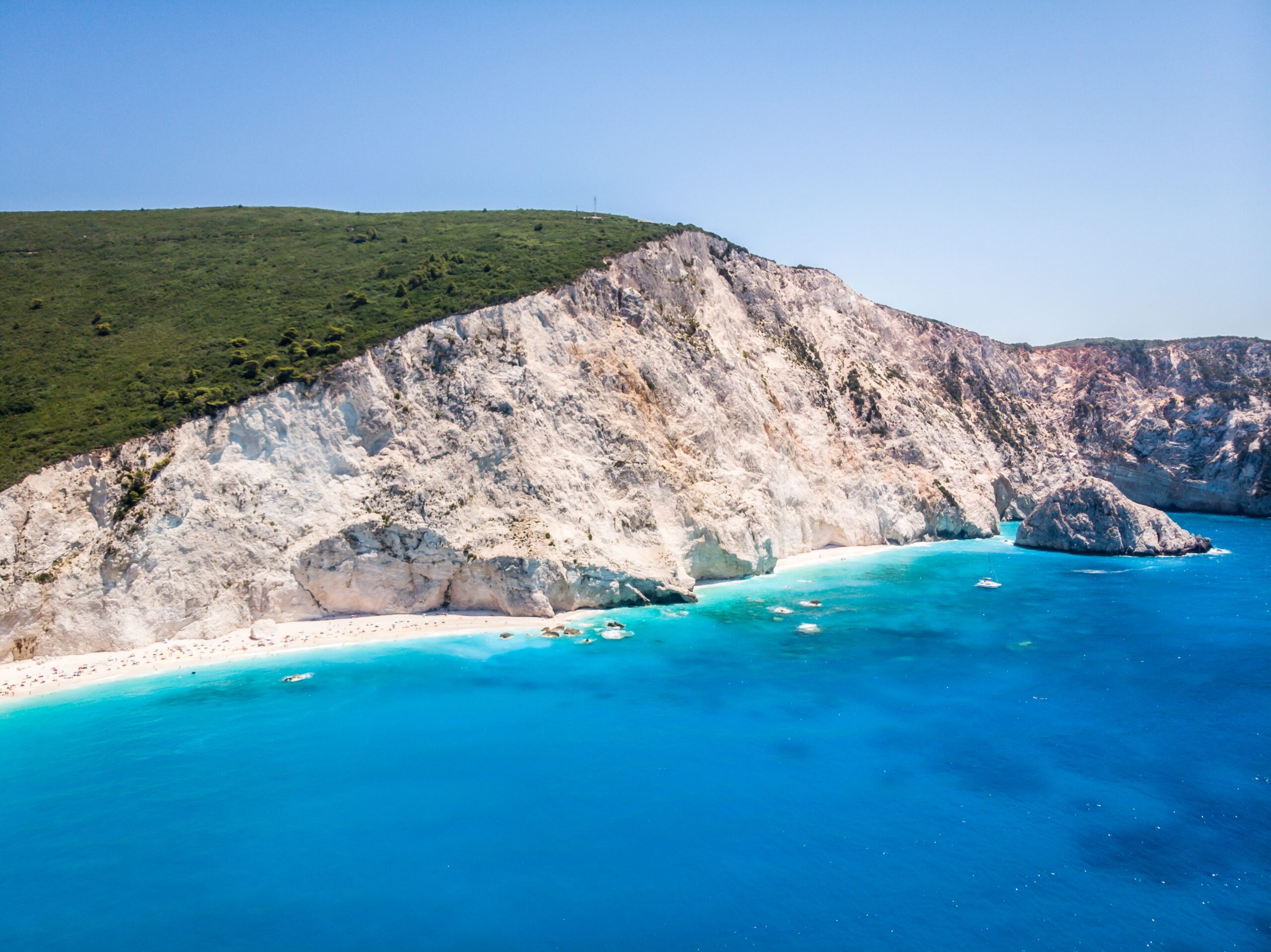
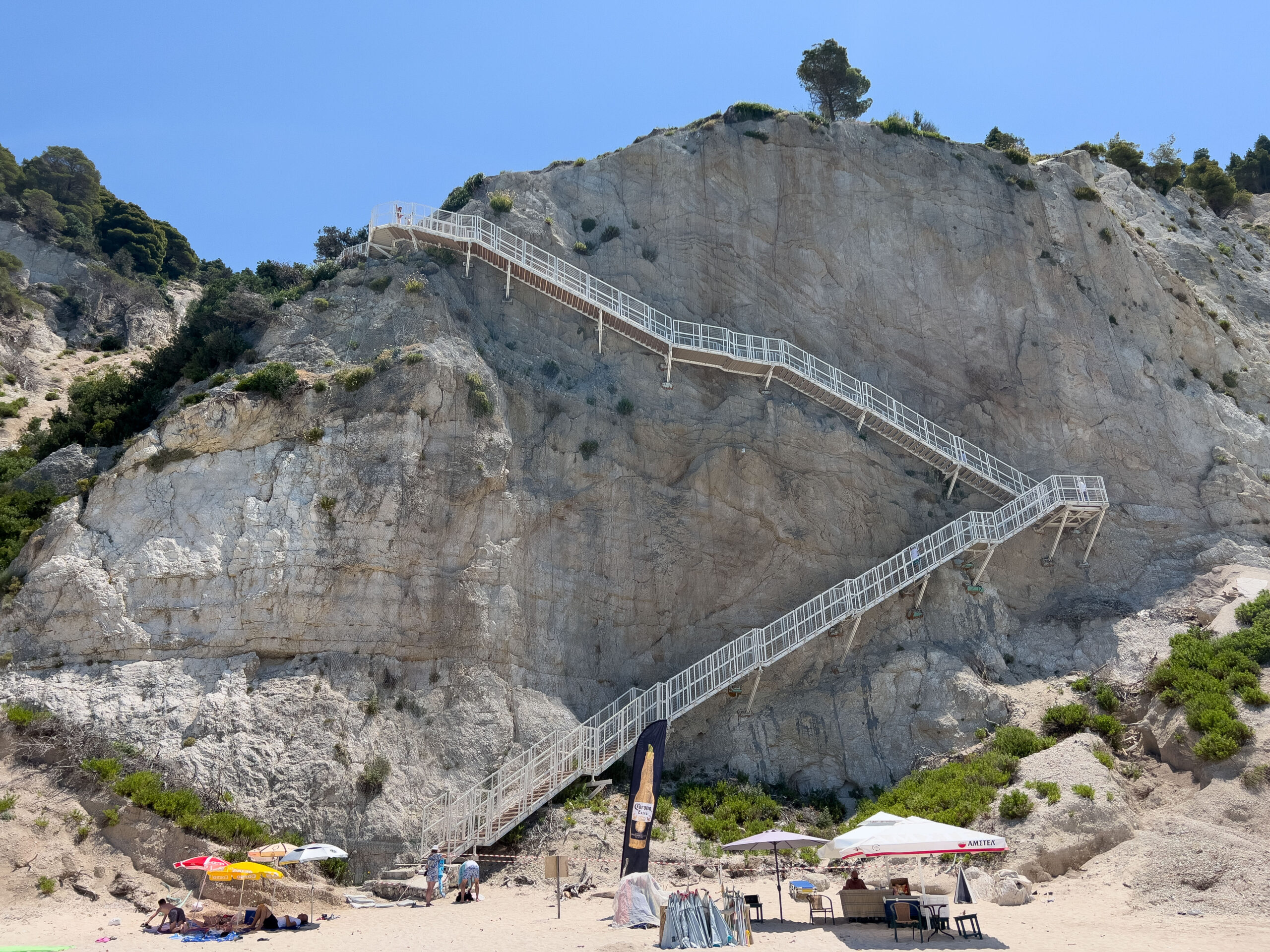
And Lefkada earns the journey. Porto Katsiki consistently ranks among the best beaches in Europe: a half-moon of glittering pebbles beneath vertical white cliffs, the water beneath them the kind of turquoise that makes you question whether you’re looking at the sea or the sky reflected in it. Egremni Beach, accessible by a steep staircase cut into the cliff face (or by boat), offers similar drama with fewer crowds.
Lefkada is also the water sports capital of the Ionian. The bay around Vasiliki is one of the most consistent windsurfing spots in the Mediterranean — it draws serious sailors from across Europe every summer. Kitesurfing, sailing courses, and SUP tours round out a water sports menu that makes Lefkada irresistible for active travelers.
We also love Lefkada for its excellent beaches that go beyond the famous two: the hidden cove of Agiofili, the long sandy arc of Kathisma, the tiny chapel-capped headland at Agios Nikitas.
The honest trade-off: Lefkada is less “distinctly Greek” than the other islands — the easy access has brought a certain mainstream holiday energy to its main towns. Head for the west coast cliff beaches and the village interior to find the real island.
Lefkada in numbers: Bridge access from mainland Greece. Budget travelers: €55–90/day. Mid-range: €100–160+/day.
The first time you stand at the edge of Porto Katsiki’s cliff path, looking down at water so blue it seems artificially colored, you understand something essential about the Ionian Islands: they were designed for people who still believe in beauty for its own sake.
5. Paxos (Paxi) — The Secret Romantic Island
Paxos is the island that Greeks whisper about. It’s tiny — barely 7 kilometers long and 3 wide — covered almost entirely in ancient olive groves, and almost completely free of the tourism infrastructure that has reshaped its neighbors. No airports, no nightclubs, no chain hotels. Just a handful of fishing villages, clear turquoise water, and a silence so complete it feels like the world has switched off.
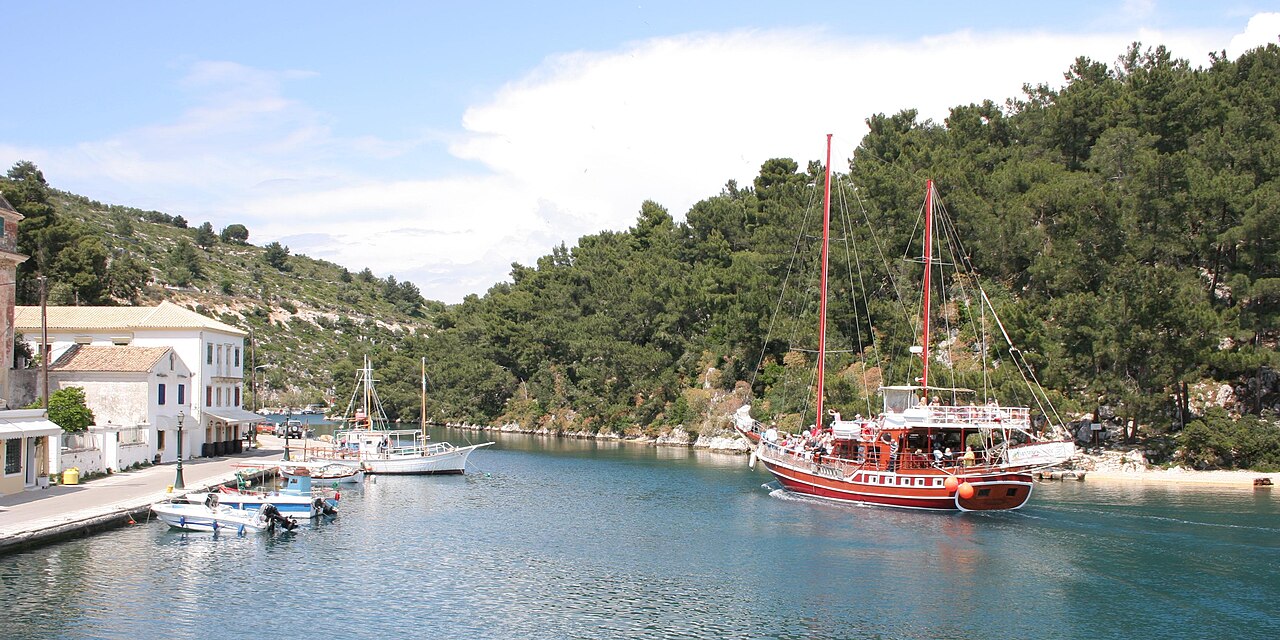
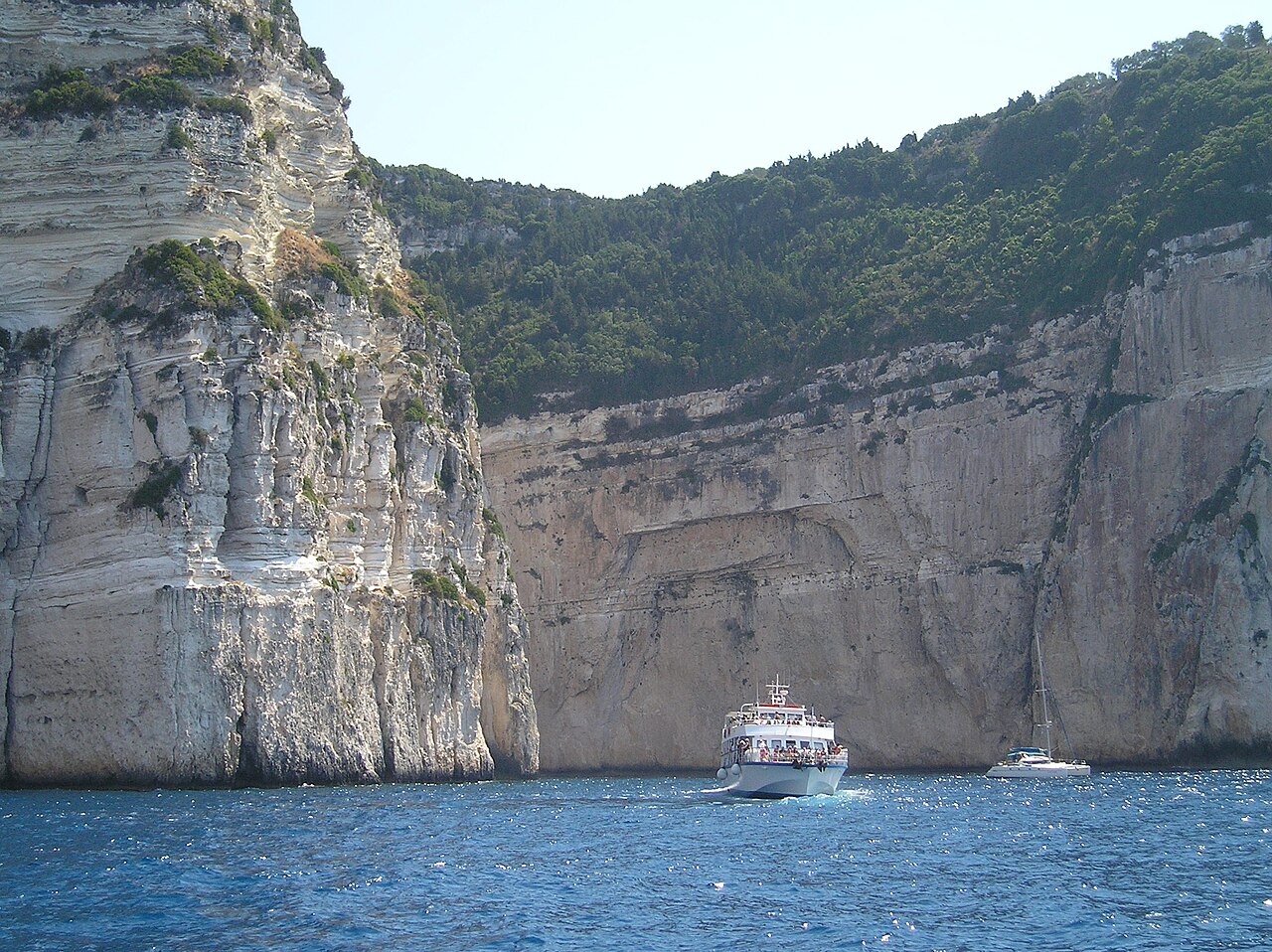
The main base is Lakka, a harbor village at the northern tip where colored fishing boats bob in a bay ringed by cypress trees and cream-colored houses. From here, you can walk through the olive groves to Loggos (another harbor, even smaller) or take a boat to explore the sea caves on the west coast — caverns of extraordinary blue water that glow in the afternoon light.
Paxos is an island for slow travel. The best days here are the ones with no plan: a morning swim off the rocks, a long lunch of fresh fish and olive oil at a harbor table, an afternoon reading in the shade of an olive tree as old as the Byzantine Empire. The island produces some of the finest olive oil in Greece — seek it out.
The honest trade-off: Paxos is not for everyone. There are no sandy beaches to speak of, accommodation is limited (mostly private villas, which require booking months ahead), and the ferry schedule from Corfu (30 minutes) can feel restrictive if bad weather closes. If you need choice and infrastructure, go elsewhere. If you need peace, come here.
Paxos in numbers: Ferry from Corfu (30 min). Budget travelers: €80–130/day. Mid-range: €150–250+/day (limited accommodation inflates prices).
6. Ithaka (Ithaca) — The Literary Island
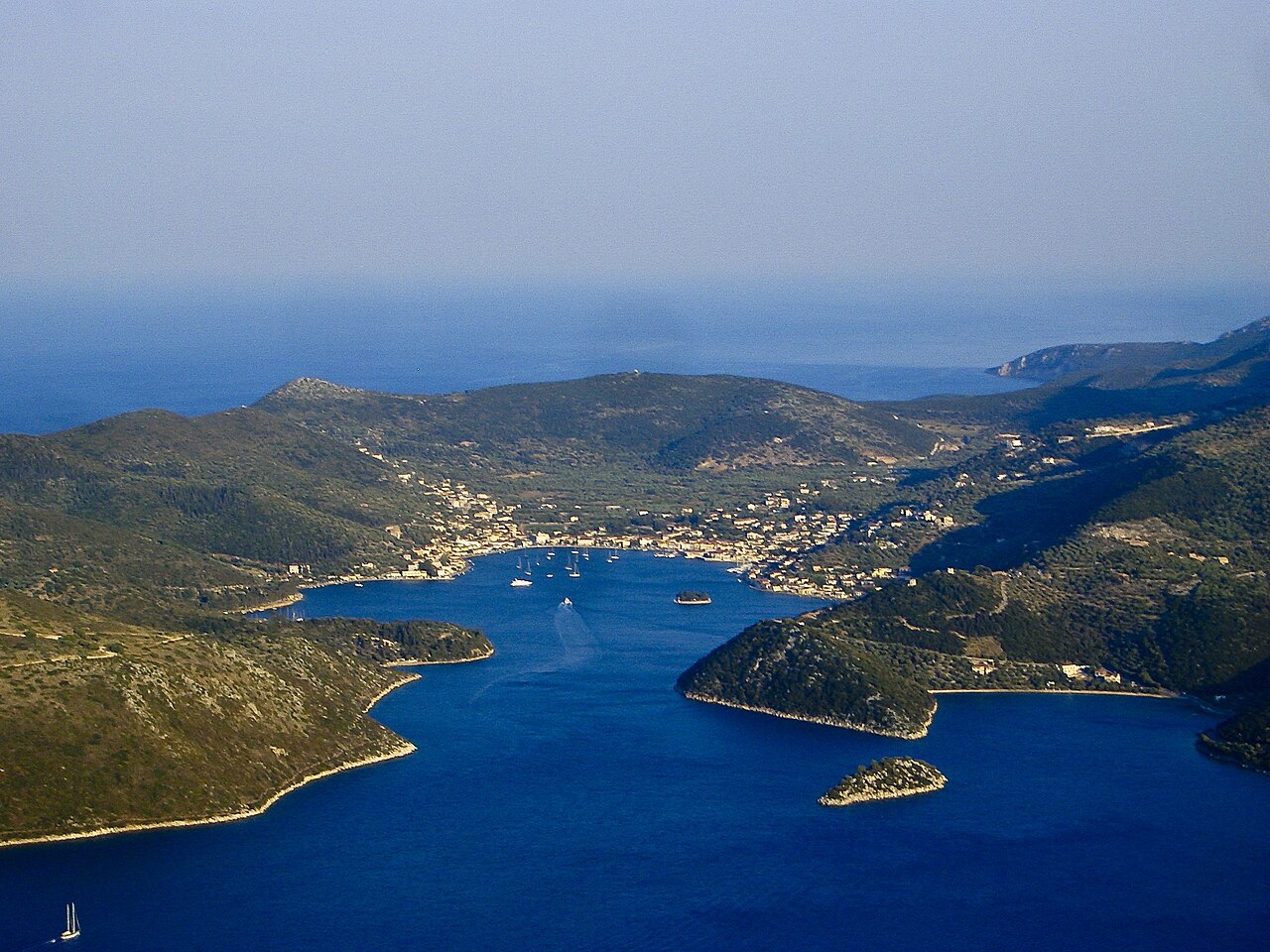
To arrive in Ithaka is to feel, immediately, that you have stepped sideways out of the mainstream. The island is small, mountainous, and stubbornly itself: two deep bays connected by a narrow waist of land, ringed by hills thick with olive and cypress, its harbor towns — Vathy and Kioni — quiet to the point of meditation.
This is, of course, the legendary home of Odysseus — the island Homer’s hero longed for through ten years of wandering, the destination that gave us the word “odyssey.” Whether or not Ithaka is literally the island of the Odyssey (scholars have been arguing about this for centuries), it has absorbed the story so completely that every walk here feels like a literary experience. The Odysseus Museum in Vathy is modest but genuinely moving. The hiking trails pass archaeological sites whose names echo through Western literature.
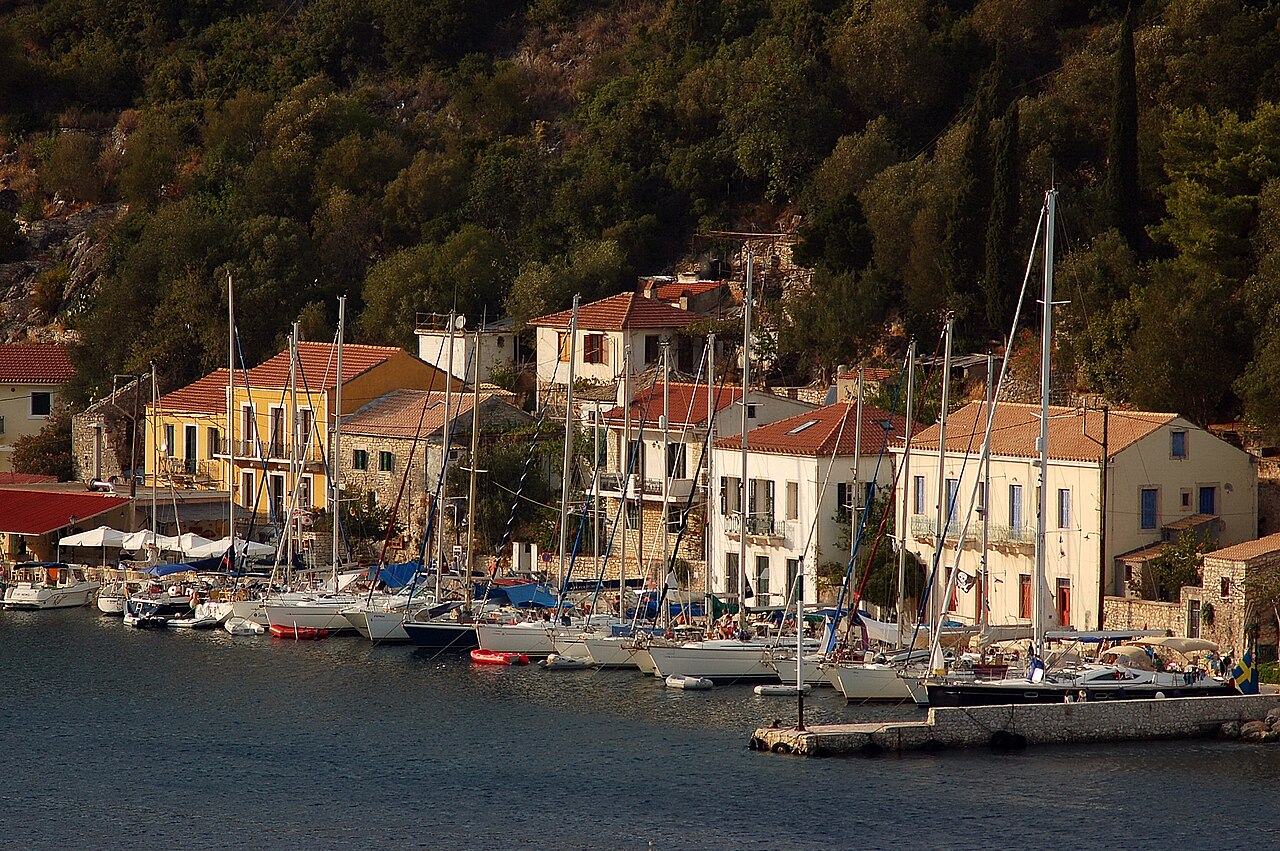
Beyond the literary heritage, Ithaka has a genuinely bohemian, artistic soul. Small galleries, evening concerts in the harbor square, a community of writers and painters who come for a week and stay for a season. The tavernas in Kioni serve lobster pasta and grilled sea bream at prices that feel almost apologetically modest given the quality.
The honest trade-off: Ithaka has no great beaches — the swimming coves are pleasant but not spectacular. It requires ferry connections (from Kefalonia, 1 hour; or Lefkada, 30 minutes) and has very limited accommodation. But for the right traveler — curious, literary, content with simplicity — it’s the most rewarding island of all.
Ithaka in numbers: Ferry from Kefalonia or Lefkada. Budget travelers: €65–110/day. Mid-range: €120–190+/day.
Somewhere between the olive groves and the quiet harbor and the weight of all that accumulated story, Ithaka does to you what Greece does at its most distilled: it makes you slow down, look up, and realize you’ve been rushing toward places when the whole point was always to arrive.
Getting There: Accessibility & Logistics
Accessibility is one of the most underrated factors in choosing an Ionian island — and where most comparison guides fail their readers. Here’s the honest picture:
Flights
- Corfu and Zakynthos have the best flight connections, with direct services from most major Northern European hubs via Ryanair, EasyJet, and TUI. These are the easiest arrivals.
- Kefalonia has some direct summer charter flights from the UK and Northern Europe, but connections are less frequent than Corfu/Zakynthos.
- Lefkada has no airport — fly to nearby Preveza/Aktio (30 minutes by road) or Corfu (then drive via the bridge).
- Paxos and Ithaka have no airports at all. Both are ferry-only.
Ferries
- Corfu: Ferry from Igoumenitsa on the mainland (45 minutes). Well-served.
- Zakynthos: Ferry from Kyllini on the Peloponnese (1.5 hours).
- Kefalonia: Ferry from Kyllini (1.5 hours) or Astakos (2 hours).
- Lefkada: No ferry needed — drive across the bridge. Unique.
- Paxos: Daily ferry from Corfu (30 minutes) or Igoumenitsa (1.5 hours).
- Ithaka: Ferry from Kefalonia (1 hour) or Lefkada (30 minutes).
For complete ferry schedules and booking, check ANEK Lines or the individual island port authority websites.
Car Rental
A car is essential on Kefalonia, Zakynthos, and Lefkada — public transport is minimal to non-existent. On Corfu it’s very useful but not strictly necessary (taxis and some buses cover the main beaches). On Paxos and Ithaka, the islands are small enough to explore mostly on foot or by bicycle.
Island Hopping
The best Ionian island-hopping route for 2 weeks: Corfu (3 nights) → ferry to Paxos (2 nights, via Corfu ferry) → ferry south to Kefalonia (3 nights) → short ferry to Ithaka (2 nights) → ferry to Lefkada (2 nights, drive back to mainland). This route covers the full range of Ionian personalities without backtracking.
Food Experiences by Island
The Ionians have one of the most distinctive food cultures in Greece — shaped by centuries of Venetian occupation, British influence in Corfu, and local agricultural abundance (olive oil, wine, honey, fresh fish). Here’s what to eat, by island:
| Island | Must-Try Dish | Don’t Miss | Local Drink |
|---|---|---|---|
| Corfu | Pastitsada (rooster + cinnamon pasta) | Sofrito, Noumboulo cured pork | Kumquat liqueur |
| Zakynthos | Ladotyri (cheese in olive oil) | Fresh sea urchin pasta | Local olive oil |
| Kefalonia | Kefalonian meat pie (Kreatopita) | Robola wine, fresh octopus | Robola white wine |
| Lefkada | Lefkada salami (smoked, cured) | Grilled fresh fish, olive oil | Local tsipouro |
| Paxos | Fresh fish (daily catch) | Seafood mezze, local olive oil | Paxos olive oil (extraordinary) |
| Ithaka | Lobster pasta (astakos) | Honey and wild herbs | Local wine |
For more on Greece’s food culture across regions, the TasteAtlas guide to Ionian cuisine is a useful deep-dive into the history behind these dishes.
When to Go: A Seasonal Guide
Peak season (July–August) means guaranteed sun and warmth on all islands — but also higher prices, fuller beaches, and (on Corfu and Zakynthos) noticeably larger crowds. If this is when you can go, you’ll still have a wonderful time — just book well in advance.
Shoulder season (May–June, September–October) is, in our view, the sweet spot for the Ionian Islands:
– May–June: Wildflowers still bloom, the sea is warm enough to swim (especially south), prices are lower, and beaches are quiet. Turtle nesting begins in Zakynthos (May).
– September is our personal favorite: the water is at its warmest after a full summer of sun, crowds have thinned, local life reasserts itself, and the light turns golden and painterly. September in Greece is an article we’ve written specifically about this golden window.
– October: Still warm in the south, olive harvest begins (especially beautiful on Paxos), sea is swimmable until mid-month.
Winter (November–March) on the Ionians means rain (these are the wettest Greek islands), limited ferry services, and most accommodation closed. Corfu’s Old Town remains open and atmospheric — but island-hopping in winter is for dedicated adventurers only.
Budget Breakdown by Island
One of the most useful and least-published pieces of information in Ionian comparison guides: what does each island actually cost?
| Island | Budget/day | Mid-range/day | Notes |
|---|---|---|---|
| Lefkada | €55–90 | €100–160 | Cheapest — no ferry fare, affordable accommodation |
| Kefalonia | €60–100 | €110–180 | Best value for quality |
| Ithaka | €65–110 | €120–190 | Low costs but limited options |
| Zakynthos | €70–110 | €130–220 | Mid-range; resort areas inflate prices |
| Corfu | €80–120 | €150–250 | Old Town accommodation is premium |
| Paxos | €80–130 | €150–250+ | Highest for quality; villa rentals dominate |
Budget = hostel/budget room + local taverna + public transport. Mid-range = 3-star hotel + restaurant dinners + car rental.
For more on managing costs across Greek destinations, our guide to the best family-friendly Greek islands includes useful budget planning information for families.
Our Final Recommendations
If you have one week: Choose one island and commit to it. Our recommendation by traveler type:
– Couples: Zakynthos (drama + nature) or Paxos (pure romance)
– Adventurers: Kefalonia (caves, mountains, wine, and Myrtos Beach)
– Culture seekers: Corfu (undisputed)
– Budget road-trippers: Lefkada (drive in, explore, spend less)
– Literary souls: Ithaka (once in a lifetime)
If you have two weeks: The ideal combination is three islands — choose based on your theme:
– The grand tour: Corfu (3 nights) → Kefalonia (4 nights) → Lefkada (4 nights)
– The romance circuit: Zakynthos (4 nights) → Kefalonia (3 nights) → Paxos (3 nights via Corfu)
– The off-the-beaten-path: Ithaka (3 nights) → Kefalonia (4 nights) → Lefkada (4 nights)
The universal truth: Whichever Ionian island you choose, the sea will be astonishingly blue, the food will be better than you expected, and you’ll spend at least one evening at a harbor table watching the light fail over the water and wondering, with genuine feeling, why you didn’t come sooner.
For context on how the Ionians compare to the rest of Greece, our guide to island hopping in Greece provides a broader perspective across the Greek archipelago.
When you’re ready to explore beyond the islands, the Peloponnese road trip guide covers the magnificent mainland coast just across from the Ionian Islands — a natural extension of any Ionian adventure.
For the quieter side of Greek island life, the guide to Folegandros shows what an island looks like when it refuses to compromise — a different Aegean rhythm that Ionian devotees often fall for next.
Planning your Ionian adventure? Bookmark this guide, and use the official Visit Greece Ionian Islands page for up-to-date ferry timetables and accommodation listings. For sea turtle conservation in Zakynthos, support the work of Archelon, the Sea Turtle Protection Society of Greece.