Every Greek island carries an idea of itself, but Ithaca carries a poem. This small Ionian island — barely 23 kilometres from tip to tip, with a population under three thousand — has been freighted with meaning since Homer made it the destination Odysseus spent ten years trying to reach. Cavafy later turned the name into a metaphor for the journey itself. The weight of all that symbolism might lead you to expect something grand, but the real Ithaca is the opposite. It is quiet, mountainous, hard to reach, and almost entirely uninterested in performing for visitors. That indifference is precisely what makes it worth the trip.
| Location | Ionian Sea, east of Kefalonia, approximately 250 km west of Athens |
| Area | 96 sq km (main island), 23 km north–south, max 6 km wide |
| Population | Around 2,860 permanent residents (2021 census) |
| Highest point | Mount Niritos, 806 metres |
| Getting there | Ferry from Kefalonia (30–50 min), Patras, or Astakos; no airport |
| Best for | Couples, hikers, mythology enthusiasts, slow travellers |
| Best time | May–June and September–October; peak July–August |
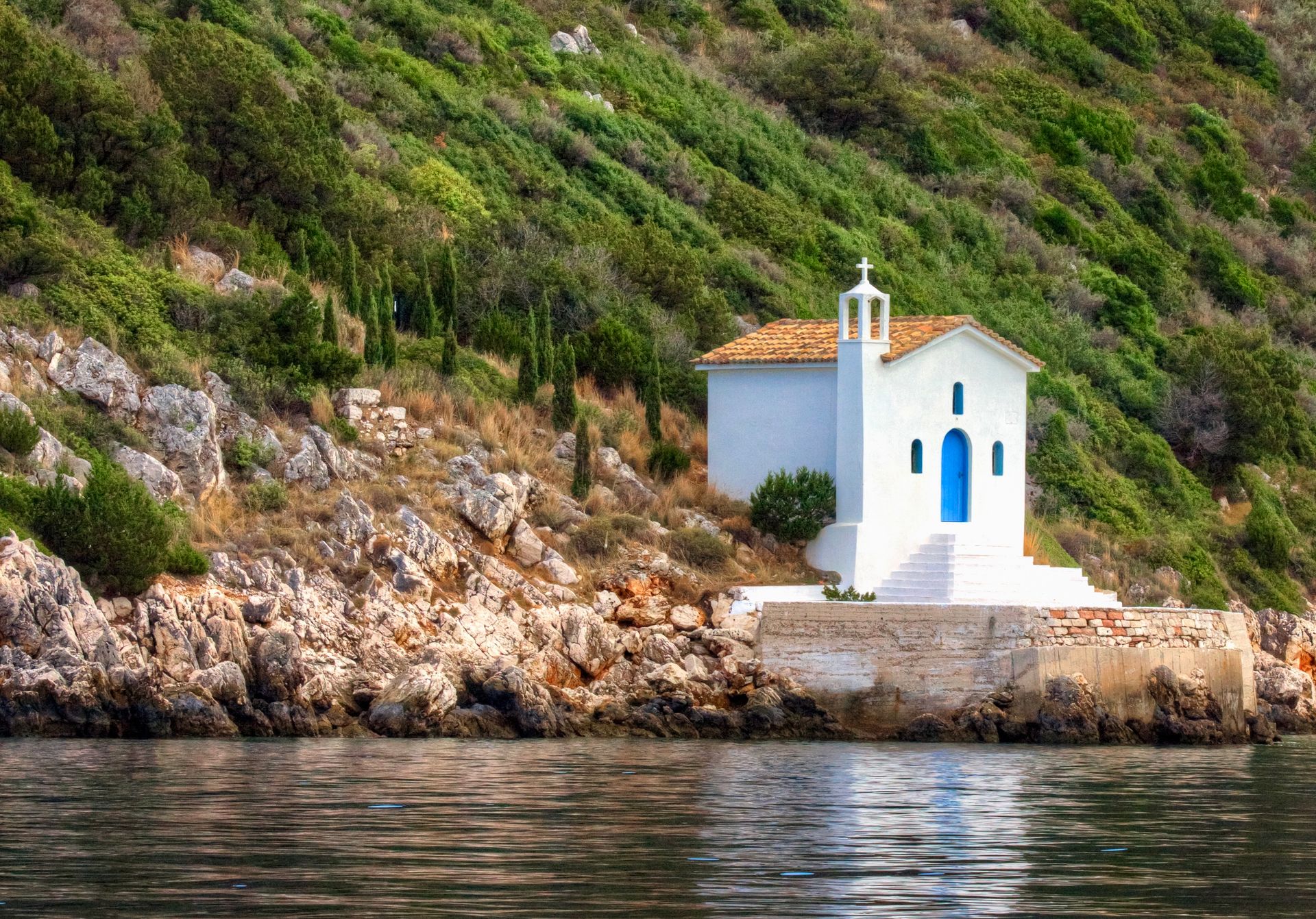
Photo: TonyNojmanSK, Pexels.
Why Ithaca Matters Beyond the Myth
The Homer question hangs over everything on Ithaca, and it is worth addressing directly. The scholarly debate about whether Homer’s Ithaca matches the modern island has been running for centuries. Heinrich Schliemann excavated here in the 1870s and found bronze coins bearing Odysseus’s head. More recently, archaeologists from the University of Ioannina have identified what they believe to be the sanctuary of Odysseus at the site known as the School of Homer. None of this settles the question definitively, but it gives the island a layer of meaning that most Greek destinations simply do not have.
Strip away the mythology, though, and Ithaca still stands on its own. The island is shaped like a figure of eight, its two mountainous halves connected by the narrow Aetos isthmus — just 600 metres wide. The southern half holds Vathy, the capital, arranged around one of the largest natural harbours in the world. The northern half is wilder, with the villages of Stavros, Frikes, and Kioni scattered along the coast and the ancient settlement of Anogi clinging to the mountain above.
What makes Ithaca distinctive among the Ionian islands is its scale and temperament. Kefalonia is dramatic and well-touristed. Corfu is cosmopolitan and occasionally crowded. Zakynthos draws beach-seekers by the planeload. Ithaca does none of that. It has no airport, no large-scale hotels, and no nightclubs to speak of. What it has is a landscape of olive groves, cypress trees, and turquoise coves that feels genuinely undiscovered — not in the marketing sense, but in the sense that you can walk for an hour without seeing another person.
Homer, Cavafy and the Weight of a Name
Two texts define Ithaca’s place in world literature. Homer’s Odyssey, composed around the 8th century BC, tells the story of Odysseus’s long journey home from Troy. Whether or not the modern island matches every geographical detail in the poem, the landscape resonates with the text. The rocky harbour where Odysseus was said to have been set ashore, the spring where the swineherd Eumaeus watered his animals, the mountain paths through pine and olive — all of these exist on the island, and walking them gives the poem a physical reality that reading alone cannot provide.
Constantine Cavafy’s poem “Ithaca,” written in 1911, takes the idea in a different direction. “Hope that the road is a long one,” Cavafy wrote, arguing that the value of Ithaca lies not in arriving but in what the journey teaches. The poem is read at Greek graduations, printed on postcards across the country, and taught in schools worldwide. It has become one of the most widely known works in modern Greek poetry, and it has given the island’s name a second life as a metaphor for any worthwhile pursuit.
Visitors who come expecting a literary theme park will be disappointed. There is no Odysseus Museum, no Cavafy heritage trail, no guided “Odyssey Experience.” The island’s connection to these texts is felt rather than curated. That subtlety is part of its appeal.
The 1953 Earthquake
On 12 August 1953, a magnitude 7.2 earthquake destroyed roughly 90% of the buildings on Ithaca, Kefalonia, and Zakynthos. Vathy was almost completely levelled. The reconstruction that followed was faithful to the traditional style — red-tiled roofs, painted shutters, two-storey proportions — but the embellishments of the Venetian period were largely lost. What you see in Vathy today is a rebuilt version of the original, handsome but humbler. The earthquake explains why the northern villages of Anogi and Exogi, which were already partly depopulated, feel older and more weathered than the capital.
When to Visit Ithaca
The season runs from April to late October. July and August are the warmest months, with temperatures reaching 32–35°C, and the island is at its liveliest during this period. Village festivals called panigiria fill the squares with music and grilled meat on summer evenings, and the water taxis to the beaches run at full capacity.
May, June, and September are the better months for most visitors. The sea is warm enough for comfortable swimming from late May. Wildflowers cover the hillsides in spring, and the light in September has a softer quality that suits the island’s character. The hiking trails are more pleasant outside the summer heat.
October remains viable but quieter. Some facilities begin to close, and ferry schedules thin out. Winter on Ithaca is mild by northern European standards but genuinely quiet — most businesses close, and the already-small population shrinks further as seasonal residents return to the mainland.
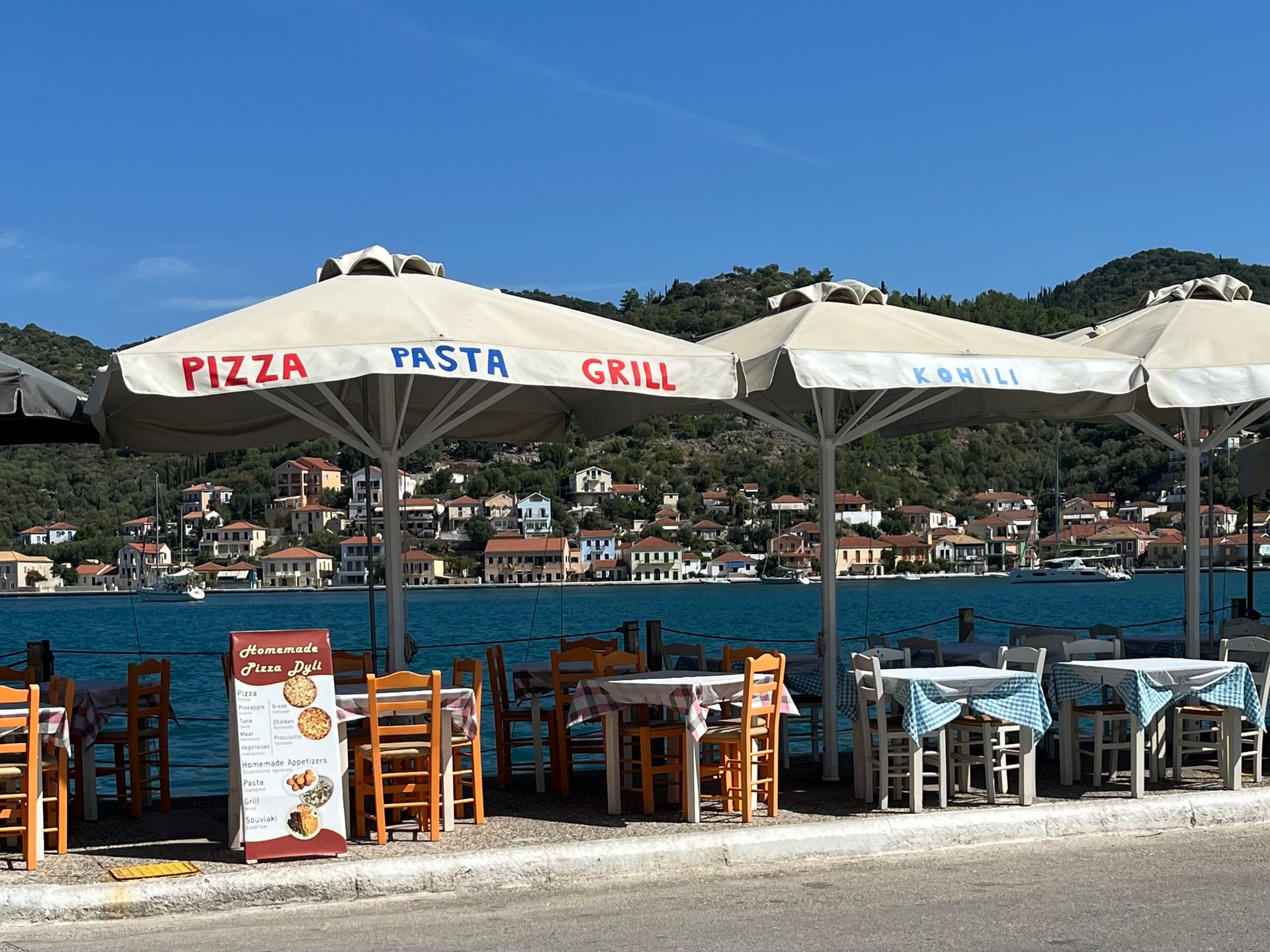
Photo: Taty Gkiozos, Pexels.
How to Get to Ithaca
Ithaca has no airport. Getting there means a ferry, and the most practical route runs through neighbouring Kefalonia.
Via Kefalonia
Most visitors fly into Kefalonia Airport and take a ferry from either Sami or Poros. The crossing from Sami to Pisaetos on Ithaca takes approximately 30 minutes, and from Poros the journey is around 50 minutes. Ionion Pelagos and Levante Ferries operate these routes, with up to 4–5 daily connections in high season. Tickets start from around €3 for foot passengers, making this one of the cheapest ferry crossings in Greece.
A second option connects Fiskardo, in northern Kefalonia, with Frikes on Ithaca. This route is useful for travellers who want to arrive directly in the island’s northern half and skip Vathy initially.
From the mainland
Direct ferries run from Patras and Astakos on the western Greek mainland. The Patras route takes approximately 3 to 4 hours and typically operates a few times per week in summer. The Astakos crossing, run by smaller operators, takes around 2 hours. Both services arrive at Pisaetos or Vathy.
From Lefkada, summer connections via Nidri or Vasiliki reach Frikes or Fiskardo (Kefalonia) with an onward transfer. For a broader view of Ionian ferry options, our Ionian Islands comparison guide covers inter-island connections in detail.
Getting around on the island
Ithaca is small enough that a car is useful but not essential. Car rental is available in Vathy, and the road network connects all the main villages. The 25-kilometre drive from Vathy to Frikes in the north takes about 40 minutes and passes through some of the island’s best scenery. In summer, a bus service connects Vathy with the northern villages and key beaches, though it runs infrequently. Scooter hire is another option. For the beaches that are hardest to reach by road — Gidaki in particular — water taxis operate from Vathy harbour.
Vathy and the Southern Half
Vathy wraps around a deep, narrow bay that almost qualifies as a fjord. The harbour entrance is so narrow that from the town centre you cannot see the open sea — an effect that gives the waterfront a lake-like calm even when the Ionian is rough outside. Red-roofed houses rise in tiers from the quayside, rebuilt after the 1953 earthquake in a style that echoes the Venetian original without replicating it exactly.
The town is walkable in twenty minutes. The waterfront has the density of activity — the ferry dock, tavernas, a few shops selling provisions and local honey. Inland, the streets climb quickly into residential quietness. The Nautical and Folklore Museum, housed near the harbour, documents the island’s seafaring past, though it keeps irregular hours outside July and August.
South of Vathy, the hillside village of Perachori is the largest settlement on the island by population — around 350 people. Built on the slopes below the forest, it looks east over the bay and offers views that reach to the Peloponnese on clear days. The village dates to the medieval period, when residents moved inland to escape pirate raids. Several walking trails radiate from Perachori into the surrounding hills.
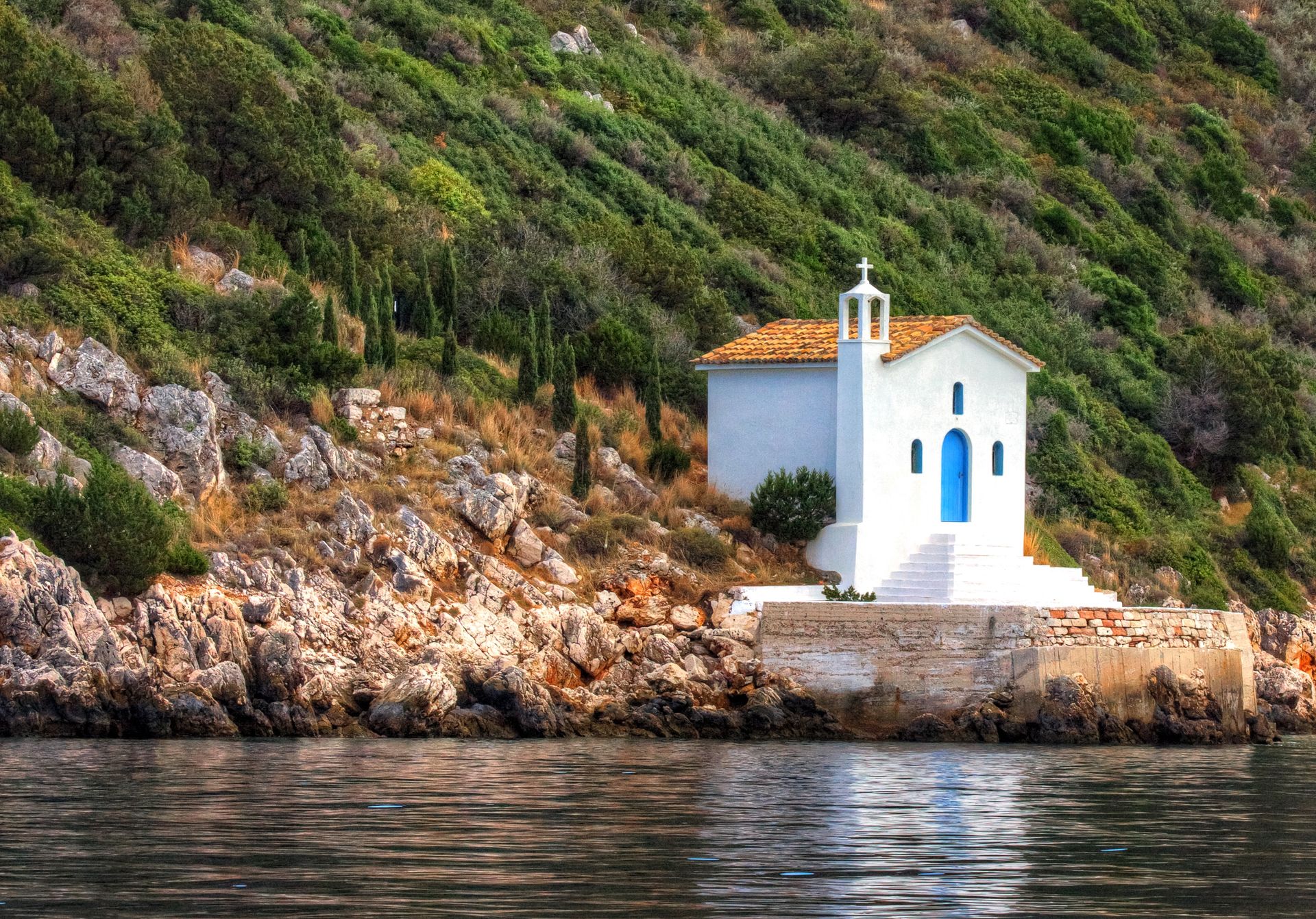
Photo: TonyNojmanSK, Pexels.
Stavros, Kioni and the Northern Villages
The northern half of Ithaca is the more atmospheric side. Cross the Aetos isthmus — where the road narrows to a single lane between two bays — and the character of the island shifts. The landscape becomes drier, steeper, and less populated. The three main villages here are Stavros, Kioni, and Frikes, each with its own personality.
Stavros is the administrative centre of the north and the second-largest settlement on Ithaca. It sits on a ridge between two bays, looking west toward Kefalonia. The village has a small archaeological collection displaying finds from the nearby Mycenaean site at Pilikata, and a bust of Odysseus stands in the central square — the only such monument on the island. The area around Stavros is where the archaeological evidence for Homer’s Ithaca is strongest.
Kioni is the village that most visitors photograph. It descends to a miniature harbour where sailing boats anchor in transparent green water. Three stone windmills stand at the village entrance, no longer functioning but perfectly positioned. Kioni has a handful of tavernas, a single shop, and an unhurried atmosphere that can absorb an entire afternoon. It escaped the worst of the 1953 earthquake, so its architecture retains more of the pre-war character.
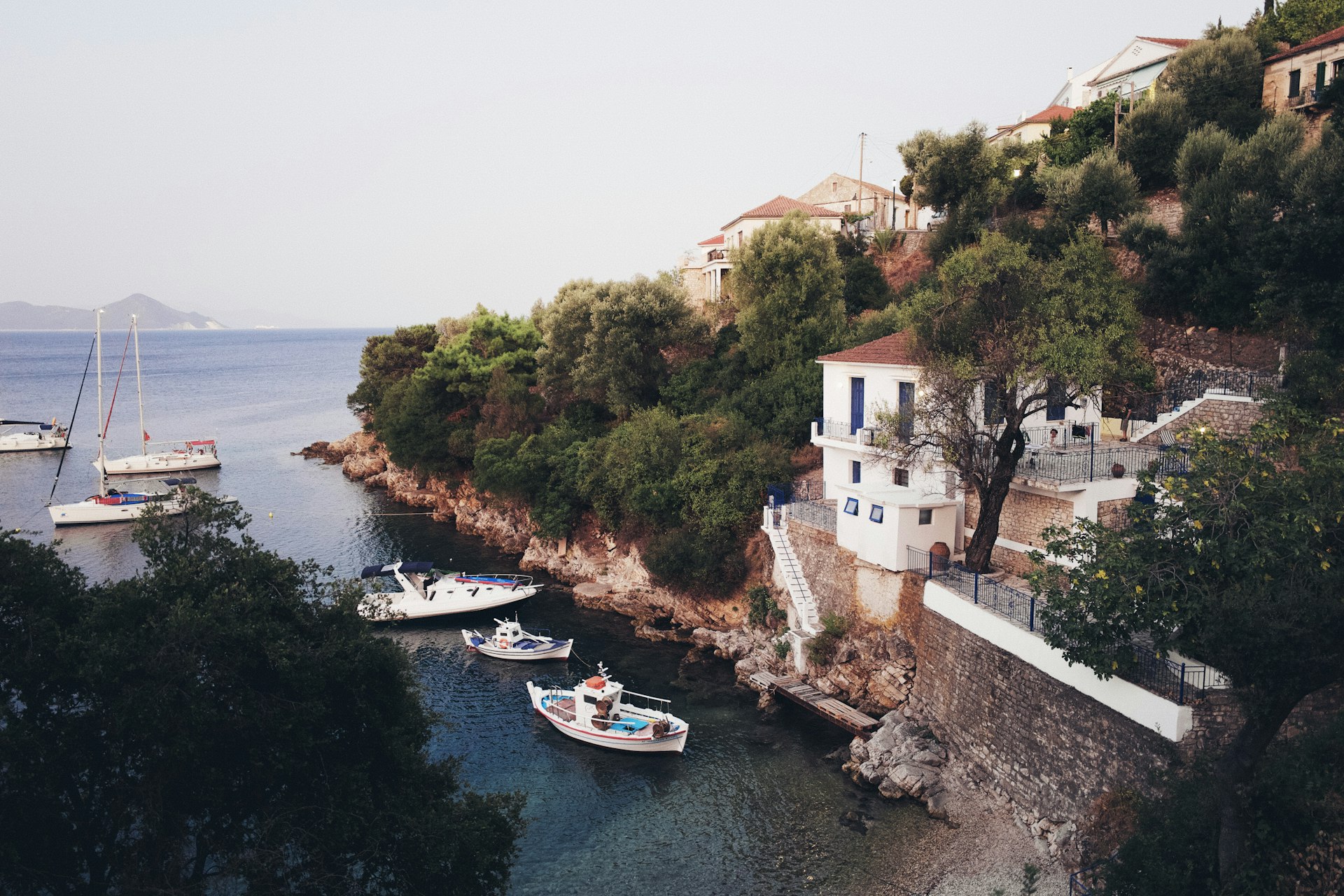
Photo by Johannes Karow on Unsplash.
Frikes is the third port village, tucked into a narrow bay in the northeast. It is the arrival point for ferries from Lefkada and Fiskardo, and its waterfront has a scattering of tavernas that come alive in the evening. Frikes is a good base for walking to nearby beaches and to the mountain village of Exogi, whose elevation once protected it from pirate raids. From Exogi, the 360-degree view takes in the central Ionian — Kefalonia, Lefkada, and the mainland coast of Akarnania.
Above all three coastal villages sits Anogi, one of the oldest settlements on the island at roughly 500 metres elevation. The village is known for two things: the church of the Panagia, which contains 14th-century Byzantine frescoes, and the natural limestone monoliths scattered across the surrounding plateau. The largest of these, called Araklis, is part of the Kefalonia and Ithaca UNESCO Global Geopark. Anogi is worth the detour for its silence alone — you are unlikely to meet more than a handful of people.
Archaeological Sites and the Odyssey Trail
Ithaca’s archaeological sites are scattered rather than concentrated, and none of them is monumental in the way that Delphi or Olympia might be. Their interest is cumulative — taken together, they build a convincing case that this island was indeed an important Mycenaean settlement, and possibly the kingdom Homer described.
The School of Homer (Agios Athanasios). Near the spring-rich foothills above Exogi, this three-terraced complex with cyclopean walls has been excavated by the University of Ioannina since 1994. The lead archaeologist identified it as the palace structure of Odysseus and Penelope, though not all scholars agree. Habitation spans from the Middle Helladic period (around 1900 BC) through to the Hellenistic era.
Loizos Cave (Polis Bay). Excavated in the 1930s by Sylvia Benton, this cave on the western coast revealed evidence of continuous worship from 2500 BC to the Roman period. Among the finds was a clay mask inscribed with the name Odysseus — the earliest known physical reference to the character outside the texts. Bronze tripods from the 9th century BC were also discovered, which may correspond to those mentioned in the Odyssey.
Pilikata. Just north of Stavros, this 750-square-metre site preserves the remains of a walled settlement dating to the pre-Hellenistic and Mycenaean periods. Finds are displayed at the Stavros Archaeological Collection, a small museum that is worth visiting if you are in the north of the island.
Marmarospilia (Cave of the Nymphs). Identified by Professor Sarantis Symeonoglou as Homer’s described sanctuary of the Nymphs, this cave was explored to a depth of 36 metres. Figurines, dedicatory pottery, and priestess rings were discovered inside. A tunnel extending 24 metres remains unexplored.
Arethousa Spring. Mentioned in the Odyssey as the source where Eumaeus took his animals to drink, this spring on the southern coast can be reached by a walking trail from Vathy. The path takes approximately 90 minutes each way and passes through dry, scrubby terrain with views over the sea. The spring itself is modest, but the walk is one of the best on the island.
Beaches on Ithaca
Ithaca’s beaches are small, pebbled, and reached by either steep footpaths, narrow roads, or water taxi. There are no broad sandy stretches like those on Kefalonia or Lefkada. What the island offers instead is clarity of water that rivals anything in the Ionian, and a level of solitude that the larger islands have mostly lost.
| Beach | Surface | Access | Facilities | Best For |
|---|---|---|---|---|
| Gidaki | White pebbles | Water taxi or steep hike | Small summer cafe | Swimming, solitude, natural beauty |
| Filiatro | White pebbles | 3 km from Vathy by road | Sunbeds, beach bar | Families, easy access, shallow water |
| Sarakiniko | Sand and pebbles | 3 km east of Vathy | None | Snorkelling, quiet swimming |
| Dexa | Pebbles | Walking distance from Vathy | Minimal | Quick swim, convenience |
| Polis Bay | Small pebbles | Road from Stavros | None | Archaeology enthusiasts, calm water |
| Kaminia | Pebbles | Southeast coast, road access | None | Snorkelling, seclusion |
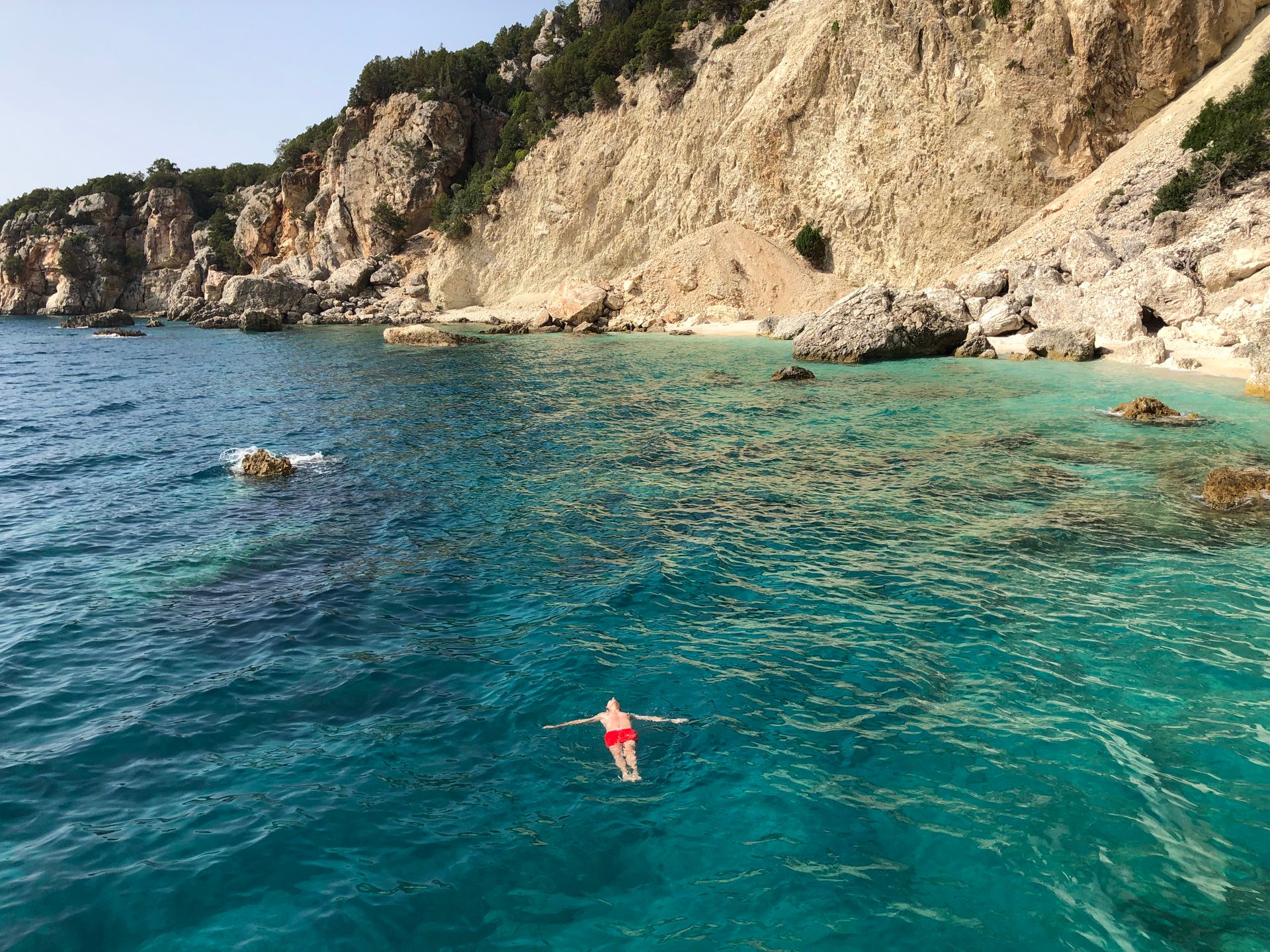
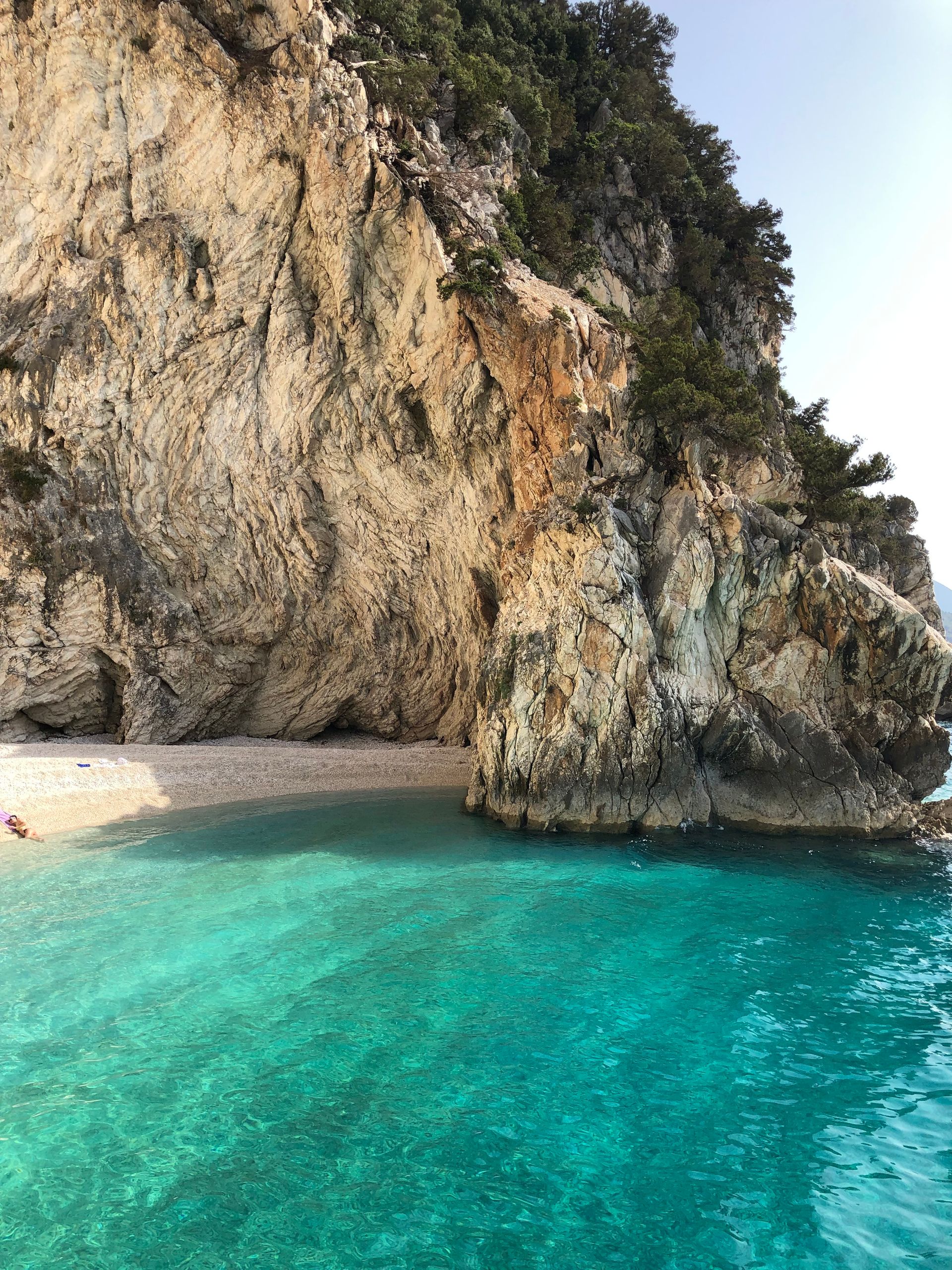
Gidaki is widely considered the finest beach on the island. Backed by white cliffs and dense vegetation, it sits on the east coast and is accessible either by water taxi from Vathy or by a steep hiking trail that takes around 45 minutes. The isolation is the point — there are no sunbeds, no beach bars (a small cafe operates in peak summer), and on most days you will have the pebbled shore largely to yourself.
Filiatro, the closest organised beach to Vathy at just 3 kilometres, is the more practical option for families. The water is shallow and calm, sunbeds are available, and a beach bar serves drinks and light food. Sarakiniko, a little further along the same coast, offers two small bays surrounded by cypress and olive trees — no facilities, excellent snorkelling.
Polis Bay, on the west coast near Stavros, doubles as a swimming spot and an archaeological site. The cave above the beach (Loizos Cave) is where the clay mask inscribed with Odysseus’s name was found. Swimming here carries a particular resonance.
Food and Dining on Ithaca
Ithaca’s food reflects its position at the crossroads of Venetian and mainland Greek traditions. The Italian influence survives in dish names — savoro (fish in a vinegar, flour, and garlic sauce), sofigado (meat stew), polpette (meatballs) — while the ingredients are thoroughly local. Olive oil from the island’s own groves, herbs from the hillsides, and fish from the surrounding sea provide the base for most meals.
The most distinctive local dish is chicken tserepa, slow-cooked in a sealed earthenware pot. The technique produces something closer to a braise than a roast, with intensely concentrated flavours. It is not on every menu, but it is worth seeking out when it appears.
A herb called sapsicho, similar to marjoram but reportedly unique to Ithaca, turns up in local cooking and is sold dried by the handful in Vathy’s small shops. The local wine varieties include the whites Thiako and Koufaki, and a dark Mavrodafni variant that pairs well with the richer meat dishes. Rovani, a sweet made from honey, rice, and olive oil, is the traditional dessert.
For dining, the harbour-front tavernas in Vathy, Kioni, and Frikes all serve reliably good food. The Old Harbour area in Vathy tends to offer better value than the main waterfront. In Kioni, the two or three tavernas overlooking the harbour compete for the same sailing crowd and keep standards high as a result. Expect to pay €40 to €65 for dinner for two with wine — less than on Kefalonia or Corfu, more than on the mainland.
Where to Stay on Ithaca
Accommodation on Ithaca is small-scale by design. There are no large resorts and no chain hotels. Most options fall into three categories: traditional guesthouses in Vathy, villas and apartments in the northern villages, and a small number of boutique properties scattered along the coast.
Vathy is the most convenient base, with the ferry port, the majority of dining options, and walking access to the nearest beaches. The waterfront area is where most guesthouses cluster, though the streets immediately behind offer quieter alternatives at slightly lower prices.
Kioni and Frikes suit travellers who want to settle into a village rhythm. Both are quieter than Vathy and have their own tavernas and swimming options within walking distance. The trade-off is that reaching the southern beaches or the ferry at Pisaetos requires a car or bus ride.
Booking ahead is important in July and August, particularly for Kioni, which has very limited capacity. In shoulder season, availability is rarely an issue.
A Suggested Three-Day Itinerary
Day 1 — Vathy and the south. Arrive via ferry to Pisaetos, drive to Vathy. Walk the harbour, visit the Nautical Museum, explore the backstreets. Afternoon swim at Filiatro or Dexa. Evening dinner on the Old Harbour waterfront.
Day 2 — The north. Drive to Stavros, visit the archaeological collection. Continue to Kioni for lunch by the harbour. Walk up to Anogi for the frescoes and monoliths. Swim at Polis Bay on the way back. Evening in Frikes for dinner and a sunset over Lefkada.
Day 3 — Beaches and walking. Morning water taxi to Gidaki — swim, read, do nothing. Return to Vathy for a late lunch. Afternoon hike to the Arethousa Spring if energy allows (3 hours round trip). Final evening in Vathy, or catch the evening ferry if moving on to Kefalonia.
What to Know Before You Go
Ithaca is not an island for everyone. It rewards patience, self-reliance, and a tolerance for quiet. If you need sandy beaches, regular nightlife, or extensive shopping, you will be frustrated. If you want to walk through landscapes that have been described in literature for three millennia, eat well in small tavernas, swim in deserted coves, and return to a harbour that looks the same at sunset as it did at dawn, Ithaca delivers in a way that few Greek islands can match.
A few practical points. There is a medical centre in Vathy but no hospital — serious cases are transferred to Kefalonia. ATMs are available in Vathy and Stavros but not in the smaller villages. Mobile phone coverage is generally good but can be patchy in mountainous areas, particularly around Anogi. Bring good walking shoes — much of what is worth seeing on Ithaca requires some uphill effort, and the paths are often rocky and uneven.
For more context on planning an Ionian itinerary, see our guide to island hopping in Greece, which covers ferry routes and multi-island combinations across the Ionian group and beyond.
The information in this article was researched and verified as of July 2026. Prices, transport options, schedules, and conditions may have changed since publication — we recommend double-checking key details before your trip.