
Athens is not only an ancient city inland from the sea. Its southern edge opens into a long urban coastline where beaches, marinas, shopping streets, rocky coves, private resorts and seaside restaurants become part of the capital’s daily life. The Athens Riviera is not an island substitute in every respect, but it is one of the easiest ways to add swimming and coastal time to an Athens stay without taking a ferry.
The practical decision is choosing the right part of the coast. Glyfada is the most useful combination of beach, shopping, restaurants and tram access. Vouliagmeni feels more resort-like and offers the lake, coves and a more polished coastal setting. Voula sits between the two and works well for public transport and accessible sea access. Farther south, Varkiza and Lagonissi are better suited to a dedicated beach day, usually with more planning. This guide compares them honestly and explains how to use the coastal tram without treating the entire Riviera as one walkable strip. For the wider city context, continue to our complete Athens guide; if you are still choosing your base, see where to stay in Athens by area.
Quick answer: which part of the Athens Riviera suits you?
| Area | Best for | What it offers | Main limitation |
|---|---|---|---|
| Faliro and Flisvos | A short waterfront break close to central Athens | Marina, park, promenade, restaurants and easy tram access | This is more urban waterfront than classic beach country |
| Glyfada | A first Riviera day without giving up city comforts | Public beaches, marinas, shopping, restaurants and tram stops | The coast is spread out and popular beaches can feel developed |
| Voula | Public transport, swimming and accessible sea access | Beaches, coastal suburbs, tram terminus and Seatrac access at selected locations | Beach quality and facilities vary between sections |
| Vouliagmeni | A polished resort atmosphere, coves and Lake Vouliagmeni | Akti Vouliagmeni, Limanakia, lake, marina and high-end dining | Private facilities and the lake can cost more than a public beach day |
| Varkiza | An organised beach day and water sports | Sandy beach facilities, seaside food and a more resort-oriented feel | Usually easier by bus or car than by tram alone |
| Lagonissi and Saronida | A longer coastal outing beyond the main suburbs | Coves, organised beaches, tavernas and the road towards Sounion | More time, traffic and transport planning are required |
The comparison is deliberately broad. A beach’s exact conditions, facilities, entry policy and water safety can change with the season, weather and operator. The Athens Riviera contains public shores, municipal beaches, private resorts and informal rocky swimming spots; do not treat them as interchangeable.
What the Athens Riviera actually is
“Athens Riviera” is a practical travel label rather than one administrative destination. It usually refers to the southern coastal strip running from the waterfront around Faliro and Alimos through Glyfada, Voula, Vouliagmeni and Varkiza, continuing towards Lagonissi, Saronida and Cape Sounion. Visit Greece presents the coastline as a sequence of beaches, marinas, shopping areas, restaurants, water sports and resorts rather than as one continuous beach.
That distinction matters when planning. Faliro is close to the centre but feels urban. Glyfada combines a town centre with the coast, but its shopping streets and beaches are not all immediately beside each other. Vouliagmeni is more cohesive as a resort area, yet its most interesting swimming options are separated by roads and private facilities. Varkiza and the coast beyond it feel more like a deliberate excursion than a casual extension of an Athens walking day.
The coastline faces the Saronic Gulf, but the water, seabed, exposure and facilities differ from one cove to the next. Some beaches are sandy and organised; others are rocky entry points where visitors need proper footwear and realistic expectations. A calm-looking cove is not automatically supervised or suitable for every swimmer.
When to visit the Athens Riviera
The coast is usable beyond the height of summer, but the experience changes sharply by season. From late spring through early autumn, the Riviera functions as a genuine swimming and outdoor-dining extension of Athens. June and September often offer the best balance between warm water, manageable heat and less pressure on the most popular beaches than the core of July and August.
July and August are the most demanding months for a spontaneous beach day. Heat, weekend traffic, full car parks, crowded tram services and limited shade can all affect the experience. Start early if you want a public beach, especially on a Saturday or Sunday. If your priority is simply sitting beside the sea, an evening promenade or dinner may be more comfortable than trying to secure a midday sunbed.
Winter is not a reason to ignore the coast. The sea is colder, but Faliro, Flisvos, Glyfada and Vouliagmeni still offer walks, cafés, restaurants and open views. Some private beach facilities operate seasonally, and swimming conditions should never be inferred from a summer timetable. The Official Athens Guide also documents winter swimming as an established local activity, but visitors should choose supervised or familiar locations and avoid treating cold-water swimming as a casual sightseeing activity.
Faliro and Flisvos: the easiest waterfront introduction
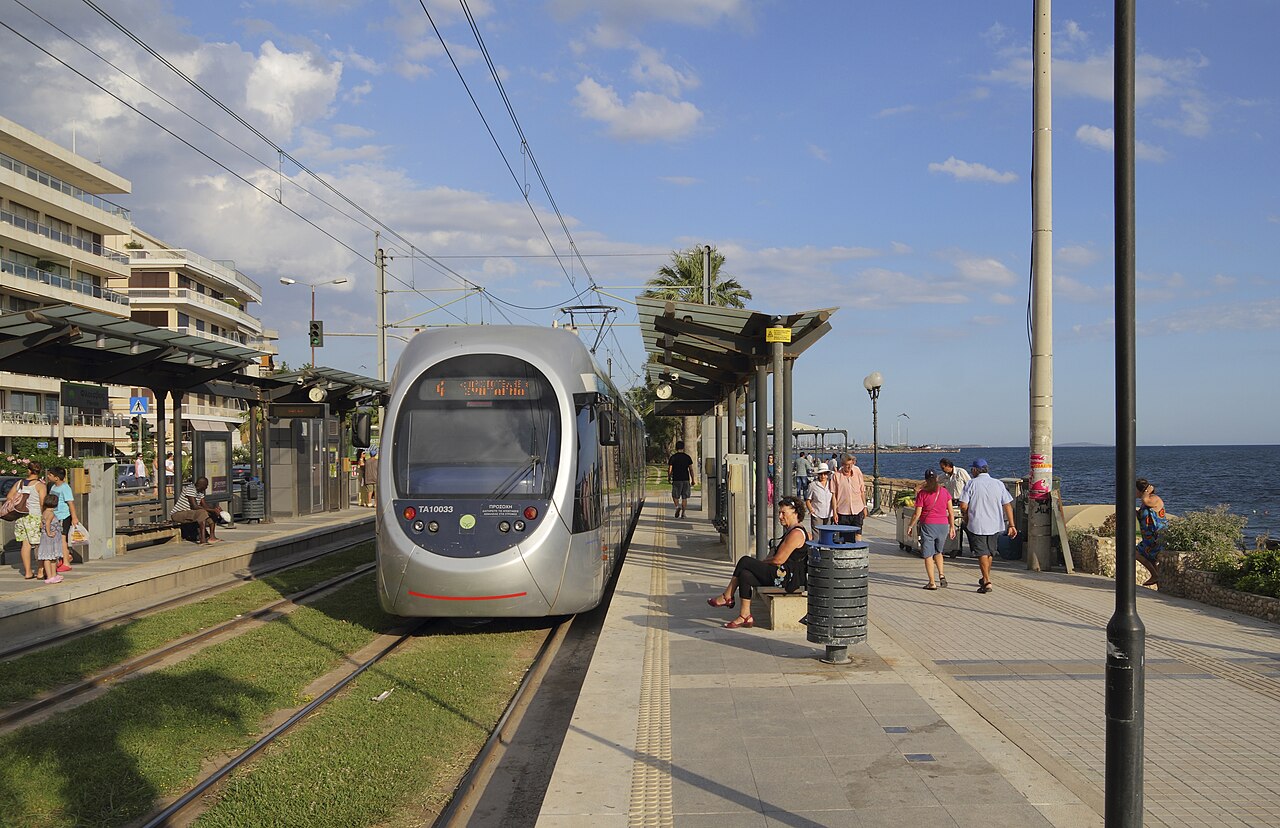
Faliro and Flisvos Marina are the most convenient coastal choice if you have limited time or do not want to travel deep into the southern suburbs. The area is better understood as a waterfront promenade than a classic beach destination. Flisvos Park, the marina, cafés, restaurants and open views create an easy half-day or evening route from central Athens.
This is where the Riviera works particularly well for travellers who want several experiences in one outing: a walk by the water, a meal, a marina atmosphere and perhaps a short look at the coastline without committing to a full beach day. It is also a practical starting point for understanding the tram. You can ride south from the city, get off for the waterfront, and continue later if the conditions and timetable suit you.
Do not choose Faliro if your only goal is the clearest water or the most spacious sandy shore. Choose it for convenience, a promenade, a marina and a low-friction change of scene. It pairs naturally with the Stavros Niarchos Foundation Cultural Centre or Piraeus, but those are separate destinations rather than parts of one beach itinerary.
Glyfada: the most versatile Riviera base
Glyfada is the best all-round introduction to the Athens Riviera for many first-time visitors. The town has a strong commercial centre, restaurants, cafés, marinas and several coastal sections, so you can combine swimming with shopping or lunch rather than building the whole day around one beach facility.
The Official Athens Guide describes Glyfada as a lively southern suburb with the Metaxa shopping strip, smaller side streets, restaurants, markets and a coast lined with public beaches, cafés and marinas. That mix is more useful to visitors than the idea that Glyfada is simply an upscale beach resort. It remains a lived-in suburb with different pockets and a changing commercial scene.
Glyfada beaches
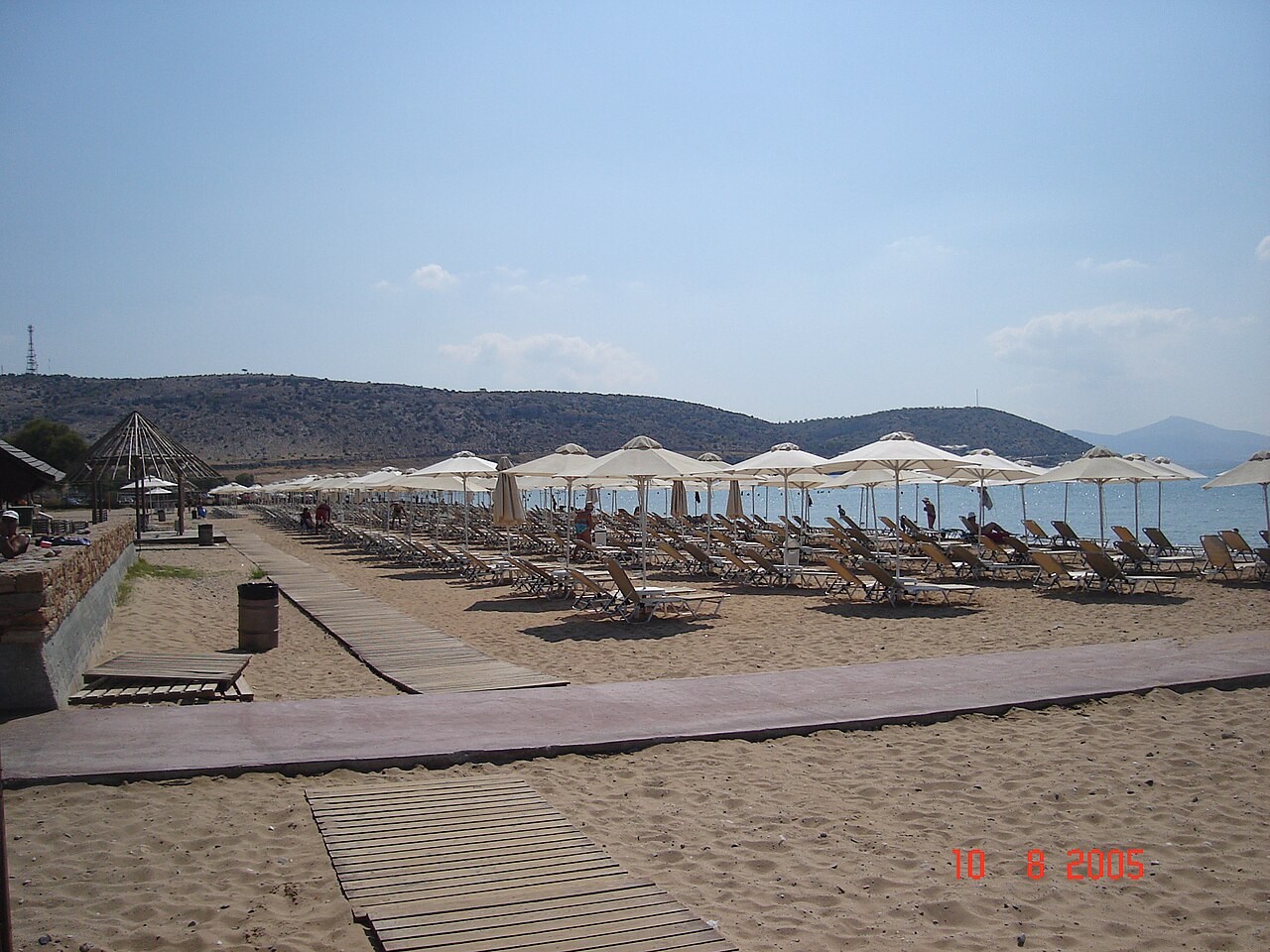
Glyfada’s public beaches are practical rather than remote. The sand, water clarity, shade, entry arrangements and available umbrellas vary between sections, and the most convenient access is not necessarily the quietest. Some stretches have organised services; others function more simply as urban swimming spots. Check the conditions on arrival and keep expectations aligned with a city beach.
The private Asteras facilities in Glyfada offer a more controlled resort experience, while Astir Beach is a separate high-end venue in Vouliagmeni. Both should be treated as private commercial venues with their own prices, reservations, access rules and seasonal operations. Do not describe either as the default public-beach experience or quote a fee without checking the operator for the exact date.
Glyfada works well for:
- travellers who want a beach and an active town in the same area;
- visitors who prefer tram access and do not want to drive;
- families who value nearby food, shops and services;
- repeat visitors looking for a more contemporary southern-Athens atmosphere.
It is less suitable for travellers seeking a secluded beach, uninterrupted nature or a quiet swimming cove. For those priorities, continue farther south or choose a smaller coastal destination outside the tram corridor.
Voula: the practical bridge between Glyfada and Vouliagmeni
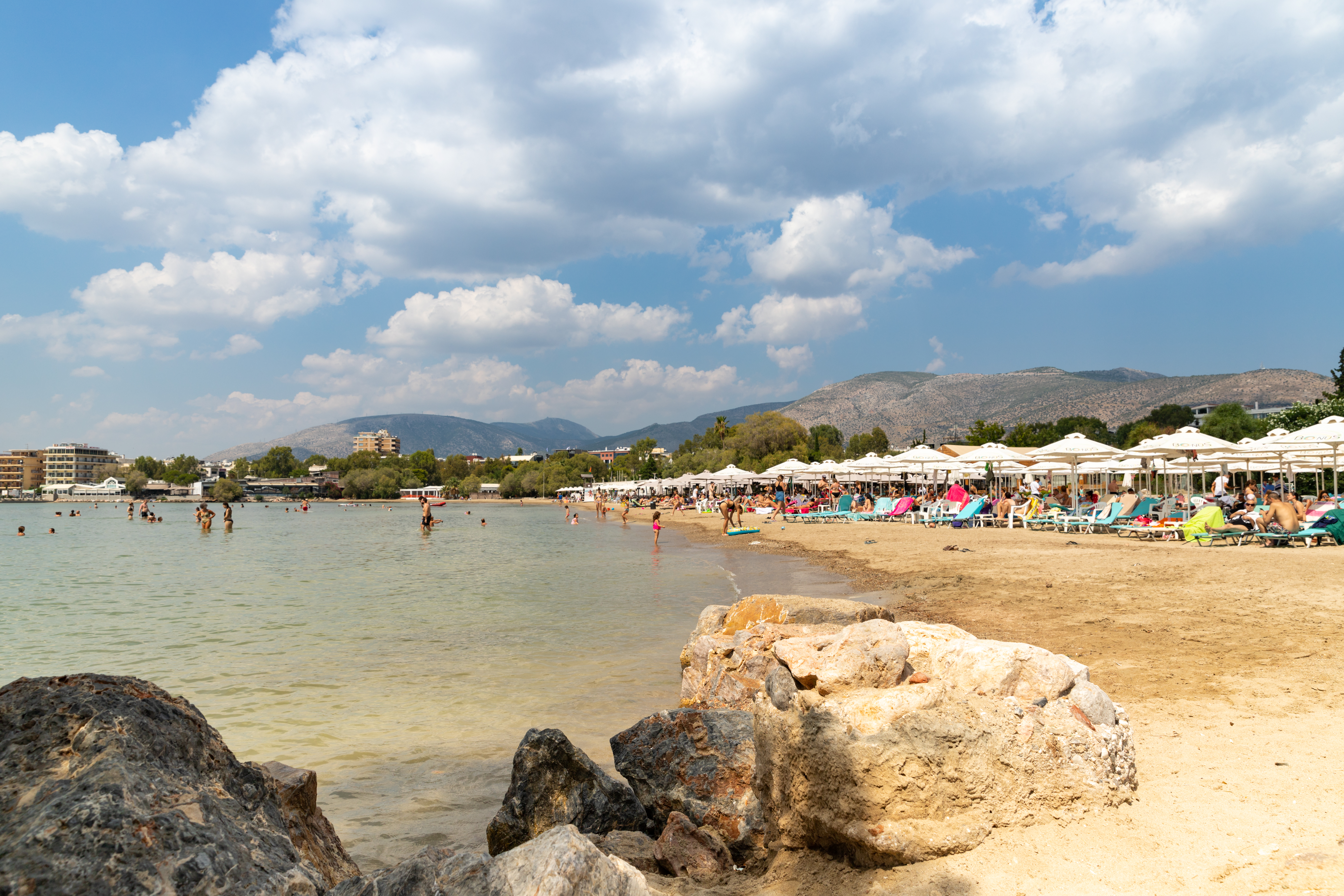
Voula is easy to overlook because it sits between better-known names, but it is one of the most useful areas for a no-car Riviera day. The tram reaches the southern terminus at Asklipiio Voulas, and the suburb combines beaches with cafés, restaurants and a residential town centre.
The coast here is not one uniform beach. You will find organised facilities, public sections and different types of entry, so inspect the immediate area rather than relying on a generic “Voula beach” label. The Official Athens Guide identifies Voula as a cosmopolitan beachside suburb with a growing food and drinks scene, while Visit Greece highlights facilities and accessibility at selected Voula beaches.
Voula is also important for accessible travel. SEATRAC describes its system as a free, remote-controlled service providing unassisted sea access for people with disabilities and mobility issues. Availability is location-specific and seasonal. Check the SEATRAC map and the individual beach listing before travelling, and do not assume that a beach with a ramp has the same level of access to changing rooms, toilets, parking or the surrounding pavement.
Vouliagmeni: the most resort-like section
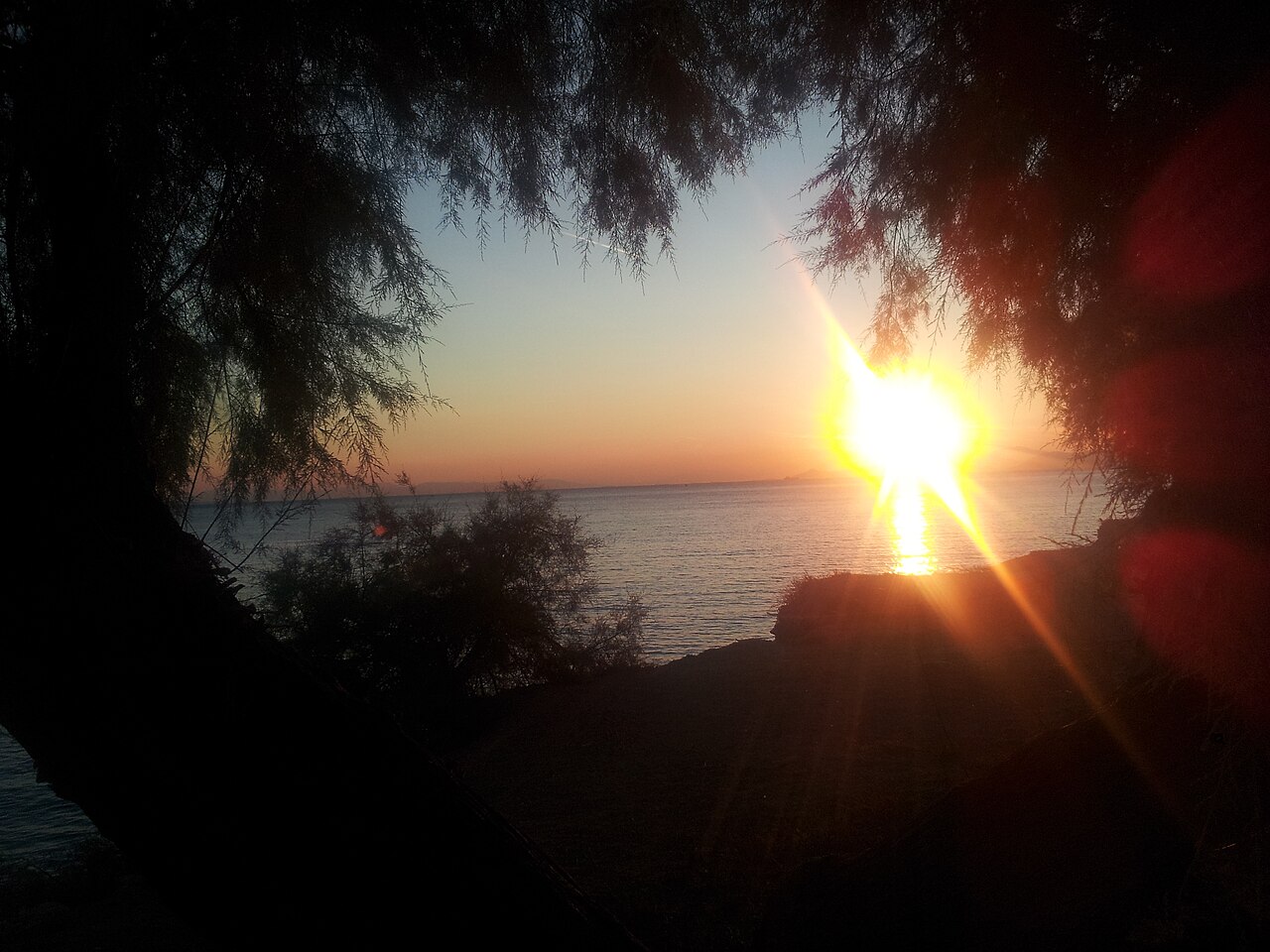
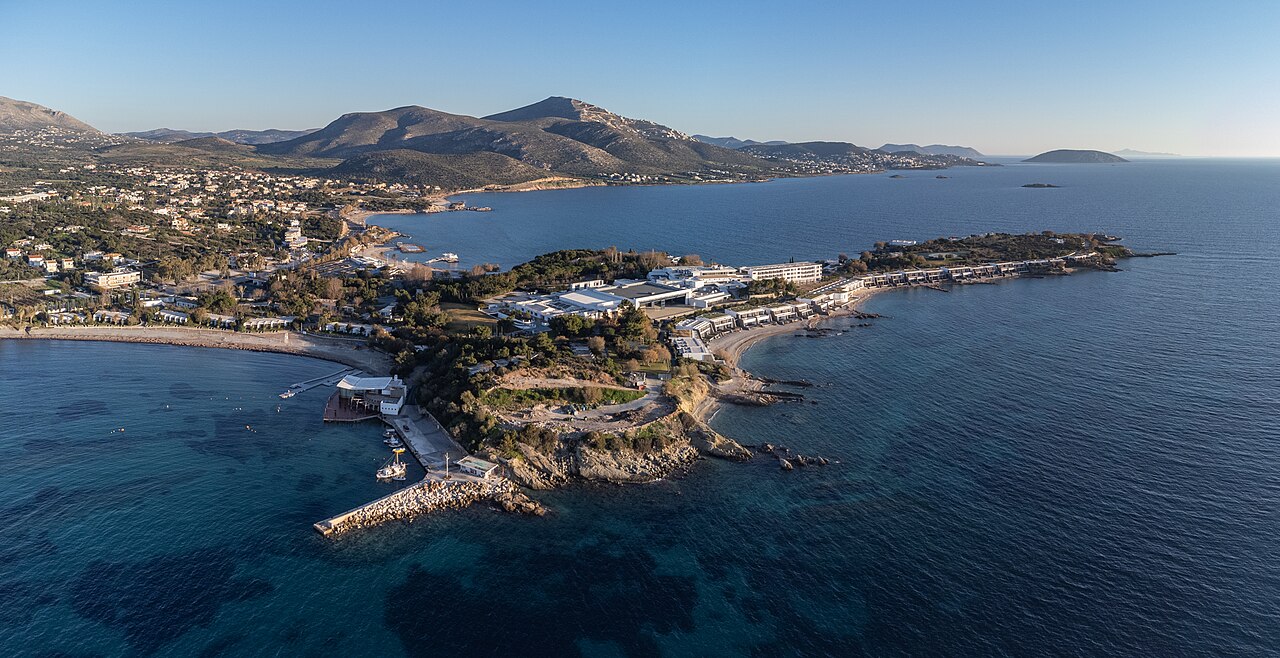
Vouliagmeni is the most polished and resort-oriented part of the central Riviera. Mount Hymettus forms a backdrop, the coastline curves around bays and coves, and the neighbourhood has a more concentrated holiday atmosphere than Glyfada. It is a strong choice for travellers who want a comfortable coastal day with good food and a choice between a conventional beach, rocky coves and the lake.
Akti Vouliagmeni
Akti Vouliagmeni is a municipal-style organised beach with facilities aimed at a broad range of visitors. The Official Athens Guide describes it as one of the city’s best-groomed beaches, with a practical, family-friendly character. Check the current entry price, opening period, lifeguard arrangements and accessibility directly with the operator or municipality before visiting; these are changeable details.
Limanakia and the rocky coves
Limanakia is a series of rocky coves rather than a conventional sandy beach. The setting can be attractive for confident swimmers and snorkellers, but entry and exit are less forgiving, and there may be little shade or formal supervision. Wear shoes suitable for rocks, do not jump into unfamiliar water, and do not choose the coves simply because photographs make them look private or effortless.
Lake Vouliagmeni
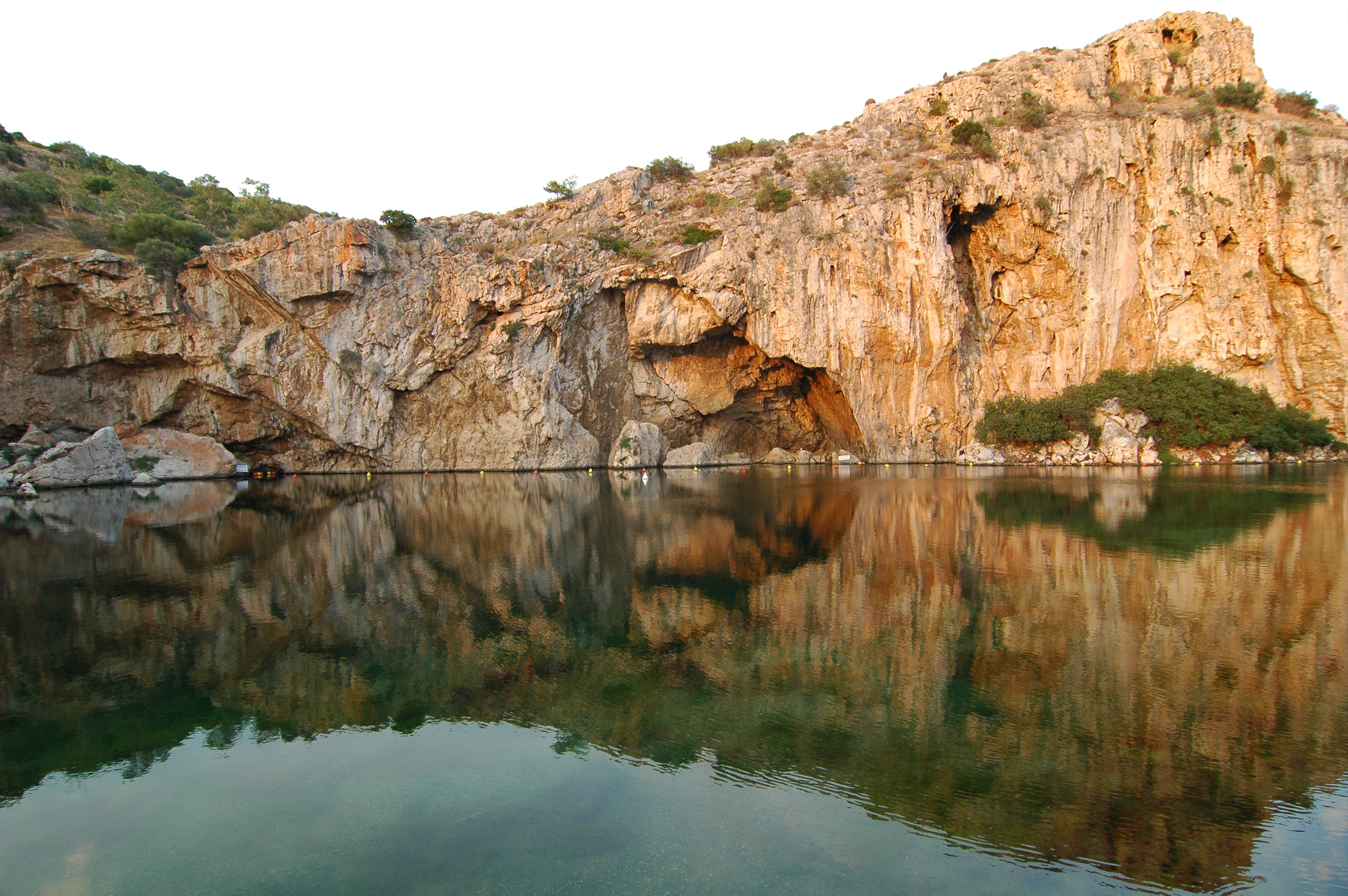
Lake Vouliagmeni is a privately operated bathing and spa facility, not a free natural lake where visitors can simply arrive and swim. The official Lake Vouliagmeni website currently states that the lake welcomes visitors year-round, publishes seasonal opening hours, charges an entrance fee and provides lifeguards during the spa centre’s operating hours. It also states that the main deck is accessible to disabled visitors, that parking is complimentary subject to availability, and that the lake may restrict entry when capacity is reached.
The lake’s own information shows why checking the official page matters. Opening hours change across the year, the last ticket is issued before closing, reservations differ by area, and some facilities close seasonally. The main deck is first-come, first-served, while upgraded areas may require reservations. Outside food and drinks are not permitted, and visitors should follow the bathing and environmental rules. See the official Lake Vouliagmeni visitor page and lake regulations before travelling.
The lake is a strong choice for visitors who value warm water, facilities and a managed experience. It is not the right choice for a free beach day, a large open shoreline or a spontaneous picnic. Its water temperature, limited capacity and private operating model are part of the decision, not footnotes.
Varkiza: choose it for a dedicated beach day
Varkiza is farther south and feels more like a beach resort than a tram-accessible suburb. The organised Yabanaki/Varkiza Resort area is known for a sandy beach, food, water sports and seasonal beach-bar facilities. Because it is an operated venue, check the current opening period, entrance policy, facilities and weather-related restrictions with the official provider before going.
Varkiza is a good choice when the beach is the main purpose of the day. It is less efficient if you want to combine several central Athens sights with a quick swim. Public transport is possible, but the route usually involves a bus connection or a longer walk rather than a simple tram ride. A car gives more flexibility, but summer parking and coastal traffic still need to be planned.
The surrounding coast includes coves, tavernas and road-side viewpoints, but the phrase “hidden beach” should be treated cautiously. A small pull-off may lack toilets, shade, lifeguards, safe pedestrian access or a reliable place to park. Choose the organised resort when facilities and ease matter more than privacy.
Lagonissi and Saronida: beyond the central Riviera
Lagonissi and Saronida continue the coastal route towards Cape Sounion. They are better treated as part of a driving itinerary than as extensions of the tram network. The coast becomes more dispersed, and the appeal lies in the sequence of bays, organised beaches, seaside restaurants and views rather than one central town.
This is where a car becomes more useful, especially if you are combining the coast with Lavrio or the Temple of Poseidon. Do not try to visit every beach in one day. Select one main swimming stop, one food stop and, if time allows, a viewpoint or short walk. Summer traffic can make the return journey slow, particularly around weekends and sunset.
The Athens Riviera is a better fit for a flexible coastal day than for a checklist of every named beach.
How to use the coastal tram
The tram is the most appealing public-transport option for reaching the central Athens Riviera because it turns the journey itself into part of the outing. It runs through the southern city and along the coast, connecting the central area with the southern suburbs. The current STASY network uses T6 between Syntagma and Pikrodafni and T7 between Asklipiio Voulas and Aghia Triada, with the relevant connection at Pikrodafni.
For a visitor heading from central Athens towards Glyfada or Voula, the important practical point is that the journey may involve a change rather than one vehicle travelling from Syntagma to every southern destination. Check the live STASY tram timetable, route direction and service notices before boarding. A timetable can vary by season, day, engineering work, incidents and special service arrangements; part of T7 may temporarily terminate short of its published Piraeus-side destination. Do not build a flight, ferry or restaurant reservation around a remembered departure time.
The tram is slower than a taxi in light traffic, but that is not necessarily a disadvantage. It is useful when you want to see the transition from dense central Athens to the coast and avoid the stress of parking. It is less useful when you are carrying bulky beach equipment, travelling very late, or trying to reach Varkiza and Lagonissi without an additional bus or taxi.
Tickets and changes
OASA’s current full-price 90-minute ticket costs €1.20 and is valid across buses, trolleybuses, trams and the relevant urban metro network for 90 minutes after validation. The current OASA ticket page also lists a 24-hour ticket at €4.10 and a five-day ticket at €8.20. These products do not cover the airport metro section or airport express buses, but they are the normal products for a Riviera tram journey.
Buy or top up an ATH.ENA ticket at a metro or tram station, and validate it as instructed. OASA also supports contactless payment on eligible validators; use the same card or device for the linked journey and keep it available for inspection. Check the current OASA information before travelling because ticket products and validation arrangements can change.
A tram journey is not a beach reservation. Even if you reach the correct stop, you may still need to walk beside busy roads, cross junctions, find the right entrance or pay an operator’s fee. Check the final walking route before leaving the city.
Driving, parking and beach access
A car is useful beyond Vouliagmeni, but it is not automatically better for Glyfada or Voula. In the central Riviera, the tram can remove the most frustrating part of the day: searching for parking. Driving becomes more attractive when you are travelling with children, beach equipment or mobility needs, or when you want to continue towards Varkiza, Lagonissi, Saronida and Sounion.
Parking rules and availability vary by beach and operator. Never assume that a private beach, lake or resort has the same parking policy as the public road outside it. Avoid blocking access routes, do not leave valuables visible, and allow extra time at weekends. If your accommodation is central, collecting a car solely for Glyfada is rarely necessary; compare the vehicle, parking and traffic cost against a public-transport day.
Accessibility also needs to be assessed in layers. A beach may have an accessible entrance but uneven pavement from the tram stop, limited shade, no adapted changing room or a seasonal access system. Use the operator’s current information and the SEATRAC map where relevant, and contact the venue if your trip depends on a specific facility.
Simple Riviera itineraries
Half-day without a car: Glyfada
Take the tram south, choose one accessible beach section, and leave time for a meal or a walk through the town centre. This is the least demanding Riviera introduction and works well when Athens sightseeing remains the priority.
Full day without a car: Faliro, Glyfada and Voula
Begin at Flisvos or another Faliro waterfront stop, continue towards Glyfada for lunch and shopping, then finish near Voula if the timetable and beach conditions suit. Do not treat this as a beach-hopping race; choose one proper swim and use the other stops for atmosphere.
Full day in Vouliagmeni
Choose either a public beach and the marina or Lake Vouliagmeni as the day’s main paid experience. Adding several private facilities makes the day expensive and repetitive. Check reservations, capacity and opening hours before leaving.
Driving day to Varkiza and beyond
Choose one organised beach, one food stop and, if desired, continue towards Saronida or Cape Sounion. Start early in summer, keep the route flexible and treat the return traffic as part of the plan.
Common mistakes on the Athens Riviera
Assuming the coast is one continuous beach: the Riviera is a chain of different urban, public and private coastal spaces separated by roads and neighbourhoods.
Taking the tram to Vouliagmeni Lake: the tram reaches Voula, not the lake. You need another connection or a taxi, and the final walk matters in hot weather.
Confusing a public beach with a beach club: entry, loungers, food, reservations and opening dates are different products.
Arriving at midday in August without a plan: shade, parking, capacity and tram space may all be limited.
Calling rocky coves family beaches: check entry, depth, exposure, supervision and facilities instead of relying on photographs.
Quoting an old price: Lake entry, private beaches, organised resorts and restaurant policies can change. Use the current official operator page.
Trying to see everything: the best Riviera day usually has one principal swimming destination and one secondary activity.
Final verdict
Choose Glyfada when you want the easiest balance of beach, town life, food, shopping and public transport. Choose Voula when tram access, a practical swim or accessible sea access matters most. Choose Vouliagmeni for the most resort-like atmosphere, Limanakia, Akti Vouliagmeni and Lake Vouliagmeni. Choose Varkiza for a dedicated organised beach day, and continue towards Lagonissi and Saronida only when you are prepared for a longer, more car-dependent route.
The coastal tram is part of the experience, but it is not a complete Riviera solution. Use it for Faliro, Glyfada and Voula; use a bus, taxi or car for the farther coast; and always check the current STASY and OASA information before travelling. Athens does not need to compete with the islands to justify a swim. Its coast is valuable precisely because it remains connected to the city.
Research and review note: Checked in July 2026. Tram services, ticket products, beach access, private-venue fees, lake hours, capacity and seasonal facilities can change; confirm the official operator and transport information before travelling.


.jpg)

_-_Λίμνη_Βουλιαγμένης_(Αττική).JPG)

