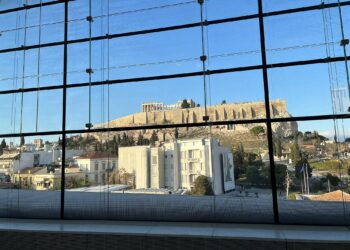
For a first visit, Athens can feel larger than the map suggests. The Acropolis, Plaka, the museums, Piraeus and the southern coast are all part of the same metropolitan area, but they are not one compact sightseeing district. Athens hop-on hop-off buses are designed for exactly that problem: they give you a narrated overview, connect several major visitor areas and let you get off when you want more time on foot.
They are not the fastest way to move around Athens, and they are not a substitute for the metro or ordinary OASA buses. Their real advantage is simpler: you can see the shape of the city before deciding where to spend your limited time. This guide explains the main routes, who benefits from them, and the limitations worth understanding before buying a ticket.

What is a hop-on hop-off bus in Athens?
A hop-on hop-off ticket gives you access to a sightseeing bus for a stated period, usually 24, 48 or 72 hours depending on the operator and ticket type. The bus follows a fixed route with marked stops. You can remain on board for a complete circuit with the audio commentary, or get off near a museum, archaeological site, neighbourhood, port or coastal stop and board a later bus.
Athens has more than one sightseeing operator, so do not assume that every red, blue, yellow or green line belongs to the same company. City Sightseeing Athens publishes Athens, Piraeus and Beach-Riviera lines, while Big Bus Tours publishes Athens, Piraeus and Riviera routes. The route colours, stop numbers, ticket conditions and departure times can differ. Check the operator shown on your ticket and use its current map rather than relying on an older blog post.
The buses generally offer open-top seating and multilingual commentary. City Sightseeing advertises commentary in 13 languages and states that its buses have ramps, low floors and an allocated wheelchair space; passengers who need step-free access should still confirm the practical arrangements before travelling.
Which routes do Athens hop-on hop-off buses cover?
The most useful way to understand the network is as three sightseeing corridors. The exact stop list varies, but the coverage is broadly consistent: historic central Athens, Piraeus and the coastal Riviera.
| Route | What it covers | Best for | Important limitation |
|---|---|---|---|
| Athens city route | Syntagma, Parliament, the National Gardens, the Panathenaic Stadium, the Temple of Olympian Zeus, Plaka, the Acropolis area, Monastiraki, Omonia and the National Archaeological Museum. | A first overview and linking the main historic sights. | The bus stops near the sights; it does not replace the walking, stairs and timed entry needed to visit them. |
| Piraeus route | Piraeus cruise terminals, the Municipal Theatre, Pasalimani, Mikrolimano and the road back towards central Athens. | Cruise passengers, port visitors and travellers who want to add a quick look at Athens’ maritime side. | Departures are much less frequent than on the central route, so a missed bus can change the shape of your day. |
| Riviera or Beach route | The coastal corridor through Palaio Faliro, Flisvos Marina, Alimos, Glyfada, Voula, Kavouri, Astir Beach and Vouliagmeni Lake, depending on the operator. | A seaside overview, a marina stop, Glyfada, or a planned visit to the Vouliagmeni area. | The route is scenic but long. Traffic and hourly or seasonal departures make it unsuitable for an unplanned chain of many short stops. |
1. The Athens city route
This is the route most first-time visitors will use. Stops near Syntagma and the Parliament make an easy starting point, while the stops around Plaka, the Acropolis and the Temple of Olympian Zeus place you beside the city’s main ancient landmarks. Other stops extend towards Monastiraki, the National Archaeological Museum and the central squares.
Big Bus currently describes its Athens route as an approximately 1 hour 40 minute circuit with buses around every 20 minutes. City Sightseeing gives a 90-minute duration for its Athens Line and publishes different seasonal frequency information. Treat these figures as operator-specific planning guidance, not as a guarantee for every day. Traffic, road closures, demonstrations and special events can affect the actual journey.
The route works particularly well as a first circuit without getting off. Listen to the commentary, note the areas you want to revisit and then use the bus as a flexible link between them. Do not try to visit the Acropolis, the Acropolis Museum, the National Archaeological Museum and Monastiraki in one rushed circuit simply because the bus passes them all.
2. The Piraeus route
Piraeus is not just a ferry terminal. It is a separate port city with waterfront districts, marinas, restaurants and a different relationship with the sea. The Piraeus sightseeing route is useful when your Athens trip includes a cruise arrival, a port-side hotel or an interest in seeing more than the historic centre.
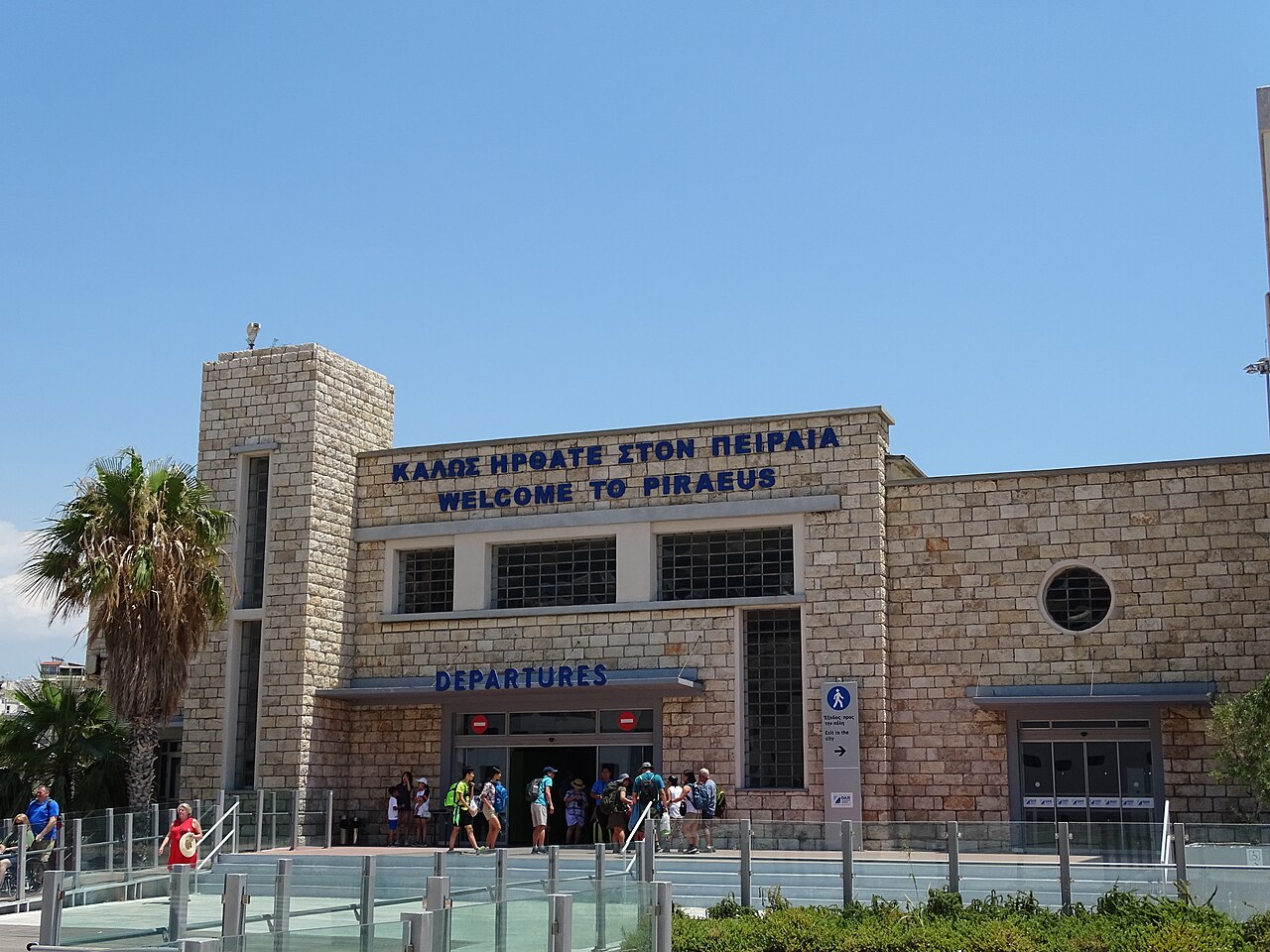
Big Bus currently lists an approximately 1 hour 20 minute Piraeus circuit with an interval of about 80 minutes. Its published stops include the cruise terminals, Pasalimani, Mikrolimano and the Municipal Theatre before returning towards the central Athens route. City Sightseeing also presents Piraeus as a separate line. The practical lesson is more important than the exact number: allow a generous buffer before a ferry, shore-excursion meeting time or airport transfer.
If your goal is only to travel between Piraeus and central Athens, compare the sightseeing ticket with the metro and with the seasonal X80 express service where relevant. The sightseeing bus adds commentary and stops, but it is not necessarily the quickest point-to-point option.
3. The Riviera or Beach route
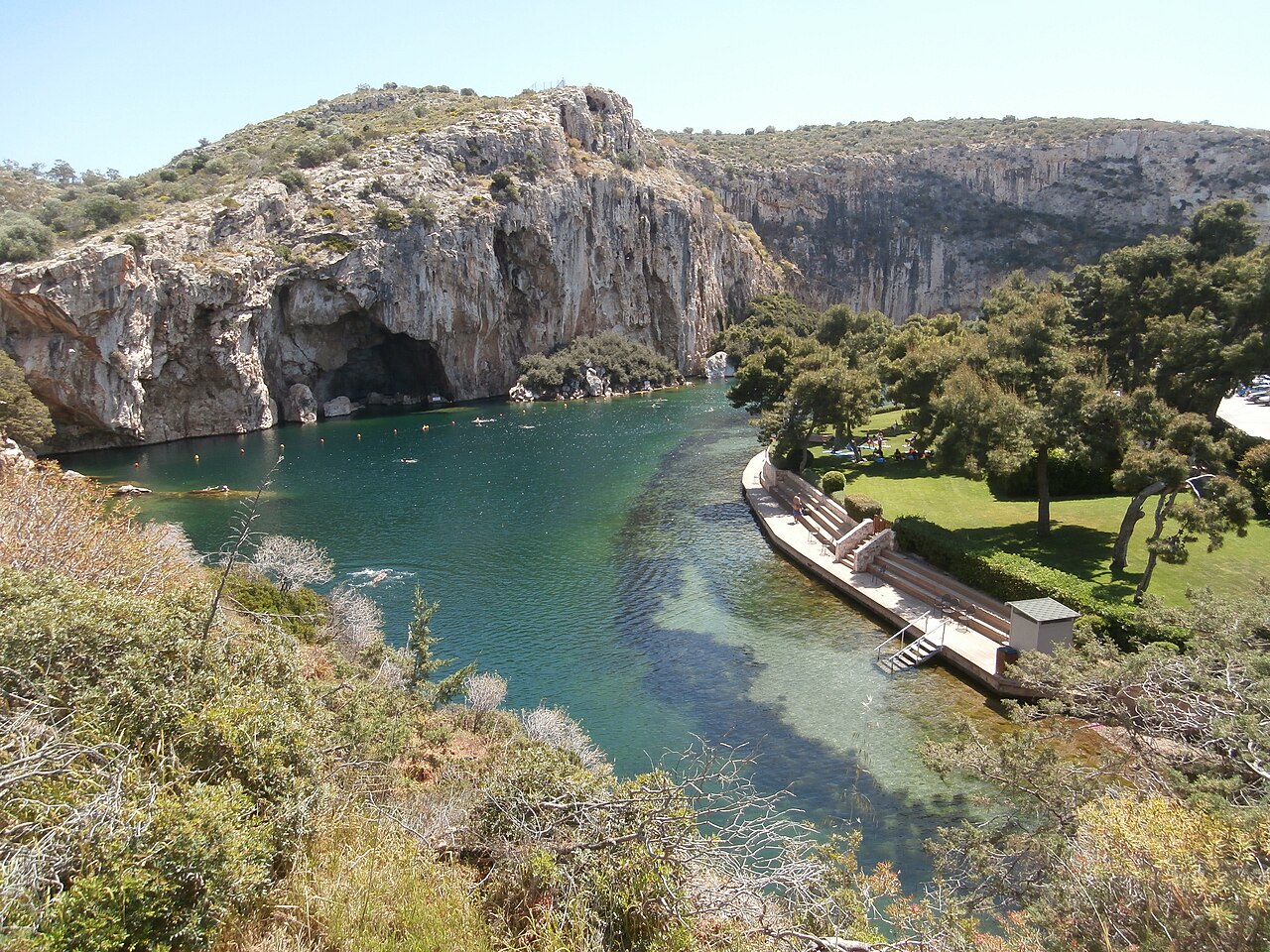
The coastal route is the most distinctive part of the Athens sightseeing offer. It follows the southern edge of the metropolitan area through Palaio Faliro, Flisvos Marina, Alimos, the beaches around Elliniko and Glyfada, Voula, Kavouri and Vouliagmeni. Some ticket products describe the coverage as one Beach-Riviera line; others divide the southern coast into separate Glyfada and Vouliagmeni lines.

Big Bus currently describes its Riviera route as an approximately two-hour circuit with buses about once an hour. Published stops include Flisvos Marina, Alimos Marina, Glyfada, Kavouri Beach, Astir Beach, Vouliagmeni Lake and the return stops around Syntagma and the Temple of Olympian Zeus. City Sightseeing’s route information similarly highlights the Riviera beaches, Glyfada and Vouliagmeni.
This is not a beach shuttle in the sense of dropping you at a single beach and collecting you every few minutes. Choose one main stop, check the return departure and treat the route as a sightseeing journey with a coastal stop. For a wider comparison of the coastline, beaches and tram options, see our guide to the Athens Riviera.
What are the main advantages?
You understand Athens before committing to a plan
A full circuit gives you a useful mental map of a city whose major sights are separated by busy roads, hills, pedestrian zones and large differences in atmosphere. You can see how Syntagma relates to the Acropolis, where Monastiraki sits in relation to Plaka and how far the Riviera extends beyond the centre.
You reduce the friction of a first day
For some travellers, the hardest part of Athens is not choosing the sights but joining them together. The sightseeing bus removes some early decisions about which stop, interchange or direction to use. That can be valuable after a late arrival, for families, for older travellers or for anyone who prefers a narrated introduction rather than immediate independent navigation.
You can combine central Athens with the coast
The Riviera route makes it possible to add a coastal view without hiring a car. That does not make every beach equally convenient, but it does turn Palaio Faliro, Glyfada and Vouliagmeni into realistic additions to a city break. The coastal tram and ordinary public transport may be better for some specific journeys; the sightseeing bus is useful when the journey itself is part of the experience.
The audio commentary adds context while you travel
The commentary can help you recognise landmarks you might otherwise pass without understanding. It is not a substitute for a museum guide or an archaeological-site visit, but it gives a useful narrative layer between stops and is particularly helpful on a first circuit.
It can be practical for cruise passengers
Passengers arriving at Piraeus can often board near a cruise terminal and use a combined route product to see central Athens without arranging a separate excursion. The time constraint is serious, however. Always check the return schedule, allow for port security and traffic, and do not plan a distant coastal stop if you must be back on board at a fixed time.
What are the disadvantages?
The sightseeing bus is not automatically the best-value transport ticket. If you are moving between two central points, the metro or an ordinary OASA service may be quicker and cheaper. A hop-on hop-off ticket becomes more defensible when you value the commentary, the overview, the open-top view or the ability to connect several visitor areas without learning the network immediately.
Traffic is the other unavoidable limitation. Athens’ historic centre and coastal avenues can slow down, particularly in the heat and during busy periods. The Piraeus and Riviera routes also run less frequently than the central city route on the current published timetables. Missing a bus can therefore cost more time than expected.
There is also a difference between being near a landmark and visiting it. The Acropolis stop does not include an Acropolis ticket, timed entry or a shortcut through the entrance. You still need to walk, queue where required and allow time for the site itself. Likewise, a Riviera stop near a beach does not guarantee free access, shade, changing facilities or easy swimming conditions.
Who should buy a ticket?
- First-time visitors with one or two days: take the Athens circuit first, then use the central route for one or two deliberate stops.
- Families: the open-top format and simple sightseeing structure can be easier than repeated navigation, especially when children enjoy the ride itself.
- Older travellers or visitors limiting stairs: check the operator’s accessibility information and choose stops carefully; the bus does not remove uneven pavements or the physical demands of the sights.
- Cruise passengers: choose a port-inclusive product only when the timetable leaves a substantial return buffer.
- Travellers curious about the coast: use the Riviera route for an overview and one planned stop, rather than trying to cover every beach.
Who may prefer ordinary public transport?
If you are staying several days, already comfortable with Athens and mainly want to travel between the Acropolis, Monastiraki, Syntagma and museums, the metro and walking may suit you better. Public transport also gives you more flexibility outside sightseeing-bus operating hours. Our complete Athens guide puts the central neighbourhoods, public transport and the main visitor decisions into a wider plan.
For airport arrivals, do not treat a hop-on hop-off bus as your transfer. Compare the metro, airport buses, rail, taxi and pre-booked options in our guide to Athens Airport to the city centre. Sightseeing routes begin in the city and do not serve the airport as a normal airport-transfer network.
How to use the buses well
- Start with one complete central circuit. This helps you understand the stop order and decide where you actually want to get off.
- Check the route timetable on the day. Pay particular attention to the last Piraeus or Riviera departure and the interval between buses.
- Choose one substantial stop rather than five rushed ones. Athens rewards time on foot, especially around the Acropolis, Plaka and the waterfront.
- Carry water and sun protection. The upper deck can be exposed, and traffic can make a planned short ride unexpectedly long.
- Keep the operator’s map and ticket details accessible. Route colours and stop numbers are not universal across companies.
- Leave a return buffer. This matters for cruise departures, airport connections, restaurant bookings and timed entries.
Is the Athens hop-on hop-off bus worth it?
For most visitors, the Athens city route is worth considering as an orientation tool rather than as a complete transport system. It is especially useful on a first visit, with children, after a tiring arrival or when you want commentary and a broad view without planning every connection. The Piraeus route earns its place when the port is part of your day. The Riviera route is attractive when you want a scenic coastal introduction and have enough time to accept slower, less frequent service.
It is less convincing when you are trying to make fast central journeys or when you expect to hop off repeatedly along the coast. In those cases, walking, the metro, tram, ordinary buses or a carefully chosen taxi may be more efficient. The best approach is to use the sightseeing bus selectively: take the overview, choose the route that matches your day and leave enough time for Athens itself.
Research and review note: Operator routes, stop coverage, accessibility information and published journey intervals were checked on 22 July 2026. Timetables, route colours, ticket products, traffic conditions and seasonal operations can change; confirm the official operator information before travelling.