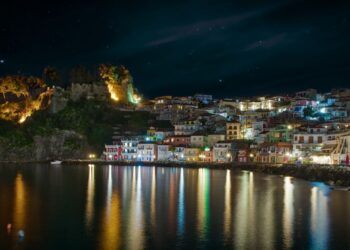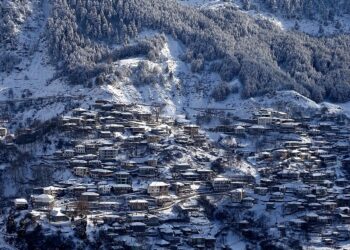
A Landscape Carved from Stone and Silence
Forty-six villages, one deep gorge, a river so clean you can drink from it, and a network of stone bridges that Ottoman-era merchants built with money earned far from home. Zagori is not an easy destination to reach, and that is exactly what has kept it this way.
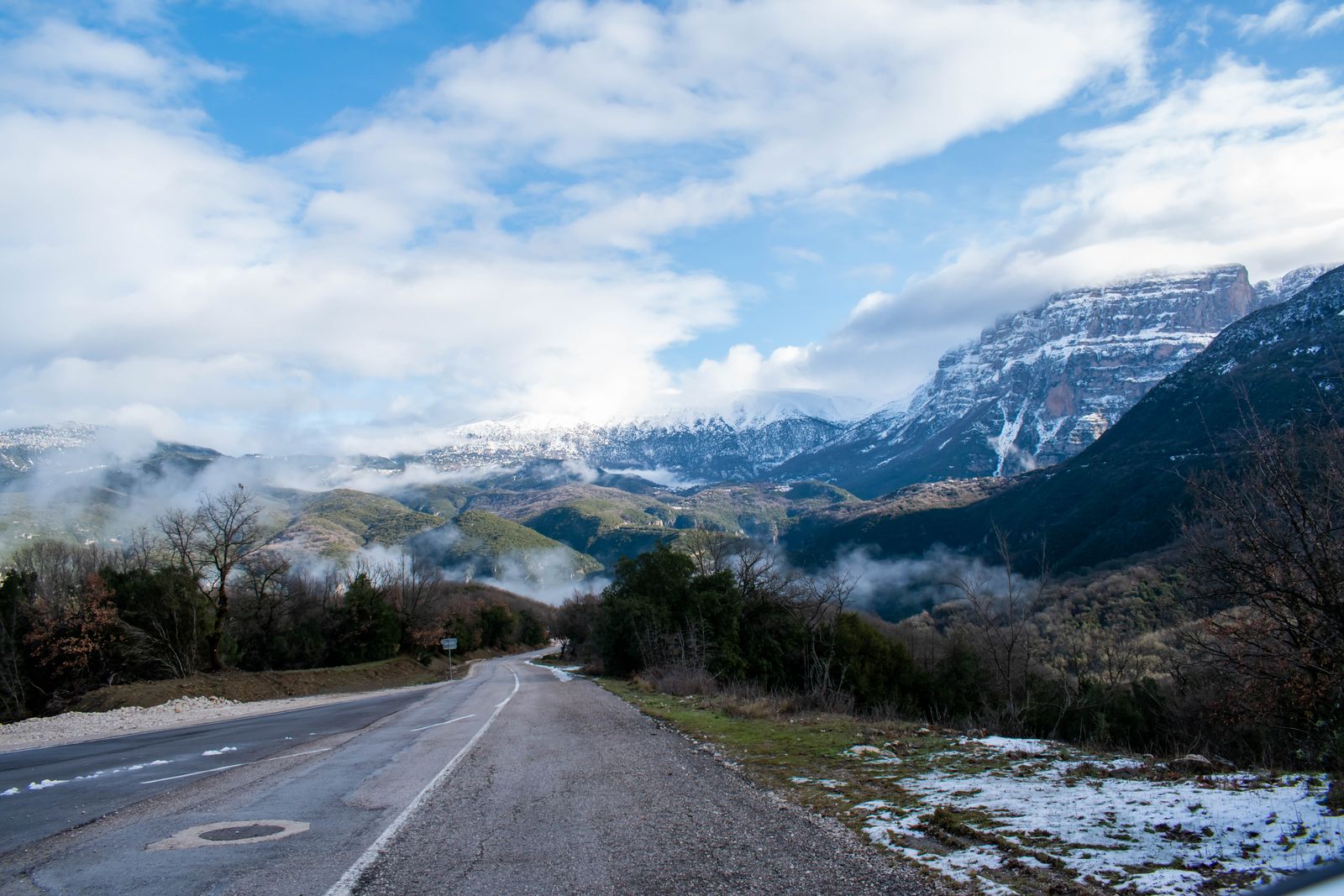
Most people who visit Greece never see Zagori. They head for the islands, the Aegean light, the whitewashed Cyclades. But in the northwest corner of the mainland, pressed against the Albanian border and folded into the Pindus Mountains, a different Greece waits. This one is built from grey limestone and slate roofs, and the dominant sound is running water rather than breaking waves. Zagori is a region of roughly 1,000 square kilometres containing 46 traditional stone villages, collectively known as the Zagorochoria. Since September 2023, this cultural landscape has been inscribed on the UNESCO World Heritage List — the first modern-era Greek site to receive the designation.
This is a guide for travellers who want to understand what Zagori actually offers, how to plan a realistic trip, and whether the region suits the kind of holiday they are looking for. It covers the Vikos Gorge, the stone bridges, practical transport questions, the food worth seeking out, and the honest limitations of visiting a mountainous region with limited public transport and a short high season.
| Region | Epirus, northwestern Greece |
| Nearest city | Ioannina (approximately 30 km south) |
| Villages | 46 traditional stone settlements (the Zagorochoria) |
| Altitude | 850 m to 1,350 m across the inhabited villages |
| UNESCO status | World Heritage Cultural Landscape (inscribed 2023) |
| Best for | Hikers, nature lovers, couples, slow travellers, photographers |
| Less suitable for | Beach holidays, nightlife, travellers without a car |
| Minimum stay | 3 nights recommended, 4–5 for comfortable exploration |
A Place Built by Emigrants
Zagori’s architecture looks far too grand for a cluster of mountain villages that were, for centuries, difficult to reach by road. The three-storey stone mansions, the arched bridges, the cobbled paths linking settlement to settlement — none of this happened by accident. During the Ottoman period, Zagori enjoyed a degree of administrative autonomy that allowed its communities to govern their own affairs. But the mountains could not support everyone, and from the 17th century onward, men from these villages migrated seasonally or permanently to trade across the Balkans, in Constantinople, in Russia, and eventually in central Europe.
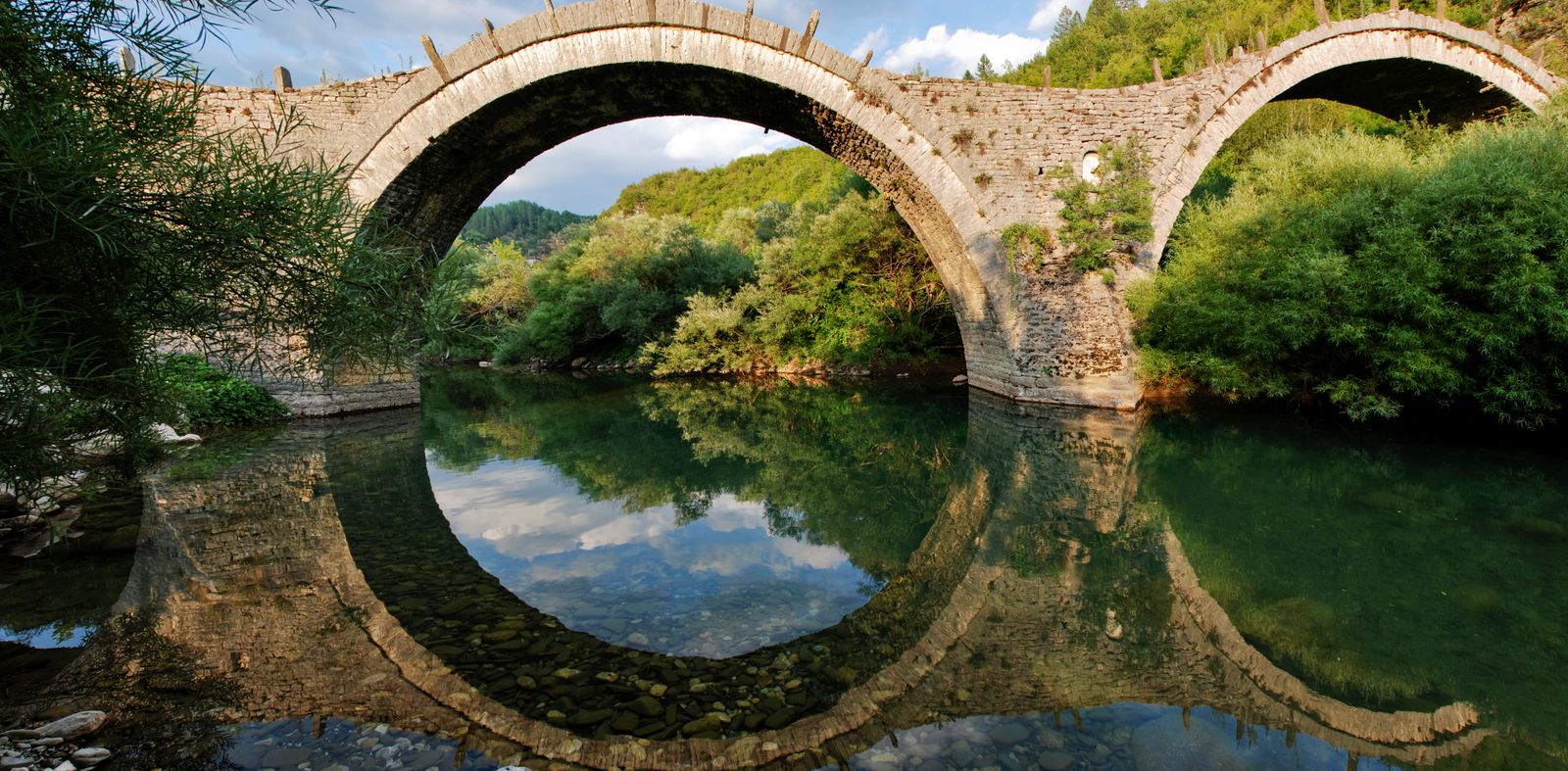
The wealth they sent home transformed the villages. Large stone bridges replaced older wooden crossings from the mid-18th century onward, funded by donations from emigrant merchant families. Houses grew taller and more elaborate, with thick walls, internal insulation, walled courtyards, and separate kitchen buildings. Public squares were paved, churches rebuilt, and schools established. The architecture you see today — the grey limestone walls, the slate roofing, the cobblestone streets — is largely the product of 18th- and 19th-century investment by a diaspora that never stopped thinking of home.
After the Balkan Wars of 1912-1913 brought the region into the Greek state, and particularly after the upheavals of the two world wars, Zagori’s population declined sharply. Many villages that once housed several hundred families now have permanent populations in the single digits. What saved them from ruin was a combination of protective heritage legislation, the declaration of the Vikos-Aoos National Park, and the gradual development of sustainable tourism from the 1980s onward.
UNESCO World Heritage Status
In September 2023, during the World Heritage Committee’s 45th session in Riyadh, the Zagori Cultural Landscape was officially inscribed on the UNESCO World Heritage List. The designation recognised the region as “an outstanding example of traditional human settlements” adapted to a remote mountain environment. It placed particular emphasis on the stone architecture, the bridge network, the cobbled paths, and the sacred community forests maintained by local villages. Twenty villages form the UNESCO core zone, though all 46 settlements are part of the cultural context.
This was significant for Greece because every previous Greek UNESCO listing related to the ancient or Byzantine world. Zagori was the first site recognised for its modern-era cultural heritage — a landscape shaped not by emperors or city-states but by ordinary villagers and their emigrant relatives, working with local stone over three centuries.
Best Time to Visit
Zagori is not a summer-only destination, though the warmest months between June and August offer the most reliable conditions for hiking and outdoor activities. Unlike most of Greece, this is a mountain region where weather can shift within hours, and temperatures at 1,000 metres are noticeably cooler than the lowland heat that dominates the national forecast.
| Season | Conditions | Best for | Limitations |
|---|---|---|---|
| Spring (Apr–May) | Mild days, cool nights, wildflowers, occasional rain | Lower-altitude walks, village touring, photography | Higher trails may still have snow; some guesthouses may not yet be open |
| Summer (Jun–Aug) | Warm days (20–28°C), pleasantly cool gorge hiking | Vikos Gorge, Dragon Lake, river activities, all trails | Busiest period; guesthouses fill on weekends; book ahead |
| Autumn (Sep–Oct) | Comfortable temperatures, spectacular foliage, mushroom season | Hiking, food, autumn colour, fewer visitors than summer | Days shorten noticeably by late October; some services close |
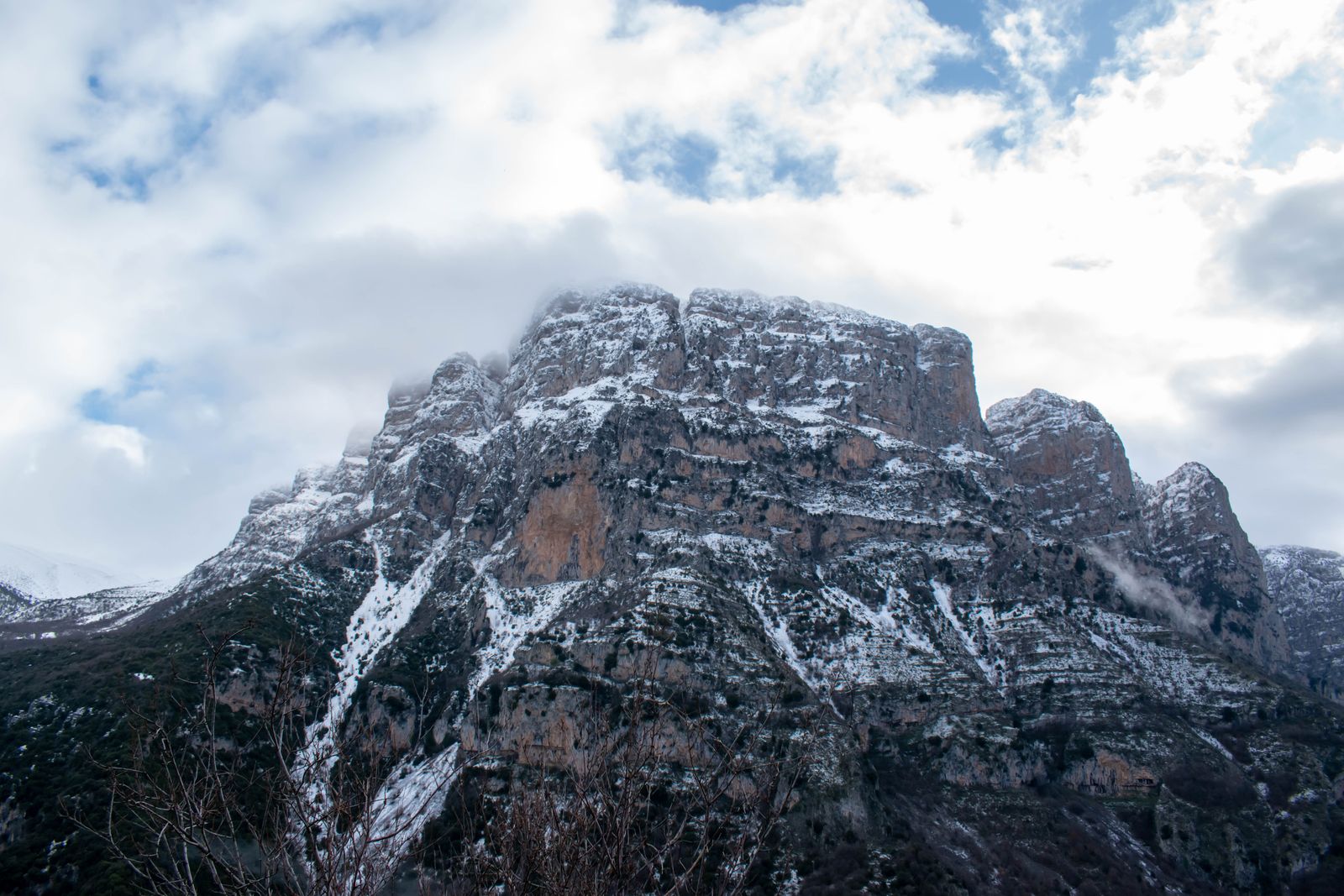
| Winter (Nov–Mar) | Cold, snowfall common, quiet, atmospheric | Fireplace weekends, snow photography, nearby skiing | Most trails inaccessible; some roads require chains; fewer open guesthouses |
For most visitors, the window between mid-May and mid-October provides the widest range of options. Autumn is particularly rewarding — the beech and oak forests that line the gorges turn deep red and gold from late September, mushroom dishes appear on every taverna menu, and the summer weekend crowds thin out. Spring brings wildflowers to the mountain meadows, though the higher passes and the trail to Dragon Lake may remain snow-covered into May.
Where to Base in Zagori
Zagori’s villages spread across three loose clusters — central, western, and eastern — and the question of where to sleep matters more than it might first seem. Villages are connected by narrow, winding mountain roads where distances feel longer than the map suggests. Choosing the right base saves driving time and puts the main trails and sights within closer reach.
| Village | Character | Best for | Nearby highlights |
|---|---|---|---|
| Monodendri | Largest village with a square, tavernas, and guesthouses; sits on the south rim of the gorge | First-time visitors, Vikos Gorge trailhead access | Vikos Gorge descent, Agia Paraskevi monastery on the cliff edge |
| Megalo Papingo | Dramatic setting beneath the Astraka towers, well-restored stone houses | Hikers heading to Dragon Lake or the alpine zone | Drakolimni trail, Astraka refuge, rock pools at nearby Mikro Papingo |
| Kipoi | Small, central, quiet; near the famous bridge cluster | Those wanting a peaceful central position with short drives to most sights | Plakidas and Lazaridis bridges, Missios bridge, trail network |
| Tsepelovo | Off the main loop, feels like a living village, quieter still | Travellers who want to disconnect completely | Vradeto Steps (nearby), eastern Zagori trails |
| Aristi | Practical position between central Zagori and Papingo, near the Voidomatis river | A comfortable base with good access to both the gorge and Papingo | Voidomatis river access, rafting starting points, Kleidonia bridge |
Accommodation across Zagori consists almost entirely of restored stone guesthouses, many of them family-run. Breakfast is typically included and tends to be generous — local yoghurt, pies, honey, and preserves. Expect to pay roughly 100 to 160 euros per night for a double room, depending on the village, the property, and the season. During peak weekends in summer and autumn, advance booking is strongly recommended; in winter, call ahead to confirm the guesthouse is open.
The Vikos Gorge
The Vikos Gorge is the centrepiece of Zagori’s landscape and the reason many visitors first hear about the region. At approximately 20 kilometres in length and with walls that rise up to around 1,000 metres above the river below, the gorge holds the Guinness World Record (1997) for the deepest gorge relative to its width. Whether or not that particular record stands up to every geological challenge — the methodology has been debated — the gorge is undeniably enormous, and hiking through it is one of the finest walks in Greece.
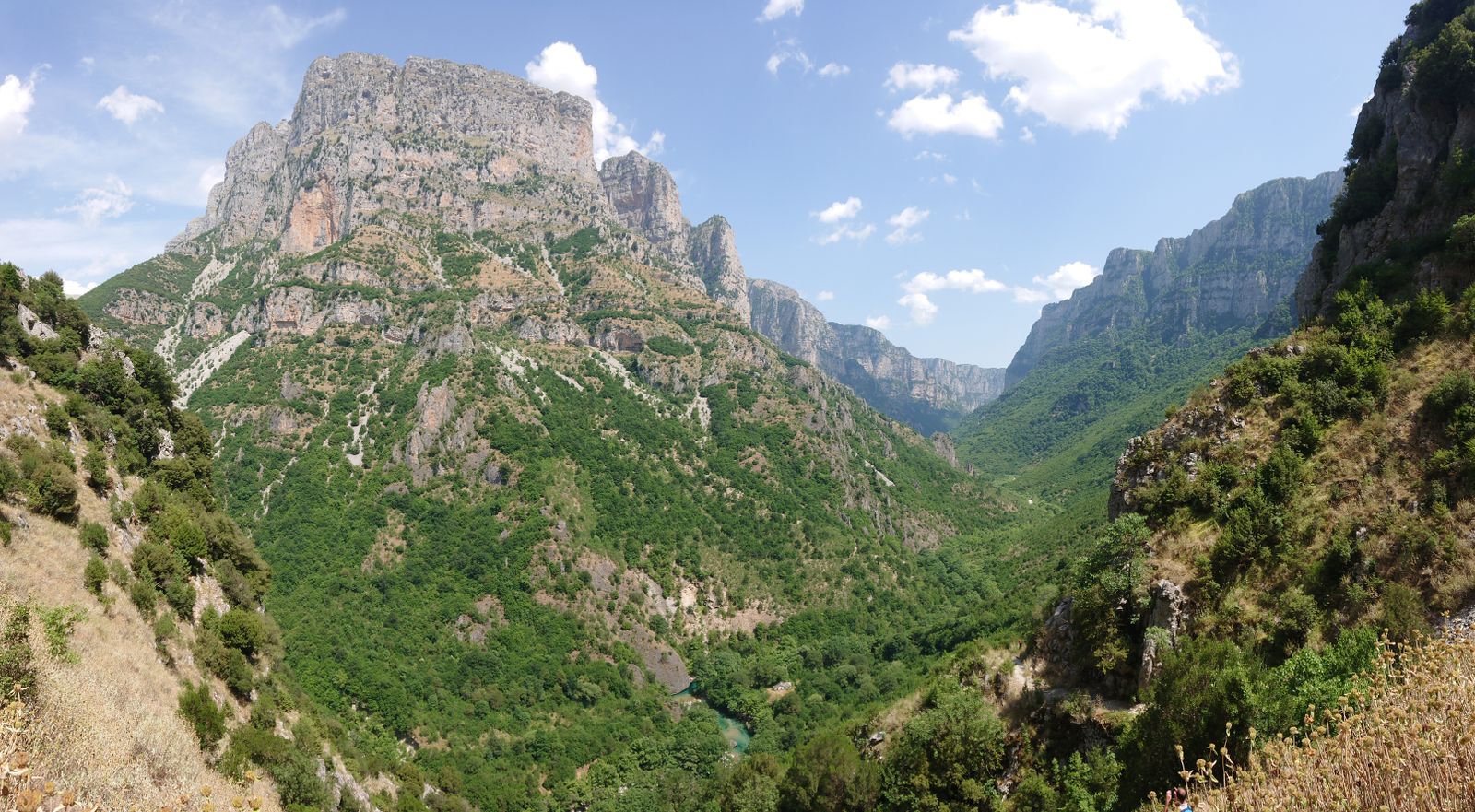
The most popular route runs from Monodendri to the village of Vikos, a distance of approximately 12 to 13 kilometres that typically takes around six hours. The trail descends steeply from Monodendri into the gorge bed, then follows the course of the Voidomatis River northward through forest and rocky terrain before climbing again at the far end. The descent and the final ascent are the hardest sections; the middle portion is more gentle, with shaded walking and occasional clearings where the canyon walls open up above.
A few practical considerations: there is no road in or out of the gorge itself, so you will need transport arranged at the other end. Tavernas in Vikos village can sometimes help arrange an informal taxi back to Monodendri — ask before you set out, and expect to pay around 20 to 30 euros. A more self-contained option is to hike from Vikos village into the gorge and back again, choosing how deep you go. This avoids the logistics problem and still offers some of the best scenery. The Voidomatis springs, where crystal-clear water emerges from the base of the gorge walls, are one of the highlights — many hikers swim here despite the fact that the water temperature rarely exceeds 9 degrees Celsius.
The gorge is best hiked between May and October. After rain, the rocky descent from Monodendri becomes slippery and potentially dangerous — check conditions locally before setting out. Bring water, sun protection, sturdy hiking boots, and more time than you think you need.
Beyond the Gorge: Walks, Bridges and Wild Swimming
The Vikos Gorge dominates the headlines, but Zagori’s trail network extends far beyond a single canyon. Cobbled paths that once served as the region’s road system now function as a superb hiking network, connecting villages through forest, across ridges, and over old stone bridges. You could spend a week here and still have trails left.
The Vradeto Steps
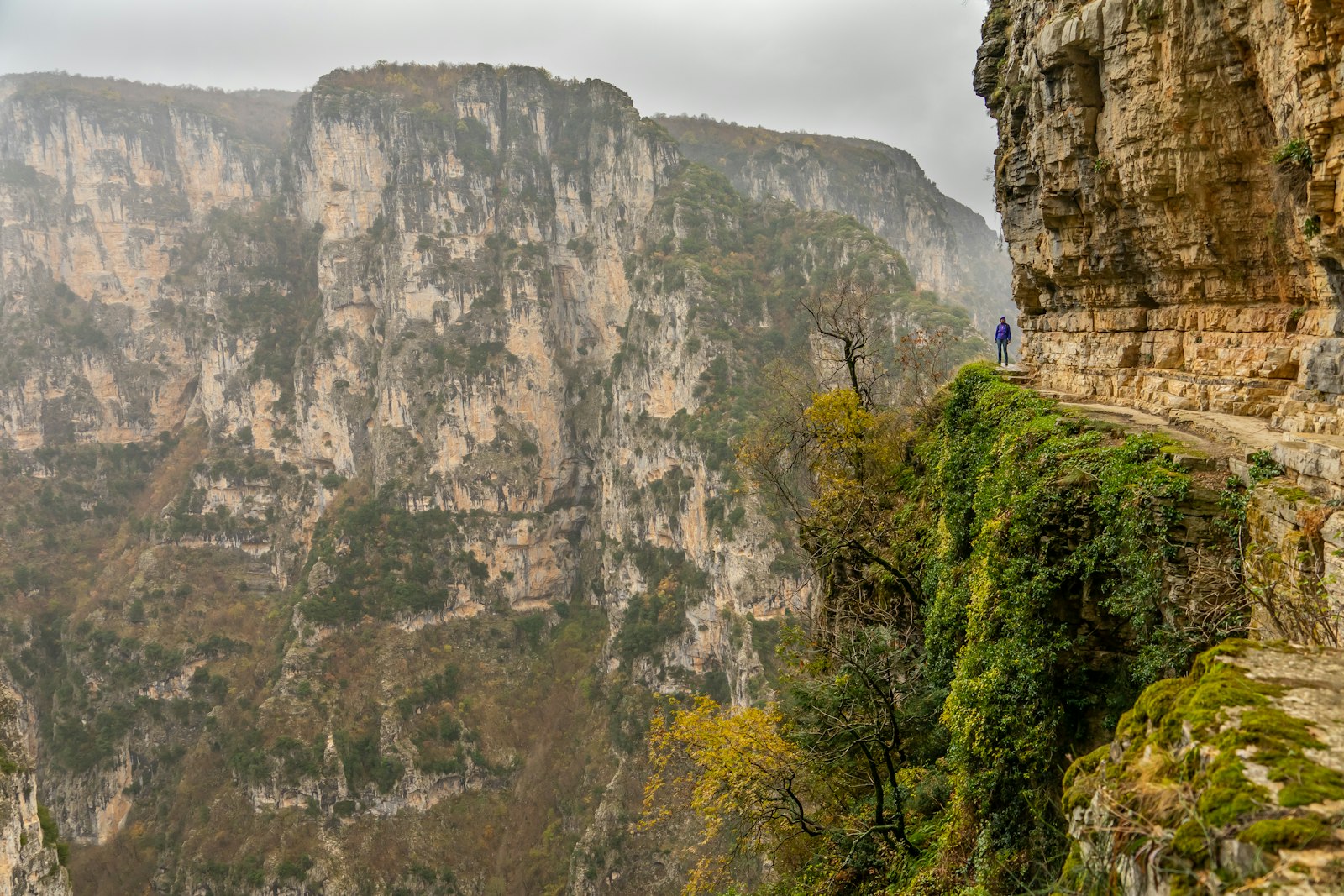
The Vradeto Steps are a 19th-century cobbled stairway cut into the face of the Mesaria Gorge, connecting Kapesovo to Vradeto — the highest inhabited village in Zagori at around 1,340 metres. Roughly 1,200 steps and 39 hairpin turns climb the gorge wall. Until a road was built in 1973, this was the only way in or out. The walk up takes roughly 45 minutes, with views back across the gorge at every turn. From Vradeto, a further trail leads to the Beloi viewpoint, which offers one of the most dramatic perspectives on the Vikos Gorge from above. Allow a half-day for the return trip from Kapesovo.
Dragon Lake (Drakolimni)
The trail to Drakolimni begins at Mikro Papingo and climbs roughly 1,000 metres to reach a glacial lake at approximately 2,000 metres altitude, just below the peaks of Mount Tymphi. The hike is around 11 kilometres each way. The first 8 kilometres bring you to the Astraka mountain refuge; the remaining 3 kilometres cross rougher, rockier ground to the lake itself. The full return trip takes 8 to 10 hours and is physically demanding. Some hikers split it over two days, overnighting at the refuge, which normally operates from May to October. The alpine newts that live in the lake are thought to have given it its “dragon” name, though local legend prefers a more dramatic origin.
The Rock Pools of Papingo
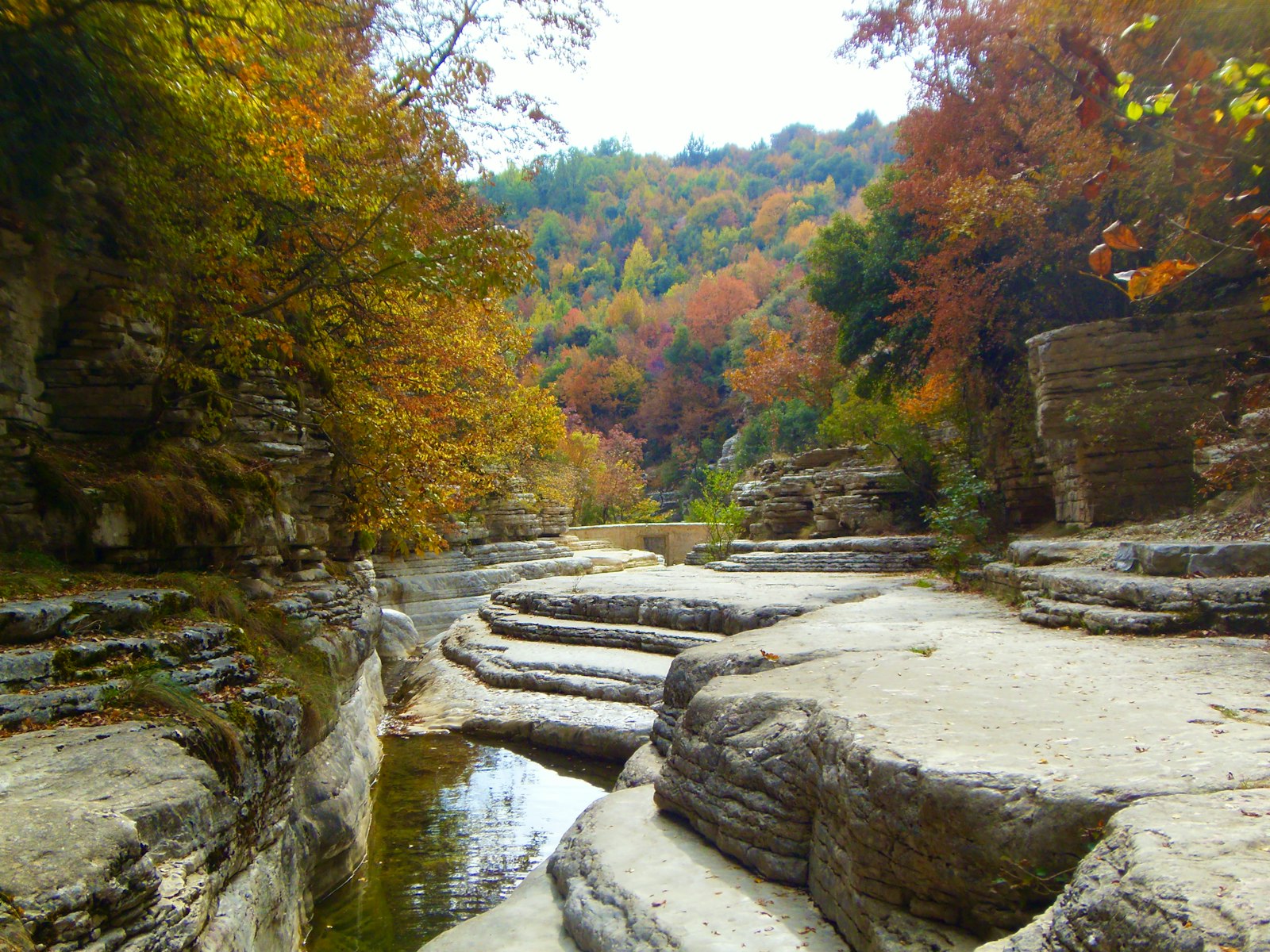
Between Mikro Papingo and Megalo Papingo, the Rogovo stream has carved a series of natural rock pools into the limestone, known locally as the Ovires or Kolymbithres. The water is cold year-round, but on a warm day the pools make for an exhilarating swim in a striking geological setting. They are easily reached on foot from either village, and no hiking gear is required — this is one of Zagori’s most accessible natural sights.
Voidomatis River
The Voidomatis rises inside the Vikos Gorge and flows through some of the most pristine landscape in Greece. It is frequently cited as one of the cleanest rivers in Europe, with water temperatures hovering between 6 and 9 degrees Celsius even in high summer. Rafting trips operate on a gentle section between the Aristi and Kleidonia bridges, typically lasting about three hours. This is scenic, easy-going rafting rather than a white-water challenge, and it suits most ages and fitness levels. Several local operators run trips from spring to autumn. Swimming is possible at various access points, but the water temperature is genuinely cold — do not underestimate it.
The Stone Bridges
Zagori’s stone bridges are as much a part of the landscape as the gorge itself. Built mainly in the 18th and 19th centuries with funds from emigrant merchants, they connected villages across the steep river valleys that road builders of the time could not easily cross. Many survive in excellent condition, and walking from one to the next through the forest makes for a fine half-day excursion. The most visited bridges include:
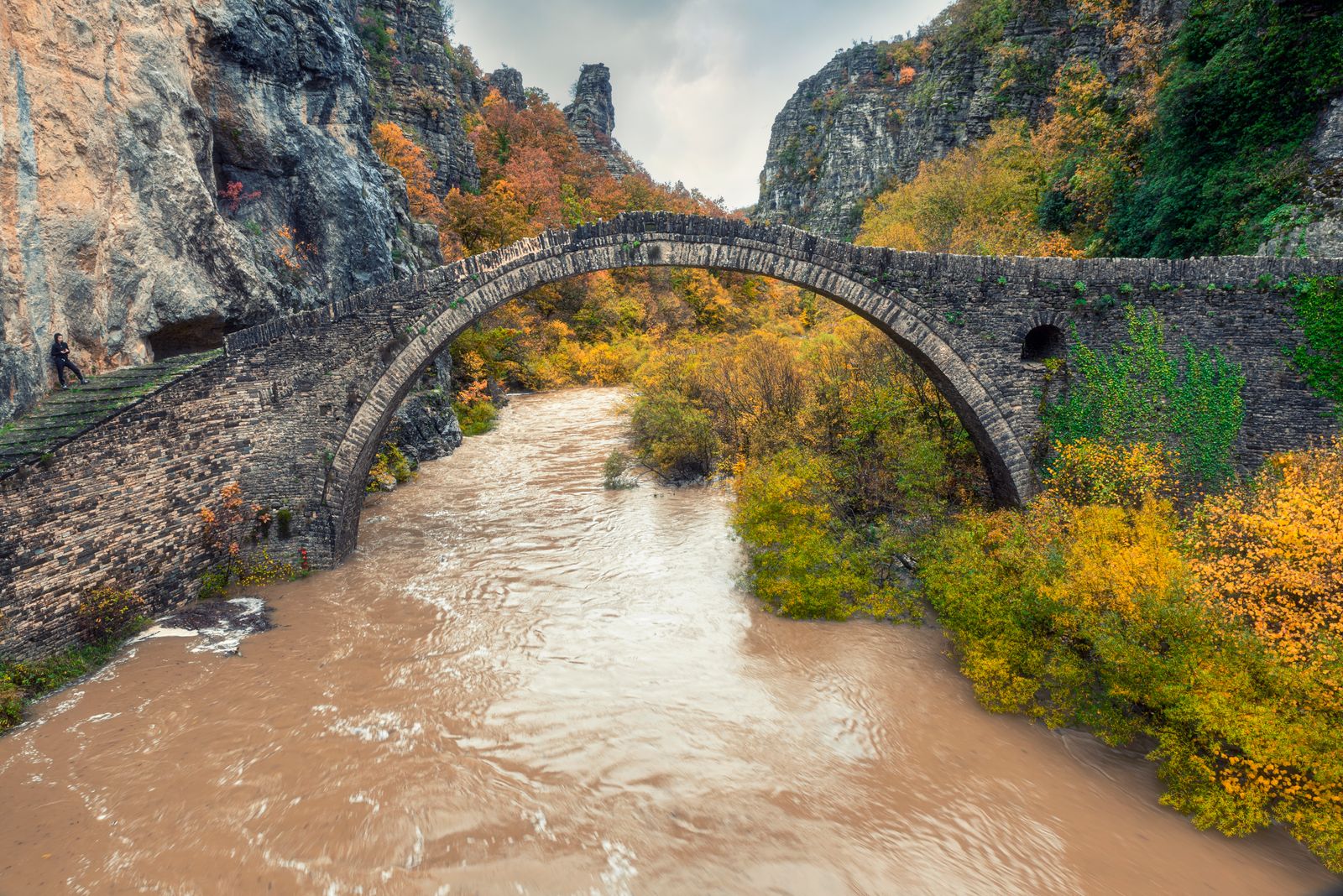
- Plakidas (Kalogeriko) Bridge — A three-arched bridge near Kipoi, one of the most photographed in the region. It spans the Voidomatis and is accessible by a short walk from the road.
- Lazaridis (Kontodimos) Bridge — A large double-arched bridge also near Kipoi, often visible from the Plakidas bridge trail.
- Missios Bridge — A single-arch bridge near Koukouli, set in a particularly photogenic gorge location.
- Kokkorou Bridge — Near Kipoi, another well-preserved single-arch structure in a scenic forest setting.
- Kleidonia Bridge — On the road between Aristi and Konitsa, a large bridge over a wider section of river, and the starting point for some Voidomatis rafting trips.
A circular trail from Kipoi passes the Plakidas, Lazaridis, and Missios bridges in roughly two to three hours and requires no special equipment beyond comfortable walking shoes. It is one of the best low-effort walks in Zagori and gives a clear sense of how the bridge network once held the region together.
What to Eat in Zagori
Zagori’s table reflects a mountain kitchen built around what the land provides: pastry, cheese, greens, game-quality meat, and whatever the forest offers in season. Do not expect the seafood spreads of the islands here. This is lamb and goat country, and the cooking has more in common with the upland Balkans than with the Aegean.

Pies are the centrepiece. Every village taverna will offer some version of the regional tradition — cheese pie, greens pie, mushroom pie, or the local kasopita (a kind of bread pudding). The pastry is often thinner and crispier than what you find elsewhere in Greece, sometimes made without commercial filo at all. In Kato Pedina, the mushroom pie has particular cultural significance, and autumn visitors have the best chance of tasting it with genuinely wild mushrooms.
Meat dishes tend toward the slow-cooked: goat baked with potatoes, lamb on the spit, or kontosouvli — marinated pork chunks roasted on a rotisserie. Trachanas soup, made from a fermented grain-and-milk preparation, appears in colder months as a warming first course. The local cheeses are excellent and varied: a softer feta style, smoked varieties reminiscent of the nearby Metsovone tradition, and harder kefalotyri used in pies and cooking. Epirus also has a strong tsipouro (pomace brandy) culture, and the local Zitsa wines — light, slightly sparkling whites — are worth trying.
The food is generally simple, honest, and ingredient-driven. When a taverna has a short menu built around the day’s pies, local meat, and whatever greens came in that morning, you are probably in the right place.
How to Get There
Zagori is not easy to reach, and that is worth being honest about. There is no airport in the region, no train service, and no ferry. The practical gateway is the city of Ioannina, approximately 30 kilometres to the south.
By air: Ioannina has a small airport with domestic connections to Athens. Flight frequency is limited, so check schedules before building your itinerary around air travel. From the airport to the city is a short taxi ride; from the city to Zagori is another 30 to 50 minutes by car, depending on which village you are heading for.
By road from Athens: The drive is approximately 440 to 450 kilometres and takes around five and a half to six hours, depending on the route. The road passes through western central Greece and can be scenic, but it is a full day’s driving.
By road from Thessaloniki: The Egnatia motorway makes this the cleanest approach from the north, at roughly 260 kilometres and around three to three and a half hours of driving. If you are arriving from Thessaloniki, this is a comfortable half-day journey.
By bus: KTEL Ioannina operates services from Athens (approximately six hours) and Thessaloniki (approximately four and a half hours) to Ioannina. Some local bus routes connect Ioannina to individual Zagori villages, but these services are infrequent and not designed for tourist day-tripping. Check schedules at ktelioannina.gr before making plans. Without a car, exploring multiple villages in Zagori is difficult.
Getting Around
A rental car is effectively essential for visiting Zagori. The villages are spread across a wide area connected by narrow mountain roads, and public transport between them is either very limited or non-existent. Roads within Zagori are generally well-maintained but can be steep, winding, and without barriers on the outer edge — confident driving in mountain conditions is important, particularly if visiting in poor weather or outside summer. In winter, snow chains may be necessary.
Note that several villages, including Dilofo, Koukouli, Mikro Papingo, and Kapesovo, are partly or fully pedestrianised — you park at the entrance and walk in. This is part of their appeal, but it means carrying luggage a short distance if you are staying overnight. Within individual villages, everything is walkable. The cobbled streets and old paths between nearby villages make for excellent short walks even if you are not a committed hiker.
How Many Days to Spend
Three nights in Zagori allows you to hike the Vikos Gorge (or a substantial part of it), visit a selection of stone bridges, explore two or three villages, and eat well. That is enough for a genuine feel of the landscape. Four or five nights opens up the possibility of adding the Vradeto Steps, a visit to Papingo, the Dragon Lake trail (which needs a full day), and Voidomatis rafting.
Travellers combining Zagori with the wider Epirus region should consider a night or two in Ioannina on the way in or out. The city has its own considerable appeal — a fortified old town, a lake island, and some of the best food in northern Greece. From Ioannina, it is also possible to continue to Delphi or the Pelion peninsula as part of a broader mainland road trip, though both involve significant additional driving.
Who Should Visit — and Who Shouldn’t
Zagori is ideal for travellers who enjoy mountain landscapes, walking, quiet evenings in stone villages, and the kind of Greek food that does not involve octopus drying on a line. Couples, small groups, and experienced family travellers will find it rewarding. Photographers have obvious material to work with in every season. Anyone who has done the Greek islands multiple times and wants something genuinely different will find it here.
It is less suitable for travellers looking for beaches, nightlife, or a resort experience. Families with very young children may find the driving and the lack of flat, easy terrain frustrating. Visitors without a car will struggle to move between villages and reach trailheads. And anyone expecting the Mediterranean warmth and swimming-by-the-sea holiday that Greece is famous for should know that Zagori offers cold rivers and mountain air instead. That is its strength, but it is not for everyone.
Common Mistakes
- Underestimating driving times. Map distances in Zagori look short, but mountain roads take longer than flat motorways. A village 15 kilometres away might be 30 minutes of careful driving.
- Trying to do everything in one day. The Vikos Gorge is a full day. The Vradeto Steps and Beloi viewpoint are a half-day. Papingo and the rock pools are a half-day. Do not stack all three into a single itinerary.
- Arriving without a booking in peak season. Zagori has limited accommodation, and summer weekends fill up. Book guesthouses in advance, especially in Monodendri and Papingo.
- Expecting island-style taverna variety. The food here is wonderful but focused — pies, meat, cheese, greens. If you need a long menu with twelve starters, adjust your expectations.
- Skipping Ioannina. Many travellers drive straight through to the villages. A night in Ioannina adds context, comfort, and excellent city food to the trip.
- Hiking the gorge without checking conditions. Rain makes the descent from Monodendri dangerous. Ask locally before setting out, and do not rely solely on weather apps — mountain conditions change fast.
Worth the Detour
Zagori asks more of you than most Greek destinations. It is far from the airports, the roads are slow, and the gorge does not hike itself. But what you find at the other end of the effort — a landscape of extraordinary geological drama, villages that look as if the mountain itself assembled them, and a silence that most of Greece lost decades ago — is among the most rewarding travel experiences in the country.
For travellers exploring mainland Greece beyond the well-known archaeological sites, Zagori sits naturally alongside Pelion in Thessaly and the Mani Peninsula in the Peloponnese as a destination that shows a very different face of Greece. Of the three, Zagori has the wildest natural scenery, the most demanding hiking, and the strongest argument for a visit in autumn. It is not a place for passive sightseeing. But for those willing to walk, drive slowly, and eat whatever the mountain provides, it is hard to imagine a more satisfying few days.
This article was researched and verified as of July 2026. Travel details such as transport schedules, road conditions, accommodation availability, and local services are subject to seasonal and annual change. We recommend confirming practical arrangements directly before travelling, particularly for mountain activities and winter visits.