Olympia sits in a green valley in the western Peloponnese, where the Alpheios and Kladeos rivers meet beneath low, forested hills. For more than a thousand years, this was the most important athletic and religious sanctuary in the ancient Greek world, and the place where the Olympic Games began. Today, the archaeological site and its outstanding museum hold one of the densest concentrations of classical sculpture anywhere in Greece. The surrounding town offers a quiet base for exploring a part of the Peloponnese that most visitors overlook entirely.
This guide covers everything a visitor needs to plan a trip to Olympia. What to see at the site and museum, how to get there, how long to stay, and what else the Elis region has to offer.
Olympia at a Glance
| Location | Western Peloponnese, Elis regional unit |
| UNESCO Status | World Heritage Site since 1989 |
| Known For | Birthplace of the Olympic Games, Temple of Zeus, archaeological museum |
| Combined Ticket | €20 full / €10 reduced (site + all museums) |
| Hours (Apr–Oct) | Daily 08:00–20:00 |
| Hours (Nov–Mar) | Daily 08:30–15:30 |
| Distance from Athens | Approximately 290 km (3.5 hours by car) |
| Best For | History and archaeology enthusiasts, families, Peloponnese road trips |
Why Olympia Matters
The ancient Olympic Games were held here every four years from 776 BC until the late fourth century AD. That makes this a continuous athletic and religious tradition lasting over a millennium. Athletes from across the Greek world competed in the stadium that still sits at the edge of the sacred precinct. Spectators numbered in the tens of thousands during each festival. The Altis, or sacred grove, contained some of the most ambitious buildings of classical antiquity. The Temple of Zeus once housed a colossal gold-and-ivory statue by Phidias — one of the Seven Wonders of the Ancient World.
Today, that statue is gone, but the site itself remains remarkably extensive. Unlike many Greek archaeological sites where a single temple or fortress dominates, Olympia spreads across a wide area. You will find the remains of temples, treasuries, athletic training facilities, a workshop, baths, and the stadium itself. One of Greece’s finest archaeological museums sits directly adjacent. Together, the site and museum can fill a full morning or afternoon of unhurried exploration.
The Olympic flame for the modern Games is still lit at the altar of the Temple of Hera in Olympia. This ceremony physically connects the ancient valley to every Olympics held since 1936.
A Brief History
Religious activity at Olympia may date back to the tenth century BC. Evidence of burnt offerings and votive deposits found at the site supports this early dating. The sanctuary was dedicated primarily to Zeus, although the earlier Temple of Hera — built around 600 BC — originally served both deities. The first Olympic Games are traditionally dated to 776 BC, initially consisting of a single footrace called the stadion. Over the following centuries, additional events were introduced: boxing, wrestling, the pentathlon, chariot racing, and the brutal pankration.
The fifth century BC was Olympia’s golden age. The monumental Temple of Zeus was completed around 457 BC, and Phidias created his legendary seated statue of the god shortly after. A row of treasuries built by various Greek city-states lined the northern terrace. Each was a small but richly decorated temple housing offerings. The Altis became a showcase of Greek art, with hundreds of statues of victorious athletes lining the pathways.
The Games continued through the Hellenistic and Roman periods, though the sanctuary’s character gradually changed. The Romans added baths and a guesthouse. The emperor Nero notoriously competed in events during his visit. The Games were abolished in 393 or 394 AD under Theodosius I, as part of a broader suppression of pagan practices. Earthquakes, floods from the Alpheios and Kladeos rivers, and centuries of silt gradually buried the site.
Systematic excavation began in 1875 under the German Archaeological Institute, a project that continues to this day. The quality and quantity of what has been unearthed is extraordinary — Olympia’s museum contains some of the most important original Greek sculptures in existence.
What to See at the Archaeological Site
The archaeological site is large enough that a thorough visit takes at least ninety minutes, and many visitors spend two hours or more. The ruins are spread across a flat, partly wooded area with gravel paths, shaded by pine and olive trees. Interpretive panels are present at the major structures, though a guidebook or audio guide adds considerable depth.
The Temple of Zeus
The Temple of Zeus was the centrepiece of the sanctuary and one of the largest Doric temples in mainland Greece. It was completed around 457 BC, built from local shell limestone coated with white stucco. The base measured approximately 64 by 28 metres. Inside stood the colossal seated statue of Zeus by Phidias, roughly 13 metres tall and made of ivory and gold over a wooden frame. Ancient visitors described entering the temple and seeing the statue as an overwhelming experience.
What remains today are the massive fallen column drums, some still lying where they fell during earthquakes. The sheer size of these drums — each taller than a person — gives an immediate sense of scale. The pediment sculptures, among the finest surviving examples of the Severe Style, are now displayed in the museum.
The Temple of Hera
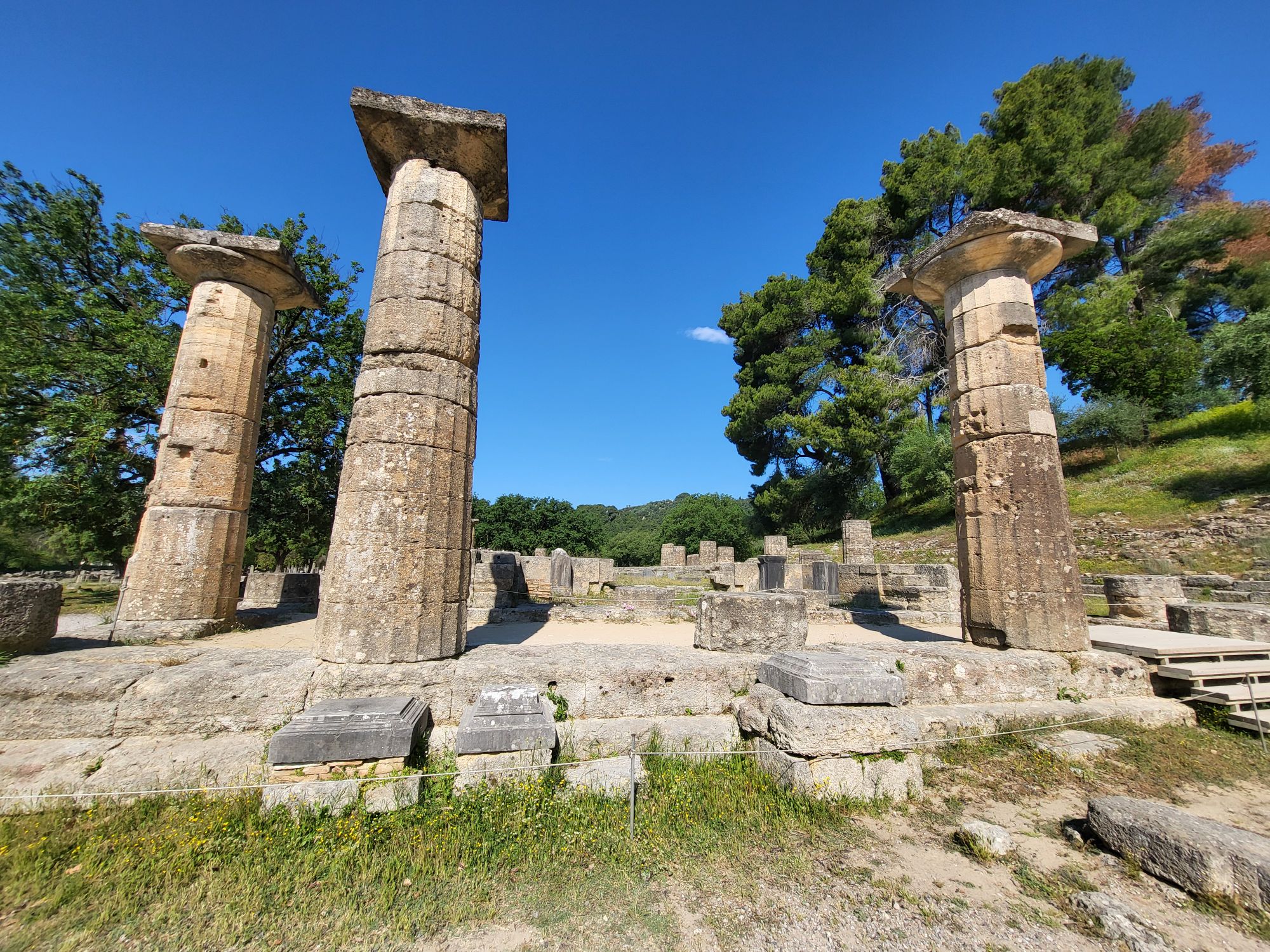
Older than the Temple of Zeus by more than a century, the Heraion dates from approximately 600 BC. It is one of the earliest monumental Greek temples. It originally featured wooden columns, which were gradually replaced with stone over several centuries. This explains why the surviving columns vary noticeably in diameter and style. The temple later became a repository for important works of art, including the famous Hermes of Praxiteles, found here during excavations.
Today, the Olympic flame ceremony takes place at the altar east of this temple. A few columns have been re-erected, and the temple’s long foundation walls give a clear sense of its plan.
The Stadium
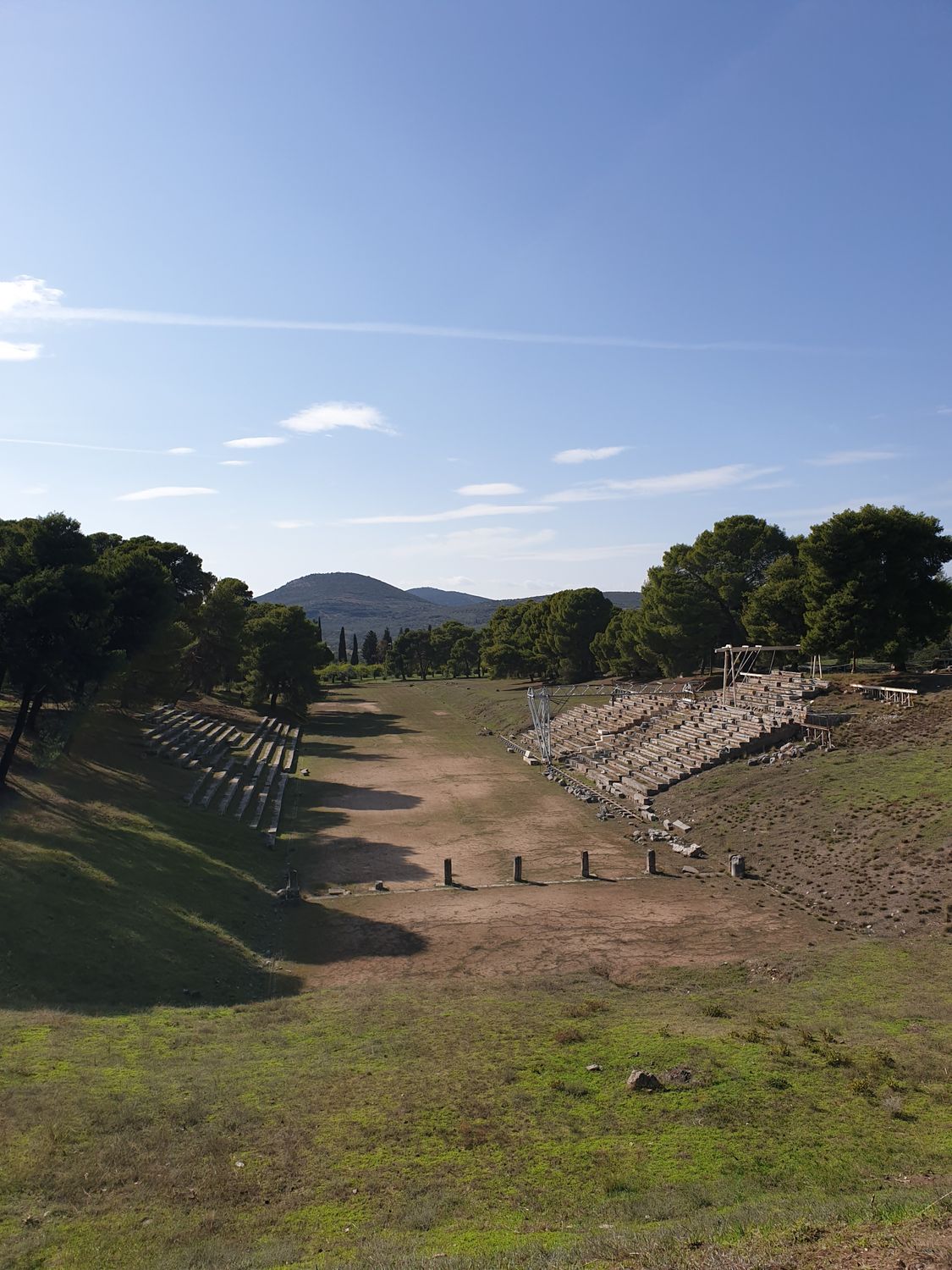
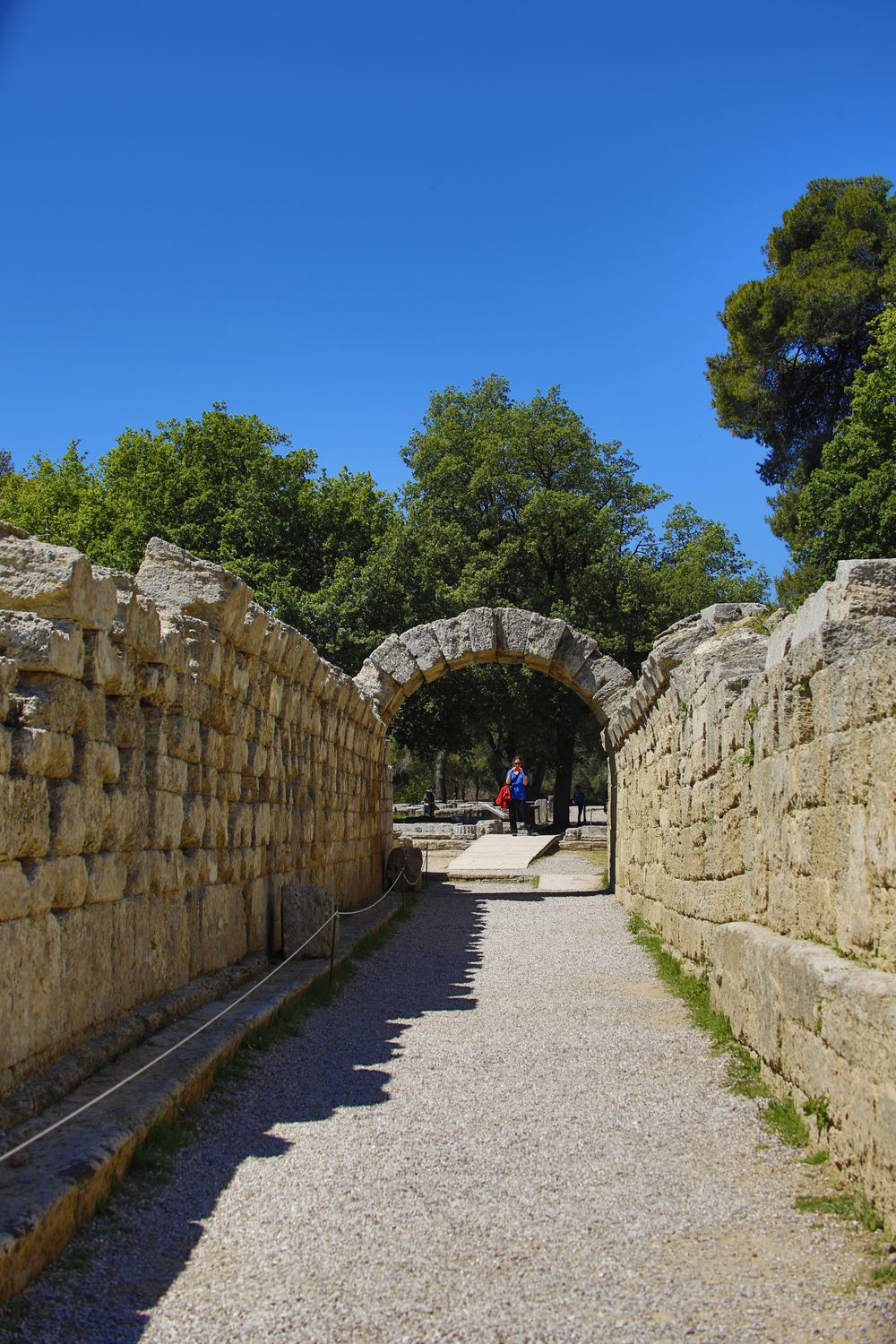
Visitors enter the stadium through a stone-vaulted tunnel known as the Krypte — the only remaining arched passageway of its kind in Greece. The running track is approximately 192 metres long. Its original stone starting blocks are visible at both ends, each with grooves for the runners’ toes. The grassed slopes on either side could accommodate an estimated 45,000 spectators. There were no permanent seats except for a stone bench reserved for the judges.
Walking the length of the track is one of the most affecting experiences at any Greek archaeological site. The scale is personal rather than monumental. The simplicity of the space makes the connection to the ancient athletes feel surprisingly direct.
Other Notable Structures
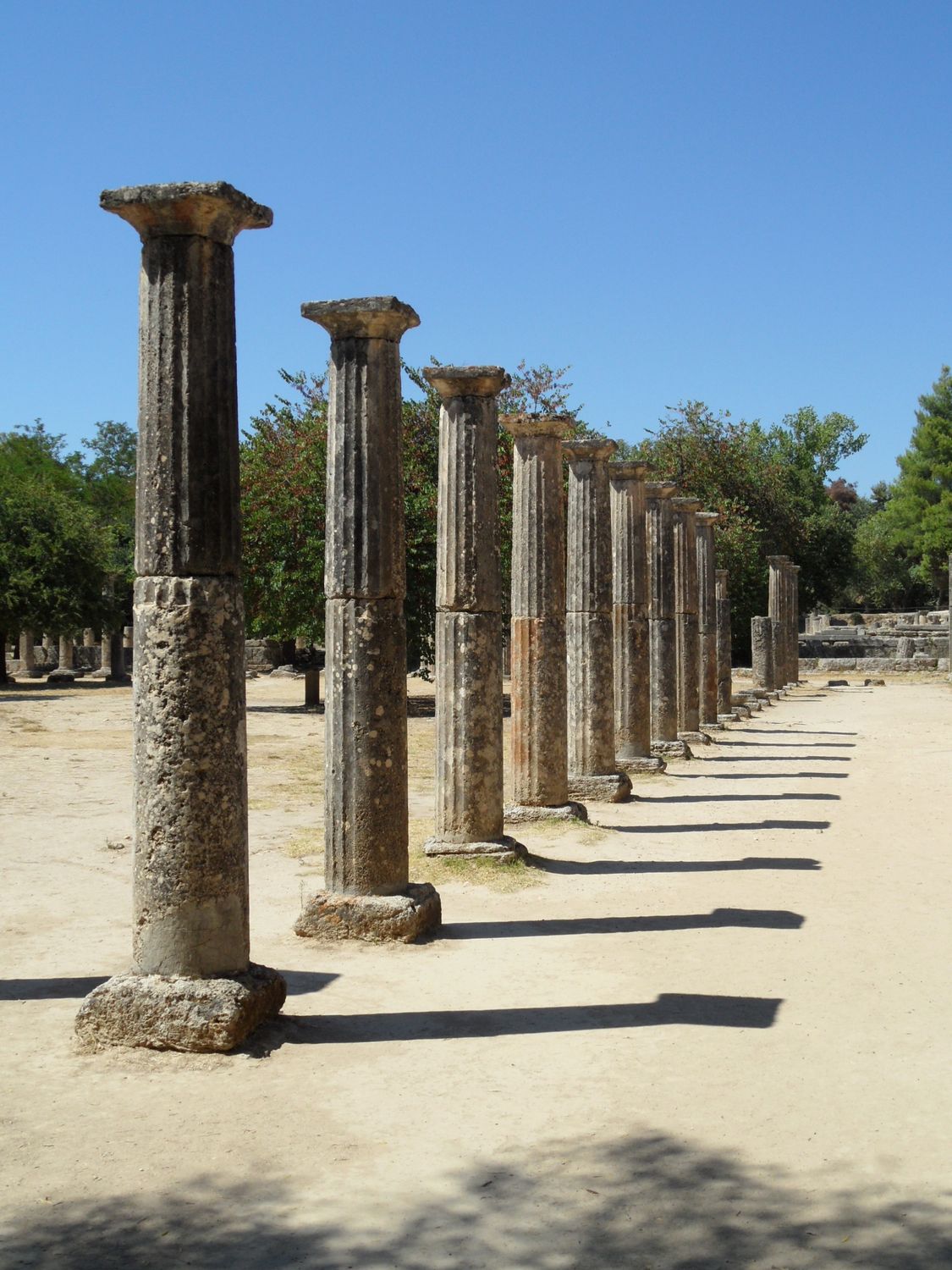
The Palaestra, where wrestlers and boxers trained, is one of the site’s best-preserved buildings. Its square colonnade surrounding an open courtyard remains clearly legible, with rooms along the sides that once served as changing areas and bathing facilities. The adjacent Gymnasium, used for running and throwing practice, retains sections of its long colonnaded running track.
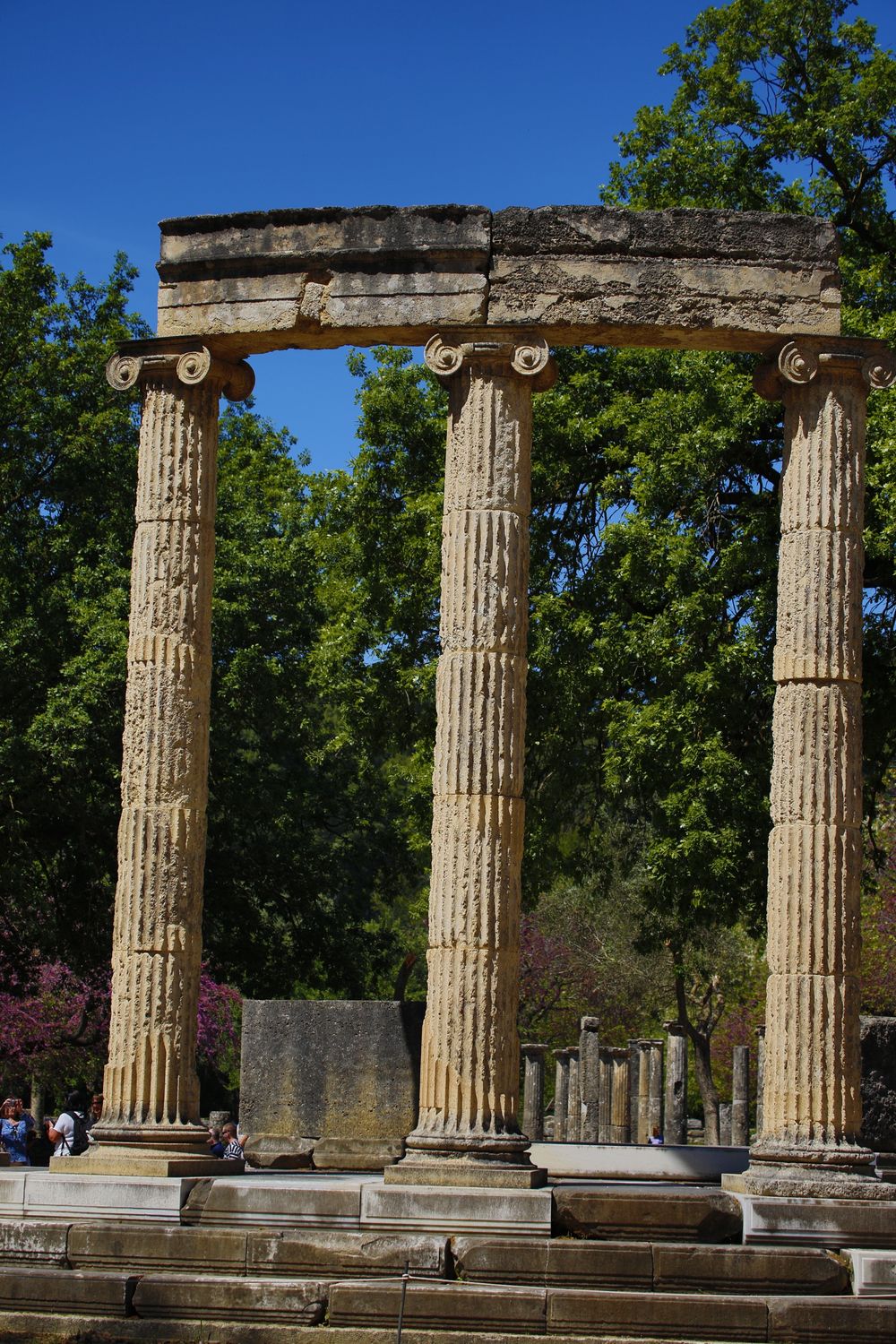
The Philippeion, a circular tholos commissioned by Philip II of Macedon after 338 BC, was the first building in the Altis dedicated to a human rather than a god. Its foundations and some column bases are visible near the entrance to the precinct. The Workshop of Phidias was identified by moulds and tools found in situ. It was later converted into an early Christian basilica — one of the site’s most intriguing layers of history.
The Leonidaion, a large guesthouse for visiting dignitaries, and the row of Treasuries along the northern terrace are also worth seeking out. The treasuries were built by various Greek city-states to house their offerings, functioning as a kind of competitive display of civic wealth and piety.
The Archaeological Museum
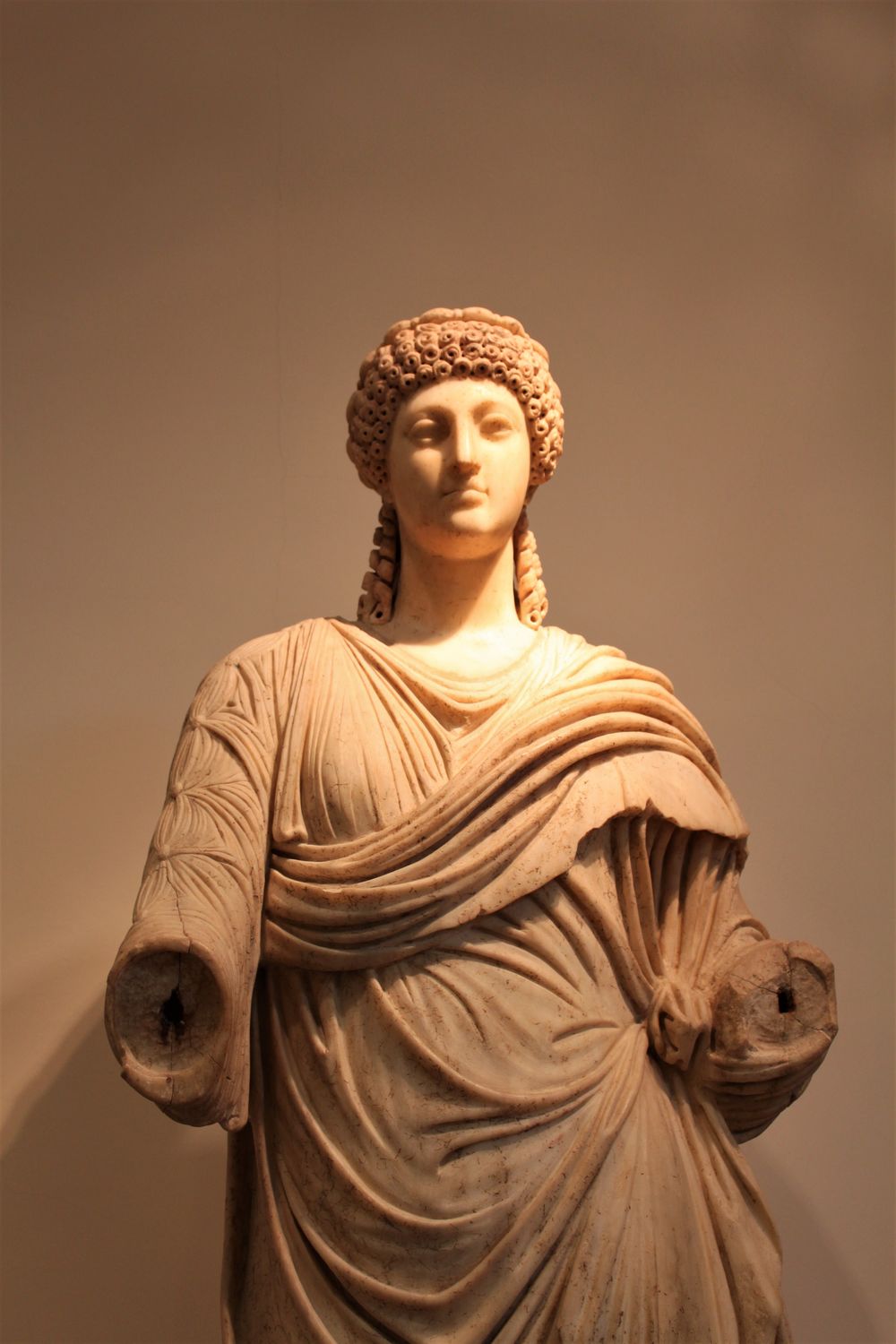
The Archaeological Museum of Olympia sits a short walk from the site entrance. It is one of the most important museums in Greece and should not be treated as an afterthought. Its collection centres on the sculptural decoration of the Temple of Zeus, supplemented by bronzes, terracottas, and objects from the Mycenaean period to the Roman era.
The east and west pediment sculptures from the Temple of Zeus dominate two large halls. The east pediment depicts the mythological chariot race between Pelops and Oinomaos, with Zeus standing at the centre. The west pediment shows the battle between Lapiths and Centaurs at the wedding of Pirithous. It is one of the most dynamic compositions in all of ancient sculpture. The twelve metopes depicting the Labours of Heracles are fragmentary but include several of the finest relief carvings to survive from the fifth century BC.
Two individual masterpieces deserve particular attention. The Hermes of Praxiteles, a marble statue discovered in the Temple of Hera in 1877, is one of very few works potentially by a named ancient sculptor to survive. Whether it is a fourth-century BC original or a later copy remains debated, but its technical refinement is beyond question. The Nike of Paionios, a marble winged Victory, once stood on a tall pillar in front of the Temple of Zeus. It captures the figure in mid-descent, her drapery pressed against her body by the wind — a virtuoso display of marble carving.
The bronze collection includes helmets, shields, armour, and small figurines that offer an intimate window into both warfare and religious practice. The museum can easily absorb an hour or more.
Planning Your Visit
Allow at least three hours for the site and museum combined. Start with the museum if you arrive after 10:00, when tour groups flood the outdoor site first. Bring water, sun protection, and comfortable walking shoes — shade is limited and the paths are uneven.
Visiting Practicalities
Tickets and Hours
A single combined ticket covers the archaeological site, the Archaeological Museum, the Museum of the History of the Olympic Games of Antiquity, and the Museum of the History of Excavations. As of 2026, the full-price ticket is €20 and the reduced ticket is €10. Both cash and cards are accepted at the ticket office.
From April through October, the site and museum open daily from 08:00 to 20:00, with last admission twenty minutes before closing. From November through March, hours are 08:30 to 15:30 daily. The site is closed on 1 January, 25 March, 1 May, Easter Sunday, 25 December, and 26 December. Several free-admission days are offered annually, including 18 April (International Monuments Day), 18 May (International Museums Day), and the last weekend of September (European Heritage Days).
Beating the Crowds
Olympia receives heavy foot traffic from organised tours, particularly cruise-ship excursions from Katakolon port, 34 km away. These groups typically arrive between 09:30 and 12:00, filling the site with guided clusters. Arriving before 09:00 or after 14:00 gives a noticeably quieter visit. If you arrive mid-morning, start with the museum — it reverses the usual tour-group flow.
What to Wear and Bring
Comfortable closed-toe shoes are strongly recommended — the site has uneven stone and gravel surfaces. Heels are not permitted. Shade is limited to certain areas with old trees, so bring a hat and water bottle. This matters especially in summer, when temperatures regularly exceed 35°C. There is a cafeteria near the museum, but no food or drink is allowed inside the site or museum buildings. Photography is permitted throughout the outdoor site and in most interior areas. Flash is prohibited inside the museum.
How to Get to Olympia
Olympia is located in the western Peloponnese, near the small town of Archaia Olympia (modern Olympia). It feels somewhat remote compared to the eastern Peloponnese destinations like Nafplio, but the roads are straightforward and the drive from Athens is scenic.
| From | By Car | By Bus | Notes |
|---|---|---|---|
| Athens | ~3.5 hours (290 km) | ~5–6 hours via Pyrgos | Motorway via Corinth, then A7/E65 to Pyrgos |
| Patras | ~1.5 hours (108 km) | ~2 hours via Pyrgos | Coastal road EO9 or inland route |
| Nafplio | ~3 hours (200 km) | Not direct; via Tripoli or Corinth | Scenic route through central Peloponnese |
| Katakolon (cruise port) | ~35 min (34 km) | Available on cruise days | Taxis and organised tours available at port |
| Kalamata | ~2 hours (150 km) | Not direct | Connects to Mani and southern Peloponnese routes |
By Car
Driving is the most practical option for most visitors. From Athens, the route follows the motorway west through the Isthmus of Corinth, then turns south towards Pyrgos on the A7/E65. A final 20-minute stretch leads east to Olympia. The road is well-maintained and passes through varied scenery: the Corinth Canal, the fertile plains of the northern Peloponnese, and increasingly green countryside near Elis. Free parking is available at the archaeological site.
Visitors on a broader Peloponnese road trip can combine Olympia with Monemvasia, Nafplio, and the Mani Peninsula. The distances between western and eastern Peloponnese are significant, though. Olympia to Nafplio, for instance, is roughly three hours by car through mountain roads.
By Bus
KTEL intercity buses run from Athens (Kifissos Terminal A) to Pyrgos several times daily. The journey takes approximately four to five hours. From Pyrgos, local buses connect to Olympia in around thirty minutes, departing roughly every two hours. The combined journey can take five to six hours each way, making a day trip by bus impractical. An overnight stay near Olympia is strongly recommended if using public transport.
From Cruise Ships
The port of Katakolon, on the Ionian coast 34 km west of Olympia, is a regular stop for Mediterranean cruise itineraries. Organised excursions to the site are available at the port, and taxis make the journey in about thirty-five minutes. If booking independently, allow at least three hours at the site. Confirm your ship’s departure time carefully before heading inland.
How Long to Stay
A half-day is the minimum needed to visit the archaeological site and museum at a reasonable pace. Many visitors come on a day trip from Athens or as a cruise-ship stop, and this is workable if the logistics are timed well. An overnight stay changes the experience entirely. It gives you the chance to visit in the early morning or late afternoon, when the light is better and the crowds thinner.
For travellers incorporating Olympia into a longer Peloponnese itinerary, one night in the Olympia area is usually sufficient. Two nights makes sense only if you plan to explore the wider Elis region — the beaches near Kaiafas and Zacharo, the port town of Katakolon, or the countryside around Pyrgos.
Where to Stay
The modern town of Archaia Olympia is small, walkable, and exists primarily to serve visitors to the archaeological site. Its main street is lined with cafes, souvenir shops, and a modest selection of guesthouses and small hotels. Most are within a ten-minute walk of the site entrance. Accommodation here tends to be straightforward and reasonably priced, with mid-range options typically falling between €60 and €120 per night in summer. The town is quiet in the evenings, which suits visitors who want an early start at the site the next morning.
Pyrgos, the regional capital 20 km to the west, has a wider range of services and more accommodation options. It lacks the proximity and atmosphere of staying next to the ruins, though. For most travellers visiting Olympia, staying in the town itself is more convenient.
Beyond the Ruins: The Elis Region
Most visitors treat Olympia as a day trip and move on, but the surrounding Elis region rewards those who linger. This is a quiet, agricultural corner of the Peloponnese, with long sandy beaches along the Ionian coast, thermal springs, and very few international tourists outside the cruise-ship window.
Katakolon is a small harbour village on the coast, best known as a cruise-ship port. Outside cruise days, it has a pleasant waterfront with a handful of seafood tavernas and calm swimming at nearby beaches. It makes a good lunch stop if driving between Olympia and the coast.
Kaiafas Lake and Beach, near Zacharo about 40 km south of Olympia, combines golden sand with a shallow coastal lagoon and thermal springs used since antiquity. The beach is one of the finest in the western Peloponnese yet remains genuinely uncrowded, even in July and August. The thermal springs have associated bathing facilities, though their operating schedule can be inconsistent.
Kourouta Beach, closer to Amaliada, offers another long stretch of sand with more developed facilities including seasonal beach bars. It is popular with domestic visitors from nearby cities but draws far fewer international tourists than the beaches of the eastern Peloponnese or the islands.
For travellers continuing south, the route from Olympia towards Kalamata passes through increasingly dramatic mountain scenery and connects to the Mani Peninsula. Those heading north can reach Patras in about ninety minutes, where ferries connect to the Ionian Islands including Kefalonia via the port of Killini.
Local Food
The Elis region and broader Thessaly area sit in the agricultural heart of the Peloponnese, and the local food reflects this. Tavernas in Olympia town serve grilled meats — lamb and pork — that are often sourced from nearby farms and cooked simply over charcoal. Hilopites, handmade egg pasta cut into small squares, appear in several local dishes, often served with slow-cooked meat or tomato-based sauces. Kokkinisto, a slow-braised meat stew in tomato sauce, is a regional speciality worth looking for.
Local cheeses include graviera and manouri, both produced in the Peloponnese’s mountainous interior. The olive oil from Elis is excellent, as the region is one of Greece’s major olive-producing areas. Roadside stalls between Pyrgos and Olympia sometimes sell local honey, olives, and seasonal fruit directly. Prices at the tavernas in Olympia town are moderate by Greek standards — somewhat higher than in non-tourist Peloponnese villages but lower than island prices.
Best Time to Visit
Olympia is an outdoor site with limited shade. The time of year — and the time of day — makes a real difference to the quality of a visit.
Spring (April–May) and autumn (September–October) offer the most comfortable conditions. Temperatures are warm but manageable, the site’s trees are at their greenest, and wildflowers appear in spring. Visitor numbers are substantially lower than in high summer. These months are ideal for anyone who wants to spend time walking the site without battling heat or crowds.
Summer (June–August) brings temperatures that regularly exceed 35°C, making midday visits physically uncomfortable and sometimes unpleasant. If visiting in summer, arrive at the 08:00 opening or wait until late afternoon. Tour-group congestion peaks between 10:00 and 13:00. The upside of summer is the longest opening hours and the most reliable weather.
Winter (November–March) sees shorter hours and cooler weather, but the site can be atmospheric and nearly empty. Some free-admission days fall in this period. Rain is more likely, and the shorter opening window (08:30–15:30) limits how much time you can spend. On balance, winter visits suit travellers already in the region rather than those making a special trip.
Common Mistakes
Skipping the museum. The Archaeological Museum is not a secondary attraction — it contains some of the most important original Greek sculptures in existence. Visitors who rush through the outdoor ruins and skip the museum miss the best of Olympia.
Underestimating the time needed. The site and museum together require a minimum of three hours for a meaningful visit. Cruise passengers on tight excursion schedules sometimes feel rushed, particularly if their tour allocates only two hours for the entire complex.
Arriving at peak hours. Between 10:00 and 12:00 on summer mornings, the site can feel overwhelmed by large groups. Adjusting your arrival to early morning or afternoon transforms the experience.
Trying a day trip from Athens by bus. The five-to-six-hour bus journey each way leaves almost no time at the site. Driving makes a day trip just about feasible, but an overnight stay is far more rewarding.
Ignoring the wider area. The Elis coast has some of the Peloponnese’s best beaches. Travellers who drive straight back to Athens miss a genuinely beautiful and uncrowded stretch of Greek coastline.
Olympia in a Wider Peloponnese Trip
Olympia fits naturally into a Peloponnese road trip, though its location in the far west means it requires deliberate routing rather than a casual detour. A practical circuit from Athens might run: Corinth – Nafplio – Monemvasia – Mani – Kalamata – Olympia – Patras – back to Athens. That covers the major highlights over seven to ten days. Alternatively, visitors arriving by ferry at Patras can make Olympia their first or last significant stop in the Peloponnese.
Olympia also pairs well with Delphi, Greece’s other great ancient sanctuary. The driving distance between the two is approximately 200 km via the Rion–Antirion bridge (around three hours), making it possible to visit both within a few days. For visitors interested in ancient Greek history, combining these two UNESCO sites offers an unusually rich experience.
This article was researched and verified as of July 2026. Opening hours, ticket prices, and transport schedules are subject to change. We recommend confirming current details with the official Olympia museum website or the Greek Ministry of Culture before your visit.