Kos occupies a peculiar position in the Dodecanese. It is the third largest island in the chain, roughly forty-two kilometres long and eleven wide, yet its terrain is overwhelmingly flat. This geological accident has made it the only Greek island where cycling is a genuine mode of transport rather than a fitness challenge. A thirteen-kilometre bike lane runs along the waterfront, connecting most of the eastern shore without a meaningful hill in sight. Add to this the Asklepieion, one of the ancient world’s most important medical sanctuaries, and a coastline that divides neatly between family-friendly north-coast sands and sheltered south-coast coves, and the island becomes considerably more interesting than its package-holiday reputation suggests.
For travellers arriving from Rhodes or heading toward Leros, Kos serves as a natural stepping stone. It is also the only Greek island with a daily ferry connection to Bodrum, Turkey, making international day trips possible without backtracking to the mainland.
Quick Reference
- Best for: Families, cyclists, history travellers, couples seeking a varied island without extreme hills
- Less suitable for: Travellers wanting remote wilderness, car-free isolation, or all-night nightlife (Kardamena aside)
- Ideal stay: 4 to 6 nights for the full island; 2 to 3 nights if combining with other Dodecanese islands
- Getting there: Direct flights from most European cities (seasonal); year-round ferries from Piraeus (approx. 10 hours)
- Car needed? Helpful for the south coast and mountain villages, but not essential for beaches along the north coast
Best Time to Visit Kos
The island is at its most balanced in May, June, and September. July and August bring temperatures regularly above thirty-five degrees, along with the meltemi wind that blows strongly from the northwest. This wind has a direct impact on beach selection: north-coast beaches such as Tigaki and Marmari can become choppy, while the south coast around Kefalos remains sheltered and calm.
September offers warm sea temperatures, reduced crowds, and calmer winds. The Asklepieion and other archaeological sites are far more comfortable to visit when daytime heat has eased. October remains possible for beaches, though some tourist services begin closing after mid-month. Winter visitors will find Kos Town functional but quiet, with limited bus schedules and most resort areas shuttered.
Getting to Kos
By Air
Kos International Airport, named after Hippocrates (code KGS), sits near the village of Antimachia in the island’s centre. During summer, over twenty-five airlines operate direct seasonal routes from cities across the United Kingdom, Germany, Scandinavia, Italy, and central Europe. Ryanair, easyJet, Jet2, Condor, and TUI are among the most active carriers. Aegean Airlines connects Kos to Athens and Thessaloniki year-round, with domestic flights taking approximately fifty minutes.
The airport is roughly twenty-five kilometres from Kos Town. KTEL buses connect the airport to major resorts, or a taxi to Kos Town costs approximately thirty to thirty-five euros.
By Ferry
Blue Star Ferries operates year-round routes from Piraeus (Athens) to Kos, with six to seven sailings per week during summer. Journey times vary from approximately eight and a half to twelve hours depending on the route and intermediate stops, with most departures in the late afternoon or evening arriving early the following morning. Deck-seat tickets start at around forty-seven to sixty-three euros per person.
From Rhodes, the ferry takes just over two hours and costs from twelve euros. From Kalymnos, the crossing is thirty-five minutes. These short hops make Dodecanese island-hopping straightforward, particularly during summer when Dodekanisos Seaways operates additional catamarans.
| Route | Operator | Duration | Frequency (summer) | Approx. Price |
|---|---|---|---|---|
| Piraeus to Kos | Blue Star Ferries | 8.5 to 12 hours | 6–7 per week | From ∼€47 deck |
| Rhodes to Kos | Blue Star / Dodekanisos Seaways | 2 to 2.5 hours | Daily (multiple) | From ∼€12 |
| Kalymnos to Kos | Blue Star / Dodekanisos Seaways | 35 minutes | Daily (multiple) | From ∼€8 |
| Bodrum to Kos | Various Turkish operators | 45 to 50 minutes | Daily (summer) | From ∼€20–25 |
Confirm schedules and book through official operators or established platforms before finalising accommodation, as routes and frequencies adjust seasonally.
Getting Around Kos
By Bicycle
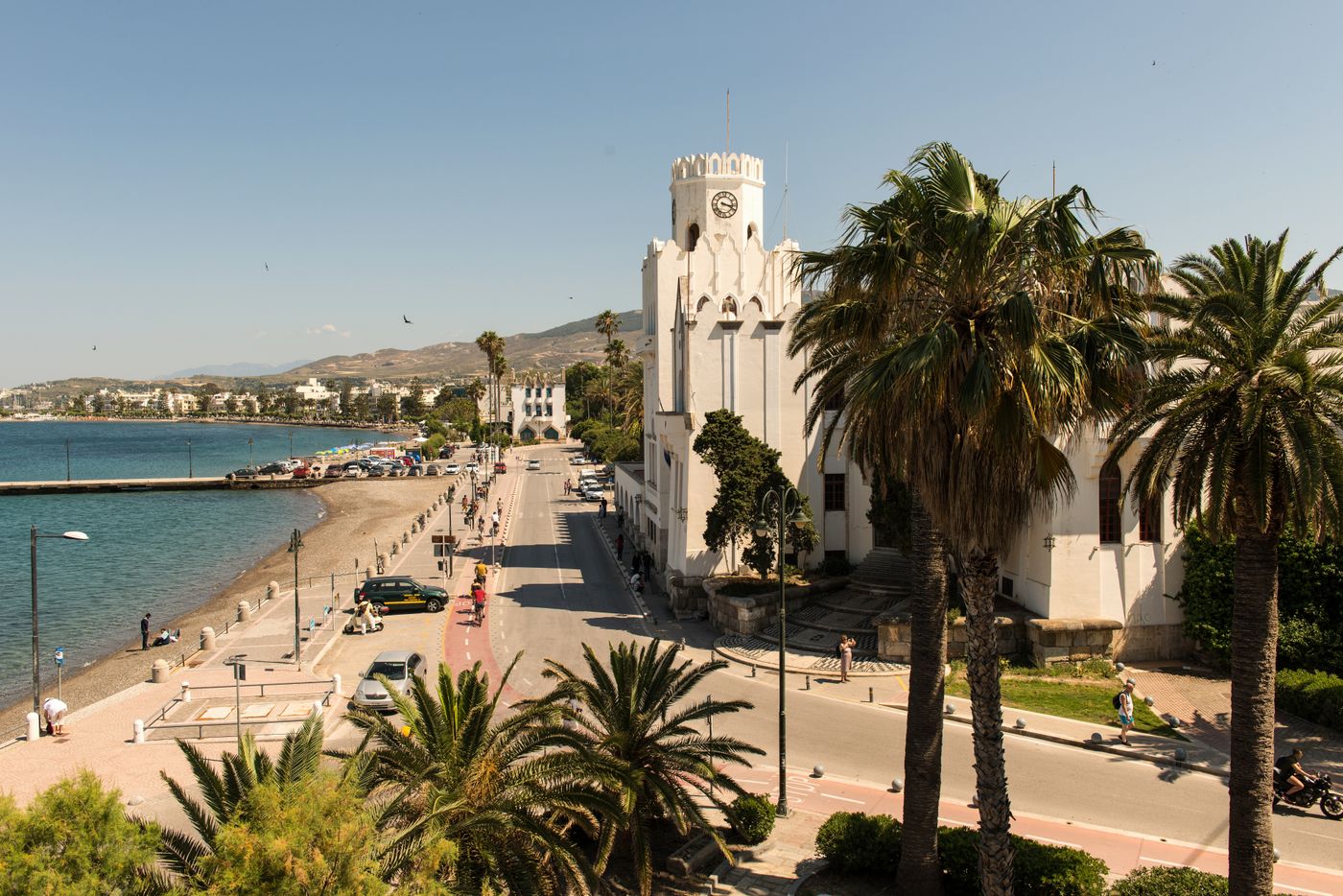
Kos is genuinely flat along its northern coast and around Kos Town. A dedicated thirteen-kilometre cycle lane stretches along the waterfront from Faros in the east to Psalidi in the west, and secondary paths extend toward Tigaki and Marmari. The island has approximately six thousand bikes available for rent, with prices typically around five euros per day from rental shops concentrated in Kos Town. For a flat, traffic-free ride connecting beaches and archaeological sites, this is the most practical Greek island for cycling.
The flat terrain extends as far as Mastichari on the north coast. Beyond that, and particularly toward Kefalos or up Mount Dikeos, the terrain changes significantly and a bicycle becomes less practical.
By Bus
KTEL Kos operates intercity buses connecting Kos Town to all major resorts and the airport. Summer schedules are relatively frequent for the north coast. Fares are affordable: Tigaki costs two euros fifty, Mastichari four euros, and Kefalos five euros fifty. The bus station is located at 7 Kleopatras Street in Kos Town. Schedules are available at ktel-kos.gr or at the station itself. Buses do not run to more remote south-coast beaches.
By Car
A rental car becomes useful for reaching the southern coast, mountain villages like Zia and Palio Pyli, and the Therma hot springs on the far eastern tip. The island is compact enough that no drive exceeds forty minutes. Parking is free at most beaches, though Mastichari and Kardamena may charge three to five euros during peak season.
Where to Stay
| Area | Best For | Character | Beach Access |
|---|---|---|---|
| Kos Town | First-timers, history, nightlife, port access | Compact, walkable, archaeological sites within the town | Lambi beach (5 min walk north) |
| Tigaki | Families with young children | Resort strip along a long shallow beach, quiet evenings | Directly on 10km beach |
| Marmari | Couples, quiet holidays | Less developed than Tigaki, more peaceful | White sand, shallow, rarely crowded |
| Mastichari | Authentic village feel, windsurfing | Working fishing village with tavernas on the harbour | Sandy, wind-exposed (good for kitesurfing) |
| Kardamena | Younger travellers, lively nightlife | Resort town, bars, clubs, beach strip | Long sandy beach, organised |
| Kefalos | Quiet escapes, south-coast beaches | Traditional village on a hilltop, remote feel | Multiple coves (5–10 min drive) |
For most first-time visitors planning to explore the whole island, Kos Town offers the best balance of access, dining, and proximity to historical sites. Tigaki is the strongest choice for families prioritising beach time with small children.
Kos Town: Ancient and Medieval History on Foot
The town of Kos is unusually dense with archaeological and historical sites, many of them scattered through the streets rather than fenced behind museum walls. A half-day walk covers the Ancient Agora (fourth century BCE, one of the largest excavated in Greece), the Roman Odeon (second century BCE, still used for concerts), Casa Romana with its Hellenistic mosaics, and Nerantzia Castle at the harbour entrance. The Plane Tree of Hippocrates, said to be a descendant of the tree under which Hippocrates taught, stands in the square connecting the castle bridge to the town centre.
The Asklepieion
Located four kilometres southwest of Kos Town, the Asklepieion is the island’s most significant archaeological monument and one of the most important healing sanctuaries of the ancient world. This is where Hippocrates, born on Kos in the fifth century BCE, is believed to have founded his medical school. The site functioned simultaneously as a place of worship of the god Asklepios, a centre for medical teaching, and a treatment facility.
The sanctuary is built on three terraces cut into a hillside, with sea views extending toward the Turkish coast. The lowest terrace contained the medical school and Roman-era baths. The middle terrace holds the remains of a large altar (fourth century BCE), two temples, and the priests’ quarters. The upper terrace, reached by a monumental staircase, housed the largest temple of Asklepios, a Doric structure from the second century BCE. Seven restored Corinthian columns from a temple of Apollo remain standing on the middle level.
Visiting Practicalities
The Asklepieion is open daily from April through October. Summer hours (April to August) run from 08:00 to 20:00, with last entry at 19:30. Hours reduce gradually from September onward. Admission is fifteen euros for adults. EU citizens under twenty-five and non-EU visitors under eighteen enter free with valid identification. Timed-entry tickets can be purchased online through hhticket.gr, which is advisable during July and August. Allow approximately sixty to ninety minutes for a thorough visit. The site is partially accessible, though the upper terraces require climbing stone steps.
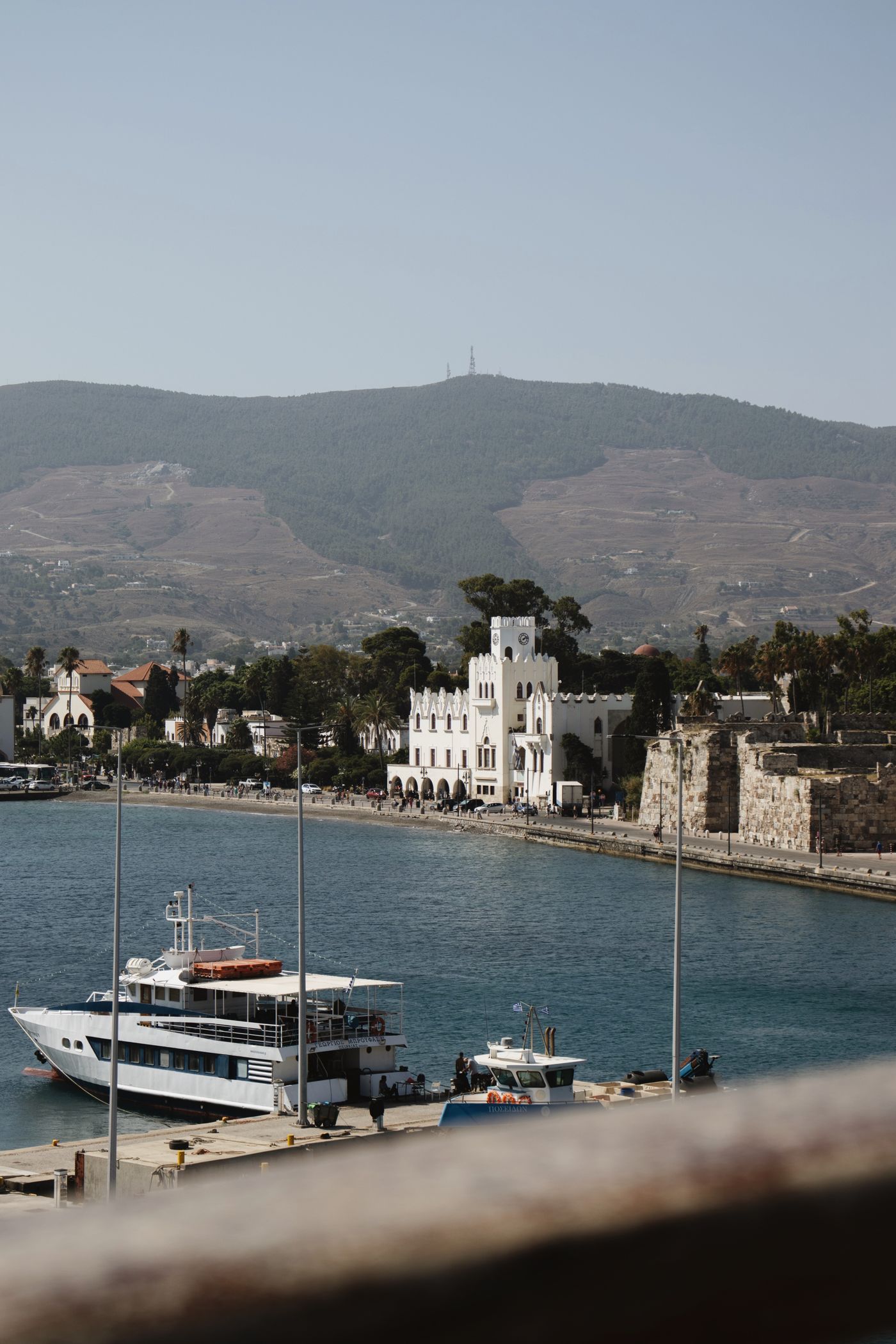
Nerantzia Castle
The Castle of the Knights of Saint John dominates the entrance to Kos harbour. Construction began in the 1430s and continued until 1514, making it one of the last major Hospitaller fortifications in the Dodecanese. The Knights incorporated ancient building materials from the Asklepieion and Kos’s Roman city into the medieval walls. Observant visitors can spot Hellenistic friezes with sculpted masks, classical inscriptions, and columns from early Christian basilicas built directly into the fortification masonry.
The castle’s name derives from the bitter orange trees (nerantzia) that the Knights planted throughout the island. The fortress has undergone significant restoration work following earthquake damage in 2017. At the time of writing, it is partly open to visitors, with access via the arched stone bridge at Phoinikon (Palm Tree) Street. Opening hours and access may vary depending on ongoing restoration work, so confirm locally before visiting.
Beaches
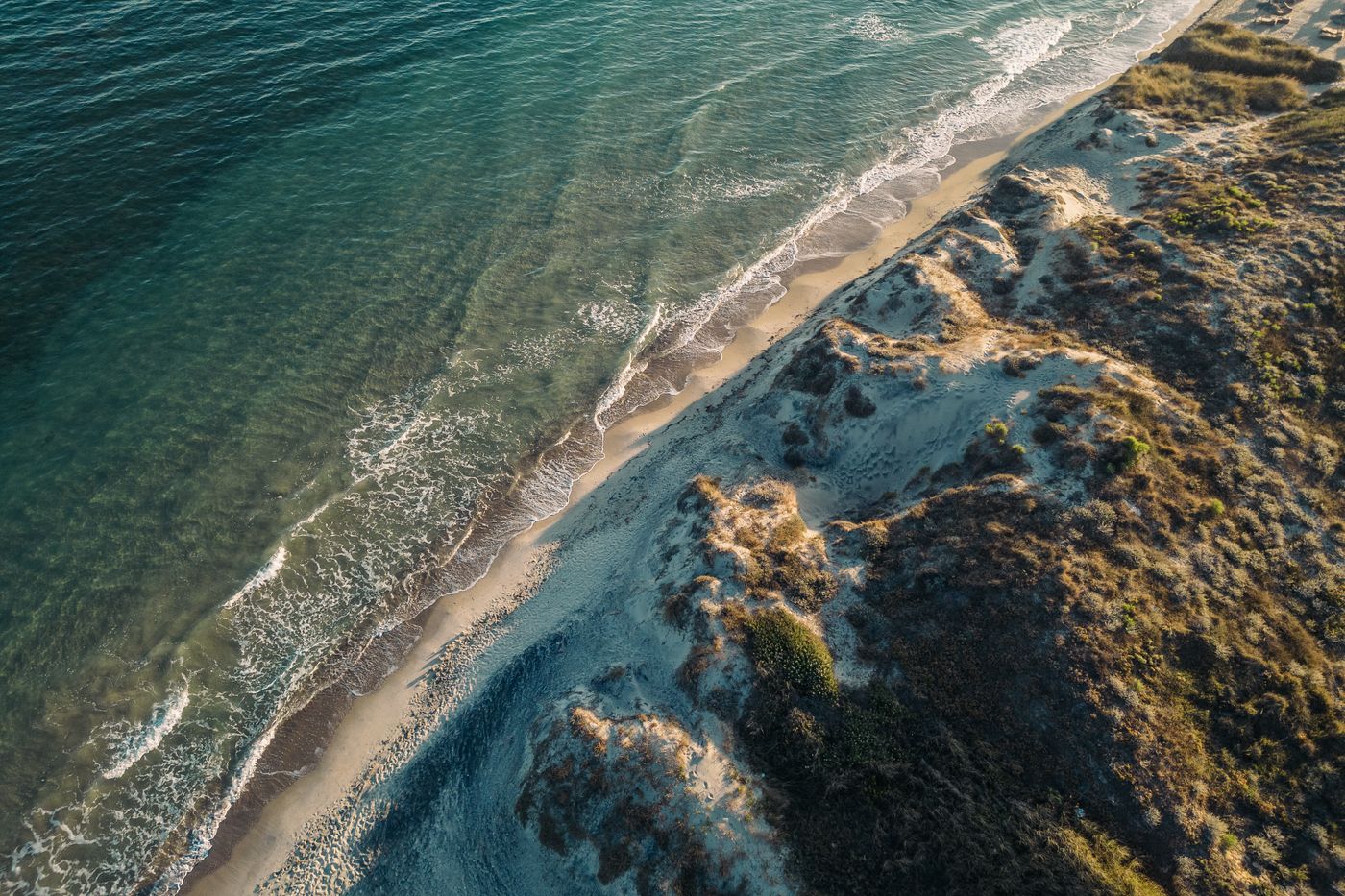
The geography of Kos divides its beaches into two distinct categories. The north coast faces the open Aegean and catches the full force of the meltemi wind during July and August. These beaches tend to be long, sandy, and shallow, making them excellent for families on calm days but potentially rough when the wind picks up. The south coast, sheltered by the island’s spine and the Kefalos peninsula, remains calmer throughout summer and tends toward smaller coves with clearer water.
North Coast
Tigaki is the most popular family beach on the island, stretching approximately ten kilometres along the north shore about eleven kilometres from Kos Town. The water is shallow for a considerable distance, which makes it particularly suitable for young children. It holds Blue Flag certification, has organised areas with umbrellas and facilities, and remains accessible by bus and bicycle. Its length means that even during peak summer, quieter stretches can be found toward either end.
Marmari, a few kilometres further west, offers a similar profile with slightly fewer visitors and a more relaxed atmosphere. The sand is white and fine, the water equally shallow, and the surrounding area less developed than Tigaki.
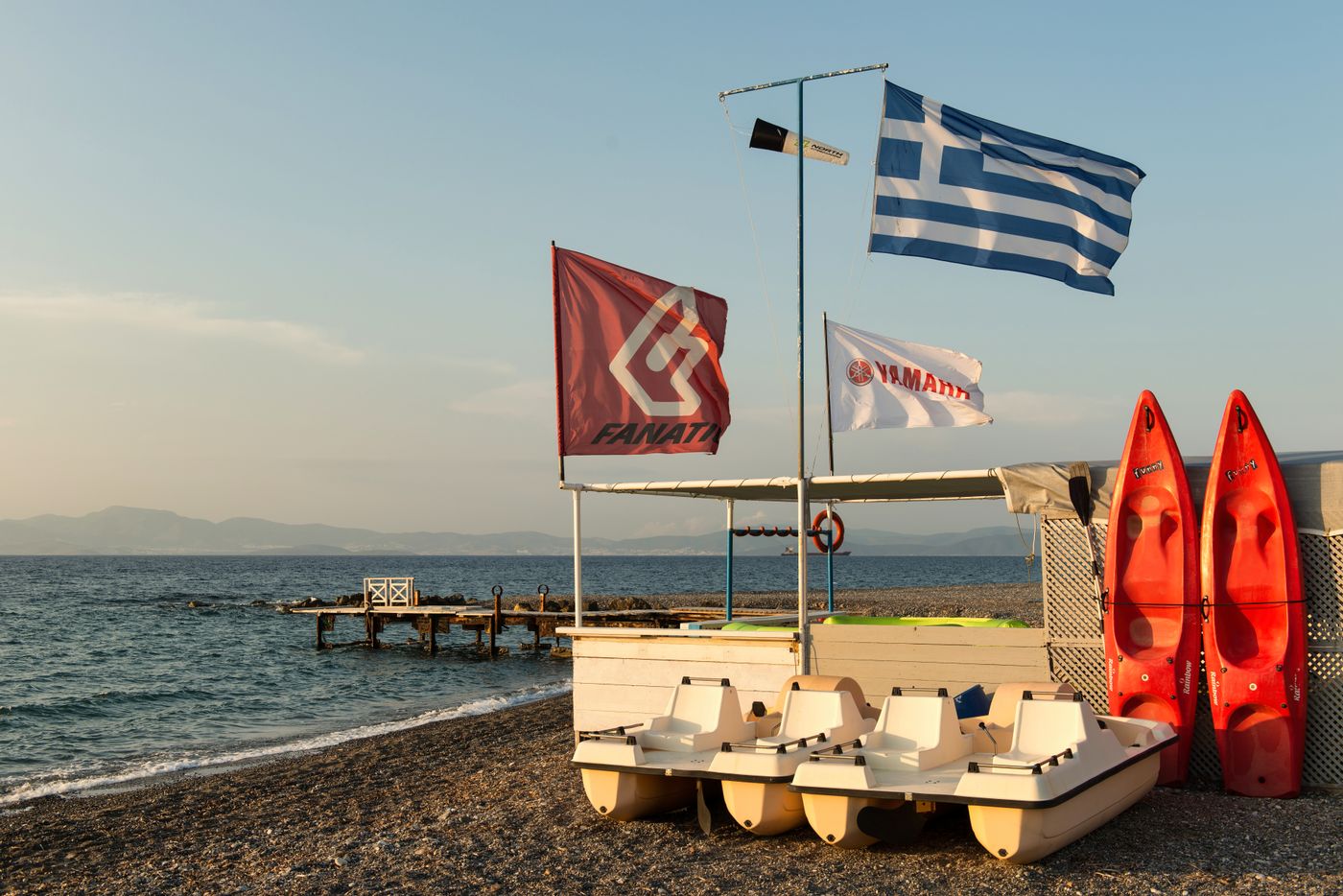
Mastichari is known primarily as a windsurfing and kitesurfing destination. Consistent winds make the western section popular with water-sports enthusiasts, while the calmer eastern section near the village harbour suits swimmers and families. A regular ferry runs from Mastichari to Kalymnos (thirty-five minutes).
South Coast and Kefalos Area
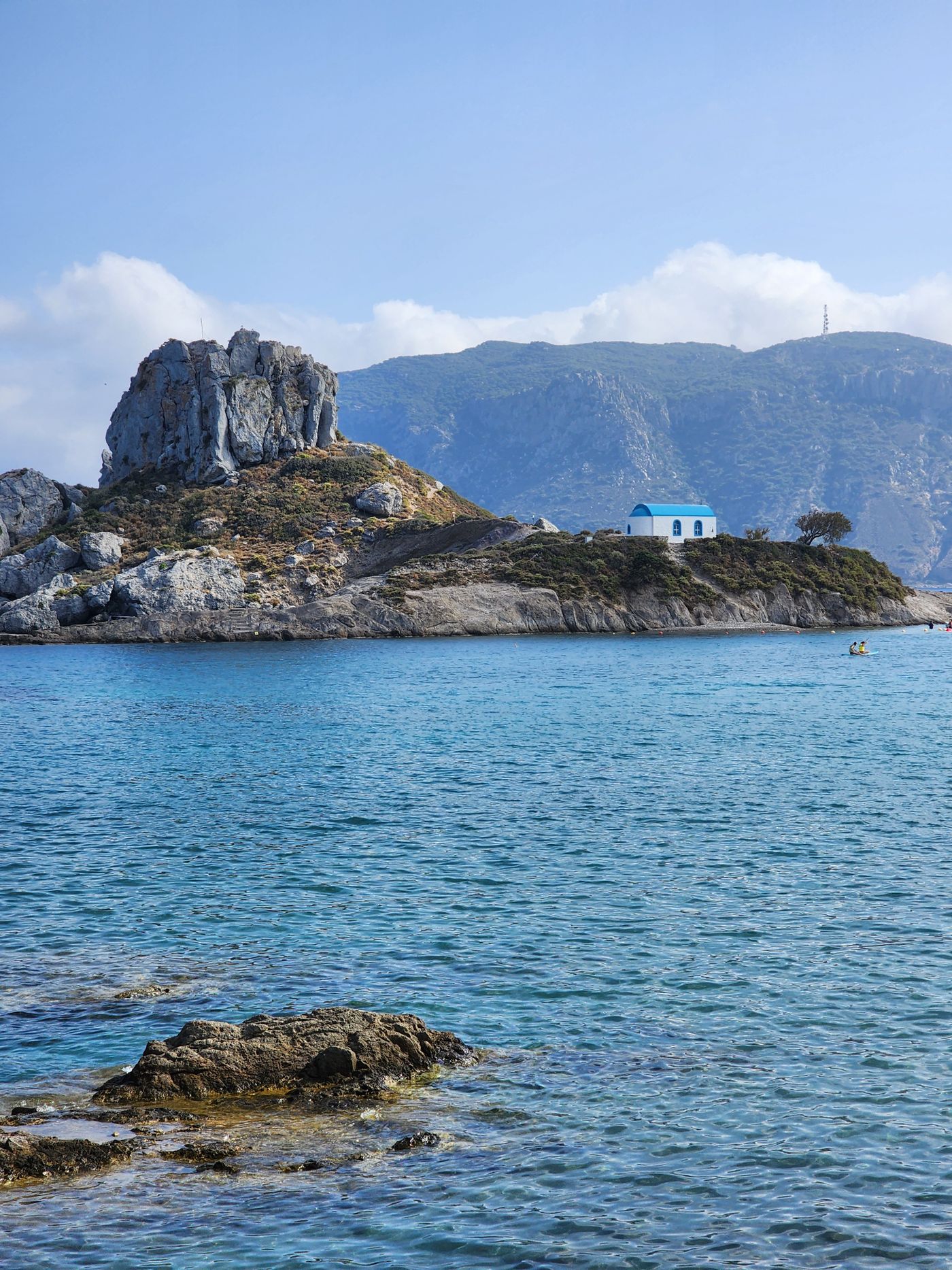
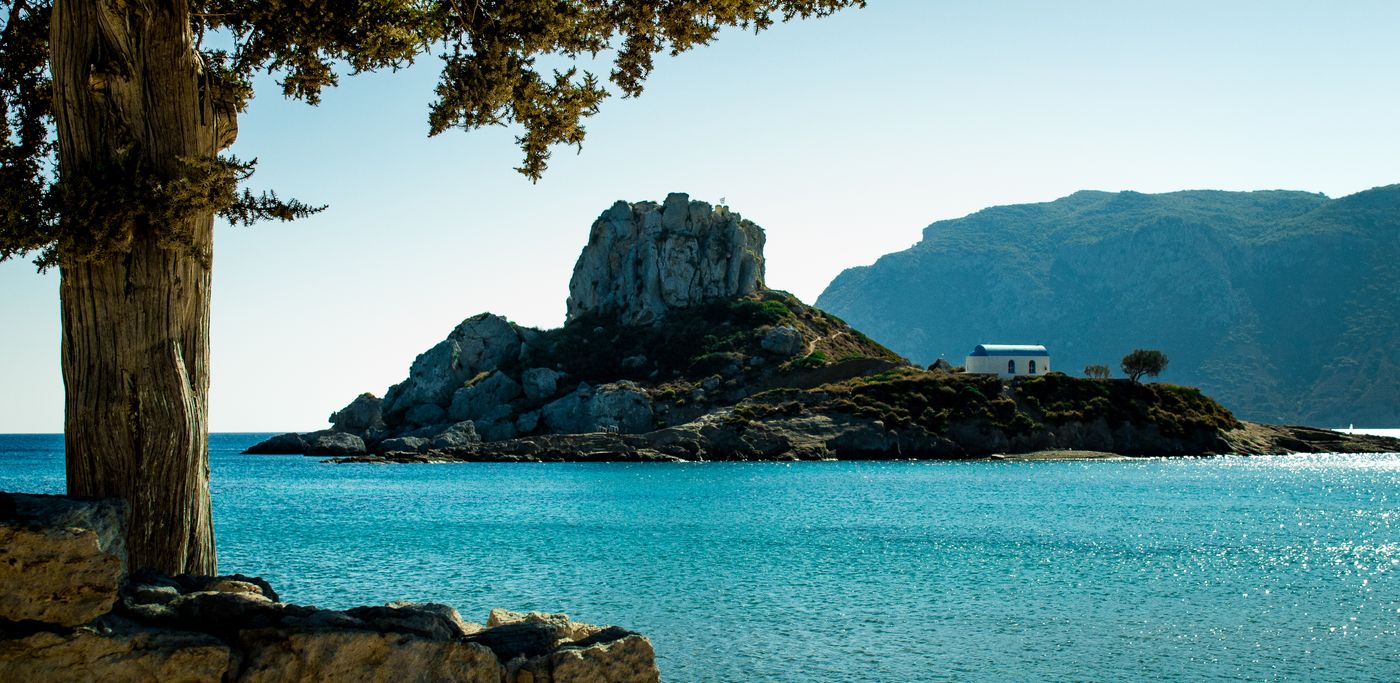
Agios Stefanos is perhaps the most photographed beach on Kos. The ruins of two early Christian basilicas stand metres from the waterline, and the small rocky islet of Kastri with its whitewashed chapel sits just offshore. The combination of archaeological remains, clear water, and the islet creates a scene distinct from anywhere else on the island. The beach is sandy, relatively sheltered, and accessible by road from Kefalos village.
Paradise Beach (sometimes called Bubble Beach) earns its nickname from volcanic gas that rises through the seabed sand, creating visible bubbles in the shallow water. The effect is subtle but genuine, a reminder that Kos sits at the edge of the volcanic arc that includes Nisyros. The beach has soft sand, clear water, and organised facilities during summer.
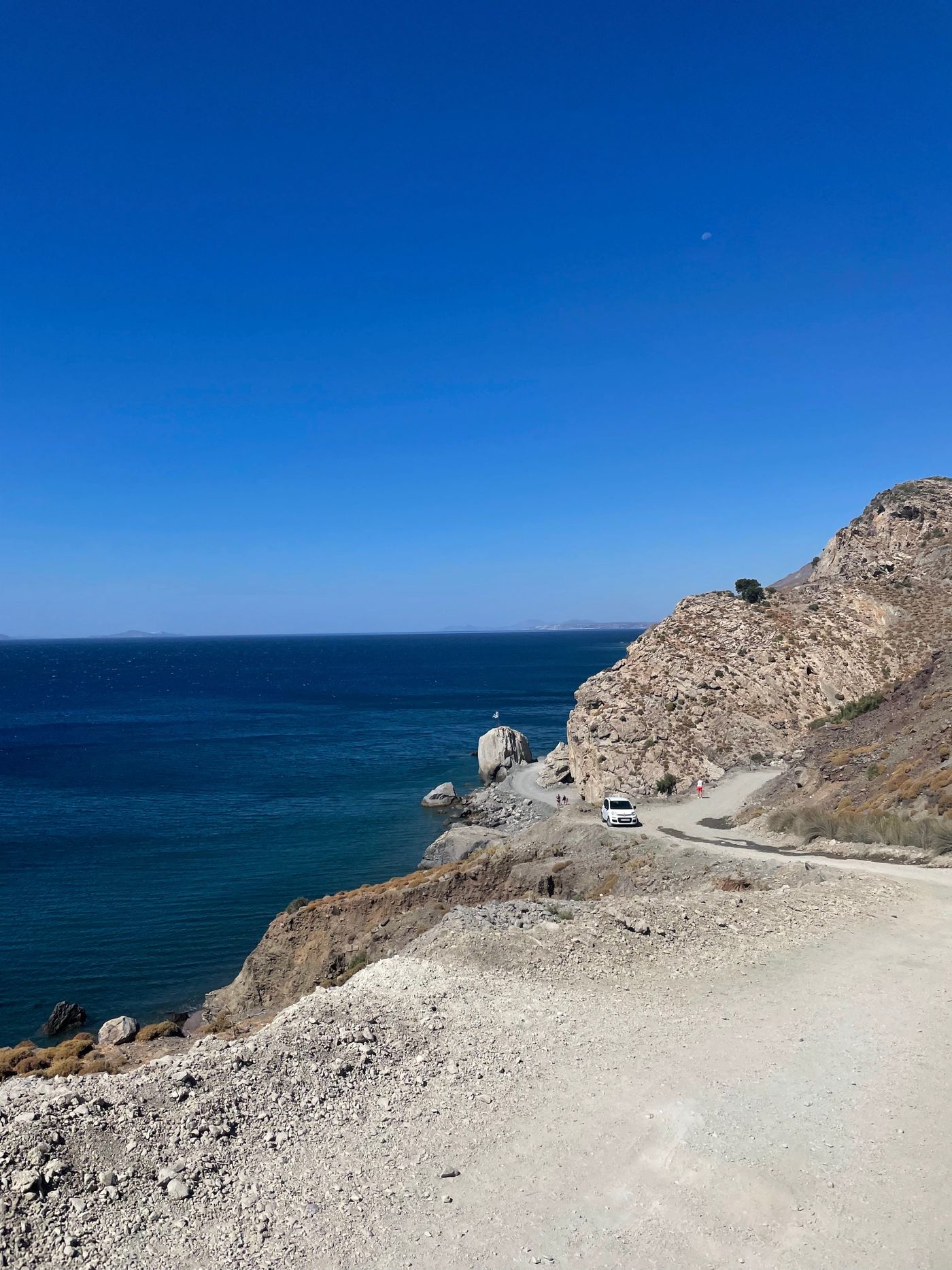
Therma is not a conventional beach but a geological curiosity. Natural hot springs (thirty to fifty degrees Celsius) emerge through rocks at the island’s southeastern tip, mixing with cooler seawater in a natural pool. The descent is steep and rocky, access is unpaved, and the smell of sulphur is strong. It rewards those who make the effort with a genuinely unusual swimming experience. Not suitable for young children or anyone with mobility difficulties.
Mountain Villages
Mount Dikeos (846 metres) occupies the southern interior of Kos, offering an altitude escape from coastal heat and a completely different landscape of forests, stone walls, and terraced hillsides.
Zia is the most visited mountain village, positioned on the northern slopes of Dikeos at an elevation that catches sunset light across the north coast and toward Turkey. The village has narrow lanes, small shops selling local honey and herbs, and tavernas with panoramic terrace seating. It receives considerable tourist traffic during summer evenings, but remains a pleasant stop earlier in the day. Nearby, the small Kos Natural Park offers walking paths through the forested upper slopes.
Palio Pyli (Old Pyli) is a partially ruined medieval settlement built around a Byzantine castle on a craggy hilltop. The climb through the abandoned stone houses and along the castle walls is moderate and rewarding, with wide views across the island. Below, the modern village of Pyli contains the Tomb of Harmilos, an ancient mausoleum built into the rock.
Antimachia, near the airport, retains a fortified castle built by the Knights of Saint John (free entry), a traditional windmill, and a rural character largely unaffected by coastal tourism.
Day Trips from Kos
Nisyros lies south of Kos and can be reached in approximately one hour by excursion boat. The island’s volcanic caldera contains active fumaroles where steam and sulphur emerge from the ground, creating a landscape unlike anything else in the Dodecanese. Organised day trips typically include time in the caldera, the village of Nikia on the crater rim, and swimming. This is a genuinely unusual excursion worth taking.
Kalymnos, the sponge-diving island immediately north of Kos, is reachable in thirty-five minutes by ferry from Mastichari or Kos Town. Its harbour, sponge workshops, rock climbing routes, and quieter pace make it a worthwhile day trip for visitors who have already spent several days on Kos.
Pserimos is a small island between Kos and Kalymnos with a single sandy beach and a handful of tavernas. Three-island boat cruises departing from Kos Town typically visit Pserimos, Kalymnos, and Plati in a single day.
Bodrum (Turkey) is accessible on a daily ferry in approximately fifty minutes. Note that you will need your passport and may require a Turkish e-visa depending on nationality. The crossing is international, so check current entry requirements before booking.
Food and Local Products
Kos benefits from volcanic soil and abundant water, making it one of the more fertile Dodecanese islands. The local culinary identity draws on this agricultural base rather than importing the greatest hits of other Greek regions.
Pitaridia is a handmade pasta traditional to Kos, typically served with tomato-based sauces, local herbs, and olive oil. It appears on taverna menus across the island, though more commonly in inland villages than beachfront restaurants. Local cheeses include kefalotyri (a hard, salty variety used in cooking or eaten as a snack) and myzithra (a soft fresh cheese often drizzled with local honey).
Seafood is abundant, with red mullet (barbounia) and octopus among the most commonly served species. The island also produces wine from both indigenous and international grape varieties, local honey (particularly thyme honey from the slopes of Dikeos), and olive oil. The municipal market in Kos Town is a good place to find regional products, from preserved fruits to dried herbs and local cheeses.
Common Mistakes
Staying only in Kardamena. Many package holidays default to Kardamena, which offers lively nightlife but limited access to the island’s history, cycling infrastructure, and best south-coast beaches. Kos Town or Tigaki provide a stronger base for exploring.
Ignoring the south coast. First-time visitors often stay exclusively on the north coast. On windy days, the sheltered Kefalos beaches offer considerably calmer conditions and some of the island’s most interesting landscapes.
Assuming all beaches suit small children. Tigaki and Marmari are excellent for toddlers. Therma is steep and rocky, Paradise Beach has variable conditions, and some south-coast coves require walking over uneven ground.
Visiting the Asklepieion at midday in July. The site is largely unshaded. Morning visits (before 10:00) or late afternoon (after 17:00) are far more comfortable and allow better photographs.
Skipping Nisyros. The volcanic island is genuinely unlike anything else available as a day trip from a Greek island. Many visitors regret not allocating a day to it.
How Many Days?
Three nights is enough to see Kos Town, the Asklepieion, one north-coast beach, and one south-coast beach. Five nights allows a comfortable pace including a day trip to Nisyros or Kalymnos, an evening in Zia, and time to cycle along the waterfront. A week makes sense for travellers combining Kos with nearby islands via short ferry hops, or for those who want to explore every beach and village without rushing.
Kos also works well as part of a wider Dodecanese itinerary. Two nights on Kos, two on Leros, and three on Rhodes covers three distinct island personalities within a single week. Ferries between these islands are frequent and short during summer.
For families choosing between Greek islands, Kos offers a combination of safe beaches, flat cycling, ancient history, and easy logistics that few other islands match at this size.
This article was researched and verified as of July 2026. Ferry schedules, admission fees, and opening hours change seasonally. Confirm transport connections with official operators before booking, and check archaeological site hours via the Greek Ministry of Culture or hhticket.gr.