Rethymno occupies a peculiar sweet spot on Crete’s northern coast. It has the layered old-town character that draws people to Chania, the long beach that makes resort towns work for families, and a central position that puts the entire island within day-trip range. Yet it moves at a pace that neither city can quite match — slower, warmer, less concerned with being anyone’s first choice.
That is arguably its advantage. Visitors who base themselves here tend to stay longer than planned, because the old quarter gives them somewhere interesting to walk at dusk, the beach is three minutes from their door, and the south-coast gorges and palm-fringed coves are just over the mountains. If you’re trying to decide between Crete’s three main north-coast towns, Rethymno is the one that tries least hard and delivers most consistently.
Crete’s Best-Kept Central Base
A Venetian–Ottoman old town, a fortress on a hill, a long sandy beach shared with nesting sea turtles, and the south-coast gorges within reach. Rethymno sits between Chania and Heraklion and quietly offers the best of both.
| Region | Central Crete, northern coast |
| Nearest airports | Chania (CHQ) — approximately 65 km west Heraklion (HER) — approximately 80 km east |
| Transfer time | 1–1.5 hours by car or bus from either airport |
| Town beach | Approximately 11 km of sand, directly east of the old town |
| Best for | Couples, families, history-minded travellers, road-trip bases |
| Less suitable for | Party-focused visitors, those wanting direct international flights |
| Minimum stay | 3 nights to explore the town, 5–7 to include south-coast beaches |
| Car needed? | Not for the town; yes for south-coast beaches and mountain villages |
Why Rethymno Works as a Base
The town has three things going for it that the guidebook summaries usually underplay. The first is its old quarter, which genuinely rewards repeated walks because the Venetian and Ottoman layers sit on top of each other rather than being separated into museum-district zones. A sixteenth-century Venetian mansion stands next to an Ottoman fountain, a converted mosque looms over a narrow lane of tavernas, and a minaret rises above rooftops that were built for a different empire. This is not a restored heritage site — it is a working neighbourhood where people live, eat, argue about parking, and hang laundry from Renaissance-era balconies.
The second is the beach. Rethymno’s town beach runs for roughly eleven kilometres east of the Venetian harbour, a wide strip of sand that starts organised with sunbeds and thins into quieter sections further along. Between May and October, sections of this beach host one of the Mediterranean’s most important nesting sites for the loggerhead sea turtle (Caretta caretta), with around 350 nests recorded annually. ARCHELON, the sea turtle protection society of Greece, monitors the nests and runs public information walks during the nesting season.
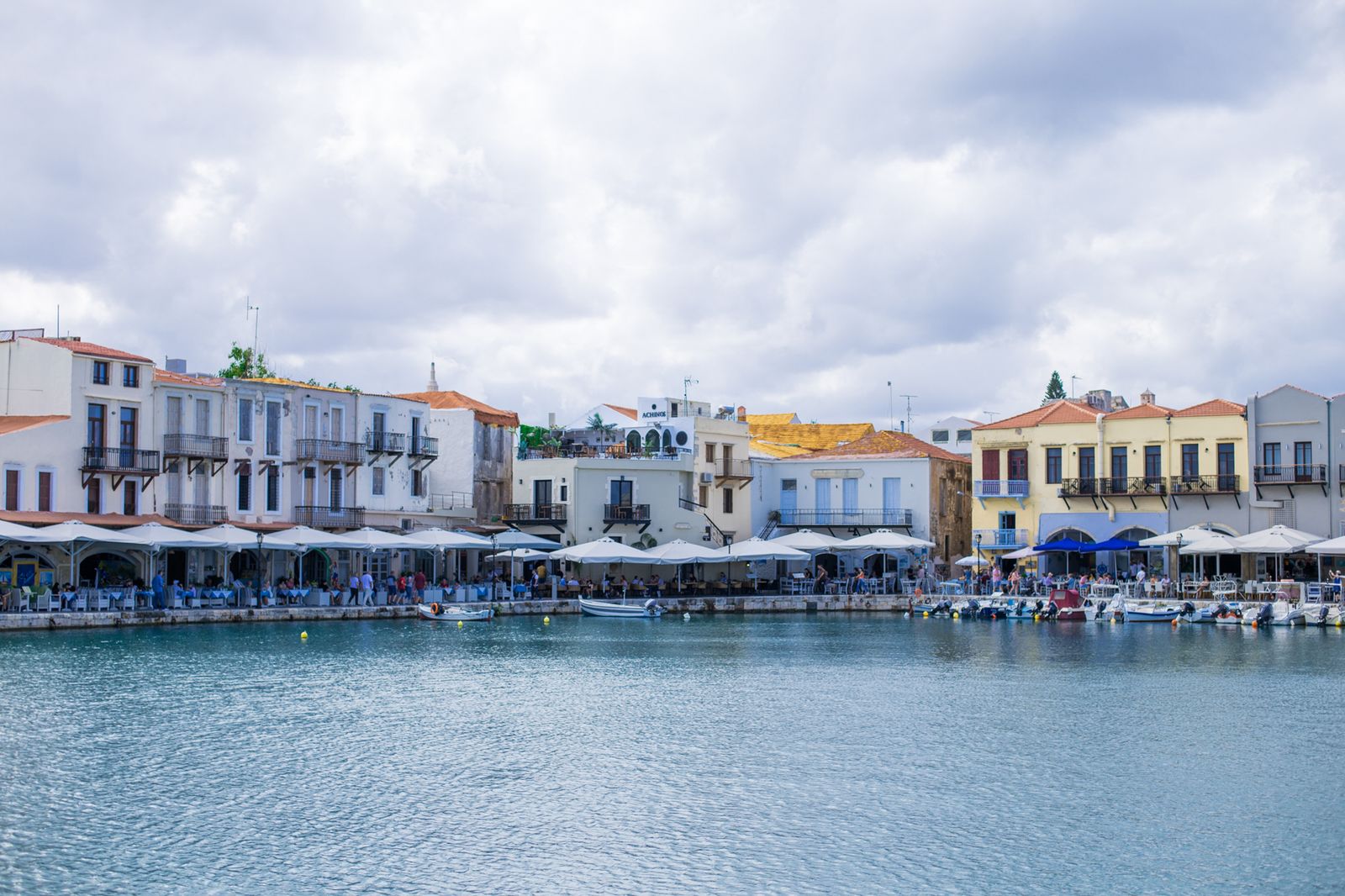
Photo: Niall Dennehy, Pexels
The third advantage is geography. Rethymno sits almost exactly between Crete’s two airports — Chania to the west, Heraklion to the east — which makes it a natural base for travellers who want to explore the whole island without relocating every two days. The south coast, with its dramatic gorges, palm beaches, and fishing villages, is accessible over the mountains in under an hour.
Best Time to Visit
The short answer: late May through June, or September into early October. These shoulder months bring water warm enough for comfortable swimming (around 22–25°C), temperatures in the mid to upper twenties, and significantly fewer visitors than the July–August peak. Most tavernas, boat services, and south-coast beach facilities are fully operational.
July and August work perfectly well, but the town is busier, accommodation is more expensive, and afternoon temperatures regularly hit 33–35°C. On the upside, this is when the Renaissance Festival brings theatre, music, and dance performances to the Fortezza and other venues throughout the town — the festival typically runs from mid-July through late August and is one of Crete’s strongest cultural events. In 2026, the Cretan Diet Festival also runs weekly food showcases in Rethymno, and the “Wines at Fortezza” tasting took place on 1 July.
April and late October are cheaper and quieter, though some south-coast beach facilities may be closed and the sea is cooler. The town itself is pleasant year-round, but anyone planning a beach-centred holiday should aim for June through September.
How to Get There
Rethymno has no airport. Every visitor arrives either by road from one of Crete’s two main airports, or by sea.
From Chania Airport (CHQ): The drive is approximately 65 kilometres, taking roughly one hour via the national road. KTEL buses run directly from Chania Airport to Rethymno, with several departures daily — schedules are adjusted to match flight arrivals, so check the KTEL Chanion-Rethymnou website before your flight. A one-way ticket costs around €6.80 for the Chania–Rethymno route.
From Heraklion Airport (HER): The distance is approximately 80 kilometres east, roughly 1 hour 15 minutes by car. KTEL buses from Heraklion’s central station (which connects to the airport by local city bus) run to Rethymno roughly every hour from early morning through late evening. A one-way intercity ticket costs around €8.30.
By ferry: Seasonal ferry services operate from Piraeus (Athens) directly to Rethymno. Year-round daily ferries serve Heraklion and Chania (Souda port), and most visitors heading to Rethymno will use one of those and then transfer by bus or car. The Heraklion and Chania ferry routes are overnight sailings, departing in the evening and arriving early the following morning.
By car: Rethymno is straightforward to reach via the E75 national road that runs along Crete’s north coast. The road between Chania and Heraklion passes directly through the town. Car rental is available at both airports and in Rethymno itself, and is strongly recommended for anyone planning south-coast excursions or mountain village trips.
The Fortezza
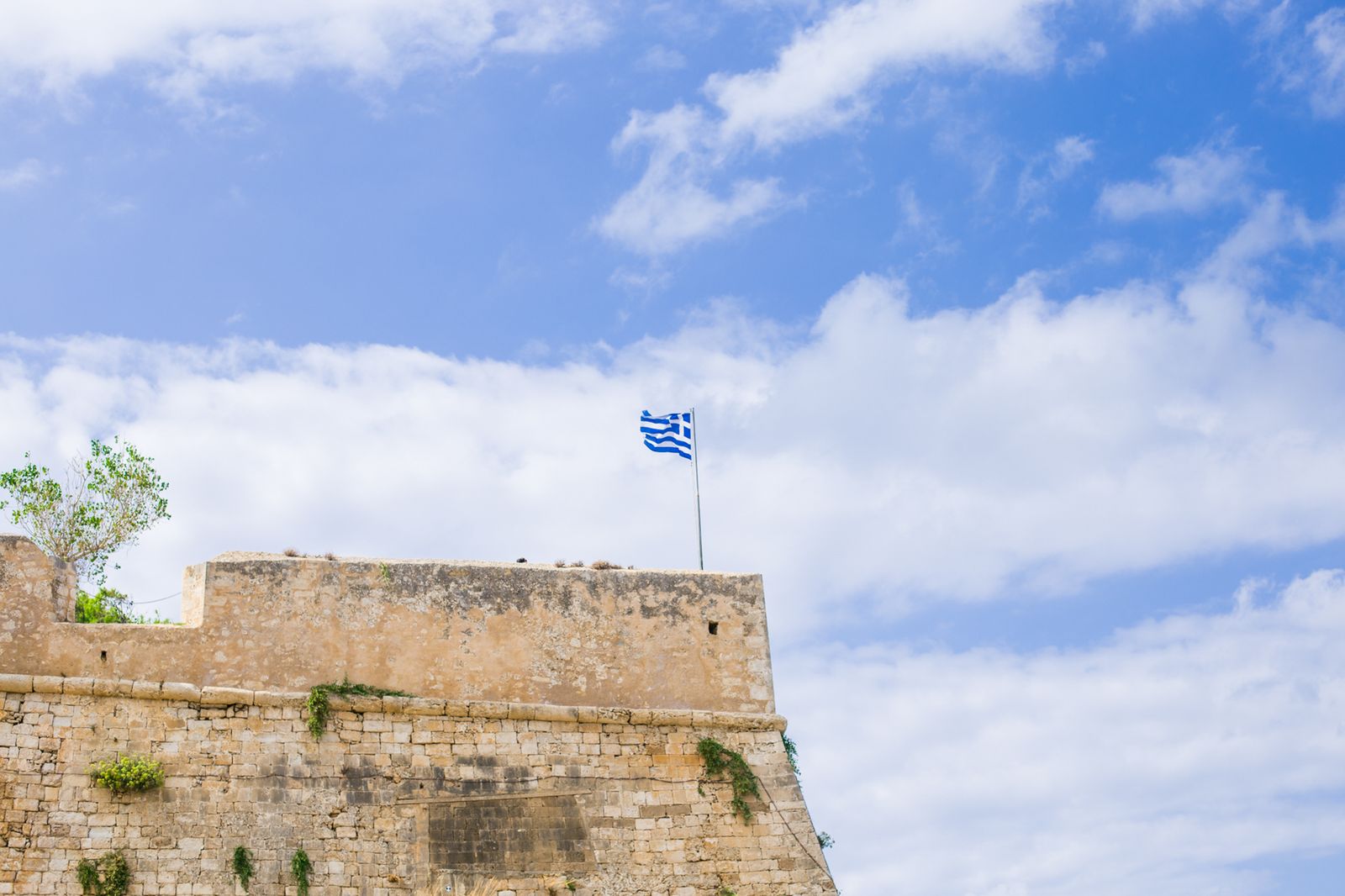
Photo: Niall Dennehy, Pexels
The Fortezza is Rethymno’s most prominent landmark, a star-shaped Venetian fortress that covers the entire Paleokastro hill above the old town. Designed by the military engineer Sforza Pallavicini and built between 1573 and 1580, it was intended to shelter the entire population of Rethymno during Ottoman attacks — though the citadel ultimately proved too small for that purpose. The construction mobilised over 107,000 Cretans and 40,000 animals, a figure that hints at the scale of the Venetian investment in Crete’s defence.
The fortress fell to the Ottomans in 1646 after a siege that wore down its defenders through disease and starvation rather than direct assault. Inside, the most notable structure is the former Cathedral of San Niccolò, which the Ottomans converted into the Sultan Ibrahim Han Mosque — its dome remains the Fortezza’s most recognisable interior feature. You will also find the remains of the Governor’s House, artillery magazines, and several bastions named for the Venetian period: Sant’Elia, Santa Maria, San Lucca.
The fortress is an open, largely unshaded space, which means summer visits are best suited to early morning or late afternoon. Admission is approximately €4–5 for adults; students and EU seniors may qualify for reduced or free entry (carry identification). Allow 45 minutes to an hour for a comfortable visit. The views from the ramparts extend across the town, the harbour, and the Cretan Sea to the north, with the White Mountains visible to the west on clear days.
The Old Town
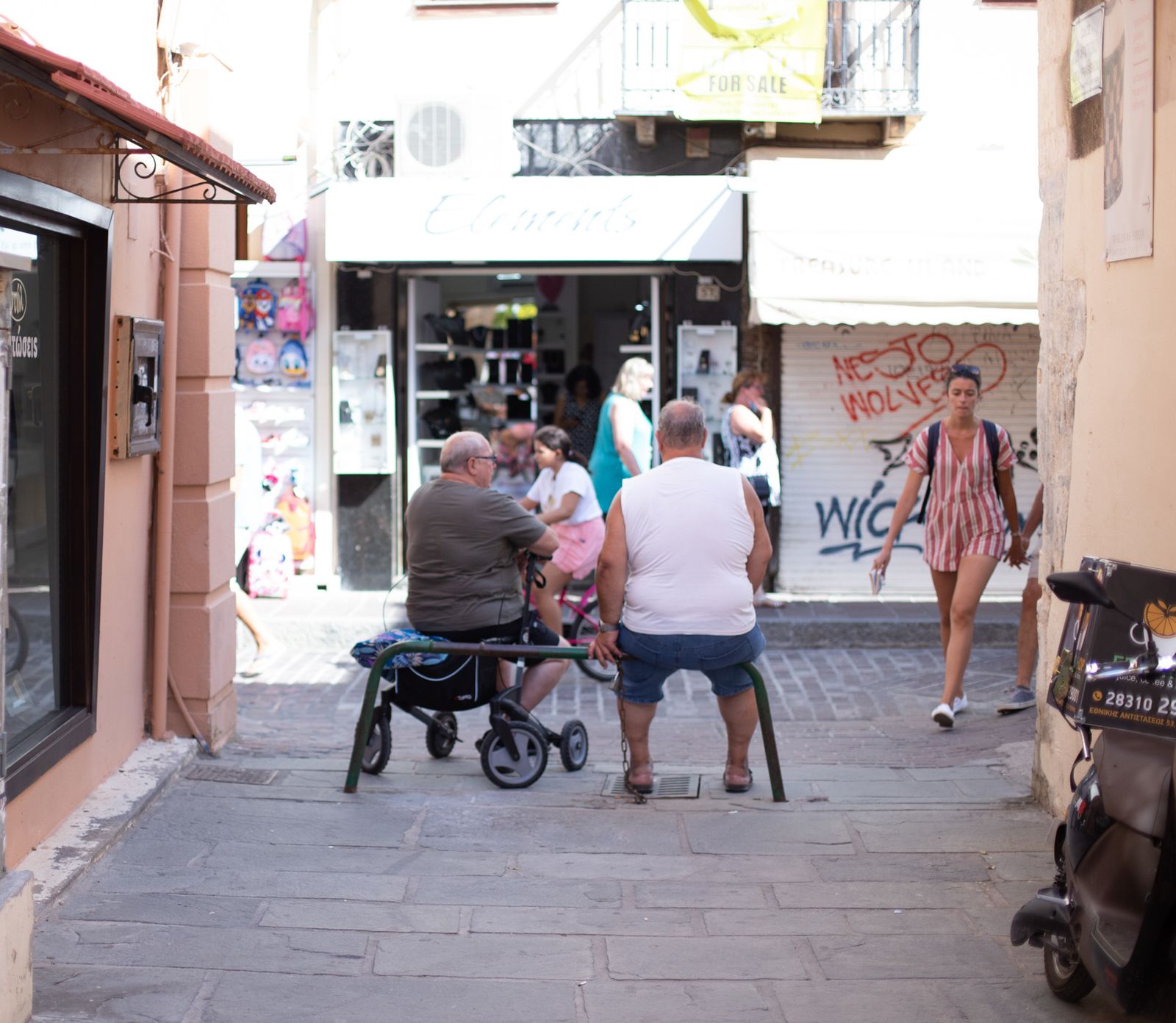
Photo: Niall Dennehy, Pexels
Below the Fortezza, Rethymno’s old town is a compact maze of cobblestone lanes that preserves its Venetian–Ottoman street plan better than almost any comparable settlement in Crete. The area is small enough to cover on foot in a couple of hours, but interesting enough to return to over several evenings.
The Rimondi Fountain is the old town’s most photographed landmark at street level. Built in 1626, it features three Corinthian columns framing lion-head spouts that still run with water. Together with the Venetian Loggia (now a museum shop selling reproductions of classical art), the fountain formed the civic heart of Venetian Rethymno.
The Neratze Mosque (also written Neradjes) is a former Venetian church that the Ottomans converted into a mosque, adding the tallest minaret in Rethymno. The name comes from the bitter-orange trees that once surrounded it. After 1924, it was repurposed as a music conservatory — a role it still serves. Its three domes and slender minaret are visible from most points in the old quarter.
The Venetian Harbour is smaller than Chania’s and more intimate, lined with fish tavernas and coloured houses. At its western end stands a stone lighthouse, originally built during the Egyptian administration of Crete in the 1830s and restored since. This is the part of town that fills with people at sunset, and for good reason — the Fortezza glows in the late light above the harbour, and the tables along the waterfront are the most pleasant place in town to eat after dark.
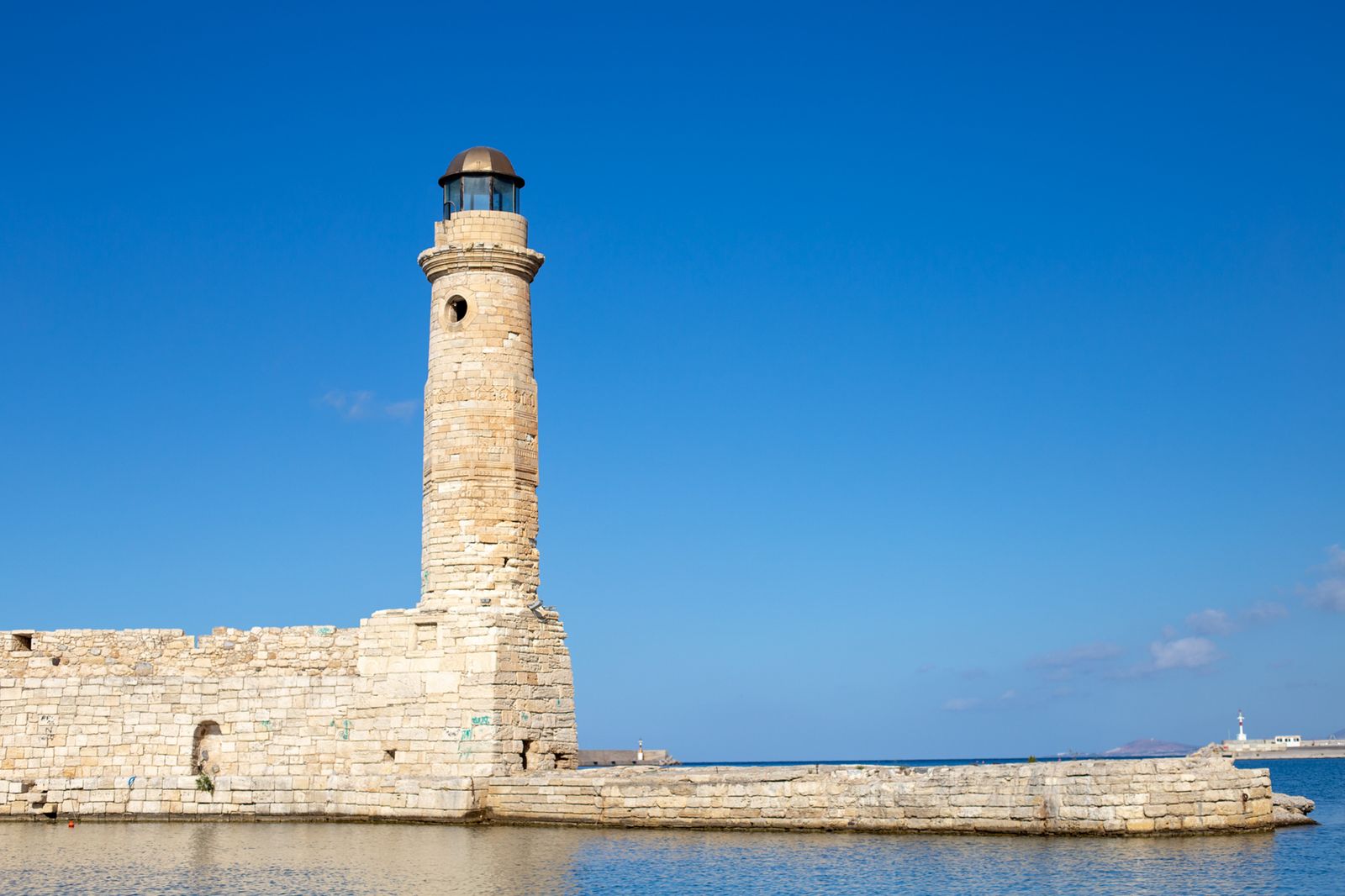
Photo: Niall Dennehy, Pexels
Other landmarks worth finding include the Guora Gate (the only surviving section of the Venetian city walls), the Church of the Four Martyrs, the Archaeological Museum of Rethymno, and the Historical and Folk Art Museum, which occupies a Venetian mansion and displays textiles, tools, and domestic objects from Cretan daily life.
Arkadi Monastery
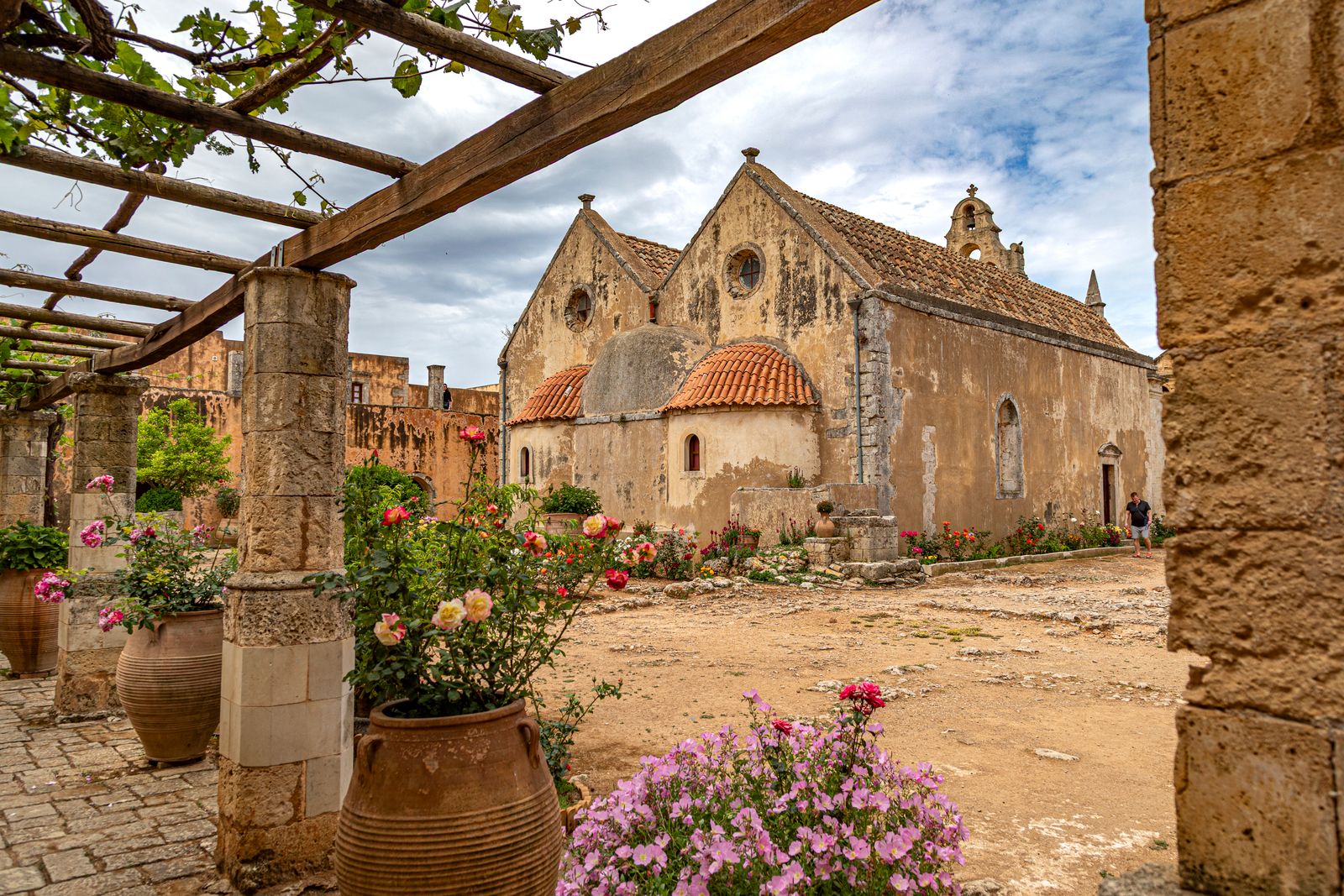
Photo: Frank van Dijk, Pexels
Roughly 23 kilometres southeast of town, the Arkadi Monastery is one of the most historically significant sites on Crete and a place that every visitor to the region should consider seeing. Founded around the eleventh century by a monk named Arkadios, the current fortress-like complex dates largely from the sixteenth century, with a double-aisled church whose Renaissance facade — completed in 1587 — is one of the finest on the island.
Arkadi’s significance, however, is not primarily architectural. During the Cretan revolt of 1866, approximately 964 fighters and civilians barricaded themselves inside the monastery while under Ottoman siege. Conditions deteriorated through disease and starvation. Rather than surrender, the defenders detonated the gunpowder magazine on the night of 8 November, killing most of those inside and a significant number of Ottoman soldiers. The event drew international attention to the Cretan struggle for independence and remains a powerful symbol of resistance in Greek national memory. A small museum inside the complex displays artefacts from the siege and the broader independence struggle.
The monastery is open daily — generally from 9:00 to 20:00 in summer (April–October) and 9:00 to 16:00 in winter. Admission is approximately €3. There is free parking outside the main gate, though spaces fill quickly after mid-morning in high season. The drive from Rethymno takes around 25 minutes through olive groves and quiet villages, and combines well with a visit to the pottery village of Margarites (see below). For more information, see the official Arkadi Monastery website.
Beaches: North Coast and South Coast
Rethymno Town Beach
The town beach is the most convenient option and the one most visitors will use daily. It runs east from the Venetian harbour along approximately eleven kilometres of sand, widening as you move further from the town centre. The western sections are the most organised, with sunbed rental and beach bars within easy walking distance of the old town. Further east, past the organised sections, the beach becomes quieter and more open, with only scattered tamarisk trees for shade.
Conditions are usually calm, though the beach faces north and can be exposed to the Meltemi wind during July and August. On days when the north wind blows strongly, the south coast offers sheltered alternatives. Families will find the shallow entry and sandy bottom manageable for young children, though lifeguard coverage outside the main organised sections should not be assumed even in peak season.
An important note: sections of the town beach are nesting habitat for loggerhead sea turtles. Between late May and October, marked nesting areas must not be disturbed. ARCHELON volunteers are present during the season and are glad to explain the conservation effort. Respecting the marked nests is both a legal requirement and a straightforward thing to do.
The South Coast
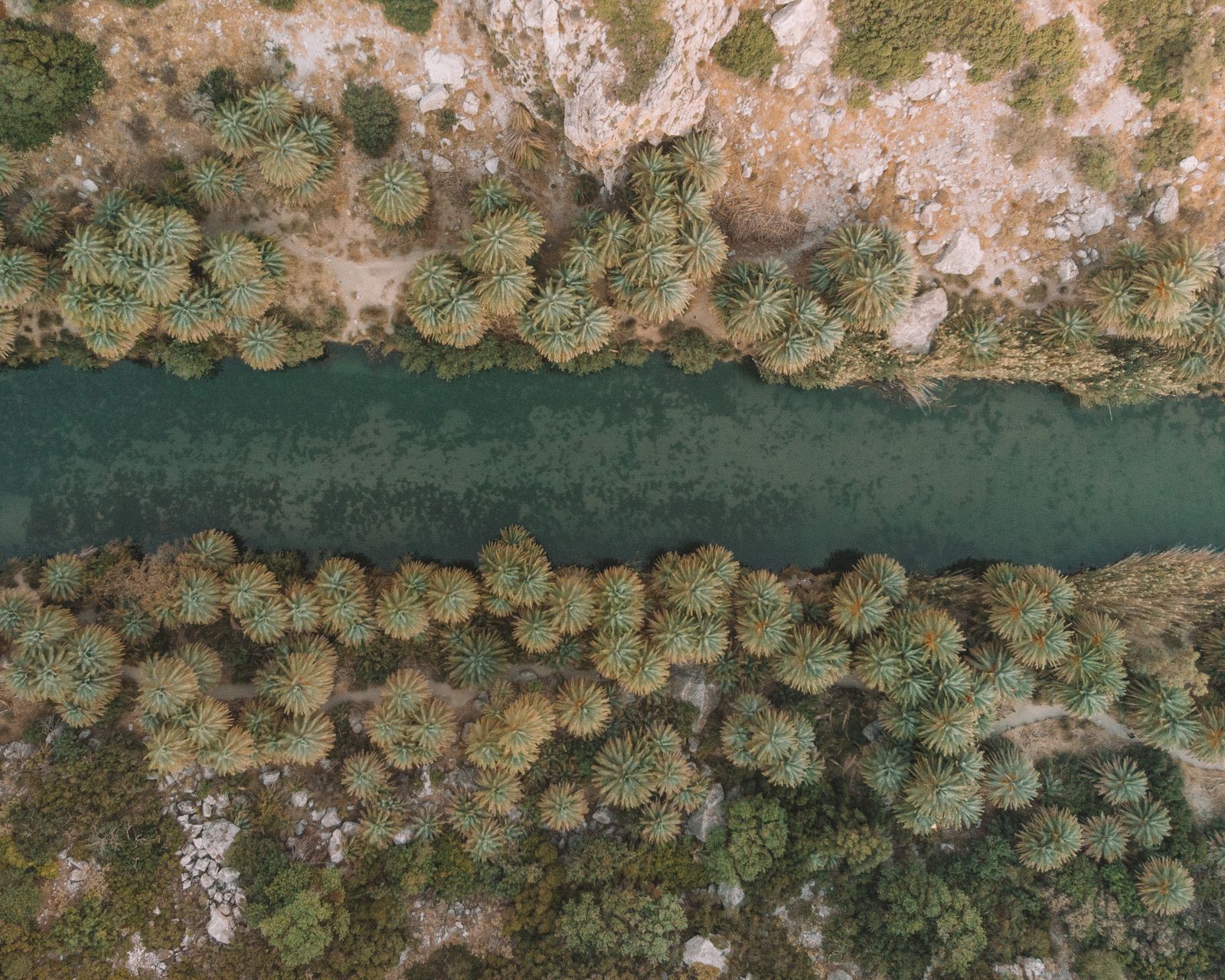
Photo: Bert Christiaens, Pexels
The south coast of the Rethymno regional unit is where the island’s most dramatic beach scenery concentrates. The drive over the mountains takes 45 minutes to an hour depending on the destination, and the landscape shift — from the relatively gentle north coast to steep gorges, isolated coves, and the Libyan Sea — is striking.
| Beach | Character | Access | Best for |
|---|---|---|---|
| Preveli (Palm Beach) | Sand and pebble estuary with endemic Cretan date palm forest | 30 km south; steep path or boat from Damnoni | Scenery, walking, photography |
| Plakias | Wide, organised sandy beach in a natural bay | 35 km south; direct KTEL bus in summer | Families, longer stays, taverna access |
| Damnoni | Sheltered sandy cove next to Plakias | 36 km south; short drive from Plakias | Calm swimming, smaller crowds |
| Triopetra | Remote double beach with dramatic rock formations | 52 km south; car required | Solitude, wild scenery, off-grid feeling |
| Agia Galini | Small-town beach with harbour and facilities | 58 km southeast; car or bus | Families wanting a south-coast base |
Preveli is the headline destination. The beach sits at the mouth of the Kourtaliotiko Gorge, where the Megalopotamos River meets the Libyan Sea. The gorge’s freshwater feeds a forest of Cretan date palms (Phoenix theophrastii) — one of only three such forests in the world. The beach itself is part sand, part pebble, and unorganised. The usual approach is either a steep descent on foot from the Preveli Monastery area above, or a boat transfer from nearby Damnoni Beach. Swimming is possible in both the sea and the cool river pools further inland. The setting is extraordinary, but the access path can be demanding in high heat, and the return climb should not be underestimated.
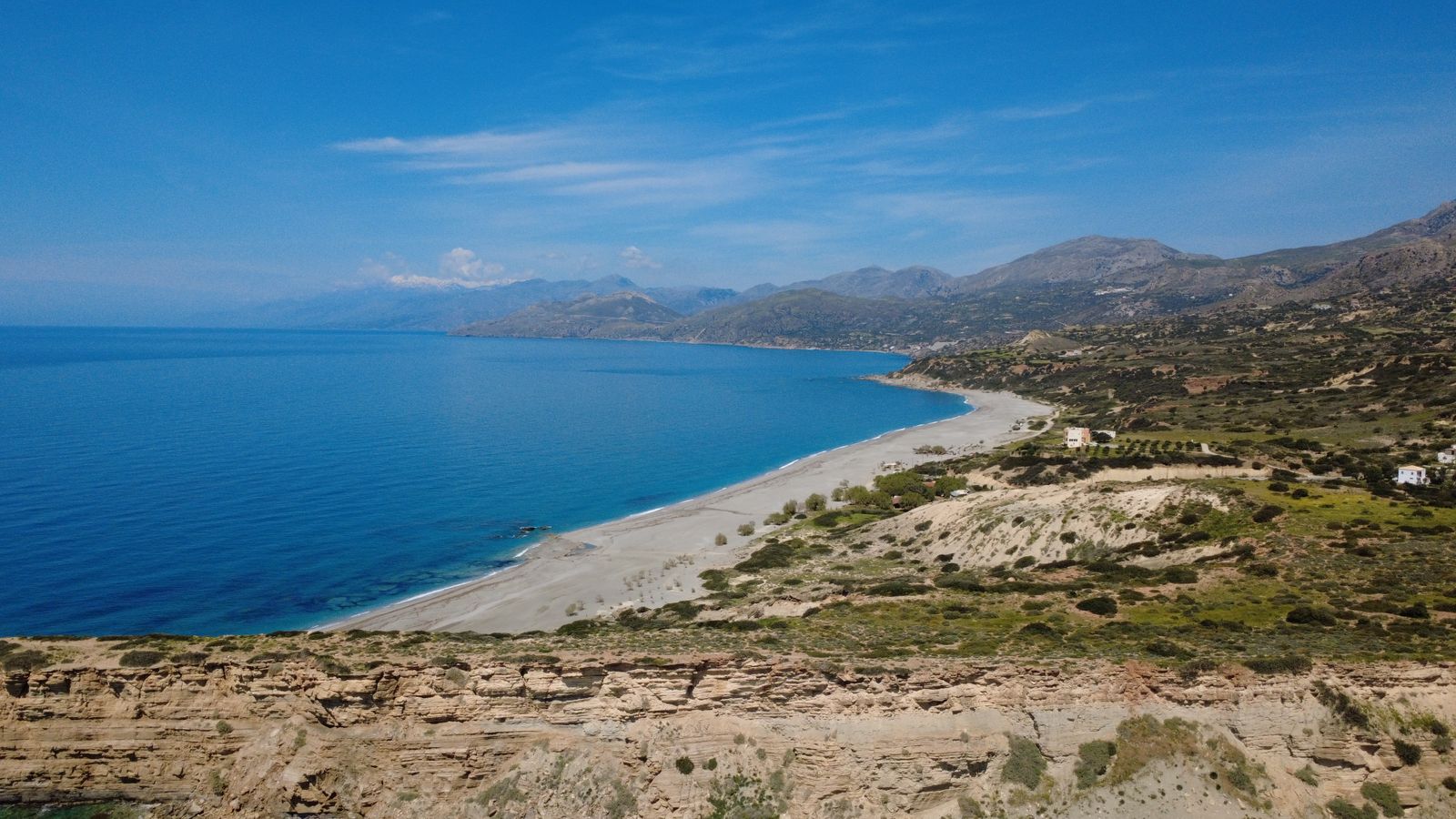
Photo: Mike Kw, Pexels
Plakias is the most practical south-coast option, with a long sandy beach, organised sections, tavernas along the waterfront, and KTEL bus connections from Rethymno during summer. It works as either a day trip or a multi-night base for exploring the south coast without a car.
Triopetra is the choice for travellers who want something emptier. Named for three large rocks at its western end, it is a wide sandy beach backed by low hills with minimal development. There is a small cluster of tavernas, but the area is off-grid in character and requires a car to reach. The Sfakia region further west offers a similar character for those willing to drive further.
Day Trips from Rethymno
Rethymno’s central position makes it an efficient base for half-day and full-day excursions. The following are the most rewarding options, all of which can be completed in a single day with a rental car.
Margarites and Ancient Eleftherna — The village of Margarites, roughly 27 kilometres southeast of Rethymno, has been a pottery centre for centuries and still has active workshops where you can watch potters at the wheel and buy handmade ceramics directly. The nearby archaeological site of Ancient Eleftherna includes a small but well-curated museum and the remains of a Minoan, Archaic, and Hellenistic settlement. The two combine naturally into a half-day trip and can also be linked with Arkadi Monastery.
Spili — A small mountain town 30 kilometres south of Rethymno, notable for its Venetian fountain with nineteen lion-head spouts. Spili is a stopping point on the road to the south coast and a pleasant place for a coffee break, but probably not a full-day destination on its own. It works best as part of a south-coast circuit.
The Amari Valley — The fertile valley south of Mount Psiloritis (also known as Mount Idi, 2,456 m), dotted with small villages, Byzantine churches with fourteenth-century frescoes, and cherry orchards. It is less visited than the coast and rewards slow driving. The villages of Thronos and Meronas both have churches worth stopping for. The valley is also the starting point for ambitious hikers heading toward the summit of Psiloritis, though that is a serious undertaking requiring proper preparation.
Melidoni Cave — Roughly 28 kilometres east of Rethymno, this cave has both geological interest (large chambers, stalactites) and painful historical significance. During the 1824 revolution, hundreds of local civilians who had taken shelter in the cave were suffocated when Ottoman forces sealed the entrance and set fires. A memorial stands inside the main chamber.
Chania or Heraklion — Either city is reachable in about an hour by bus or car. A day trip to Chania’s old town and Venetian harbour or to Heraklion’s Archaeological Museum and the Palace of Knossos is entirely feasible from a Rethymno base.
Food and Drink
Rethymno is a strong food town, and in 2026 the entire island of Crete was designated as the European Gastronomy Destination — a recognition that reflects the depth and quality of Cretan culinary tradition rather than any recent trend. The old town’s backstreet lanes, particularly the area behind the Venetian harbour and around the Rimondi Fountain, have the strongest concentration of traditional tavernas, often at noticeably lower prices than the harbour-front restaurants (which charge partly for the view, and the sunset is worth paying for at least once).
Cretan cuisine relies on a short list of exceptional ingredients — local olive oil, wild greens gathered from the hills, sheep’s and goat’s milk cheeses, slow-cooked lamb and goat, and the twice-baked barley rusks that form the base of many traditional dishes. These are the regional specialities most worth ordering:
- Dakos — Crete’s answer to bruschetta: a barley rusk softened with grated tomato, topped with crumbled mizithra cheese, capers, and generous olive oil. It appears on every taverna menu and varies noticeably by cook.
- Chochlioi boubouristi — snails fried in olive oil with rosemary. A distinctive Cretan meze that visitors either enjoy immediately or need a second attempt to appreciate fully.
- Apaki — lean pork smoked with local herbs, served as a cold meze. The smoking technique gives it a flavour unlike any standard cured meat.
- Gamopilafo — creamy pilaf cooked in goat or lamb broth, traditionally served at Cretan weddings. Not every taverna offers it, but it is worth asking.
- Kalitsounia — small pies filled with soft local cheese (mizithra) or wild greens, fried or baked depending on the season and the village.
- Graviera — the hard sheep’s-milk cheese that is Crete’s most widely produced, often served grilled (saganaki) or alongside honey as a starter.
Every taverna meal in Crete ends the same way: complimentary fruit or a small sweet, followed by a carafe of tsikoudia (also called raki), the clear grape spirit that is Crete’s social glue. It is not a marketing gesture — the offering is genuine hospitality, and declining gracefully is perfectly fine. For a deeper look at Crete’s indigenous grape varieties and the winemaking villages of the Rethymno and Heraklion regions, see our guide to Crete’s wine country.
Where to Stay
Rethymno divides into three main areas for accommodation, each suiting a different kind of visit.
The Old Town is the most atmospheric choice, with converted Venetian and Ottoman buildings offering rooms around internal courtyards. The trade-offs are familiar: narrow lanes mean carrying luggage on foot, car parking requires a lot outside the pedestrian zone, and noise from nearby tavernas may continue past midnight in summer. The old town suits couples and travellers who prioritise character over convenience.
The beach strip east of the old town is where most mid-range and family-oriented accommodation sits. Hotels and apartments line the road behind the beach, many with pools and direct beach access. The area connects to the old town by a waterfront walk of 15–20 minutes, and parking is generally easier. This is the practical choice for families and anyone who wants to split their time between old-town evenings and beach days.
Accommodation outside Rethymno makes sense if you have a car and plan to spend most of your time exploring. The villages of Panormo (22 km east) and Plakias (35 km south) both offer quieter alternatives with good tavernas and a different pace. Bali, about 30 kilometres east along the coast, has sheltered family-friendly coves — though it gets heavily booked in peak summer.
Getting Around
The old town and town beach are entirely walkable, and most visitors will not need transport for their first couple of days. For south-coast excursions, mountain villages, and Arkadi, a rental car is the most practical option. Car-rental agencies operate both in town and at the airports.
KTEL buses connect Rethymno to Chania, Heraklion, and the south-coast town of Plakias, with reasonably frequent summer schedules on the main north-coast route (roughly hourly). The bus station is on the western edge of the town centre, walkable from most old-town accommodation.
Taxis are available but should be arranged in advance for longer trips, particularly airport transfers. Agree on the fare before departing if the metre is not running.
How Long to Stay
Three nights is the minimum for seeing the town properly — the old quarter, the Fortezza, the beach, a few dinners in the backstreets. Five to seven nights allows comfortable day trips to the south coast, Arkadi, and one or two mountain villages without rushing. Travellers splitting their time across Crete often give Rethymno three nights and move on, but those who can afford a slower pace will find it rewards staying longer than originally planned.
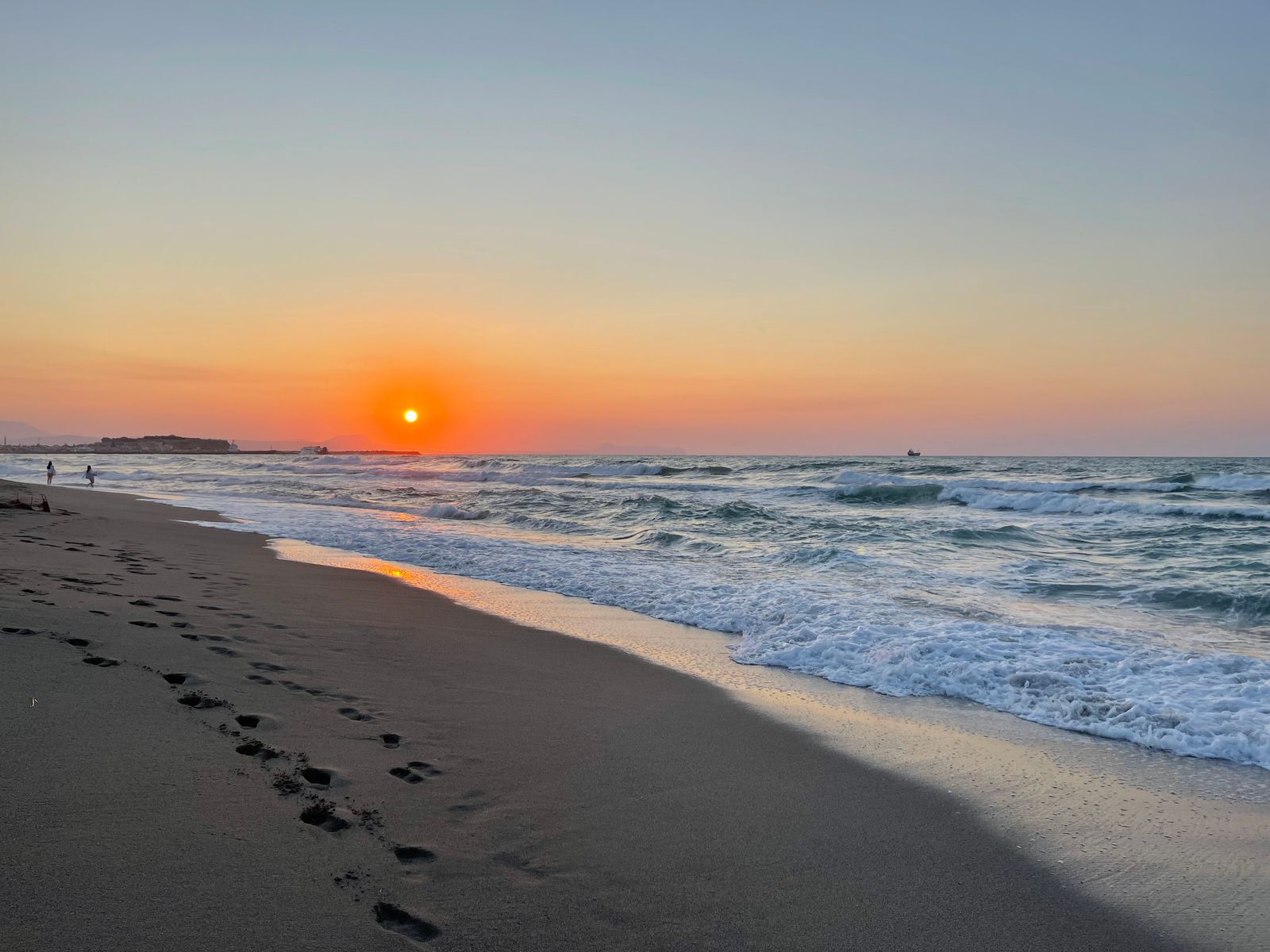
Photo: Elia, Pexels
Who Should Visit — and Who Might Prefer Somewhere Else
Rethymno is a strong choice for: couples who want old-town atmosphere combined with a beach nearby; families looking for a convenient base with genuine historical interest; road-trip travellers using central Crete as a hub; repeat visitors who have already seen Chania and Heraklion; food-oriented travellers drawn to Cretan cuisine; anyone wanting to combine north-coast convenience with south-coast exploration.
Consider alternatives if: you want direct international flights (Chania or Heraklion are better starting points); nightlife is a primary motivation (Heraklion or Malia provide more options); you want to be immediately beside world-famous beaches like Elafonisi or Balos (Chania is the better western base); or you are visiting Crete for fewer than three days (a single-base visit to Chania or Heraklion may serve you better).
Honest Limitations
The lack of an airport means every visit begins with a transfer, which adds an hour or more and some cost. Summer afternoons are genuinely hot, and the north-facing town beach is exposed to the Meltemi wind — on strong-wind days, it becomes less comfortable, and some visitors relocate to the south coast for shelter. The town beach, while convenient, is not among Crete’s most spectacular; the real beach scenery is on the south coast, which requires a car. Rethymno’s nightlife exists but is modest compared to larger Cretan cities. And the old town, for all its character, is compact — it will not fill a week on its own without excursions.
This article was researched and verified as of July 2026. Travel information, prices, opening hours, and transport schedules are subject to change. We recommend confirming time-sensitive details directly with official sources before travelling. Rethymno’s official tourism portal is rethymno.guide. For Crete bus schedules, consult e-ktel.com and ktelherlas.gr.