Greece’s First Capital, Still Worth the Drive
Nafplio sits where the Argolic Gulf meets the eastern Peloponnese, roughly two hours south-west of Athens by motorway. It served as the first capital of newly independent Greece from 1827 to 1834, and those years left a mark that still defines the town: neoclassical mansions, Venetian fortifications, a compact harbour, and the kind of self-assurance that comes from having once been the centre of an entire nation. Today it functions as a base for some of the most important archaeological sites in Europe and one of the most walkable towns on the Greek mainland.
| Best for | Couples, history-focused travellers, families with older children, weekend breaks from Athens |
| Getting there | ~2 hours by car or KTEL bus from Athens |
| Ideal stay | 2–3 nights (1 night minimum for a day-trip pace) |
| Best months | April–June and September–October |
| Daily budget | Mid-range: expect €80–150 per person for accommodation, meals, and site entries |
| Car needed? | Helpful for beaches and day trips; the old town itself is fully walkable |
Why Nafplio Deserves More Than a Day Trip
Most visitors who reach Nafplio do so on a coach tour from Athens, bundled with a quick stop at the Corinth Canal and an hour at Mycenae. They see the harbour, take a photograph of Bourtzi Castle floating in the bay, and leave before lunch. That is a waste of what is arguably the most rewarding small town on the Greek mainland.
Nafplio rewards a slower pace. The old town is compact enough to walk end to end in fifteen minutes, but dense with Venetian doorways, Ottoman fountains, neoclassical facades, and the kind of small, independent shops that have largely disappeared from island tourist zones. Three fortresses sit within or directly above the town, each from a different era and each offering a different perspective on both the landscape and the layers of history stacked beneath your feet. The Archaeological Museum holds finds from Mycenae, Tiryns, and the wider Argolid in a handsome Venetian building on Syntagma Square.
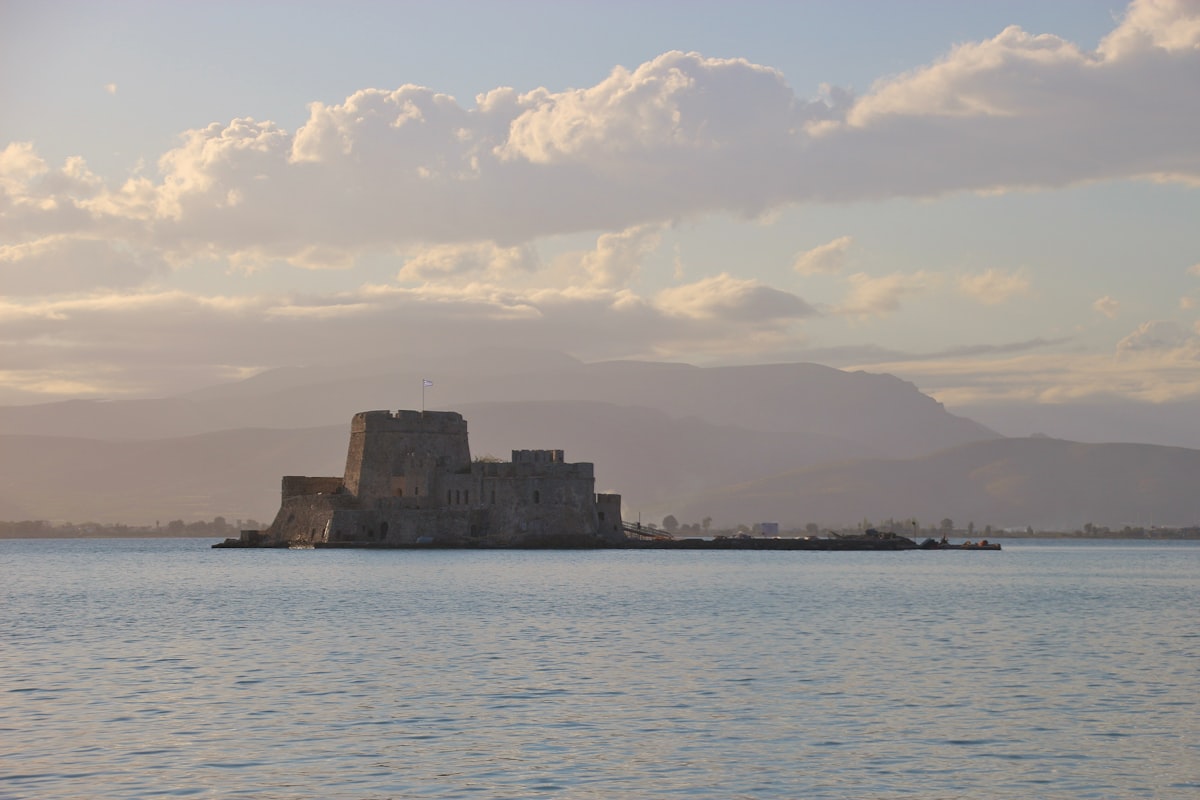
Photo by Uta Scholl on Unsplash.
Beyond the town, Nafplio is the natural base for visiting Epidaurus, Mycenae, and Tiryns, three UNESCO-listed sites that between them span the Bronze Age, classical antiquity, and the origins of Western theatre. The wine region of Nemea, home to the indigenous Agiorgitiko grape, lies within easy driving distance. And the coastline south of town offers a series of beaches ranging from the organised sands of Karathona to quiet coves accessible only on foot.
What Nafplio is not is a beach resort. The swimming near town is serviceable rather than spectacular, nightlife is limited to evening strolls and waterfront drinks, and the town fills up noticeably on summer weekends when Athenians arrive. Travellers looking for a party island or a week of uninterrupted sunbathing will be happier elsewhere. But for anyone who wants to combine a beautiful, walkable base with some of the most important ancient sites in Europe, Nafplio is difficult to beat.
Best Time to Visit
Spring and early autumn are the strongest seasons for Nafplio. From April through mid-June, temperatures sit comfortably in the low to mid-twenties, wildflowers cover the hills around Palamidi, and the archaeological sites are open on extended summer hours without the heat that makes a midday visit to Mycenae genuinely unpleasant. September and October offer similar advantages, with the added benefit of a warm sea for swimming at Karathona and Tolo.
July and August bring temperatures regularly above 35°C and, more significantly for Nafplio, a wave of weekend visitors from Athens. The town is a popular two-hour escape for Athenians, which means that accommodation prices rise, parking becomes difficult, and the narrow streets of the old town feel crowded on Friday and Saturday evenings. If you visit in peak summer, aim for midweek and climb Palamidi before 9 a.m.
Winter is quieter and mild by northern European standards, with daytime temperatures around 12–15°C. Most tavernas and shops remain open year-round, though the archaeological sites at Epidaurus and Mycenae switch to shorter winter hours (typically closing at 15:30). For a weekend of walking, eating well, and visiting fortresses and museums without the heat, the shoulder months and even January or February work surprisingly well.
How to Get There
From Athens by car
The drive takes approximately two hours via the A8/E65 motorway through Corinth. The road is modern, well-maintained, and tolled (expect to pay around €10 in tolls each way). After Corinth, you follow the regional road through Argos to Nafplio. If you plan to visit Epidaurus, Mycenae, or the beaches outside town, a rental car is the most practical option. Parking in Nafplio is manageable outside peak summer, with free lots near the harbour and along the approach road, though spaces fill quickly on summer weekends.
From Athens by bus
KTEL Argolidas operates direct buses from the Kifissos bus terminal in Athens (accessible via the Agios Antonios metro station on the red line, followed by a 15-minute walk). Services run roughly every two hours from early morning to late evening, with a journey time of approximately two hours and ten minutes. A one-way ticket costs around €15. The bus arrives at the KTEL station on Andrea Siggrou, a short walk from the old town. Schedules vary between weekdays and weekends, so it is worth confirming times through the KTEL Argolidas website before travelling.
No train service
Rail service to Nafplio was suspended in 2011 during the financial crisis and has not resumed. The Region of the Peloponnese has discussed restoring the line, but there is no confirmed timeline.
The Three Fortresses
Nafplio is defined by its fortifications. Three separate fortresses, built across several centuries by different occupying powers, sit within or directly above the town. Together they provide the most concentrated display of military architecture in the Peloponnese and some of the finest views on the Greek mainland.
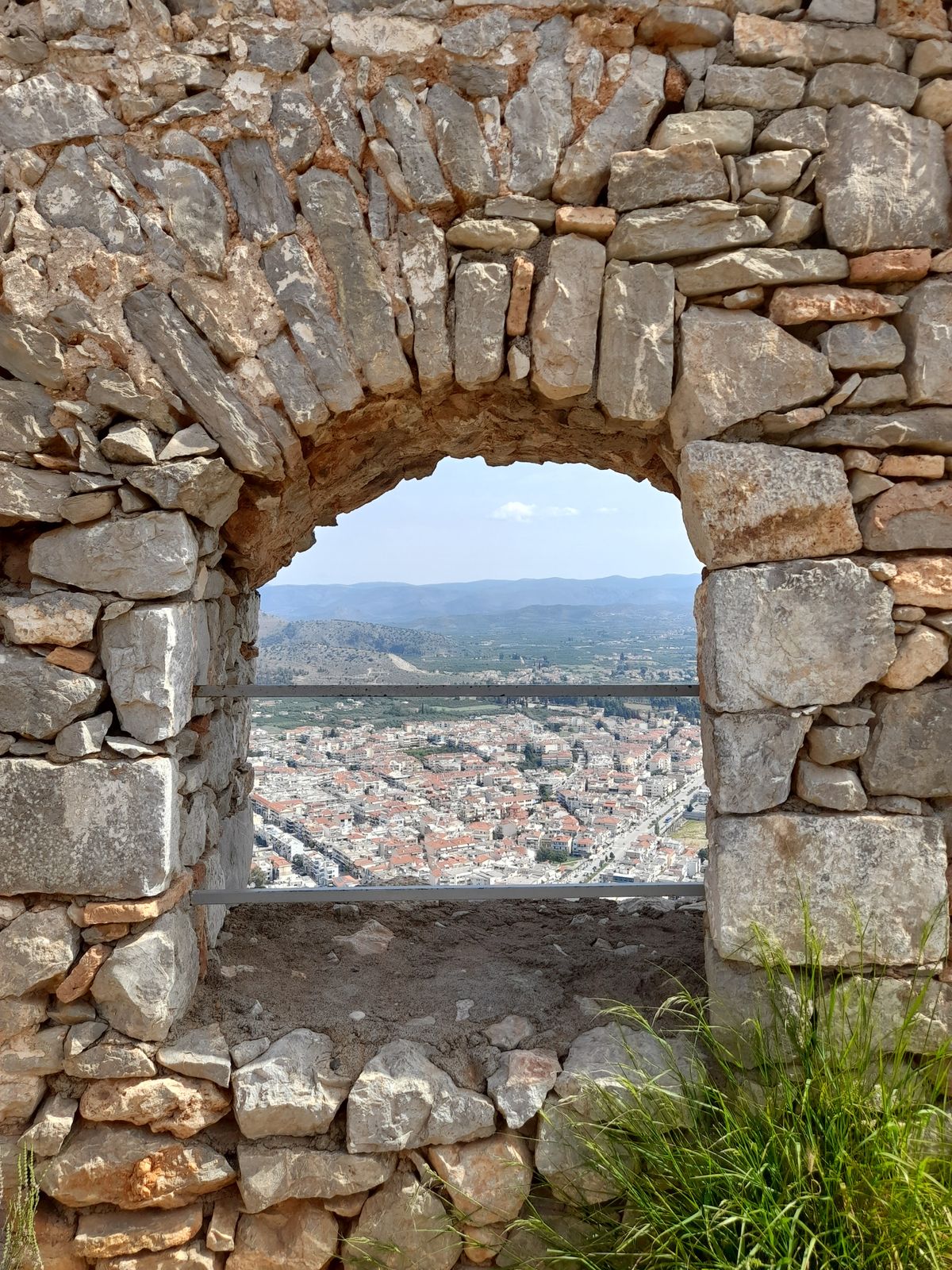
Photo: Tatiana Lapa, Pexels.
Palamidi
The largest and most imposing of the three, Palamidi sits on a hill 216 metres above sea level on the eastern edge of town. The Venetians built it between 1711 and 1714, designed by the military engineers Giaxich and Lasalle, and it stands as the last major fortification project of the Venetian Republic overseas. The fortress consists of eight interconnected bastions, each designed to be independently defensible. During the Greek War of Independence, Greek forces under Staikos Staikopoulos captured it from the Ottomans in November 1822.
The famous approach is a stone stairway from the eastern edge of the old town, widely quoted as having 999 steps, though travellers who have counted report numbers between 857 and 913. The climb is steep and exposed, so bring water and avoid the midday sun. The easier alternative is a paved road from the south side that takes about ten minutes by car or taxi, with a small car park at the top. Allow at least an hour to explore the bastions, ramparts, and the prison where Theodoros Kolokotronis was once held.
Opening hours follow a seasonal schedule set by the Ministry of Culture: from May through August, the site opens at 08:00 and closes at 20:00, with shorter hours in spring and autumn (check the exact closing time for your travel dates, as it changes every few weeks through the shoulder season). Winter hours are 08:30 to 15:30. Admission is €20 for adults and €10 at a reduced rate. The site is closed on 1 January, 25 March, Easter Sunday, 1 May, and 25–26 December.
Bourtzi
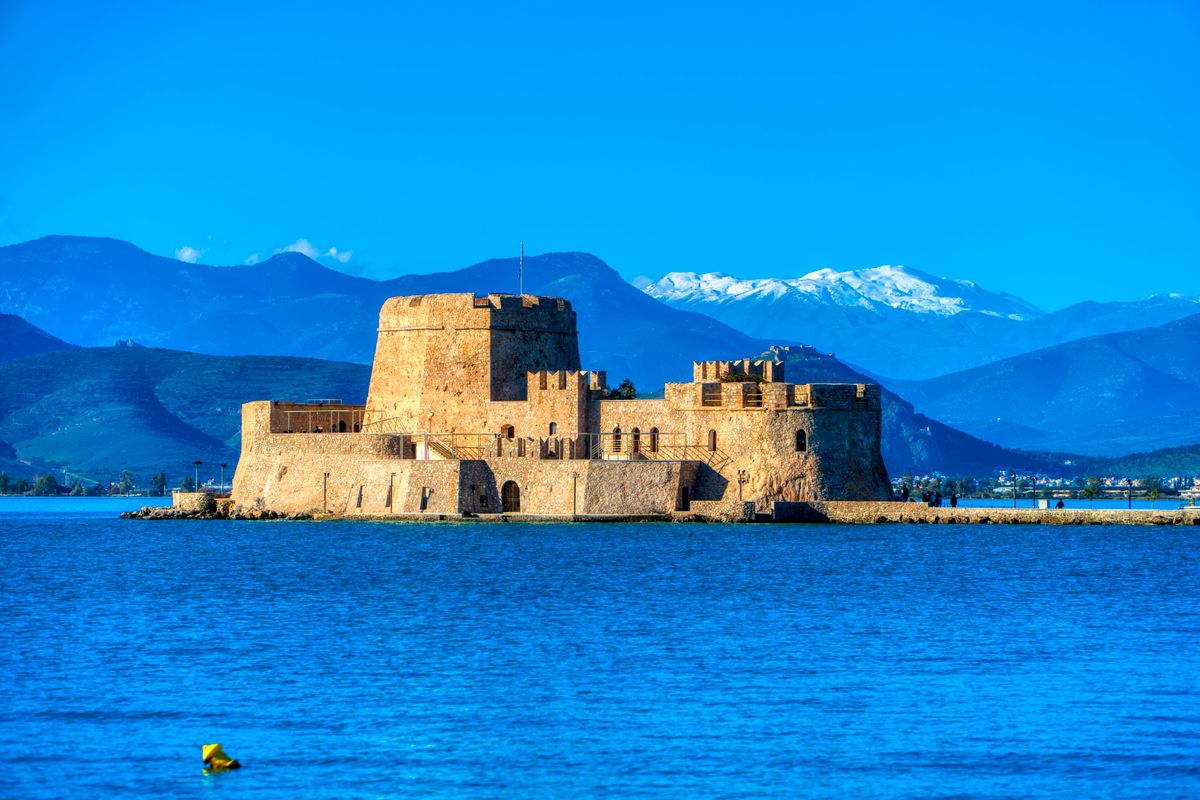
Photo: Alex Ravvas, Pexels.
The small island fortress of Bourtzi sits in the middle of the harbour, about 400 metres from the pier. The Venetians built it in 1471 on the islet of Agioi Theodoroi, and the name itself comes from the Turkish-Arabic word for island-fortress. The castle was extensively restored and reopened to visitors in 2023, and now includes a small exhibition, a rooftop terrace, and a café. Small boats depart from the harbour roughly every 30 minutes (the embarkation point is near Filellinon Square). Expect to pay around €7 for the boat and a separate fee for castle entry. The visit, including the boat ride, takes roughly an hour. Summer hours run from 09:00 to 21:00 (May through September), with shorter hours in winter.
Acronafplia
The oldest of the three, Acronafplia occupies the rocky peninsula between the old town and Arvanitia Beach. Its fortifications are a palimpsest of ancient, Byzantine, Frankish, Venetian, and Ottoman construction, though the site has not been maintained to the same standard as Palamidi or Bourtzi. There is no entrance fee and the site is always open, which makes it an appealing option for a late-afternoon walk and sunset views. The most rewarding route approaches from the south, climbing past the Grimani Bastion to the old Xenia hotel plateau. From the top, the views take in Palamidi, Bourtzi, and the Argolic Gulf.
Walking the Old Town
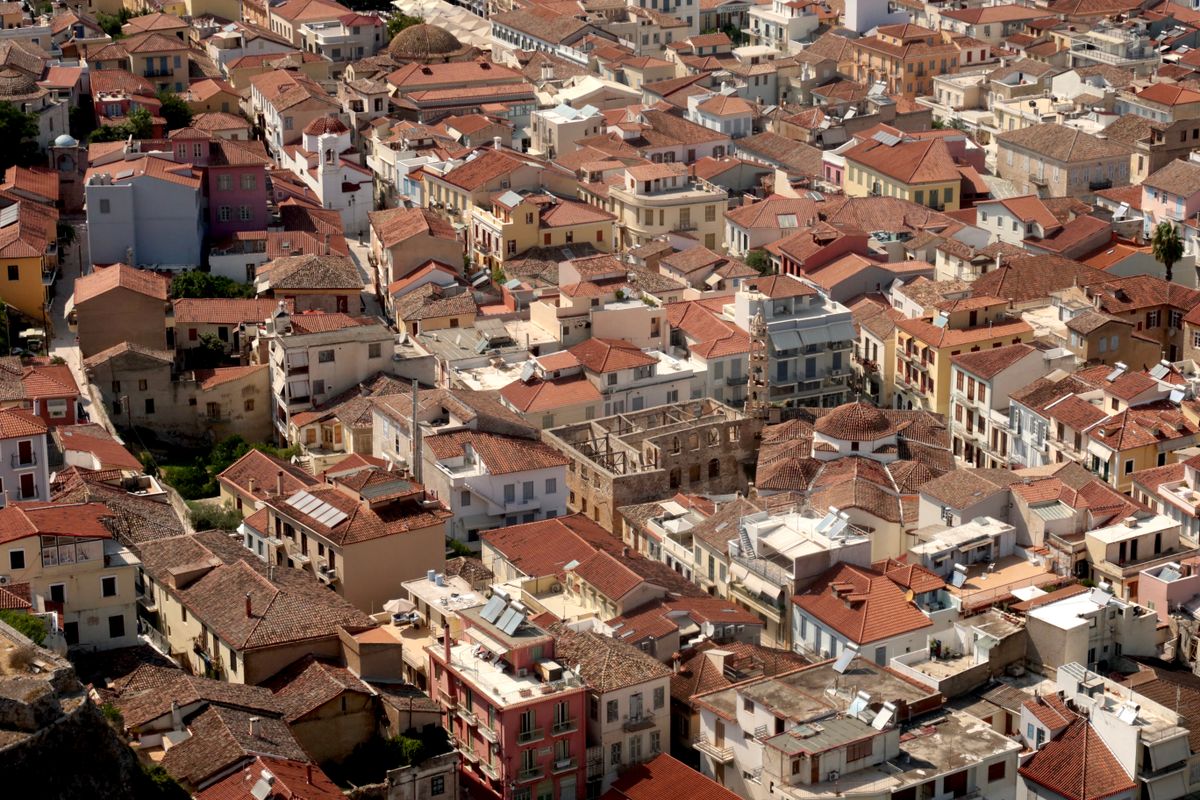
Photo: Farzona Comnas, Pexels.
Nafplio’s old town is one of the best-preserved in Greece, partly because the archaeologist Evangelia Protonotariou-Deilaki fought successfully against the demolition of traditional buildings during the post-war era when most Greek cities were rebuilding in concrete. The result is a town centre of Venetian balconies, neoclassical facades, and narrow streets paved in marble and stone.
Syntagma Square (Constitution Square) is the natural starting point. The square is flanked by a former Venetian arsenal that now houses the Archaeological Museum of Nafplio, which contains finds from across the Argolid, including the remarkable bronze Dendra armour from the 15th century BC. The museum is open daily except Tuesdays, from 08:30 to 15:30, with an admission fee of €10.
From Syntagma Square, Staikopoulou Street leads south through the commercial heart of the old town, lined with independent shops selling leather goods, jewellery, local olive oil, and komboloi (worry beads, which have been a Nafplio specialty for decades). Side streets branch off to small squares with cafes and churches, including the Church of Agios Spyridon, where Ioannis Kapodistrias, the first head of state of independent Greece, was assassinated on 9 October 1831. A small bullet hole in the church wall marks the spot.
The Peloponnesian Folklore Foundation, housed in a restored mansion on Vasileos Alexandrou, is one of the finest regional ethnographic museums in Greece, with collections of traditional costumes, textiles, tools, and household objects. Opening hours vary by season; the museum is typically open mornings on weekdays and Saturday, with additional afternoon hours in summer.
The Arvanitia promenade runs along the southern edge of the peninsula below Acronafplia, offering a paved path with views of the fortress above and the sea below. On summer evenings, this is where much of the town gathers to walk, sit on the rocks, and watch the light change over the gulf.
Beaches Near Nafplio
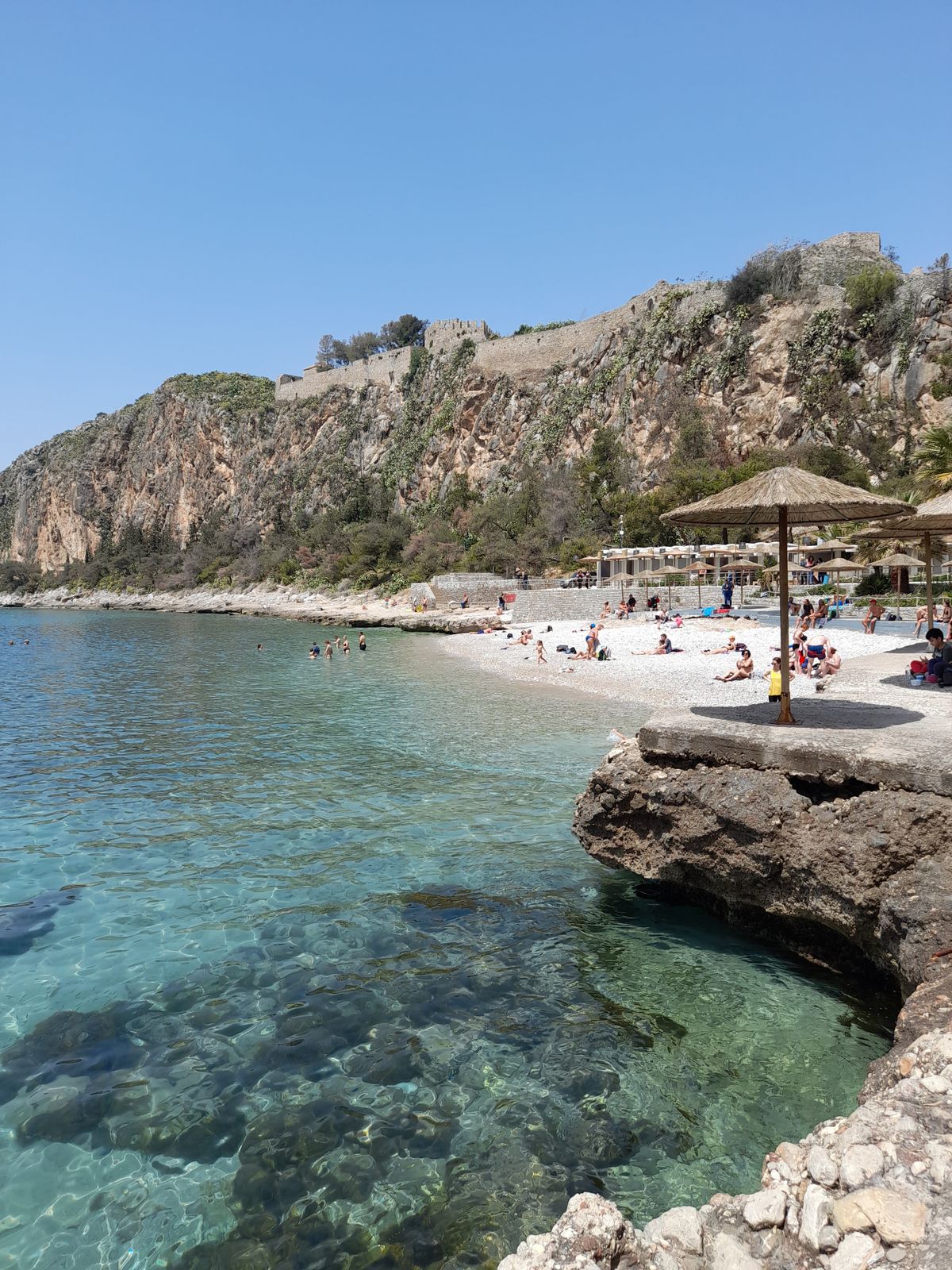
Photo: Tatiana Lapa, Pexels.
Nafplio is not primarily a beach destination, but the coast south and east of town offers several options for swimming, ranging from organised sandy beaches to small secluded coves. The most useful distinction is between the in-town options (Arvanitia, the old Lido) and the beaches that require a short drive or bus ride (Karathona, Tolo, Plaka).
| Beach | Distance | Type | Best for | Notes |
|---|---|---|---|---|
| Arvanitia | Walkable (10 min) | Pebble/gravel, organised | Quick swim, couples | Small, steep entry, beach bar; not ideal for toddlers |
| Karathona | 3 km (drive or 45-min walk) | Sandy, partly organised | Families, full beach day | Blue Flag, shallow water, sunbeds and tavernas; summer bus service |
| Neraki | 1.5 km (walk along coast path) | Pebble, unorganised | Seclusion, snorkelling | Small, no facilities; on the Arvanitia–Karathona coastal path |
| Tolo (Psili Ammos) | 12 km south-east | Sandy, fully organised | Families, watersports | Long sandy beach, restaurants along shore, boat rentals; busy in summer |
Karathona is the strongest all-round option: a long, gently shelving sandy beach with enough space that even in August you can usually find room away from the sunbed area. The walk from Arvanitia along the coastal path takes about 45 minutes and passes several smaller coves, including Neraki, that are worth a stop if you have a towel and shoes suitable for pebbles. There is a summer bus service from the town to Karathona, which is helpful if you are travelling without a car.
Tolo, about 12 kilometres south-east of Nafplio, is a more developed beach-resort village with a long sandy beach and full tourist infrastructure. It suits families looking for a beach base outside the town, though the beach itself becomes crowded in July and August. Conditions at all beaches can become rough in strong northerly or easterly winds; if the wind is up, Karathona tends to be more sheltered than Arvanitia.
Day Trips from Nafplio
The concentration of world-class archaeological sites within a short drive of Nafplio is one of the strongest reasons to stay here rather than simply passing through on a day trip from Athens. With a rental car and two to three days, you can comfortably visit Epidaurus, Mycenae, Tiryns, and Nemea without rushing.
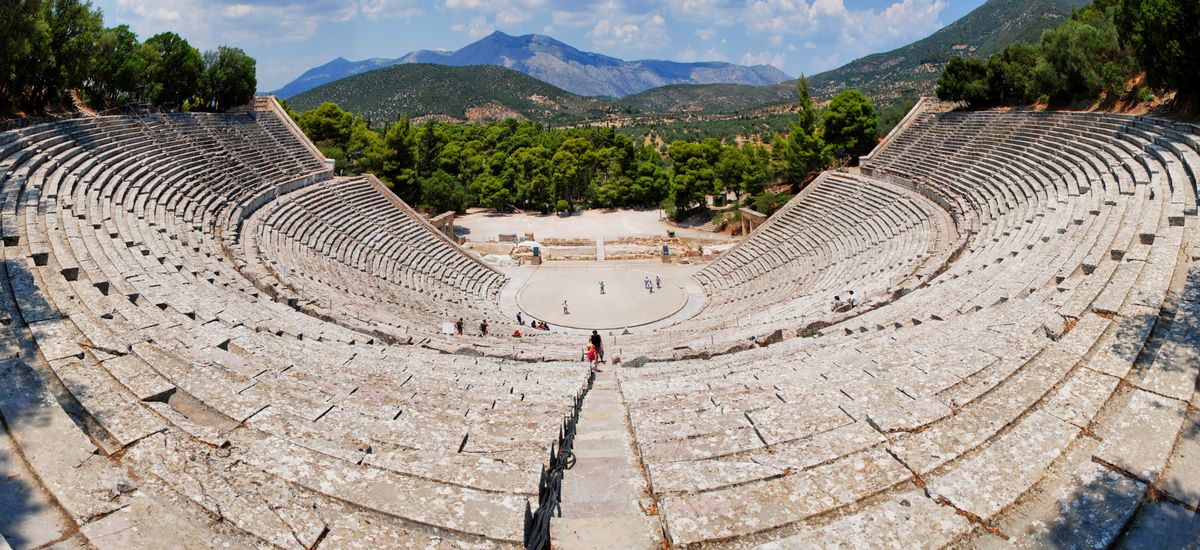
Photo: Tom D’Arby, Pexels.
Epidaurus (~30 km, 30–40 minutes)
The ancient theatre at the Asklepieion of Epidaurus is one of the best-preserved theatres from antiquity and one of the most affecting ancient sites in Greece. Built in the 4th century BC, it seats approximately 14,000 spectators and is famous for its acoustics: a coin dropped on the circular orchestra floor can be heard from the highest row, 55 rows up. Beyond the theatre, the wider sanctuary of Asklepios includes the remains of a temple, a tholos, a gymnasium, and a small museum. The Athens and Epidaurus Festival stages performances of classical drama here every summer, usually from late June through August; tickets sell quickly and are worth booking well in advance.
The site follows the same seasonal hours as Palamidi (08:00–20:00 in peak summer, shorter in spring, autumn, and winter). Admission is €20. If you visit only one archaeological site from Nafplio, make it this one.
Mycenae (~25 km, 25–30 minutes)
The citadel of Mycenae was the centre of the Mycenaean civilisation that dominated the eastern Mediterranean from roughly the 15th to the 12th century BC. Together with Tiryns, it is inscribed as a UNESCO World Heritage Site. The Lion Gate, the earliest monumental sculpture in Europe, still marks the entrance. Inside the citadel, you can walk through Grave Circle A (where Schliemann found the gold death masks), the palace ruins, and the underground cistern. The nearby Treasury of Atreus (Tomb of Agamemnon), a short walk or drive from the main entrance, is a massive tholos tomb with an interior space that remained the largest domed structure in the world for over a thousand years.
The site museum, located near the entrance, contains finds from the excavations and is included in the admission price of €20. Allow two to two and a half hours for the citadel, museum, and Treasury of Atreus.
Tiryns (~4 km, 7 minutes)
Often overlooked because of its proximity to Nafplio and the shadow of Mycenae, Tiryns deserves a stop. The site sits on a low hill just north of Nafplio and is famous for its Cyclopean walls, massive stone fortifications that the ancient Greeks believed could only have been built by the Cyclopes. In mythology, Tiryns was the home of Heracles and the base from which he undertook his Twelve Labours. The site is smaller and less visited than Mycenae, which means you are likely to have the walls and corbelled galleries largely to yourself. Admission is €10. Opening hours are 08:30–15:30 year-round.
Nemea (~40 km, 45 minutes)
The ancient site of Nemea includes the remains of the Temple of Zeus, a museum, and the stadium where the Nemean Games were held. The modern interest in Nemea, however, centres on wine. The surrounding valley is the heart of the Agiorgitiko grape, which produces some of the best red wines in Greece under the PDO Nemea designation. Several wineries in the area offer tastings, usually by appointment. If you are interested in combining archaeology with a wine-country detour, Nemea makes a rewarding half-day trip from Nafplio.
Food and Local Flavours
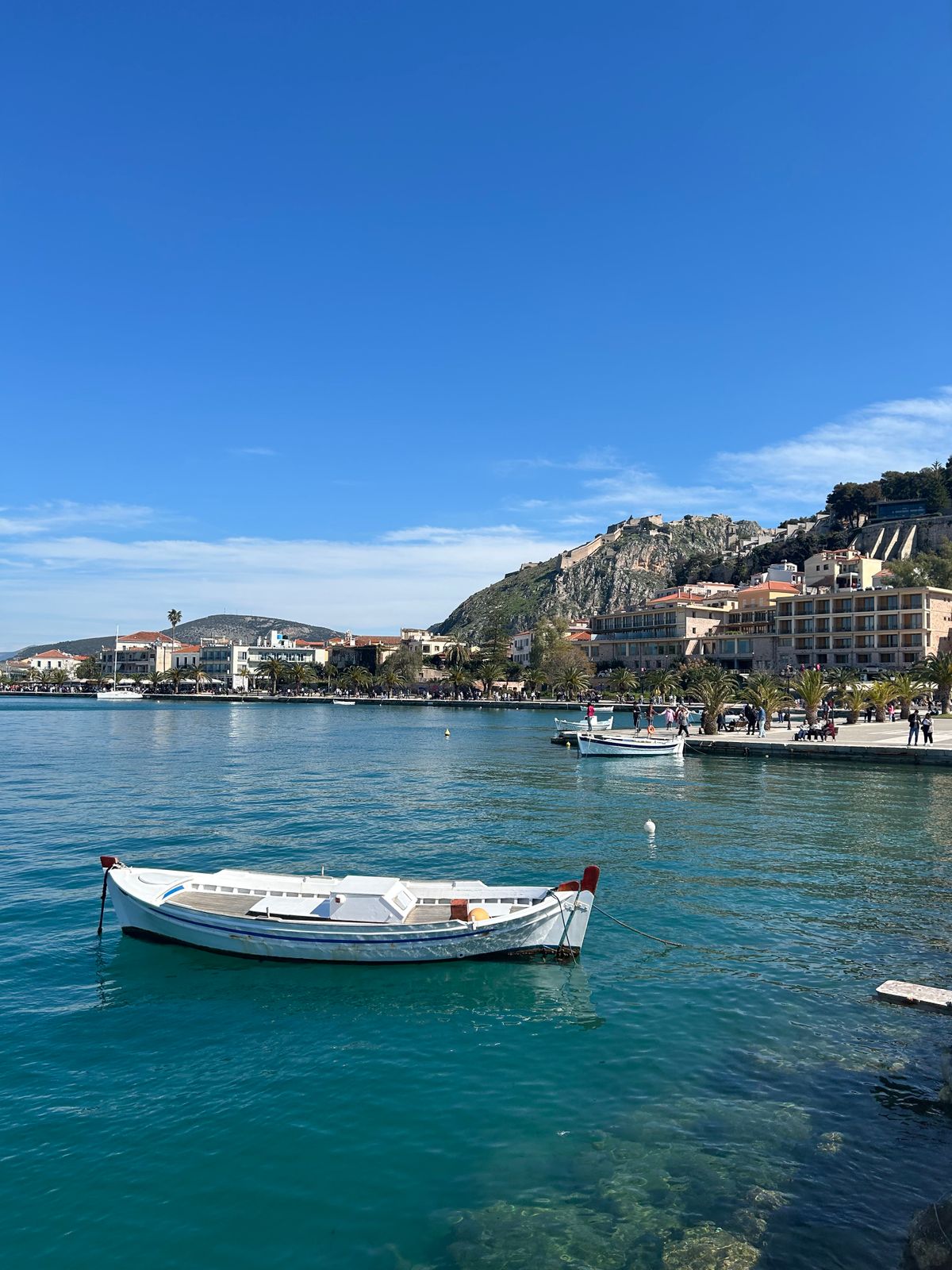
Photo: Eleni B, Pexels.
Nafplio and the wider Argolid have a food identity that goes beyond the standard Greek taverna menu. The region produces oranges, lemons, olives, and artichokes (the area around Iria, south-west of Nafplio, is especially known for its artichoke cultivation). Local dishes reflect this agricultural base.
Gogges are handmade pasta tubes, shaped by pressing a small piece of dough with the thumb. They are typically tossed in olive oil or butter and sprinkled with grated myzithra cheese. Bogana is a slow-cooked lamb dish, traditionally prepared in an earthen pot with potatoes and herbs. Portokalopita, an orange-scented cake made with phyllo pastry, is a common dessert across the Peloponnese but especially associated with this citrus-growing region. Look also for local artichoke dishes, which appear on menus in season: stuffed, fried as meatballs, or served raw in salads.
The waterfront tavernas serve competent seafood, but some of the better cooking happens in the back streets of the old town and in the villages outside Nafplio, particularly around Nea Tiryntha and the road towards Argos. Wednesday and Saturday mornings bring an outdoor market with local oranges, olives, honey, and spices.
For wine, the Nemea region (see day trips above) produces the Agiorgitiko grape in styles ranging from light rosé to concentrated, oak-aged reds. Many Nafplio tavernas carry local Nemea wines by the carafe.
Where to Stay
The old town is the best base for most visitors. It puts you within walking distance of the harbour, the fortresses, the museums, restaurants, and the Arvanitia promenade. Accommodation ranges from converted Venetian mansions and neoclassical townhouses to simpler pensions and guesthouses. Prices are moderate by Greek standards, though they rise on summer weekends and holidays.
The area around Acronafplia, on the slopes above the old town, tends to be quieter and offers better sunset views, though it involves more uphill walking. Travellers prioritising a beach-focused stay might consider Tolo, which has a wider range of family-oriented accommodation along the seafront, though it lacks the architectural interest of Nafplio itself.
If you are visiting on a summer weekend, especially in July or August, it is worth booking accommodation in advance. Nafplio is a popular short break from Athens and last-minute availability can be limited. If you are interested in other mainland destinations with a similar mix of history, atmosphere, and coastal access, our guide to Monemvasia covers a medieval fortress town about two and a half hours further south along the Peloponnese coast.
Getting Around
The old town is entirely walkable. The main sights, shops, restaurants, and harbour are all within a ten to fifteen-minute walk of each other, and much of the centre is pedestrianised or has limited vehicle access. For the fortresses, Arvanitia is on foot, Acronafplia can be reached by a ten-minute walk, and Palamidi either on foot (up the steps) or by car or taxi to the top.
A car is useful for reaching Karathona and Tolo beaches, and essential for the day trips to Epidaurus, Mycenae, Tiryns, and Nemea. Parking in the old town is limited, but there are usually spaces near the harbour and the KTEL station outside peak summer hours. Taxis are available and reasonably priced for local trips.
If you are arriving by bus and do not plan to rent a car, you can still enjoy the old town, Palamidi, Bourtzi, Arvanitia, and Acronafplia on foot, and reach Karathona by summer bus. Organised tours to Epidaurus and Mycenae run from Nafplio, though they limit your flexibility. For travellers without a car looking for an island-day-trip alternative, the car-free island of Hydra is reachable by hydrofoil from nearby Tolo or Porto Heli.
How Many Days in Nafplio
Two to three nights is the comfortable minimum. That gives you a full day for the old town, Palamidi, and Bourtzi, a day for Epidaurus and Mycenae (or Epidaurus and Tiryns), and time for a beach afternoon or wine-country detour. One night works if you are passing through on a Peloponnese road trip, though you will need to prioritise.
If you have four or more days, you can add Nemea, the ancient site of Argos (which has a large theatre and the hilltop Larisa fortress), the coastal walks between Arvanitia and Karathona, and a slower exploration of the Argolid coast. Nafplio also works well as a base for the first or last leg of a wider Peloponnese itinerary that continues to Monemvasia, the Mani peninsula, or Olympia.
Common Mistakes to Avoid
Treating Nafplio as a box-ticking stop on a day tour from Athens. The coach tours cover Nafplio, Mycenae, and Epidaurus in a single exhausting day. You see the highlights at speed and miss everything that makes the town worth visiting: the evening light on the harbour, the quiet of Acronafplia at sunset, a late dinner in a back-street taverna. If you have the time, stay at least one night.
Climbing Palamidi at noon in summer. The 999 steps are steep, fully exposed, and south-facing. In July and August, the stone radiates heat. Start early in the morning, or drive to the top and walk down at your own pace.
Not checking fortress and site hours before visiting. Closing times at Palamidi, Epidaurus, and Mycenae change several times through the year, sometimes every two weeks during the shoulder season. The last admission is typically twenty minutes before closing. A March 2026 visitor to Palamidi reported climbing 910 steps only to arrive after the last entry at 15:10. Check the Ministry of Culture website (odysseus.culture.gr) on the day of your visit.
Skipping Tiryns. It is less than ten minutes from Nafplio by car and rarely crowded. The Cyclopean walls and corbelled galleries are unlike anything else in the region, and the €10 admission is the lowest of the major Argolid sites.
Visiting only in summer. Nafplio is a year-round destination. Spring wildflowers, autumn light, and winter quiet each offer a different and often better experience than the July heat. For a quieter trip that combines well with seasonal travel planning, September in Greece explains why early autumn is one of the strongest months to visit the mainland.
Final Verdict
Nafplio is the rare Greek destination that combines a genuinely beautiful town, serious historical depth, world-class archaeology within day-trip range, and a functioning local life that does not shut down outside tourist season. It is ideal for couples, history-focused travellers, and families with children old enough to enjoy a fortress climb and a museum visit. Dedicated beach-seekers and nightlife-oriented travellers will find more to do on the islands, but anyone looking for the mainland at its best will find it hard to leave Nafplio disappointed.
This article was researched and verified as of July 2026. Opening hours, admission prices, bus schedules, and seasonal services are subject to change. We recommend confirming time-sensitive details directly with the relevant operators or official websites before travelling. Admission prices for archaeological sites reflect the Ministry of Culture pricing introduced in April 2025.