Where Mountain Forests Meet the Aegean
Pelion is a mountainous peninsula in central Greece where dense forests of chestnut, oak and plane trees run down steep slopes to meet the Aegean Sea. It sits between Volos, a port city of around 145,000 people, and the Sporades islands visible from its eastern cliffs. The western side overlooks the calm Pagasetic Gulf; the eastern side faces the open Aegean with its stronger winds and dramatic coastline.
Unlike most Greek coastal destinations, Pelion offers mountain and sea on the same day trip. Visitors can walk a cobbled path through a village at 700 metres altitude in the morning and swim at a forested beach 40 minutes later. The peninsula belongs to the Magnesia regional unit in Thessaly, and it remains far more popular with Greek holidaymakers than with international visitors, though that balance is slowly shifting.
What follows is everything you need to plan a trip here: the villages worth lingering in, the beaches that justify the winding descent, the train that rattles through chestnut forest at walking pace, and the food that makes Pelion’s taverna tables worth sitting at long after the plates are cleared. You will need a car, a tolerance for hairpin bends, and ideally a few more days than you think.
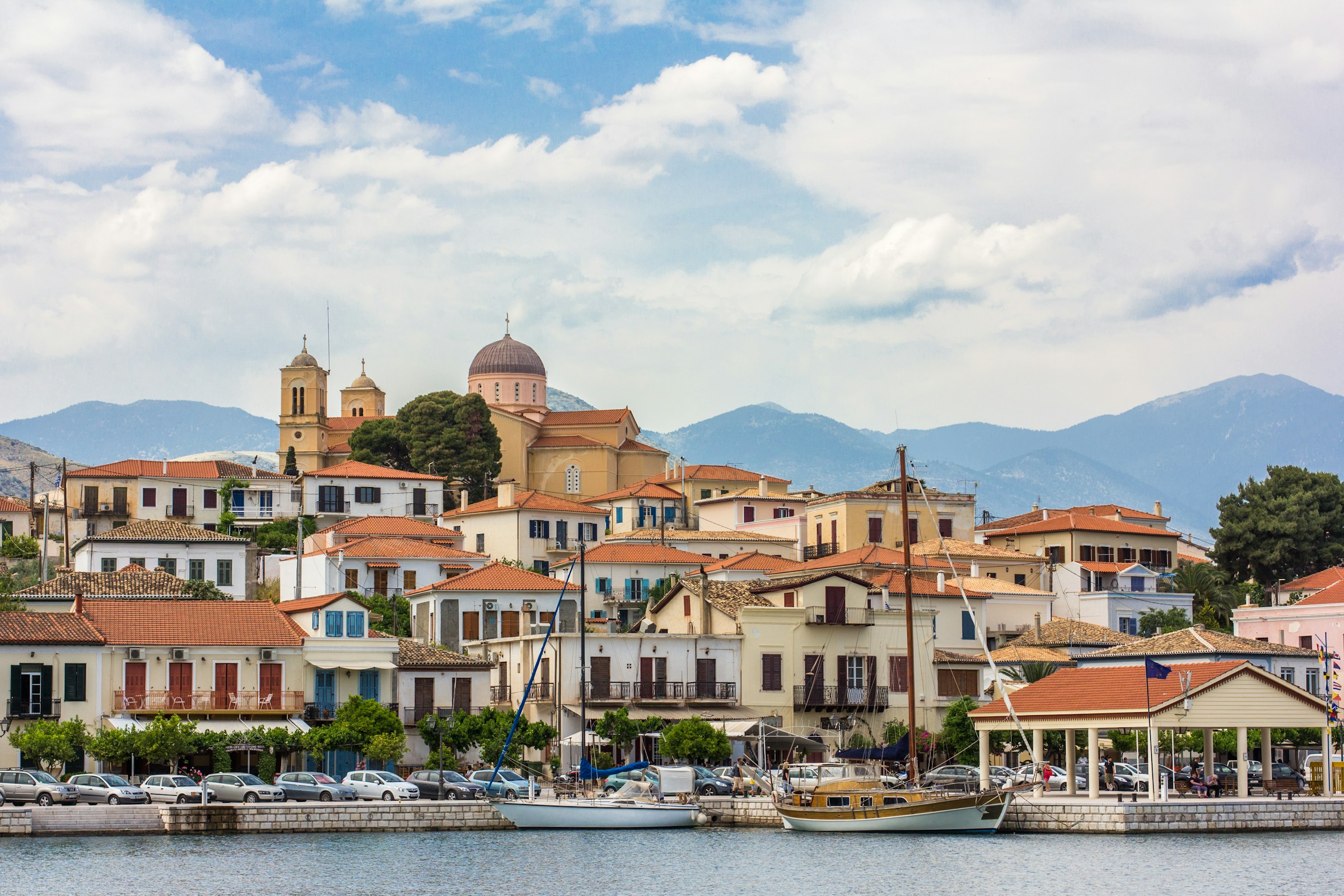
Photo by ALEXANDRA TORRO on Unsplash.
The Geography: Two Coasts, One Mountain
Mount Pelion rises to approximately 1,624 metres at its highest point and runs along the spine of the peninsula like a forested wall. This ridge creates two distinct coastal environments. The western coast faces the sheltered Pagasetic Gulf, where the water is warmer, calmer and shallower, making it more suitable for young children. The eastern coast faces the open Aegean, where beaches sit below steep cliffs, the water is clearer, and conditions can become rough when northern winds blow.
Most of the traditional mountain villages sit along or near the ridge, at altitudes between 300 and 750 metres. This means that reaching the coast from a mountain village typically involves a descent of 20 to 40 minutes on winding roads. The geography is part of the appeal, but it also means that a car is essential and driving distances feel longer than they look on a map.
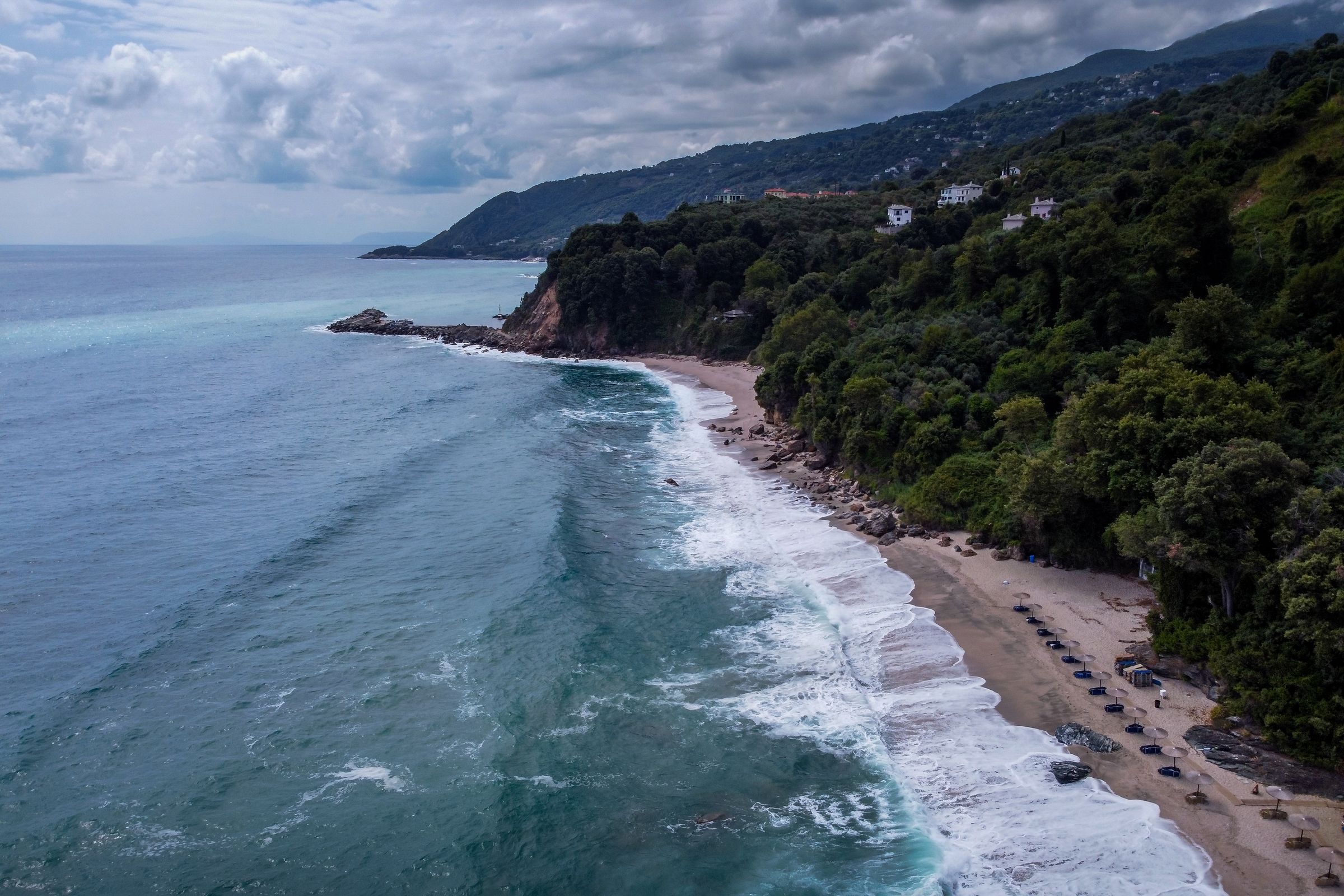
Photo by Chavdar Lungov on Pexels.
Mythology and history
In Greek mythology, Pelion was the home of the Centaurs and the summer retreat of the Olympian gods. The wise Centaur Chiron, who tutored Achilles, Jason and Asclepius, lived in a cave on its slopes. According to the myth, the ship Argo was built from timber cut on Mount Pelion, and the marriage of Peleus and the sea nymph Thetis, which ultimately led to the Trojan War, took place near Chiron’s cave. The mountain takes its name from King Peleus, father of Achilles.
During the Ottoman period, Pelion’s villages enjoyed a degree of autonomy thanks to their remote mountain position and the difficulty of the terrain. Wealthy merchants built stone mansions with decorated wooden balconies and stained-glass windows, many of which survive today. The peninsula became a centre of Greek learning, with libraries and schools established in villages such as Milies and Zagora during the 18th century. Several of these institutions played a role in the intellectual movement that preceded Greek independence.
In the land where Chiron taught heroes the art of healing, the mountain still works its cure — slower hours, cooler air, and the sound of running water in every village square.
Best Time to Visit Pelion
Pelion is a genuine year-round destination, which is unusual for Greece. Each season offers a different experience, and the best time depends on what the traveller wants.
| Season | Conditions | Best for | Considerations |
|---|---|---|---|
| May–June | Warm days (22–28 °C), wildflowers, sea reaching 20–22 °C | Hiking, village exploration, quiet beaches | Some coastal facilities may not be fully open until mid-June |
| July–August | Hot but cooler than southern Greece (28–34 °C), sea 24–26 °C | Beach holidays, families, full services | Main beaches and popular villages become busy, especially at weekends |
| September–October | Warm sea (22–24 °C), mild air, harvest season | Hiking, food, photography, autumn colours | Some tourist services wind down from late September |
| November–April | Cool to cold, snow on higher villages, rain | Fireplace guesthouses, skiing at Agriolefkes, winter food | Many coastal businesses close; mountain villages remain atmospheric |
May, June, September and October are generally the most comfortable months for combining mountain walks with swimming. July and August are viable but noticeably busier, particularly on the eastern beaches and in Makrinitsa. Pelion’s altitude means summer temperatures stay several degrees below Athens and most island destinations.
How to Get to Pelion
All routes to Pelion pass through Volos, the gateway city at the foot of the mountain.
From Athens
The drive from Athens to Volos covers approximately 330 kilometres via the E75 motorway through Lamia and takes around four hours in normal traffic. Toll costs on the motorway are approximately €12–15. KTEL buses run several times daily from Athens (Liossion terminal) to Volos, taking about four to five hours. A train connection via Larissa is also available but requires a change and takes around five hours.
From Thessaloniki
The distance from Thessaloniki to Volos is around 220 kilometres, taking approximately 2.5 to 3 hours by car via the E75. KTEL buses run multiple times daily with a journey time of about 2.5 hours.
Flying to Volos
Nea Anchialos Airport (VOL), approximately 20 kilometres south of Volos, operates seasonal flights from several European cities including London, Munich, Vienna, Brussels and Amsterdam. Flight availability varies by airline and year, so schedules should be confirmed well in advance. The airport operates primarily from May to October.
From the Sporades
Ferries connect Volos with Skiathos, Skopelos and Alonissos, making it possible to combine a Pelion trip with Sporades island-hopping. Ferry schedules vary by season and should be checked directly with operators.
Getting Around Pelion
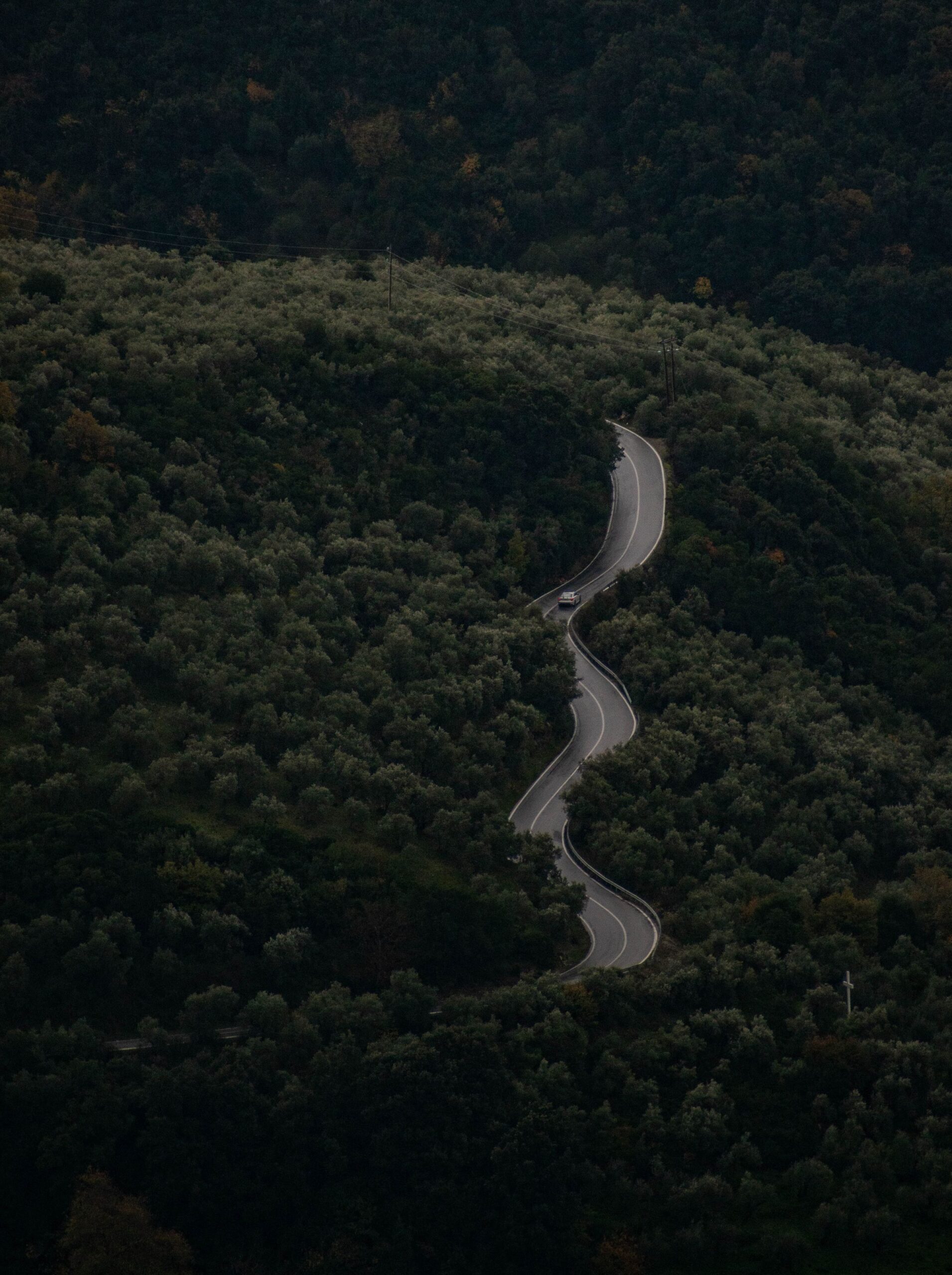
Photo by Georgios Parlantzas on Pexels.
A rental car is essential for exploring Pelion properly. Public bus services from Volos reach the larger villages, but frequency is limited and many beaches and smaller villages have no bus connection at all.
The mountain roads deserve respect. They are paved but narrow, with tight hairpin bends, steep gradients and limited visibility around corners. Driving speeds are necessarily slow, typically 30–40 km/h on the mountain sections. A compact car is easier to manoeuvre than anything larger, and travellers unfamiliar with mountain driving should avoid night journeys on the eastern side of the peninsula.
Fuel is available in Volos, Portaria, Agios Ioannis and several larger villages, but stations become scarce on the eastern coast and in the south. Fill up before heading to remote beaches or the southern tip.
Parking in the mountain villages is generally straightforward. Makrinitsa, Portaria and Tsagarada have designated car parks at or near the village entrance, since the village centres are pedestrian. Coastal parking at popular beaches such as Mylopotamos and Fakistra is more limited during peak summer.
The Mountain Villages of Pelion
Pelion’s villages are the heart of any visit. Their distinctive architecture, featuring stone-built mansions with slate roofs, wooden balconies and colourful painted details, dates largely from the 18th and 19th centuries. Each village is arranged around a central square shaded by one or more ancient plane trees, with a church, a fountain and usually a handful of tavernas.
Makrinitsa
Perched at around 750 metres and just 15 kilometres from Volos, Makrinitsa is known as the “balcony of Pelion” for its sweeping views over the Pagasetic Gulf. The main square contains a chapel with marble reliefs, a fountain with carved lion heads, and a hollow plane tree large enough to stand inside. The village has more souvenir shops than most Pelion villages, and its proximity to Volos means it attracts day visitors, especially at weekends. Despite this, the cobbled lanes above the square remain quieter, and the architecture is genuinely impressive. Allow two to three hours for a thorough visit.
Portaria
Just below Makrinitsa at around 600 metres, Portaria is the most accessible mountain village and often the first that visitors encounter when driving up from Volos. It has a broader range of restaurants and accommodation than Makrinitsa, a pleasant square, and serves as a practical base for first-time visitors. The chapel of Panagia Portarea contains 16th-century frescoes worth seeing. From Portaria, the Centaurs’ Trail follows a stream bed through a forested ravine for approximately 1.9 kilometres, taking around 40 minutes and suitable for families.
Tsagarada
Tsagarada is not one village but four neighbourhoods spread across a forested hillside on the eastern slopes. Its most famous landmark is the plane tree in the square of Agia Paraskevi, estimated to be at least 1,000 years old, with a trunk circumference of around 14 metres. The village sits at approximately 500 metres and offers access to several of the peninsula’s finest beaches, including Mylopotamos, Fakistra and Damouchari. Tsagarada has a quieter, more secluded atmosphere than Makrinitsa and is well suited to travellers seeking a longer stay.
Vizitsa
Vizitsa, on the southwestern slopes, is one of the most architecturally intact villages in Pelion. Its stone mansions, including the towers of the Kontos, Geroulanos and Karagiannopoulos families, are well preserved and the village sees fewer visitors than its more famous neighbours. The square has several restaurants serving local specialities, and the Women’s Agrotourism Cooperative of Vizitsa sells homemade preserves, honey and spoon sweets made from local produce including the firiki apple.
Milies
Milies sits at around 360 metres on a slope with panoramic views of the Pagasetic Gulf. It is the terminus of the Pelion steam train and home to one of Greece’s oldest provincial libraries, founded in the 18th century and containing rare manuscripts. The cobbled streets, the church of the Taxiarches (built before 1741) and the old railway station make it a rewarding village for a half-day visit. Several traditional guesthouses offer accommodation in restored Pelion mansions.
Zagora and Kissos
Zagora is the largest village on the peninsula, historically important as a centre of apple cultivation. The Zagora apple has Protected Designation of Origin status. The village itself is a working agricultural community rather than a tourist destination, which gives it a different character from the more visited villages. Nearby Kissos contains the church of Agia Marina, notable for its interior frescoes and considered one of the finest churches on the peninsula.
Pelion Beaches
Pelion’s beaches fall into two categories based on which coast they face, and the difference between the two sides is substantial.
Eastern coast (Aegean)
The Aegean beaches are the more dramatic of the two. They sit below steep, forested slopes, often requiring a descent on foot or down a winding road. The water is exceptionally clear, often turquoise against white pebbles, and the setting of forest meeting sea is what distinguishes them from typical Greek island beaches. However, the Aegean side is exposed to northern winds, and conditions can become rough. These beaches are not always calm.
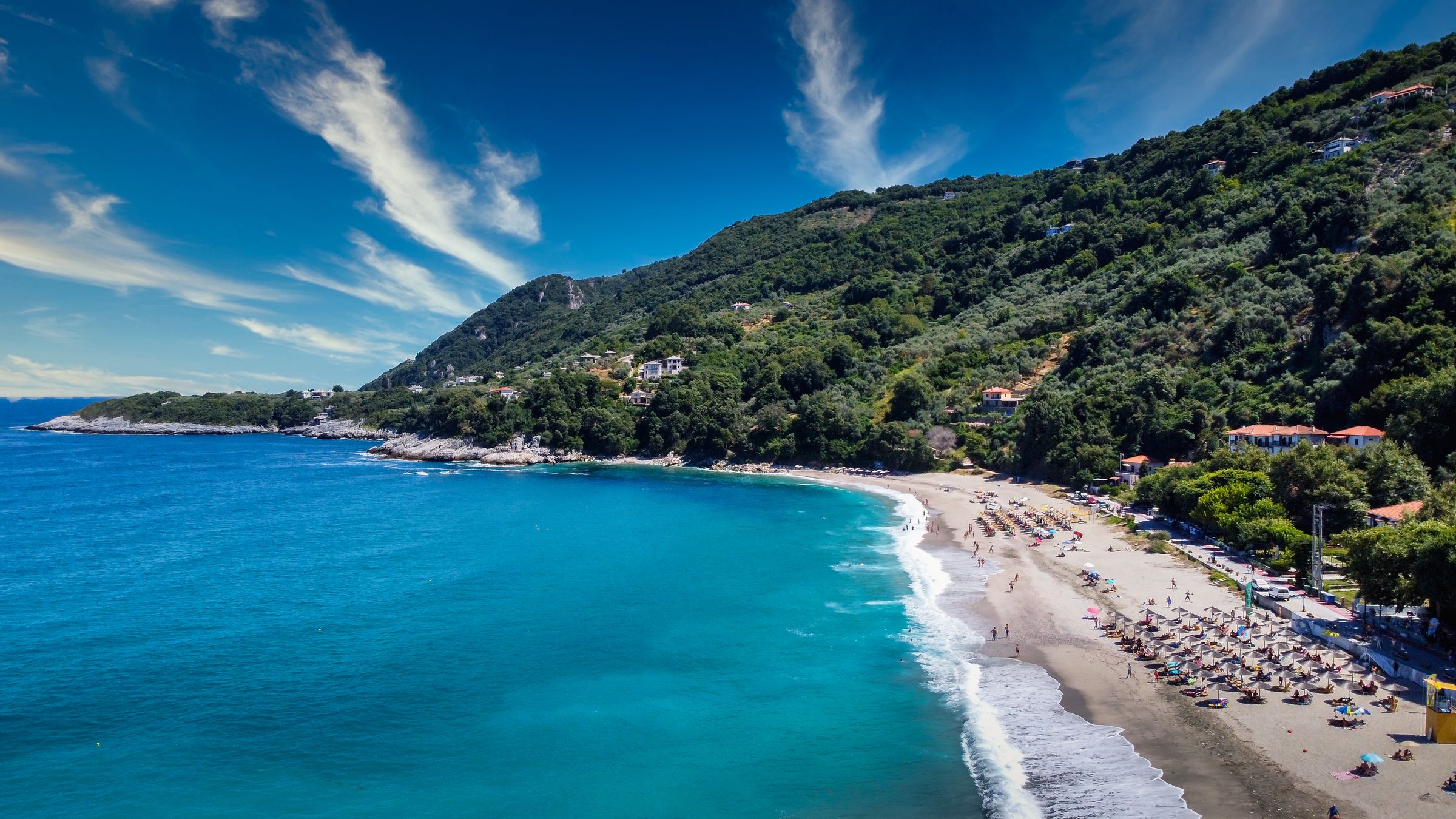
Photo by Chavdar Lungov on Pexels.
| Beach | Access | Surface | Facilities | Notes |
|---|---|---|---|---|
| Mylopotamos | Steps from road above Tsagarada (~15 min descent) | Sand and fine pebbles | Seasonal beach bar on one side | Divided by a rock arch; one of the most photographed beaches in mainland Greece |
| Fakistra | 20-minute downhill walk from road | Sand and pebbles | None | Flanked by tall rock walls; a sea cave and a small waterfall are nearby; exposed to wind |
| Damouchari | Road access, small parking area | Large white pebbles | Tavernas at the harbour | Two small bays; used as a filming location for Mamma Mia; the old harbour is atmospheric |
| Papa Nero | Road access | Golden sand | Sunbeds, tavernas, lifeguard in summer | Adjacent to Agios Ioannis; one of the more family-accessible eastern beaches |
| Agios Ioannis | Road access | Sand | Full facilities, bars, accommodation | The most developed beach on the east coast; lively in summer |
| Horefto | Road access from Zagora | Fine sand, approximately 2 km long | Accommodation, restaurants, shops | The longest beach in Pelion; calm in settled weather |
Western coast (Pagasetic Gulf)
The gulf beaches are warmer, calmer and more sheltered. They tend to be wider with easier access, making them better suited to families with young children or travellers who prefer a gentler sea. What they lack is the dramatic cliff-backed setting of the Aegean side.
Afissos has a pleasant sandy beach with clear water and tavernas along the waterfront. Kala Nera, one of the first coastal villages south of Volos, is practical rather than spectacular and serves as a starting point for several hiking routes. Further south, Milina is a small fishing village popular with sailors, and the narrow beach at Marathias, backed by olive trees, offers a quieter alternative.
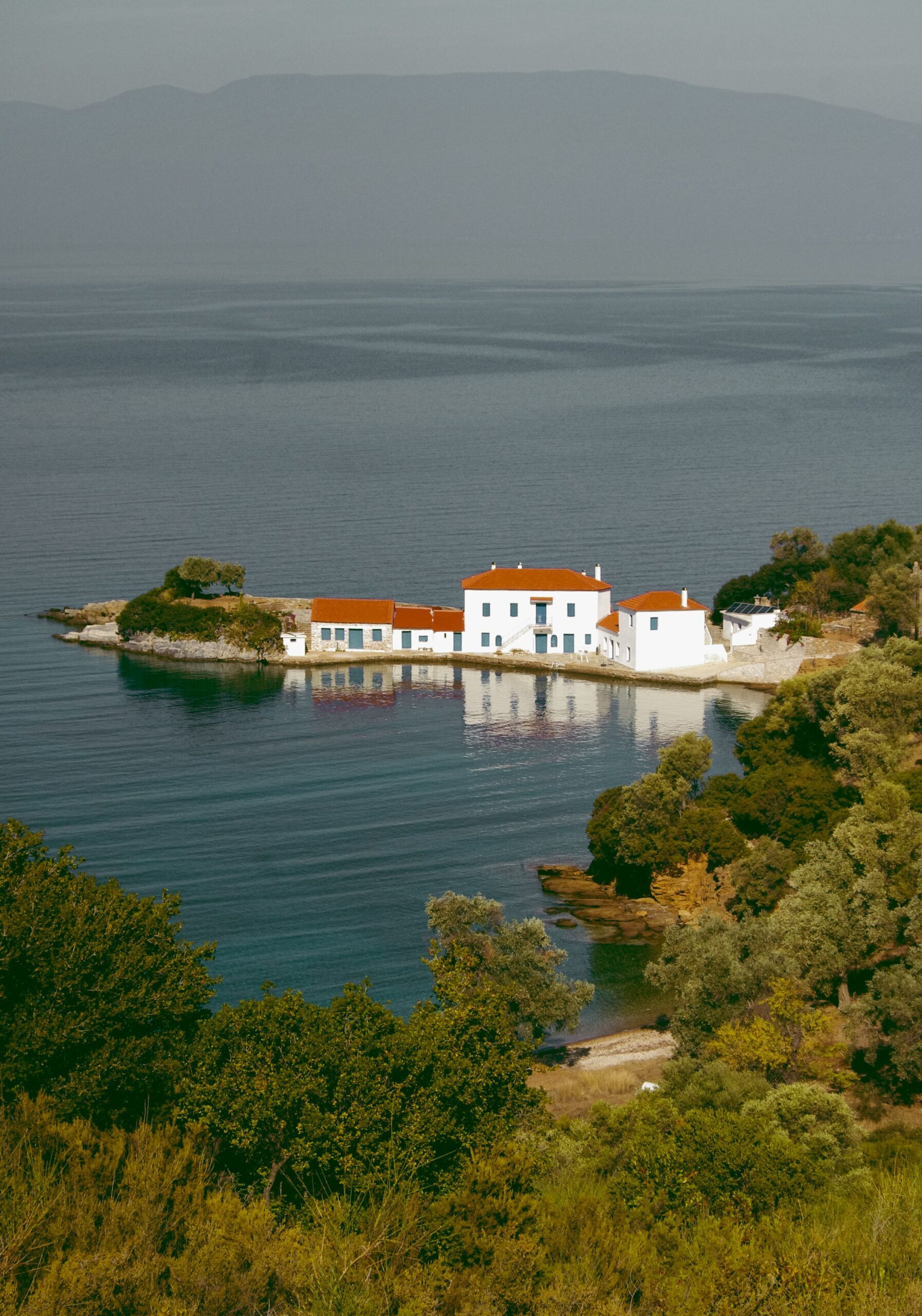
Photo by Marina Gr on Pexels.
Travellers prioritising dramatic scenery and clear water should head east. Those with small children, or anyone who dislikes exposed conditions, will find the Pagasetic coast more reliable.
The Pelion Train
The Pelion railway, known locally as the Moutzouris (“the smudgy one,” after the steam it once produced), runs 15 kilometres between Ano Lechonia and Milies through forested mountainside with views of the Pagasetic Gulf. The narrow-gauge line (just 60 centimetres wide, making it one of the narrowest in the world) was built between 1892 and 1903 under the direction of Italian engineer Evaristo de Chirico, father of the painter Giorgio de Chirico, who was born in Volos.
The route passes through tunnels, over stone-arched bridges (including the five-arched Kalorema bridge) and across the distinctive metal De Chirico bridge near Milies, where the train rolls on a curved line while the bridge itself is straight. The journey takes approximately 90 minutes each way, with a 15-minute stop at Ano Gatzea.
At the time of writing (July 2026), the train operates on Saturdays and Sundays from spring to autumn. During July 2026, additional Friday services have been announced. The train departs Ano Lechonia at 10:00 and returns from Milies at 15:00. Return tickets cost approximately €18 for adults and €10 for children; one-way tickets from approximately €10 and €6 respectively — worth confirming before you go. Booking in advance is strongly recommended, particularly during summer weekends. Tickets can be purchased through the Hellenic Train website or at the station.
The Ano Lechonia station is 12 kilometres from Volos, accessible by car (there is a car park at the station) or by local bus. From Milies station, a cobbled path leads up to the village centre.
The train rattles through chestnut forest at walking pace, trailing woodsmoke and memory. Giorgio de Chirico’s father built these bridges; the son painted their shadows into surrealism.
Hiking the Kalderimia
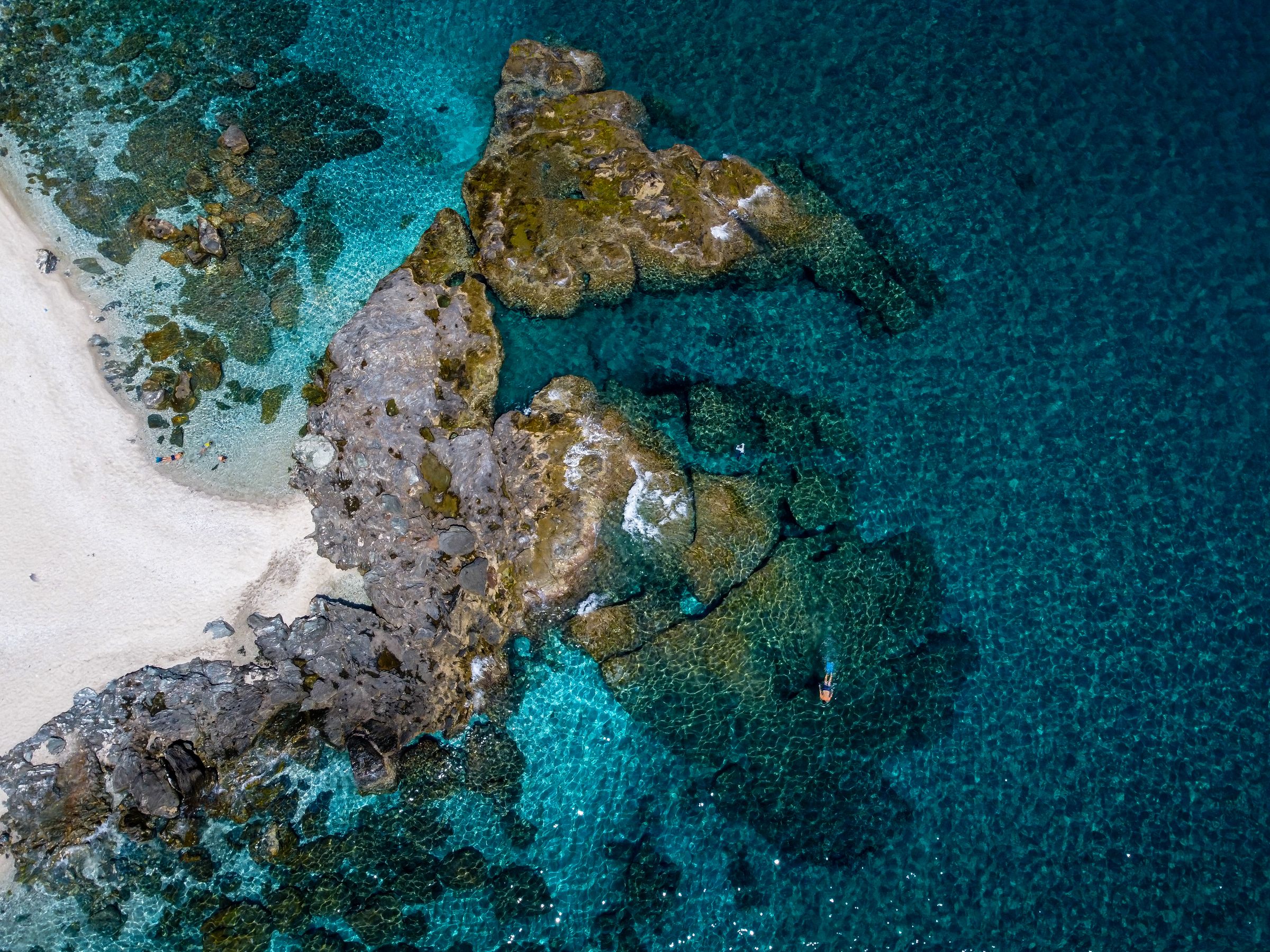
Photo by Chavdar Lungov on Pexels.
Pelion is crossed by a network of kalderimia: cobbled mule paths built during the 18th century to connect villages and carry produce down the mountain. Many have been damaged, overgrown or covered by tarmac, but substantial sections survive and have been marked as hiking trails.
The eastern side of the peninsula is steeper and more demanding, while the western side offers more gradual terrain. The best hiking months are April to June and September to November, when temperatures are comfortable and the forest is at its most atmospheric. Summer hiking is possible but should start early in the morning to avoid midday heat, even though the forest canopy provides significant shade.
The Centaurs’ Trail near Portaria is the most popular short walk, following a stream bed through a ravine for about 1.9 kilometres with small waterfalls and wooden bridges. It takes around 40 minutes and is suitable for families with children. The path from Mouresi down to Damouchari follows an old kalderimi through forest with sea views and takes roughly an hour of descent. The walk along the old railway line between Kala Nera and Milies, passing through tunnels and over bridges, offers a different perspective on the landscape.
Good walking shoes are essential, even on shorter routes. Some kalderimia have uneven surfaces and loose stones. The Anavasi map of Pelion is the most reliable walking map for the area. Mobile signal is unreliable in parts of the eastern coast and on mountain paths, so offline maps are advisable.
Food and Drink in Pelion
Pelion has a distinctive regional cuisine that draws on the mountain’s forests, orchards and proximity to the sea. The food here differs noticeably from typical Greek island cooking.
Spetzofai is the signature dish: thick-cut local pork sausage slow-cooked with red and green peppers in a tomato and wine sauce until the flavours concentrate into something robust and satisfying. It appears on nearly every taverna menu in the mountain villages and varies slightly from kitchen to kitchen.
Tsipouro, a grape-pomace spirit similar to Italian grappa, is central to the food culture of the wider region. In Volos, the ritual of drinking tsipouro with mezedes (small plates that arrive automatically with each round) defines the city’s dining identity. The establishments serving tsipouro and mezedes are called tsipouradika, and several dozen line the waterfront streets. Each round of tsipouro brings a different small dish: grilled sardines, fried cheese, octopus, greens pie or whatever is fresh that day. Budget approximately €20–30 per person for a full tsipouro session with food.
Other distinctive local foods include tsitsiravla (pickled turpentine-tree shoots, an acquired taste), various wild greens pies, bumbari (a traditional sausage made from ground beef and offal), and the firiki apple, a small aromatic variety grown around Zagora with Protected Designation of Origin status. Chestnuts are abundant in autumn, and Pelion’s honey, particularly from bees feeding on pine and arbutus, is highly regarded.
Restaurants in the mountain villages tend to be family-run tavernas serving traditional recipes at reasonable prices. A main course typically costs €9–14, and portions are generous. Seafood is better on the coast, particularly at Damouchari and along the Pagasetic Gulf.
Where to Stay in Pelion
Pelion’s accommodation character is defined by small guesthouses, restored mansions and family-run hotels rather than large resorts. There are no mega-developments, and much of the accommodation reflects traditional Pelion architecture: stone walls, wooden ceilings, working fireplaces and balconies with views.
| Area | Best for | Driving to eastern beaches | Character |
|---|---|---|---|
| Portaria | First-time visitors, easy access to Volos, year-round stays | 40–50 minutes | Well-connected gateway village with the broadest range of services |
| Tsagarada | Longer stays, forest atmosphere, eastern beach access | 10–20 minutes | Quieter and more remote; best proximity to Mylopotamos and Fakistra |
| Milies / Vizitsa | Architecture, walking, the Pelion train | 30–40 minutes | Traditional villages with historic buildings; good central position |
| Agios Ioannis / Papa Nero | Beach holidays, families | On the coast | Sea-level resort villages; limited mountain character |
| Afissos / Kala Nera | Families with small children, calm water | 40–50 minutes | Pagasetic Gulf coast; warmer, calmer, less dramatic |
Travellers planning to explore the full peninsula are often better served by moving between two bases rather than committing to one. A practical approach is to spend two or three nights near Tsagarada for the eastern coast and mountains, then move to Milies or Vizitsa for the southern circuit and the train. Portaria works well as a single base for shorter visits of three or four days, given its central position and proximity to Volos.
How Many Days in Pelion
Three days is a minimum for a worthwhile visit, allowing time for two or three villages, a couple of beaches and a meal in a mountain taverna. Five days is more comfortable and allows exploration of both coasts, a ride on the Pelion train and a tsipouro session in Volos. A full week permits a thorough circuit of the peninsula, including the quieter southern villages around Trikeri and Lafkos, more ambitious hiking, and time to adjust to the deliberately slow pace.
Travellers often underestimate driving times on the mountain roads. A village that appears to be 20 kilometres away may take 40 minutes to reach. Plan fewer stops per day than you would on flat terrain, and leave time for the unexpected detour.
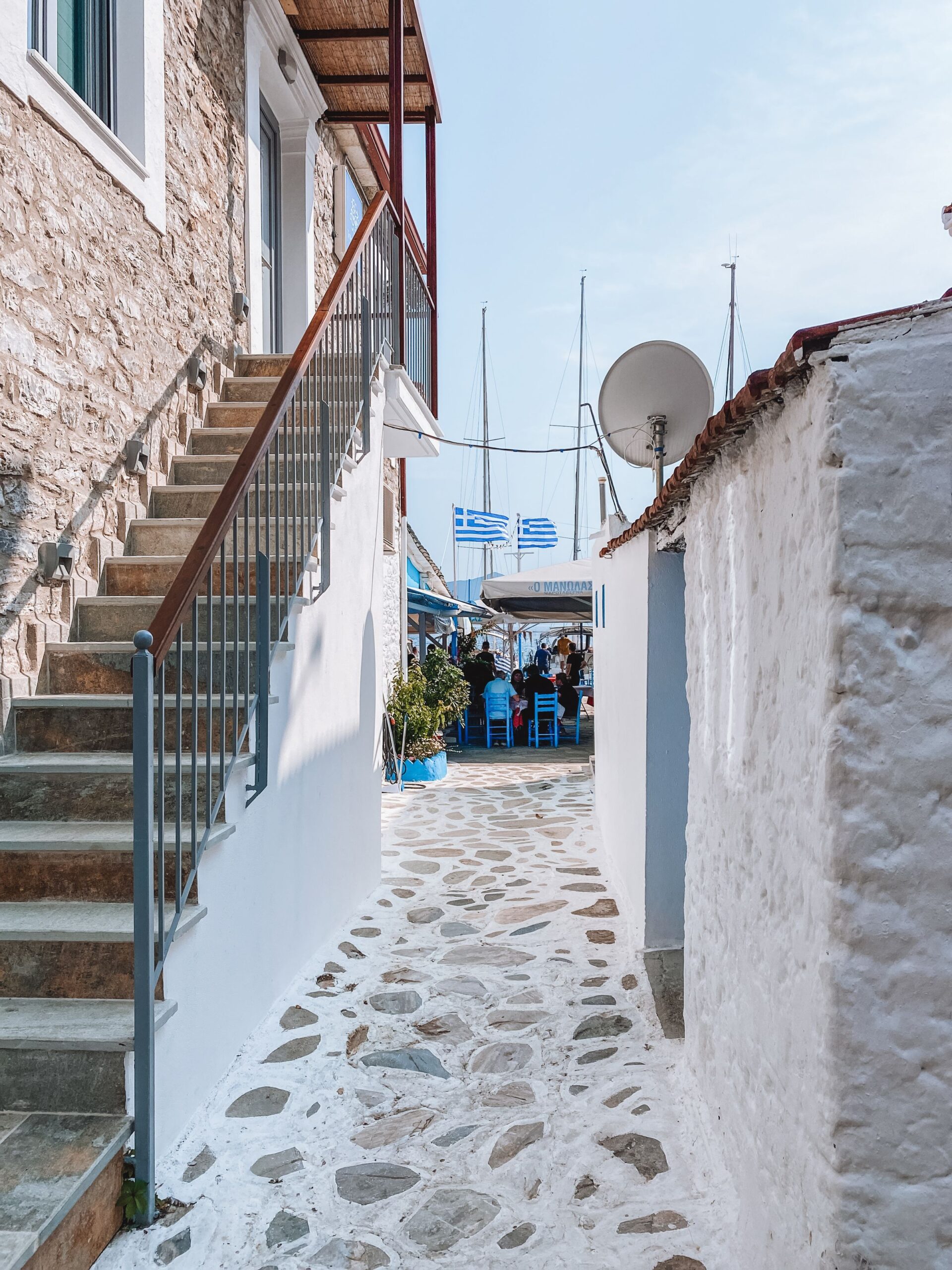
Photo by ANMA PHOTOGRAPHY on Pexels.
Combining Pelion with Meteora and the Sporades
Pelion pairs naturally with two other destinations in the region. Meteora, the dramatic monastery-topped rock pillars, is approximately 200 kilometres west of Volos, reachable in about 2.5 hours by car via Larissa. A visit to Meteora adds one or two days to a Pelion itinerary and the contrast between the two landscapes is striking.
The Sporades islands of Skiathos, Skopelos and Alonissos are accessible by ferry from Volos port. This makes it possible to begin or end a Pelion trip with a few days of island-hopping. Ferry schedules are seasonal and should be confirmed before booking.
Who Pelion Suits — and Who It Does Not
Pelion works particularly well for travellers who enjoy driving through varied landscapes, walking on mountain paths, eating well in village tavernas, and combining sea and mountain in the same trip. It suits couples, families with older children, hikers, food-focused travellers, and anyone who has already visited the popular islands and wants to experience a different side of Greece.
Pelion is less suitable for travellers who rely on public transport, prefer flat terrain, want nightlife or large hotel complexes, or dislike narrow mountain roads. Families with toddlers should be aware that many eastern beaches involve descents on steps or paths, and that the Aegean side can be rough. The Pagasetic coast is more forgiving for very young swimmers, but it lacks the visual drama that draws most visitors to the peninsula.
Mobile signal and Wi-Fi can be patchy in remote villages and on mountain paths. This is part of the appeal for some visitors and a frustration for others.
Practical Tips
- Carry cash. Some smaller tavernas and guesthouses may not accept cards, particularly in remote villages.
- Bring walking shoes even if hiking is not the main purpose of the trip. Village paths and beach access routes are uneven.
- Fill the fuel tank in Volos or Portaria before heading east or south.
- Northern winds (meltemi) can affect eastern beaches from mid-July. Check conditions before committing to a long drive to a specific beach. The Pagasetic side is usually calm when the east is rough.
- Mosquitoes can be persistent in forested villages during summer. Repellent is advisable for evening dining outdoors.
- Book the Pelion train in advance during summer. Walk-up tickets are not guaranteed.
- Water from mountain fountains in villages is generally safe and often excellent. Locals use them daily.
Getting the Most from Pelion
Pelion rewards slow travel. Driving its roads quickly is both unpleasant and unsafe, and rushing between attractions misses the point of a destination whose character reveals itself in the details: the sound of running water in a village square, the taste of spetzofai in a taverna shaded by a 200-year-old plane tree, the particular blue of the Aegean seen through a gap in the chestnut forest.
The peninsula has managed to retain its identity partly because it has never been easy to reach. The roads discourage mass tourism, the absence of an international airport limits arrivals, and the accommodation stock of small guesthouses rather than package-holiday resorts keeps visitor numbers manageable. For travellers willing to navigate the mountain roads and spend time in villages rather than ticking off landmarks, Pelion offers one of the most distinctive experiences in mainland Greece.
The information in this article was researched and verified as of July 2026. Prices, transport options, schedules, and conditions may have changed since publication — we recommend double-checking key details before your trip.