Chania announces itself slowly. The overnight ferry from Piraeus enters Souda Bay just before dawn, and the White Mountains materialise above the coastline in shades of grey and copper. By the time travellers reach the old harbour, the light has softened, the cafés are setting out their chairs, and the Venetian lighthouse stands at the end of its long stone breakwater as it has for more than a century and a half. This is the kind of city that earns its reputation through detail rather than spectacle — and the details, once noticed, are difficult to leave behind.
Chania is the principal city of western Crete, with a population of roughly 60,000 and a history reaching back to the Bronze Age settlement of Kydonia. Many visitors treat it as a base for exploring the region’s famous landscapes: the lagoon at Balos, the pink sand of Elafonisi, the 16-kilometre descent through Samaria Gorge. But the city deserves more than a night of transit. Its Old Town is among the most layered in Greece, shaped by Minoans, Venetians, Ottomans, and the complicated twentieth century. Its food is distinctly western Cretan — different in emphasis from what you encounter in Heraklion or on the eastern coast.
Chania at a Glance
| Region | Western Crete |
| Best for | History, food, beaches, hiking, families, couples, long stays |
| Best time to visit | May–June and September–October |
| Airport | Chania International (CHQ), direct flights from Athens and many European cities |
| Ferry | Daily overnight from Piraeus to Souda Bay, year-round |
| Car needed? | Strongly recommended for beaches beyond the city |
| Minimum stay | 3 nights (5–7 for beaches and gorges) |
Who Chania Is For — and Who May Prefer Somewhere Else
Chania works for a wide range of travellers, which is part of its appeal and part of the reason it gets busy. Couples gravitate towards the Old Town for its evening atmosphere and walkable scale. Families with school-age children find a practical mix of city exploration, accessible beaches, and manageable day trips. History-minded visitors will discover enough material in the Old Town alone for two or three days of attentive wandering. Hikers use Chania as the gateway to the White Mountains and the gorges that cut through them. And for anyone spending a week or more on Crete, it is the natural base for exploring the western half of the island.
That said, travellers seeking a quiet, undiscovered Greek town should adjust their expectations. Chania is well established. The harbour promenade fills up on summer evenings, and the famous beaches draw large crowds during July and August. Visitors who prioritise solitude, nightclub-centred nightlife, or an all-inclusive resort experience may find other parts of Crete more suitable.
A Walk Through the Old Town
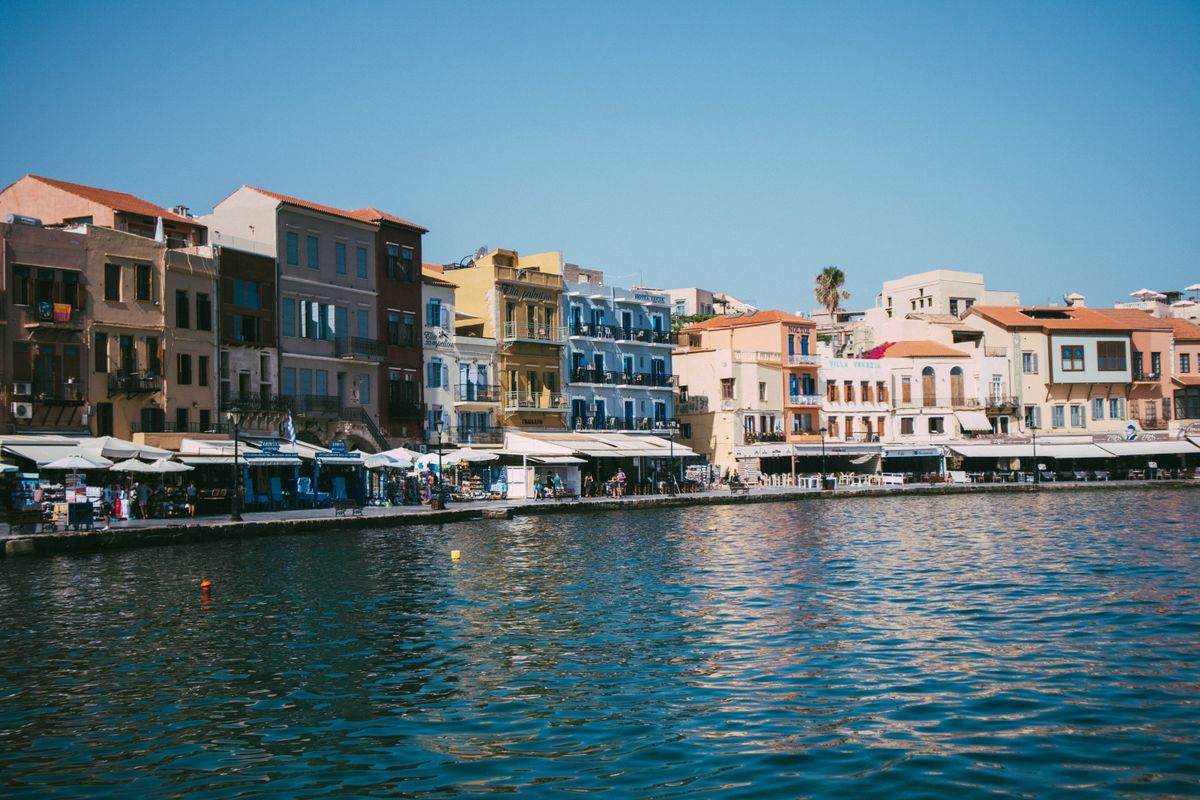
Chania’s Old Town is enclosed within remnants of Venetian fortification walls and declared a protected historical monument since 1965. It divides into several distinct neighbourhoods, each with a different texture, and the most rewarding approach is to walk between them without a fixed itinerary.
The Venetian Harbour
Construction began in 1320 and continued for roughly three hundred years. The harbour eventually encompassed two basins: a western one for unloading goods, and an eastern one lined with arsenali — the vaulted stone shipyards where galleys were hauled ashore for repair. At its peak under Venetian rule, the harbour ranked second only to Venice itself, holding more than forty galleys that controlled trade across the eastern Mediterranean.
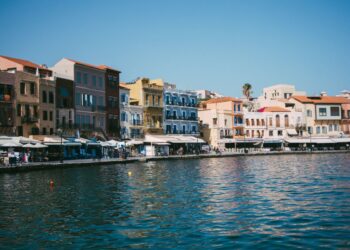
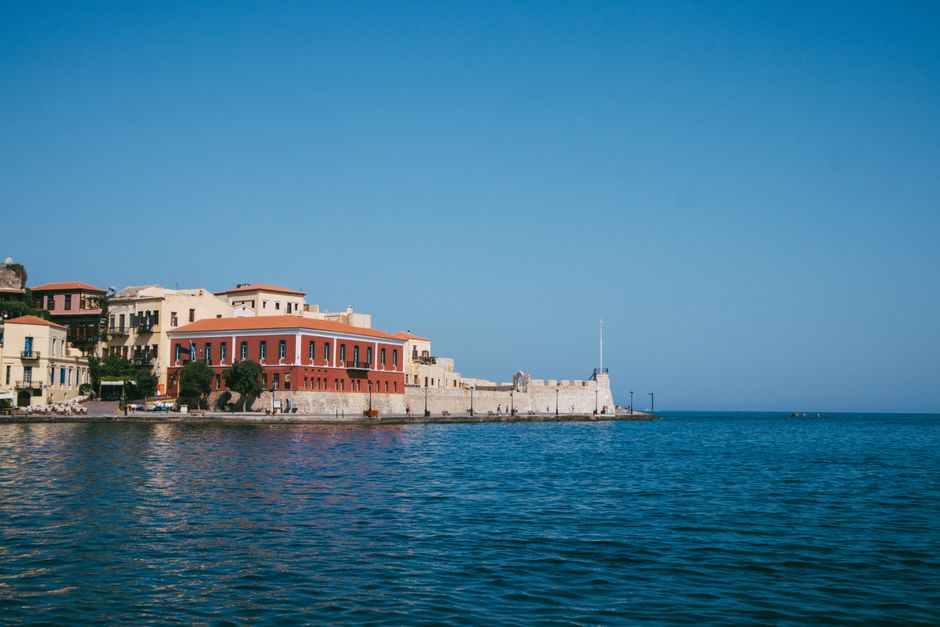
Today the harbour is the social centre of the city, ringed by restaurants whose tables extend almost to the water’s edge. The Firkas Fortress anchors the western end. It has served as a military stronghold, garrison, and prison, and now houses the Maritime Museum of Crete. This is also where the Greek flag was raised on 1 December 1913, when Crete formally united with Greece — a moment of deep symbolic importance for Cretans. Walking east along the promenade, travellers pass the Yali Tzamii, or Mosque of the Janissaries. This domed Ottoman structure was built in 1645 to mark the conquest of the city. It has been carefully restored and now hosts exhibitions.
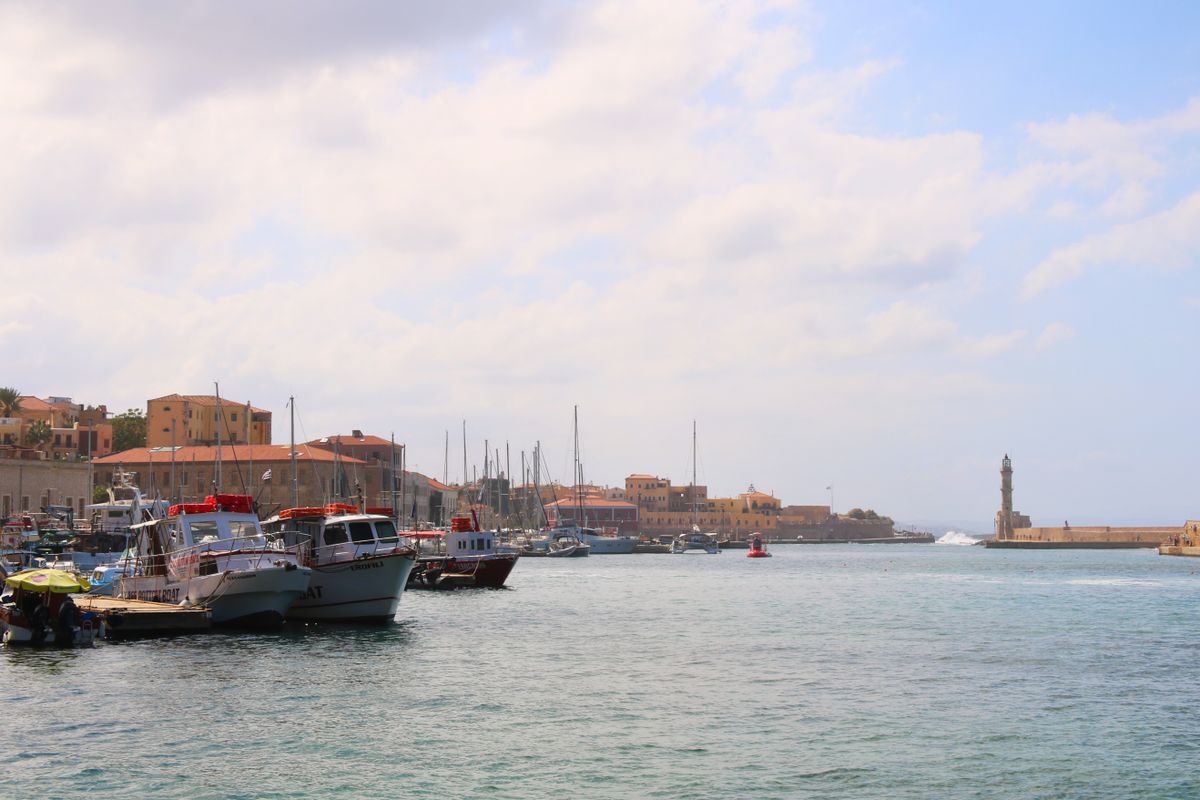
The Egyptian Lighthouse stands at the end of the long breakwater that shelters the eastern basin. Despite its name, it was originally Venetian, rebuilt during the Egyptian occupation of Crete in the 1830s. The walk along the breakwater takes about fifteen minutes and makes one of the most pleasant evening strolls in western Crete, particularly when the light turns the harbour a deep amber.
Topanas, Splantzia, and Kastelli
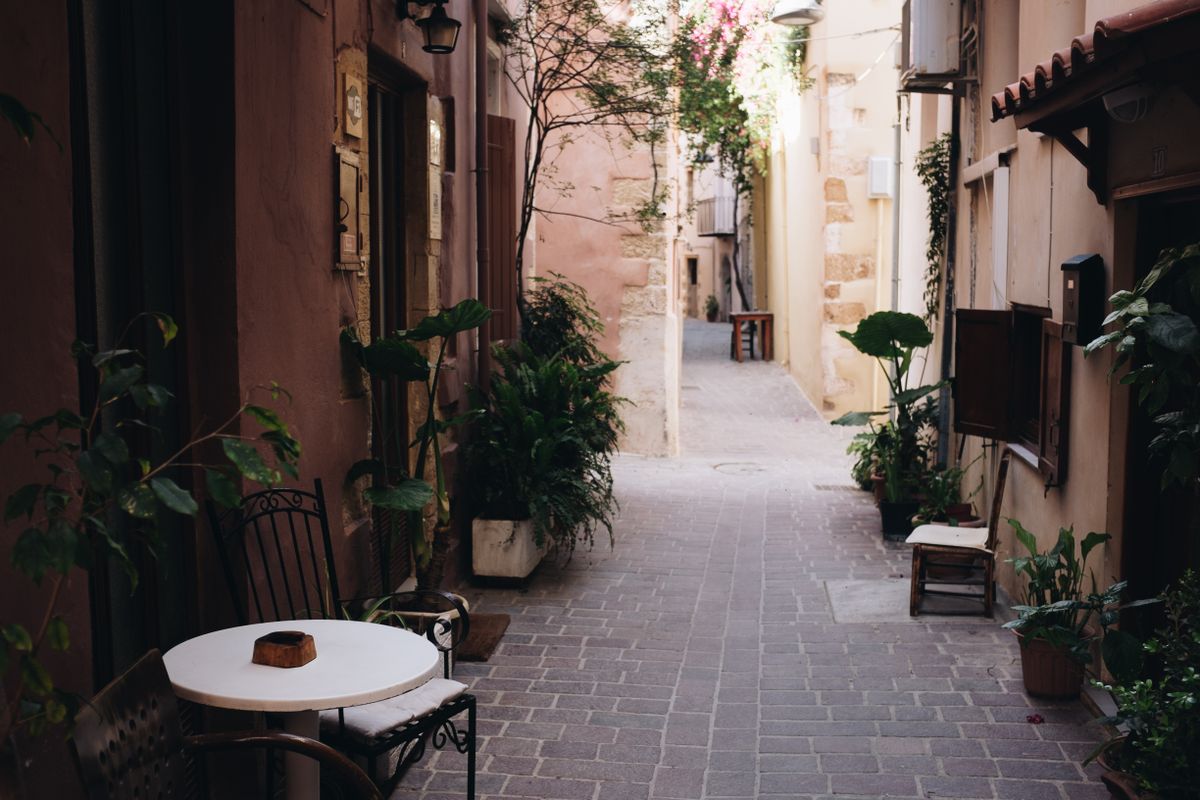
West of the harbour lies Topanas, the former Christian quarter during Ottoman rule, named after a Venetian ammunition warehouse. Its lanes are narrow, its buildings restored in varying degrees, and its atmosphere noticeably quieter than the promenade — a welcome contrast during the busier months. South and east of the harbour, the Splantzia quarter centres on its plateia with large plane trees and a more residential feel. Tavernas here tend to be calmer and less expensive than those facing the water.
Kastelli hill, immediately behind the harbour, is where the story of Chania begins. Archaeological excavations have uncovered evidence of continuous habitation from the Neolithic period, roughly the fourth millennium BCE. During the Minoan civilisation, the settlement was known as Kydonia — the name appears in Linear B tablets as ku-do-ni-ja. Ancient sources including Homer and Strabo recognised it as one of the most important cities in western Crete. Excavation continues today, much of it around Agia Aikaterini Square. The Bronze Age remains lie beneath layers of later construction, making Kydonia one of the great partly hidden cities of the ancient Mediterranean.
The Municipal Market
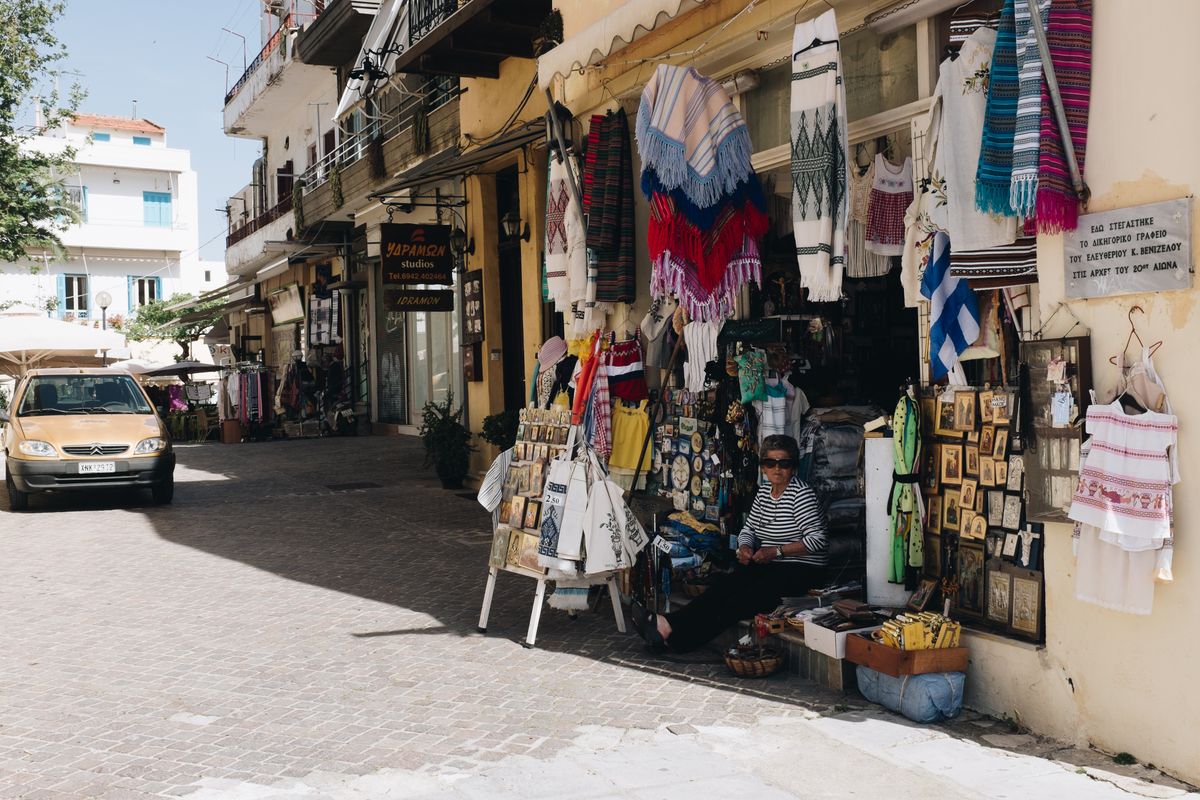
The Agora, or Municipal Market, is a cross-shaped covered building that opened in 1913. The ceremony was led by Prime Minister Eleftherios Venizelos just three days after Crete’s unification with Greece. Its four entrances open to different directions. Inside, traders sell local cheeses, olive oil, herbs, honey, fresh fish, Cretan knives, and leather goods alongside souvenirs of varying quality. Several small tavernas serve simple, inexpensive meals. The market sits at the boundary between Old Town and modern Chania, making it an effective starting point for a walking tour in either direction.
History Written in Stone
Chania is sometimes described as one of the oldest continuously inhabited cities in Europe. The evidence, while complicated by dense later building, supports the claim. Palace-like structures on Kastelli hill, pottery and fresco fragments now in the Archaeological Museum, and Linear B tablets all point to a settlement of considerable sophistication during the second millennium BCE. Kydonia survived the broader Minoan collapse and continued through the Mycenaean, Archaic, Classical, and Roman periods, each leaving fragments that archaeologists slowly untangle.
The Venetian period (1204–1669) shaped the city most visibly. Under Venetian rule, Chania — then called La Canea — served as the capital of Crete. The harbour, the fortification walls, the arsenali, and much of the Old Town’s street plan date from this era. The Grand Arsenal, the largest shipyard building, has been restored and now functions as a cultural centre. When the Ottomans took the city in 1645 after a two-month siege, they converted churches into mosques, built baths and fountains, and introduced a new architectural vocabulary that still marks certain corners of the Old Town.
The twentieth century added its own difficult chapter. During the Battle of Crete in May 1941, German airborne forces landed around Maleme airfield west of Chania in the largest parachute assault of the war. Allied troops and Cretan civilians fought fiercely — men, women, and children engaged the paratroopers with whatever they had. The island eventually fell. Chania sustained heavy bombing damage, and the city’s Jewish community was later deported by the occupying forces. The Allied War Cemetery at Souda Bay, a short drive east, honours the British, Australian, and New Zealand soldiers who fell during the battle.
The Beaches of Western Crete
Western Crete contains several of the most photographed beaches in Greece. Three in particular draw visitors from across the island and beyond, all accessible as day trips from Chania — though each requires some effort to reach, which is part of their appeal.
Balos Lagoon
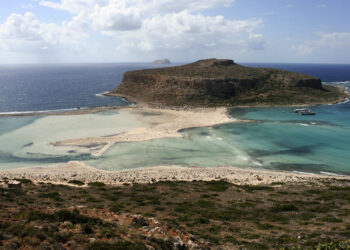
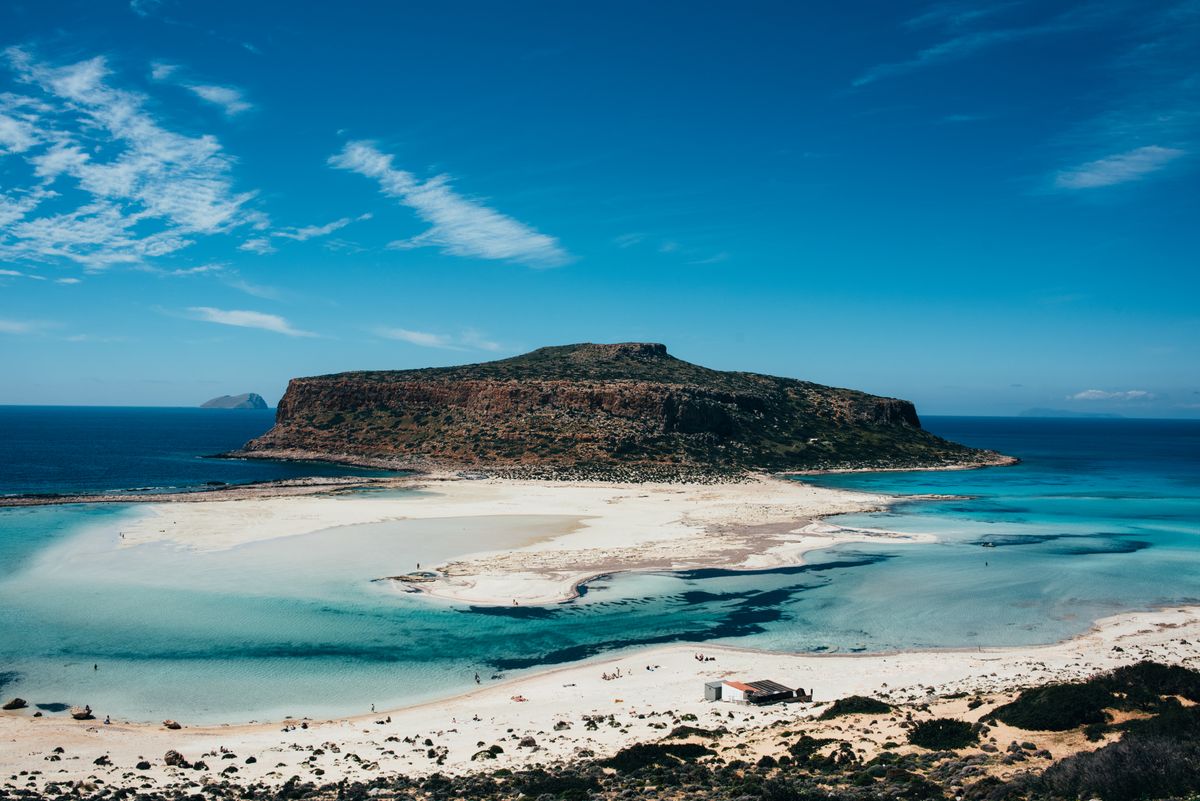
Balos sits at the northwestern tip of Crete, roughly 56 kilometres from Chania town. The lagoon forms between the Gramvousa peninsula and Cape Tigani, creating a shallow turquoise pool that photographs extraordinarily well from the hillside above. There are two ways to reach it. The first is by boat from Kissamos, roughly one hour and running seasonally. The second is by driving to the end of a rough dirt track and walking down a steep, exposed path for about twenty minutes. The boat is more comfortable; the hillside approach offers the famous panoramic view. Neither option is easy with a pushchair or mobility difficulties, and there is virtually no shade on the beach. Arrive early in summer — by mid-morning, both the beach and the access path become uncomfortably crowded.
Elafonisi
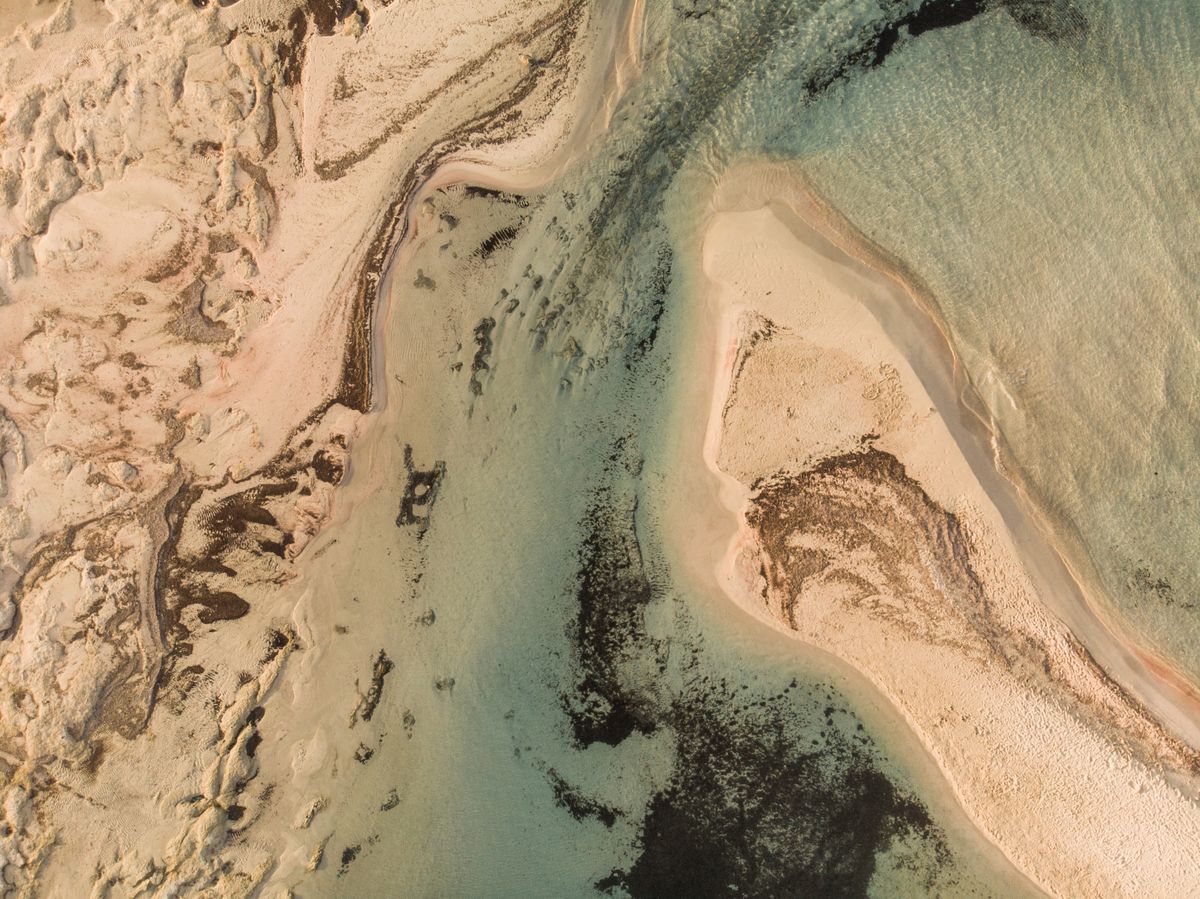
Elafonisi lies 82 kilometres southwest of Chania, at the very tip of Crete’s western coast. It was ranked the world’s best beach in TripAdvisor’s 2025 Travellers’ Choice Awards, and its appeal is immediately visible. A wide sandbar extends towards a small islet. The sand is tinged pink by crushed shells of tiny marine organisms, and warm, shallow water rarely rises above the knees for the first fifty metres. It is genuinely well-suited to families with young children — the gradual depth and absence of strong currents make conditions more predictable than on many Cretan beaches. But the same qualities that make it famous also make it popular. In July and August, space fills quickly. May, early June, and September offer a substantially better experience.
Falassarna
Falassarna, about 50 to 60 kilometres west of Chania, is the beach many repeat visitors quietly prefer. It is a long, wide stretch of clean sand facing west, which means it catches the sunset in a way that Balos and Elafonisi do not. The water is clear and the beach partly organised with sunbeds, though there is plenty of room to spread a towel farther along. Winds can pick up from the north, occasionally stirring the waves — good for body-surfing, less ideal for very small children on rough days. The ruins of the ancient Hellenistic city of Phalasarna lie just inland, adding a historical dimension that most beach day trips lack.
Stavros and City Beaches
For those who prefer not to drive an hour each way, Stavros beach sits on the Akrotiri peninsula, roughly 16 kilometres northeast of Chania. It is a sheltered, almost circular cove backed by a distinctive rounded hill, and its calm water makes it reliably family-friendly. Several beaches lie closer to the city. Nea Chora is within walking distance of the Old Town, while Agioi Apostoli and the long sand strip at Agia Marina and Platanias offer convenience, sunbed rental, and nearby tavernas. None have the dramatic setting of the western beaches, but they more than serve for an easy afternoon swim.
| Beach | Distance from Chania | Access | Best for | Watch out for |
|---|---|---|---|---|
| Balos Lagoon | 56 km | Boat from Kissamos or dirt road + steep walk | Photography, shallow lagoon | No shade, steep path, crowded by mid-morning in summer |
| Elafonisi | 82 km | Paved road (narrow final section) | Families, pink sand, very shallow water | Extremely busy July–Aug, limited parking |
| Falassarna | 50–60 km | Paved road, easy parking | Sunsets, wide sand, body-surfing | North wind can create waves |
| Stavros | 16 km | Paved road, small car park | Calm water, families, easy half-day | Small beach, fills on weekends |
| Nea Chora | Walking distance | On foot from Old Town | Quick swim, convenience | Urban beach, no dramatic scenery |
Into the White Mountains
The Lefka Ori — the White Mountains — rise steeply behind Chania, reaching 2,453 metres at their highest point, Pachnes. They are not white with snow for most of the year, but with exposed limestone that catches the Cretan light in a particular way, turning pale grey, almost silver, against the deep blue overhead. For visitors based in Chania, they provide a dramatic backdrop to every harbour photograph and a serious destination for hikers.
The most famous route is the Samaria Gorge, a 16-kilometre walk that begins near Omalos, high in the mountains, and descends through increasingly narrow rock walls to the coastal village of Agia Roumeli. The gorge is open from approximately May to October, depending on water levels, and draws thousands of walkers each season. It is long and demanding in hot weather — five to seven hours for most people. The only way out from Agia Roumeli is by boat to Sougia or Hora Sfakion, followed by a bus back to Chania. This is a full-day commitment. Carry adequate water, wear proper footwear, and start early.
For those who find the full Samaria walk too strenuous or logistically complicated, the Agia Irini Gorge offers a shorter, gentler alternative with similar scenery and far fewer people. It lies within the same national park area. The Imbros Gorge, also accessible from Chania, is another popular option — shorter and less steep than Samaria, with a more manageable two-to-three-hour walking time.
The Akrotiri Peninsula
Northeast of the city, the Akrotiri peninsula holds a different landscape: quieter, more cultivated, and rich with monastic history. The Monastery of Agia Triada (Holy Trinity) of Tzagaroli was built in 1634 and set among olive groves and vineyards. It is one of the finest examples of Cretan Renaissance architecture on the island, about 15 kilometres from Chania, and produces its own olive oil and wine. Farther along the peninsula, the more remote Gouverneto Monastery and the ruined Katholiko Monastery can be reached on foot. The walk descends through a small gorge to a rock-cut church by the sea — atmospheric and surprisingly moving for a short excursion.
Eating in Chania
Western Cretan food has its own character, and Chania is the best place to encounter it. The Cretan diet — heavy on olive oil, wild greens, pulses, cheese, and grilled meat — underpins most of what appears on taverna tables, but several dishes are specifically associated with the Chania region and worth seeking out.
Chaniotiko boureki is the signature dish: a baked layering of thin-sliced courgette, potato, local myzithra or graviera cheese, and fresh mint, bound with olive oil. Some versions use pastry; others go without. It sounds simple, but the combination of sweet courgette, earthy potato, and sharp cheese produces something quietly memorable. It appears on tables across western Crete in summer when courgettes are at their best.
Kalitsounia are small pastries filled with soft myzithra cheese and drizzled with honey (the sweet version, often associated with Easter) or stuffed with wild greens (the savoury version). Bougatsa is a warm custard-filled filo pastry dusted with cinnamon and icing sugar, a Chania breakfast tradition. Bakeries near the market sell it from early morning, and locals are particular about which bakery does it best. Dakos, the barley rusk topped with grated tomato, myzithra, olive oil, and oregano, is technically island-wide but appears on nearly every Chania menu. It makes a perfect light lunch.
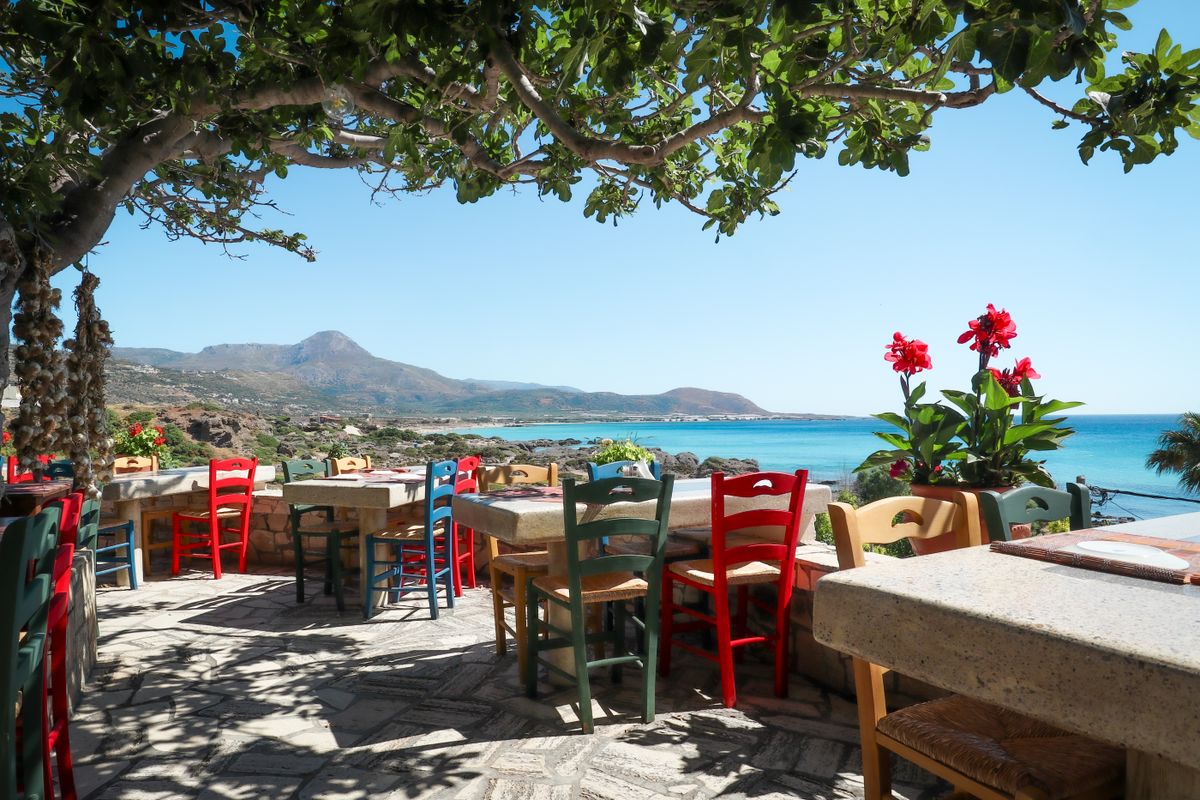
For choosing where to eat, the general principle holds. Tavernas directly on the harbour promenade charge more and often serve to a tourist rhythm. Those a few lanes back in Splantzia, or further along in Koum Kapi and Nea Chora, tend to offer better value and more careful cooking. The covered market’s small tavernas are good for inexpensive, no-frills meals during the day.
Best Time to Visit Chania
The short answer: May to June and September to October offer the best combination of warm weather, manageable crowds, and reasonable prices. September is often singled out as the single best month. Sea temperatures peak at 25–26°C after absorbing months of summer heat. The fierce August light softens. Restaurants, freed from the busiest weeks, tend to be at their most attentive.
July and August are the hottest and most crowded months. Temperatures regularly exceed 30°C, the famous beaches fill early, and accommodation prices rise significantly. Strong Meltemi winds from the north can occasionally make exposed beaches rough and disrupt ferry schedules. For travellers whose dates are fixed to school holidays, Chania still works — but book well in advance and reach popular beaches before 10:00.
April is possible for Old Town exploration, hiking, and wildflowers, though the sea is still cool and some beach facilities may not yet be operating. November through March sees Chania at its quietest. The Old Town remains atmospheric, mountain landscapes turn dramatic and green, and rain is more frequent. Most beach-oriented tourist infrastructure closes for winter.
Where to Base Yourself
The best area depends on what kind of trip you are planning, but most first-time visitors do well in or near the Old Town.
| Area | Best for | Trade-offs |
|---|---|---|
| Old Town (Topanas / Jewish Quarter) | Atmosphere, restaurants, evening walks, no car needed | Most expensive, can be noisy at night, parking very limited |
| Koum Kapi | Quieter than Old Town, seafront promenade, 10–15 min walk to harbour | Fewer boutique-hotel options |
| Nea Chora | Beach access, better value, easier parking, still walkable to Old Town | Less historic atmosphere |
| Halepa / Tabakaria | Quiet, off-the-beaten-path, historic tannery district, parking available | 20–30 min walk to Old Town |
| Platanias / Agia Marina | Beach resort atmosphere, pools, families wanting a resort base | 15–20 min drive to Old Town, more touristic feel |
Travellers with a car should think carefully before booking deep inside the Old Town’s pedestrian centre. Parking is severely limited, one-way streets are confusing, and most boutique hotels in the core have no private parking. Nea Chora, Koum Kapi, or Halepa offer much easier logistics for anyone planning regular day trips by car.
Getting There and Getting Around
By Air
Chania International Airport (CHQ), named after the Cretan revolutionary Ioannis Daskalogiannis, sits on the Akrotiri peninsula, a short drive northeast of the city centre. It receives daily domestic flights from Athens and several weekly connections from Thessaloniki. During summer, a large number of direct international flights operate from the UK, Germany, the Netherlands, Italy, France, Scandinavia, and beyond. A public bus connects the airport to the city centre for approximately €2.50, running in coordination with arrivals.
By Ferry
An overnight ferry operates daily year-round from Piraeus (Athens) to Souda Bay, the deep natural harbour about 7 kilometres east of Chania town. The crossing takes approximately nine hours, departing in the evening and arriving at dawn. It is a comfortable way to arrive — and a practical one for those bringing a car. Chania is not directly connected by ferry to other Greek islands. Travellers coming from the Cyclades or Dodecanese typically ferry to Heraklion and then travel overland.
Getting Around
KTEL buses connect Chania to Rethymno, Heraklion, Kissamos, Hora Sfakion, and many smaller towns. Services on the main intercity routes run relatively often — up to 16 departures per day to Heraklion on weekdays, for example. Local urban buses cover Souda, the airport, Agioi Apostoli, and nearby beach areas. However, for reaching Balos, Elafonisi, Falassarna, or the south coast independently, a rental car is strongly recommended. Public buses reach some of these destinations, but services are infrequent and schedules change by season. The road to Balos is unpaved, and some rental companies exclude it from their policies — worth confirming before you set off.
How Many Days You Actually Need
Two nights is enough to walk the Old Town, eat well, and visit the harbour at different times of day. Three nights allows a day trip to one major beach and a more relaxed pace in the city. Five nights lets you add Samaria Gorge, a second beach day, and the Akrotiri monasteries without feeling hurried. A full week is justified if you want to explore the south coast or use Chania as a base for all of western Crete.
Many travellers combine Chania with time in Rethymno, about an hour east by bus or car. Others move to Heraklion and eastern Crete for the second half of their trip. Both approaches work well — the character of western and eastern Crete is different enough to make the combination interesting rather than repetitive.
Common Mistakes to Avoid
Trying to do Balos, Elafonisi, and Falassarna in one day. They are in different directions from Chania and each requires travel time plus time on the beach. One beach per day is realistic, two at a push if you leave early and don’t mind spending most of the day in a car.
Booking a car-dependent beach day without renting a car. Organised tours reach Balos (by boat from Kissamos) and Elafonisi (by coach), but they arrive when the beaches are already busy and leave on a fixed schedule. If flexibility matters to you, rent a car.
Walking the Samaria Gorge in flip-flops. It sounds absurd, but it happens regularly. The path is rocky and uneven, the descent is steep in places, and the walk takes five to seven hours. Proper closed-toe shoes with grip are essential, along with at least two litres of water per person.
Eating only on the harbour promenade. The harbour tavernas are fine for a drink with a view, but the food is often more generic and more expensive than what you will find a few streets back. Wander inland — the lanes reward exploration.
Visiting only in August. Chania is at its most crowded, most expensive, and hottest during the first three weeks of August. If your schedule allows any flexibility, September offers nearly everything August does with noticeably fewer people and a more relaxed atmosphere.
Exploring More of Western Crete
Chania is the natural starting point for deeper exploration of western Crete. Travellers with more time might consider the remote south coast around Sfakia, where the road ends and boats take over, or the wine-producing villages in the foothills of the White Mountains, where indigenous grape varieties produce wines unlike anything else in Greece. Kissamos, the quiet town west of Chania, serves as a calmer alternative base and the departure point for boats to Balos. And the interior villages — Theriso, Meskla, Lakki — offer a side of Crete that most visitors never see, where old women still sit in doorways and the pace of life has nothing to do with the summer tourist season.
This article was researched and verified as of July 2026. Transport schedules, opening hours, admission prices, and seasonal access may change — we recommend confirming details with official sources before travelling. Vivid Greece does not accept payment or free services in exchange for coverage. All recommendations reflect independent editorial judgement.