
Renting a car in Crete can transform the island from a collection of distant beaches and mountain villages into a trip you can shape around your own pace. It can also add cost, parking stress and a level of driving that is unnecessary if you plan to stay in one well-connected resort.
The useful question is not simply whether a hire car is convenient. It is whether a car will give you access to the kind of Crete you actually want to experience. This guide compares the situations where renting makes sense, the places where buses and excursions are enough, what to check in the rental contract, and how to choose a vehicle without paying for capabilities you will not use.
Rent the car for the days that need it
A car is valuable on Crete when it opens a region, not when it sits outside a city hotel while you pay for it.
Quick answer: is renting a car in Crete worth it?
| Trip type | Car verdict | Why |
|---|---|---|
| City break in Heraklion | Usually not needed | The centre, museums, harbour and main cultural sights are easier on foot or by local transport |
| Chania without distant beaches | Optional | A car helps for Akrotiri and western beaches, but organised excursions cover selected highlights |
| Rethymno and north-coast bases | Useful for part of the trip | The town and main corridor are manageable; inland villages and the south coast are less simple |
| Western Crete beaches and gorges | Usually worthwhile | Early starts, dispersed trailheads and beach access are easier to control with a car |
| Eastern Crete and Lasithi | Useful | A vehicle connects Agios Nikolaos, Elounda, villages, archaeological sites and interior roads more flexibly |
| Resort holiday in Stalida or Hersonissos | Often optional | Beach, shops, restaurants, buses and excursions are close; hire for selected days if needed |
| South Crete road trip | Strongly recommended | The route is part of the experience and public transport is less convenient for combining remote stops |
The table is a starting point rather than a rule. Your best choice depends on the places you want to visit, how much driving you enjoy and whether the rental terms suit your dates.
When you probably do not need a car
You can have a satisfying Crete trip without driving if you choose a base that already provides what you want. Chania, Rethymno, Heraklion and Agios Nikolaos all offer town-centre accommodation, restaurants and local experiences. The resort coast around Stalida, Hersonissos and parts of Malia is also designed for a beach-led holiday where you can walk to most daily needs.
A car is less useful when your itinerary consists of a historic town, one or two organised excursions and a nearby beach. In that situation, the vehicle may spend much of the day parked while you still pay for the rental, fuel and insurance. A transfer from the airport followed by a two- or three-day hire can be more logical than collecting a car as soon as you land.
Without a car, be realistic about what organised excursions solve. A tour to Balos, Elafonisi, Knossos or Spinalonga may remove the need to navigate and park, but it gives you a fixed departure, return and itinerary. That is a good trade for some travellers and a poor one for others. Public transport can be practical along the main north-coast corridor, but seasonal departures, stops and frequencies change. Check the current KTEL timetable before building a no-car route around a particular bus.
The Where to Stay in Crete guide explains which bases are easiest without a car and how the accommodation decision affects transport.
Where a rental car makes the biggest difference
Western Crete
Chania is a workable base without a vehicle, but a car becomes valuable when western Crete is the main reason for the trip. Balos, Falassarna, Elafonisi, the Akrotiri peninsula, inland villages and the White Mountains do not form one compact sightseeing district. Each day has its own road, parking and walking considerations.
For Balos, compare driving with a boat excursion rather than assuming that a hire car reaches the lagoon itself. The final approach and any walk, boat timing or seasonal access restriction should be checked before you set out. For Elafonisi, the question is not only whether you can reach the beach but whether your group wants the return journey after a long beach day. For Samaria, the car cannot be retrieved from Agia Roumeli at the end of the walk; the usual arrangement combines the hike with a boat and onward transport. The official Visit Greece information confirms the point-to-point nature of the route and its seasonal, weather-dependent operation.
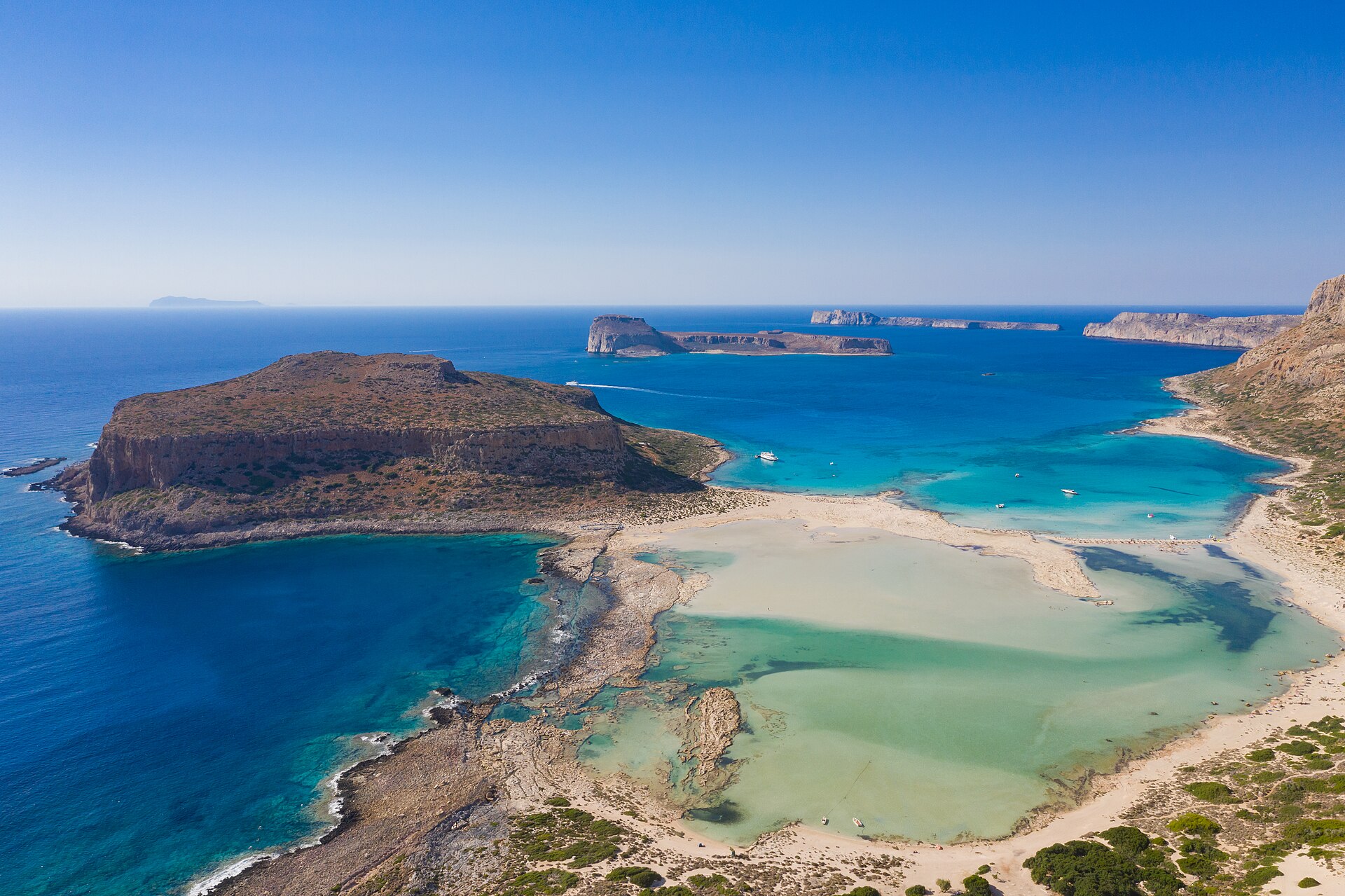
Photo by dronepicr, via Wikimedia Commons, licensed under CC BY 2.0.
Central Crete
A car is useful around Heraklion when you want to combine Knossos with Archanes, wine villages, Gortyna, the south coast or less direct countryside routes. It is not automatically useful for the city itself. Parking inside or near the historic centre can be more frustrating than walking from accommodation with a sensible location.
Use the car for the regional days and leave it parked for the city days where possible. The existing Heraklion guide is the better starting point for deciding which sights need a vehicle and which do not.
Eastern Crete and the Lasithi interior
Agios Nikolaos and Elounda can work with buses, taxis and boat trips if the plan is town, bay and Spinalonga. A rental becomes more valuable when you add Lato, Kritsa, Voulisma, the Lasithi Plateau, inland villages or a route towards Sitia and Ierapetra.
Eastern Crete is where a map can give the wrong impression of convenience. A sequence of coastal stops may look short but still involve parking, walking, waiting for a boat or turning back on a narrow road. Use a car for flexibility, not as permission to fill every hour with another pin.
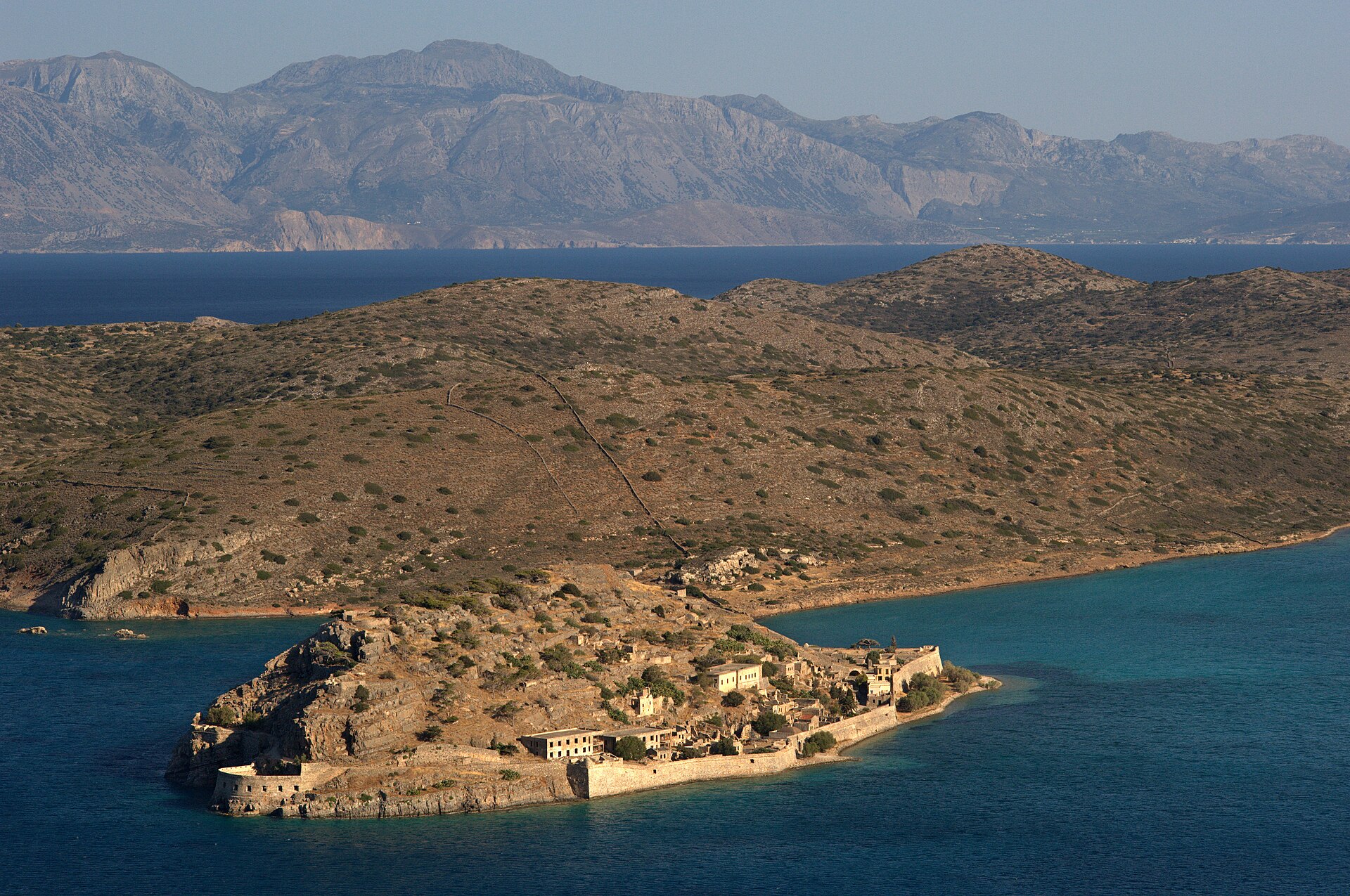
Photo by Ggia, via Wikimedia Commons, licensed under CC BY-SA 3.0.
South Crete
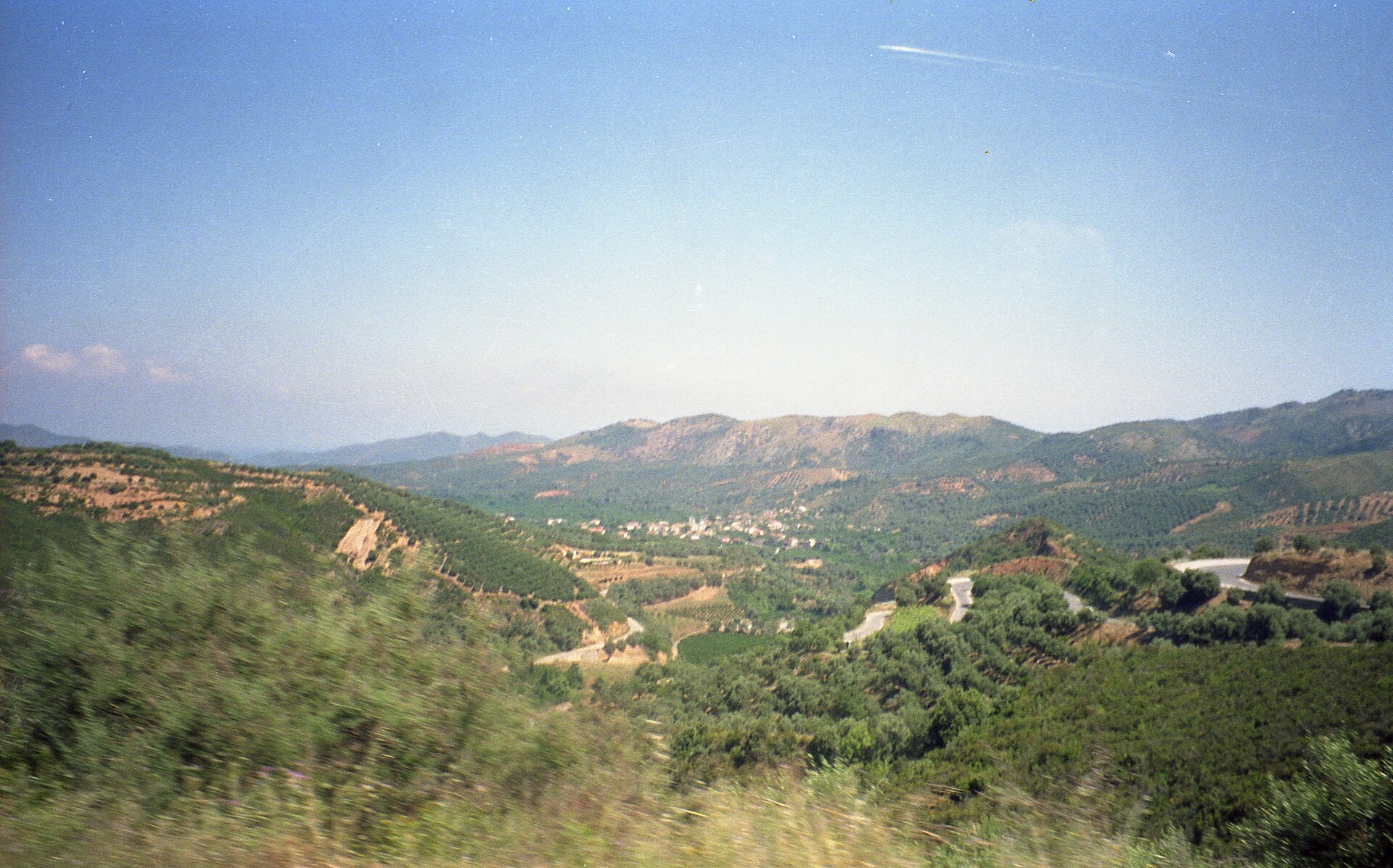
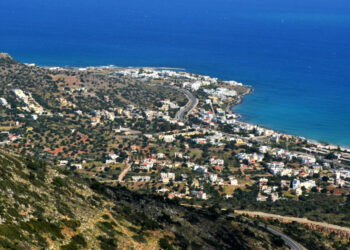
The south coast is the clearest case for renting when the itinerary is route-led. Matala, Agia Galini, Plakias, Lentas, Tsoutsouras, Keratokampos and Ierapetra are not one continuous resort area with identical transport. Buses serve parts of the coast, but they are less useful when you want to link remote beaches, inland villages and viewpoints in one day.

Photo by Pathwaygr, via Wikimedia Commons, licensed under CC BY 3.0.
The existing South Crete road-trip guide shows why the car is part of the route rather than merely a way to reach one hotel.
How many days should you rent the car?
There is no rule that says the rental period must match the length of the holiday. A short hire can be the better choice when you have a walkable base and only need transport for beaches, villages or a change of accommodation.
| Holiday pattern | Practical rental approach | What to avoid |
|---|---|---|
| Three to five nights in one town | No car or hire for one or two excursion days | Paying for a car that remains parked in the centre |
| One week in western Crete | Hire for the beach, gorge or inland days; keep city days car-free if convenient | Trying to combine Balos, Elafonisi and Samaria in rushed consecutive days |
| One week in eastern Crete | Hire for Lasithi, Lato, villages and remote beaches | Assuming a car makes western-Crete day trips sensible |
| Ten to fourteen nights with regional moves | A longer hire or one-way rental may reduce backtracking | Booking a one-way route before checking the fee and drop-off terms |
| Resort holiday with excursions | No car or a short hire for one flexible day | Renting a large vehicle for a beach-and-restaurant itinerary |
Compare the price of a short rental with the combined cost of airport transfers, taxis and excursions. Do not compare only the daily headline rate: a shorter hire can have a different rate, while a longer hire may add insurance, an additional driver or airport fees.
Choosing the right vehicle
For most Cretan trips, a small or compact car is the sensible starting point. It is easier to park in towns, more comfortable on narrow village streets and usually adequate for the main paved roads. Families should prioritise luggage space, rear-seat comfort and a properly fitted child restraint over the smallest possible price.
An automatic car can be worth paying more for if you are not comfortable with a manual gearbox, especially on steep approaches or when repeatedly stopping and starting on mountain roads. Check the exact vehicle category rather than assuming that a reservation guarantees a particular make or model.
A larger car may help with passengers and luggage, but it is not automatically better for Crete. It can make narrow lanes, old-town parking and tight coastal approaches more difficult. A four-wheel-drive label also does not mean that the vehicle is authorised or insured for every dirt road. Follow the rental contract and ask the local station before using an unpaved route.
Ask about roof racks, child seats, additional drivers, luggage capacity and after-hours collection before booking. These extras can change the total cost and the practical suitability more than a small difference in the base rental rate.
Rental insurance: what you are actually comparing
Every rental vehicle in the EU must have third-party liability insurance, and it should be included in the rental price. That does not mean every possible cost is covered. Optional or additional cover may address damage to the rental vehicle, theft, glass, tyres, roadside assistance or the driver’s excess, depending on the contract.
The important word is excess. A booking may show a low daily price while leaving you responsible for a substantial amount if the car is damaged. Compare the rental company’s own cover with any separate broker or excess policy, and check who handles the claim. A third-party policy is not automatically the same as reducing the amount the rental desk can charge at the time of damage.
Before booking, look for:
- the excess for collision damage and theft;
- exclusions for tyres, wheels, glass, underside and roof;
- damage caused on unpaved roads or restricted routes;
- fuel policy and late-return charges;
- deposit amount and accepted payment card;
- roadside assistance and what happens after a breakdown;
- additional-driver, young-driver and airport fees;
- ferry permission if the car will leave Crete.
The EU’s Your Europe car-rental guidance is a useful neutral reference: read the rental terms, distinguish a broker from the actual rental company and do not assume an online booking has an automatic 14-day cooling-off cancellation right.
Driving licence and documents
Bring the original valid driving licence, passport or identity document and the rental voucher or booking confirmation. Licence rules can depend on where the licence was issued, and a rental company may have requirements that are stricter than a general travel summary. If your licence is from outside the EU, check the current Greek recognition rules and ask the rental company whether an International Driving Permit or official translation is required before you travel. Do not rely on a forum answer or on the fact that another traveller was not asked.
Keep the rental agreement and insurance details accessible in the car. If a second person will drive, make sure that driver is named in the contract. If you plan to take the vehicle on a ferry, get written permission first; a ferry company selling a vehicle ticket does not prove that the rental contract permits the crossing or that the cover remains valid.
Driving in Crete: the habits that matter
The main north-coast road is generally the easiest part of a self-drive itinerary. Mountain and rural roads require a different approach. Allow more time than a map estimate suggests, especially when the route includes hairpins, villages, parking, walking or a late return after a beach day.
- Drive on the right and follow the signs and local speed limits rather than treating a navigation app as authority.
- Use seat belts and the correct child restraint. These are mandatory in Greece.
- Do not assume that a wide road remains wide around the next bend.
- Expect motorcycles, agricultural vehicles, pedestrians and animals on rural routes.
- Do not stop on a bend or narrow section for a photograph. Find a safe pull-off.
- Use headlights and extra caution in poor visibility, tunnels and mountain weather.
- Do not drink and drive, even when the distance back to the hotel looks short.
- Download or save the route before leaving areas with weak mobile coverage.
Parking is often a bigger planning issue than the driving itself. Ask the accommodation whether parking is private, guaranteed, paid, nearby or simply street parking. In old towns, the final walk with luggage may involve cobbles, stairs or a restricted street. At popular beaches, arriving earlier can matter more than choosing a theoretically faster route.
What to inspect before leaving the rental station
Do not treat the collection formalities as an obstacle between you and the beach. They are the moment to understand the vehicle and record its condition.
- Walk around the entire car and photograph each side, wheel, mirror, windscreen and roof.
- Record existing scratches, dents, warning lights and the fuel level on the agreement or collection record.
- Check the spare-wheel or breakdown arrangement, warning equipment and emergency contact.
- Confirm the fuel type, return procedure and after-hours instructions.
- Ask which roads, beaches, ferries or surfaces are excluded by the contract.
- Check that the additional driver and child seat, if booked, are recorded.
- Save the rental company’s telephone number and the station’s location.
Airport pickup, town pickup or one-way rental?
Airport pickup is convenient when you are leaving immediately for another region, travelling with children or arriving at a time when public transport is limited. It may also carry location or airport charges, so compare the full total with a city pickup or a transfer to your first base.
Town pickup can be more sensible when you are spending the first days in Chania, Rethymno or Heraklion without a car. It avoids paying for a vehicle while you are sightseeing on foot and can make the driving section of the holiday more deliberate.
A one-way rental between Heraklion and Chania airports may suit a longer island route, but it is not automatically cheaper. Check the one-way fee, opening hours, vehicle availability, deposit, insurance terms and whether the return station accepts the same category. Build the route around the places you want to visit, then price the rental — not the other way around.
Common mistakes when renting in Crete
- Hiring for the whole holiday by default: a walkable base may make a shorter rental better value.
- Choosing the cheapest headline rate: insurance excess, deposit, airport fee and fuel policy can change the real cost.
- Assuming every beach is a drive-to stop: some require a boat, walk, reservation or weather check.
- Using a dirt road because the map suggests it: the contract may exclude it and the vehicle may not be suitable.
- Taking a car on a ferry without written permission: the crossing and the rental cover are separate questions.
- Booking a large vehicle for an old-town stay: extra space is not useful if parking and narrow lanes become stressful.
- Measuring the island by kilometres alone: driving time includes bends, stops, parking, walking and fatigue.
- Leaving the car full of beach sand: check cleaning terms before returning it.
When a rental car is worth the money
A car is most defensible when it changes the kind of trip you can take: when it lets you reach a mountain village before the heat, connect a south-coast route, leave a busy resort for a quieter beach, or make a regional move without depending on a fixed timetable. It is less defensible when it merely replaces a short taxi ride or sits outside a city hotel.
For a first visit, a useful compromise is often one walkable base plus a focused rental period. For a longer trip, a one-way route can reduce backtracking if the terms are clear. For a resort holiday, compare the cost of one or two rental days with an excursion and transfer. The best choice depends on the days you want to control, not on a general belief that “you need a car in Crete”.
When you know that you need a vehicle, compare rental availability, insurance terms, deposit requirements, cancellation conditions and the exact pickup location for your dates. The booking decision should follow the route and the contract, not just the lowest number shown in a search result.
Final recommendation
Rent a car in Crete if you want a regional road trip, remote beaches, mountain villages, the south coast or several stops that public transport cannot join comfortably. Consider staying car-free if you are based in a walkable town or resort and plan to use a small number of organised excursions. For many travellers, the strongest option is in between: no car for the town days, a carefully chosen vehicle for the days when Crete’s geography is the reason for travelling.
Research and review note: Rental terms, insurance exclusions, licence requirements, road conditions and seasonal transport can change; confirm the current contract and official guidance before driving.



_01.jpg)
_(9453257774).jpg)