Lefkada’s Best Beaches: Beyond Porto Katsiki & Egremni — Quieter Alternatives
We drove off the ferry-less bridge and into Lefkada before we had even agreed on a plan. That’s the thing about this island: it invites spontaneity. One moment you’re on the mainland highway, the next you’re winding through a green mountainous interior toward a sea so impossibly turquoise you’re convinced someone added food dye. No boats to catch, no timetables to respect — just the open road and, somewhere ahead, the best beaches in the Ionian.
Most people come for Porto Katsiki and Egremni, and we understand why. Both are extraordinary. But Lefkada’s real secret is what lies beyond those two famous postcards — coves draped in pine trees, village beaches with real fish tavernas, windy bays that draw athletes from across Europe, and waterfalls tumbling through gorges nobody else seems to know about. This is our complete guide to the island: the famous, the hidden, the edible, and the unforgettable.
Why Lefkada Is Different from Every Other Greek Island
There are over 200 inhabited Greek islands, and most of them require a ferry. Lefkada requires nothing but a full tank of petrol and a sense of direction. A narrow causeway and a short floating bridge connect it to the Akarnanian coast of mainland Greece, making it the only island in the country you can drive to directly.
This changes everything. It means you can leave Athens in the morning and be on a beach by noon. It means a rental car costs you nothing extra for a ferry supplement. It means a family with small children doesn’t have to negotiate boat schedules, seasickness, and heavy luggage at dawn. And it means Lefkada stays just slightly under the radar — the kind of place where the beaches are as good as Santorini’s but the taverna check at the end of the night is considerably less painful.
The island’s nearest airport is Aktion-Preveza, just 20 minutes from the bridge. From Athens by road, you’re looking at roughly 3.5 to 4 hours on the A5 toll road. And once you’re here, a rental car for €26–50 per day is your best investment — because Lefkada’s beaches sprawl from north to south, and each one has its own personality.
For a different Ionian perspective — and to weigh Lefkada against its neighbours — read our Ionian Islands Showdown guide.
Standing at the edge of the floating bridge for the first time, watching the water shift from dark Ionian blue to a shallow lagoon green, we had the distinct sensation of entering somewhere apart from the ordinary world.
The Beach Portfolio: Nine Shores, Nine Moods
Leftkada’s coastline holds a remarkable range of beach experiences. The west coast has the drama — pale limestone cliffs plunging into turquoise water, the kind of scenery that makes you question whether you’ve stumbled onto a Caribbean island. The east coast is gentler, sheltered, and quieter. The south opens to windy bays that have turned Vassiliki into Greece’s premier wind sports destination. Here’s how they stack up.
Porto Katsiki: The Benchmark
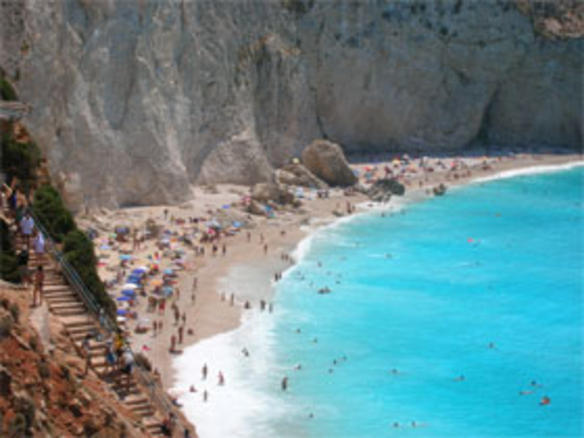
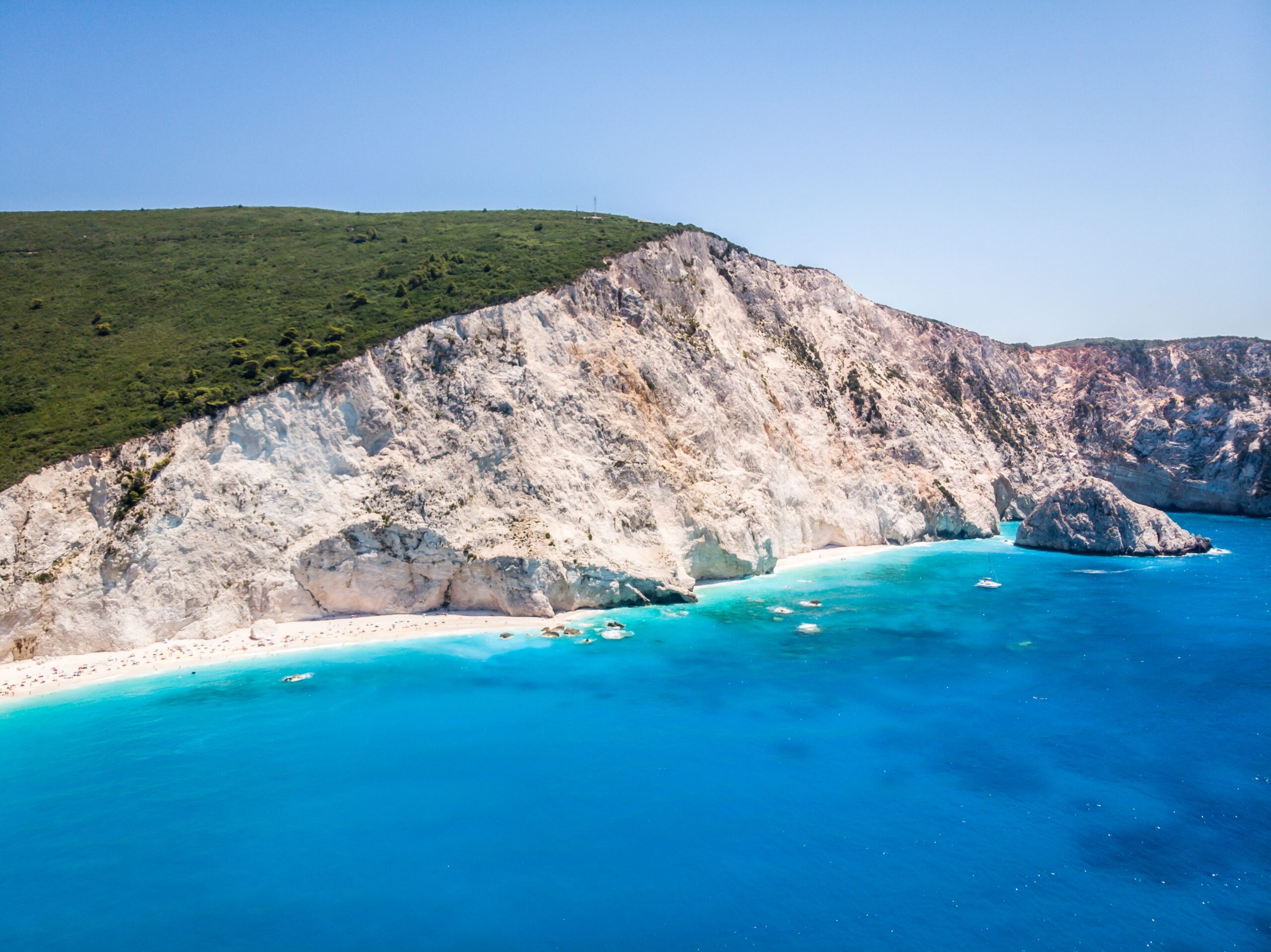
We won’t pretend you can skip it. Porto Katsiki sits at the base of 50-metre chalk-white cliffs on the southern tip of the west coast, and the combination of pebble beach, pale rock, and translucent water is genuinely unlike anything else in Greece. Go early — before 9am in July or August — to find a parking space and a stretch of shingle to yourself. By midday the staircase from the car park becomes a slow-moving queue. There are umbrellas, sunbeds, and a café, but the beach earns its fame for the cliffs and the colour of the water alone.
Best for: Photography, swimming, first-timers.
Peak crowds: Very high in July–August.
Facilities: Umbrellas, sunbeds, cafés, restaurants.
Egremni: The Wilder Sister
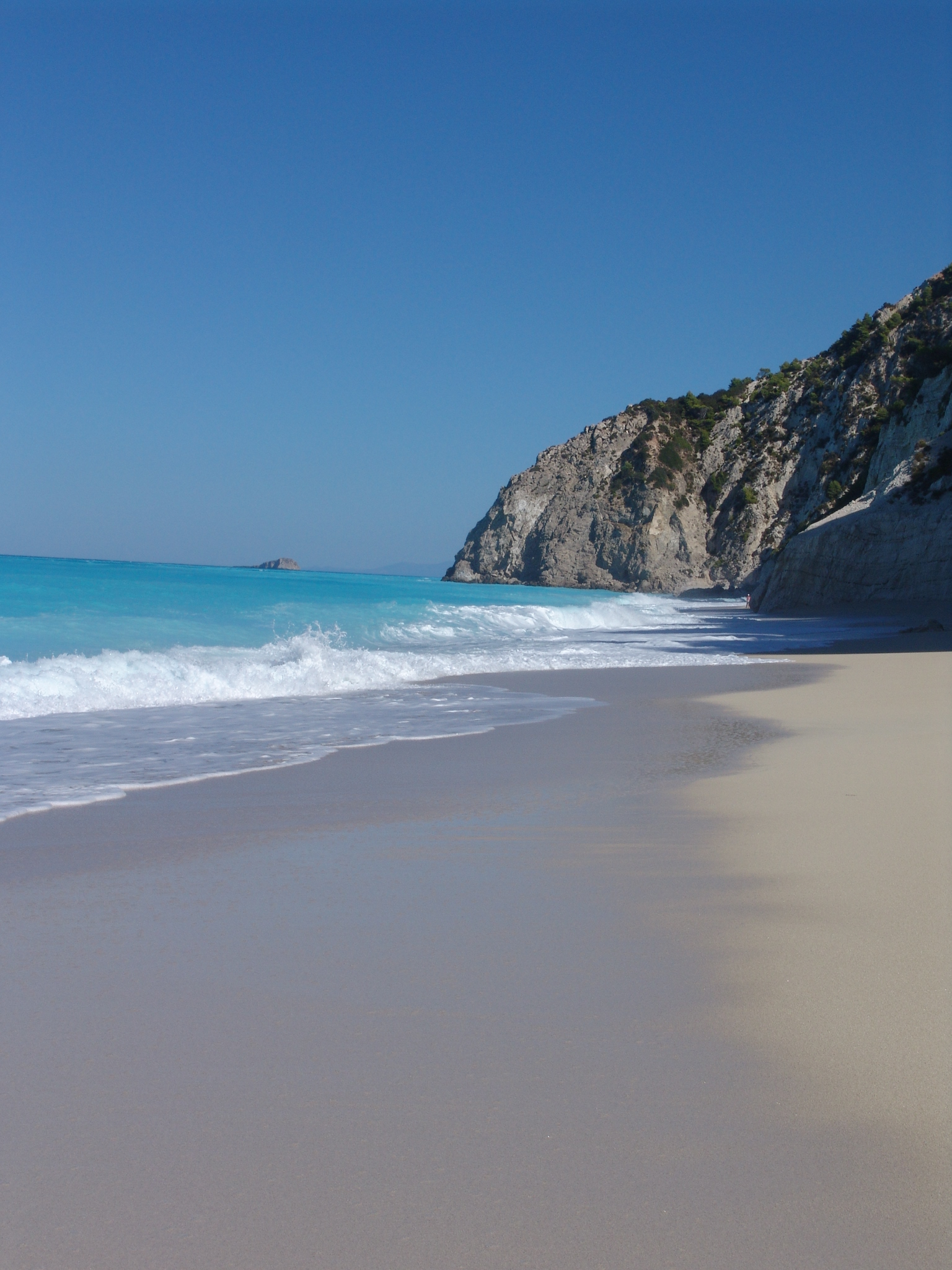
A few kilometres north of Porto Katsiki, Egremni is equally dramatic but less visited. The cliffs here rise to 50 metres, the beach is over a kilometre long, and the new staircase (rebuilt after earlier access was nearly impossible) has made it reachable again. Because fewer tourists know about the staircase, the atmosphere is more adventurous — quieter at the water’s edge, wilder underfoot.
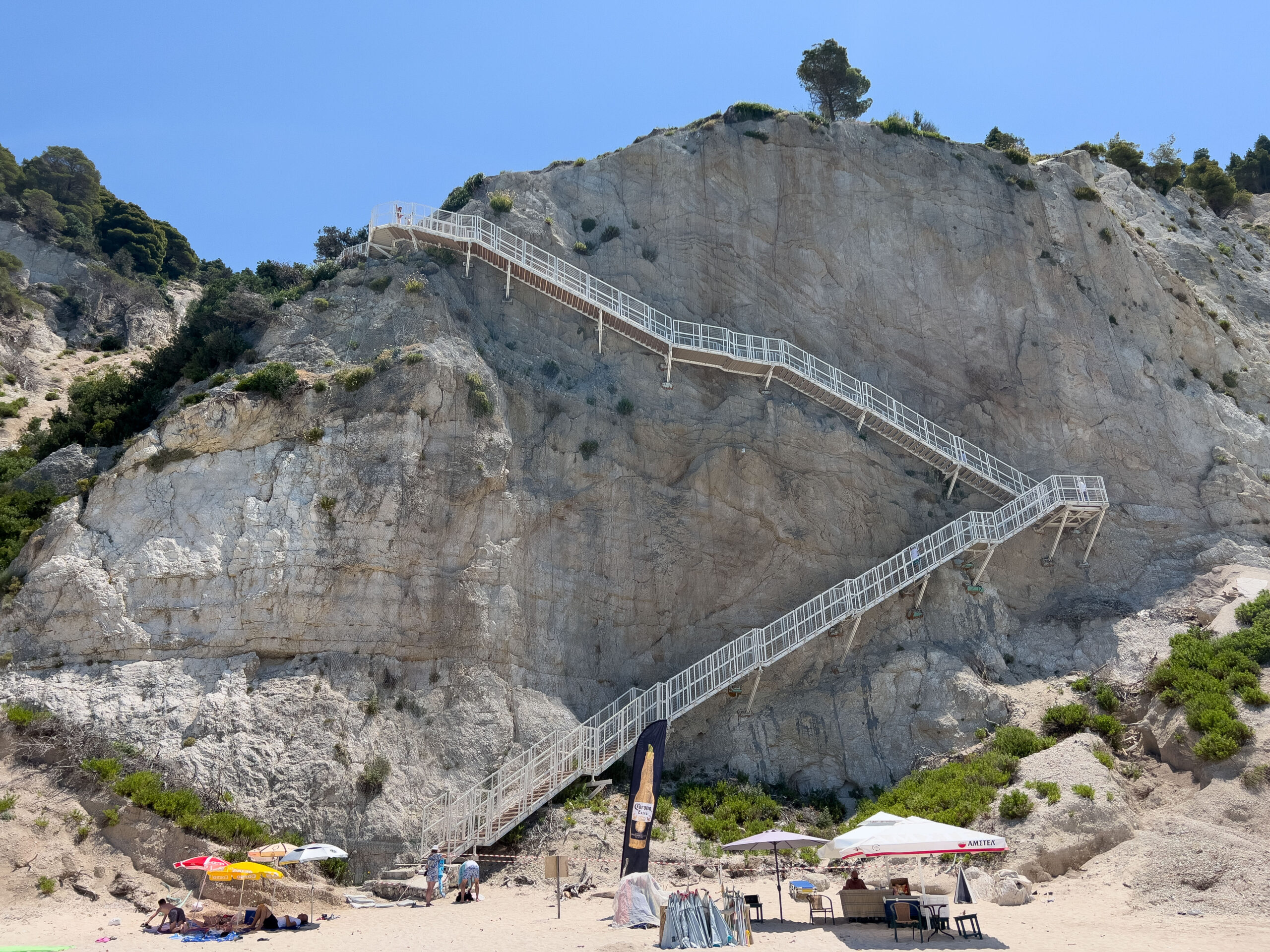
Bring water and snacks; facilities are minimal. But snorkelling in 25 metres of visibility, with the cliffs rising behind you and almost no one else around, is worth every step of the descent.
Best for: Swimming, photography, adventurous travellers.
Facilities: Very limited. Bring your own provisions.
Kathisma: The Family Beach
One of the longest stretches of sand on the island, Kathisma sits on the west coast backed by tall green cliffs and pine trees. The infrastructure here is well-developed — sunbeds, umbrellas, tavernas, water sports — which makes it ideal for a full beach day with children. The water is clean and gradually shallow. Crowds are moderate to high in summer, but the beach is long enough that you can always find a quiet corner if you walk a little north.
Best for: Families, all-day beach sessions, water sports.
Facilities: Full: sunbeds, cafés, water sports hire.
Agios Nikitas: The Only Turquoise Village Beach on the West Coast
This is our personal favourite for what it combines: a car-free fishing village with narrow cobbled lanes, fish tavernas on wooden decks, and a small sandy beach with water that shifts from glass-green near the shore to deep Ionian blue. Agios Nikitas is the only settlement on Lefkada’s west coast with a proper beach in its heart — everywhere else, you drive to the water. Here, you walk down from your terrace.
The village hums with a gentle life — cats on doorsteps, fishing boats, morning coffee at the harbour, slow evenings over grilled fish. It reminds us of the kind of Greece that used to exist before mass tourism, preserved here in a small pocket of the Ionian. If you love the idea of a car-free Greek village, our guide to Hydra, the car-free Saronic island, captures a similar magic.
Best for: Village atmosphere, local food, swimming.
Facilities: Village tavernas, bars, shops.
Mylos Beach: The Hidden Neighbour
A short walk south of Agios Nikitas, Mylos is a small sandy cove with fine pebbles that most people drive straight past. It’s intimate, relatively quiet, and shaded by pine trees in the afternoon. A small café operates nearby. If you want solitude on the west coast without the long descent to Egremni, Mylos is your beach.
Best for: Quiet days, swimming, avoiding the crowds.
Facilities: Minimal.
Pefkoulia: The Pine-Fringed Gem
Pefkoulia is Lefkada’s most scenic approach — a long sweep of sand backed by pine trees, with green-cliffed hillsides on either side and remarkably few tourists relative to its beauty. The drive there is part of the experience: winding roads with sea views through the pines. Arrive by mid-morning and you’ll often find entire sections of the beach to yourself, even in high summer.
Best for: Photography, peaceful swimming, fewer crowds.
Facilities: Umbrellas, sunbeds, small taverna.
Agiofili: The East Coast Surprise
While everyone crowds the west coast, Agiofili sits on the east side — calm, sheltered, and considerably less visited. The water is turquoise and the beach is compact, making it feel almost private. It’s excellent for snorkelling (look for sea grass meadows and small fish darting in the shallows). The slightly awkward access — limited parking, short walk — keeps the crowds manageable.
Best for: Snorkelling, avoiding crowds, quiet days.
Facilities: Minimal — small café.
Vassiliki: The Wind Sports Capital
Vassiliki is not primarily a sunbathing beach — it’s a windsurfing destination, and one of the best in the world. The bay’s reliable thermal winds (15–20 knots average through summer) combined with a wide, navigable expanse of water attract athletes from across Europe, and the village has built its identity entirely around wind sports. Certified schools offer lessons at all levels (€80–150 per day); equipment rental is widely available.
Even if you don’t windsurf, Vassiliki’s harbour makes for a lovely evening — cold beer, grilled octopus, watching the last windsurfers come in as the sun drops over the hillside.
Best for: Windsurfing, kitesurfing, active travellers.
Facilities: Wind sports schools, restaurants, bars.
Gialos & Mikros Gialos: The Village Twins
Near Vassiliki, these two beaches have a local, unhurried quality. Gialos is larger; Mikros Gialos is intimate and sheltered. Both are good for families and for travellers who prefer a beach with a real village life around it — tavernas serving fresh fish, old men playing backgammon in the shade, children running between the tables.
Best for: Families, easy access, village atmosphere.
Facilities: Tavernas, cafés, water sports equipment.
Inland Adventures: Waterfalls, Gorges & Mountain Villages
The beaches are extraordinary — but leaving the coast entirely for an afternoon might be the best decision you make on Lefkada.
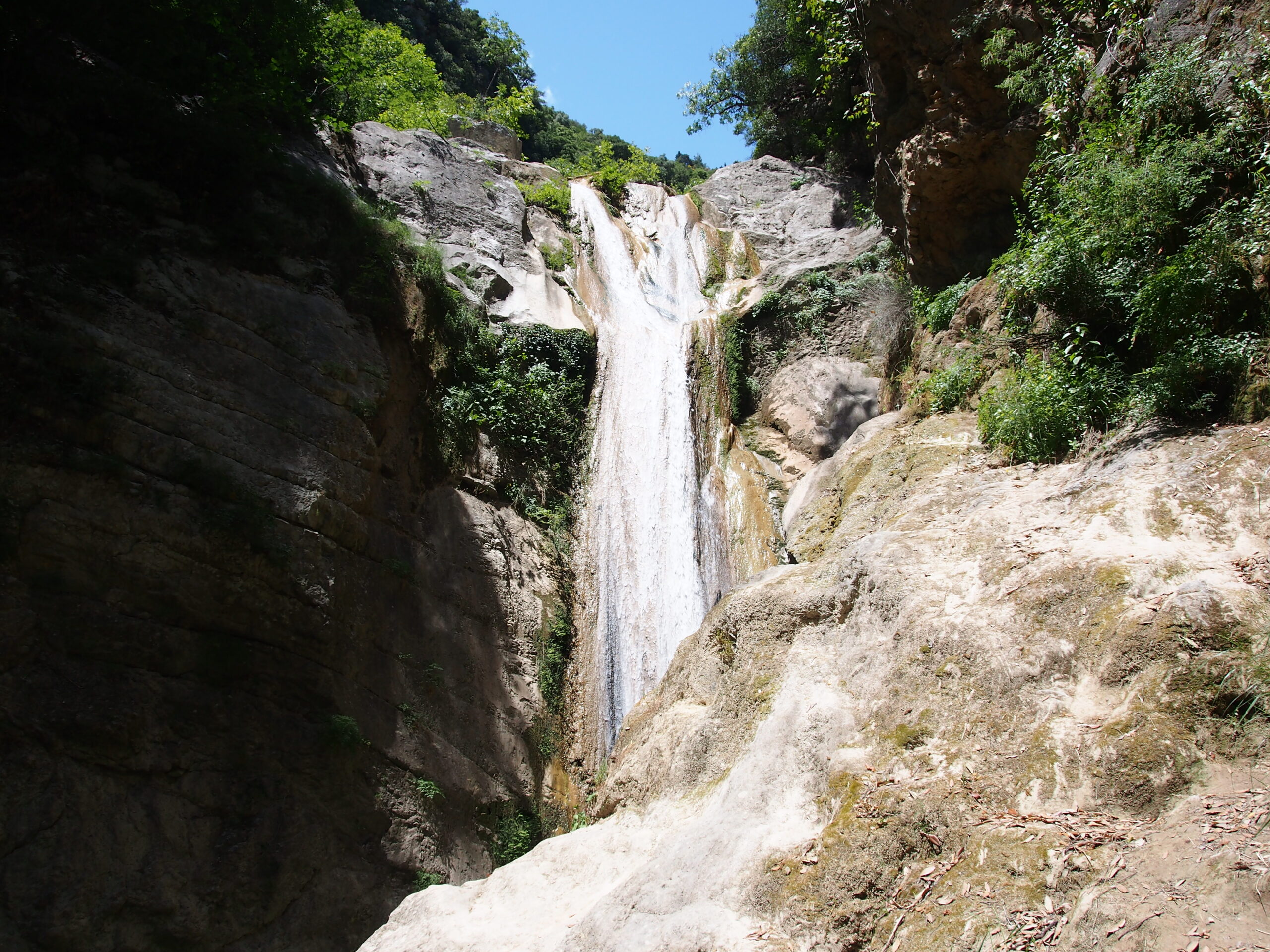
Nydri Waterfalls & Dimosari Gorge
Start from the village of Nydri on the east coast and walk 3–4 kilometres inland through a gorge thick with native vegetation — plane trees, oleander, the occasional flash of a kingfisher. The trail follows a stream through increasingly narrow canyon walls until a series of three waterfalls appear, fed by mountain springs. The largest drops into a deep natural pool; swimming in it on a hot day is absolutely transcendent.
The hike takes 1 to 1.5 hours return and is classified easy to moderate. Go in spring (May–June) when the water is fullest, or early September when the gorge is cool and the summer rush has passed. The trail is well-marked from Nydri village; no guide required.
Karya: The Lace Village
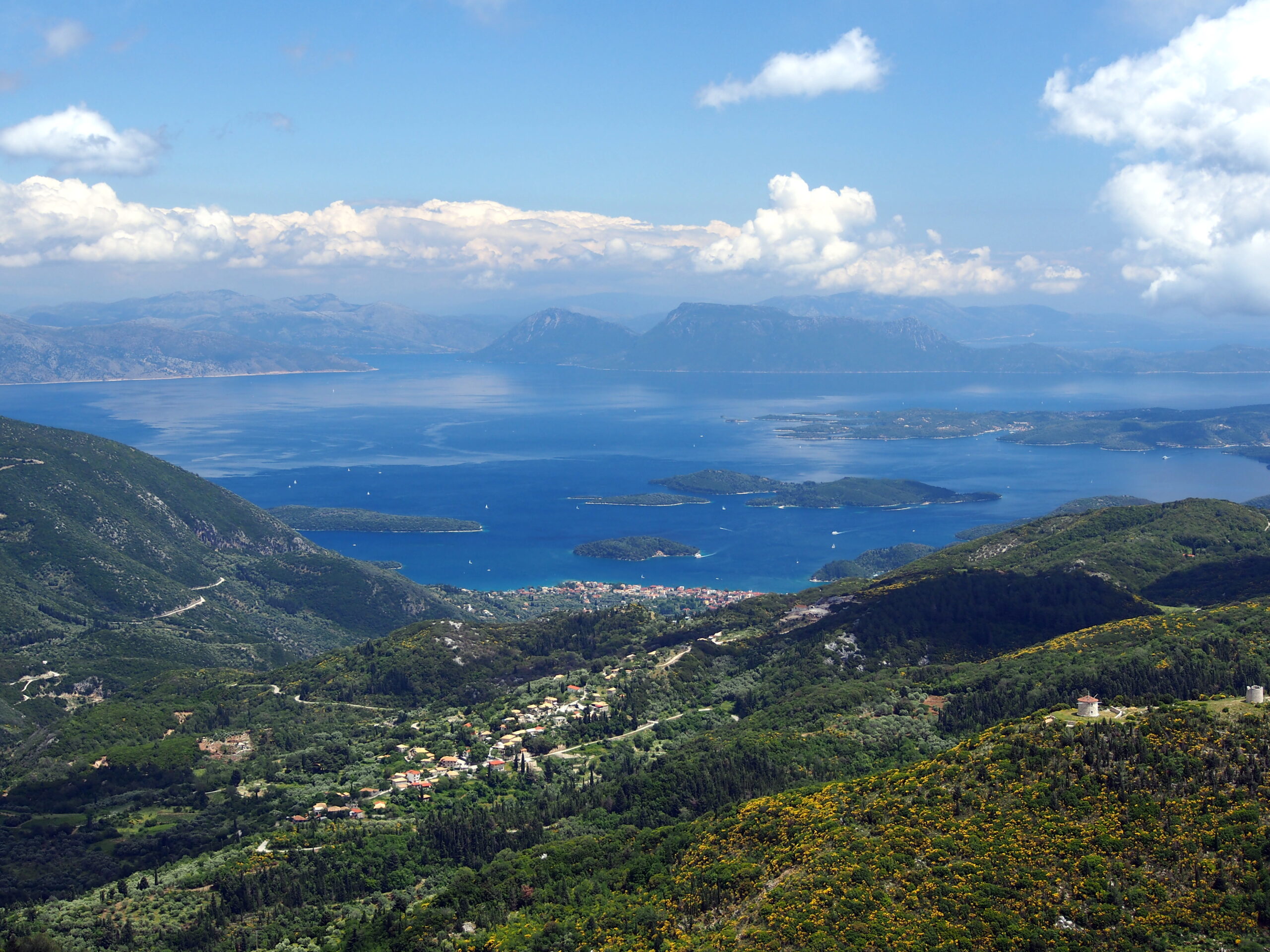
In the central highlands, Karya is Lefkada’s most famous mountain village — known across Greece for its lace-making tradition. Local women still sit in doorways working needle on linen, producing the intricately patterned textiles that have made Lefkadan lace a Greek cultural heritage craft. Small workshops sell genuine handmade pieces; they make beautiful, meaningful souvenirs.
The village itself is architecturally lovely: stone paths, Ottoman-era fountains, a central square with an old plane tree and tables set beneath it. Have lunch at one of the small tavernas serving local mountain dishes — roast lamb, village cheese, green pies with wild greens.
Eglouvi: Views at 300 Metres
Five kilometres from Karya, Eglouvi perches at 300 metres with panoramic views sweeping over the island’s interior and all the way to the Ionian Sea. At golden hour, the light turns the terraced hills amber and the villages below become toy-sized. It’s one of those views that make you feel the island from the inside out — its geography, its scale, its quiet depth. Eglouvi is famous locally for its lentils, a premium variety grown in the mountain soil and used in soups and salads across the island.
For those who love combining mountains, villages, and culinary culture, Lefkada’s highland loop bears comparison to the experience of island-hopping smaller Cyclades. Amorgos has a similar sense of dramatic geography and quiet highland character.
Activities & Water Sports: The Ionian Playground
Beyond the beach, Lefkada punches well above its weight for active tourism. This is a destination that rewards movement.
Windsurfing & Kitesurfing
Vassiliki Bay on the south coast is Greece’s premier windsurfing location and consistently ranks among the top sites in Europe. The thermal winds that funnel through the bay in summer — averaging 15–20 knots from May to September — provide ideal conditions for beginners and experts alike. Multiple certified schools operate on the beach; lessons run €80–150 per day, equipment rental from €30–50. Kitesurfing has its own hub at Agios Ioannis near Lefkada Town, where steady winds and flat water suit learners.
Boat Trips & Island Hopping
From Nydri and Sivota, day trips head out to the nearby satellite islands: Meganisi (a quiet island with excellent seafood), Kastos, Kalamos, and even the private Skorpio island once owned by Aristotle Onassis. Boat tours also explore the hidden sea caves and remote coves along the west coast — inaccessible by road but spectacular from the water. Small motorboats up to 30hp can be self-rented without a licence (€150–300 per day), or join a group excursion for €40–80 per person.
Hiking the Trails Network
The Lefkada Trails network maps a series of routes across the island ranging from coastal walks to mountain crossings. The most popular combine the Dimosari Gorge with the Nydri Waterfalls; the Karya–Eglouvi loop takes 3–4 hours at moderate difficulty. The best hiking months are April–June and September–October, when temperatures are comfortable and wildflowers are in bloom.
Snorkelling
The clearest water for snorkelling is at Porto Katsiki, Egremni, Mylos, and Agiofili, where visibility regularly reaches 20–30 metres. Sea turtles are occasionally spotted (less commonly than in Zakynthos, where turtle beaches are protected). Equipment is available for hire at major beaches.
We anchored in a small cove nobody had bothered to name, slid into water that was 28°C and so clear we could count the pebbles at four metres depth. There was nobody else for half a kilometre in either direction. This is what Lefkada keeps in reserve for those who venture past the famous two.
Sivota & Cape Lefkata: The Hidden Edges
Sivota: A Harbour That Time Forgot
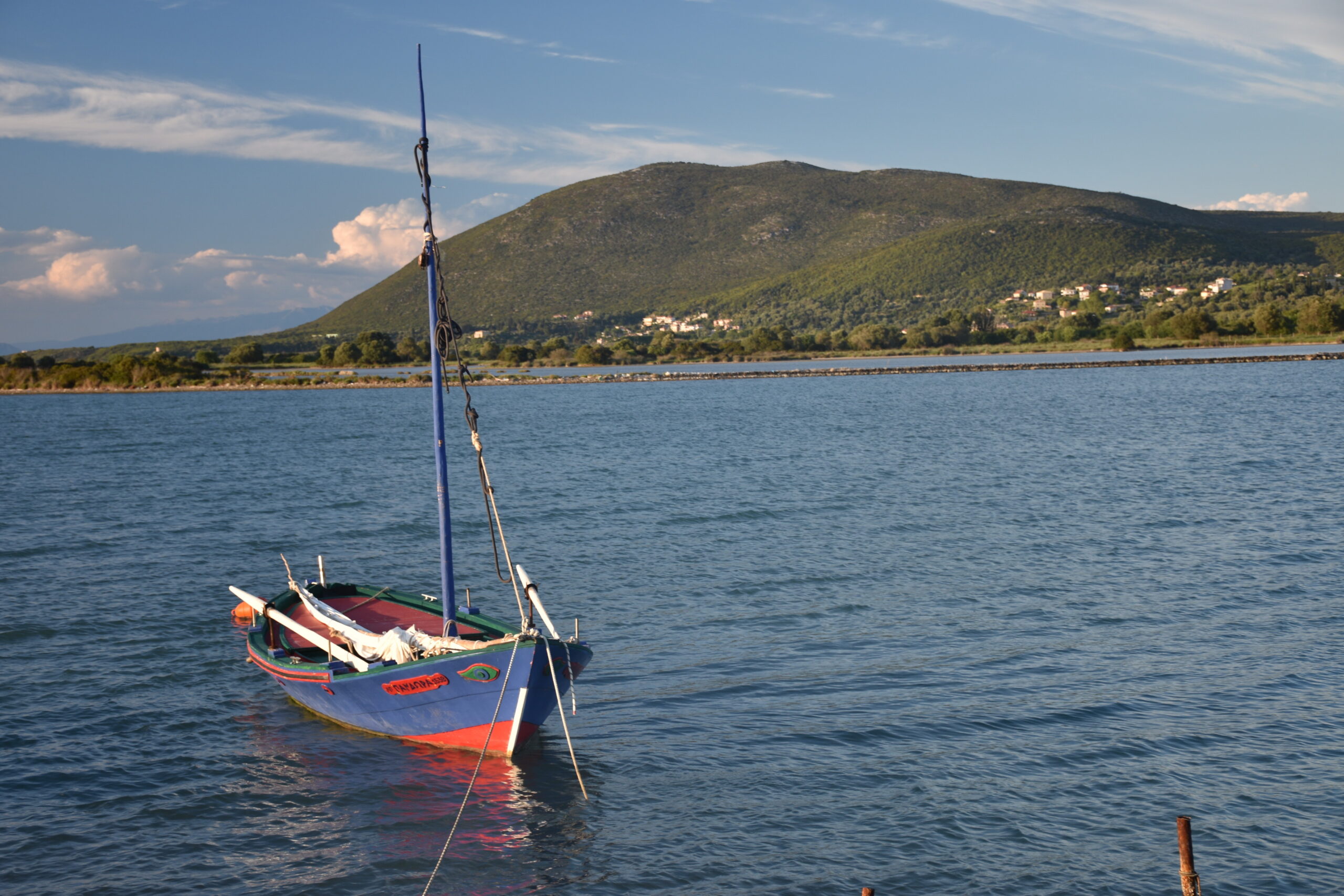
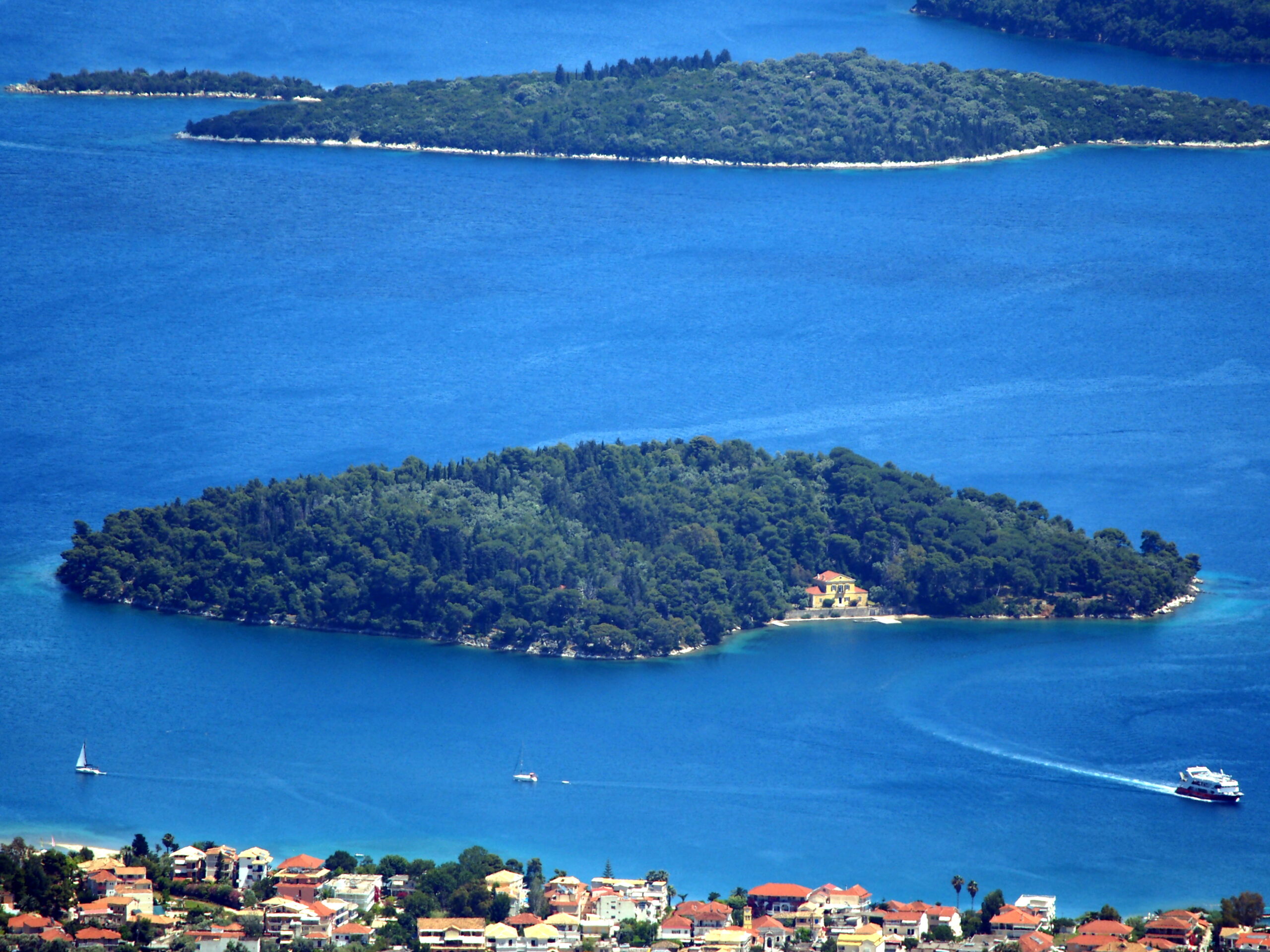
Sivota is a small harbour village on the southeast coast with turquoise water, a handful of seafood restaurants, and almost no tourist infrastructure beyond what the locals provide. Boats rest in a calm inlet, cats circle the fish-cleaning tables, and dinner is whatever was pulled from the sea that morning. It’s an excellent base for self-guided boat trips into the hidden coves of the southeastern coast — many of which have no road access and no names on any map.
Stay a night if you can. The quiet after the day-trippers leave is extraordinary.
Cape Lefkata: Sappho’s Leap
At the southernmost tip of the island, the limestone cliffs of Cape Lefkata — known in antiquity as Cape Doukato — rise 60 metres above the sea and end in the Doukato Lighthouse, built in 1890. The mythology here is darker and more romantic than most Greek geography: according to legend, the ancient poet Sappho threw herself from this cliff in unrequited grief for a young ferryman named Phaon. Whether true or not, the site has drawn poets and wanderers for centuries.
The views from the cliff edge are extraordinary, particularly at sunset when the light turns the sea copper and the lighthouse stands silhouetted against the western sky. Drive here 45 minutes before sundown; the 5-minute walk from the car park is easy, and safe viewing platforms are in place. Bring water — the cape is exposed and the wind is fierce.
The Taste of Lefkada: Venetian Flavours & Ionian Tables
Leftkada spent centuries under Venetian rule, and the flavours in its kitchens show it. The local cuisine is richer and more layered than standard Greek taverna fare — slow-cooked, wine-based, spiced with long tradition.
What to Order
Sofrito is the dish to seek out above all others: veal or beef slow-cooked in white wine, garlic, and parsley until the meat falls apart and the sauce is deep and silky. It’s a Venetian inheritance, served with rice or bread to absorb every drop.
Kreatopita is a meat pie wrapped in hand-rolled pastry with rich, warmly spiced filling — closer to a Balkan börek than a standard Greek spanakopita, and much more interesting.
Pastitsada, rooster braised in wine sauce, arrives in deep terracotta, fragrant with cinnamon and allspice. Order it when you see it on a blackboard; not every taverna makes it every day.
For seafood, Lefkada’s daily catch includes grouper (rofos), gilt-head bream (tsipoura), and octopus grilled on the harbour railings. Mussels are farmed locally and excellent in white wine and garlic. The tavernas in Agios Nikitas and Sivota are the best places to eat them.
Local Products Worth Buying
Lefkada lentils are a premium variety grown in the mountain terraces — darker, earthier, and more flavourful than mass-produced imports. Thyme honey from the island’s highlands is intense and floral. The locally produced wine is small-scale but worth seeking out; ask at a village grocery or the central market in Lefkada Town.
Recommended Restaurants
- Pueblo Restaurant (Lefkada Town) — modern Greek with exceptional ingredients (4.9/5).
- Seaside Restaurant — fresh fish with harbour views, over a thousand reviews and consistently excellent.
- Mastelo — traditional Ionian cuisine, the place for sofrito.
- Tavernas in Agios Nikitas — for fish and seafood in a village setting.
- Vassiliki harbour tavernas — casual, good value, excellent after a day on the water.
For more on Greek culinary traditions across the islands, read our guide to Sifnos, Greece’s great foodie island.
Practical Planning: Getting There, When to Go & Where to Stay
Getting There
By car from the mainland: The easiest route is via the A5 toll road toward Preveza, crossing the floating bridge into Lefkada. The bridge is free. From Athens, the drive takes 3.5–4 hours. This is by far the most comfortable and flexible way to arrive.
By air: Aktion-Preveza Airport is 20–30 minutes from the bridge by car. In summer, there are regular flights from Athens (1 hour) and several European cities. A taxi from the airport to Lefkada Town costs €60–80; buses run 6+ times daily in peak season.
From other islands: Ferries connect Lefkada to Kefalonia (1.5–2 hours), Ithaca (45 minutes), and Meganisi (30 minutes).
If you’re planning a broader Greek road trip, Lefkada makes an exceptional starting or ending point. Our Peloponnese road trip guide describes a natural extension for drivers already on the A5 corridor.
Best Time to Visit
July–August brings the warmest weather (30°C+), the best beach conditions, and the largest crowds. Peak season prices apply everywhere.
May–June and September–October are the sweet spots: warm (25–28°C), less crowded, and ideal for hiking. September is particularly lovely — the sea has been warming all summer, the tourists are thinning, and the light turns golden. For more on why autumn is Greece’s secret season, see our September in Greece guide.
November–March is quiet to the point of emptiness. Most tavernas and beach businesses close. If you’re coming for hiking, gorge walks, or village life, it can be atmospheric — but confirm opening times in advance.
Where to Stay
Agios Nikitas is our top recommendation for first-timers: a car-free village with genuine character, close to the west coast beaches, with small hotels and studios (from €80/night).
Nydri suits those who want a central location with easy access to the waterfalls, boat trips, and restaurants. Larger hotels, pools, good infrastructure.
Vassiliki is the natural base for wind sports enthusiasts — many schools offer accommodation packages with their courses.
Sivota for those seeking genuine quiet and a harbour setting. Few chain hotels; mostly family-run studios.
Lefkada Town for cultural immersion, local markets, and access to the nightlife and cultural scene.
Mid-range hotels cost €60–120 per night; studios and apartments from €30–60.
Getting Around the Island
Rent a car. There’s no other practical option for reaching the scattered beaches. Prices start at €26/day; book at least 48 hours in advance in peak season. Parking is usually free or €2–5 at the main beaches. Scooters and quads (€25–40/day) are good for adventurous solo travellers. No-licence boat rentals (up to 30hp) are another option for coastal exploration.
A Suggested Lefkada Itinerary
Three Days: The Essential Lefkada
Day 1 — West Coast Drama: Drive the coastal road to Porto Katsiki (arrive before 9am), then continue to Egremni. Afternoon at Kathisma or Pefkoulia. Evening in Agios Nikitas for dinner at the harbour.
Day 2 — Inland & East: Morning hike to the Nydri Waterfalls via the Dimosari Gorge. Lunch in Nydri village. Afternoon at Agiofili Beach. Explore Karya village in the late afternoon. Dinner at a mountain taverna.
Day 3 — South & Wind: Visit Vassiliki (windsurf lesson or just watch from the beach). Drive to Cape Lefkata for sunset views. Evening at Sivota harbour — fresh fish, local wine, harbour lights.
Five Days: The Full Picture
Add: a full day boat trip from Nydri or Sivota exploring offshore coves and islands. A second morning on the west coast for Mylos and Agios Nikitas. A lunch at Eglouvi for mountain lentils and panoramic views. And at least one long evening in Lefkada Town — its neoclassical streets, local wine bars, and morning market are easy pleasures.
By the last evening, we had stopped calculating how many beaches we had visited. Lefkada doesn’t reward counting. It rewards slowing down — an extra hour at a cove, a second plate of sofrito, a wrong turn down a mountain road that ends, inevitably, at the sea.
Why Lefkada Deserves Your Next Trip
There is a particular type of Greek island experience that Lefkada does better than almost anywhere else: freedom. Freedom from ferries and timetables, freedom to explore at your own pace, freedom to discover a different beach every day for a week and still not have seen everything. Add to that the Caribbean-quality water, the genuine mountain villages, the waterfalls in the gorge, the sofrito on the taverna table, and the wind over Vassiliki Bay — and what you have is a complete destination that somehow remains underestimated.
The famous two beaches are real. Go to them. But leave time for everything else. That’s where the real Lefkada lives.
Lefkada is part of the Ionian Islands group. For comparisons with other Ionian destinations, read our Ionian Islands Showdown — a complete guide to choosing the right island for your trip.