
Athens is generally a safe city for visitors, but it is not a city where you should switch off completely. The main everyday risk is opportunistic theft in crowded places—especially on public transport and around busy tourist sights—rather than serious violence directed at travellers. Demonstrations, occasional disorder and uneven after-dark streets are the situations that deserve more thought.
The useful question is not simply “Is Athens safe?” It is how to move through the city sensibly: where to take extra care with a phone or passport, how to choose a neighbourhood, what to do after a late night, and how to respond if a taxi ride or protest changes your plans. This guide keeps the advice practical and proportionate, alongside our complete Athens travel guide and the more detailed comparison of where to stay in Athens.
The short answer: is Athens safe for tourists?
For most visitors, yes. The U.S. Department of State currently places Greece at Level 1, “Exercise normal precautions”, and describes Greece as generally safe while warning that petty crime is common in popular tourist locations. The UK Foreign, Commonwealth & Development Office similarly highlights thefts of passports, wallets and handbags on the metro and in crowded tourist places, particularly in central Athens.
That is a reassuring but not blank-cheque answer. Athens is a large, lively capital. A traveller who keeps a bag open on a packed train, accepts an unsolicited taxi offer or walks into a demonstration out of curiosity is taking avoidable risks. A traveller who uses ordinary city habits—secure belongings, check the route, stay aware at night and leave protests alone—will usually find the city straightforward to navigate.
| Situation | Practical level of concern | What to do |
|---|---|---|
| Pickpocketing | The most relevant routine risk | Zip bags, keep phones and wallets out of back pockets, and pay attention at station entrances and crowded platforms. |
| Walking after dark | Usually manageable on busy routes; less comfortable on quiet or poorly lit streets | Plan the last few minutes, stay on active streets, and use a licensed taxi or app when that is the sensible option. |
| Demonstrations | Occasional disruption; some protests can become confrontational | Check local news and transport alerts, avoid the gathering, and do not cross police lines. |
| Taxi problems | Avoidable with an official rank, licensed taxi or reputable app | Use a marked taxi, confirm the destination and ask for a receipt if needed. |
Pickpockets and petty theft: where visitors should focus
Pickpocketing is the issue most visitors are likely to encounter. Crowded metro carriages, station escalators, busy platforms, queues, markets and congested tourist streets create the same conditions found in many European capitals. The point is not to treat every stranger as suspicious; it is to remove the easy opportunities.
- Keep your phone and wallet in a zipped pocket or a cross-body bag worn in front.
- Do not place a phone on a café table beside the pavement or leave a bag hanging on the back of a chair.
- On a crowded train, keep a hand on your bag, particularly while boarding, leaving or passing through a bottleneck.
- Carry only what you need for the day. Keep a copy of your passport separately and store the original securely when you do not need it.
- If someone creates an unusual distraction—a sudden spill, a friendly crowding manoeuvre or an insistent request for help—take a step back and check your belongings without making a scene.
- Use a secure hotel safe for spare cards, extra cash and documents, but keep a practical emergency reserve separately from your main wallet.
Do not let safety advice turn a holiday into surveillance duty. You can enjoy the metro, flea market and pedestrian streets normally; simply treat them as busy urban environments rather than empty museum corridors.
Is public transport safe in Athens?
Athens’ metro, buses, trolleybuses and tram are practical ways to explore the city, and most visitors use them without difficulty. The safety issue is less the network itself than the density of people around it. Busy trains and stations are ideal places for a thief to work quickly, especially when passengers are distracted by maps, luggage or a phone.
Before boarding, have your ticket ready and know which station you need. On the metro, OASA says passengers should validate their ticket or card at the gates when entering and exiting. Do not block the doorway while checking directions, and avoid displaying your phone unnecessarily in a crush. If you are travelling with luggage from the airport, keep it close rather than leaving a small bag on the floor beside you.
OASA’s official visitor guidance lists the airport express buses as operating on a 24-hour basis and provides real-time information through its telematics tools. That does not mean every route runs at the same frequency all night, so check the current service before relying on a late connection. Our guide to Athens Airport transfers compares the metro, airport buses, railway, taxis and pre-booked options.
Simple metro habits that make a difference
- Stand away from the edge of the platform and let passengers leave before boarding.
- Keep bags closed and in sight on escalators and inside busy carriages.
- Do not leave a passport, phone or camera in an open jacket pocket.
- At night, follow the route you planned rather than wandering through unfamiliar streets while staring at a map.
- If you lose an item, contact OASA or station staff promptly; note the line, station, direction and approximate time.
Which Athens areas feel easiest for visitors?
Athens is not divided into neat “safe” and “unsafe” blocks. The atmosphere can change from one street to the next, and a busy central square can feel very different from a quiet side street after midnight. Choose a base according to transport, lighting, hotel access and the kind of evening you want, rather than relying on a dramatic online list of areas to avoid.
Plaka, Acropolis and Koukaki
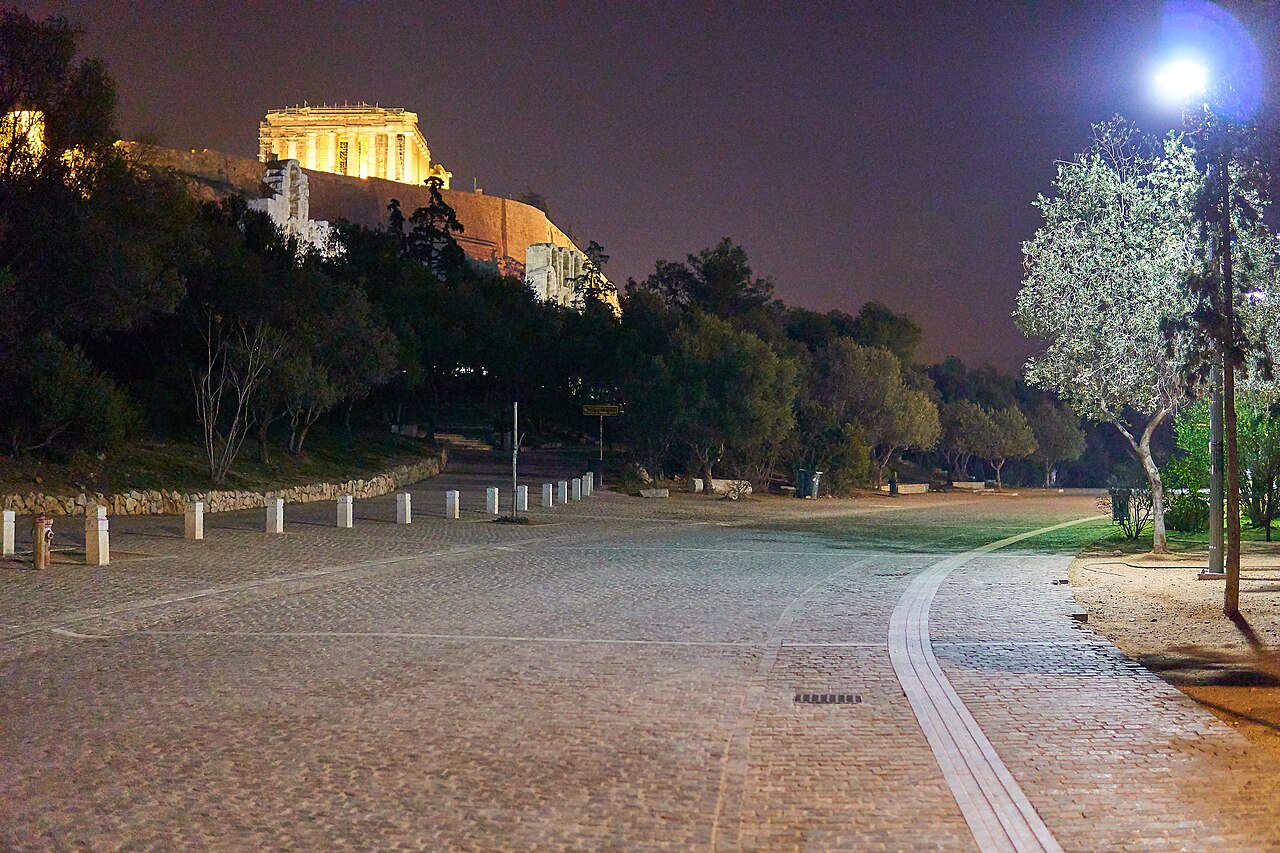
These areas are convenient for first-time visitors because major sights, restaurants and well-used walking routes are close by. They can be busy and tourist-oriented, and the quietest lanes are not automatically the best choice for a very late solo walk. Check the route from the metro or restaurant to your actual accommodation, not just the neighbourhood label.
Syntagma, Monastiraki, Psyrri and Thissio
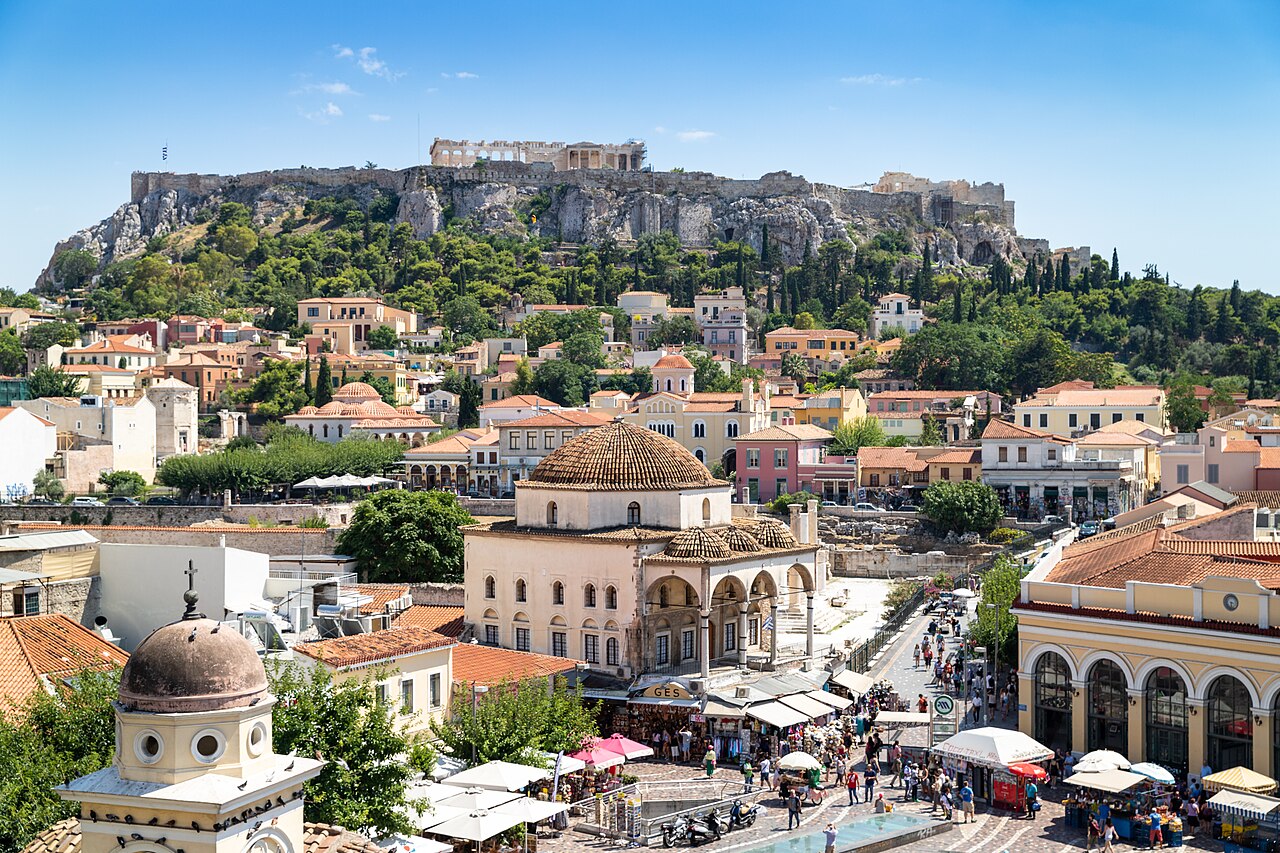
These central areas are useful bases with strong transport connections and plenty of evening activity. Monastiraki and Psyrri are especially lively at night, while Syntagma is a major transport and civic hub. Crowds help with orientation but also create better conditions for pickpockets. Syntagma Square is also a common location for demonstrations, so check for planned events when your itinerary is flexible.
Kolonaki, Pangrati and the central residential districts
These areas can feel calmer and more local, with restaurants and cafés rather than a single tourist strip. The trade-off is that your return route may involve a longer walk, a hill or a taxi. Ask your accommodation about the best-lit route and do not assume that a short distance on the map will feel equally comfortable after midnight.
Omonia, Exarchia and Metaxourgio
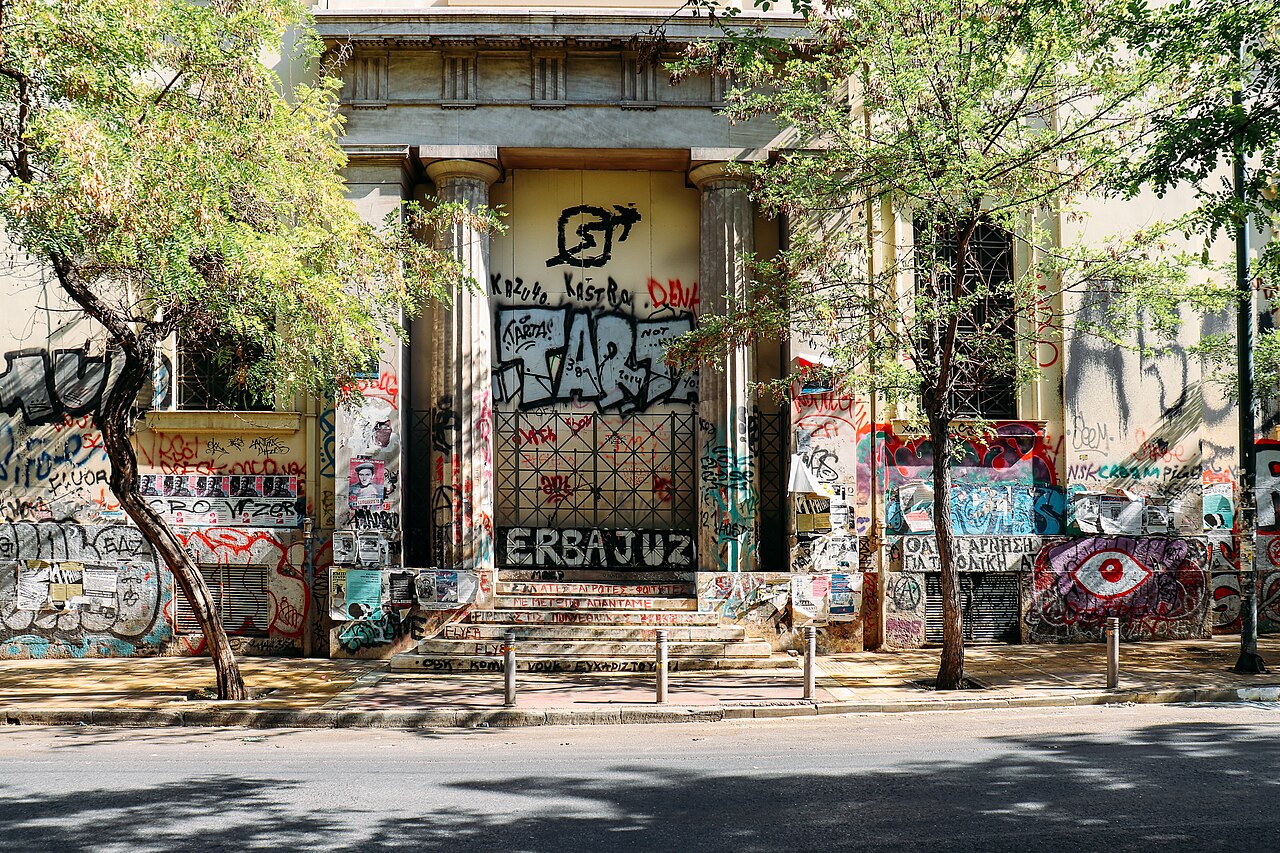
These are real, changing neighbourhoods—not forbidden zones—and many people live, work, eat and go out there. They also have streets and public spaces where a first-time visitor may feel less comfortable, particularly late at night or during a protest. The Official Athens Guide specifically advises visitors to take care around Omonia and Exarchia Squares, parts of Keramikos–Metaxourgio, Pedion tou Areos and the area around the Law School because open drug use may be visible in some places, and to avoid Exarchia and Syntagma Squares when strikes or demonstrations are planned.
The practical advice is simple: visit during the day if those areas interest you, stay aware of the local atmosphere, and choose a busier route or a taxi when returning late. Avoid making sweeping judgements about residents or businesses based on one street or one evening.
Scams and overcharging: what is actually worth watching?
Athens does not require a special catalogue of elaborate tricks. Most problems are ordinary tourist-city practices: unsolicited approaches, confusing prices, pressure to buy, or a service that costs more than the visitor expected. The best response is calm verification, not confrontation.
Taxi overcharging and unofficial approaches
Use the official taxi rank at the airport and marked taxi ranks in the city, or book a licensed cab through a reputable app. Do not follow someone who approaches you inside an airport or station offering an “official” ride. Before departure, show the exact accommodation address and confirm whether the fare is metered or a published fixed rate. Keep the receipt and note the vehicle details if something goes wrong.
For airport journeys, the official flat rate applies only to the defined Athens city-centre zone and changes according to the time of day; it is not a universal price for every address in the metropolitan area. For a city ride, a meter or app estimate gives you a reference point. A driver taking a route around traffic is not automatically cheating, but an unexplained refusal to use the meter, a sudden extra charge or pressure to pay far above the expected amount is a reason to ask for the receipt and report the problem rather than argue in the road.
Restaurant, bar and menu problems
Choose a place because you like the menu and atmosphere, not because someone on the pavement insists that you enter. Read the menu before sitting down, check whether prices are by portion or by weight, and ask about any unclear couvert, service or minimum-charge item. Restaurants should provide an itemised bill; keep it until you have checked the total.
Distraction approaches and unsolicited help
You may encounter people offering roses, bracelets, petitions, photographs or help with an ATM or ticket machine. Some approaches are harmless, but you do not need to accept the interaction. A polite “no, thank you”, moving into a staffed area, and keeping your belongings secure is usually enough. Never hand your bank card to another person or allow a stranger to take over a cash-machine transaction.
Returning after a night out
Athens has a late social rhythm, and central areas remain active well into the evening. That makes a night out feasible for solo travellers and groups, but the last part of the journey deserves planning. The risk often comes from tiredness, alcohol, an empty phone battery or a poorly chosen shortcut rather than from the city as a whole.
- Save your accommodation on your map before leaving and keep the address in Greek and English.
- Check the last metro or bus that actually serves your route; do not assume that a late city service is an airport service.
- Use a licensed taxi or reputable taxi app if the walk is quiet, uphill, poorly lit or simply feels wrong.
- Keep one payment method and a little emergency cash separate from your main wallet.
- Watch your drink, stay with friends when possible, and do not leave an intoxicated companion to walk back alone.
- If you feel followed or harassed, enter a busy hotel, shop, restaurant or transport station and ask staff for help rather than continuing to the accommodation.
Well-used routes around Plaka, Koukaki, Thissio, Monastiraki and Psyrri can be perfectly ordinary late-night walks, but “busy” is not the same as “risk-free”. A short taxi ride is a reasonable choice when it removes a long, uncertain final walk.
Demonstrations, strikes and tear gas
Demonstrations are a normal part of public life in Greece, but they can disrupt a visitor’s plans and occasionally become confrontational. Syntagma Square is the most obvious central location, and events may also affect nearby streets, metro stations, buses and taxis. Strikes can be called at short notice and may disrupt public transport, roads, ferries or other services.
If you see a protest forming, do not walk through it to take a photograph or reach a landmark. Move away before the crowd becomes dense, follow police instructions and check a current transport update. The FCDO notes that some demonstrations have turned violent and that security forces may use tear gas; the Official Athens Guide also advises avoiding Exarchia and Syntagma Squares when strikes and demonstrations are planned.
Build flexibility into an important day: leave extra time for the airport, ferry port or a timed museum visit, and be ready to change stations or use a taxi. The issue is usually disruption rather than a reason to cancel an Athens trip.
Solo travellers: practical advice without paranoia
Athens works well for solo travel because it has a large visitor infrastructure, many walkable districts, public transport and plenty of places where you can sit down alone without attracting attention. The best solo strategy is to reduce avoidable uncertainty.
- Choose accommodation with clear late check-in instructions, a staffed entrance or reliable self-check-in.
- Send someone your broad plan for the evening and keep your phone charged.
- Book the first airport transfer or check the exact public-transport route before you land, especially if arriving late.
- Eat and drink in places where the menu and prices are clear; do not follow aggressive invitations from the pavement.
- Keep your passport secure and carry only the ID, money and cards you need for the day.
- Trust your instincts. You do not need to justify leaving a bar, changing a route or taking a taxi because the atmosphere feels uncomfortable.
Solo travellers should not be singled out as helpless. The advice is the same as for anyone exploring a busy capital, with one extra practical point: make sure another person knows where you are staying and how to contact you.
If something goes wrong
For an immediate emergency in Greece, call 112, the free European emergency number for police, fire and ambulance. The Hellenic Police lists 100 for police emergencies, while the Tourist Police service at 1571 is available in Greek, English, French and German. If a passport, phone or wallet is stolen, report it to the police and contact your bank, insurer and embassy or consulate as appropriate.
Write down the time, place, route, taxi plate or receipt details while they are fresh. If you are shaken, ask hotel staff or a nearby business to help you make the call. Do not try to recover stolen property yourself or escalate an argument over a fare.
Useful official contacts include the Official Athens Guide’s safety page, Hellenic Police direct lines, Greece’s national emergency numbers and OASA lost-and-found information.
The bottom line
Athens is safe enough for a normal city break, including for many solo travellers, provided you treat it as a large capital rather than a risk-free resort. Protect your belongings on the metro, use official taxis, plan your night-time return, and keep away from demonstrations. Be more selective about streets and transport after midnight, not fearful of the city at every hour.
The most useful mindset is calm awareness. You should be able to enjoy the Acropolis, a late dinner in Psyrri, the metro to the coast and a solo coffee without spending the whole trip looking over your shoulder. Just keep your phone off the café table, your bag closed and your route home in mind.
Research and review note: Safety advice, emergency contacts and transport guidance were checked in July 2026. Demonstrations, service conditions and official travel advice can change, so re-check the linked authorities before travelling.




.jpg)

