Anogeia is not a polished resort or a quick photo stop. It is a highland town on the northern slopes of Psiloritis, where mountain farming, music, resistance history and Cretan hospitality still shape everyday life. The journey up from Heraklion or Rethymno is part of the experience: the road leaves the coast behind, climbs through rocky uplands and arrives in a place that feels culturally distinct from the beaches below.
This guide is for travellers deciding whether Anogeia deserves a dedicated stop, an overnight stay or a longer exploration of central Crete. It explains the town’s history, the practical ways to get there, the mountain landscape around Nida and Zominthos, and what to eat — especially antikristo, the slow-roasted lamb associated with shepherds and open-fire cooking.
Why Visit Anogeia?
Anogeia suits visitors who want to understand a more rural, self-confident side of Crete. You come for the stone streets, kafeneia, craft traditions and strong musical culture, but also for the relationship between the town and the high mountain pastures above it. This is a place where food is tied to livestock, songs are tied to dancing, and history is remembered in public rather than kept behind a museum label.
It is also a useful base for exploring the Psiloritis landscape. The municipality includes routes towards the Nida Plateau, the Ideon Cave area and the Minoan mountain centre at Zominthos. Those excursions require planning: roads are mountainous, weather changes quickly at altitude, and a map distance does not necessarily reflect the time needed for a slow, scenic drive.
| Decision | Practical answer |
|---|---|
| Best for | History, Cretan food, music, mountain scenery, walking and rural culture. |
| Best base | Anogeia itself for atmosphere and evening meals; Heraklion or Rethymno for a wider coastal itinerary. |
| Car needed? | Not strictly for the town, but strongly preferable for Nida, Zominthos, viewpoints and flexible timing. |
| Ideal stay | One full day for the town; two nights if you want food, culture and a mountain excursion without rushing. |
A Town Shaped by Mountain History
Human presence in the wider Anogeia area reaches back to Minoan times, while animal husbandry has remained central to the local economy. The municipality’s own historical account describes a landscape where livestock farming, crafts and small-scale household production helped preserve distinctive customs over generations. The exact date when the present settlement was founded is not historically established, although an early written reference appears in a Venetian census of 1577.
Local tradition connects Anogeia with the ancient city of Axos and, further back, with the Curetes and Idaean Dactyls of Cretan mythology. These traditions should be understood as part of the town’s cultural memory rather than presented as proven genealogy. The stronger historical point is continuity: Anogeia grew in a mountain environment that supported pastoralism, protected communities from coastal power centres and maintained links between upland routes and the interior of Crete.
The town’s history is also inseparable from resistance. Anogeia was destroyed during conflicts with Ottoman forces in 1822 and 1867. During the Second World War it became associated with the Cretan resistance and with the passage of the abducted German general Heinrich Kreipe. In August 1944, German occupation forces ordered the destruction of the settlement. The municipality records that the razing began on 13 August and continued until the end of the month, with homes, schools, dairy buildings and livestock destroyed and inhabitants killed or forced to shelter in the mountains.
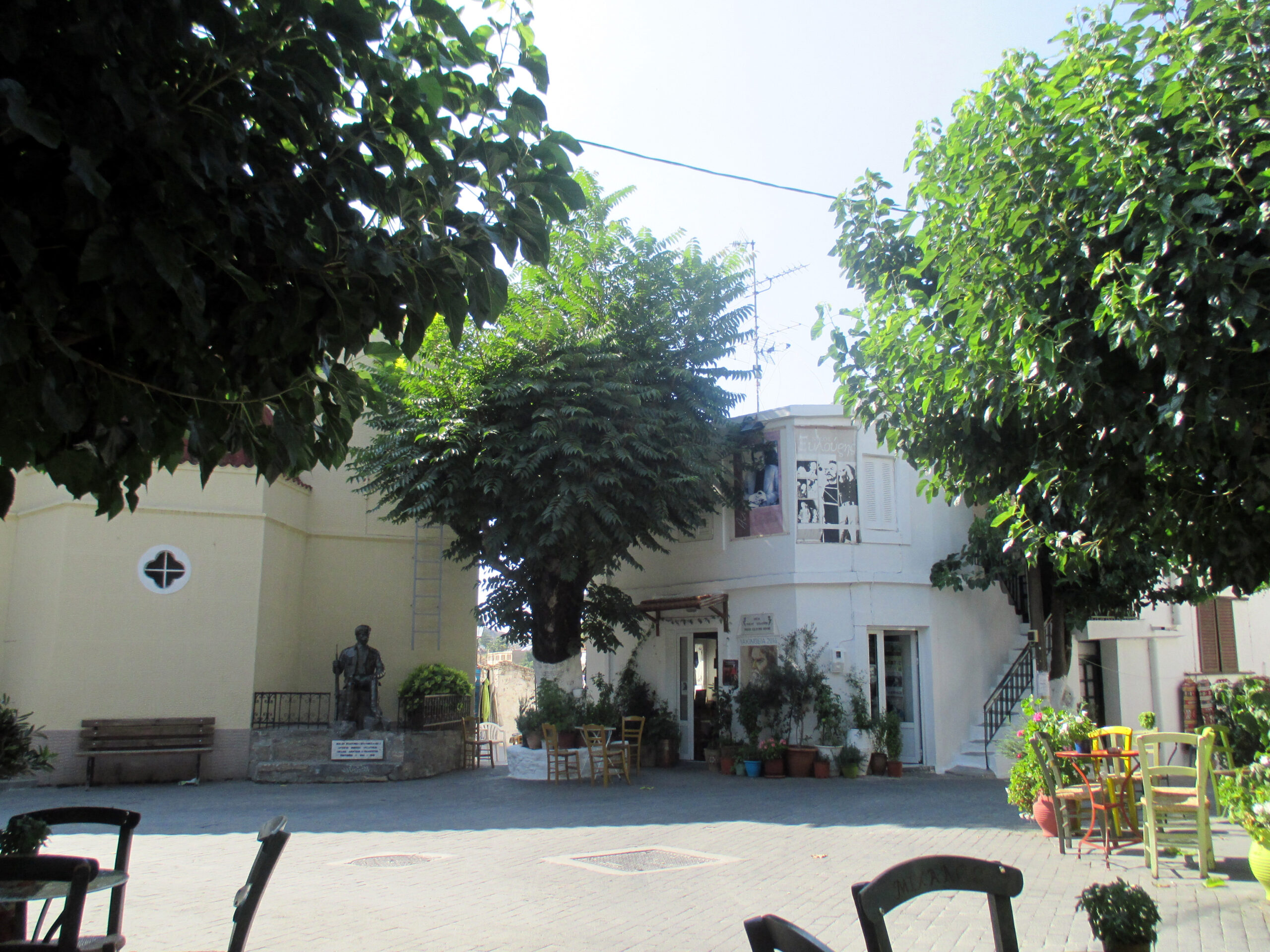
This is not a minor footnote to a village visit. It explains the tone of Anogeia: proud, direct and protective of its memory. The town was rebuilt after the war, with Mesochori forming the initial core of the restored settlement. In the historic centre, the churches of Agios Georgios, Agios Ioannis and Panagia help orientate a walk through the town.
How to Approach the Holocaust Memorials
Visitors should allow time for the memorials and commemorative spaces without treating them as scenic attractions. The annual remembrance events in August include speeches, music, dance and theatre, and the town remains a member of Greece’s network of martyred villages and cities. Read the displays carefully, keep voices low and remember that this is living local history rather than a backdrop for photographs.
Music, Dance and the Anogeian Character
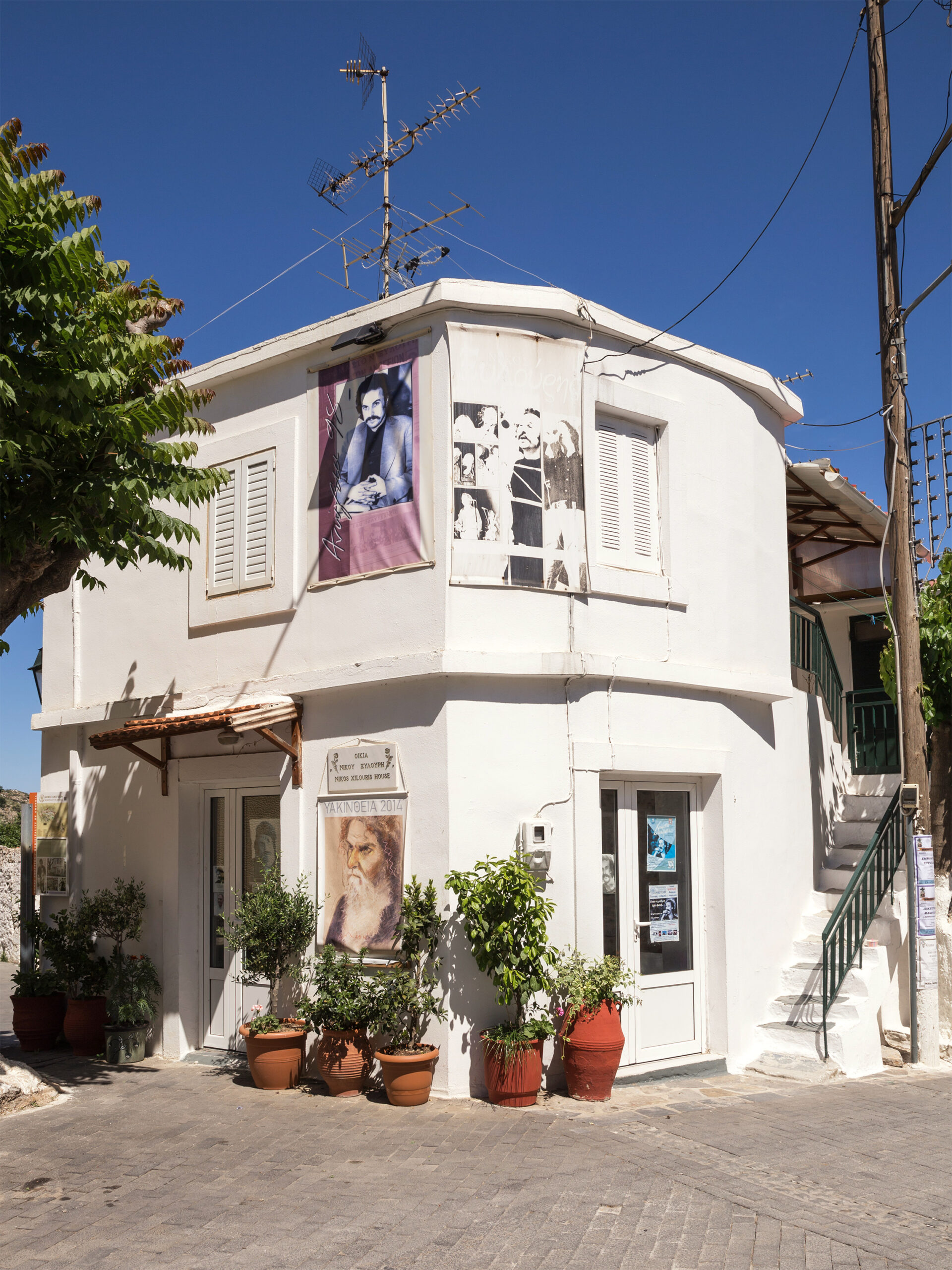
Anogeia is one of Crete’s best-known centres of music. The municipality describes a tradition rooted in older Greek and Byzantine sounds and enriched by the eastern Mediterranean. Nikos Xylouris, often called the “Archangel” of Cretan music, is the most famous name associated with the town, but the tradition is broader than one performer.
Music in Anogeia is closely linked to dance. Pentozalis, pidichtos, sousta and syrtos are part of the wider Cretan repertoire, while local variations include the Anogeian-step pidichtos. A festival, wedding or live music evening may be more meaningful than a formal performance because the music is still part of social life. Visitors should enjoy it respectfully: do not assume that every musician or dancer is performing for tourists, and ask before taking close-up photographs.
Getting to Anogeia
Anogeia lies in the mountains between Heraklion and Rethymno. The municipality gives approximate road distances of 36 km from Heraklion and 52 km from Rethymno, but these figures should not be treated as a promise of a particular driving time. The route is winding, and your real journey includes junctions, slower mountain traffic, viewpoints and possible stops in villages.
By car
Driving is the most flexible option. From Heraklion, leave the main north-coast route towards the old road through the Gazi and Tylissos area, then continue uphill towards Anogeia. The municipality describes two broad approaches: one through Tylissos and Gonies, including the Gonian Gorge area, and another via the old Heraklion–Rethymno road, Voulismeno Aloni, the Stroumboula Plateau, Astyraki and Aidonochori.
From Rethymno, follow the national road towards Heraklion before turning inland through the Mylopotamos area. From either direction, expect bends, gradients and sections where overtaking is inappropriate. In winter or after severe weather, check road conditions before setting out, especially if you plan to continue above Anogeia towards Nida.
By bus
Public transport can work for the town itself, particularly from Heraklion, but it is less convenient for a mountain itinerary. The municipality states that services from Heraklion are generally more frequent because the distance is shorter. Heraklion departures use the bus station near Hanioporta, while Rethymno connections use the central bus station and may involve a less direct journey. Travellers coming from Chania should expect to change buses twice according to the municipal visitor information.
Schedules change by season and are sometimes adjusted at short notice. Check the current timetable directly with KTEL Heraklion–Lasithi and, for Rethymno connections, KTEL Chania–Rethymno. Do not plan a same-day Nida or Zominthos excursion around a bus arrival unless you have confirmed the return connection.
| Starting point | Most practical option | What to consider |
|---|---|---|
| Heraklion | Car or direct KTEL service | Usually the simplest public-transport approach; check the current departure and return times. |
| Rethymno | Car, or KTEL via the central station | The inland route is scenic but not a fast coastal transfer. |
| Chania | Car, or a carefully coordinated bus journey | The municipality advises that public transport may require two changes. |
| Nida and Zominthos | Car or organised excursion | Mountain roads, altitude and limited timetable flexibility make a private vehicle useful. |
What to See in and Around Anogeia
Mesochori and the town centre
Start on foot in the historic centre, where the main road passes through the densest part of the rebuilt town. Walk slowly rather than looking for a single monument. Churches, workshops, cafés, stone details, small squares and everyday village life are the point. Anogeia is best understood through its texture and social spaces.
The Nikos Xylouris connection
The town’s musical history is visible in places connected with its artists, including the house associated with Nikos Xylouris. Treat these as cultural sites rather than celebrity photo opportunities. The broader value lies in understanding how music, dance and oral tradition have remained central to Anogeian identity.
Nida Plateau and the mitata
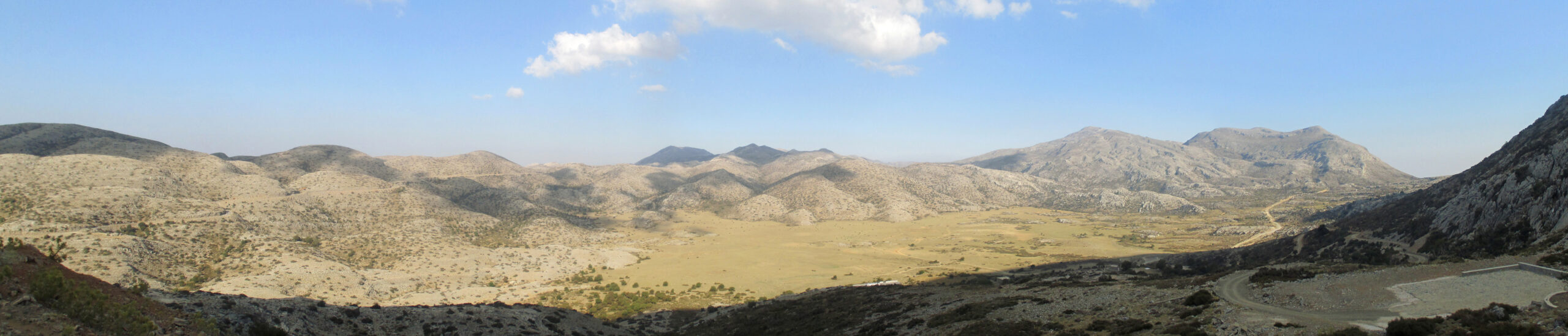
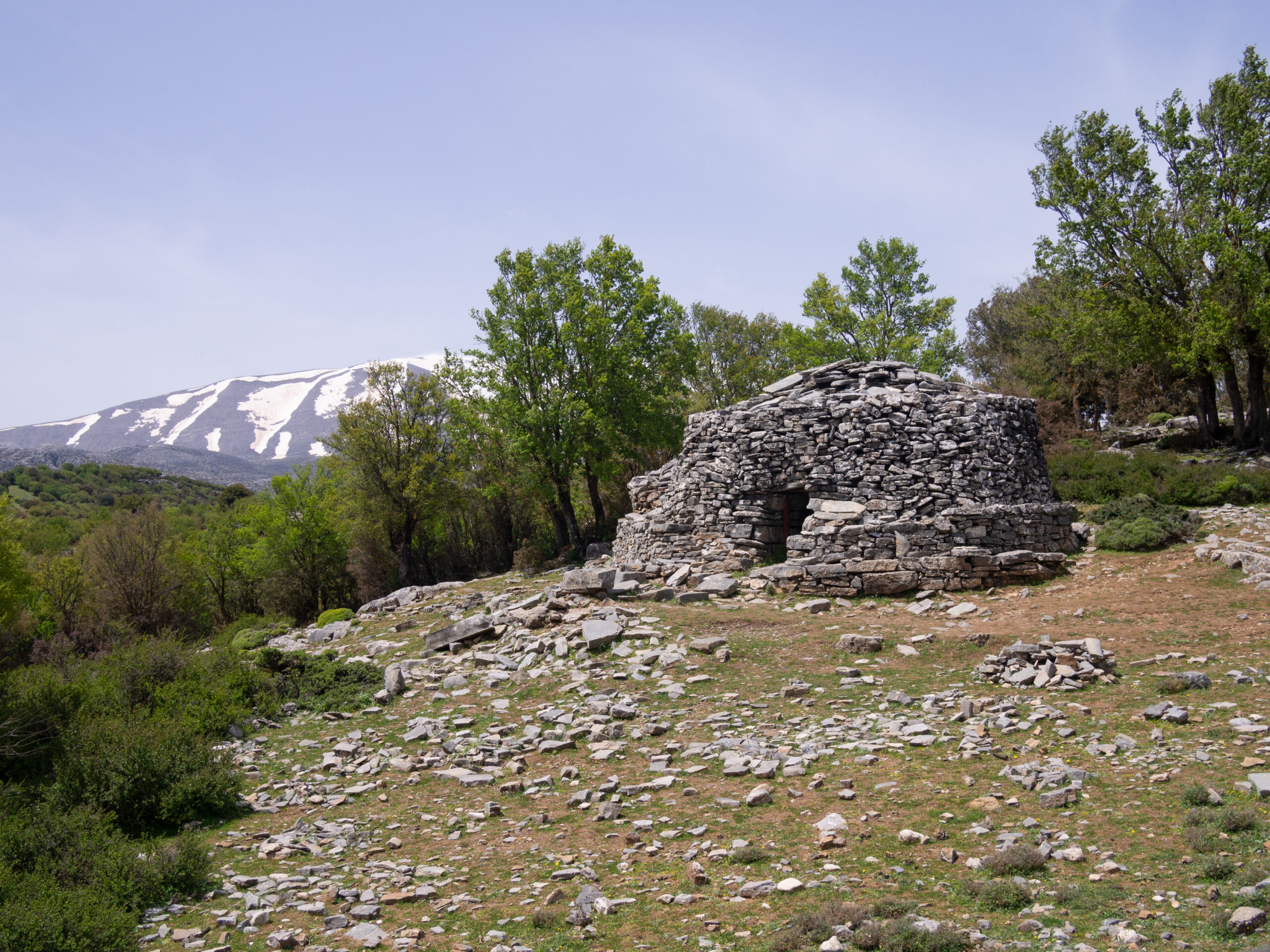
Nida is the high pastoral landscape above Anogeia. The municipality describes the plateau as a broad, open area in the Psiloritis range, historically linked with pastoral life and resistance activity. Its dry-stone mitata are circular, domed shepherds’ buildings used for seasonal shelter and cheese-making. Their construction relies on carefully placed local stone rather than mortar, and their form echoes older Cretan vaulted structures.
The plateau is exposed. Weather can be colder, windier or more changeable than in Heraklion, even on a bright summer day. Take water, wear shoes suitable for uneven ground and avoid entering private or working shepherds’ buildings without permission. If snow, fog, storms or ice are present, postpone the drive or ask locally about conditions.
Zominthos
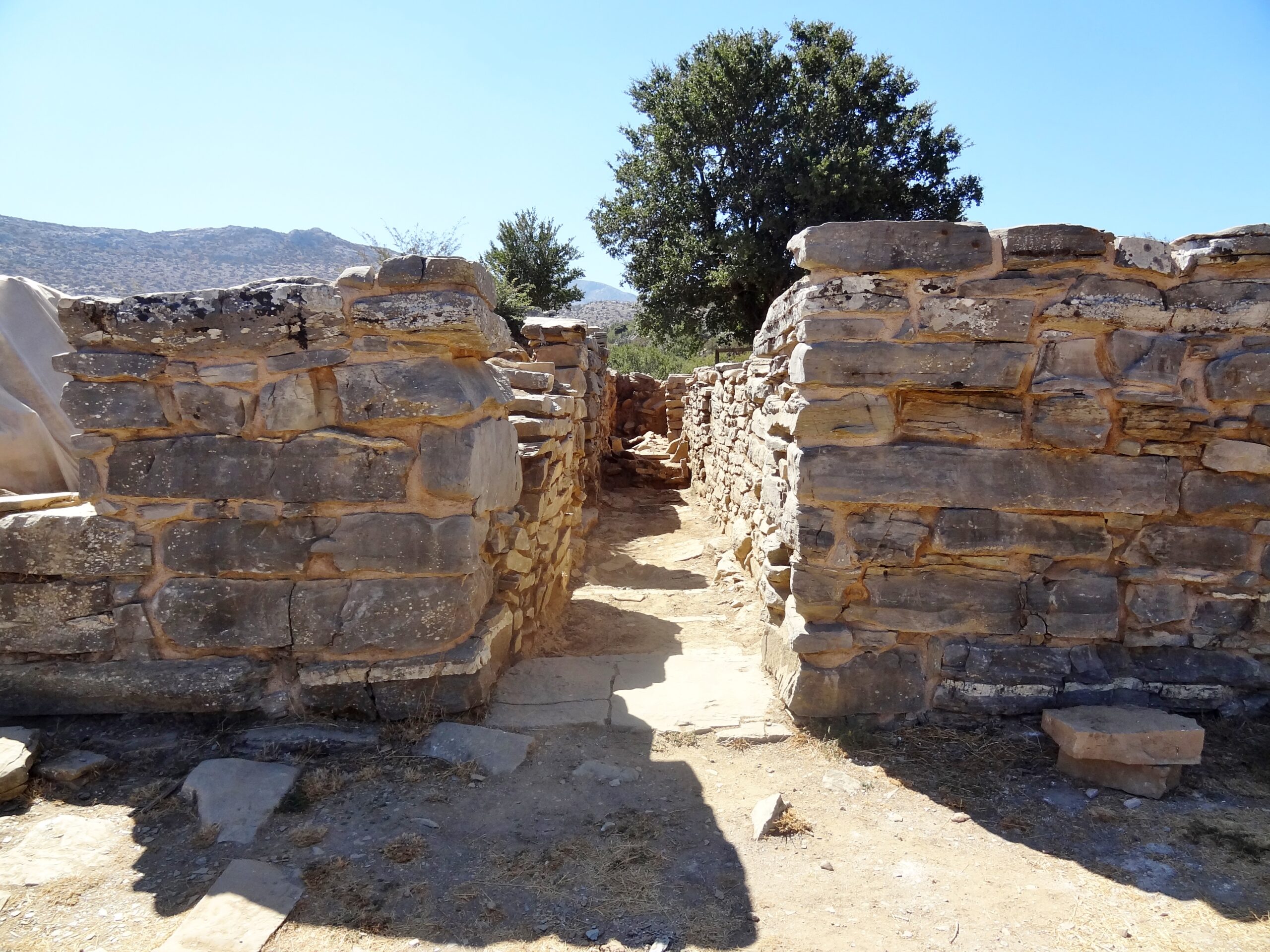
Zominthos is one of the most important archaeological reasons to travel into the Psiloritis highlands. The Ministry of Culture describes it as a Minoan mountain palace at approximately 1,200 metres, linked to the Sacred or Ideon Cave area. Excavations have identified a central building of the Neopalatial period, dated to 1700–1650 BC, built over earlier remains from roughly 1900–1700 BC.
The scale is unusually revealing. The central building contained around seventy ground-floor rooms and more than 1,600 square metres, with evidence of residential, communal, ritual, workshop and storage functions. Zominthos was not an isolated mountain farmhouse: its position connected routes between the highlands and the plains, while water, timber, animal husbandry and beekeeping supported its importance.
Check the current archaeological-site arrangements before travelling. The site has been undergoing visitor-infrastructure and conservation work, including access routes, signage, fencing, parking and safety measures. Opening arrangements can change, so use the current Ministry of Culture or official site information rather than relying on an old blog post.
Psiloritis Natural Park
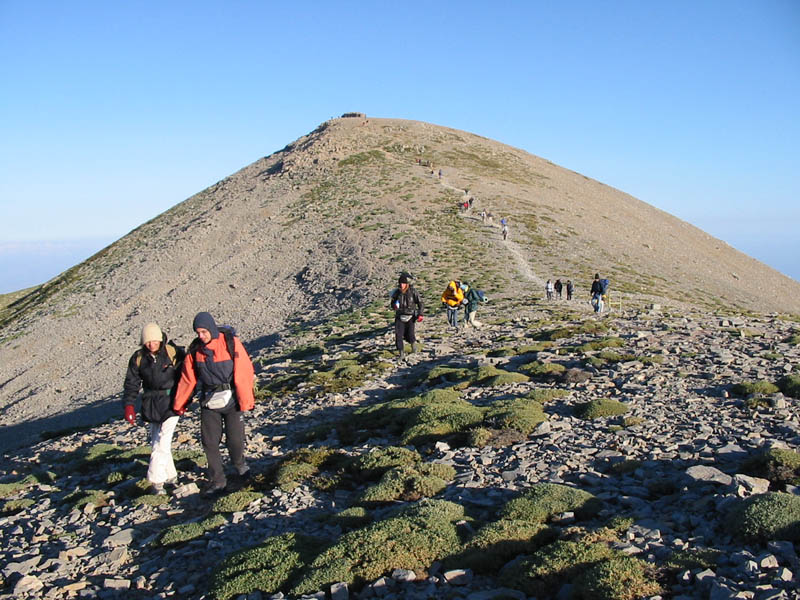
The wider Psiloritis Natural Park is recognised within the UNESCO Global Geoparks network. Its significance is not limited to geology: the park combines geological formations, endemic flora and fauna, pastoral landscapes, archaeology, history and living traditions. This is a useful lens for the whole Anogeia visit. The mountain is not scenery separate from culture; it has helped produce the settlement’s economy, architecture and memory.
What to Eat in Anogeia
Come hungry. Anogeia’s food is built around the products of the mountain: lamb and goat, dairy, herbs, greens, flour, olive oil and simple preparations that depend on good ingredients. The municipality highlights traditional tavernas serving homemade recipes, with roasted meat, pasta, rice, pies, dolmadakia, kalitsounia and sarikopitakia among the local choices.
Antikristo: the dish to seek out
Antikristo is a method of cooking rather than simply a recipe. Pieces of lamb are salted and arranged around an open fire, traditionally on spits or supports positioned so that the meat cooks from the radiant heat rather than sitting directly over the flames. The process is slow, and the result depends on the fire, the cut, the distance from the heat and the cook’s judgement.
In Anogeia, antikristo makes sense as part of a pastoral food culture. It connects the dish to shepherds, communal gatherings and the practical use of fire in the mountain landscape. It is usually a dish to share, and availability may depend on the taverna, the day and how much preparation has been made. Ask what is being served and whether an order is intended for more than one person rather than assuming every menu item is available at every hour.
Expect a substantial meal rather than a delicate tasting plate. A good order may be accompanied by salad, potatoes, greens, local cheese, bread and raki. The most respectful way to approach it is to ask the restaurant how it is prepared and to let the meal take time.
Other local dishes and products
- Gamopilafo: rice and pasta cooked in meat broth, traditionally associated with weddings and celebrations.
- Kalitsounia: small Cretan pies filled with cheese or greens; depending on the preparation, they may be savoury or sweet.
- Sarikopitakia: rolled or coiled pastry pies, often filled with local cheese and served with honey or other accompaniments.
- Dolmadakia and cooked dishes: homemade-style plates that can provide a lighter counterpoint to roasted meat.
- Local dairy: seek out fresh cheeses and yoghurt-style products from the pastoral economy, asking what is locally made and currently available.
- Raki: often offered after a meal, but accept only if you want it; it is hospitality, not an obligation to drink.
How to choose a taverna
Look for a place that explains what is cooking that day and is comfortable with questions about portions, ingredients and preparation. For antikristo, ask whether it is cooked on the premises, how much is a typical order and whether you need to reserve or arrive early. Menus and opening days can be seasonal, especially outside weekends and festival periods.
How Long to Stay
A day trip can cover the town centre, a museum or music-related stop, lunch and a short walk. It is enough for a first impression, but it compresses the experience into a sequence of arrivals and departures. An overnight stay gives you a better chance to eat at an unhurried pace, hear local music if an event is taking place and see the town after day visitors leave.
Two nights make more sense if you want to combine Anogeia with Nida or Zominthos. Do not combine every mountain attraction in a rushed schedule: the highland roads, changing weather and time needed to understand the archaeological landscape reward a slower plan.
| Time available | Suggested plan | Best for |
|---|---|---|
| Half day | Town walk, coffee and a substantial meal. | Travellers passing between Heraklion and the mountain interior. |
| One full day | Historic centre, cultural sites, lunch and one carefully chosen nearby excursion. | A first visit without an overnight stay. |
| Two nights | Town and food on the first day; Nida, Zominthos or a walking route on the second. | Travellers who want the landscape and culture to have equal weight. |
When to Visit
Late spring and autumn are particularly attractive for walking, village exploration and mountain drives, but conditions are never guaranteed. Summer offers longer daylight and a lively travel atmosphere, while the highlands can still feel cooler than the coast. August brings major commemorative and cultural activity, but it can also mean busier accommodation, tavernas and roads.
Winter has a different appeal: fewer visitors, a stronger sense of everyday life and the possibility of snow on Psiloritis. It also brings the greatest need for flexibility. Check forecasts and road conditions before driving towards Nida, and do not assume that a route shown on a summer travel blog is equally straightforward after heavy rain or snow.
Practical Advice for a Better Visit
- Wear proper shoes: even a town walk includes uneven paving, slopes and steps; mountain routes need more than casual sandals.
- Carry cash as a backup: card acceptance and connectivity can vary between small businesses, although you should not assume cash is the only option.
- Book ahead for popular meals: particularly at weekends, holidays and during cultural events.
- Ask before photographing people: especially musicians, older residents, shepherds and children.
- Do not over-plan the highlands: leave time for weather, livestock on the road, parking and unmarked turns.
- Respect working landscapes: do not climb on dry-stone structures, enter mitata or cross fenced pasture without permission.
- Check opening information: archaeological sites and small museums may operate seasonally or under changing arrangements.
- Keep the food order realistic: antikristo and other meat dishes can be generous; ask about portion size before adding several plates.
Is Anogeia Worth Adding to a Crete Itinerary?
Yes, if your idea of Crete includes more than beaches and archaeological headline sites. Anogeia gives the island’s mountain interior a human scale. Its history is difficult but essential, its music is still social rather than merely preserved, and its food makes the pastoral economy tangible. The journey is not the easiest detour from the coast, and public transport limits the freedom to explore above the town, but that is part of the decision rather than a flaw to hide.
Choose Anogeia for a deeper central-Crete experience: a place to listen, eat slowly and understand how the Psiloritis landscape continues to shape identity. If your trip is built around beaches, nightlife and effortless transfers, stay on the coast. If you want the island’s voice rather than only its postcard, give the town at least one unhurried day.
Related Vivid Greece Guides
Use Anogeia as a mountain extension to a wider central-Crete route. Pair it with the Heraklion guide if you are arriving through the island’s main city, or with the Rethymno guide if you are approaching from the west. For a wider driving plan, see the Crete road-trip guide. Travellers continuing into the mountains may also compare the experience with our Zagori guide, another destination where pastoral landscapes and village culture matter as much as viewpoints.
Research and review note: Transport schedules, archaeological-site arrangements, restaurant opening days and mountain-road conditions can change. Confirm current details with the relevant operator, authority or accommodation before travelling.