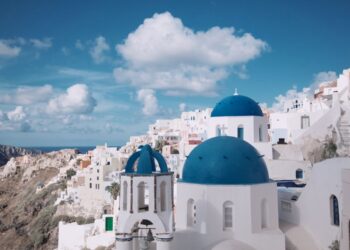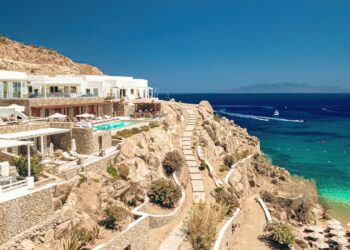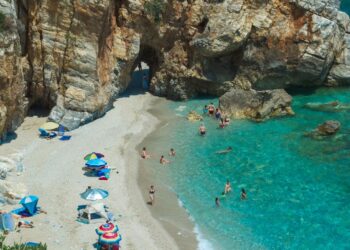
Samothrace is the North Aegean island for travellers who want mountains, rivers and archaeology to share the same day. Mount Saos rises behind the coast, waterfalls feed natural pools, and the Sanctuary of the Great Gods gives the island a historical weight that no ordinary beach itinerary can reproduce.
It is also a destination that rewards honest planning. Samothrace has no airport, the ferry arrives at Kamariotissa rather than Chora, and the most famous natural pools involve uneven ground, slippery rock and real hiking. The central decision is whether you want a rugged outdoor island with a strong cultural centre, or an easy beach holiday with short transfers and predictable facilities.
Samothrace is an active landscape
Come for the waterfalls and sanctuary, but plan around the mountain, the ferry and the footing.
Is Samothrace right for your trip?
Samothrace suits hikers, swimmers, history travellers, campers, independent families with older children and visitors who enjoy rural places with a strong local rhythm. It works especially well for travellers who want to combine a morning at an archaeological site with an afternoon in a river pool or a quiet evening in Chora.
The island is less suitable if you want flat roads, frequent public transport, a long line of organised sandy beaches or a holiday built around effortless swimming. The sea is only one part of the experience. Saos, the rivers and the mountain routes dominate the interior, and the easiest-looking pool may still require proper shoes and concentration.
| What you want | Why Samothrace works | What to plan for |
|---|---|---|
| Waterfalls and pools | Fonias, Gria Vathra near Therma and other river routes create natural swimming settings. | Slippery rock, uneven trails, cold water and sudden weather changes. |
| Ancient history | The Sanctuary of the Great Gods and its archaeological museum. | The site is open-air and needs its own half-day, not a quick stop. |
| A quiet beach | Pachia Ammos, Kipos and other rugged coastal options. | Facilities vary and some beaches are reached by rough roads or boat. |
| A car-free break | Chora, Kamariotissa and Therma can be connected with planning. | Remote waterfalls, beaches and trailheads may require a taxi or tour. |
How long should you stay?
A one-day visit from the mainland is possible only if the ferry timetable gives you a useful window, and even then the island will feel compressed. You would need to choose either the sanctuary and Chora or a single natural excursion. Trying to add Fonias, Pachia Ammos and the archaeological site to the same day is not a realistic plan.
Three nights is a practical minimum for a first visit. It allows one day for the sanctuary and Chora, one for a river or waterfall route, and one for the coast or Therma. Four or five nights give you a weather buffer, which matters on an island where swimming, hiking and ferry connections can all be affected by conditions.
Stay longer if you want to climb Saos, explore several vathres, camp responsibly or use Samothrace as a slow northern Aegean base. The island’s small size on a map is misleading: mountain roads, trail approaches and return journeys take time.
Getting to Samothrace
Samothrace is reached by ferry. The principal route departs from Alexandroupoli and arrives at Kamariotissa. Fast Ferries’ current route information lists regular departures to Samothraki and identifies the Adamantios Korais as the vessel serving the connection; Ferryhopper currently displays crossings of about 1 hour 45 minutes. Treat the duration and frequency as planning information rather than a fixed timetable: the operator warns that schedules can vary, so check the booking result for your dates.
The ferry is conventional and carries vehicles, so a car can be useful once you arrive. Book vehicle space separately where required and reach Alexandroupoli with enough time for check-in. If you are arriving by plane, compare the cost and timing of getting to Alexandroupoli with an overland route from Thessaloniki or another mainland base. If your route includes eastern Macedonia before the ferry, the Vivid Greece Kavala guide can help you judge whether an overnight stop adds value or simply makes the journey longer.
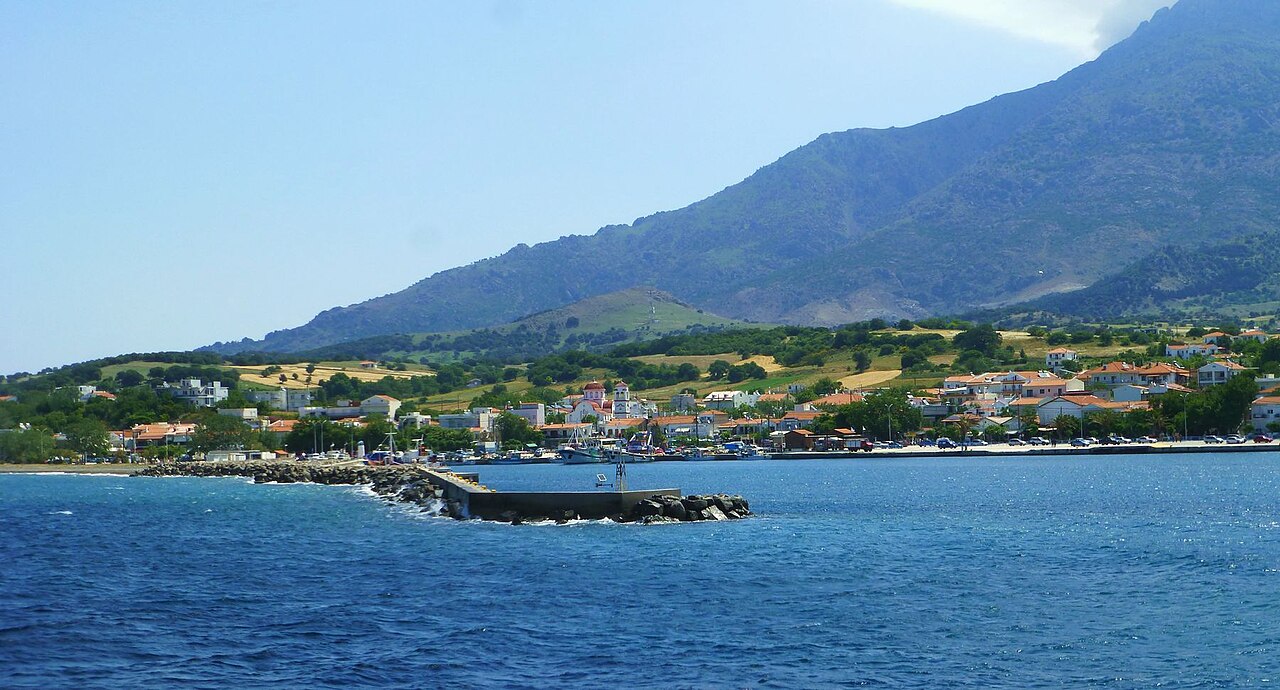
Check both the Fast Ferries destination page and the booking result for your travel date. The operator may change the timetable, vessel or intermediate calls, while a timetable aggregator can display indicative data based on the season. The safest booking habit is to verify the outbound and return sailing together before committing to accommodation, car hire or a mainland connection.
| Arrival plan | Best for | Main issue |
|---|---|---|
| Car from Alexandroupoli | Travellers planning waterfalls, beaches and several villages. | Reserve vehicle space and check the sailing day before travelling. |
| Foot passenger | A Chora, Kamariotissa or Therma-focused stay. | Arrange the transfer from Kamariotissa before assuming buses will match the ferry. |
| Mainland road trip | A Northern Greece route with Alexandroupoli and the Thracian coast. | Allow a buffer for ferry delays and the return connection. |
Where to stay
Kamariotissa: the practical arrival base
Kamariotissa is the port and the easiest base for a short or car-free trip. It has accommodation, restaurants, shops and the simplest first-night logistics. Choose it if your ferry arrives late, if you want to stay near the sea or if you plan to arrange transfers from one place.
Chora: the cultural base
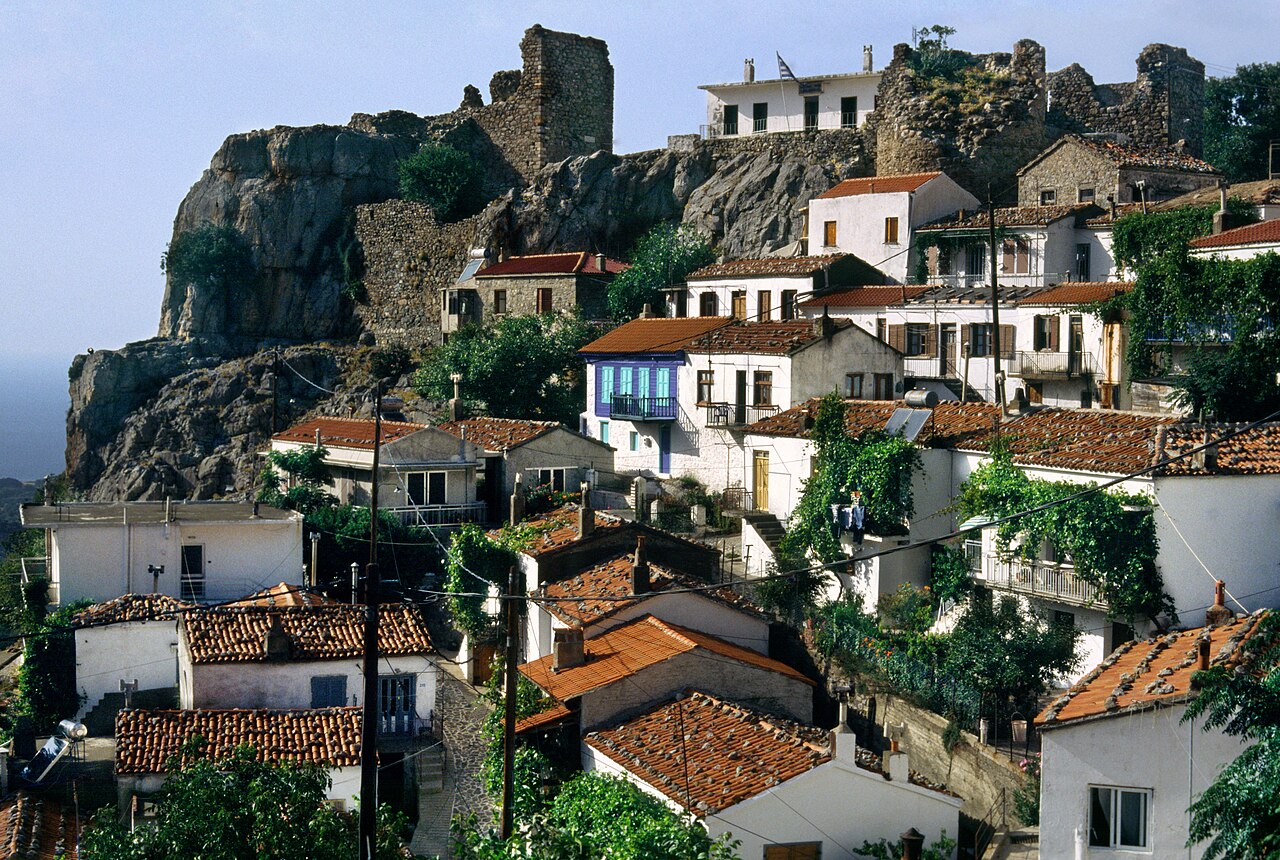
Chora sits inland and uphill beneath the medieval tower. It is the strongest base for atmosphere, evening walks and traditional architecture. The trade-off is the road from the port and greater distance from the northern waterfalls and Therma.
Therma: the outdoor base
Therma is the natural choice for travellers focused on hot springs, river walks and the northern mountain landscape. It offers an easier start for some waterfall routes, but fewer alternatives for late meals and ferry departures than Kamariotissa. Confirm transport before choosing it without a car.
Chora and the Tower of Gattilusi
Chora is one of Samothrace’s most distinctive settlements. Houses follow the contours below the medieval tower, narrow streets open into small squares and the mountain feels close enough to dictate the town’s shape. Walk in the late afternoon when the heat has eased, but keep the climbs and return journey in mind.
The Tower of Gattilusi is a surviving medieval landmark associated with the Genoese Gattilusi family. It gives Chora its recognisable skyline, but the value of the settlement lies in the relationship between tower, stone houses, churches and mountain rather than in one isolated monument.
The Sanctuary of the Great Gods
The Sanctuary of the Great Gods at Palaiopolis is Samothrace’s essential historical visit. The site was associated with the Samothracian Mysteries, an ancient initiation cult whose rites were deliberately secret. The archaeological remains include the sacred buildings, theatre, terraces and monuments that made the sanctuary an important religious destination in the ancient Aegean.
The Winged Victory of Samothrace was found on the island but is now in the Louvre. The archaeological museum beside the sanctuary helps visitors understand the objects and architecture without pretending that the original statue is still on site. Allow several hours for the sanctuary and museum together, especially in summer heat.
The sanctuary is easier to appreciate if you arrive with a little historical context. It was not a single temple arranged for a quick photograph, but a developing sacred complex with different buildings, terraces, monuments and routes through the hillside. The site’s relationship with water, rock and the sea is part of its character. Read the museum displays first if you can, then walk the ruins with the plan in mind rather than trying to identify every fallen stone.
Do not confuse the sanctuary with the ancient city of Samothrace. The sacred complex lies at Palaiopolis, while modern Chora occupies the inland settlement that grew in a different defensive landscape. Visiting both gives the island’s history more shape: one place explains the international religious importance of ancient Samothrace, the other shows how a later community adapted to mountains, piracy and limited flat land.
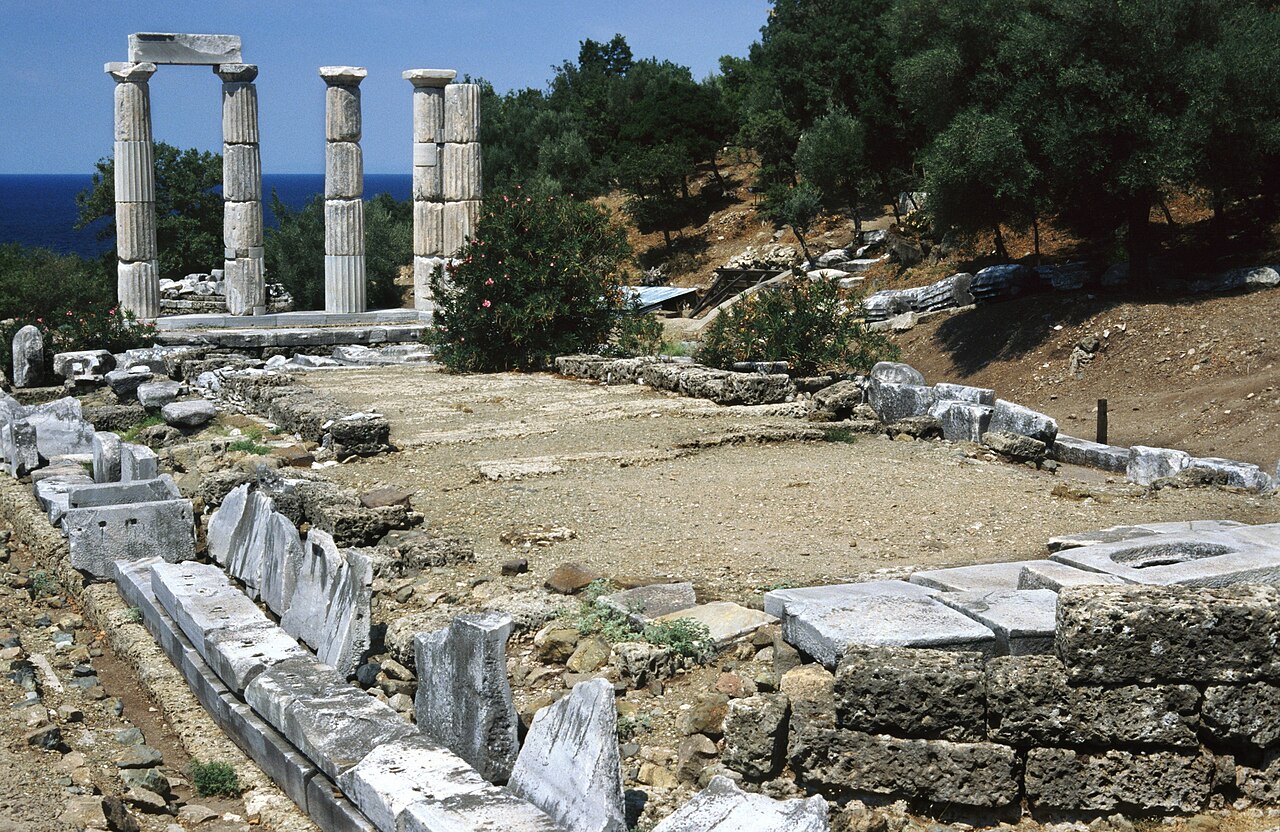
The museum’s current visitor information lists a combined general admission of €10 for the archaeological museum and sanctuary, with reduced admission of €5. In the summer period, the museum is open from 08:30 to 15:30 on Monday to Friday and Sunday, while Saturday runs from 13:00 to 20:00. Winter hours are different, with Monday and Tuesday closures and 08:30 to 15:30 opening from Wednesday to Sunday. Confirm the published timetable and ticket information before travelling, particularly outside the main season, because official pages can change or display different arrangements.
Use the museum’s official visiting-hours page and its ticket page for the final check. The Ministry of Culture listing and the museum’s own site should take priority over an old travel blog or a timetable copied into a booking page.
Fonias and the vathres
Fonias is the island’s best-known river route. The lower pools and first waterfall can be reached by a relatively short walk, but the route quickly becomes more demanding as it continues upstream. Rock is slippery, water levels change and the gorge narrows. A photograph of swimmers at a pool is not evidence that the next section is safe for your group.
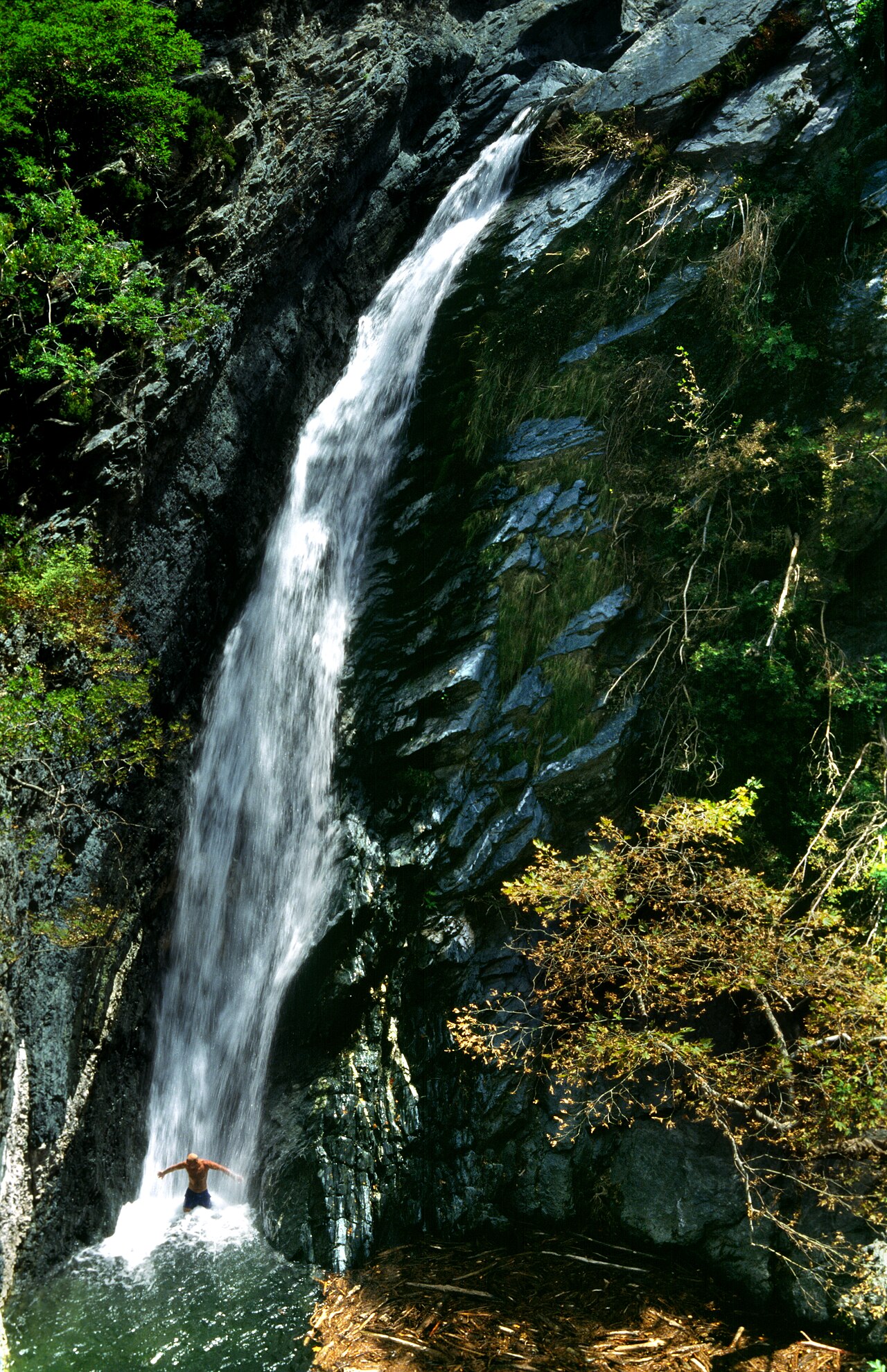
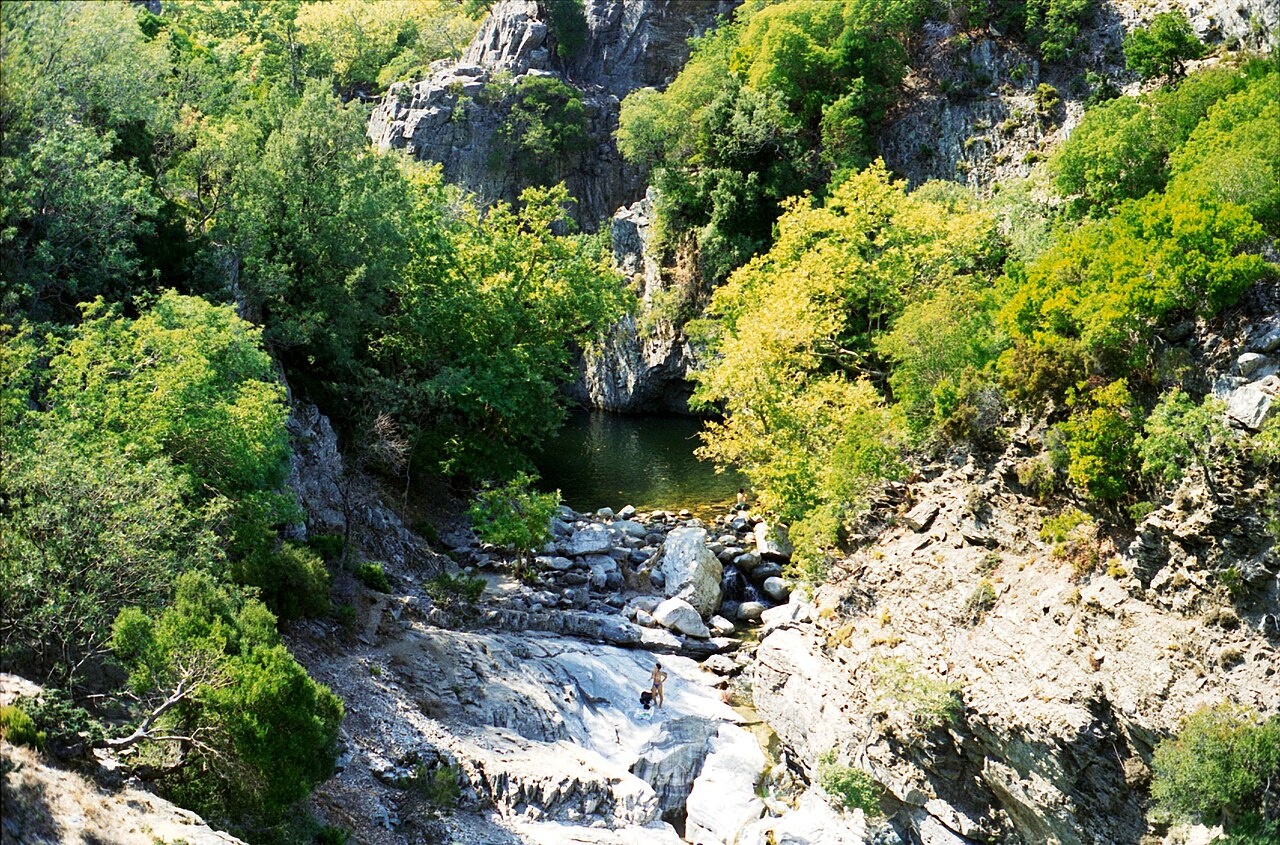
Wear shoes with grip, keep both hands free where the terrain requires them and avoid climbing above pools without local knowledge. Do not jump into water of unknown depth, and do not continue upstream in rain or when the rocks are wet and unstable. If you want a shorter nature experience, choose a lower accessible pool or a guided route rather than treating the gorge as an informal water park.
Other vathres around Therma and the northern slopes offer different levels of access. Some are suitable for a short walk; others require scrambling, stream crossings or a long return. Ask locally about the route you are actually considering, not simply “where are the waterfalls?”
Mount Saos and serious hiking
Mount Saos, whose summit Fengari reaches 1,611 metres, gives Samothrace its unusual vertical character. The mountain rises close to the sea, so a route can move from warm coast to exposed high ground faster than a visitor expects. That contrast is beautiful, but it is also why the island should not be approached as a collection of easy waterfall walks.
A summit or high-route attempt belongs in a different category from a visit to a lower vathra. Experienced hikers should check the route, forecast, water availability, ascent, descent time and return transport before setting out. Anyone travelling without mountain experience should choose a shorter marked route or a local guide instead. Clouds, wind, heat and wet rock can alter the difficulty quickly, and the ferry timetable is not a sensible deadline for a demanding descent.
For most visitors, the better decision is to experience the mountain at its lower levels: a forested river route, a view from Chora, the sanctuary’s hillside setting or a coastal road beneath Saos. The island does not require a summit attempt to feel mountainous.
Therma and the hot springs
Therma is associated with Samothrace’s thermal waters and is a practical base for northern nature routes. The setting combines forest, mountain and coast, but facilities and bathing arrangements are more rustic than a fully managed spa resort. Check the local condition of pools, access and any operating facilities before planning the day around bathing.
Thermal water does not remove the need for caution. Hot or mineral-rich water can be unsuitable for some health conditions, and natural pools may have uneven entries, slippery edges or no supervision. Treat the springs as a local outdoor experience, not as a medical treatment, and leave if the water or footing feels unsafe.
Beaches and the coast
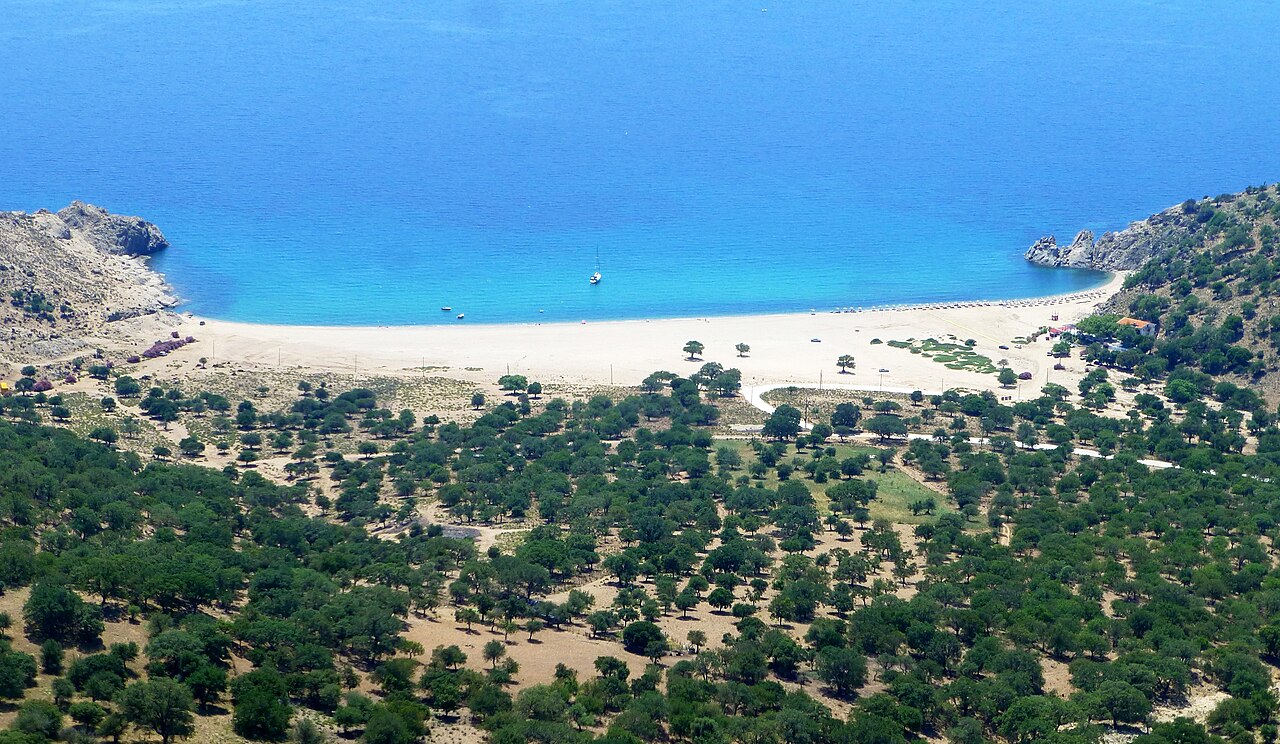
Samothrace’s beaches are shaped by the mountain. Some are pebbled and dark, some are broad and sandy, and several are framed by cliffs or river mouths. The coast is more convincing when chosen by the kind of day you want rather than by a single ranking.
- Pachia Ammos: the best-known broad sandy beach, useful for a conventional swimming day.
- Kipos: a darker, more rugged coast with a strong volcanic character and sunset appeal.
- Therma Beach: a small coastal option near the northern settlement and springs.
- Fonias Tower Beach: a pebbled shore near the river landscape and medieval tower.
- Vatos and Kremastos: more remote options where boat access, sea conditions and local arrangements matter.
Pachia Ammos is the easiest beach to explain to a first-time visitor, but it does not represent the whole island. Carry water, shade and footwear for rough approaches, and check whether a taverna, sunbed or water service is operating before relying on it.
Sea conditions also matter more on the remote coast than a photograph suggests. Boat access to Vatos or Kremastos depends on a suitable sea and an operator running that day; it is not a guaranteed alternative when the road is inconvenient. Keep a land-based beach or village plan as a backup, and never treat a remote landing as an invitation to swim beyond your ability or close to unseen rocks.
Kamariotissa, food and the island’s pace
Kamariotissa is more than the place where the ferry stops. It is the island’s practical food and supply centre, with a working harbour, tavernas and the easiest place to buy what you need before a mountain day. Eat here when your route depends on an early departure or when you want a straightforward evening after travelling.
Samothrace’s food combines seafood, goat, local meat, vegetables, cheese and simple dishes that suit a rural island with strong pastoral traditions. Goat is the island’s best-known speciality. Ask what is fresh and what has been cooked that day. A restaurant’s proximity to the port does not by itself tell you whether it is the right choice for a slow meal or a quick ferry connection.
The island’s pace is part of the practical experience. A ferry delay can affect a restaurant booking, a hot afternoon can change a waterfall plan, and a late return from the sanctuary can make an ambitious dinner reservation unhelpful. Keep one meal flexible, buy water before a nature day and avoid building a route that depends on crossing the island at the hottest part of the afternoon.
Seasonal planning and accessibility
Late spring and early summer are attractive for river walks because the landscape is green and water is more likely to be flowing, but conditions still vary by rainfall and temperature. July and August bring the clearest demand for beaches, pools and ferries; start nature walks early and reserve accommodation and vehicle space ahead. September can offer warm sea conditions with a calmer rhythm, while winter is a different proposition: ferry reliability, limited services, wet rock and mountain weather deserve priority over a fixed sightseeing list.
Samothrace is not an easy destination for every mobility level. Chora is steep, archaeological ground is uneven, and the famous vathres are reached over natural terrain rather than a surfaced promenade. Travellers with reduced mobility should prioritise Kamariotissa, accessible coastal viewpoints, the museum where possible and accommodation with confirmed level access. Families should judge a pool route by the youngest or least confident walker, not by the photographs used to advertise it.
For emergencies in remote terrain, do not rely on a mobile signal or assume that another visitor can provide a quick rescue. Tell your accommodation where you are going, carry a charged phone and return before darkness. If conditions change, turn around early. The most responsible Samothrace itinerary is one that leaves enough time for a safe return rather than treating the last pool or viewpoint as a compulsory finish.
Getting around without a car
Without a car, base yourself in Kamariotissa or Therma and arrange the priority excursions before arriving. Local buses, taxis and seasonal tours may cover the main settlements, but service frequency and route coverage should be confirmed for your dates. A car gives much more freedom for beaches, Chora, the sanctuary and changing your plan around weather.
Driving on Samothrace
Mountain roads can be narrow, and some beach or trail approaches are rough. Choose a rental vehicle you can control, check insurance restrictions and avoid taking a small car onto an unsuitable track simply to reach a photograph. For Fonias and other gorges, the vehicle solves the approach but not the hike: footwear, ability and weather remain the important variables.
| Travel style | Best base | Realistic plan |
|---|---|---|
| Car-free cultural visit | Kamariotissa or Chora | Prioritise the sanctuary, museum, Chora and one arranged nature excursion. |
| Waterfall-focused stay | Therma | Start early, choose one route by ability and keep a weather buffer. |
| Beach and island loop | Kamariotissa | Hire a car and separate Pachia Ammos from remote coastal options. |
| Family trip | Kamariotissa or a serviced coastal base | Choose easy swimming, the sanctuary and shorter walks; avoid committing to gorge scrambling. |
A practical four-day itinerary
| Day | Plan | Why it works |
|---|---|---|
| 1 | Arrive at Kamariotissa, settle in and walk the port or continue to Chora for an evening visit. | The first day stays flexible around the ferry and avoids an overbuilt schedule. |
| 2 | Visit the Sanctuary of the Great Gods and museum, then return via Chora and the Tower of Gattilusi. | The island’s history receives a full day and is not squeezed between swims. |
| 3 | Choose Fonias or an easier vathra route near Therma, with proper footwear and an early start. | You can match the route to weather, water levels and ability. |
| 4 | Swim at Pachia Ammos or choose a coastal drive before the return ferry. | The final day leaves room for a conventional beach without sacrificing the island’s main identity. |
Common mistakes to avoid
- Planning only around the ferry: Samothrace needs a weather and transport buffer.
- Treating every vathra as an easy swim: water levels, slippery rock and access vary sharply.
- Leaving the sanctuary for the last hour: its opening schedule and scale deserve a proper visit.
- Choosing a base without checking transfers: Kamariotissa, Chora and Therma serve different trip styles.
- Assuming all beaches have services: carry water, shade and basic supplies.
- Climbing Saos casually: high-mountain routes require experience, weather awareness and a realistic return plan.
The verdict
Samothrace is worth the ferry for travellers who want a genuine outdoor and cultural decision rather than a simple beach escape. The sanctuary gives the island historical gravity, Chora gives it a human centre, and the rivers and mountain pools make the landscape physically part of the trip. If you are extending a Northern Aegean route, the existing Lemnos guide is the most natural companion for comparing two very different islands reached through the wider Thracian and North Aegean network. For a more developed island mix of beaches, villages and ancient sites, compare it with the Vivid Greece Samos guide; Samothrace is the more rugged and physically demanding choice.
Choose three nights for a balanced first visit and four or more if waterfalls, beaches and weather buffers matter. Come prepared for rough edges, changing conditions and a slower transport rhythm. Samothrace is rewarding precisely because it asks you to participate in the landscape rather than view it from a resort timetable.
Research and review note: this guide was checked in July 2026 against Fast Ferries, Ferryhopper, the Archaeological Museum of Samothrace and the Greek Ministry of Culture. Ferry schedules, archaeological-site and museum hours, ticket prices, trail and waterfall access, sea conditions, road conditions and seasonal services can change. Confirm the relevant details directly before travelling.