
Corfu at a Glance
| Location | Ionian Sea, northwest Greece — opposite the Albanian and Greek mainland coasts |
| Greek name | Kerkyra (Κέρκυρα) |
| Size | Approximately 585 km² — the second-largest Ionian island after Kefalonia |
| Population | Around 100,000 permanent residents |
| Best months | May, June, September, and October — warm weather, fewer crowds |
| Getting there | International airport with direct European flights; year-round flights from Athens (~1 hour); ferries from Igoumenitsa (~1 hour 20 minutes) |
| UNESCO status | Old Town of Corfu — inscribed in 2007 |
| Ideal stay | 5–7 days for thorough exploration; 3–4 days for a focused trip |
Corfu does not look quite like the rest of Greece. Four centuries of Venetian rule left their mark in the narrow lanes, the shuttered townhouses, and the ornate churches of the old capital. Later French and British periods added neoclassical flourishes that give the island a layered, almost continental elegance. The effect is rare in Greece’s Aegean-dominated image. Round a corner in the old town and you might momentarily forget whether you are in the Ionian or northern Italy.
That cultural complexity sets Corfu apart from other popular Greek islands. It does not rely on a single selling point — not just beaches, not just ruins, not just nightlife. The island stretches roughly 60 kilometres from north to south, with a mountainous green interior and a rugged western coastline of cliffs and sandy coves. The gentler eastern shore faces the mainland, and the capital city earned UNESCO World Heritage status for good reason. Olive groves contain an estimated three to four million trees. Traditional mountain villages preserve a slower way of life, and the cuisine owes as much to Venice as to Athens.
This guide is for travellers planning their first or second trip to Corfu, particularly those who want to move beyond the resort strip. It covers the island’s different faces — its beaches, yes, but also its history, food, villages, and practical logistics.
Why Corfu Rewards a Longer Stay
Most Greek islands reveal their character within a day or two. Corfu takes longer. Its UNESCO-listed Old Town alone deserves two unhurried mornings. The western coastline, from the turquoise coves of Paleokastritsa to the sandstone cliffs of Sidari, could fill a week of beach-hopping. Add mountain villages, a distinctive local cuisine, and easy day trips to Paxos or even Albania. Five days feels like a reasonable minimum rather than a luxury.
Corfu Town and the UNESCO Old Town
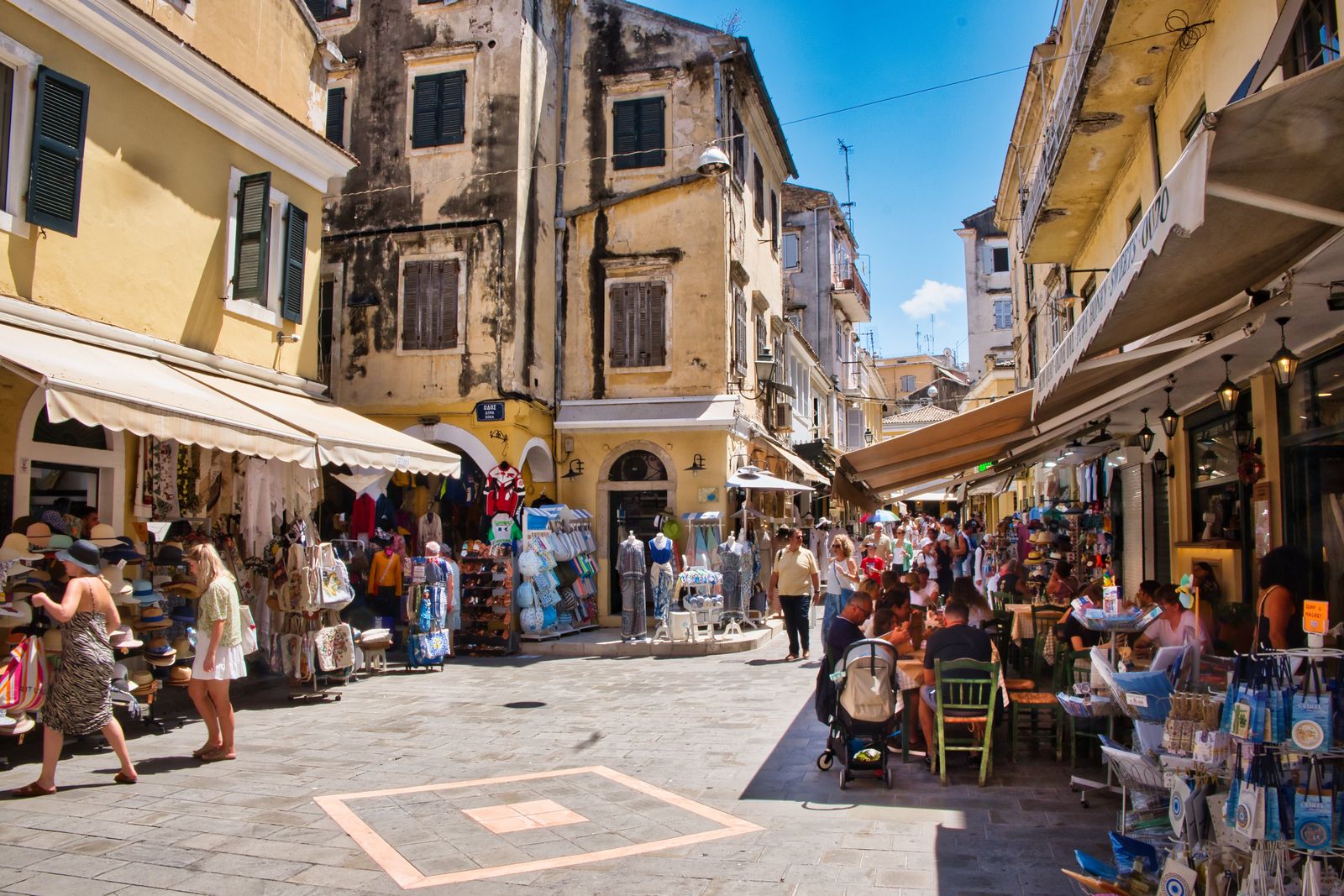
The capital is the island’s cultural heart, and it is worth arriving early before heading to the beaches. Corfu Town (known in Greek as Kerkyra) sits on the eastern coast, sheltered between two fortresses. The Old Fortress is a Venetian stronghold built from the fifteenth century onward on a rocky promontory. The New Fortress, constructed in the late sixteenth century, occupies a hill above the port. Both are open to visitors, though the Old Fortress tends to reward more with its panoramic position and small exhibitions.
Between them lies the Old Town, a dense web of narrow lanes called kantounia, lined with tall Venetian-era buildings whose green or ochre shutters open onto strings of drying laundry. Some lanes are barely wide enough for two people to pass. The architecture shows its Italian heritage most clearly here: arched doorways, internal courtyards, wrought-iron balconies, and churches whose bell towers look more Tuscan than Cycladic. UNESCO inscribed the Old Town on the World Heritage List in 2007 for the exceptional condition of its fortifications and its unusual blend of styles.
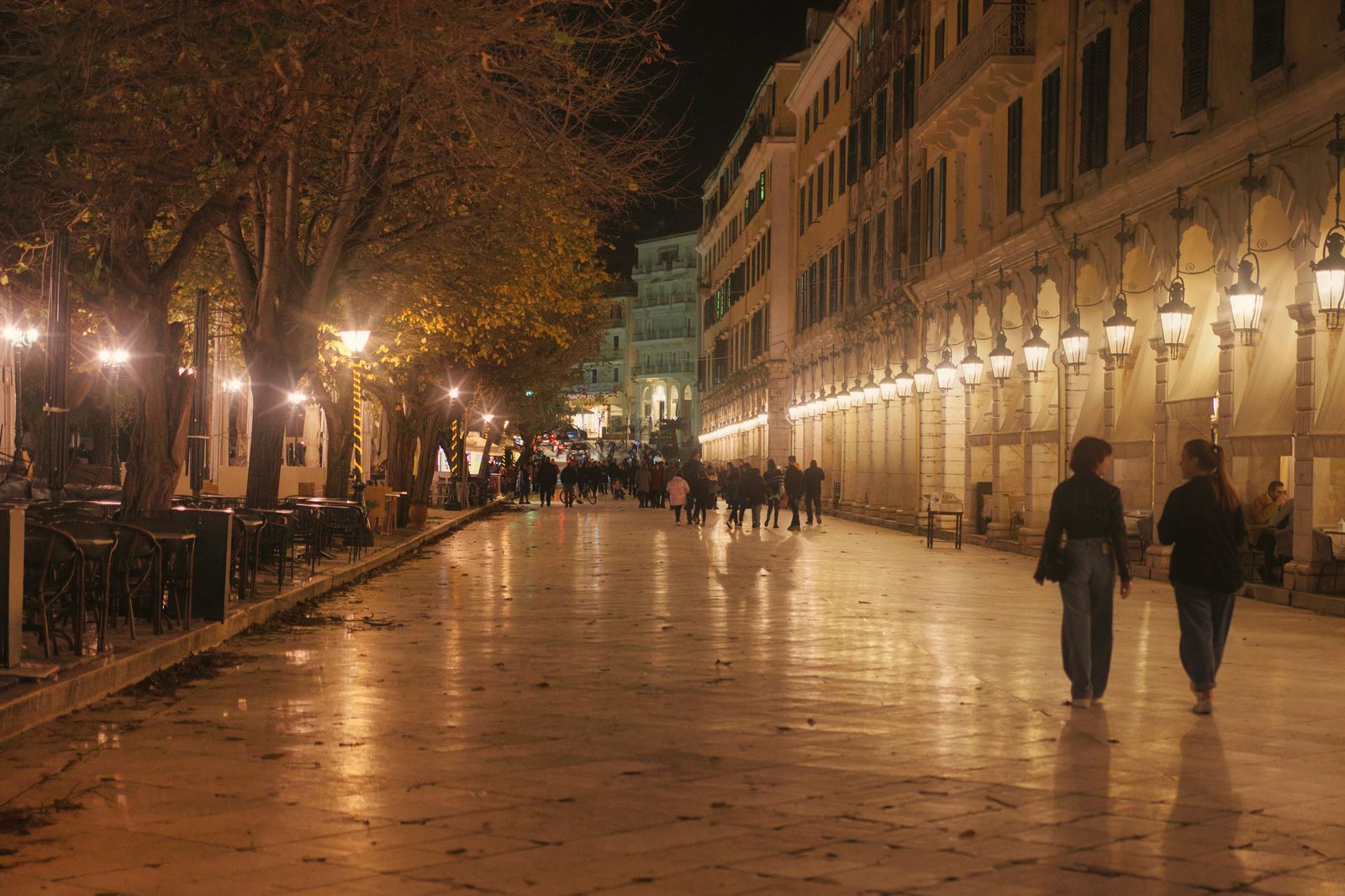
Two landmarks anchor the centre. The Spianada is one of the largest public squares in southeastern Europe, separating the Old Town from the Old Fortress. Cricket matches are still played on the grass — a legacy of the British Protectorate period (1815–1864) that feels wonderfully incongruous. Along the western side runs the Liston, an arcaded promenade modelled after the Rue de Rivoli in Paris. It was built during the brief French rule in the early nineteenth century. The arches now shelter a row of cafés where the price of a coffee is high but the people-watching is free.
Beyond the main square, the Old Town is best explored without a plan. The Orthodox churches are worth looking into, particularly the Church of Agios Spyridon, dedicated to the island’s patron saint. Its silver-encased relics are paraded through the streets four times a year. The Palace of St. Michael and St. George, a grand Regency-era building on the northern edge of the Spianada, houses the Museum of Asian Art — an unexpectedly rich collection from Corfiot diplomatic holdings.
Beyond the Old Town: Palaces, Monasteries, and an Empress
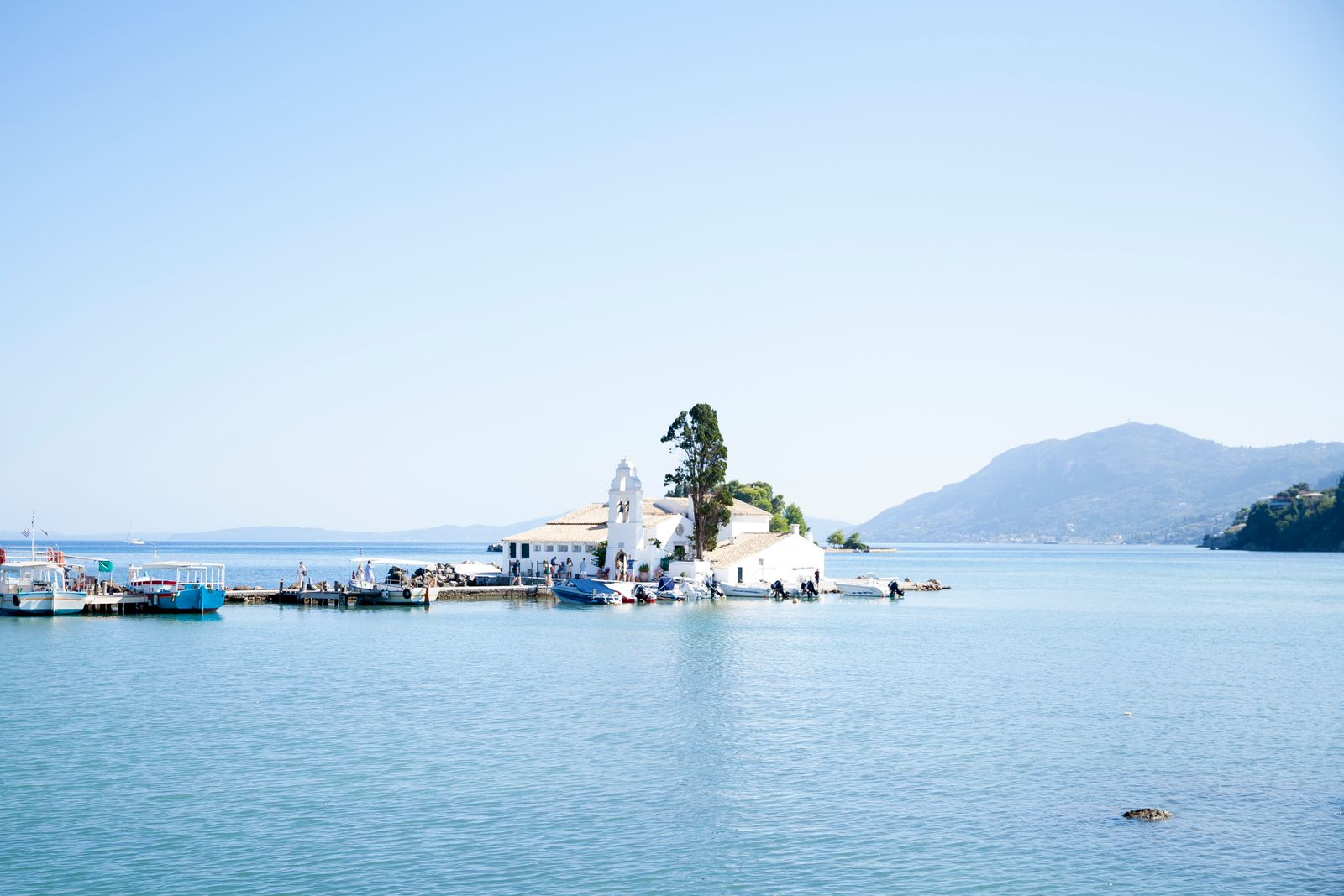
A handful of sights outside the old walls are worth the short drive or bus ride. Pontikonisi — Mouse Island — is a tiny tree-covered islet visible from the Kanoni viewpoint south of town. It is one of the most photographed spots on the island. The neighbouring Vlacherna Monastery is connected to the shore by a narrow causeway and looks exactly as it does in postcards. The monastery itself is small and takes only a few minutes to visit.
Mon Repos is a neoclassical estate set in parkland on the Kanoni peninsula. It was the birthplace of Prince Philip, Duke of Edinburgh, in 1921, and now operates as the Museum of Palaeopolis. The collection includes archaeological finds from the surrounding area, among them remains of early temples to Hera and Artemis dating to the seventh century BC. The shaded gardens are pleasant for a quiet walk.
The Achilleion Palace, built in 1890 for Empress Elisabeth of Austria (known as Sissi), sits in the village of Gastouri about ten kilometres south of Corfu Town. Its terraced gardens contain neoclassical statues and views across the Ionian Sea. The palace interior reflects the empress’s fascination with Achilles and Greek mythology. At the time of writing, the interior is closed for renovations, though the gardens remain open. Check locally for updated access before visiting.
Beaches: West, North, and East
Corfu has over seventy named beaches, which is both a blessing and a source of confusion. The character of the coastline changes depending on direction. The western shore tends toward sandy beaches backed by tall cliffs. The northeast coast offers sheltered pebble coves with exceptionally clear water, while the north has wide sandy stretches suited to families. The south mixes popular resort beaches with some of the island’s wildest natural landscapes.
The Western Coast
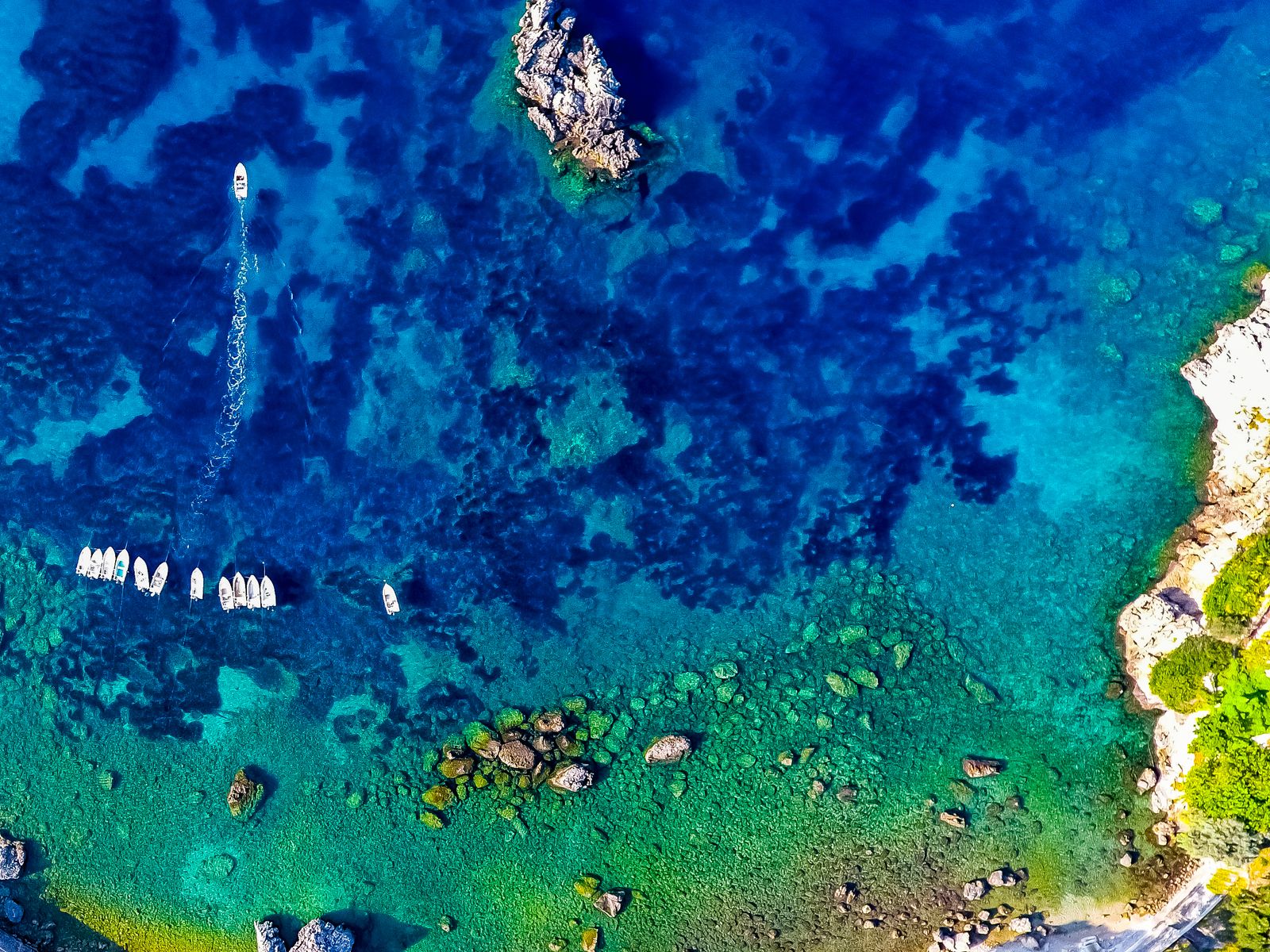
Paleokastritsa is the flagship, and with good reason. Six small bays of intensely coloured water sit beneath steep green hillsides, about 25 kilometres from Corfu Town. The main beach has sunbed hire and boat rental. Smaller coves around the headland are reachable by water taxi or by footpaths of varying difficulty. Above the bays sits the Monastery of Theotokos, a working monastery founded in the thirteenth century whose terrace views justify the winding drive up. Paleokastritsa fills up from mid-June through August, so arrive before ten in the morning or visit in shoulder season.
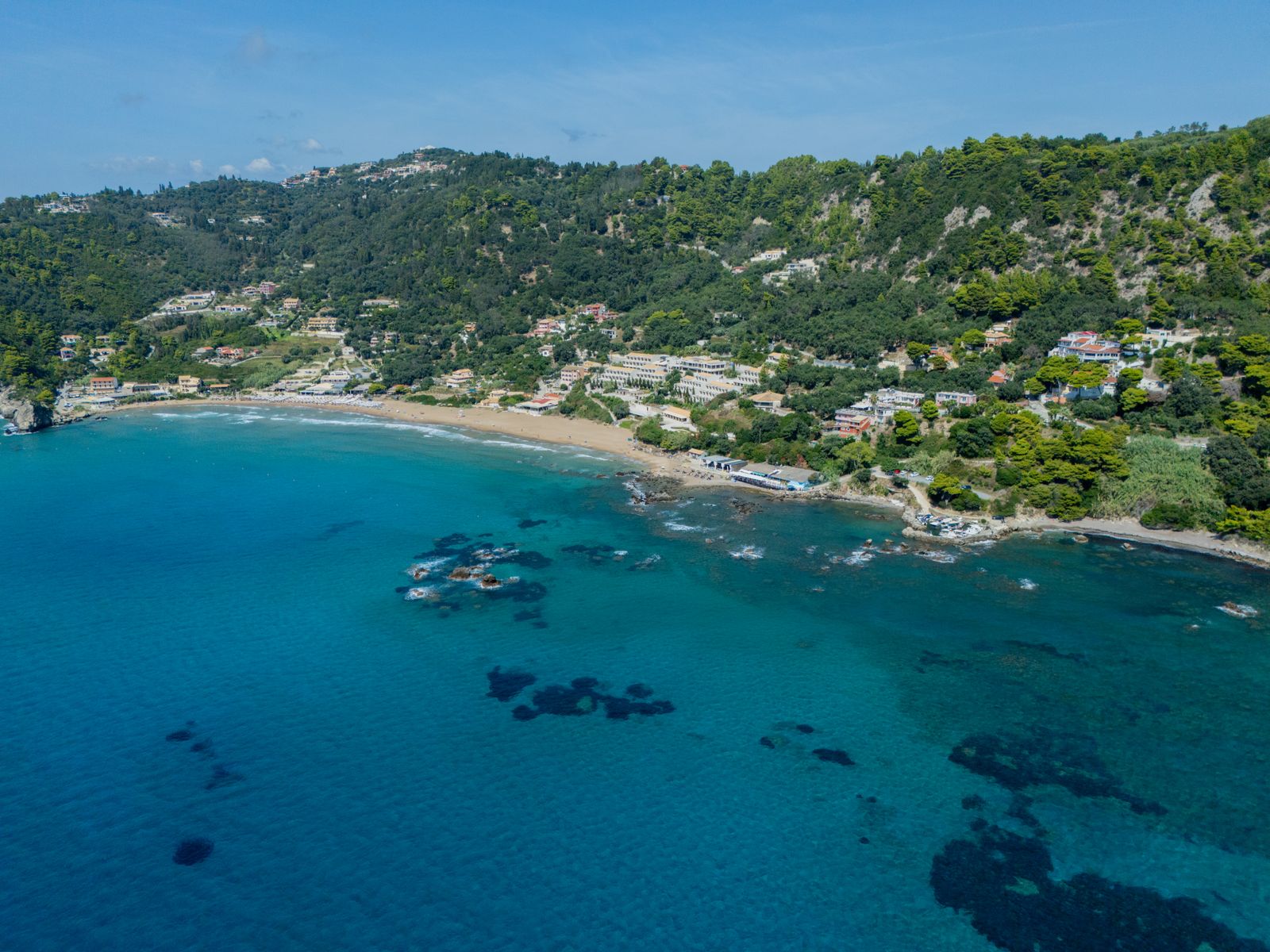
South of Paleokastritsa, Glyfada is one of the island’s most popular sandy beaches. It is wide enough to absorb crowds reasonably well and faces due west for reliable sunsets. Sunbeds, bars, and water sports make it a practical choice, though not a quiet one during peak season. Agios Gordios, further south again, offers a long sandy beach beneath a headland and tends to draw a slightly younger crowd.
For something wilder, Halikounas stretches along the southern edge of the Korission Lagoon, a shallow saltwater lake designated as a nature reserve for its bird populations. The beach is sandy, mostly undeveloped, and popular with kitesurfers when the wind picks up. Travellers who prefer space over infrastructure will appreciate this stretch.
The Northern Coast
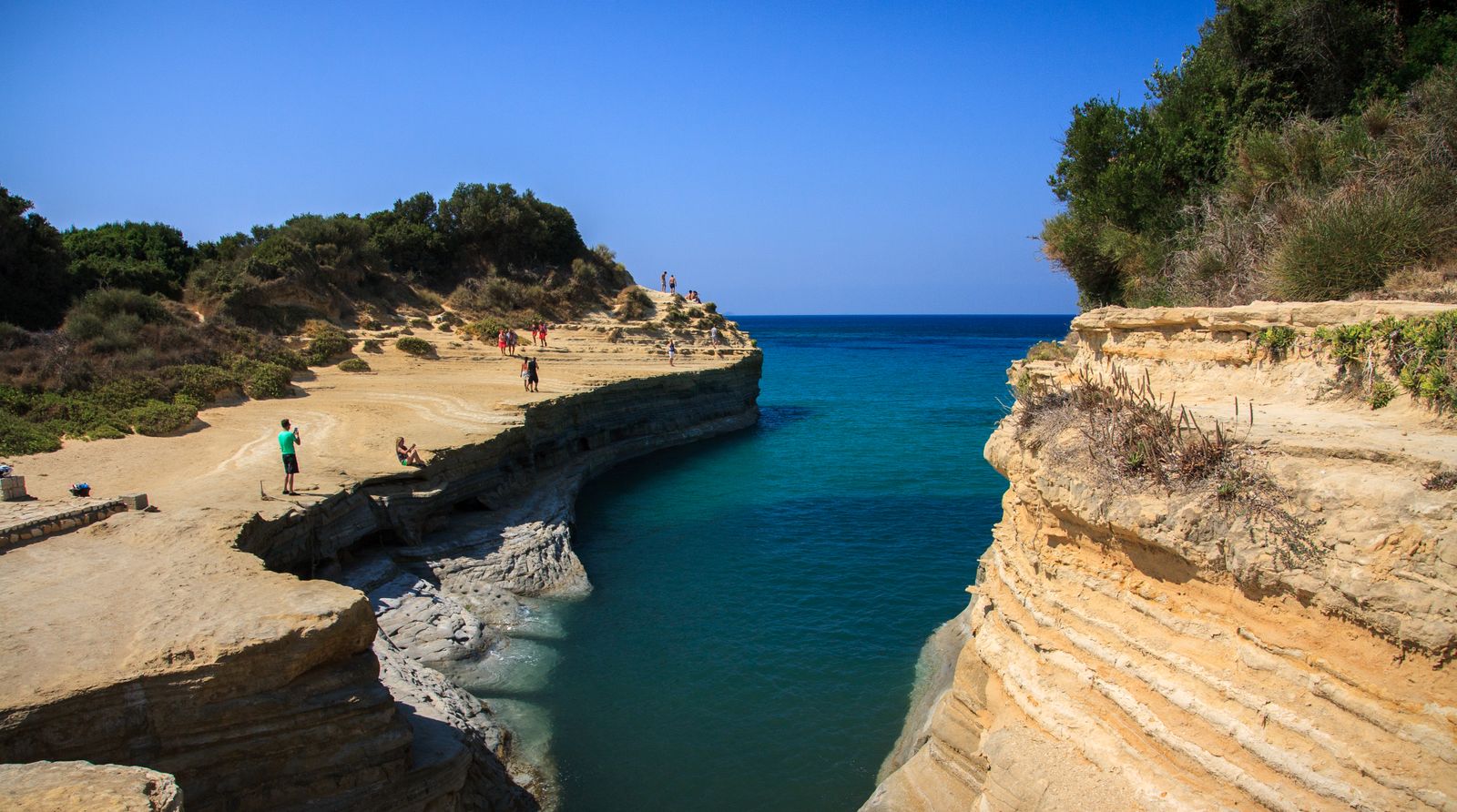
Sidari, in the northwest, is known primarily for Canal d’Amour — a narrow channel carved through sandstone cliffs into turquoise pools. Local legend claims that couples who swim through it together will stay together forever. This adds a certain romantic charm but also guarantees crowds in summer. The geological formations are genuinely impressive, though the beach around the canal is small and feels cramped at midday. Sidari town itself is a developed resort with a package-holiday atmosphere.
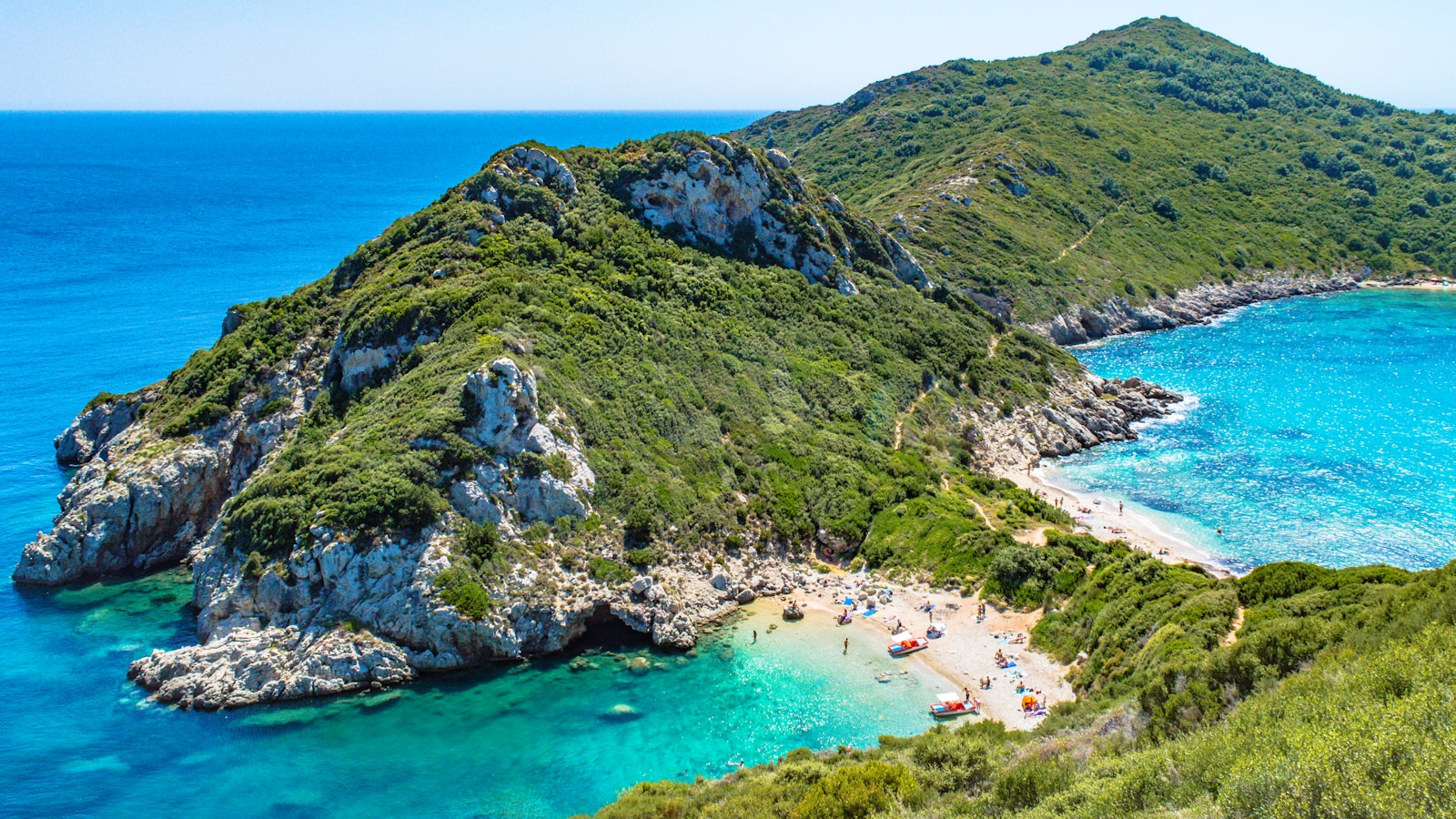
Further west, Agios Georgios Pagon is a wide sandy bay that remains quieter and works well for families. From the headland above the village of Afionas, a steep trail leads down to Porto Timoni, a striking double beach where a narrow spit separates two bays. The walk takes roughly 20–25 minutes each way and is demanding in the heat. Bring water and wear proper shoes rather than flip-flops.
Along the north coast proper, Acharavi and Roda offer long, shallow, sandy beaches with calm conditions. These areas lack dramatic scenery but are practical for families who prioritise safe swimming and easy access.
The Northeast Coast
The northeast between Barbati and Kassiopi is where Corfu shows its more elegant side. The beaches here tend to be pebbly rather than sandy, but the water is exceptionally clear. Olive groves and cypress trees back the shoreline, with the Albanian mountains visible across the narrow strait. Kalami is associated with the writer Lawrence Durrell, who lived here in the late 1930s and described the bay in Prospero’s Cell. The waterfront has a handful of tavernas and the pace is deliberately slow.
Barbati, slightly further south, is a long pebble beach with deeper water and good snorkelling conditions. Kassiopi sits at the northeast tip — a small harbour town with Byzantine-era fortress ruins and several pebbly coves within walking distance.
| Beach | Type | Best for | Note |
|---|---|---|---|
| Paleokastritsa | Mixed sand/pebble, multiple coves | Scenery, snorkelling, boat trips | Arrive early in peak season; monastery above |
| Glyfada | Wide sandy | Sunsets, beach bars, water sports | Organised and popular; west-facing |
| Canal d’Amour (Sidari) | Sandstone coves | Couples, geology, swimming | Photogenic but small; crowded midday in summer |
| Porto Timoni | Double pebble beach | Adventurous visitors, photography | Steep 20–25 min hike from Afionas; no facilities |
| Barbati | White pebble | Snorkelling, clear water, couples | Deep water; Mount Pantokrator backdrop |
| Acharavi | Long sandy, shallow | Families with young children | Calm, shallow entry; good facilities nearby |
| Halikounas | Sandy, undeveloped | Kitesurfing, solitude, nature | Near Korission Lagoon nature reserve; minimal services |
Mountain Villages Worth the Detour
Corfu’s green interior is often overlooked by visitors who never leave the coast, which is a shame. The mountain villages offer a very different texture. Old Perithia (Palea Perithia), on the northern slopes of Mount Pantokrator, is the most distinctive. Once a thriving medieval settlement, the village was gradually abandoned during the twentieth century as residents moved to the coast. Today it is a protected heritage site with crumbling stone houses, cobbled paths, and several restored tavernas serving Corfiot classics. The setting feels genuinely removed from the tourist trail. The drive up also brings you close to the summit of Pantokrator at 906 metres, where a small monastery and a telecommunications tower share the peak. The panoramic view extends across to Albania, mainland Greece, and the Diapontian islands.
Lakones, perched above Paleokastritsa, has earned the nickname “the balcony of the Ionian” for its views down to the turquoise bays below. It is a tiny village — barely more than a church, a few houses, and a couple of terrace cafés facing the sea. The panorama is one of the finest on the island and is best appreciated in the late afternoon light. Combine it with a morning at Paleokastritsa beach for a satisfying half-day.
Pelekas sits on a hill about 13 kilometres from Corfu Town and is the island’s traditional sunset spot. A viewpoint known as Kaiser’s Throne — where Kaiser Wilhelm II reportedly came to watch the sun go down — offers a 360-degree panorama across the island. The village has a relaxed, vaguely bohemian atmosphere with a handful of tavernas and rooms to let.
What to Eat in Corfu
Corfiot cuisine is noticeably different from the food on most Aegean islands, and the Venetian influence is the reason. Where other Greek islands lean toward grilled fish and simple salads, Corfu developed slow-cooked dishes with rich sauces, imported spices, and pasta. This is cooking that requires time and a wood fire rather than a charcoal grill.
Pastitsada is the island’s signature dish: rooster or beef slow-cooked in a spiced tomato sauce with red pepper, cinnamon, cloves, and wine. It is served over thick pasta and topped with grated cheese. It is traditionally a Sunday and celebration meal, and most tavernas serve their own version. Sofrito is the second essential — thin slices of veal pan-fried in flour and simmered in a white sauce of garlic, white wine, vinegar, and parsley. The name comes directly from Italian, and the dish rewards a tolerance for garlic. Bourdeto completes the local trinity: a fish stew built around scorpionfish, cooked with enough red pepper to give it genuine heat. That spiciness is unusual for Greek cooking.
Beyond the three classics, look for bianco, a lighter fish preparation with lemon and potato, and tsigareli, slow-stewed greens that vary by season. Corfu is also the only place in Greece where kumquat grows commercially. The small citrus fruit arrived from China via the British in the nineteenth century and is now made into liqueur, marmalade, and candied sweets. The liqueur is intensely sweet, and a small bottle makes a distinctive gift.
The island’s olive oil is excellent, produced mainly from the Lianolia variety, and tends to be milder than Cretan oils. Some of the olive trees exceed five hundred years in age. Locally produced ginger beer (tsitsibira) is another leftover from the British period, still served in a few traditional establishments in Corfu Town.
Getting There
Corfu is unusually well connected for a Greek island, which is one of its practical advantages over more remote destinations.
By air: Ioannis Kapodistrias International Airport (CFU) sits just three kilometres south of Corfu Town. The runway extends over the water beside the main road, creating one of Greece’s more memorable scenes for plane spotters. Year-round flights from Athens take approximately one hour, with multiple daily services. From roughly May through October, direct flights arrive from cities across Europe including London, Berlin, Vienna, and Milan. Check seasonal routes from your home city before booking — they change annually.
By ferry: The main crossing connects Igoumenitsa on the Epirus coast with Corfu Town in approximately 1 hour and 20 minutes. Additional sailings from the southern port of Lefkimmi take around 50 minutes. KerkyraLines and Kerkyra Seaways operate frequent daily services — up to 25 crossings per day in peak summer. Passenger tickets cost approximately €7–10 one way, and vehicles can be transported. Booking ahead is advisable in July and August. Igoumenitsa is reachable by car from Athens in roughly 5–6 hours, or by KTEL bus from Athens, Thessaloniki, and Ioannina.
Corfu also has seasonal ferry connections to Italy (Bari, Brindisi, Ancona, and Venice) and a short crossing to Sarandë in Albania. This makes it a natural stop on a broader Adriatic or Ionian island-hopping itinerary.
Getting Around the Island
A rental car is the most practical way to explore Corfu thoroughly. The road network covers the island reasonably well, though mountain roads are narrow and winding — particularly the approach to Lakones and the road up Mount Pantokrator. Expect to pay approximately €15–50 per day depending on season and vehicle type. Rates rise and availability drops in July and August, so book in advance during those months.
Corfu Town has a local bus network (the Blue Buses) covering the town and immediate surroundings. The Green KTEL buses connect the capital with most major resorts and villages across the island. Service is more frequent in summer but remains limited, particularly to western and mountain areas. For travellers based in Corfu Town who want to visit Paleokastritsa or the north coast for a day, the bus works well. For anything more ambitious, a car makes a significant difference.
Scooter rental is popular with couples and solo travellers, though the mountain roads require caution and some riding experience.
Where to Base Yourself
| Area | Best for | Trade-off |
|---|---|---|
| Corfu Town | Culture, dining, nightlife, walking the Old Town | No proper beach nearby; parking is difficult |
| Northeast coast (Barbati to Kassiopi) | Couples, clear-water swimming, quiet evenings | Pebble beaches; need a car for west coast trips |
| Paleokastritsa area | Scenery, boat trips, snorkelling | Limited dining options in the evening; winding access road |
| North coast (Acharavi, Roda, Sidari) | Families with young children, sandy beaches | Resort-oriented atmosphere; less cultural depth |
| South (Benitses, Moraitika) | Budget stays, proximity to the airport | Package-tour feel; beaches are less distinctive |
For a first visit, splitting time between Corfu Town and a coastal base on the northeast or west coast offers the best balance. Two nights in town for the Old Town, museums, and evening dining, followed by three nights on the coast for beaches and villages, is a reliable structure.
Honest Limitations
Corfu is one of the wettest places in Greece. Annual rainfall reaches approximately 1,000 millimetres — more than double what the Cyclades receive. Summer months from June through August are reliably dry, but spring and autumn can bring sharp downpours that pass quickly. November is the wettest month. That rainfall is also what keeps the island so green, which is a genuine advantage for anyone tired of bare rocky landscapes.
The south coast around Kavos has a well-earned reputation for loud nightlife aimed at young package tourists. It has almost nothing in common with the rest of the island, and travellers seeking a quieter experience should avoid basing themselves there. The contrast between Kavos and a taverna in Old Perithia is one of Greek tourism’s starkest cultural divides.
Traffic around Corfu Town can be slow in summer, and parking in the old centre is effectively impossible. Use one of the car parks on the outskirts and walk in. Mountain roads to villages like Lakones and Old Perithia are narrow with tight bends, so confident driving helps.
Rocky beaches and sea urchins are common, particularly on the northeast coast. Water shoes are a practical precaution for anyone planning to swim from pebbly or rocky shores.
A Suggested Five-Day Itinerary
Day 1 — Corfu Town. Arrive and settle into accommodation in or near the Old Town. Walk the kantounia, visit the Old Fortress for panoramic views, explore the Spianada and Liston promenade, and eat your first pastitsada at a taverna in the old streets.
Day 2 — Kanoni, Mon Repos, and the south. Spend the morning at Mon Repos estate and the Palaeopolis archaeological area, then walk to the Kanoni viewpoint for views of Pontikonisi and Vlacherna Monastery. In the afternoon, drive to the Achilleion Palace gardens — check whether the interior has reopened before going. Return to town for an evening stroll.
Day 3 — Western coast. Dedicate the full day to the west side of the island. Swim at Paleokastritsa in the morning, take a boat trip to the sea caves, and visit the monastery above the bays. Drive up to Lakones for coffee with a view, then head to Glyfada beach for a late swim and sunset. Consider stopping in Pelekas for the Kaiser’s Throne viewpoint on the way back.
Day 4 — The north. Drive to the northwest for Canal d’Amour in the morning before the crowds build. Continue to Agios Georgios Pagon or walk down to Porto Timoni from Afionas if conditions and fitness allow. Afternoon at a north-coast beach (Acharavi or Roda for sand, Kassiopi for pebbles and a harbour lunch). Optional detour to Old Perithia for a mountain-village dinner.
Day 5 — Northeast coast and departure. Spend the morning at Kalami or Barbati on the northeast coast for a final swim in clear water. Allow time for a slow lunch at a waterfront taverna. Return to Corfu Town for last-minute shopping — kumquat products, olive oil, local wine — before heading to the airport or ferry.
Connections: Day Trips and Onward Travel
Corfu’s position makes it a natural hub for wider exploration. Day boats to Paxos and Antipaxos depart from Corfu Town port and typically include swimming stops at Antipaxos’s turquoise bays. This is one of the most popular day trips from the island. A fast boat to Sarandë in Albania takes under an hour and allows a visit to the ancient site of Butrint, itself a UNESCO World Heritage Site. A passport is required for the Albania crossing.
For travellers continuing through the Ionian islands, Lefkada and Kefalonia are reachable via mainland connections. Direct inter-island ferries in the Ionians are limited compared to the Cyclades, so plan connections carefully and allow flexibility.
This article was researched and verified as of July 2026. Opening hours, transport schedules, and admission fees may change seasonally. We recommend confirming time-sensitive details directly with official sources before travelling. Vivid Greece is an independent publication and this guide contains no sponsored content.
