Mountainous Greece: The New Campaign Putting Zagori & Vikos Gorge on the Map

On April 6, 2026, Greece’s Ministry of Tourism did something quietly revolutionary. Instead of unveiling another campaign about cobalt-blue seas and sun-drenched beaches, Minister Olga Kefalogianni launched “Mountainous Greece. It Lifts You High. All Year Round.” — a bold pivot towards the country’s rugged, under-visited interior. For anyone who has ever suspected that Greece is far more than its coastline, this was a moment of vindication.
At the heart of this new campaign lies a single region that encapsulates everything mountainous Greece has to offer: Zagori, a network of 46 stone-built villages in the Pindus mountains of Epirus, anchored by the colossal Vikos Gorge — one of the deepest gorges in the world. In September 2023, UNESCO inscribed the Zagori Cultural Landscape as a World Heritage site, and international media from the BBC to the New York Times have since published major features on its remarkable 46-village hiking trail. Yet for all that growing recognition, Zagori remains refreshingly uncrowded, authentic, and — for most travellers — still a secret waiting to be discovered.
There are moments in the mountains when time itself seems to pause — the sun slanting through a thousand-year-old plane tree, the smell of wild oregano underfoot, the distant clang of sheep bells. This is Greece at its most elemental.
Hiking the Vikos Gorge: Greece’s Most Spectacular Trail
The main event in Zagori, and the reason most hikers make the journey, is the Vikos Gorge hike. At 900 to 1,000 metres deep, it competes with the likes of the Grand Canyon for the title of deepest gorge in the world (relative to its width — and it is extraordinarily narrow). The scale is quite simply overwhelming: you walk along the floor of a chasm whose walls rise vertically on either side, the sky a ribbon of blue far above.
The classic route runs one way from Monodendri to Vikos village — 12 kilometres of moderate-difficulty terrain that takes five to six hours. You start at the central square of Monodendri, at roughly 1,060 metres elevation, and descend into the gorge on old cobbled paths laid by 17th- and 18th-century stonemasons. The trail ends at Vikos village, 770 metres above sea level, after a total elevation gain of about 676 metres. The return route doubles the distance to 24 kilometres and takes ten to twelve hours, so most hikers arrange a car transfer or two vehicles.

No permits are needed — this is a free-access trail through the Vikos-Aoos National Park, which in 2005 merged into the larger Northern Pindos National Park, the largest protected area on the Greek mainland. The terrain is stony in places, with some steep descents and a few stream crossings, so sturdy hiking boots and trekking poles are advisable.
The best seasons for the Vikos Gorge hike are spring (April to May) and autumn (September to October), when daytime temperatures hover around a perfect 15–20°C. Spring brings wildflowers carpeting the gorge floor and waterfalls swollen by snowmelt; autumn sets the entire landscape ablaze with golden foliage. Summer can be uncomfortably hot in the gorge, and winter — while spectacular for experienced winter hikers with proper gear — sees snow and limited services in the villages.
For those who prefer a shorter taste of the gorge, the hike from Vitsa to the monastery of Agia Paraskevi offers a rewarding two-to-three-hour round trip with stunning cliff-edge views.
The 46 Villages of Zagori: A Walk Through Stone History
Zagori is not a single town but a constellation of 46 traditional villages — the Zagorohoria — each with its own character, layout, and atmosphere. What unites them is an architectural language of extraordinary consistency and beauty: stone houses with grey slate roofs, cobbled streets laid in intricate patterns, plane-tree-shaded central squares, and stone-arched bridges spanning every river and stream.
This tradition was built by itinerant master stonemasons from the region of Mastorochoria, whose craft spread across the Balkans. Over sixty of their arched bridges survive today, gracefully curving over the Voidomatis and its tributaries. The most photographed is the three-arched Plakidas Bridge (also known as Kokkori Bridge) near Kipi.
Here are the villages you should not miss:
Aristi
The unofficial capital of Zagori tourism and the most popular base for exploring the region. Aristi sits on a plateau overlooking the Voidomatis valley, with stunning mountain views from almost every stone-built guesthouse. It has a good selection of tavernas, cafés, and boutique hotels, making it the most practical choice for first-time visitors.
Monodendri
The main trailhead for the Vikos Gorge hike, and home to one of the most dramatic viewpoints in all of Greece. The Monastery of Agia Paraskevi perches on the very edge of the gorge — a vertiginous balcony over the void. The monastery itself dates from the 15th century, though what stands today is largely an 18th-century reconstruction. Stand at its edge and you understand immediately why Zagori was called “land behind the mountain” (from the Slavic za gora).
Papigo (Mega Papigo and Mikro Papigo)
The twin villages of Papigo lie in the shadow of Mount Tymfi (8,192 feet), their stone houses clustered on the mountainside like something from a Brothers Grimm illustration — except the sun shines here. Mikro Papigo (Little Papigo) is particularly charming, with narrow alleyways, natural springs, and the acclaimed Mikro Papigo 1700 Hotel & Spa, a restored stone mansion that is the region’s most luxurious stay.

Skamneli
One of the most beautifully preserved villages in the region, Skamneli is built on two levels connected by cobbled lanes. Its church of the Apostles, an early 19th-century basilica, contains a carved wooden iconostasis that is one of the finest in Epirus. The village has a quiet, lived-in feel that rewards slow wandering.
Dilofo
Remarkably, Dilofo remained car-free until quite recently — its double-hilltop layout and steep cobbled stairs made vehicle access nearly impossible. The result is one of the most atmospheric settlements in Zagori, a place where the only sound is church bells, running water, and your own footsteps. Two-storey stone mansions with slate roofs line the narrow lanes, their upper floors projecting over the streets on wooden brackets.
Kipi
The gateway village to the Zagori interior, Kipi is the first you reach when driving from Ioannina. Its position at the entrance to the Vikos Gorge makes it a popular base, and the Kipi Mountain Resort offers comfortable accommodation. The surrounding area is rich in stone bridges, including the elegant three-arched bridge that gives the village its name (kipi means “gardens” in Greek).
Vitsa
Perched on a steep slope between two ravines, Vitsa offers shorter gorge access for those who want a less demanding hike. Its winding alleys are lined with some of the oldest surviving mansions in Zagori, their stone walls bearing the characteristic double-sloped slate roofs that keep the snow from accumulating in winter.
UNESCO Status: What It Means for Zagori
In September 2023, the Zagori Cultural Landscape was inscribed on the UNESCO World Heritage list — a decision that recognised not just the individual villages or the gorge, but the entire relationship between human settlement and nature over centuries. The UNESCO designation covers the unique agro-pastoral landscape, the network of stone bridges and cobbled paths, the sacred forests (protected groves around churches and monasteries), and the traditional way of life that shaped it all.
This “New UNESCO Site” status is a powerful SEO hook and a compelling reason to visit now, before mass tourism catches up. Unlike Meteora, which has been a UNESCO site since 1988 and now struggles with summer crowds, Zagori remains quiet and authentic. The absence of coach-tour infrastructure and the region’s require-a-car geography naturally limit visitor numbers, preserving the very qualities that earned it UNESCO recognition.
Standing on the edge of Vikos Gorge at Agia Paraskevi, the world falls away — literally. A thousand metres of empty space, then the whisper of the Voidomatis far below. No photograph can truly capture what it feels like to be this small.
Getting to Zagori: Car Rental Is Not Optional
Let me be direct: you need a car to experience Zagori. There is almost no public transport within the region — no buses connecting the villages, no taxi ranks at trailheads, no organised shuttle services. The narrow, winding roads that snake through the mountains are part of the experience, but they demand confident driving.
| Route | Distance | Driving Time |
|---|---|---|
| Ioannina Airport (IOA) | 22 km | ~30 minutes |
| Thessaloniki Airport (SKG) | 300 km | ~4 hours |
| Athens Airport (ATH) | 450 km | ~5 hours |
| Preveza/Aktio Airport (PVK) | 104 km | ~2 hours |
| Corfu Airport (CFU) | 73 km + ferry | ~4 hours total |
Ioannina Airport is the obvious choice — a 30-minute drive from the first Zagori villages. It has limited direct flights, so many visitors fly into Thessaloniki or Athens and drive. Rent your car at the airport; the agencies in Ioannina town are a close second. Do not underestimate the driving time: the Zagori roads are beautiful but slow, and distances that look short on a map can take twice as long as expected.
For those combining Zagori with other destinations, the region is about three hours by car from Meteora and roughly four hours from the beaches of Thessaloniki and Halkidiki — making it an excellent addition to a Northern Greece road trip.
Best Time to Visit Zagori
| Season | Conditions | Verdict |
|---|---|---|
| Spring (April–May) | 15–20°C, wildflowers, waterfalls, guesthouses reopen mid-April | ⭐⭐⭐⭐⭐ Best for hiking |
| Summer (June–August) | Warm days, peak season, can be hot in the gorge | ⭐⭐⭐ |
| Autumn (September–October) | 15–20°C, golden foliage, fewer crowds | ⭐⭐⭐⭐⭐ Best for hiking |
| Winter (November–March) | Snow, cold, limited services | ⭐⭐ Only for experienced winter hikers |
Spring and autumn are the undisputed champions. The weather is ideal for extended hiking, the villages are alive without being crowded, and the natural beauty is at its peak. If you visit in summer, start your hikes early in the morning to avoid the midday heat. Winter is a special experience for those equipped for snow hiking, but many guesthouses close, and the Vikos Gorge trail should only be attempted with proper winter gear.
Beyond the Gorge: Rafting, Monasteries & the Voidomatis River
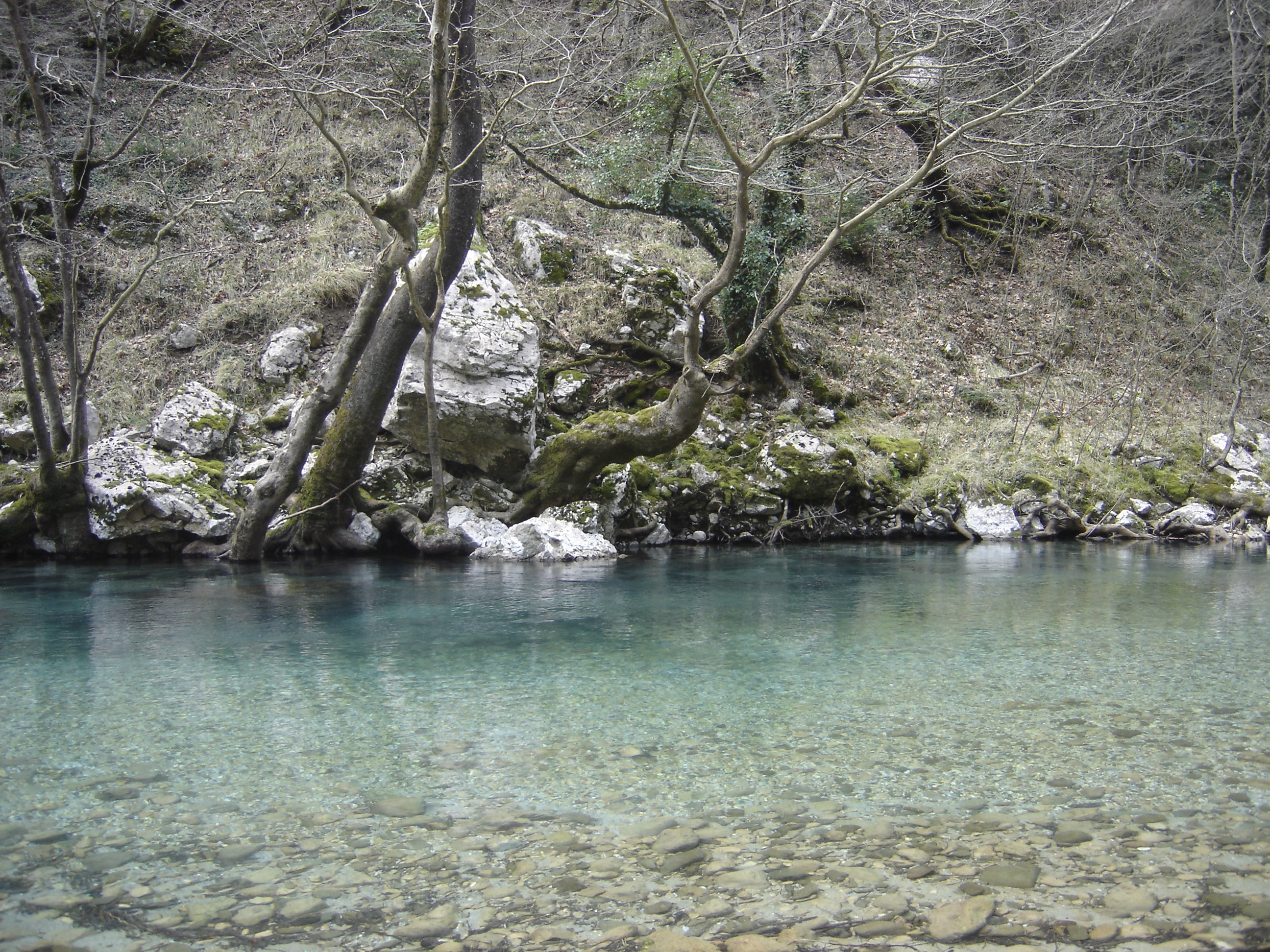
The Voidomatis River is one of the clearest rivers in Greece — you can see every pebble on the riverbed from the bank. In spring and early summer, guided rafting and kayaking trips run through its turquoise waters, offering a completely different perspective on the gorge. This is a genuinely fun and family-friendly activity, suitable even for first-time rafters.
Zagori is also home to several remarkable monasteries built into the mountain landscape. The Monastery of Voutsa, the Panagia Spiliotissa (cave monastery), and Rogovou Monastery all reward a visit. And for a taste of local history on foot, the Vradeto Stairs — a stone stairway of over 1,100 steps that was, until the 1970s, the only connection between the villages of Vradeto and Kapesovo — make for a fascinating short hike.
For longer treks, the High Trails of Pindos network offers multi-day routes crossing the entire mountain range, with overnight stays in traditional guesthouses. These are moderate to challenging and best attempted with a guide or detailed route planning.
Epirote Cuisine: What and Where to Eat in Zagori

The cuisine of Epirus is among Greece’s most underrated — hearty, seasonal, and deeply connected to the mountains. You should arrive hungry and prepared to eat well.
Epirote pies (pites) are the region’s signature dish. They come in dozens of varieties: tyropita (cheese pie), spanakopita (spinach pie), and the sublime hortopita (wild greens pie) made from foraged mountain greens. The pies are baked in round metal tins (sini) over wood fires, and the best places to try them are the family-run tavernas in almost every village.
Trahana — a handmade pasta from cracked wheat and fermented milk — appears in soups and stews. Metsovone, a smoked cheese from the nearby town of Metsovo (a 40-minute drive from Aristi), is protected by PDO status and pairs perfectly with a glass of local tsipouro. Wild mushrooms foraged from the Pindos forests appear in everything from risottos to simple grilled plates. Fresh trout from the region’s rivers, simply grilled with olive oil and lemon, is a Zagori staple.
For drinks, Tsipouro (pomace brandy) is the local spirit, often served with a small meze plate. The wine regions of Zitsa (PDO, for crisp white wines from the Debina grape) and Metsovo (home to the excellent red wines of Katogi & Strofilia) are short drives from Zagori and make for excellent day trips.
A note on Metsovo: This mountain town of Vlach heritage is often grouped with Zagori in travel itineraries, and for good reason. Its Averoff Gallery houses a superb collection of 19th and 20th-century Greek art, and the local cheese and wine scene is outstanding.

The Mountainous Greece Campaign: Why Now?
The “Mountainous Greece. It Lifts You High. All Year Round.” campaign is not just a marketing slogan — it reflects a strategic shift in Greek tourism policy. With overtourism protection measures now covering 251 locations across the country and a €45 million investment from the Recovery and Resilience Facility for tourism workforce modernisation, the Greek government is actively steering visitors towards less-frequented regions. The campaign’s domestic phase launched in April 2026, with international promotion (targeting the UK, France, Germany, Sweden, and Denmark) running through YouTube and TikTok through June 2026, aiming for an estimated 19 million reach.
For travellers, this means one thing: Zagori is getting attention, but it is not yet crowded. The window for experiencing it with relatively few other tourists is still open, but it may not stay open forever. Combine your visit with Folegandros: The Cycladic Cliff Island for the perfect contrast between sea-cliff Greece and mountain-cliff Greece — both off the beaten path, both authentic, yet worlds apart. If you’re craving volcanic landscapes and surreal beaches after the mountains, Milos is the perfect next stop. Alternatively, extend your trip to the Peloponnese Road Trip for another side of mainland Greek adventure.
Nature and Wildlife of the Pindus Mountains
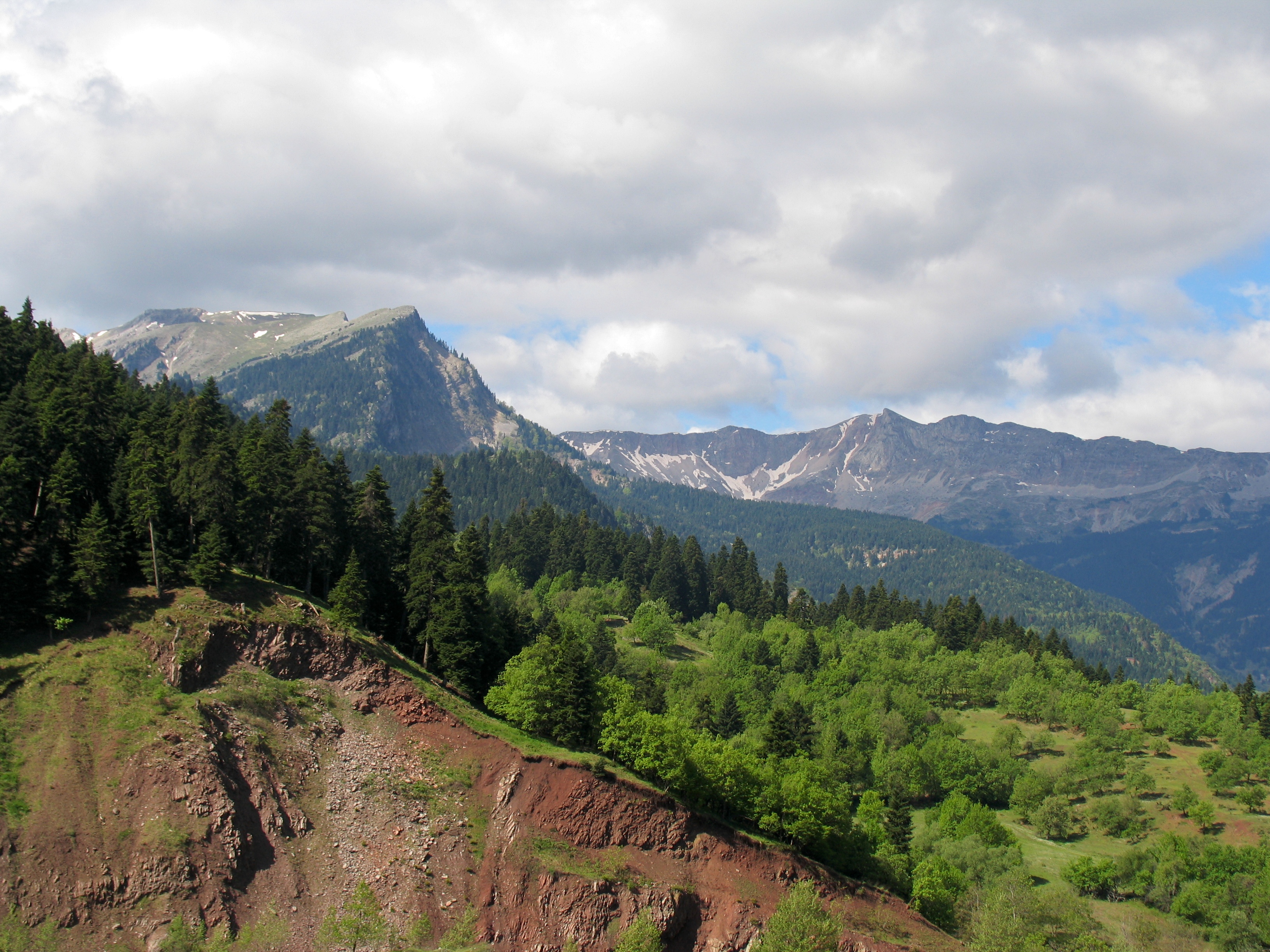
The Northern Pindos National Park — Greece’s largest terrestrial protected area — is a biodiversity hotspot of European significance. Its mosaic of forests, alpine meadows, rivers, and gorges supports brown bears (the largest population in Greece), Eurasian otters, wolves, wild boar, and the rare Pindos bright bush-cricket, an endemic species found nowhere else on earth. The park is designated under multiple Natura 2000 zones, and its conservation status is actively monitored.
For nature lovers, this adds another layer to a Zagori visit: you are not just hiking a beautiful gorge; you are moving through one of the most ecologically significant landscapes in the Balkans.
After five days in Zagori, you start to understand something that guidebooks cannot explain. The mountains don’t just change the landscape — they change you. You leave stronger than you arrived.
Practical Tips for Visiting Zagori
- Cash is king. Many villages have no ATMs, and smaller tavernas and guesthouses do not accept cards. Bring enough cash from Ioannina.
- Book accommodation in advance. The best guesthouses (Mikro Papigo 1700, Kores Boutique Hotel, Pirrion Wellness Hotel, the traditional mansions in Aristi and Kipi) fill up weeks ahead, especially in spring and autumn.
- Pack layers. Mountain weather is changeable — a sunny morning can turn into a cool, cloudy afternoon within an hour. Even in summer, evenings in the villages are cool.
- Start hikes early. The Vikos Gorge hike takes five to six hours; if you start after 10:00, you will be finishing in the hottest part of the day.
- Arrange a car transfer. For the one-way gorge hike, park at Monodendri and arrange a taxi or a second driver at Vikos village. It is the single most useful logistical move you can make.
- Learn a few Greek words. The villagers appreciate any attempt at communication. “Kalimera” (good morning), “Efharisto” (thank you), and “Yamas” (cheers) go a long way.
This article was researched and written by Vivid Greece. All photographs are used under Creative Commons licenses and remain the property of their respective creators.