Why Halkidiki Deserves More Than a Weekend
Most international visitors to northern Greece spend their days in Thessaloniki, eat bougatsa by the waterfront, and fly home without realising that one of the country’s finest coastlines begins less than an hour south. Halkidiki is a three-pronged peninsula that reaches into the Aegean like an outstretched hand, and each of its fingers offers something the others do not. Kassandra has organised beaches, nightlife, and the easy comfort of well-established tourism infrastructure. Sithonia is wilder and greener, with pine forests that slope into turquoise coves you might otherwise expect only on a Cycladic island. And Mount Athos, the easternmost peninsula, remains a self-governing monastic republic that has operated under its own laws since the Byzantine era.
What makes Halkidiki unusual is this range packed into a single region. You can spend the morning swimming at a Blue Flag beach with a cocktail bar behind you, drive forty minutes into the hills for lunch in a stone-built mountain village, and finish the afternoon watching the silhouette of medieval monasteries from a boat in the Singitic Gulf. The region holds 93 Blue Flag beaches as of 2026 — more than any other regional unit in Greece — and yet it rarely appears on the radar of travellers planning their first Greek holiday.
This guide covers all three peninsulas, the often-overlooked inland centre, and the practical decisions that shape a Halkidiki trip: which peninsula suits you, how long to stay, whether you need a car, and what most first-time visitors get wrong.
| Region | Central Macedonia, northern Greece |
| Nearest airport | Thessaloniki (SKG), approximately 60–120 km depending on destination |
| Blue Flag beaches (2026) | 93 — the highest of any Greek regional unit |
| Best for | Families, couples, nature lovers, history and culture travellers |
| Ideal stay | 5–7 days for one or two peninsulas; 10+ days for comprehensive coverage |
| Car needed? | Strongly recommended, especially for Sithonia and inland villages |
| Peak season | July–August; shoulder months (June, September) offer the best balance |
The Three Peninsulas: Choosing Your Halkidiki
Understanding Halkidiki means understanding its geography. Three long peninsulas extend southeast into the Aegean from a broad central landmass, and the experience on each one is genuinely different — not just in marketing language, but in landscape, infrastructure, atmosphere, and the kind of traveller who tends to stay there.
Kassandra: The Accessible Peninsula
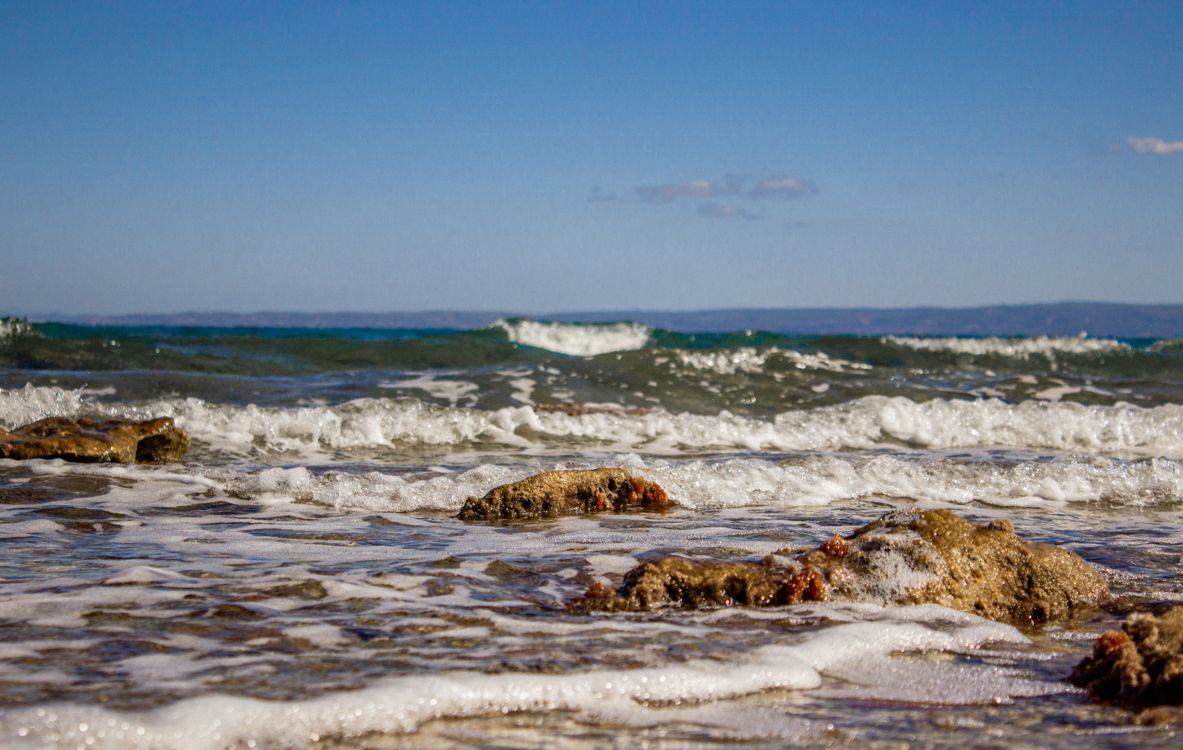
Kassandra is the westernmost finger and the closest to Thessaloniki, which makes it the most developed and the easiest to reach without a car. The highway from the city reaches the peninsula’s neck in under ninety minutes, and KTEL buses serve the main coastal towns throughout the summer season. Its beaches are long, sandy, and generally well-organised, with sunbeds, beach bars, and water-sports facilities at most popular stretches. Towns like Kallithea, Pefkochori, and Hanioti have the highest concentration of accommodation and evening activity, while Afytos — perched on a cliff above the Toroneos Gulf — preserves a slower pace with its cobblestone lanes, traditional stone architecture, and small artisan shops.
Kassandra suits travellers who want reliable beach infrastructure, a social atmosphere at the end of the day, and the reassurance that a pharmacy, supermarket, or medical centre is never far away. It is also the stronger choice for visitors without a car, since bus connections are more frequent than on Sithonia. The trade-off is clear: at peak season, particularly in late July and August, the most popular beaches and waterfront areas can feel crowded, and the coastline lacks the dramatic, unspoiled quality of its neighbour.
Sithonia: The Quieter, Wilder Peninsula
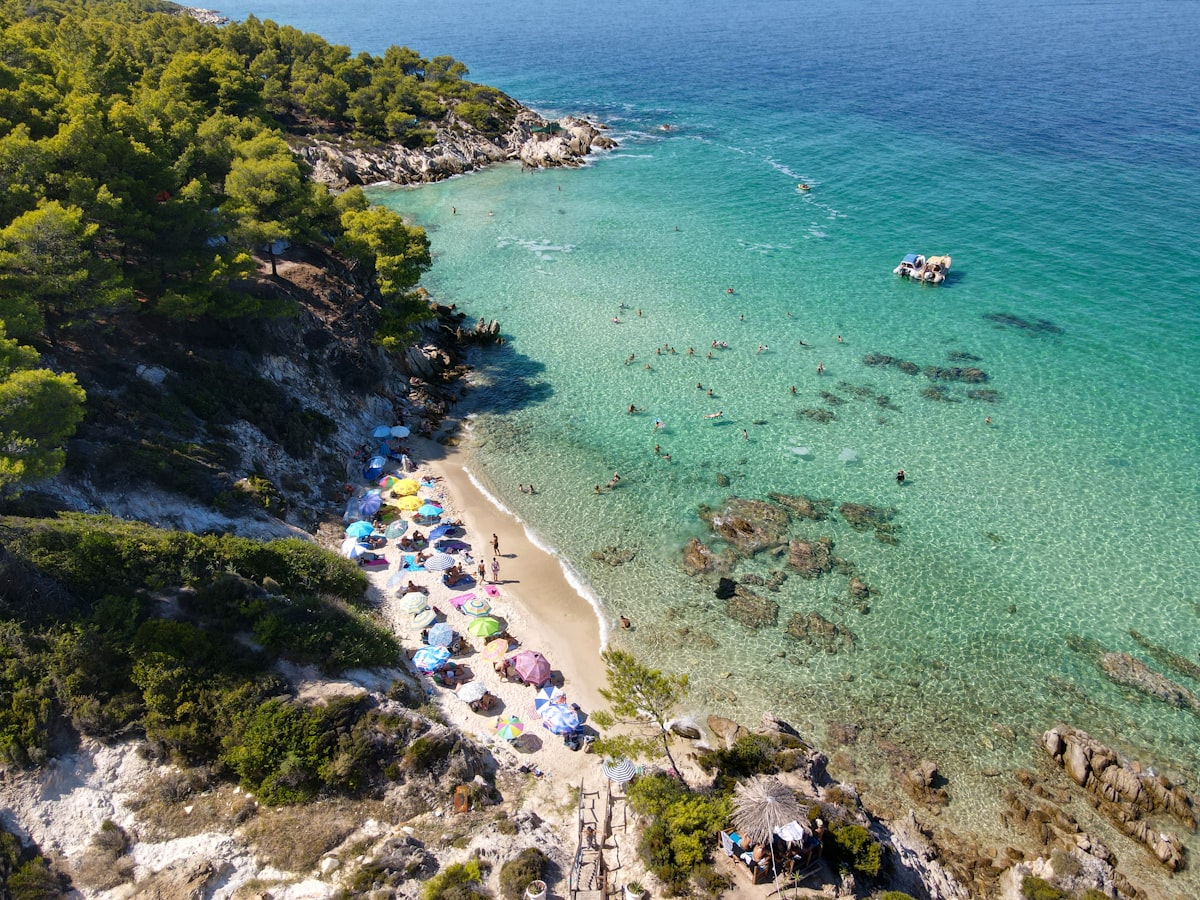
Sithonia is the middle peninsula and, for many returning visitors, the reason they keep coming back. Pine forests extend to the shoreline along much of the coast, and the combination of white rock, shallow turquoise water, and dense green vegetation creates a landscape that feels closer to a Caribbean postcard than the mainland Greece most people imagine. The beaches here are widely considered among the finest in the country — Kavourotrypes (also called Orange Beach) draws photographers for its sculpted rock formations and vivid colour, while Karidi Beach near Vourvourou offers waist-deep aquamarine water that extends metres from the shore.
The towns are smaller and quieter than Kassandra’s resorts. Nikiti, at the peninsula’s neck, has a well-preserved old town of stone houses and is famous throughout northern Greece for its honey production. Neos Marmaras provides the best shopping and services on the peninsula, with its hillside position offering views across the Toroneos Gulf. Sarti, on the eastern coast, faces directly toward Mount Athos — the mountain’s peak is visible across the water on clear mornings. Vourvourou sits on a calm bay dotted with nine small islands, most of them reachable by rented boat for the day.
Sithonia requires a car. Bus connections exist but are infrequent, and many of the best beaches involve unpaved access roads or short hikes from the nearest parking area. The reward is a coast where empty coves are still findable even in July, and where the southern tip around Cape Drepano remains genuinely quiet. Porto Koufo, the largest natural harbour in Greece, offers some of the best seafood in the region from its waterfront tavernas.
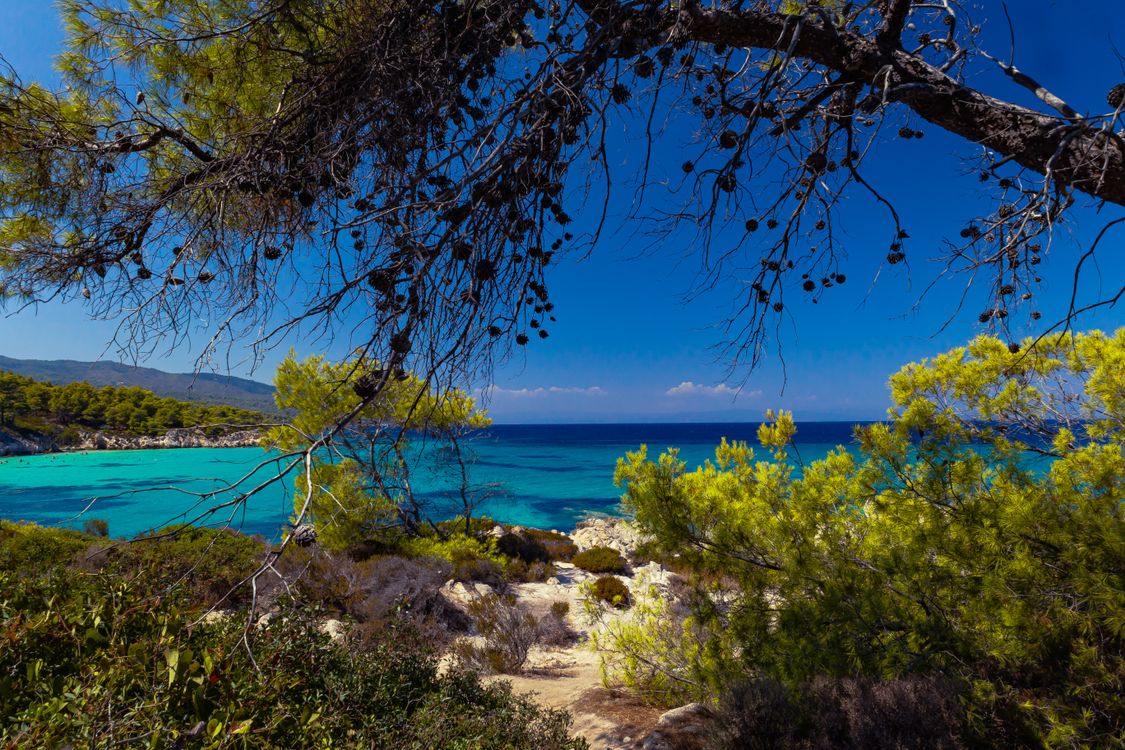
Sithonia’s coastline holds some of Greece’s finest beaches — pine forests meeting turquoise water along coves that rival the Cyclades.
From the shallow lagoon of Karidi to the sculpted rock of Kavourotrypes, the middle peninsula rewards those willing to drive a little further.
Mount Athos: The Monastic Republic
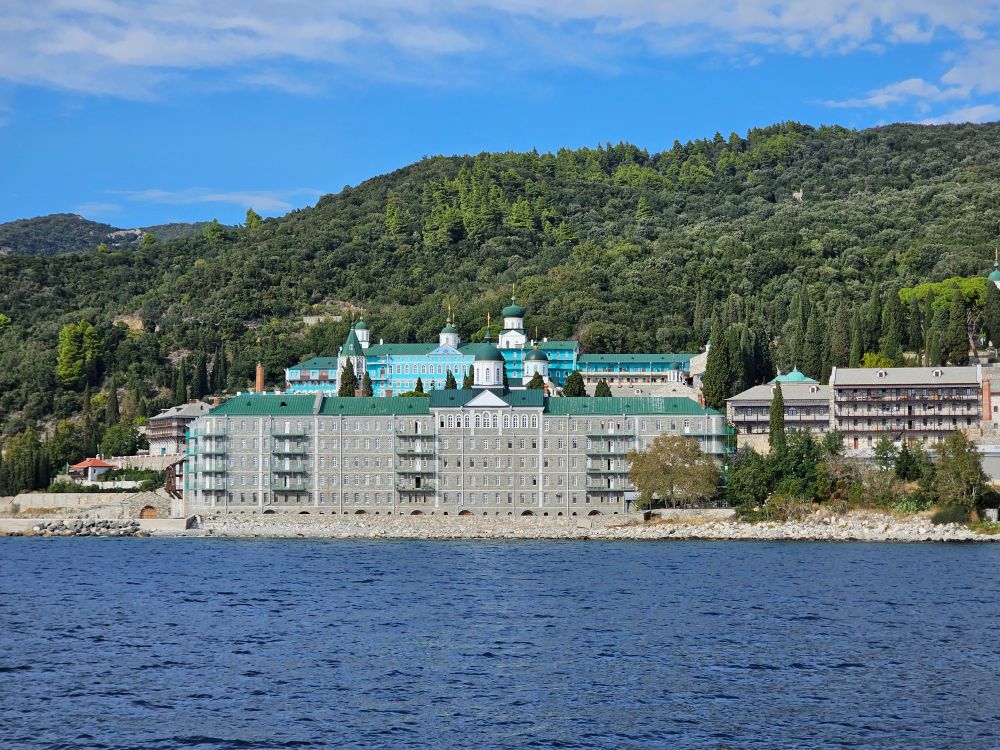
The third peninsula is unlike anything else in Europe. Mount Athos is an autonomous monastic state under Greek sovereignty, home to twenty Orthodox monasteries and approximately two thousand monks who maintain traditions largely unchanged since the Byzantine period. It has been a UNESCO World Heritage Site since 1988, and access is strictly regulated: only men may enter, and visitors are limited to 120 Orthodox Christians and 10 non-Orthodox pilgrims per day. A special permit (diamonitirion) must be obtained in advance, and stays are typically limited to four nights.
For those who cannot or do not wish to enter the peninsula itself, boat cruises along the Athos coastline depart from Ouranoupolis and from Ormos Panagias. These three- to four-hour trips follow the western or eastern coast at a distance that allows clear views of the monasteries clinging to the mountainside. The peak of Mount Athos itself rises to 2,033 metres directly from the sea — a dramatic silhouette visible from beaches across Sithonia.
Ouranoupolis, the last town before the Athos border, makes a good base for the eastern side of Halkidiki regardless of any interest in the monasteries. Its small beach sits beneath the medieval Tower of Prosforios, and Ammouliani — Halkidiki’s only inhabited island — is a short ferry ride away, offering sandy beaches and a handful of quiet tavernas.
Best Time to Visit
Halkidiki’s season runs from May through October, with each month offering a meaningfully different experience. June and September stand out as the strongest months for most travellers. June brings consistently warm weather with daytime temperatures in the high twenties Celsius, sea temperatures around 22°C that are comfortable for swimming, and noticeably fewer crowds than peak summer. September offers similar warmth with the added advantage of sea temperatures that have climbed through the summer, often reaching 24–25°C — the warmest of the year.
July and August are peak season in every sense: the hottest weather, the fullest beaches, the most complete range of services, and the highest accommodation prices. Temperatures regularly exceed 30°C, and the most popular beaches on Kassandra can feel saturated by mid-morning. If you are visiting in these months, Sithonia’s less-developed coastline will generally feel less congested.
May is attractive for hiking, village visits, and archaeological exploration, though the sea remains cool for most swimmers at around 19–20°C. October brings pleasant daytime temperatures and lighter crowds, but services begin closing down, boat tours may stop operating, and the weather becomes less predictable, with the possibility of rain increasing through the month.
| Month | Air Temp | Sea Temp | Crowds | Best For |
|---|---|---|---|---|
| May | 20–25°C | ~19°C | Low | Hiking, villages, archaeology |
| June | 25–30°C | ~22°C | Moderate | Beach + sightseeing balance |
| July–Aug | 28–35°C | 24–25°C | High | Full beach season, nightlife |
| September | 24–28°C | ~24°C | Moderate | Warm sea, fewer crowds, wine |
| October | 18–22°C | ~20°C | Low | Quiet travel, olive harvest |
How to Get There
Halkidiki does not have its own airport. All travellers arrive through Thessaloniki’s Macedonia Airport (SKG), which receives direct flights from most major European cities through airlines including Aegean, Ryanair, easyJet, and Wizz Air. From the airport, Kassandra is roughly 85–100 km away (around ninety minutes by car), while Sithonia’s main settlements are 100–130 km (approximately two hours).
Renting a car at the airport is the most practical option, particularly if you plan to explore Sithonia or visit inland villages. Rental prices in summer 2026 generally start from approximately €30–45 per day for a compact car, though rates climb steeply in late July and August.
For travellers without a car, KTEL Halkidiki operates bus services from its station on the Thessaloniki–Halkidiki national road to destinations across both Kassandra and Sithonia. The station is not at the airport — from the arrivals terminal, you can take local bus 79A or 79B to the IKEA stop, then transfer to bus 36 to reach the KTEL Halkidiki station. From there, buses run to Kassandra towns like Kallithea (approximately €8), Pefkochori (€12), and to Sithonia destinations like Neos Marmaras (€13) and Ouranoupolis (€13). Services are more frequent in summer but remain limited compared to island ferry networks, so checking the KTEL Halkidiki website or app before travelling is important.
Private transfers from the airport are widely available, with prices typically ranging from €50–90 depending on the destination.
The Best Beaches
With more than 550 kilometres of coastline and 93 Blue Flag beaches, choosing where to swim in Halkidiki is less about finding good water and more about matching the beach to your preferences. Some general principles help narrow the decision.
Kassandra’s beaches tend to be long, sandy, and well-organised. Sani, at the peninsula’s northwestern tip, offers fine sand against a backdrop of wetland reserve. Possidi has a distinctive sandy cape that shifts shape with the currents. Kallithea is the most developed and social, with beach bars and facilities stretched along its bay. Hanioti and Pefkochori suit families looking for organised swimming with nearby shops and services.
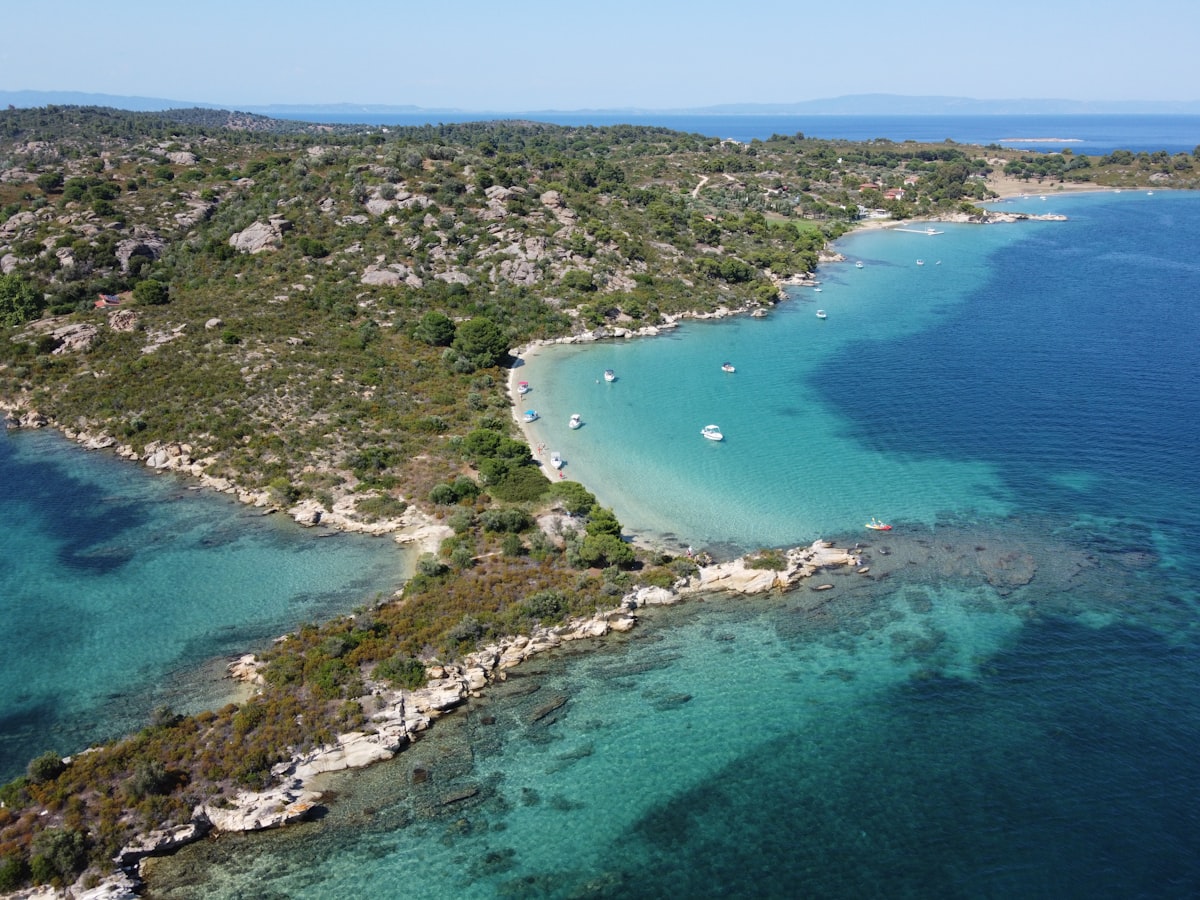
Sithonia’s coast is where the landscape becomes more dramatic. Karidi Beach near Vourvourou is a natural shallow pool of aquamarine water, bordered by smooth white rock and pine shade — it fills early in peak season, so arriving before mid-morning matters. Kavourotrypes (Orange Beach) consists of several small coves carved into white rock between pine trees, with water colours that look digitally enhanced but are not. It has limited facilities, which is part of its appeal. Armenistis, further south, is one of the longest sandy beaches on the peninsula, with organised facilities and a campsite. Porto Koufo sits inside a deep natural harbour where the water remains calm even when the wind picks up outside — it is one of the most sheltered swimming spots in the region.
For those willing to take a boat, Diaporos Island off Vourvourou’s coast offers sheltered coves with extraordinary water clarity. Group boat trips from Vourvourou or Ormos Panagias run approximately €25 per person for a four-hour loop, while private small boats can be hired for around €80–120 per hour.
| Beach | Peninsula | Type | Facilities | Best For |
|---|---|---|---|---|
| Karidi | Sithonia | Shallow lagoon, white rock | Limited | Families, photography |
| Kavourotrypes | Sithonia | Small rocky coves | None | Photography, swimmers |
| Armenistis | Sithonia | Long sandy beach | Full (bars, sports) | All-day beach, camping |
| Porto Koufo | Sithonia | Sheltered harbour | Moderate | Calm water, seafood lunch |
| Sani | Kassandra | Fine sand, wetland | Full (resort) | Luxury, families |
| Possidi | Kassandra | Sandy cape | Moderate | Walking, sunset |
| Kallithea | Kassandra | Organised sand | Full (bars, dining) | Social beach day |
| Kalamitsi | Sithonia | Sand with rocky edges | Moderate (campsite) | Snorkelling, quiet stays |
Beyond the Coast: Villages, History, and Culture
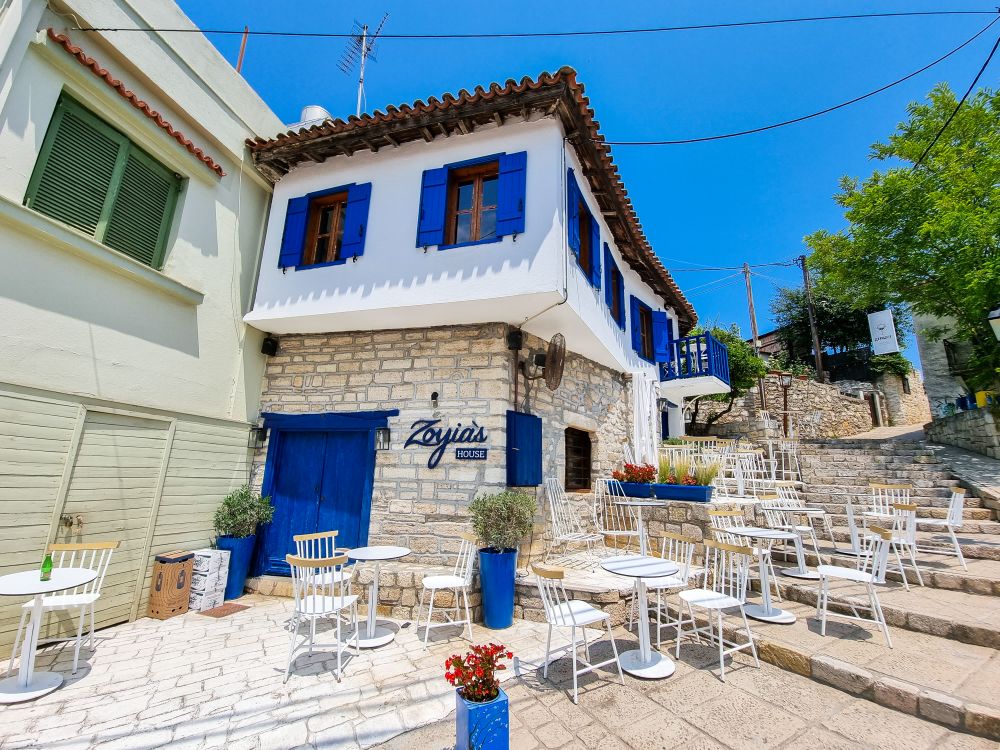
The hills and valleys of central Halkidiki hold some of the region’s most rewarding experiences, and most visitors drive straight past them on their way to the coast. The mountain village of Arnaia is the standout — one of twelve historic settlements known as the Mantemochoria, it has narrow cobblestone alleys lined with traditional Macedonian houses painted in faded yellows, reds, and blues. A large plane tree shades the central square, where older residents gather in the afternoons. Arnaia is known for its honey, tsipouro (the local pomace spirit), and a small weaving museum that documents the textile traditions of the area.
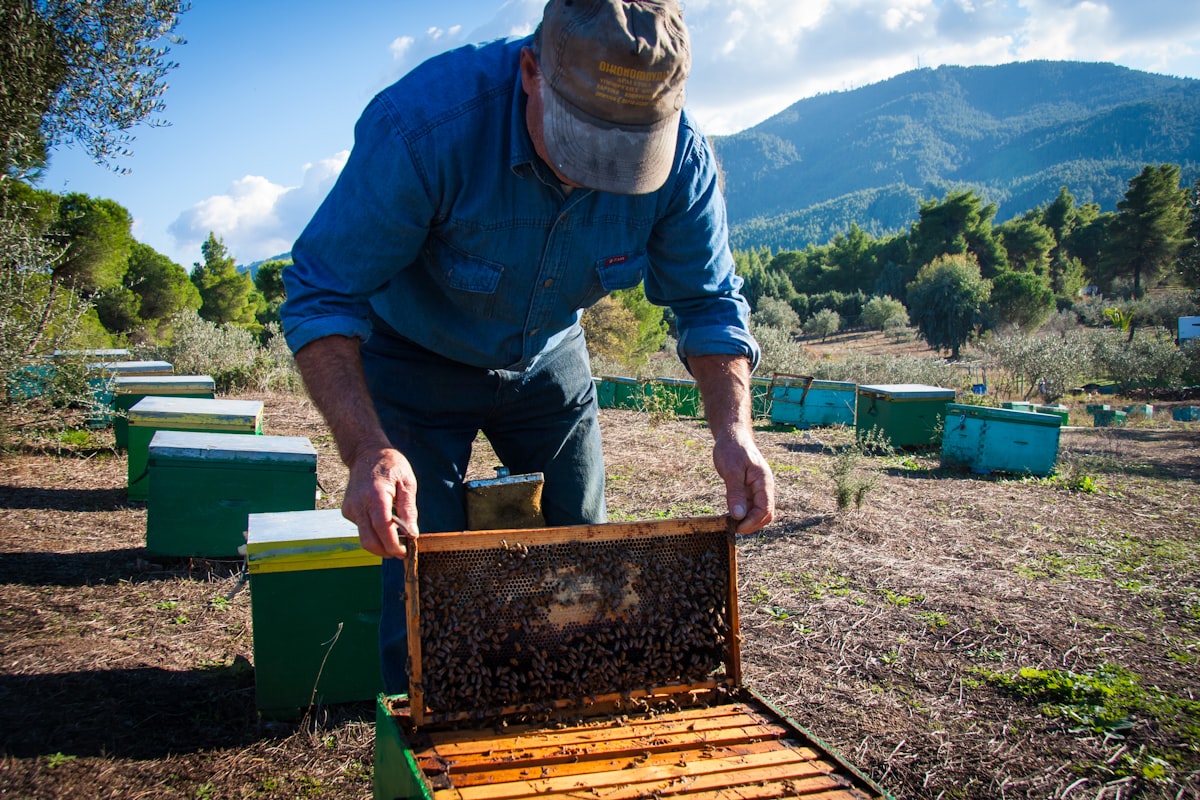
On the Sithonia side, Parthenonas sits perched on a hillside with sweeping views over the Toroneos Gulf. The village was abandoned by its residents in the late 1960s when many moved to nearby Neos Marmaras for tourism work, and it was later resettled by a mix of Greeks and foreigners who restored the traditional stone houses. It now has a small folklore museum, a couple of tavernas, and a quality of stillness that the coast cannot match. Old Nikiti, just above the beach town of the same name, has its own preserved cluster of stone houses, a running fountain in the square, and a reputation as the largest beehive village in Greece — apiarists are scattered across the surrounding hillsides, and local honey appears on every table in the area.
Afytos (also written Afitos) is technically on the Kassandra coast, but it feels more like a village than a resort. Its stone buildings sit on a cliff edge above the gulf, and the view from the main square takes in the sea and the opposite coastline in a single sweep. A small folk museum occupies a restored traditional house, and the winding lanes are lined with ceramic workshops, jewellery shops, and cafes that stay open well past midnight in summer.
Archaeological Sites and Ancient History
Halkidiki’s history runs deeper than its beaches suggest. The region was colonised by Greek city-states as early as the eighth century BC, and the ancient cities of Olynthos and Stageira both left marks that remain visible in the landscape today.
Ancient Stageira, located on a pine-covered peninsula near the village of Olympiada in eastern Halkidiki, is the birthplace of Aristotle. The philosopher was born here in 384 BC, and the city — originally founded in the seventh century BC by colonists from Andros — was later destroyed by Philip II of Macedon before being rebuilt at Alexander the Great’s request as a tribute to his former teacher. The archaeological site preserves remnants of walls, towers, an acropolis, and residential areas, and it overlooks the small island of Kafkanas across a stretch of clear water. Admission is free, and the site is generally open daily except Tuesdays from 08:30 to 15:30. A separate interactive theme park called Aristotle’s Park, located in the modern village of Stagira about eight kilometres away in the mountains, offers hands-on demonstrations of physical phenomena described in Aristotle’s works.
Ancient Olynthos, roughly 80 km from Thessaloniki, is one of the best-preserved examples of the Hippodamian grid system of urban planning — the street layout that later influenced Rome, Paris, and modern cities around the world. The site reveals how ordinary Greeks lived in the fourth century BC: houses with courtyards, kitchens, bathrooms, and floor mosaics still in their original positions. It rarely draws large crowds, which means a visit often feels more like private exploration than a tourist attraction.
Petralona Cave, on the western edge of Halkidiki near the village of Petralona, gained international attention after the 1960 discovery of a fossilised human skull estimated to be approximately 700,000 years old. The cave itself is rich in stalactite and stalagmite formations, and a small museum at the entrance displays fossil finds and anthropological exhibits.
Food, Wine, and Local Products
Halkidiki’s food culture draws from both the Macedonian hinterland and the sea, and a few products define the region more than others.
The Halkidiki olive is probably the area’s most famous export. The large green Hondrolia variety has Protected Designation of Origin (PDO) status and is widely exported as a table olive, while black olives and olive oil from the same groves appear in kitchens across the peninsula. Olive harvesting typically runs from September (for green olives) through January, and several farms and cooperatives in the area now welcome visitors for tastings and tours, particularly through the Taste Halkidiki programme that has promoted local gastronomy since 2020.
Honey is the other defining product. Pine honey is the dominant variety, produced across the forested hills of Sithonia and central Halkidiki, though smaller quantities of blossom and chestnut honey are also available. The villages of Nikiti and Arnaia are particularly associated with honey production, and you will find it drizzled over loukoumades (fried dough balls), served with local yogurt, and used in meat glazes at tavernas across the region.
The sea provides generously here too. Mussels from the Strymonian Gulf near Olympiada are notably large, often served as mydopilafo (mussel risotto) or saganaki with feta. Fish tavernas along the waterfronts of Porto Koufo, Toroni, and Neos Marmaras serve the day’s catch directly, and the quality of the seafood is consistently high. The broader Macedonian culinary tradition also brings influences from Constantinople and Asia Minor — many families in Halkidiki trace their roots to refugees who arrived after the 1922 population exchange, and their cooking traditions have become part of the local identity.
Wine production is smaller in scale than in the Peloponnese or Crete, but the Limnio grape — one of the oldest documented grape varieties in the world, mentioned by Aristotle himself — produces aromatic red wines from vineyards across the region. Several small wineries welcome visitors, particularly around Arnaia and the eastern slopes.
Pine honey, PDO olives, and mussels the size of your thumb — Halkidiki’s food is rooted in the land and the sea.
The villages of Arnaia and Nikiti are the heart of the region’s honey production, while olive groves stretch across the lowlands from Ormylia to Olynthos.
Where to Stay
Your choice of base depends on what kind of holiday you want, and the differences between areas are significant enough that choosing the wrong one can shape the entire trip.
On Kassandra, the main resort towns of Kallithea, Pefkochori, and Hanioti offer the broadest range of accommodation, from large beachfront properties to smaller apartment rentals. Afytos is a better choice for travellers who prefer a village setting with character. Kassandra’s accommodation is generally easier to book and more affordable than equivalent properties on Sithonia, particularly outside peak season.
On Sithonia, the main bases are Nikiti (close to the peninsula’s neck, convenient for both coastlines), Neos Marmaras (the largest town, with the best services), Vourvourou (ideal for families and watersports), and Sarti (the best position for Mount Athos views). Accommodation here is more scattered and often smaller — family-run apartments and studios are common, and booking well in advance is important for July and August.
For eastern Halkidiki and the Athos area, Ouranoupolis is the main option, with a range of accommodation from simple guesthouses to larger properties. It works well for travellers combining beach time with an Athos boat cruise or a visit to Ammouliani island.
For inland exploration, Arnaia has a small number of guesthouses and renovated traditional properties that suit travellers looking for mountain quiet and a base for visiting archaeological sites and villages.
Getting Around
A rental car is the most flexible and practical way to explore Halkidiki. Roads are generally in good condition, though the coastal roads on Sithonia narrow in places and access to some beaches involves short stretches of unpaved track. Parking is free at most beaches but can fill quickly at popular spots like Karidi and Kavourotrypes in peak season — arriving before 10:00 makes a real difference.
KTEL buses connect Thessaloniki with the main towns on Kassandra and Sithonia, and their online booking system allows advance ticket purchases. Within the peninsulas, however, bus services are limited, and reaching the best beaches or inland villages by public transport alone is difficult. If you are relying on buses, Kassandra is the more viable choice.
Boat hire is worth considering on Sithonia, where several of the best swimming spots — including Diaporos Island and remote coves on the southern coast — are only reachable by water. Small motorboats can be rented in Vourvourou and Ormos Panagias, typically without a licence for lower-horsepower models.
How Long to Stay
A long weekend of three or four days is enough to explore one peninsula and get a feel for the coastline, but Halkidiki rewards longer stays. Five to seven days allow comfortable coverage of Kassandra or Sithonia with time for an inland village visit, an archaeological site, and a boat trip. Travellers who want to see both peninsulas, take an Athos cruise, and explore the central villages should plan for at least ten days.
Day trips from Thessaloniki are possible — the nearest Kassandra beaches are under ninety minutes away — but the drive is long enough that a single day does not leave much room for exploration beyond one or two stops.
Who Should Visit — and Who Might Prefer Somewhere Else
Halkidiki is an excellent match for families (shallow beaches, organised infrastructure, no ferry journey required), couples looking for a mix of beach and culture, and travellers who want to combine a beach holiday with access to Thessaloniki and northern Greece. It is one of the few Greek destinations where the driving-holiday model works particularly well — the concentration of beaches, villages, and archaeological sites within a manageable area makes it ideal for travellers who like to move around without spending hours in a car.
It may be less suitable for travellers whose primary interest is Cycladic architecture and island-hopping culture, for visitors who want car-free mobility (Sithonia is difficult without a vehicle), or for anyone expecting the kind of evening scene found on Mykonos or Ios. Kassandra has nightlife, but it caters mainly to a Balkan and northern European clientele rather than the international party circuit. Travellers seeking isolation and wild landscape may find Sithonia rewarding but should be prepared for peak-season crowds at the most famous beaches.
Common Mistakes to Avoid
Booking Kassandra when you wanted Sithonia, or vice versa. The two peninsulas serve genuinely different audiences. Read the descriptions above carefully before choosing your base.
Assuming you can get around without a car. Bus connections exist but are designed more for Thessaloniki commuters than beach-hoppers. On Sithonia especially, a car is close to essential.
Skipping the interior. A drive to Arnaia or Parthenonas takes under an hour from most coastal locations and offers a view of Halkidiki that the beach strip does not provide.
Arriving at popular beaches after 10:00 in August. Karidi, Kavourotrypes, and several other Sithonia beaches have limited parking and no overflow capacity. Early arrivals park easily; latecomers may circle for an hour.
Ignoring the eastern side. Ouranoupolis, Ammouliani, and the Aristotle trail around Olympiada are less visited than the main peninsulas and often quieter, even in high season.
Suggested Five-Day Itinerary
Day 1: Arrive at Thessaloniki airport, pick up rental car, drive to your Sithonia base (Nikiti or Vourvourou area). Afternoon swim at Karidi Beach or explore old Nikiti village.
Day 2: Beach day on Sithonia’s east coast — Kavourotrypes in the morning, move to Armenistis or Toroni for the afternoon. Seafood dinner at Porto Koufo.
Day 3: Rent a boat from Vourvourou to explore Diaporos Island and the Blue Lagoon. Alternatively, drive to Parthenonas village for a hill walk and lunch with a view.
Day 4: Cross to Kassandra for a day — morning at Afytos village, swim at Possidi or Sani, afternoon in Kallithea if you want a livelier beach atmosphere.
Day 5: Drive to Ancient Stageira via Arnaia (stop for coffee and honey shopping). Afternoon swim at Olympiada, then return to Thessaloniki for departure or continue to Ouranoupolis for an Athos cruise the following morning.
Links to Other Vivid Greece Guides
Halkidiki pairs naturally with a visit to Thessaloniki. Our Thessaloniki travel guide covers the city’s food scene, Byzantine heritage, and practical details. For travellers continuing into the wider region, our Thasos guide covers another excellent northern Greek destination reachable from the same airport. And if you are comparing mainland beach options with the islands, our family-friendly Greek islands guide can help you decide which approach suits your trip.
This article was researched and verified as of July 2026. Travel details including transport schedules, admission fees, and seasonal services may change. We recommend confirming time-sensitive information directly with operators before travelling.