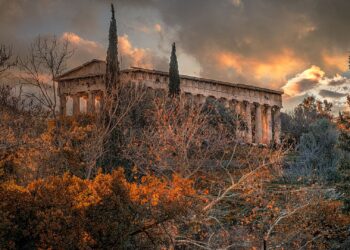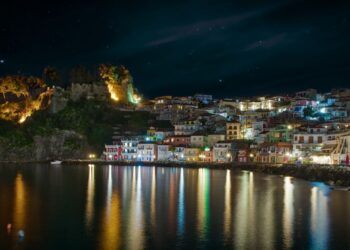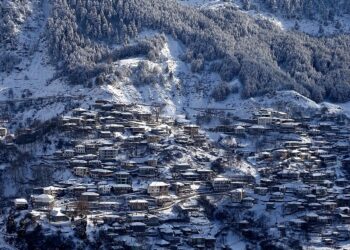
There is a particular kind of cold in Kastoria that you feel before you see anything. It rolls off Lake Orestiada in the early morning. It settles between the stone mansions of the old town. The whole place smells faintly of woodsmoke, even in the shoulder seasons. Locals will tell you, half-proud and half-exasperated, that this is one of the coldest towns in Greece. That sounds like an odd selling point for a country famous for its beaches. Understand what that cold has built here, though, and it makes sense.
Kastoria sits on a narrow peninsula that pokes into its own lake, in the region of Western Macedonia. It’s about as far from the postcard Greece of whitewashed Cyclades as you can get, while still being unmistakably Greek. The town has more than seventy Byzantine churches packed into a population of thirty-odd thousand people. It also has a five-hundred-year fur trade, one that once put it on the same commercial map as Leipzig and New York. There’s a limestone cave here too, where archaeologists found cave bear bones predating the Parthenon by ten millennia. Almost none of this makes it into the standard Greece itinerary.
Kastoria doesn’t perform for visitors. It just carries on being exactly what it has been for a thousand years, and lets you watch.
Where Kastoria Is, and Why It Feels So Different
Kastoria is the capital of the Kastoria regional unit, within the modern administrative region of Western Macedonia. That region is one of four making up Greek Macedonia, alongside Central and Eastern Macedonia and Thrace. Kastoria sits close to the Albanian border, about 700 metres above sea level. Lake Orestiada wraps around it on three sides. Limestone mountains hem in the rest. Winters stay properly cold here. Summers are mild compared to the scorching plains further south.
The town’s name is thought to come from the Greek word for beaver, kastori. The lake’s shores were apparently thick with them once. That was before the fur trade that would define the town started hunting other animals instead. Whether or not you buy the etymology, it’s a nice detail to carry with you. Walk the lakeside promenade at dusk. Watch the swans glide over water gone the colour of pewter. The name feels right either way.
Kastoria is not an easy add-on to a typical Greek holiday, and that’s precisely why it has stayed so unspoiled. There’s no railway line anywhere near it. The closest stations are in Florina and Amyntaio, both requiring further transfers by road. Kastoria does have its own small airport, Aristotle, code KSO, just outside town in Argos Orestiko. But it only runs a handful of domestic flights, mostly to Athens, and not on every day of the week. The more dependable route is via Thessaloniki International Airport, roughly 200 kilometres away. From there, a KTEL long-distance bus takes around four to five hours, depending on the route. There’s also a direct daily bus from Athens’s Kifissos terminal, though it’s a long haul at around six and a half hours. If you’re driving, the E90/A2 motorway network makes the trip from Thessaloniki considerably faster than the bus. None of this is a reason to skip Kastoria. It’s a reason to build in a proper few days once you’ve made the effort to get there.
| From | Method | Approx. Time |
|---|---|---|
| Thessaloniki Airport | KTEL bus | 4–5 hours |
| Athens (Kifissos terminal) | Direct KTEL bus | ~6.5 hours |
| Athens | Domestic flight to Kastoria (KSO) | ~1 hour (limited days) |
| Thessaloniki | Self-drive via motorway | ~2.5–3 hours |
A Town That Byzantine Emperors Fought Over
Long before it was called Kastoria, this promontory was known as Celetrum. The Roman historian Livy mentioned it in connection with events of 199 BC. That was during the war between Rome and Philip V of Macedon. The Roman emperor Diocletian later founded a nearby town called Diocletianopolis, which invading tribes destroyed. Emperor Justinian rebuilt it on the peninsula the modern town now occupies, in the sixth century. From that point on, Kastoria’s location made it a prize. A natural fortress jutting into a lake is easy to defend and hard to besiege. The town changed hands with almost comic regularity as a result.
Bulgarians held it until 1018, when Basil II took it back for Byzantium. Norman crusaders under Bohemond I occupied it briefly in the 1080s, before Emperor Alexios I Komnenos forced them out. Over the following two centuries it passed between several powers in turn: the Despotate of Epirus, the Empire of Nicaea, the Second Bulgarian Empire, and the Serbian Empire under Stephen Dušan. An Albanian noble family held it last, before the Ottomans took it for good in the mid-1380s. If you like your history layered and complicated rather than tidy, Kastoria delivers. You can feel all of it in the mismatched architecture — part fortress town, part merchant quarter, part Ottoman-era commercial hub.
It was under Ottoman rule, oddly, that Kastoria flourished. Local Greek merchant families accumulated real wealth through the fur trade. They used it to fund Greek-language schools. The oldest one in the whole of Macedonia was established here in 1614. It kept Greek culture and Orthodox Christianity alive through five centuries of Ottoman administration. The town also had a significant Romaniote Jewish community going back centuries, including the medieval scholar Tobiah ben Eliezer. That community’s story ends in tragedy. In April 1944, the German occupying forces deported Kastoria’s Jewish population to Thessaloniki, and from there to Auschwitz. By 1945, only a handful of survivors remained. It’s a heavy fact to sit with in a town this quietly beautiful. It’s worth knowing before you wander its old quarters.
Kastoria’s more recent history is bound up with the Macedonian Struggle of the early 1900s. Greek, Bulgarian and Ottoman interests all vied for control of the region’s identity. The town’s Greek Orthodox bishop at the time, Germanos Karavangelis, organised some of the earliest Greek armed resistance groups. The Greek officer Pavlos Melas was killed in action nearby in 1904. Karavangelis had his body buried inside the town’s Metropolis, reportedly after threatening to mobilise the entire Greek population if Ottoman authorities refused to hand it over. Kastoria finally became part of the modern Greek state in 1913, following the Balkan Wars.
Seventy-Odd Churches in a Town That Refuses to Modernise
The headline statistic about Kastoria — repeated by every local guide, slightly undercounted or overcounted depending on who you ask — is that it has somewhere between seventy and eighty Byzantine and post-Byzantine churches. All of that sits within a small municipal boundary. That’s an extraordinary density for a town this size. It’s not a museum piece, either. Most of these churches are still in use. Many are privately maintained by the families whose ancestors built them centuries ago.
Start at Panagia Koumbelidiki, an eleventh-century church with an unusually tall dome. It makes the church instantly recognisable against the skyline. Koumbes is Ottoman Turkish for dome, hence the name, and the interior frescoes have survived remarkably intact. From there, seek out Agioi Anargyroi, the Church of the Holy Unmercenary Physicians. It’s one of the oldest and most photographed churches in town. Its brick-and-stone exterior is a masterclass in Byzantine construction technique. The Church of Taxiarchis Mitropoleos and the various Taxiarchis churches scattered through the old quarters each hold their own frescoes, some dating to the thirteenth century.
A word of warning that nobody tells you in advance: many of the frescoes have had the eyes and faces of saints deliberately scratched out. This isn’t decay. It’s the scar tissue of Ottoman-era religious tension, when defacing Christian imagery was, in some periods, a form of protest or intimidation. It’s unsettling the first time you notice it. Then it becomes part of how you read the town.
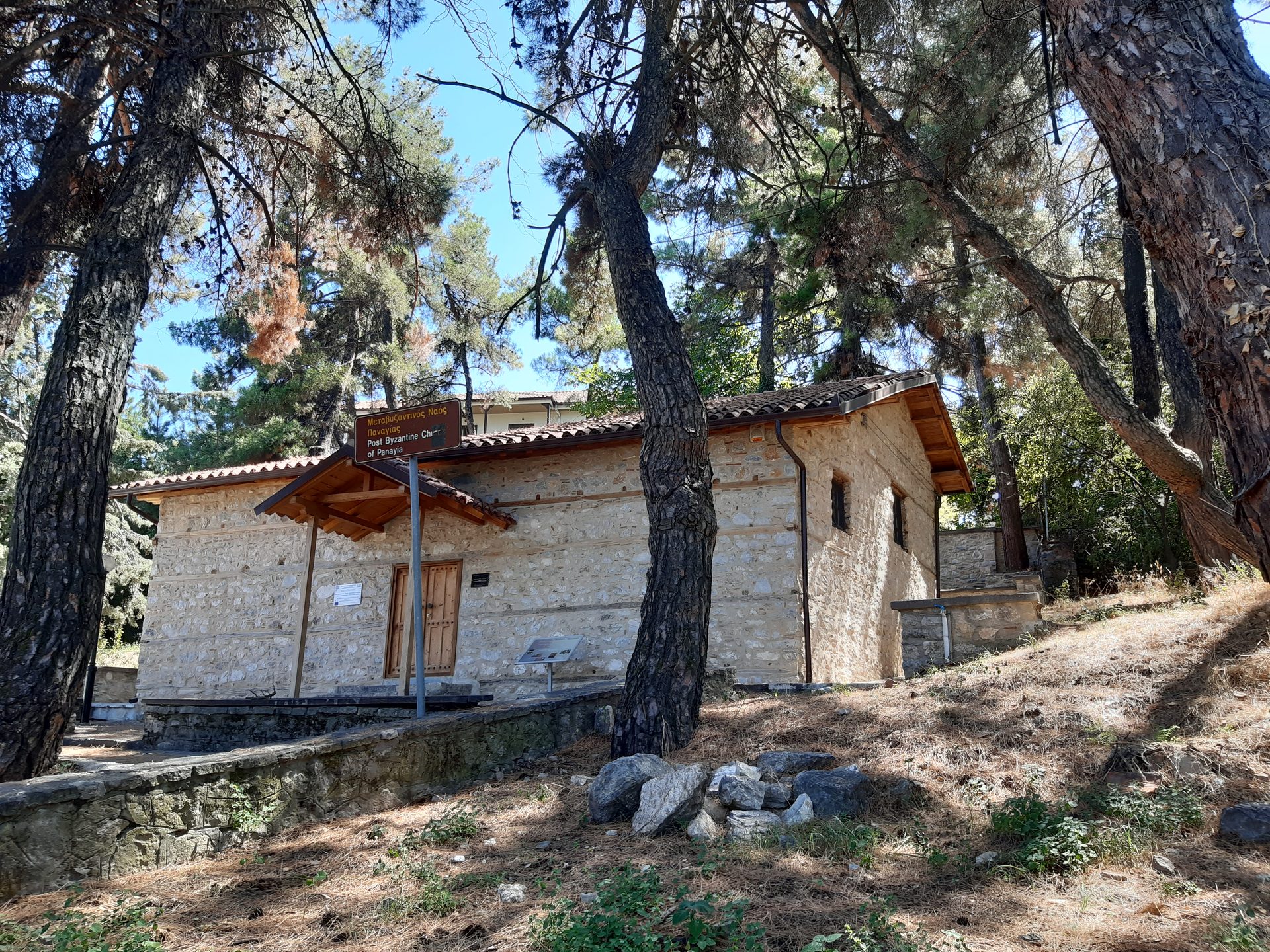
Most churches are unlocked during daylight hours. A good number are privately owned, though, and only open on their saint’s feast day. Don’t be surprised if a few doors stay shut. Dress modestly. If you’re serious about the frescoes, bring a small torch. Most of these buildings have no electric lighting, and rely entirely on whatever daylight filters through narrow window slits.
Doltso and the Mansions Built on Fur
Wander into the Doltso quarter, on the lake-facing side of the peninsula, and the architecture shifts from ecclesiastical to domestic. It gets considerably grander, too. This was the merchant district. Its archontika, or mansion houses, were built by fur trade families between the seventeenth and nineteenth centuries. Three and four storeys of stone ground floors meet timber-framed upper floors, with projecting bay windows, painted ceilings, and carved wooden interiors. The Bassaras Mansion is one of the better-preserved examples open to visitors. Simply strolling the narrow lanes around it — Orestiada Street, Georgakis Olympiou Street — gives you a feel for how wealthy this town once was.
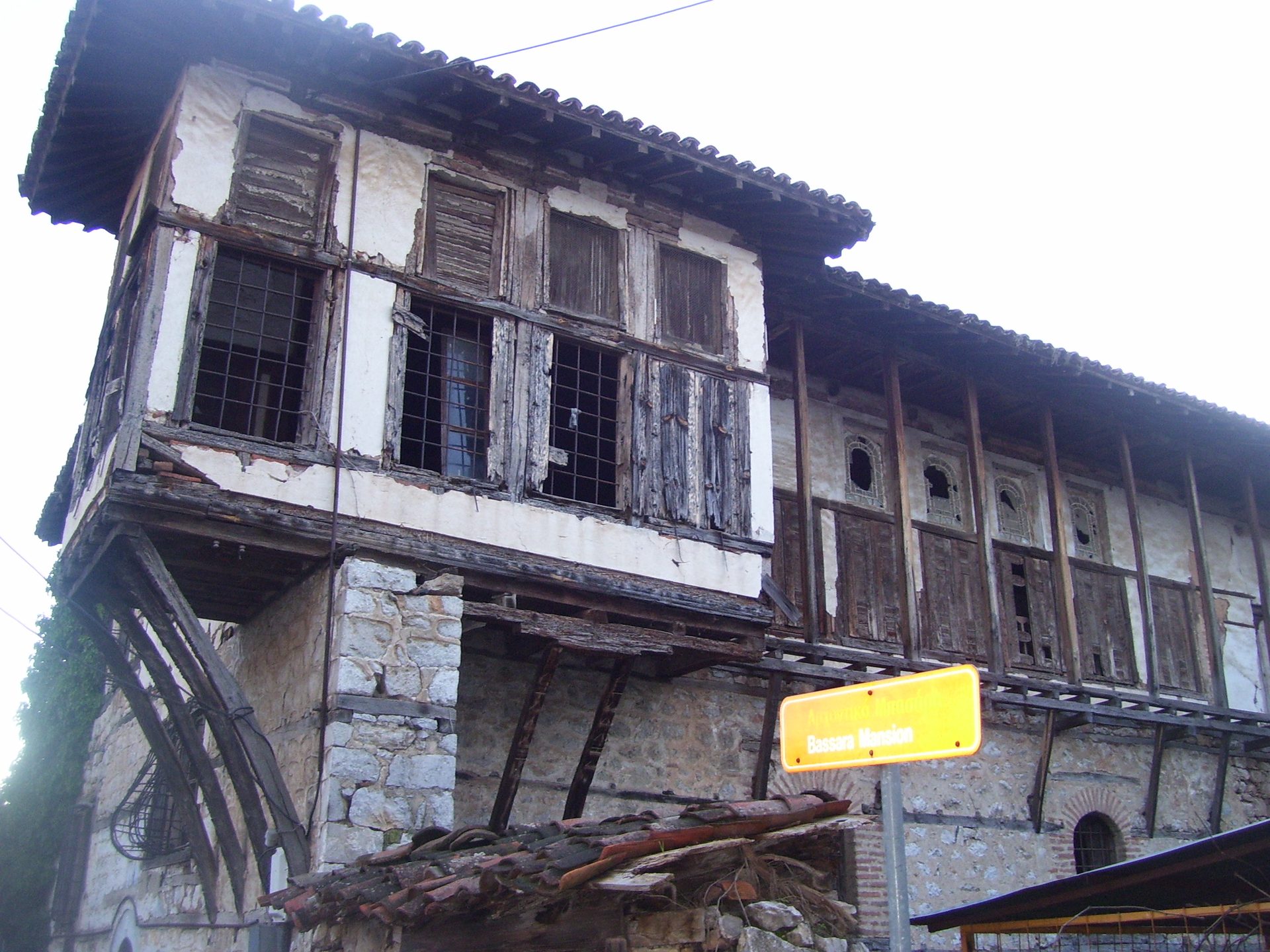
That wealth came from fur, and it still does, to a shrinking but stubborn degree. Kastorian furriers have been working pelts since at least the fourteenth century. The town reportedly supplied ermine for the linings of Byzantine courtiers’ robes. Fur became first a practical necessity, then a luxury status symbol across Europe, over the following centuries. Kastorian traders built commercial networks stretching to Vienna, Leipzig, Paris, London and eventually New York. Local raw materials ran out generations ago. These days the pelts are imported from North America and Scandinavia. But the processing and manufacturing knowledge stayed here, passed down through families. At its peak, more than sixty percent of the local workforce was connected to the fur industry in some way. The trade has been squeezed hard since. Animal-rights sentiment, cheaper Chinese manufacturing, and the more recent loss of major Russian buyers have all taken their toll. You’ll still pass fur workshops and showrooms throughout the old town, though, their windows a strange, slightly anachronistic sight against a backdrop of Byzantine chapels.
Lake Orestiada: Swans, Fishermen and a Cave Full of Dragons
The lake is really the whole point of Kastoria, and the town wraps around it accordingly. A well-maintained promenade circles most of the shoreline. Allow a couple of hours to walk the full loop. Give yourself longer if you keep stopping to photograph the reflections, which you will. Early morning and just before sunset are when the water goes completely still and mirrors the mountains behind it. Locals fish from small boats along the quieter northern stretches, much as they’ve done for generations.
If you’d rather be on the water than beside it, you can rent kayaks or pedal boats from a few operators along the promenade. Spend a couple of unhurried hours out on Orestiada, weaving between reed beds where herons stalk the shallows. It’s one of the more meditative things you can do in northern Greece.
A short walk, or paddle, north-east of the town centre brings you to the Monastery of Panagia Mavriotissa. It’s one of Kastoria’s oldest religious sites, set among trees right on the water’s edge. Beside it stands a plane tree reckoned to be roughly nine centuries old. Its trunk is so wide it takes several people to encircle it. It’s a genuinely humbling thing to stand next to, after a morning spent reading about emperors and invasions.
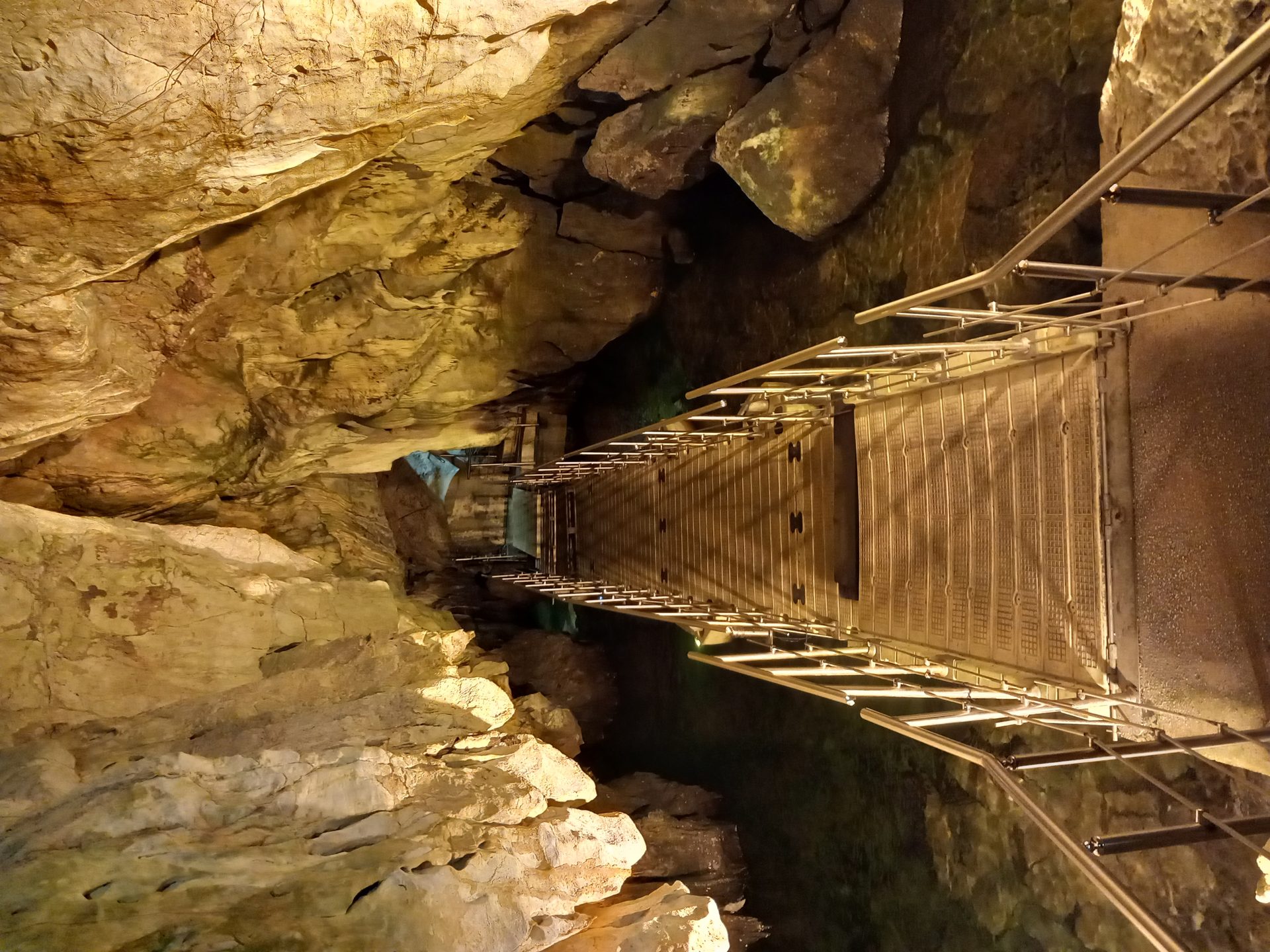
Further along the lakeshore is Kastoria’s strangest attraction: Dragon’s Cave, or Spilaio tou Drakou. It’s a limestone cave system discovered only in the 1940s, stretching roughly 300 metres into the hillside. Inside are stalactites, stalagmites, and small underground pools. There are also, genuinely, the fossilised bones of cave bears that lived here more than ten thousand years ago. The cave takes its name from local legend rather than any actual dragon, obviously. But walking through chambers this old, lit only by strategic lighting, has a theatrical quality that no amount of knowing better quite dispels.
Directly across the water from the town, the village of Dispilio sits on the site of one of Europe’s most important Neolithic lake settlements. It’s dated to around 5500 BC. Excavations here turned up what’s believed to be the oldest known wooden tablet bearing linear script found anywhere in Europe. It’s a genuinely significant find. It gets a fraction of the attention it would if it were sitting in a museum in Athens, rather than a lakeside village in the far northwest. A reconstructed Neolithic settlement is open to visitors on the site. It gives a tangible sense of pile-dwelling life on this lake nine thousand years ago, long before any Byzantine emperor had heard of the place.
Day Trips: Bear Sanctuaries, Stone Villages and a Three-Country Lake
Kastoria is compact enough to see properly in two or three days. That makes it an ideal base for exploring the wider, wilder corner of Western Macedonia around it. This is a part of Greece that gets a fraction of the domestic tourism of the Peloponnese or Epirus, let alone international visitors.
Nymfaio
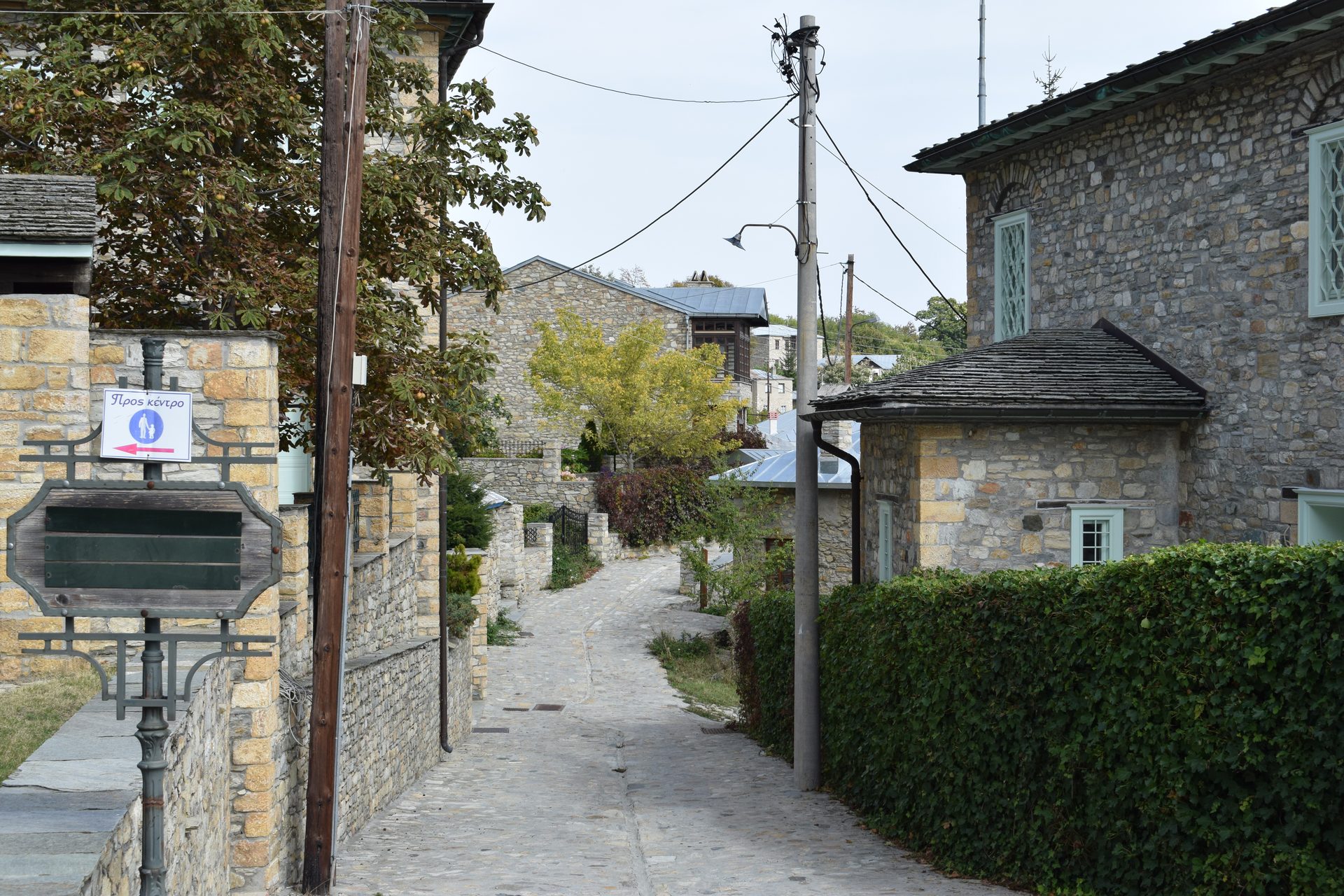
About forty minutes from Kastoria, in the neighbouring Florina regional unit, sits the mountain village of Nymfaio. It’s set at roughly 1,350 metres, on the slopes of Mount Vitsi, also called Verno. It was once a prosperous Vlach community known for silversmithing. Today it’s protected as a traditional settlement, meaning its stone mansions and cobbled streets can’t be modernised beyond recognition. UNESCO has named it among the ten most picturesque villages in Europe. Walk its car-free main street in autumn mist, and that claim doesn’t feel like an exaggeration. Nymfaio is also home to the Arcturos environmental centre, which runs a sanctuary for rescued brown bears. These are animals that can no longer survive in the wild, often after being kept illegally as performing bears. A separate wolf and lynx conservation area sits nearby. It’s a genuinely worthwhile stop if you have any interest in the wildlife that still roams these mountains — most of which you’ll never see in person.
Prespa Lakes
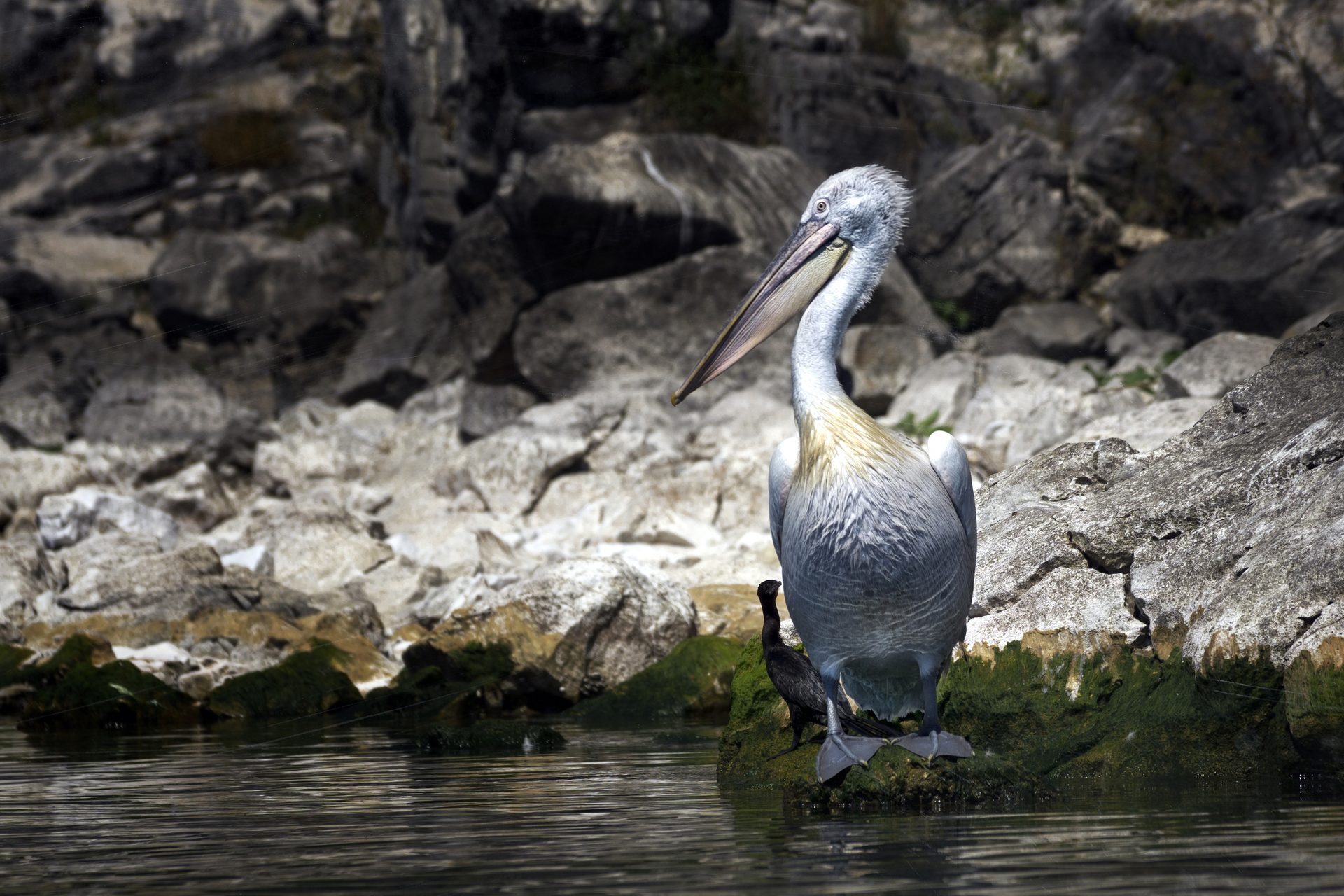
About an hour’s drive from Kastoria, the twin Prespa lakes straddle the borders of Greece, Albania and North Macedonia. It’s one of the very few places in Europe where you can stand in one country and look across water at two others. The Greek side is protected as a national park. It’s one of Europe’s most important breeding grounds for the Dalmatian pelican. Pygmy cormorants and a long list of other waterbirds nest here too, drawing serious birders from across the continent. The lakeside villages, Psarades chief among them, are sleepy, unhurried, and largely untouched by anything resembling mass tourism. Come for a boat trip past rock-cut Byzantine hermitages along the cliffs. Stay for a lakeside lunch of fresh trout.
Nestorio and the mountain villages
Closer to home, the village of Nestorio sits around thirty minutes south of Kastoria. It has a fourteenth-century church with frescoes that rival anything in the town itself. Add the kind of stone-built mountain architecture that makes for good, unhurried wandering, and it’s worth the detour. If you’re driving between Kastoria and the Prespa lakes, or further into Epirus, build in time for a couple of these smaller villages. Don’t treat the region as a straight A-to-B drive.
What to Eat in Kastoria
This is mountain food, built for cold winters rather than beach afternoons. It’s a genuine departure from the olive oil and tomato-heavy cooking of southern Greece. The signature local ingredient is the Prespa giant bean, an enormous, creamy white bean grown in the volcanic soil around the Prespa lakes. It’s usually slow-cooked into a rich stew with vegetables and olive oil. You’ll also find kavourmas, a preserved pork dish where the meat is cooked and stored in its own rendered fat. It’s a preservation method dating back to long winters before refrigeration. It still tastes better than that description makes it sound.
Freshwater fish, unsurprisingly, features heavily. Trout from the mountain streams around Kastoria and Prespa is often simply grilled with local herbs. Fish soup appears on menus through the colder months. Bougatsa, the flaky pastry found across northern Greece, turns up here in both sweet and savoury versions — custard-filled, or stuffed with cheese or minced meat. It makes a solid breakfast before a day of church-hopping. For something more distinctly local, ask for sarmadakia: small stuffed vine leaves, usually rice and herbs, served with a lemon sauce. Or simply order feta with local honey. It’s a simple combination that tastes considerably better than it has any right to.
This is a town that cooks for warmth, not for show — and it’s better for it.
Ragoutsaria: Kastoria’s Own Carnival, Brass Bands and All
If you can time a visit around the Orthodox feast of Epiphany, Kastoria puts on one of the more unusual folk festivals anywhere in Greece. The Ragoutsaria runs for three days, from the 6th to the 8th of January. It fills the town with costumed groups called bouloukia, each with its own brass and percussion band, parading and dancing through the streets more or less continuously. The custom is believed to trace back through Byzantine and Roman practice to the ancient Dionysia festivals. The name itself likely derives from the Latin rogatores, meaning beggars. That’s a nod to an older tradition: costumed revellers going door to door, asking for food, wine or coin, in exchange for driving out evil spirits for the coming year. It culminates on 8 January in the Doltso quarter, where all the different groups converge for a final, boisterous street party. It has nothing to do with tourism and everything to do with a town celebrating itself. If your trip planning has any flexibility, and you’re curious about Greek festival culture beyond the more widely covered Orthodox Easter traditions further south, build a whole trip around this instead.
When to Visit
Kastoria’s climate is genuinely different from the rest of Greece. It follows a humid subtropical pattern, moderated by the lake. Winters here are properly cold: January nights regularly dip below freezing, and snow is common. Summers are warm but rarely brutal, generally milder than the Athens basin or the islands at the same time of year. July and August bring the best weather for walking, cycling and being out on the water. You’ll get long daylight hours, and none of the ferry queues or beach crowding that define peak season elsewhere in the country. Spring and autumn are quieter still, and arguably more atmospheric, with mist regularly settling over the lake at dawn. Winter rewards you with the Ragoutsaria carnival and snow-dusted mountains, if you can handle genuine cold. The town empties of its modest summer tourist trickle. You’re left more or less alone with seventy Byzantine churches and your own footsteps on frozen cobblestones.
Where to Stay
Doltso is the obvious base if you want to be within walking distance of the old mansions and lakefront promenade. Several of the restored archontika now operate as boutique guesthouses. That gives you the rare chance to actually sleep inside a two-hundred-year-old fur merchant’s house. Options closer to the modern town centre tend to be more budget-friendly. They put you nearer the bus station and everyday restaurants, at the cost of a slightly longer walk to the prettiest parts of the peninsula. Given how compact Kastoria is, neither choice puts you more than fifteen or twenty minutes’ walk from anything you’ll want to see.
A Few Practical Notes
- Getting around: The old town and lakeside promenade are entirely walkable. A car is genuinely useful, though, if you want to reach Nymfaio, Prespa or the smaller mountain villages without relying on infrequent local buses.
- Language: English is spoken in hotels and central tavernas, less reliably in the mountain villages. A few basic Greek phrases go a long way here, more so than on the well-trodden islands.
- What to pack: Even in summer, evenings by the lake cool down fast. Bring a layer you wouldn’t normally think to pack for a Greek trip.
- Photography: Sunrise over the lake from the Dispilio side, looking back at the town, is the single best vantage point. You’ll likely have it to yourself.
Why Bother
Greece has no shortage of extraordinary places, and most of them are considerably easier to reach than Kastoria. That’s rather the point. This is a town that built genuine wealth on a craft most modern travellers never think about. It defended a lakeside promontory through nine centuries of shifting empires. It kept a carnival tradition alive that predates Christianity itself. Through all of it, the town has remained, to most outsiders, essentially unknown. If your idea of a good trip involves the stone villages and mountain silence of Zagori, or you’re drawn to the quieter shoulder-season side of Greece rather than its beaches, Kastoria belongs on the list. This isn’t an add-on to a Thessaloniki weekend. It’s a destination that rewards the extra effort of getting there. Pair it, if you have the time, with a wider loop through the Byzantine sites of the Peloponnese. Together they add up to a very different, much colder, and considerably less visited picture of what Greek history actually looks like, once you leave the coastline behind.
The information in this article was researched and verified as of July 2026. Prices, transport options, schedules, and conditions may have changed since publication — we recommend double-checking key details before your trip.