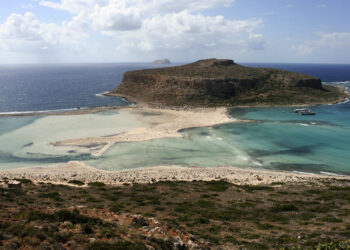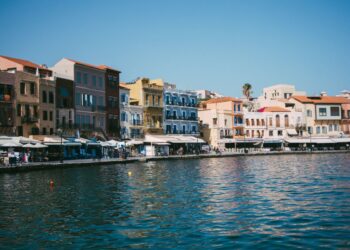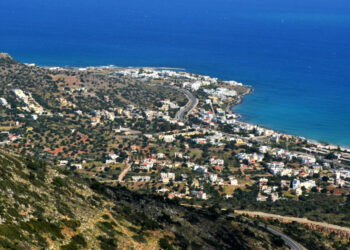
South Crete is not one continuous beach road. The best sections are often the ones that climb away from the coast, lose their signal and demand more time than the map first suggests. This road trip from Matala to Ierapetra is built around that reality: a route through the Asterousia Mountains, small coastal settlements, rough-edged beaches, a high stone village and the more practical eastern base of Ierapetra.
It suits travellers who want a quieter, less polished side of Crete and are comfortable driving slowly on winding roads. It is not a checklist for one hurried day. With the suggested detours, expect roughly 220 kilometres and at least four and a half hours of wheel time before swimming, meals, viewpoints, short walks or wrong turns. Allow two nights at minimum; three nights makes the trip considerably more humane.
Asterousia by the long way round
Matala is the recognisable beginning. The real character arrives when the road turns towards Three Churches, Tsoutsouras and the mountain villages.
At a glance: the route and the decision it involves
The route below is a planning framework, not a promise of fixed driving times. Lesser roads can be slow, weather-sensitive and tiring, while roadworks or local diversions can change the sensible order. Check navigation shortly before departure and ask locally about any road that has recently suffered storm damage.
| Section | Approx. driving | Why stop | Best base |
|---|---|---|---|
| Matala to Three Churches | About 59 km / 1 hr 20 min | Asterousia scenery, a small coastal settlement and an uncrowded beach atmosphere | Matala or Three Churches |
| Three Churches to Tsoutsouras | About 38 km / 55 min | A more serviceable beach village, coastal walking possibilities and Eileithyia’s archaeological story | Tsoutsouras |
| Tsoutsouras to Ethia | About 28 km / 40 min | Stone houses, mountain air, churches and the tomb associated with Saint Eumenios | Ethia only if pre-arranged; otherwise Tsoutsouras or Ierapetra |
| Ethia to Ierapetra | About 97 km / 1 hr 55 min | A change from remote mountain roads to a working southern city, harbour and inland wetlands | Ierapetra |
These approximate figures are calculated from the current road network and exclude parking, photographic stops, beach time and the slower pace required on narrow mountain roads.
How many days do you need?
Two nights: the efficient version
Stay the first night in Matala or nearby, then spend the second night in Tsoutsouras or Ierapetra. Use Three Churches as a deliberate stop rather than trying to turn every cove into a separate expedition. Visit Ethia only if the road and your energy are favourable. This works for experienced drivers, but leaves little room for a long swim or an unplanned walk.
Three nights: the better version
Spend night one around Matala, night two near Tsoutsouras and night three in Ierapetra. This allows the Asterousia section to be treated as the reason for the trip rather than a detour between two better-known towns. You can reach Three Churches without rushing, give Tsoutsouras a proper half-day and arrive in Ierapetra with time for the harbour or Bramiana Reservoir.
Who should choose another route?
Consider a more conventional north-coast itinerary if you dislike bends, isolated roads, basic beaches, limited services or making decisions without a reliable signal. This is also a poor route for a late arrival. In the smaller settlements, food, fuel and accommodation choices are limited compared with Matala, Agios Nikolaos or Ierapetra.
Stage one: begin in Matala, but do not mistake it for the whole south coast
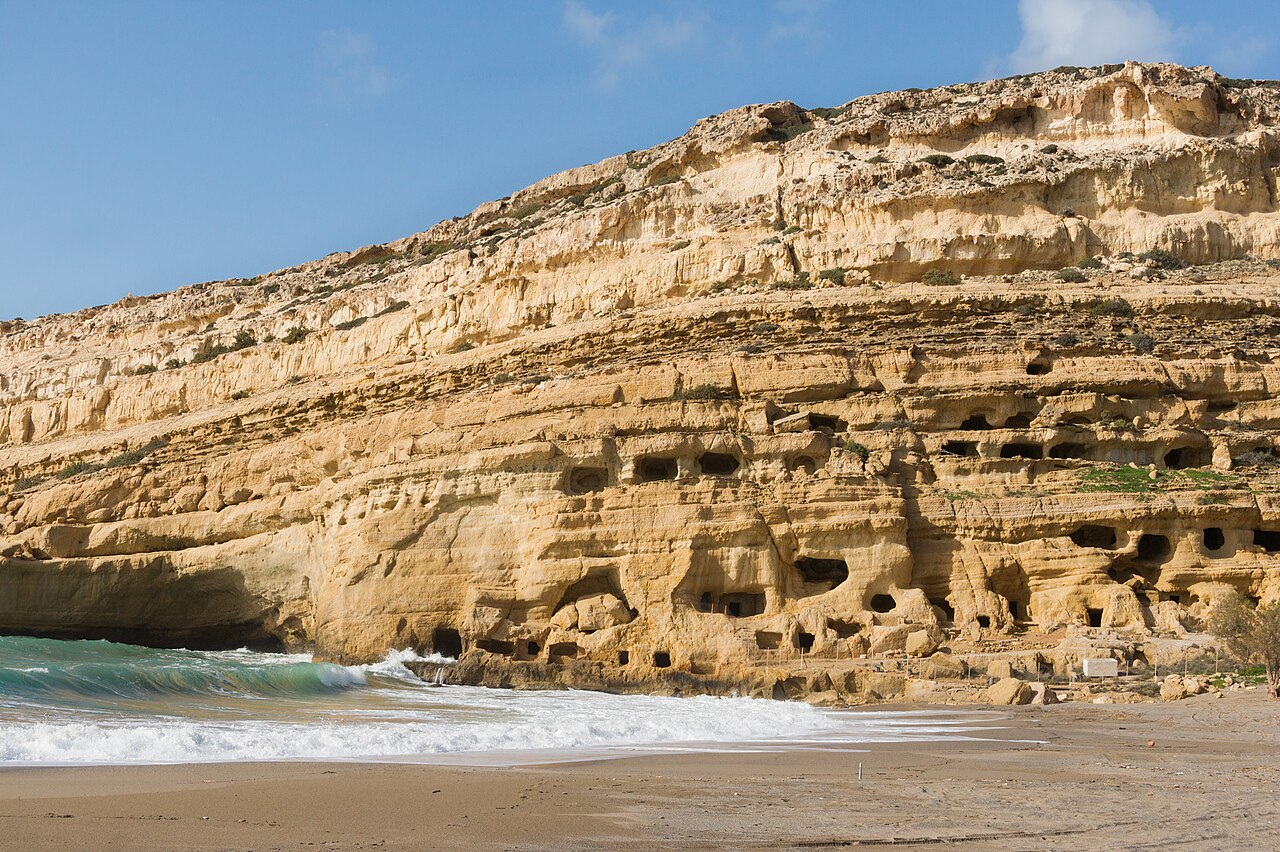
Matala is the easiest opening because it combines a compact village, a sandy bay and famous rock-cut caves in a place with a useful range of accommodation and places to eat. The caves are the visual shorthand for the settlement and the reason many first-time visitors arrive here. They also set up a contrast: Matala is the most recognisable and visitor-ready stop on this itinerary, while the Asterousia coast soon becomes more dispersed and less forgiving.
Give Matala at least one evening and part of the following morning. Walk the shoreline, see the caves where access is permitted and keep expectations realistic in high summer: the village can be busy, parking can take patience and the beach is not a private cove. If you have already covered Matala, use it as a short opening stop. The official Crete guide places Matala alongside the wild Asterousia mountains for good reason.
Stage two: Three Churches and the Asterousia coast
Three Churches, or Tris Ekklisies, is reached through the Asterousia landscape rather than by a simple coastal motorway. The commonly used approach runs via Charakas and Paranymphoi; the final section descends through bends to the sea. Published local information describes roughly twelve kilometres of asphalt from Paranymphoi to the settlement, but conditions and the experience of the road matter more than the number. Drive in daylight, leave margin for oncoming vehicles and do not assume every viewpoint is a safe place to stop.
The small coastal settlement takes its name from three churches traditionally identified as Panagia, Afentis Christos and Agios Georgios. The main beach is a mixture of coarse sand and pebbles, with deeper water and fewer organised facilities than the beaches around Matala. Bring water, sun protection and anything essential for the next leg rather than relying on a large supermarket or full beach services.
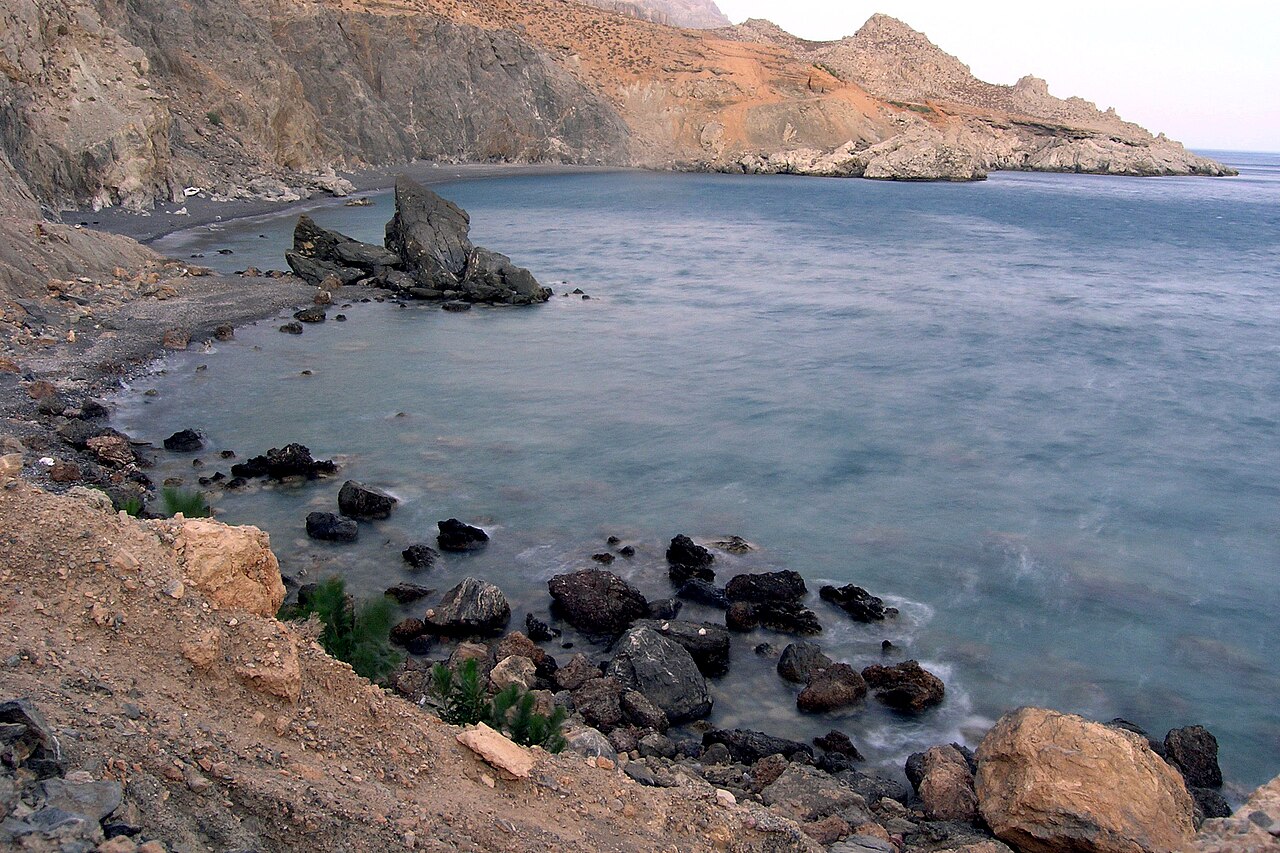
Three Churches works best as a landscape stop: a swim when the sea is calm, a quiet meal, a look at the surrounding cliffs and time to appreciate the scale of the Asterousia. The wider area includes beaches and tracks that are not sensible additions to a normal rental-car itinerary. Some require a boat or a walk, and a rough-looking road is not automatically covered by your rental agreement.
Optional western detours: Trypiti and Koudoumas
If you have an extra night, two of the strongest Asterousia additions lie away from the direct line: Trypiti Beach near Lendas and the Monastery of Koudoumas. They should be treated as planned detours, not casual roadside stops.
Trypiti Beach is reached by dirt tracks from the Lendas area or from the inland side, depending on the approach. The setting at the mouth of the Tripiti Gorge, with the cave church of Panagia Tripiti nearby, is memorable precisely because the access remains rough. Do not take a standard rental car onto an unverified track, and do not confuse this Asterousia beach with Trypiti on Gavdos. For most travellers, the sensible plan is a local guide, a suitable vehicle or a walk from a confirmed starting point rather than an optimistic navigation pin.
Koudoumas Monastery is a more substantial detour and one of the most atmospheric destinations in the mountains: a historic monastery above a small beach on the Libyan Sea. The road from the Sternes direction is a long, difficult dirt road through the Asterousia. In January 2026, the Region of Crete announced funding for restoration of the difficult access road, which is useful context but not proof that every section is currently easy or suitable for an ordinary hire car. Check the latest local road conditions, opening arrangements and religious etiquette before setting out.
These detours reward a slower itinerary, but they change the geometry of the trip. Add them before committing to a Three Churches to Tsoutsouras day, or reserve a separate night around Lendas, Kapetaniana or the wider Asterousia rather than trying to squeeze everything into one long drive.
Stage three: Tsoutsouras, where archaeology meets a working beach village
From Three Churches, the route turns towards Tsoutsouras. The two places look close on a map, but the road connection is not a straight coastal promenade; allow roughly an hour for the drive and more if you stop. Tsoutsouras is the more practical overnight option because it has a proper settlement, a broad beach area and a little more everyday infrastructure.
Near the settlement lies the Cave of Eileithyia, associated with the ancient town of Inatos. The entrance is sealed for safety reasons according to specialist local information, so this is not a cave-tour experience. A short path and steps lead towards the entrance area, but do not attempt to enter, climb barriers or treat the site as an adventure attraction.
Eileithyia was associated in antiquity with childbirth and fertility, and the cave was used as a place of worship over a long period. Finds reported from the sanctuary include figurines, vessels, jewellery and other offerings, with important material now held in the Archaeological Museum of Heraklion. Read the site as a protected archaeological landscape, not as a place to search for souvenirs or repeat local legends as proven history.
Tsoutsouras also gives you a choice: swim and stop there, or walk west towards Maridaki if conditions, footwear and daylight allow. Treat route descriptions online as indicative. Coastal paths can be exposed, rocky and slippery, and the return is part of the walk.
Continue east to Keratokampos if you want a more practical beach base
Keratokampos, a few miles east of Tsoutsouras, is a useful alternative when you want the southern-coast atmosphere without staying in the smallest settlement. It is a modest seaside village and fishing harbour with a longer beach, a handful of tavernas and accommodation, making it a more comfortable base for a relaxed night. The trade-off is that it takes you away from the inland climb to Ethia, so choose one direction: Tsoutsouras to Ethia for the mountain and religious history, or Keratokampos for another coastal pause before continuing towards Ierapetra.
Keratokampos also works well as a weather-sensitive fallback. If the sea is too rough for a swim or the Asterousia roads feel unwise, keep the day shorter, eat by the water and reassess the route in the morning. That flexibility is more valuable here than adding another ambitious beach pin.
Stage four: the inland turn to Ethia and Saint Eumenios
Ethia is the cultural change in the route. Instead of following the sea, you climb into the Asterousia Mountains to a traditional stone village at roughly 740 metres. The air, architecture and rhythm are different from the coast. Destination sources describe Ethia as a settlement of stone houses surrounded by mountain peaks, with a notable concentration of churches and chapels.
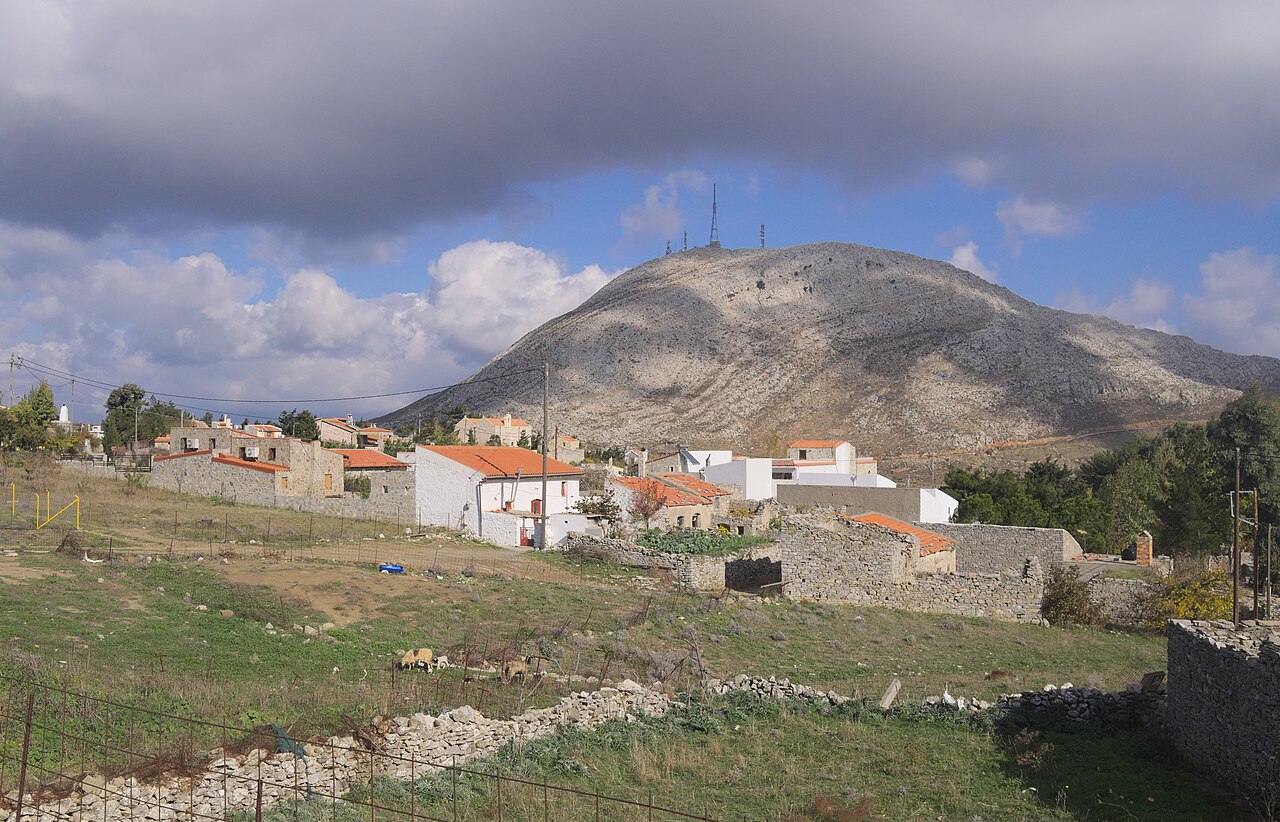
The village has suffered the population decline common to many remote Cretan settlements, but it is not an empty film set. Walk quietly, respect private homes and do not turn courtyards or religious spaces into props. The larger northern church is consecrated to the Nativity of the Virgin Mary and the Archangels; the Prophet Elijah church is connected with a local tradition that it was built in a single day.
Ethia is also associated with Saint Eumenios Saridakis, a modern Cretan saint born in the village in 1931. His tomb is beside the northern church, and visitors come to pay their respects. The stop can be meaningful even for travellers who are not religious, provided it is approached as a living place of worship rather than another photo opportunity.
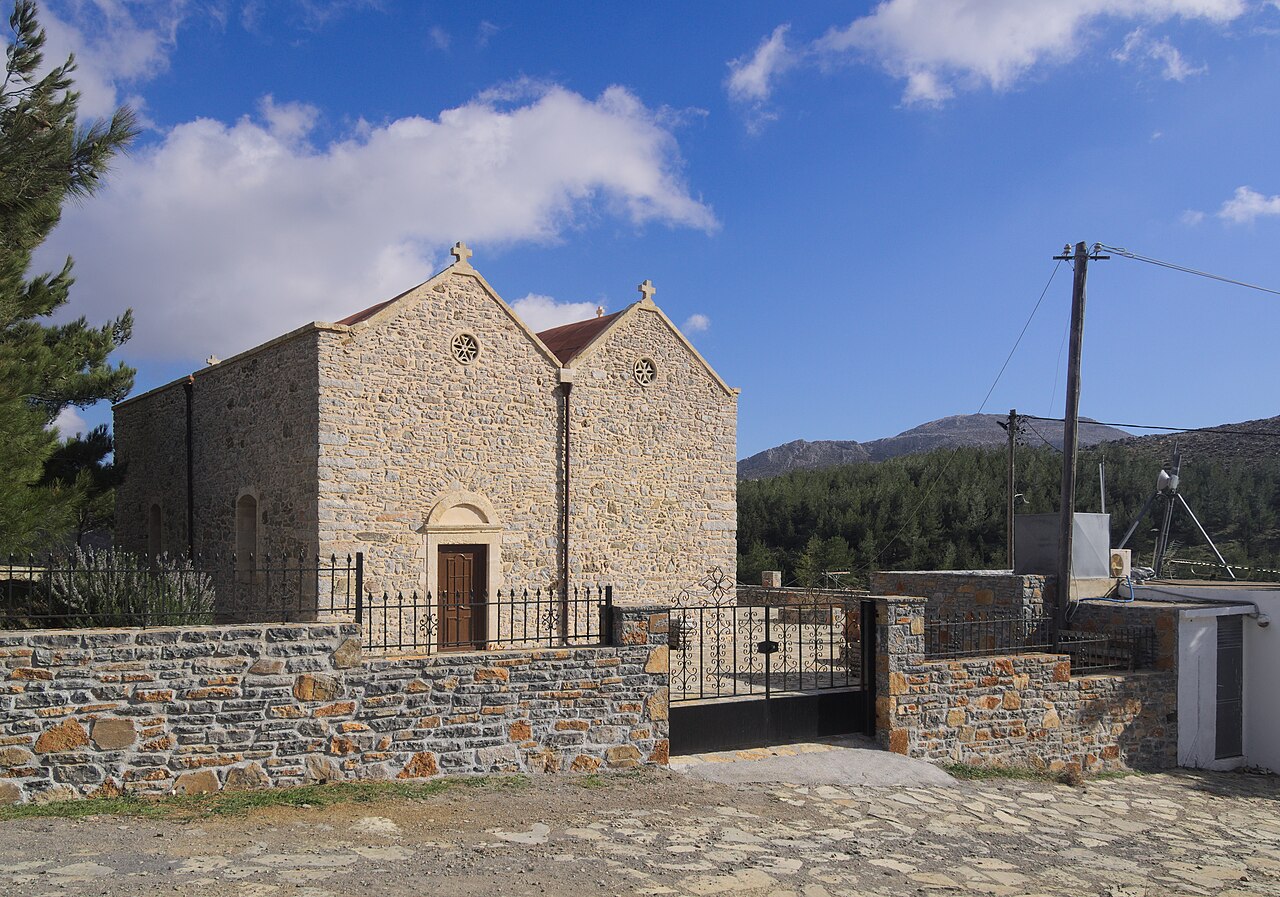
Dress modestly if you plan to enter a church, keep voices low and check whether a service or memorial gathering is taking place. Do not assume that a small village has a visitor centre, open museum or staffed information point. The “House of Love” and local displays are mentioned in destination sources, but opening arrangements should be confirmed locally.
The road from Tsoutsouras to Ethia is short in kilometres but not necessarily quick in practice. Navigation apps can be optimistic about speed. If you have a low-clearance car, a nervous driver or bad weather, ask for current local advice before committing.
Stage five: finish in Ierapetra
From Ethia, Ierapetra is the sensible finish because it restores choice: more accommodation, food, fuel, shops, a harbour and onward connections. The drive is roughly 97 kilometres by the route used for this plan and takes close to two hours before stops. Check the route on the day; the most direct-looking line is not always the fastest after mountain roads.
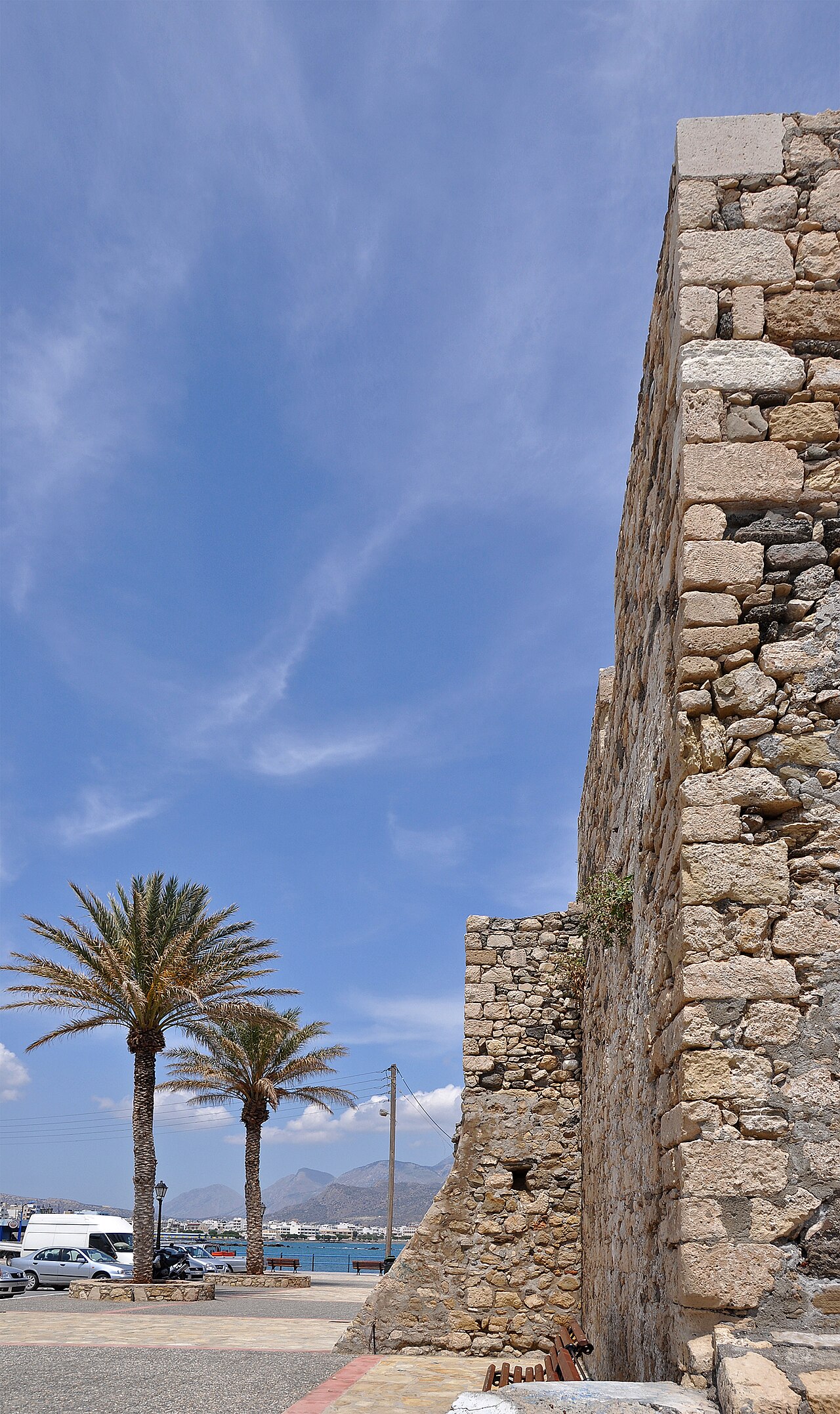
Ierapetra is more than a place to sleep before a boat excursion. The town has a seafront and Kales fortress at the harbour. Walk the harbour and old town, then decide whether you want another beach day or an inland nature stop. The city is also used as a base for Chrysi, but boat timetables, environmental rules and access arrangements change, so confirm current information rather than building a fixed promise into this guide.
A worthwhile final detour: Bramiana Reservoir
Bramiana Reservoir lies a few kilometres north-west of Ierapetra and offers a different final scene: water, planted edges and birdlife in a landscape better known for dry hills and greenhouses. The official Visit Greece feature describes it as an important wetland and gives a practical approach from Ierapetra via the Myrtos road.
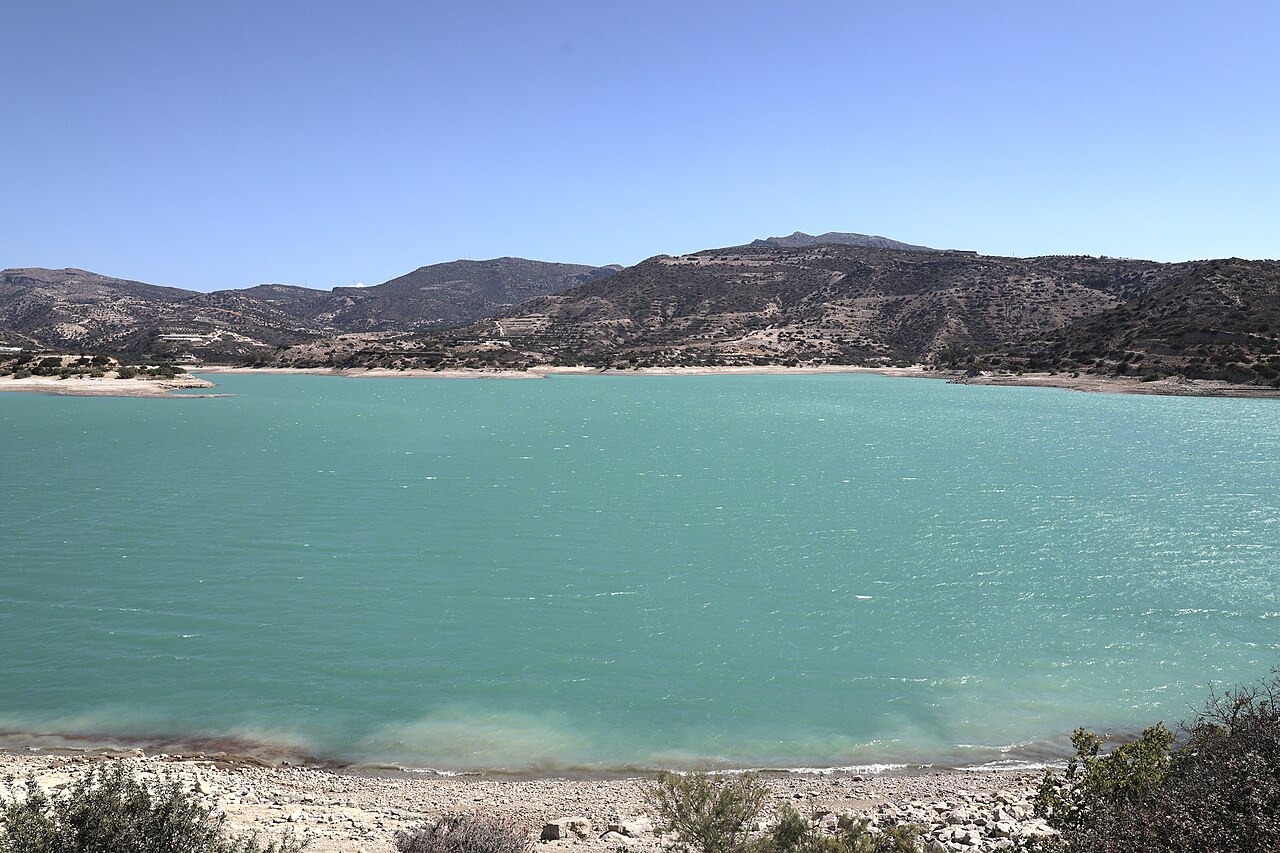
This is not a manicured lakeside park. The rough circuit becomes less comfortable beyond the marked bird-observation area, so drive carefully and do not continue simply because a map shows a line. The reservoir is most rewarding in cooler parts of the day, particularly after seasonal rains, but birds and water levels vary. Keep noise down and avoid disturbing wildlife.
Where to stay on the route
Matala is the easiest base for the opening section, with the widest choice of rooms, restaurants and evening activity. Tsoutsouras is a better match for a quiet beach night and an early start towards the mountain roads, but it has fewer fallback options. Ierapetra is the strongest logistical base at the eastern end and works well if you want to add Chrysi, Koutsounari, Myrtos or other Lasithi stops later.
Ethia is a visit rather than a reliable spontaneous overnight base unless you have confirmed accommodation directly. The same principle applies to Three Churches: check exact opening dates and facilities before planning around a particular taverna or room. In shoulder season, some places may operate limited hours; outside the main season, options can be sparse.
Driving advice that matters here
- Use a normal, well-maintained car. A small car is easier on narrow roads, but it must still have tyres and brakes suitable for steep sections.
- Drive remote sections in daylight. Night adds fatigue, livestock, poor visibility and fewer opportunities to ask for help.
- Carry water, food and offline navigation. Signal and services are not consistent across the Asterousia.
- Never trust a route line blindly. Confirm a track’s surface and whether your rental contract permits it. This is particularly important for Trypiti and Koudoumas.
- Check the weather. Heavy rain can change mountain roads, gorges and coastal paths quickly.
- Leave beaches as you found them. Several stops have limited waste collection and little infrastructure.
Final verdict: is this the right South Crete road trip?
Yes, if you want a route with contrast rather than a chain of interchangeable beaches. Matala provides the familiar opening, Three Churches supplies the remote Asterousia drama, Tsoutsouras adds a practical coastal pause, Ethia brings mountain architecture and living religious history, and Ierapetra gives the journey a useful eastern finish.
The route is not effortless and should not be sold as a secret shortcut. Its value lies in the gaps between the headline places: the slow descent to a small beach, the inland turn that changes the landscape, and the need to stop because the road is beautiful rather than because a ranking told you to. Give it two nights if you must; give it three if you want to remember it as a journey rather than a transfer.
Research and review note: Researched in July 2026 using official tourism and municipal sources, route data and destination references. Mountain-road conditions, opening arrangements, services, boat schedules and access rules can change; confirm locally before travelling.